Reflection on 1 Thessalonians 2:13-20

Scripture

You have accepted what we said is the very word of God, which of course it is. And this word continues to work in you who believe.

Observation

The Thessalonians accepted Paul’s message as the very word of God, not human ideas. Because of this, they were persecuted as were the brothers and sisters in Judea.

Paul tried again and again to come back to Thessalonica, but Satan prevented him. But they are his pride and joy, his reward and crown.

Application

The gospel is not just human wisdom – it is God’s own word.

Every philosophy is flawed because it is of human origin. The gospel is from God, and it is perfect.

No human wisdom can bring us salvation because people do not even see that we need salvation. Most human philosophies give a form of salvation in which we can rise above our failings by thinking and acting rightly .

God’s word says that to be saved we need to be set free from sin. Only God can save us, and that is through the blood of Jesus Christ our Lord.

Prayer

Thank you Lord for the freedom that comes in surrendering myself to Jesus. It is true that the gospel is God’s word. Amen.

Is it time to unleash carp herpes?

Carp are a terrible plague in Australian waterways. There is a control measure being considered, but is now the right time to introduce it?

From National Geographic:

Is it time to unleash carp herpes?

By Ivor Stuart, Charles Sturt University; John Koehn, Charles Sturt University; Katie Doyle, Charles Sturt University, and Lee Baumgartner, Charles Sturt University  January 30, 2023
 Reading Time: 5 Minutes  Print this page
Exploding carp numbers are ‘like a house of horrors’ for our rivers.

With widespread La Niña flooding in the Murray-Darling Basin, common carp (Cyprinus carpio) populations are having a boom year.Videosof writhing masses of both adult and young fish illustrate that all is not well in our rivers. Carp now account for up to90%of live fish mass in some rivers.

Concerned communities are wondering whether it is, at last, time for Australia tounleash the carp herpes virusto control populations – but the conversation among scientists, conservationists, communities and government bodies is only just beginning.

Globally, the carp virus has been detected inmore than 30 countriesbut never in Australia. There arevalid concernsto any future Australian release, including cleaning up dead carp, and potential significant reductions of water quality and native fish.

As river scientists and native fish lovers, let’s weigh the benefits of releasing the virus against the risks, set within a context of a greater vision of river recovery.

A house of horrors for rivers

Carp are a pest in Australia. They cause dramatic ecological damage both here and in many countries. Carp werefirst introducedin the 1800s but it was only with “the Boolarra strain” that populations exploded in the basin in the early 1970s.

Assisted by flooding in the 1970s, carp have since invaded92%of all rivers and wetlands in their present geographic range. There have been estimates of up to357 million fishduring flood conditions. This year, this estimate may even be exceeded.

Carp are super-abundant right now because floods give them access to floodplain habitats. There, each large female can spawn millions of eggs and young have high survival rates. While numbers will decline as the floods subside, the number of juveniles presently entering back into rivers will be stupendous and may last years.

The impacts of carp are like a house of horrors for our rivers. They cause massive degradation of aquatic plants, riverbanks and riverbeds when they feed. They alter the habitat critical for small native fish, such as southern pygmy perch. And they can make the bed of many rivers look like the surface of golf balls – denuded and dimpled, devoid of any habitat.

Dimpled riverbed
Adult carp usually search for food at the bottom of rivers, stirring up sediment and creating dimples on the riverbed. Image credit: Ivor Stuart, Author provided

Most strikingly, this feeding behaviour contributes to turbid rivers, reducing sunlight penetration and productivity for native plants, fish and broader aquatic communities.

Carp truly are formidable “ecosystem engineers”, which means they directly modify their environment, much likerabbits. Their design leads to aquatic destruction of waterways.

We know when their “impact threshold” exceeds88 kilograms per hectareof adult carp, we see declines in aquatic plant health, water quality, native fish numbers and other aquatic values. At present, we expect carp to far exceed this impact threshold. For river managers, the challenge is to keep numbers below that level.

Read the full article here

Quote for the Day

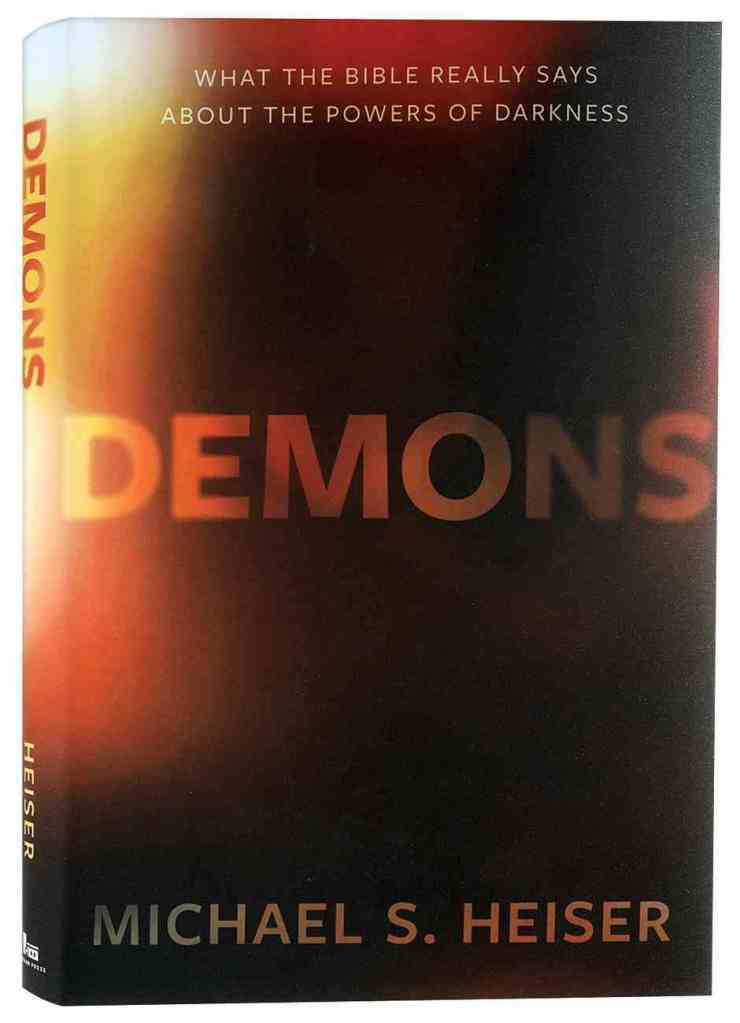
Israel as a land and people were, in the words of Deuteronomy 32:9, “Yahweh’s portion” and his “allotted heritage.” As such, Israel was surrounded on all sides by territories inhabited by enemies and under dominion of hostile gods. Michael Heiser

Reflection on 1 Thessalonians 2:7-12

Scripture

as apostles of Christ, we certainly had a right to make some demands of you, but instead we were like children among you. Or we were like a mother feeding and caring for her own children.

Observation

Paul had a right as an apostle to make demands of the people he ministered to, that they support his ministry.

Instead he worked hard to support himself so that he would not be a burden on anyone. The Thessalonians themselves were witnesses to his honesty and devotion in this.

He was like a father to them – pleading, encouraging, and urging them to live their lives in a way that is worthy of God’s Kingdom.

Application

There are people who minister with a servant’s heart or a father’s heart. Then there are those who see their ministry as an entitlement to demand things of others.

Ministry as relationship is more authentic and more faithful to the gospel than ministry as business.

There are times in any ministry when the resources are tight. These are opportunities to grow our ability to trust in the Lord.

Paul’s attitude was like that of Christ. He was there to serve the church, not to be a burden to it. He supported himself by earning a living by making tents.

Nowadays, there are many models and paradigms for financing ministry. We should always endeavour to not be a burden on the church. And above all, we must avoid the mentality that we are entitled to special consideration, special honour, special treatment within the church.

Prayer

Lord, thank you for the ministry you have entrusted to me. Please help me to stay genuinely humble, a servant to your flock. Amen.

Quote for the Day

Yahweh rules justly and expects the same from those who rule the nations. But what we read in the Old Testament makes it clear that this is not the reality among the nations. Worse, their gods seek to spread chaos to Yahweh’s portion, Israel, by seducing his people to worship them instead of the Most High.  Michael Heiser

Rain

Rozina Mison

January 27th 2023

Rain is a symbol of my cleansing the land. I also long to cleanse hearts – open yourselves up to me and to each other that my cleansing work may reign.

To come to a place of one heart and one mind, you must deal with conflict. I do not want different things; I am single minded, and you should all seek my way, not your own way. You must listen to each other, listen being prepared to change your view, being prepared to give ground. Most things are not important.

Evil must come to the light to be dealt with.

Do you want to be cleansed? It is more comfortable to be dry and so we stay out of the rain. Choose the cleansing rain; choose to run in it, to rejoice in it, to let my Spirit fo His work in it.

Joseph Mattera- 7 Forms of Functional Cessationism

From “Charisma” magazine:


7 Forms of Functional Cessationism Joseph Mattera — 8 minutes


stock.adobe.com

In this article, cessationism refers to the doctrine, practice or belief that the ascension ministry gifts and the manifestations of the Holy Spirit ceased with the early church and do not function in the present church age (Eph. 4:11-16; 1 Cor. 12: 4-11).

The charismatic and Pentecostal world believes in all the gifts of the spirit and in hearing God’s voice. Various terms are used to describe these manifestations: “revelation” and “illumination.” On the other hand, there are evangelical rationalists, who are, in function and theology, “cessationists.” Whether Pentecostal or a non-charismatic evangelical, you may be a functional cessationist if you don’t practice or experience divine spiritual phenomena. The term “evangelical rationalist” describes a person who believes in all the cardinal truths of the Scriptures but denies the practice of certain manifestations of Holy Spirit phenomena in the contemporary church (1 Cor. 12:4-11).

These believers “demystify” the Scriptures and have an enlightenment framework in which all biblical truth is verified through the grid of their rational minds and understanding. Of course, as true Christians, they are inconsistent in their anti-supernatural view. This is because salvation itself, the point of translation for every believer, hinges on faith and the profession of the Lordship of Christ and His historical and supernatural resurrection. This results in a supernatural conversion experience (Rom. 10:9-10; 2 Cor. 5:17).

The following are seven types of functional Cessationists:

1. Cessationism Regarding Ephesians 4:11 Ministry Gifts – Whether you or your denomination classify as charismatic, if there exists no belief in or embrace of the practical function of the ministry gifts listed in Ephesians 4:11, then you or they are cessationists concerning these.

2. Cessationism Regarding Hearing the Voice of God – If you do not believe that God can subjectively communicate to you outside of the written Word of God or that He has ceased doing so since the completion of the canon of Scripture, you are a cessationist. Whether you describe divine communication as an “illumination,” (God impressing something upon your heart), or a “revelation,” (God speaking to you), it is all the same experience.

Evangelical rationalists take Scriptures like 1 Corinthians 13:10 to mean the completion of the canon of Scripture. (The 39 books of the Old Testament and the 27 books of the New Testament). Thus, when somebody claims “God spoke to them,” rationalists believe it is adding to the Word of God or the final canon of Scripture. (They use Revelation 22:18-19 to support their argument.)

They believe this, even though a proper exegesis of 1 Corinthians 13:10 shows that Paul was not talking about the final canon of Scripture but rather was referring to the saints seeing Jesus “face to face” in heaven. (1 Cor. 13:12; 1 John 3:2).

Furthermore, in the context of this verse, Paul said he would “know fully even as he was fully known.” Since he died before the book of Revelation was written, he could not have been speaking about canon completion but rather he was referring to going to heaven. In addition, the context of 1 Corinthians 13:10 also shows that “knowledge” will pass away, not just tongues and prophecies. Do any of these evangelical rationalists genuinely believe that our present-day need for “knowledge” no longer exists?

3. Cessationism Regarding the Gift of Prophecy – Doctrinally, Pentecostals and charismatics claim they believe in the gift of prophecy. (First Corinthians 14:31 says that “all may prophesy” so that the church may be edified. You can also see 1 Corinthians 14:4).

However, if members in such Pentecostal and charismatic churches never practice this gift in their gatherings, it is reasonable to classify them as functionally cessationist toward prophecy.

4. Cessationism Regarding the Practice of Glossolalia – Many leaders in the Pentecostal movement say that some of their young pastors and members in their contemporary churches do not practice “speaking in tongues” for personal edification (1 Cor. 14:2-4). Those who don’t pursue, receive and practice this spiritual gift, aside from the Pentecostal classification, are functionally cessationists (1 Cor. 14:18, 1 Cor. 39-40).

5. Cessationism Regarding Divine Healing – The Gospels and New Testament writings encourage believers to pray for the sick by faith for supernatural healing (Mark 16:15-18; Luke 10:1-9; John 14:12; James 5:13-15; Acts). Despite this New Testament chronicled practice, many Pentecostals and charismatics rarely pray effectively for the sick. Consequently, they are functional cessationists when it comes to divine healing.

6. Cessationism Regarding the Expelling of Demons – Jesus made it clear that believers have authority over demons in His name. (Luke 10:17-20; James 4:7). Despite this, many charismatic Pentecostal believers are spooked out when casting demons out of people. This practice, sometimes called “deliverance,” should not be the special unique calling of any one person or church, but should be part of the spiritual arsenal of all believers as the need arises. Setting the captives free is one of the essentials of the Gospel (Luke 4:18). In this area, those who never engage in the expelling of demons are functional cessationists.

7. Cessationism Regarding Experiential Hermeneutics – Being trained in the historical/grammatical method of biblical interpretation enables me to properly discover the author’s original intent when they were inspired to write the sacred, canonical text. However, if the Holy Spirit is not allowed to give further insight into the practical application and understanding of the Scriptures, this would be a form of hermeneutical cessationism. After all, the Holy Spirit has come to guide us into all truth and is our primary Teacher (John 14:26, 1 John 2:27). For more recommended reading on this subject, refer to Dr. Craig Keener’s book, “Spirit Hermeneutics.”

In conclusion, my prayerful aim is to encourage all believers, irrespective of their classification, to pursue and allow the fullness of the Holy Spirit to flow through their lives, and in their local church so that all may become more effective witnesses of Christ (Acts 1:8). Examine the Scriptures and be bold as you respond to apostolic instruction (1 Cor. 14:1). Pursue, love and desire spiritual gifts, and especially that you may prophesy.


Dr. Joseph Mattera is an internationally-known author, consultant and theologian whose mission is to influence leaders who influence culture. He is the founding pastor of Resurrection Church, and leads several organizations, including The U.S. Coalition of Apostolic Leaders and Christ Covenant Coalition. Dr. Mattera is the author of 13 bestselling books, including his latest “The Purpose, Power and Process of Prophetic Ministry,” and is renowned for applying Scripture to contemporary culture.

Quote for the Day

When God chose to raise up a new human family (Israel) in the wake of Babel, he left room for the salvation of the forsaken nations in his covenant with Abram. It would be through Abram’s descendants that all the nations of the earth would be blessed (Gen 12:1–3). Michael Heiser