Reflection on Judges 13:1-25

Scripture

“Why do you ask my name?” the angel of the Lord replied.” It is too wonderful for you to understand.”

Observation

The Israelites again do evil in the sight of the Lord, so the Philistines oppress them for 40 years.

A man named Manoah is married to a woman who is unable to have children. The angel of the Lord appears to his wife with the happy news that she will soon become pregnant. The child is to be set apart for the Lord, so she must not eat any unclean food. The child will rescue Israel from the Philistines.

She tells Manoah, who then prays for a second visitation so they can receive more instructions about how to raise the child. The angel of God appears again to Manoah’s wife while she is sitting in the field. She runs to bring Manoah. Manoah wants to kill a goat to feed the angel, but he will not eat it. Manoah offers it as a burnt offering to the Lord. When Manoah does this, the angel of the Lord rises to heaven in the flames.

When the baby is born they name him Samson.

Application

When Manoah asked the angel his name, he replied, “It is too wonderful for you to understand”

Many scholars believe that in the Old Testament, the angel of the Lord is a representation of Jesus, the Son of God yet to be born in human flesh.

This truly is a mystery that is too wonderful to understand.

Because God is infinite and unlimited, and we are finite and bound to physical bodies, there are many things about Him that we cannot understand. They remain mysteries to us.

It is natural to want to know as much about God as we can, but we must accept that our knowledge is limited. Some things about the Lord are simply too wonderful to explain, far beyond our thoughts and words.

Prayer

Lord God, you truly are too marvellous for words. I cannot entirely understand you, but I will worship you. Amen.


Yarning Circles

Recently we had the privilege of meeting a well-known Aboriginal pastor, Henry Weatherall. Henry has moved around regional NSW and ministered in places like Moree and Condobolin, as well as an itinerant ministry through much of the nation.

During our conversation, Henry said that he likes to get into prisons and minister to young indigenous inmates in yarning circles. In a small group, people share their stories and why they are there. Henry also shares his story of how God set him free from alcoholism and turned his life around.

Henry said that indigenous people really need to have these opportunities to get their hurts and struggles out in the open. Everybody needs that, otherwise we just carry the soul sickness around with us and never receive healing.

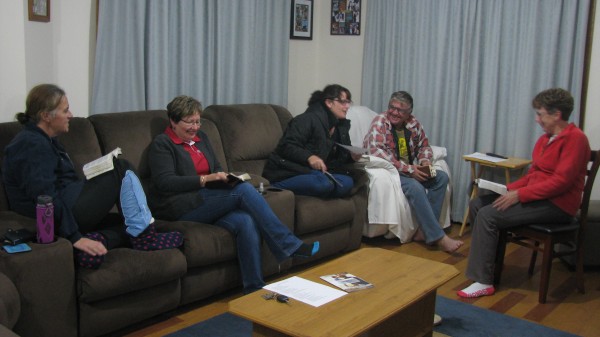
At New Life we emphasise our own yarning circles, which we call cell groups. In cell groups we have opportunities to share our stories and to minister to one another, all in the safe environment of people who care about each other. We laugh together, we worship together, we cry together and we pray together. All the time the Holy Spirit is deepening our love for one another and for Him.

This is an important part of our life together. We want to be healed, whole and strong to take the gospel of the kingdom to our friends and families.

Yarning circles – cell groups – whatever the name, they are a great idea.

Reflection on Judges 12:1-14

Scripture

After Jephthah died, Ibzan from Bethlehem judged Israel. He had thirty sons and thirty daughters.

Observation

The people of Ephraim raise an army to fight Jephthah. They claim to have been overlooked when Jephthah fought the Ammonites. Jephthah replies that he did summon them at the beginning of the dispute, but they refused to come.

Jephthah then gathers the men of Gilead to attack the people of Ephraim. He captures the Jordan River and sets up check points at all the crossing points along the river. Those wanting to cross are required to say the word Shibboleth. The Ephraimites cannot say this word correctly and they are killed.

After Jephthah dies, Ibzan takes over as judge over Israel. After Ibzan, comes Elon, and then Abdon.

Application

Some of the judges were more famous for their offspring than for their actions. Ibzan had thirty sons and thirty daughters. Elon had seventy sons and grandsons. They were very busy men!

It is fair to assume that under these judges Israel enjoyed a time of peace. Nothing is recorded of national significance.

Sometimes life is like that. We enjoy peace and prosperity. Life goes on as normal.

During the peaceful times, we need to make sure that we continue to walk with the Lord. When life is going well, some people find it easy to neglect prayer and worship.

This was certainly the case for Israel. During times of peace, they would gradually turn away from the Lord and start to worship other gods, until the Lord sent an enemy to punish them.

Prayer

Lord Jesus, please help me to stay focused on you, even when times are good. Amen.

Reflection on Judges 11:29-40

Scripture

Jephthah made a vow to the Lord. He said, “If you give me a victory over the Ammonites, I will give to the Lord whatever comes out of my house to meet me when I return in triumph. I will sacrifice it as a burnt offering.”

Observation

The Spirit of the Lord comes upon Jephthah, and he leads an army against the Ammonites. He makes a vow to the Lord that he will offer as a burnt offering whatever comes out of his house to meet him when he returns in triumph.

The Lord gives Jephthah a crushing victory over the Ammonites. When he returns home, his only daughter comes out to meet him, dancing for joy. Jephthah tears his clothes in anguish at the result of his foolish vow.

Jephthah’s daughter asks to go into the hills for two months and weep with her friends as she will never have children. She returns home, and her father keeps his vow.

Application

We must always be careful of the things we say, especially the promises we make. Jephthah’s vow was foolish and unnecessary.

The Lord does not require us to make brash promises or costly sacrifices to answer our prayers. He delights to pour out grace upon grace over us. Prayer is not a process of bargaining with God, but of seeking His will and His desires.

Jephthah was foolish in that he should have known that God’s law does not condone human sacrifice in any situation. This raises the question of where were the priests and other religious leaders who could have told him quite clearly that the Lord does not require or allow such things.

Jephthah killed his daughter as a sacrifice to the Lord to thank him for the victory God had given. This sacrifice was abhorrent to God.

Jephthah’s vow was foolish; it was unnecessary; and it was displeasing to the Lord.

Prayer

Lord, I pray that my religious acts will never be obnoxious to you. Please give me wisdom in my words and my deeds. Amen.