Ephesians 4:30

Here is my commentary on Ephesians 4:30. I am publishing these once or twice a week, but you can read all of the available articles at our web-site, http://www.new-life.org.au

Ephesians 4:30

“Do not grieve the Holy Spirit of God with whom you were sealed for the day of redemption.”

We are not to grieve the Holy Spirit of God.

The word “ to grieve” has a similar meaning in Greek as in Hebrew. It means to cause sorrow or grief or to distress. Paul is telling us we must not distress the Holy Spirit.

This follows immediately after the instruction to not let any unwholesome to come out of our mouths. Some commentators suggest that this is important because the Holy Spirit is especially concerned about our communication within the fellowship and to unbelievers. The words that we use and the ways we talk to one another are important to the Holy Spirit and can cause Him grief or distress.

It is also true that our habitual or repeated sins of any character can distress the Holy Spirit. We are told repeatedly in the scriptures that we are to be holy just as the lord is holy. To be constantly in sin is to desecrate the holy vessels that God has called us to be and which Christ died to purchase.

The fact that we can grieve the Holy Spirit is a reminder of the personhood of the Spirit. We can sometimes think of the Spirit as being an impersonal force, perhaps because we fail to adequately grasp who the Holy Spirit is.

We must affirm that the Holy Spirit is God, and therefore a person, in the same way that the Father and the Son are also God and persons .

We use the word “spirit” very loosely at times – the spirit of Christmas, team spirit, the spirit of Australia. In this context the word means a vaguely conceived connection, a bond, or a shared purpose. This is not the character of the Holy Spirit.

The Holy Spirit is God active in the world- whether the context is seen in individual believers, in non-believers, in a culture, or in the church.

When we grieve the Holy Spirit, we grieve God. This occurs through our sin and rebellion, and it opposes the whole concept of our salvation.

Paul here describes the Holy Spirit as” the Holy Spirit of God.” He could have referred to him as the Spirit, or the Spirit of God, or the Holy Spirit. In this way, Paul is emphasising that the Spirit of God is Holy. This is not a name or a title, but a description of the nature of the Spirit of God.

God is Holy. When we use the word “holy” about God, we don’t mean the same thing that we mean when we describe a created thing or a person as holy.

To say an object is holy means that it has been set apart for God’s purposes. The object then cannot be used for ordinary or profane purposes. Similarly when the scriptures say that we are to be holy, they mean that we are now devoted to God’s purposes and we cannot do just whatever we want to do.

To say God is holy is to say that God is untouched in anyway by sin. We can’t say this of any created thing because, just by being in the world, they are touched by the general state of corruption which sin has brought into the creation.

God is holy because He cannot do anything that is opposed to His own character. The Spirit of God is likewise holy. Jesus, the Son of God, was tempted in every way that we are, but He remained without sin. He is holy.

Because God is by His nature untouched by sin, He does not change in His holiness. We are assailed in every direction by temptation, and often we give in. We can be righteous one minute, and commit some grievous in the next minute, but God’s holiness is constant and unchanging .

The Spirit of God is holy because He is God, and He does not change .

We were sealed with the Holy Spirit of God for the day of redemption.

A seal was often placed on a document to serve two functions.

Firstly, it served as a guarantee of the source of the document. It was a sign of ownership. The document could be trusted as a genuine letter from a king, because it contained the king’s seal. The Holy Spirit’s presence in the life of the believer is a sign that we belong to God.

The second purpose of a seal was to guarantee the document’s authenticity. A letter that was sealed could be trusted to be free from alterations as long as the seal remained intact.

The Holy Spirit is a sign or a seal that we are the real thing as far as Christ is concerned. We carry the mark of God in our spirits to show that we are not a forgery. Our salvation is real because the Holy Spirit is really in us.

The presence of the Holy Spirit seals us for the day of redemption.

The day of judgement, when the sheep are separated from the goats, and the wheat from the weeds, can make us feel anxious. Judgement sounds like it is about condemnation or punishment.

The day of judgement is, for christians, the day of redemption. We will be declared free and righteous on that day. The Holy Spirit in us will be seen as the true sign of our salvation .

Christians have nothing to fear from God’s judgement. We know, or we should know, that Jesus’ death on the cross has bought our salvation. We look forward to eternal joy spent in the presence of God.

Those who do not know Christ will be judged and condemned to the lake of fire.

Our culture does not deal well with binary, or black and white, decisions. We like to have grey zones where the edges are blurred, where laws have loopholes. God has stated clearly that those who die in Christ will be raised to eternal life, while those who die away from Christ are doomed to hell.

To choose for Christ is the most important decision any person can make.

Key points in this verse:

  • To grieve the Holy Spirit means to cause him pain or distress
  • Our words and our sins can distress the Holy spirit
  • The Holy Spirit is God and is a person not a force
  • God is totally untouched by sin and cannot sin
  • We are sealed with the Holy Spirit as a sign and guarantee that we belong to God
  • For Christians the day of judgement is the day of freedom
Reflection on Matthew 22:1-14

Scripture

“The feast has been prepared. The bulls and fattened cattle have been killed, and everything is ready. Come to the banquet.”

Observation

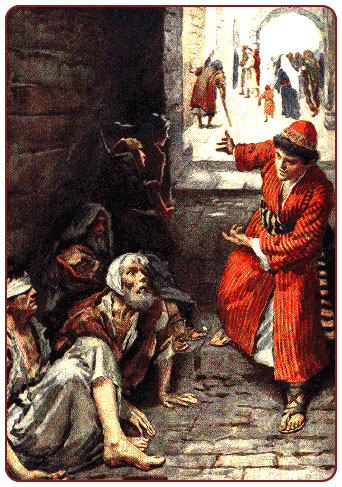
The kingdom of God is like a king who prepared a great wedding feast. When everything was ready the king sent out his servants to fetch the guests. They all refused to come.

The king sent out more servants. The guests ignored them, and some even killed the messengers.

The king was furious, so he sent his army to kill the murderers. Then he instructed his servants to bring in everyone “good and bad alike.” One man in the feast was not properly dressed and so the king had him thrown out into the darkness.

Application

The last few decades has seen a massive cultural change in the West. A centuries long tradition of adherence to christianity has been overturned by hypersexual individualism. No longer are christians in the majority in many countries, but they are becoming increasingly marginalised and harried by the cultural leaders.

There have been many attempts in the church to reverse this culture war. Christians have been made to feel guilty in many ways. If only we evangelised more or better. If only our churches were more welcoming of Generation Z’s or Millennials.

This parable was originally aimed against the leaders of Israel who failed to see Jesus was the long- awaited Messiah bringing in the promised Kingdom. They were the invited gusts who refused to come to the party.

But now we have a new culture where people have rejected the gospel. We are the invited guests living in the privilege of a culture that was dedicated to God’s values. We said “No” to the king’s invitation, and now the Spirit of God is calling people in Asia, Africa and South America to “Come.”

A faithful remnant intercedes for their nations and share the gospel. Will we see the invited guests change their minds and join the feast?

Prayer

Lord, I pray for Australia. Bring this nation back to a place of repentance before you. Revive us! Amen.

Clever Mimicry in Marine Fish

Instead of cleaning parasites off the host, this aggressive mimic will actually bite them instead.

I just love the huge variety in the world of marine fish. They are a testament to the amazing creativity of the Creator God. Here are some examples of the ways in which some fish try to mimic other fish for a variety of reasons.

From Saltwater Aquarium blog

7 Sly Examples of Mimicry in Saltwater Fish

Let’s face it, it’s a fish-eat-fish world out there. Carving out a niche and surviving is a full-time job. One of my favorite survival strategies among animals is mimicry–and we’re fortunate to have several great examples of mimicry in saltwater fish.

7 Stealthy Cases of Saltwater Mimicry

If you want to jump right into things, you can scroll down to see the first case of mimicry in saltwater fish for yourself, but it might be helpful to provide some background about the few interesting types of mimicry that will be shown in this article:

  1. Batesian mimicry
  2. Self-mimicry
  3. Aggressive mimicry

Batesian 

The first, and perhaps most well-known type of mimicry is called Batesian. It is named after Henry Walter Bates, who put forward a theory that this visual copy-catting is an evolutionary adaptation/strategy that helps avoid predation.  Batesian mimicry occurs when a relatively harmless species imitates the coloration patterns of a species known to be toxic or have harm-inducing defenses. It’s sort of a distastefulness-by-association approach, where the harmless animal benefits by association, while the species being copied is largely unaffected.

Click here to read the rest of the article

Voluntary Assisted Dying

CHRISTIAN MEDICAL PROFESSIONALS SAY: SIGN PETITION TO STOP EUTHANASIA

At a time when our nation should be trying to save lives and provide better aged care, new laws promoting euthanasia and assisted suicide are putting vulnerable people in danger.ADVERTISEMENT

Seeing the risk that these euthanasia laws pose to patients and medical professionals, the Christian Medical and Dental Fellowship of Australia is rising up to oppose assisted suicide and to promote more ethical health care.

The Christian Medical and Dental Fellowship of Australia (CMDFA) is an organisation of doctors, dentists and associated healthcare professionals who are urging all Christians to sign a petition calling for New South Wales Premier Gladys Berejiklian to oppose the introduction of new laws which would allow euthanasia and physician-assisted suicide in NSW.

This is to oppose the new ‘Voluntary Assisted Dying’ legislation that Independent MP Alex Greenwich hopes to present to the NSW Parliament in September, after releasing a draft in July.

Greenwich argues that similar laws have now passed in Victoria, Western Australia, Tasmania, South Australia and New Zealand. Queensland has committed to a draft bill.

But is that any reason for NSW to jump off the same cliff?

Professor John Whitehall, National Chair of the CMDFA, is one of many medical professionals who say no.

Speaking on behalf of his CMDFA colleagues, he says:

“We have great concern for those who suffer with terminal illness and agree that end-of-life care needs to be improved. We are, however, very concerned about the recent moves across Australia to legalise euthanasia and physician-assisted suicide.”

“The CMDFA agrees with the World Medical Association [an international organisation founded by physicians from 27 different countries] that the practice of euthanasia and physician-assisted suicide is unethical and must be condemned by the medical profession.

“Euthanasia is in conflict with basic ethical principles of medical practice and we reject Mr Greenwich’s suggestion that these practices constitute a form of medical care.”

Professor Whitehall points to what’s happening overseas and why legalising euthanasia can be a slippery slope:

“The experience in Canada and the US state of Oregon, where they’ve already legislated to allow euthanasia and physician-assisted suicide, reveals that it is not possible to legislate in such a way that wrongful deaths do not occur.”

Here in Australia, the death toll from euthanasia is tragically rising. Whitehall says, “Our colleagues in Victoria [where euthanasia has been legalised] are reporting distress as they are asked to facilitate the ending of their patients’ lives within the healthcare system.”

It’s little wonder these caring professionals are distressed, when you look at the statistics.

A recent report shows that since the ‘Voluntary Assisted Dying Act’ commenced in Victoria in June, 2019:

  • 224 people have died from taking the prescribed medications.
  • Applicants accessing Voluntary Assisted Dying were as young as 20 years old.
  • The average age of people accessing this was 71.
  • 23 per cent had a non-malignant diagnosis (not uncontrollable or resistant to therapy).

Seeing that doctors have taken an oath to preserve life, Professor Whitehall says, “We believe it is wrong for a doctor to kill a patient or to facilitate their suicide.”

Many feel it’s particularly wrong that such practices should be proposed at this time, after the Aged Care Royal Commission revealed a significant crisis in aged care in this country. Legalising euthanasia, as Whitehall and his colleagues in the CMDFA say, is not a suitable solution where the provision of palliative care has been shown to be inadequate.

“Our goal is to transform healthcare in Australia by maintaining ethical standards of medicine and protecting the vulnerable members of our community whose lives would be put at risk by such laws,” says Professor Whitehall.

You can take a stand with Christian doctors and other healthcare professionals in the CMDFA by signing the petition to oppose the introduction of unethical laws to allow euthanasia and physician-assisted suicide in NSW .

Have your say today by signing the CMDFA petition here.

Quote for the Day

CULTURE IS IMPORTANT. The culture in which we live teaches us how to behave and how to think. We learn what is right and wrong, good and bad, by living in a culture that defines these things. We learn our moral intuitions, beliefs, convictions—whatever term you want to use—in community, in relationship with others. Culture socializes us into what is considered proper behavior. For Christians, this is true in our churches as well as in society at large. Scot McKnight