Here is my commentary on Ephesians 2:4. I am publishing these once or twice a week, but you can read all of the available articles at our web-site.

Ephesians 2:4

But because of his great love for us, God, who is rich in mercy …

God loves us with great love (a more literal rendering of this phrase) and is rich in mercy.

We need to always bear in mind that it is God who is the subject of our salvation. It is God who takes the decisive action to put to rights our terrible predicament regarding sin.

The previous verse talks about how we once lived in our sins and transgressions. We were objects of wrath.

God intervenes to deal with sin. We might expect that his intervention to fix sin and to deal with the objects of his wrath wold be to pour and judgement and punishment on these sinners .

But God acts first out of his great love and his rich mercy .

The Lord takes the initiative and God the Son becomes a human being. Jesus comes into the world to effect salvation for all who put their trust in him.

God acts from love and mercy, not from judgement or vengeance. This is not to say that there is no judgement for those who remain in sin. God’s love at this time does not mean that he’s gone soft on sin. Far from it! He took the fall; He paid the price; He gave up everything in the hope of rescuing some.

God loves us with great love.

The love that God shows us is, in Greek, agape. This is love that is poured out for the sake of the person who is loved. God’s love does not wax or wane depending on our response to him. He loves the greatest sinner just as much as he loves the greatest saint.

Agape love is love that says, “ I love you regardless of what you do or do not do for me.” Agape love is the reckless love of the father in the parable of the prodigal son.

Some people infer that because God’s love is unwavering and independent of the response of its object, that this agape love is unemotional. Gods love is not subject to ups and downs in the ways human love may be, but that does not make it unemotional. God’s love Is love, not a rational, intellectual, dispassionate exercise of good thoughts to us.

The Old Testament reveals the Lord as a God whose love for his people is passionate and emotional. He describes himself as a husband who is jealous for his wife Israel .

God loves us with a great love. His love is not stingy or doled out by the teaspoonful. God’s love is lavish, immense, never ending. Nobody can tell how high or deep or wide or long is God’s love for us. The cross gives us a picture of His love in that God has laid down his own life for us.

God loves his creation, especially people whom he made in his own image. He has an abundance of love for us, love that never runs out. Even when he judges people, it will be from a position first of love.

God is rich in mercy.

We deserve to be punished for our many sins and transgressions. At one time we lived in sin. It was our lifestyle; we were unrepentant and just didn’t care. Perhaps we did not know we were sinners.

God’s mercy is seen in the way he defers punishment. He did not strike us down immediately after our first sin, not even after our first thousand sins. Although our first sin was enough to condemn us, he gave us chance after chance after chance to turn away from our wickedness. In fact, he gives every person their entire lifetime to come to a place of recognising that they are a sinner.

Gods mercy is seeing also in that the defers final judgement so that as many people as possible may be saved (2 Peter 3:9). Judgement against the world’s wickedness will come, but the Lord holds back, waiting for the fullness of his kingdom to be filled .

God’s mercy is seen also in the fact that he freely welcomes us into his family. When we repent and turn to him, the record of sin is deleted instantly. There is no qualifying period, no need to meet certain standards of behaviour.

Sometimes law courts give a suspended sentence. A person may be sentenced to prison, but it is suspended for a time period. If the criminal commits no further crimes in that suspension period, his prison term is revoked. But if any offence is committed, the full prison sentence must be served.

But God wipes away our sins immediately. We don’t have to be perfect for a year before we qualify. God’s mercy is instant and covers all of our sins, past and future.

God is rich in mercy. He has so much mercy to give away, there is more than enough to go around. When Jesus fed the 5000 people, the abundance or richness of the miracle was seen in the fact that everybody had enough to eat and there was much more left over than was present to start off with.

God has more than enough mercy to go around. Because he loves us with great love, he is prepared to forgive our sins and failures repeatedly and often. The only requirement is that we seek his grace.

Gods mercy is so rich that he forgives the sins we forget to confess. Some people obsess about ”keeping short accounts with God”, that is looking for every misdemeanour and offence they might have committed, so they can confess it all to God. We must not be afraid of overlooking something that God might hold against us.

God is rich in mercy, rich enough to forgive the greatest and least of sins, those we confess and those we forget to confess. He loves us with great love.

Key points in this verse

  • God loves us with great love
  • God initiates our salvation; we respond to him.
  • God deals with sin by paying for it Himself
  • God’s love, agape love, flows to us whether we respond or not.
  • God is passionately in love with us
  • God is rich in mercy
  • God delights to welcome sinners into his family
  • God has more than enough mercy to go around

Reflection on Acts 11:1-18

Scripture

When the others heard this, they stopped objecting and began praising God. They said, “we can see that God has also given the Gentiles the privilege of repenting of their sins and receiving eternal life.”

Observation

Peter arrives back in Jerusalem, having shared the gospel with Cornelius’ household. Some of the Jewish believers criticise him for entering the home of a Gentile. Peter recounts the story of how he had the vision of the animals being lowered from heaven, his visit to Caesarea, and the giving of the Holy Spirit to the Gentiles.

When the others hear this, they stop objecting and start praising God. They rejoice that God is giving the Gentiles the opportunity to repent and believe the Good News.

Application

How often our preconceptions of what God will do prevent us from seeing what He is already doing. The Jewish believers thought that God would only save people like them, but God’s plan is much bigger.

Sometimes we get mentally locked in to a picture of the way God acts. It can be about people being saved- we might have a hard time believing that a particular people group can encounter God and believe the gospel.

Sometimes we think that a certain prayer or a way of praying is the only way to get a healing or some other miracle. Some people get fixated on a person- only the pastor or a particular celebrity preacher can pray for them.

Amazingly, God is much bigger than our preconceptions of Him. He will save anybody who turns to Him. He will use any prayer from any person to achieve His purposes..

Prayer

Lord, teach me how to see things as you see them, and not through the filter of my preconceptions. Amen.

Ephesians 2:4

Here is my commentary on Ephesians 2:4. I am publishing these once or twice a week, but you can read all of the available articles at our web-site.

Ephesians 2:4

But because of his great love for us, God, who is rich in mercy …

God loves us with great love (a more literal rendering of this phrase) and is rich in mercy.

We need to always bear in mind that it is God who is the subject of our salvation. It is God who takes the decisive action to put to rights our terrible predicament regarding sin.

The previous verse talks about how we once lived in our sins and transgressions. We were objects of wrath.

God intervenes to deal with sin. We might expect that his intervention to fix sin and to deal with the objects of his wrath wold be to pour and judgement and punishment on these sinners .

But God acts first out of his great love and his rich mercy .

The Lord takes the initiative and God the Son becomes a human being. Jesus comes into the world to effect salvation for all who put their trust in him.

God acts from love and mercy, not from judgement or vengeance. This is not to say that there is no judgement for those who remain in sin. God’s love at this time does not mean that he’s gone soft on sin. Far from it! He took the fall; He paid the price; He gave up everything in the hope of rescuing some.

God loves us with great love.

The love that God shows us is, in Greek, agape. This is love that is poured out for the sake of the person who is loved. God’s love does not wax or wane depending on our response to him. He loves the greatest sinner just as much as he loves the greatest saint.

Agape love is love that says, “ I love you regardless of what you do or do not do for me.” Agape love is the reckless love of the father in the parable of the prodigal son.

Some people infer that because God’s love is unwavering and independent of the response of its object, that this agape love is unemotional. Gods love is not subject to ups and downs in the ways human love may be, but that does not make it unemotional. God’s love Is love, not a rational, intellectual, dispassionate exercise of good thoughts to us.

The Old Testament reveals the Lord as a God whose love for his people is passionate and emotional. He describes himself as a husband who is jealous for his wife Israel .

God loves us with a great love. His love is not stingy or doled out by the teaspoonful. God’s love is lavish, immense, never ending. Nobody can tell how high or deep or wide or long is God’s love for us. The cross gives us a picture of His love in that God has laid down his own life for us.

God loves his creation, especially people whom he made in his own image. He has an abundance of love for us, love that never runs out. Even when he judges people, it will be from a position first of love.

God is rich in mercy.

We deserve to be punished for our many sins and transgressions. At one time we lived in sin. It was our lifestyle; we were unrepentant and just didn’t care. Perhaps we did not know we were sinners.

God’s mercy is seen in the way he defers punishment. He did not strike us down immediately after our first sin, not even after our first thousand sins. Although our first sin was enough to condemn us, he gave us chance after chance after chance to turn away from our wickedness. In fact, he gives every person their entire lifetime to come to a place of recognising that they are a sinner.

Gods mercy is seeing also in that the defers final judgement so that as many people as possible may be saved (2 Peter 3:9). Judgement against the world’s wickedness will come, but the Lord holds back, waiting for the fullness of his kingdom to be filled .

God’s mercy is seen also in the fact that he freely welcomes us into his family. When we repent and turn to him, the record of sin is deleted instantly. There is no qualifying period, no need to meet certain standards of behaviour.

Sometimes law courts give a suspended sentence. A person may be sentenced to prison, but it is suspended for a time period. If the criminal commits no further crimes in that suspension period, his prison term is revoked. But if any offence is committed, the full prison sentence must be served.

But God wipes away our sins immediately. We don’t have to be perfect for a year before we qualify. God’s mercy is instant and covers all of our sins, past and future.

God is rich in mercy. He has so much mercy to give away, there is more than enough to go around. When Jesus fed the 5000 people, the abundance or richness of the miracle was seen in the fact that everybody had enough to eat and there was much more left over than was present to start off with.

God has more than enough mercy to go around. Because he loves us with great love, he is prepared to forgive our sins and failures repeatedly and often. The only requirement is that we seek his grace.

Gods mercy is so rich that he forgives the sins we forget to confess. Some people obsess about ”keeping short accounts with God”, that is looking for every misdemeanour and offence they might have committed, so they can confess it all to God. We must not be afraid of overlooking something that God might hold against us.

God is rich in mercy, rich enough to forgive the greatest and least of sins, those we confess and those we forget to confess. He loves us with great love.

Key points in this verse

  • God loves us with great love
  • God initiates our salvation; we respond to him.
  • God deals with sin by paying for it Himself
  • God’s love, agape love, flows to us whether we respond or not.
  • God is passionately in love with us
  • God is rich in mercy
  • God delights to welcome sinners into his family
  • God has more than enough mercy to go around
Reflection on Acts 10:34-48

Scripture

Evan as Peter was saying these things, the Holy Spirit fell upon all who were listening to the message.

Observation

Peter starts to share the gospel message. He shares how God has shown him that he accepts all who fear Him and do what is right.

Peter goes on to say that Jesus was anointed with the Holy Spirit by God and went about healing all who were oppressed. He was crucified, but God raised Him to life on the third day.

While Peter is speaking, the Holy Spirit comes on the hearers. They start speaking in tongues and praising God. Peter orders that they should be baptised since God has given His Holy Spirit to them.

Application

While Peter is speaking, the Holy Spirit came on the hearers. Of all the reasons to have a sermon interrupted, this would have to be the best!

It was a shock to the Jewish believers that the Gentiles should receive the Holy Spirit like this. They were still thinking of christianity as a Jewish thing. But here was a bunch of people who were not Jews suddenly receiving the Holy Spirit as they responded to the Good News.

God often catches us by surprise. The least likely people get saved sometimes, while those we think are on the edge of believing remain stubbornly on the edge.

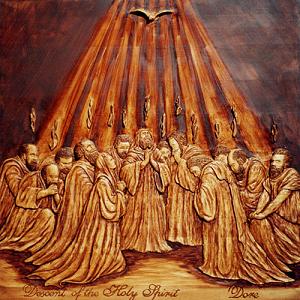
Like on the Day of Pentecost, the sign of the Holy Spirit being poured our is that these new believers speak in tongues and praise God.

Speaking in tongues or, as Paul calls it, praying in the Spirit, means surrendering our voice to the Holy Spirit for Him to use.

Praising God means using our voice , along with our mind, to focus on speaking good things about God.

Both of these together are signs of the powerful presence of the Holy Spirit.

Prayer

Come Holy Spirit and fill me again. May my heart and mind be totally filled with you, and my tongue devoted to our praise. Amen.

Lessons From The Lock Down

The so-called lock down in Australia has not been as draconian as in other places, at least not in law. The nightly scolding by politicians, though, keeps people in their place. And if they stray, then the police are always ready to hand out $1000+ fines.

I have learned some things about people and about myself during this time that I would not have expected.

  1. People give up their hard earned rights and freedoms with very little care. Who would have though a few months ago that we would willingly embrace the closing down of churches, pubs and restaurants? Freedom of association is a basic human right, yet we have surrendered that without any debate.
  2. Who would have thought that police would roam the streets, stopping people to ask them where they are going, and to send them back if they don’t have a reasonable excuse?
  3. I have seen disturbing signs of the contempt of the young towards the old that has come from the fact that many victims of the corona virus are elderly.
  4. No surprise, but I thought I wouldn’t see it in Australia. Politicians who take your rights away will not readily let go of their power. The “crisis” must go on longer than first expected. People will have to agitate to get their freedom back.

I have also learned some things about myself in this time. The chief thing among them is that I am not so nearly introverted as I thought.

Extroverts are people who find energy from being with other people, while introverts find energy in being alone. Extroverts like to party when they are down to help them forget, while introverts like to spend time alone to work things out and find energy to face life.

I have discovered that I love people, physically present people, people that you can touch and see their body language. Yes too much of that and I tire easily, but they are people that God loves and Jesus died for, and I love them too. I miss them.

Although I am a bit of a tech fan, and have always seen ways for computers and other devices to make life simpler, looking at people on a screen is no substitute for being in the room together. I love small groups partly because you can talk seriously with one another. But the camera and the screen put up a wall between people.

I miss worship. Yes I can worship God however and wherever I like. But corporate worship is something else. People have been live streaming their services, but that seems to me to be to worship what porn is to marriage. You can have all the same bits present but it misses the point. Worship is never about a good band and a preacher performing, while the rest of us watch on. Worship is about the gathered people of God, together expressing praise and adoration to the Lord. I don’t care what anybody says, you can’t do that by way of a screen, and whatever a live stream is it isn’t worship.

I don’t know how long this lock down will last, but I suspect that with declining deaths and declining new cases the pressure will be growing for politicians to wind back the restrictions.

As they do that we need to make sure that we end up with the full restorations of freedom and human rights.

Reflection on Acts 10:19-33

Scripture

“ So I sent for you at once, and it was good of you to come. Now we are all here, waiting before God to hear the message the Lord has given you.”

Observation

After seeing the vision, Peter is told by the Holy Spirit that three men have come to the house, and Peter is to go with them. He goes downstairs where the men explain why they have come.

The next day they leave for Caesarea. There, Cornelius has gathered his friends and relatives together to hear the message.

Peter explains his realisation that he should not call any person impure or unclean, despite the Jewish laws. Cornelius then recounts his experience of seeing the angel, and the message the angel gave him.

Application

After their respective experiences, Cornelius and Peter were both expecting God to do something powerful. Cornelius had even invited friends and relatives to hear Peter’s message, even though he did not know for sure what the message would be, or even if Peter would come.

Wouldn’t it be different if each Sunday in church everybody came with the sense of anticipation? We don’t know what the preacher is going to say, but we know that the Holy Spirit is leading him and it will be awesome!

As a pastor, I sometimes get my hopes up that God will do something this week. Sometimes He chooses to do visible healings and miracles; sometimes lives are changed by the Holy Spirit applying the message to people’s hearts.

I am sure that if we gather together with an expectation that God is going to do something, He will be more likely to act.

As I talk to people, they are already excited about getting together for worship after the lock down ends. I hope that the expectation is about meeting God as much as it is about meeting people.

This is the kind of expectation that God will use.

Prayer

Please help me Lord to grow in expectation that you will meet with me at any time and in any place, but especially when the church meets together. Amen.

Reflection on Acts 10:1-18

Scripture

But the voice spoke again, “Do not call anything unclean if God has made it clean.”

Observation

A devout, God- fearing man called Cornelius, a Gentile, has a vision in which he sees an angel. The angel tells him to send some men to Joppa to find Peter. As soon as the angel leaves, Cornelius sends some servants and a soldier.

As Cornelius’ messengers are approaching Joppa, Peter goes to the roof of the house where he is staying in order to pray. He falls into a trance and has a vision of a large sheet being lowered from heaven. The sheet has all kinds of animals on it, and a voice tells him to kill and eat. Peter refuses, saying that the animals are unclean. The voice rebukes Peter for calling unclean what God has called clean. The vision is repeated three times.

Application

I am often amazed at Peter’s boldness. In this passage he is not afraid to tell God that He is messed up with His command to eat unclean food.

The Lord had to make it clear to Peter that it was a new era now. God was working with the Gentiles, not just the Jews. It was time to adjust his thinking about what and who is clean, and what and who is unclean.

There are many christians who carry a similar, religious point of view. There are aspects of culture that they declare are sinful, even though the Bible is silent on the issue. Many have looked down on people who like contemporary music, dancing, playing cards, alcohol or whatever. They ask, “How can you be a christian and do that?”

Some aspects of our culture are misused, twisted by sin. But not all of them are.

As christians we must not fall into the trap of thinking that if I don’t like something, then it is not of the Lord; if one song is overly sexualised then it condemns a whole genre of music.

There are many things that God has declared to be good, which we might in our zeal to be holy, declare to be unclean.

Prayer

Lord, please help me to be slow to judge and quick to accept others. Help me to discern what you call clean or unclean, and to walk in humility with you. Amen.