The sermon for April 1st 2018 is now available on the New Life web-site.
In this sermon, which is baed on Isaiah 25:6-9, I talk about Jesus swallowing death.
Click here to listen in your broswer, here to download the mp3
It’s Easter Saturday (more accurately Holy Saturday), the space between the sorrow of Good Friday and the joy of Easter.
What was Jesus doing on Saturday?
Maybe we should start with the why of Easter Saturday. In theory Jesus could have resurrected any time after His heart stopped beating. “It is finished!” could have been followed with “Surprise!” as He got down from the cross in His new body.
In Jewish tradition, it was not possible to say that a person’s spirit had truly left their body until the third day after their death. Remember that they counted the day that something happened as the first day. So Jesus rose on the Sunday, the third day after His death.
The delay was for our benefit, so that we would know for sure that He had died on the cross, not merely stunned as some people try to make out. Jesus’ death was truly beyond doubt. Not too many people survived a crucifixion, which in Jesus’ case included a spear thrust through His side.
So the delay was for our benefit, that we would know that the death was real and the resurrection was real.
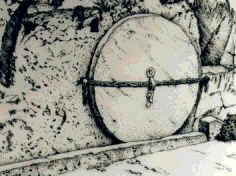
Jesus’ body remained in the tomb, as far as we know. The opening was sealed and guarded by soldiers in case someone stole the body. They remained there until the events of the resurrection on Sunday morning (see Matthew 28:1-6).
Jesus’ spirit presumably returned to the Father for some high fives and celebration at the completion of the great rescue plan.
In 1 Peter 3:19 we are told that after His death “He went and preached to the spirits in prison.” It is not clear who these spirits are or what He preached to them about or why this happened. But we do know that this particular event happened outside of the constraints of physical time.
Regardless, we do know that Jesus died on Good Friday at the hands of well trained and experienced executioners. We know that He was, by any measure, dead. When He died He took the sins of the world and put them to death also, lifting from us the burden of guilt.
He invites us all to live in resurrection life, being a part of His Kingdom for ever.


The news reports have been full of the cricket cheating scandal for a week now.
Many people have commented about the issue. The overwhelming response is disappointment and anger at the cricket team.
That’s the surprise for me. When we are daily bombarded with the poor behaviour of politicians, footballers, celebrities, and the banks why would we expect anything else?
We have abandoned any basis for morality with the rejection of christianity and the embrace of secular humanism. The overwhelming popular morality is “It’s OK if nobody gets hurt.”
Nobody got hurt with the ball tampering plot, so what’s wrong? Cricket Australia tried to avoid the “c” word- cheat.
Nobody got hurt when Barnaby Joyce traded in his wife for a younger model- except for his wife and daughters of course, but people move on.
In both cases some people have claimed that the original “sins” were compounded by lying and covering up. Really? We get upset about lies in a post-truth age? Sandpaper or yellow tape, really who cares?
We do care, because deep down we know that there are objective standards of moral behaviour, right and wrong. We might give ourselves a free pass with our own faults, but we expect better of our “betters”.
God has set some rules that are universally applicable. Don’t cheat. Don’t lie. Don’t steal. Don’t murder. Don’t commit adultery.
On the eve of Good Friday some commentators are starting to come around to the idea of forgiveness and redemption. Real redemption only comes from the cross of Christ and only after we acknowledge our own sin.
There’s the rub. We want forgiveness without repentance from sins we don’t acknowledge and a saviour we refuse to believe in. We think others should set a better example without thinking the same should be true of ourselves.
So after a four day long weekend we will be ready for next week’s scandal and asking ourselves again, “How can this be happening?”


I was talking to one of my parishioners the other day about daily Bible reading. She said to me, “I find it so hard because my first reaction when I start to read is, I’ve read that before and I know what’s in it.”
This is a real problem for many people, especially christians who have been diligent for many years in reading the Word. At times I have (still do, occasionally) fallen into this trap.
So how do we overcome it?
I think the key is to approach our devotional time with expectation. We must expect that the Holy Spirit will reveal to us something that we need to know. To do that, we must slow down the process, slow our reading, become more meditative.
Here are some keys to reading the Bible more effectively.
I often use the SOAP method pioneered by Wayne Cordeiro. Most of my Reflections published on my blog are in this format. Remember that this is a process for structuring your thoughts and writing in your journal.
This is a really simple but profound way of reading the Bible. It will bring your devotions to life.
The key to it all is that you are spending time in the presence of the Living God. It’s not about gaining knowledge or self-improvement. It’s about relationship with God.