
The sermon for 1st October 2017 is now available on the New Life web-site.
In this sermon, which is based on Matthew 21:23-32, I talk about Authority, Religion and Grace.

The unrelenting push for so-called renewable energy to replace coal in order to save the planet has its collateral damage. If you push up the price of electricity to make renewables competitive and decrease overall usage then people are going to find that alternatives become economically feasible- like ditching grid power for diesel generators. That’s got to be a win for the environment.
Jo Nova writes:
Some South Australian farmers going fully diesel for electricity
Maybe they’ll get one like this one?
Circa 1934.*
Green management of the South Australian grid scores another big success for the environment:
The Manns’ electricity costs have more than doubled in five years, from about $200,000 per annum to $500,000.
Due to the high prices, the family will this summer switch to diesel power to run their 116-stand rotary dairy and 14 irrigation centre pivots at Wye in the lower south east of South Australia.
The Manns are among Australia’s top 10 dairy producers, in terms of volume, milking up to 2300 cows and producing 19-21 million litres annually.
If only South Australia had more “cheap” solar and wind power, their electricity might be as low cost as the coal-fired Victorians:
Their move comes as South Australia’s dairy lobby has calculated the state’s dairy farmers paid about 40 per cent more for power than their Victorian neighbours last season.
The Mann’s are definitely going diesel this summer, but may set up a mixed solar-diesel-battery plan in the long run:
“Its embryonic, but information we have is saying we could get a payback within five years of (setting up a system on-farm) not connected to the grid, a combination of solar, diesel and batteries.
Imagine how expensive your electricity has to be for a small diesel generator to be cheaper than mass produced coal power? This could be the first time in 130 years that people connected to coal turbines switch off to use their own small fossil fueled generators because it’s cheaper.
Another world first for South Australia. And possibly a mark of the grid saturation point of intermittent renewables.
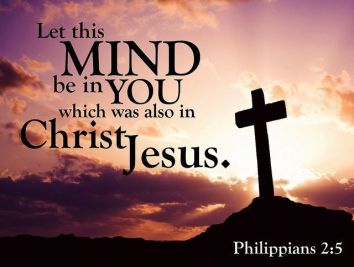
Passage: https://www.biblegateway.com/passage/?search=Philippians+2:1-13
Scripture
Do nothing from selfish ambition or conceit, but in humility consider others as better than yourselves.
Observation
If we have received any blessing at all from Christ, we should be of one mind, sharing His love. Rather than working from selfish ambition or conceit, we should be humble, considering other as better than ourselves.
We should have the mind of Christ Jesus who, though He was God, did not cling to that status. He humbled Himself, being a slave and obeying the Father even to the point of death on a cross, Therefore God exalted him, raising Him to the highest place of adoration.
Application
The world is constantly telling us to put ourselves out there, to dream big and strive to make those dreams come true.
The world is all about selfish ambition and achieving our own goals. We believe in equality but push ourselves forward at every opportunity.
The way of Christ is about surrendering ourselves to Him. Just as Christ humbled Himself to the point of a shameful death, we must humble ourselves and obey even to the point of death if necessary.
My life is no longer my own to do with as I please. It is all in the hands of God.
I must surrender all pride and conceit to God, turning away from that way of thinking. Now I must learn to consider others as better than myself.
The heart of a christian is the heart of a servant, considering the needs of others ahead of my own needs.
Prayer
Lord Jesus, teach me how to walk in your ways, surrendering all conceit and selfish ambition to you. Amen.

Passage: https://www.biblegateway.com/passage/?search=Exodus+17.1-7
Scripture
Moses named the place Massah (which means “test”) and Meribah (which means “arguing”) because the people of Israel argued with Moses and tested the Lord by saying, “Is the Lord here with us or not?”
Observation
At the Lord’s command the people move from place to place, eventually stopping at Rephidim. There is no water, so the people demand that Moses do something.
Moses cries out to the Lord who orders him to take his staff and strike a rock at Mount Sinai. When Moses does this, water comes gushing out of the rock.
Application
When we are going through difficult times it can be easy to lose sight of God. The Israelites grumbled because they were thirsty. In a sense that is understandable. On the other hand, they were receiving food twice a day at the hand of the Lord. Why would the God who provided food this way not give them water also.
We can grumble and complain against God from a place of faith. It is OK to cry out to God when we don’t understand what is happening. We also need to recognise that Scripture tells us to rejoice always, even in suffering.
There comes a point when we may cross the line from faith to unbelief, from lament to testing. I think the point is where we start to doubt that God is with us.
The Israelites tested God by saying, “Is the Lord really here or not?” They had passed from doubting God’s goodness to doubting God’s presence, despite a pillar of fire that travelled with them.
In a time of grief or despair we might wonder why things happen the way they do. We might wonder where God is hiding in the mess we are living through.
We need to be careful, though, of the temptation to doubt that God is here with us. That is the place where our unbelief leads us away from Jesus.
Prayer
Lord it is easy to believe when every day we see prayers answered. I ask for grace to believe when prayers seem to be rejected and when all I see around me is dark. Please help me to stay focused on you. Amen.
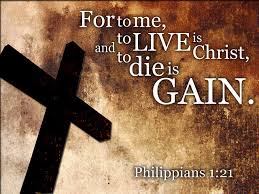
Passage: https://www.biblegateway.com/passage/?search=Philippians+1:21-30
Scripture
For to me, living is Christ and dying is gain.
Observation
For Christians, continuing to live means fruitful labour in the lordship of Christ, but dying means we get to be with Christ. Paul was aware of this dilemma. He wanted to be with Christ but also wanted to help the Philippians grow in Christ.
The Philippians are encouraged to live in a manner worthy of the gospel. They should stand firm against their opponents. Their steadfastness is evidence of their salvation but also of their foes’ destruction.
Believing in Christ and suffering for Him are both privileges from God.
Application
Many Christians live with the values of the world not of the gospel. We get so caught up in the flesh that we lose sight of the spiritual.
This earthly life, with all of its joys and griefs and ups and downs, is just the beginning of our life. We will reign with Christ for ever.
Paul was torn between living for the love of the people he oversaw and love for eternal life with Christ,
We experience fellowship with Christ in this life, but how much more shall we be with Him in the next life. To live is Christ but to die is gain.
Death is not the end of life for the believer. It is a new birth, a transition to something even better.
Always our focus must be on the long-term goal of eternity as well as on the present.
This is the ultimate win- win situation. We live well in this life and get to do it for ever. We have fellowship with Christ now, as a preparation for even better fellowship with Him in eternity.
Prayer
Father please forgive me for the times I lose sight of who I am in Christ. Help me to live every day as preparation for the life to come. Amen.

Climate scientists have now admitted they were wrong about man-made global warming and I don’t know whether to laugh or cry.
Not very wrong, you understand, just a bit wrong. Apparently the planet is still going to hell in a carbon-lined hand-cart, just more slowly.
A study in the journal Nature Geoscience says the world has warmed more slowly than had been forecast by computer models, which were “on the hot side” and overstated the impact of emissions. You don’t say.
Global average temperature has risen by about 0.9C since pre-industrial times but there was a slowdown in the rate of warming for 15 years before 2014.
Er, would that be the slowdown that was authoritatively said not to have happened because the computer models all said it was impossible for it to happen, because everyone knew that rising CO2 levels inescapably caused global temperatures to rise and anyone who said the evidence of the slowdown showed the entire theory was bunkum and hogwash was a “denier”?
Yes, it would.
“Myles Allen, professor of geosystem science at the University of Oxford and another author, said: ‘We haven’t seen that rapid acceleration in warming after 2000 that we see in the models. We haven’t seen that in the observations.’
“He added that the group of about a dozen computer models, produced by government institutes and universities around the world, had been assembled a decade ago ‘so it’s not that surprising that it’s starting to divert a little bit from observations’. Too many of the models used ‘were on the hot side’, meaning they forecast too much warming.”
Nevertheless, according to the study rapid reductions in emissions will still be required – but the world now has more time to make the changes.
But if the computer models were wrong, on what evidence do these scientists base any calculation of what reductions in emissions will be required? On what basis do they still maintain there is a need for any reductions at all?
According to Myles Allen, the group of about a dozen computer models, produced by government institutes and universities around the world, had been assembled a decade ago “so it’s not that surprising that it’s starting to divert a little bit from observations”.
Oh really? Why isn’t it surprising? The theory hasn’t changed: you know, the theory – sorry, not a theory but the unchallengeable and incontrovertible and inconvenient truth – that rising CO2 levels cause a rise in global temperature.
So what exactly was it that had been fed into the computer models a decade ago that caused them to fail to predict that rising CO2 levels would not continue to cause such a rise in global temperature – or to be more precise, that they would cause a slowdown for a few years? Does the theory itself have a break for R&R? Because such a slowdown was certainly not included in the catechism of anthropogenic global warming theory.
Well, it was just those darned pesky computers that screwed up, wasn’t it, and led those scientists astray. Not the scientists’ fault at all, was it.
The truth is rather different. As many of us have been saying since AGW theory was first invented in 1988, the idea that computer modelling could ever predict something as stupendously complex as climate change was always scientifically illiterate. Computers are only as good as the information that is fed into them. If you feed rubbish in, you get rubbish out. Fed inadequate information designed to prove AGW theory, the computers disgorged predictions that proved AGW theory.
The whole thing was a scam from start to finish. Will these Potemkin scientists ever admit that? Even now the Met Office, among others, is still trying to spin the data, as David Whitehouse reports here.
For the past three decades, AGW zealots have insisted that “the science is settled” (itself another piece of anti-science illiteracy). They not only denounced as “deniers” those who actually looked at the evidence and questioned the theory but also sought to ruin their reputations and careers.
Climate-related science has been corrupted by ideologically-bent grant-funding only given to projects designed to prove the theory; government policies have been catastrophically skewed to undermine energy production and screw the poor through fuel bills inflated to meet the costs dumped on energy production through an orthodoxy no-one in government had the intelligence or cojones to fight.
We have been the victims of junk science. Maybe the highly limited admission of error in this study will help blow down the whole rotten facade of pseudo-science and finally expose this charlatanry for the ideological con-trick that it is.

Let me cut to the quick: if you dare to question the radical homosexual agenda, or if you dare to publicly defend what the institution of marriage has always been about, chances are very good that you can lose your job, be fined, or face other heavy-handed penalties for your views.
All over the West today free speech, religious freedom, and the democratic process itself are under direct attack. And overwhelmingly those stomping on our freedoms are the activists from the homosexual lobby and their many and various supporters.
The way things are going, I really need to write a book featuring all those who lost their jobs for daring to stand up for heterosexual marriage. Oh wait – I already did this. The first chapter of my 2014 book Dangerous Relations features not one, not two, but 165 cases of pink persecution.
They come from a 34-month period (January 2011 to October 2013) and feature just some of the cases of people losing their freedoms, being kicked out of a job, fined, or even jailed – all for the “crime” of insisting on the usual understanding of marriage, and refusing to bow down to the homosexual juggernaut.
 And these were certainly not all of the cases that took place during this period. And of course not every case of this kind gets a wide public hearing, as the ones I reported on did. Thus I think it is safe to say that we now have many hundreds – if not thousands – of occurrences of this happening.
Not a day goes by when some poor soul who thought living in a free democratic society meant he could speak out on things that matter – including the historic understanding of marriage – has found himself on the receiving end of rainbow repression.
And in some places things are now this bad, but homosexual marriage has not even been legalised yet. Just imagine how much worse things will get if and when it is! Australia is one such nation, where the rainbow activists have been on a search and destroy mission, targeting anyone who dares to disagree with their radical agenda.
I have heaps of examples of this already documented on my site. Well, it is a new day, so we of course have plenty of new examples to include in this ever-expanding list of victims of the pink mafia. Let me offer just three more of them.
The first involves a small business owner in Canberra who has just fired one of her staff members. Was he caught stealing company goods? Did he seek to molest a customer? Did he trash the joint in a drunken rage? Nope, he did something far, far worse: he actually said he affirms heterosexual marriage.
Yes that is now such an horrific offence that you can lose your job over it. Try telling this guy nothing changes when we seek to redefine marriage. It has not even been legally changed here yet and we already have people losing their jobs! Wakey wakey folks!
The shop owner, Madlin Sims, wrote this on her FB page (I slightly edited one word):
Today I fired a staff member who made it public knowledge that they feel “it’s okay to vote no”.
Advertising your desire to vote no for SSM is, in my eyes, hate speech.
Voting no is homophobic. Advertising your homophobia is hate speech. As a business owner I can’t have somebody who publicly represents my business posting hate speech online.
1. Its bad for business
2. I don’t like sh*t morals
3. I don’t want homophobes working for me, especially in an environment with children.
It’s not okay to vote no. It’s not okay to be homophobic. This isn’t a matter of opinion or even religion. It’s a matter of the love & livelihood of real human beings. Freedom of speech is there for a reason and so are consequences.
Wow, did you get that? To support traditional marriage is “hate speech”! Affirming male-female marriage is “sh*t” morals! If you say marriage is about one man and one woman you are being “homophobic”! And the real howler is this: “It’s a matter of the love & livelihood of real human beings.”
Um yeah, try telling this real human being who just got fired what this love is all about, and how it impacts one’s livelihood! Usually the leftists are the first to scream about unfair dismissals and authoritarian bosses running roughshod over workers’ rights. Um, just where are all these lefties now? As Martyn Iles pointed out:
This woman has sacked a contractor for using an “it’s ok to vote no” frame on Facebook. She has a problem, though…
1) Discrimination Act 1991 (ACT) s13 — “It is unlawful for a principal to discriminate against a contract worker… (b) by not allowing the contract worker to work or continue to work”
2) Discrimination Act 1991 (ACT) s7(1)(o) — “political conviction” is a protected attribute.
It appears that what she has done is plain illegal.
My second case is not much better. One person actually rented a plane to sky write the words “Vote No”. For daring to do that all hell has broken out. They are now after his head, and he is now likely hiding in fear of his life! One news item puts it this way:
The electoral watchdog has received complaints about the “Vote No” skywriting over Sydney on the weekend not being properly authorised. A grassroots campaigner against same-sex marriage commissioned a pilot to write “Vote No””Vote No” in the sky four times on Sunday, a day after the anti same-sex marriage campaign launched nationally.
The skywriting, which was not organised by the key “no” case group Coalition for Marriage, attracted much discussion on social media, and the website from which it was crowdfunded was inundated with comments. The Australian Electoral Commission has received a number of complaints regarding the skywriting.
But get a load of all the love and tolerance he is now getting:
Social media users quickly began circulating the company’s contact information, abusing them for taking on the job. One message said the business owner is an “a***hole”. Another post said it was “probably the end of your business”.
One text message to the business owner read “you really are a sh** human. You’re definitely the biggest piece of sh** in Australia today. Probably tomorrow too. Hope you’re proud of yourself. Don’t be surprised by the hate coming for you. Titt for tatt, it’s only fair, right? You stupid, ignorant, remorseless, pathetic, old, LOSER”.
My final case involves a church that had the audacity to actually affirm two-thousand years of Christian social teaching on this issue:
A billboard outside a Brisbane church has sparked outrage ahead of the same-sex marriage vote. The Bellbowrie Community Church posted the sign: “God designed marriage between a man & a woman”. It was condemned on social media, and critics took to the church’s Facebook page to object.
“Hopefully there are churches in the area that cater to ALL Christians and not just the ones who fit in the narrow minded view of this “Church of God”. I’m sure Christ would be very disappointed in your view of Christianity,” one post said. Others started taking to the church’s review section and posting one-star reviews.
“A closed-minded group which overtly discriminates against members of our valued community and their (very reasonable) quest for marriage equality,” one woman wrote. Cartoons of same sex couples and sailors waving rainbow flags were posted in the comments under unrelated posts by the church.
So let me get this straight: now churches cannot even state publicly what the Christian view of marriage is without the haters and frenzied mobs coming out in force? I repeat: if things are this bad now, can you imagine how much worse things will get if faux marriage is legalised here?
And yet the other side keeps pushing the same old mantra that nothing changes when we change marriage. There will be no negative repercussions, they keep insisting. They are lying through their teeth and they know it. As just one of a kazillion examples, just yesterday lesbian activist and sister of Tony Abbott Christine Forster said the same thing.
She claimed on Sky News that homosexual marriage would have zero impact on free speech. She claimed that “there is nothing about changing same-sex marriage laws to allow same-sex couples to marry that will have any impact whatsoever on people’s ability to speak freely about their religion and their beliefs.”
Sure Christine, sure. Try telling that to the guy who just lost his job, or the skywriter facing the wrath of the militants, of the Queensland church subjected to so much hate and abuse. Try telling them their ability to express their beliefs – whether religious or not – will not be put at risk.
www.news.com.au/finance/work/at-work/its-not-okay-to-be-homophobic-canberra-contractor-sacked-for-vote-no-facebook-post/news-story/4ed027f47b5810e87036450054a8b6dd
au.news.yahoo.com/a/37132053/same-sex-marriage-no-case-skywriting-triggers-complaints/
www.couriermail.com.au/questnews/southwest/same-sex-marriage-supporters-critical-of-brisbane-church-billboard/news-story/240c1a37342c85ee0d50ecea0e6f2513?nk=6b87ac2934e63127b3027c05d2a15a8e-1505782321
Passage: https://www.biblegateway.com/passage/?search=Exodus+16.1-15
Scripture
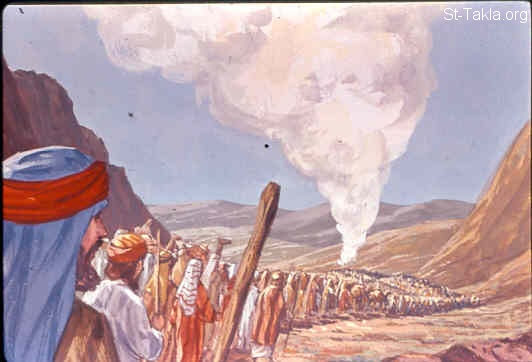
As Aaron spoke to the whole community of Israel, they looked out to the wilderness. There they could see the awesome glory of the Lord in the cloud.
Observation
The community of Israel journeys into the wilderness of Sin. The people begin to complain against Moses and Aaron bringing them into the wilderness to starve. They make the ridiculous complaint that in Egypt they always had enough and sat around eating all day.
The Lord promises Moses that He will provide meat every evening and bread each morning. So each evening vast numbers of quails fly into the camp, and each morning a flaky substance which they call manna appears on the ground.
Application
Amidst the complaining and grizzling of the people in the wilderness, they could see the glory of God in the cloud.
Their fear and unbelief prevented them trusting the God who was gloriously present with them, shining from the cloud at the edge of the camp.
The issue was not that they doubted God’s presence- He was clearly visible to them. Nor was the issue that God was able to provide for them- they had experienced some awesome miracles in the previous few weeks.
The issue was this. Did God care enough to provide for their needs? Could they trust the Lord to bring them through?
This issue of the Lord’s love and our trust in Him is at the heart of all doubt, and indeed of all sin.
We don’t have the cloud of glory “out there.” We have the Holy Spirit in us, a far greater blessing than the children of Israel experienced.
This same question remains for us as we pass through our own wilderness experiences. Can I trust God in this wilderness?
Prayer
Lord I believe, help me in my unbelief. Help me to trust you in the wilderness times even more than in the good times. Amen.


