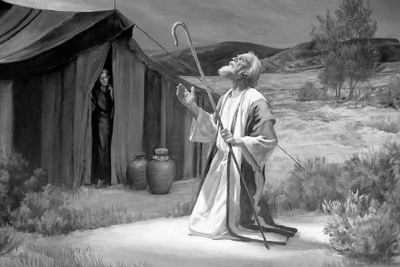
Reflection on Exodus 20:1-17

Scripture

“I am the Lord your God who brought you out of Egypt, out of the land of slavery.”

Observation

Ten “word “ or commandments for the people of God:

1. No other gods

2. Do not worship idols

3. Do not misuse the name of the Lord

4. Do not work on the Sabbath

5. Honour your parents

6. Do not murder

7. Do not commit adultery

8. Do not steal

9. Do not give false testimony

10. Do not covet

Application

Many many things have been written and spoken about these simple commandments. Together they are a minimum standard of behaviour for a person to obey God and live His way.

Of course, Jesus takes this much further, dealing with the thoughts that precede the action.

Some people bridle at the suggestion that there are standards of behaviour for christians. “We are under grace, not law,” they say. This is true, but the requirements of responding to grace are far more stringent that mere law can dictate.

Jesus bought me out of slavery to sin and death. That says to me that I am His slave now and that means He has the right to tell me how to live.

Prayer

Lord please help me to honour you with my mind, my body, my thoughts and my words. Amen.

Half of Australia’s Warming Due to “Adjustments”

The duplicity of the BOM in its historic temperature adjustments is documented in this article from Jo Nova:

Historic documents show half of Australia’s warming trend is due to “adjustments”

Adjustments that cool historic temperatures have almost doubled Australia’s rate of warming.

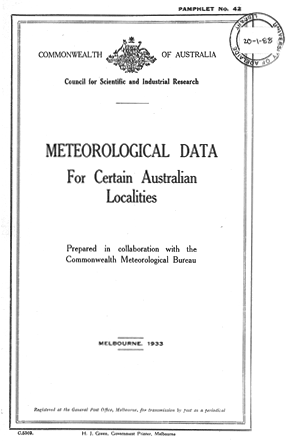
CSIR published “Meteorological Data” 1855 – 1931

There was a time back in 1933 when the CSIRO was called CSIR and meteorologists figured that with 74 years of weather data on Australia, they really ought to publish a serious document collating all the monthly averages at hundreds of weather stations around Australia. Little did they know that years later, despite their best efforts, much of the same data would be forgotten and unused or would be adjusted, decades after the fact, and sometimes by as much as one or two degrees. Twenty years later The Commonwealth Bureau of Census and Statistics would publish an Official Year Book of Australia which included the mean temperature readings from 1911 to 1940 at 44 locations.

Chris Gillham has spent months poring over both these historic datasets, as well as the BoM’s Climate Data Online (CDO) which has the recent temperatures at these old stations. He also compares these old records to the new versions in the BOM’s all new, all marvelous, best quality ACORN dataset. He has published all the results and tables comparing CDO, CSIR and Year Book versions.

He analyzes them in many ways – sometimes by looking at small subsets or large groups of the 226 CSIR stations. But it doesn’t much matter which way the data is grouped, the results always show that the historic records had warmer average temperatures before they were adjusted and put into the modern ACORN dataset. The adjustments cool historic averages by around 0.4 degrees, which sounds small, but the entire extent of a century of warming is only 0.9 degrees C. So the adjustments themselves are the source of almost half of the warming trend.

The big question then is whether the adjustments are necessary. If the old measurements were accurate as is, Australia has only warmed by half a degree. In the 44 stations listed in the Year Book from 1911-1940, the maxima at the same sites is now about half a degree warmer in the new millenia. The minima are about the same.

Remember that these sites from 1911-1940 were all recorded with modern Stevenson Screen equipment.  Furthermore, since that era the biggest change in those sites has been from the Urban Heat Island (UHI) effect as the towns and cities grew up around the sites. In some places this effect may already have been warming those thermometers in the first half of the last century, but in others UHI can make 5 to 7 degrees difference.

If Australian thermometers are recording half a degree higher than they were 70 – 100 years ago, we have to ask how much of that warming is the UHI effect? Common sense would suggest that if these older stations need any correction, it should be upward rather than downward to compensate for the modern increase in concrete, buildings and roads. Alternatively, to compare old readings in unpopulated areas with modern ones, we would think the modern temperatures should be adjusted down, rather than the older ones.

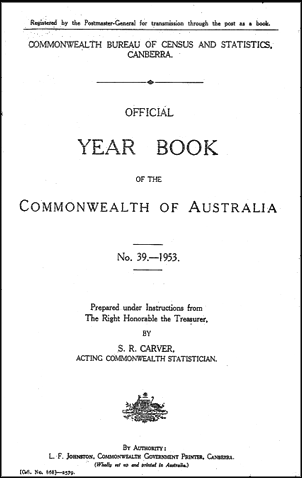
The Official Year Book 1953

Chris Gillham discusses the potential size of the UHI changes:

“In 2012 and 2013 it was anticipated that UHI warming in south-eastern Australia will continue to intensify by approximately 1C per decade over and above that caused by global warming (Voogt 2002), with tests in 1992 showing a UHI influence up to 7.2C between the Melbourne CBD and rural areas. [PDF]

Smaller but significant UHI influences were found in regional towns, with a 1994 test observing a UHI intensity up to 5.4C between the centre of a Victorian town and its rural outskirts.”  [PDF]


Full article here

Reflection on Mark 8:31-38

Scripture

“If you try to hang on to your life, you will lose it. But if you give up your life for the sake of the Good News, you will save it.”

Observation
Jesus begins to tell the disciples that He must suffer many things, that He will be put to death, but He will rise from the dead three days later.

Peter takes Jesus aside and rebukes Him for saying these things. Jesus tells him, “Get away from me Satan!”

Jesus then tells the crowd that to follow Him they must turn from their own ways, take up the cross and follow Him. To try to save your life is to lose it, but to give up your life for the sake of the gospel is to save it.

Application
Jesus turns all of our human viewpoints on their heads. The way up is to go down, the way to life is to surrender our life to Him.

Following Jesus is not about “Your best life now”. It is about His best life in us.

For many christians, following Jesus means literally laying down their lives for the gospel. For all christians it should mean becoming living sacrifices, letting Jesus’ plan for our lives take precedence over our own selfish ambitions.

Prayer
Lord Jesus I take up my cross to follow you today. Take all that I am, take my plans and be glorified in me as I surrender to you. Amen.

Reflection on Romans 4:13-25

Scripture

He was delivered over to death for our sins and was raised to life for our justification

Observation

It wasn’t the law that gave Abraham the promise but the righteousness of faith. It is faith in the promise of God that has value not the law itself.

Abraham is our father in the faith in the sight of God. Abraham believed in hope and it was that unwavering faith that brought the promise to fruition.

Abraham’s faith was credited to him as righteousness, but those words are for us also, for when we believe in Christ’s death and resurrection God makes us righteous.

Application

Faith is not just about abstract belief in God. Abraham trusted God’s promise about his heritage, the destiny of descendants yet to come. He didn’t just believe a promise, he bet his whole family’s future on God’s faithfulness.

True faith is an all or nothing venture. No safety nets or Plan B.

Salvation is about trusting that God is who He says He is. We come to Him with no goodness of our own and we trust Him to show us mercy because of Christ.

We need also to live by that kind of faith in our daily life. We trust God for a ministry that might one day emerge, for provision for a need that is bigger than our resources.

God is faithful and when we trust Him, He credits it to us as righteousness.

Prayer

No safety nets Lord! I put my trust in you today. Amen

One Person Makes A Difference

You could be the “one person” who makes a difference. Although this article is written for pastors, it applies to every single follower of Jesus.

From Focus on the Family

ONE PASTOR MAKES ALL THE DIFFERENCE

Pastor Lee holding a babyBy Jim Daly

Picture this scene: it is the middle of the night, and the doorbell rings. A weary man stumbles to the door and opens it. There is no one standing on the front step. But when he looks down, he sees a small bundle in a cardboard box. Instinctively, he brings it inside and opens it. Wrapped inside a blanket is a tiny newborn baby, almost frozen by the mid-December cold.

This is the scenario that played out in a poor urban neighborhood of Seoul, South Korea several years ago—on the doorstep of a pastor named Lee Jong-rak. The baby, which suffered from physical disabilities, had been surrendered by a desperate unwed mother, under the cover of night, in the hope that the child would find a safe refuge in Pastor Lee’s home.

As gripping as this story is, it actually begins many years earlier, with the birth of Pastor Lee’s own son, Eun-man. The child was born with crippling cerebral palsy, leaving his body deformed and making him dependent upon his parents for constant care. His condition was so serious that Pastor Lee, along with his wife and their young daughter, essentially spent the first 14 years of Eun-man’s life in the hospital with him, waiting for the day when they could take him home.

During those years in the hospital, in addition to caring for Eun-man, Pastor Lee reached out to many other physically challenged kids. Over time, he took in several orphans from the hospital. By the time he was able to move Eun-man and the rest of his growing family back home, his reputation as a loving and compassionate shepherd was firmly established. It was this reputation that compelled a frightened young mother to surrender her baby on his front step on that cold December night.

With the problem of child abandonment growing throughout Seoul (on average, more than 200 babies are abandoned on the streets there every year), Pastor Lee knew something had to be done. So he installed a “baby box” on the side of his home as a way for desperate young mothers to anonymously and safely surrender their children. A sign posted above the box bears Psalm 27:10: “For my father and mother have forsaken me, but the Lord will take me in.” Since installing the box in 2009, more than 600 babies have been surrendered into Pastor Lee’s care.

Can you relate to Pastor Lee’s story? As a pastor, you provide that same level of love and care. Your circumstances might look different, but you nevertheless invest in the lives of those around you with the same spirit of Christ-like love.

Like Pastor Lee, you’ve probably received one of those midnight knocks on your front door, or maybe a phone call or a text, from someone in crisis. Perhaps the issue isn’t an abandoned baby. It might be someone who has just discovered their spouse is having an affair, or who has lost their job, or been diagnosed with cancer, or experienced the sudden death of a loved one.

And like Pastor Lee, you have challenges of your own at home. Maybe not a child with cerebral palsy, but challenges nonetheless—things that require your love and time and attention, and that have the potential to drain your already dwindling reserves of energy. Even so, when a member of your congregation has a need, you make time, you make room. You sacrifice.

As a pastor, you are available—to care, to admonish, to shepherd, to teach, to listen. This is a gift to your flock and a powerful example to a watching world of authentic, Christ-like love and service. There are likely days when you feel overlooked and unappreciated, but please know that we here at Focus are praying for you as you minister the love of Christ in your community. Thank you! May we never take you and your work for granted.

If you want to learn more about Pastor Lee, I hope you and your congregation will make plans to attend The Drop Box, Focus on the Family’s new documentary film appearing in movie theaters nationwide for three nights only, March 3, 4, and 5. The power of this story is such that the director of The Drop Box, Brian Ivie, actually committed his life to Christ during the making of the film!

Watch this video clip to get a behind-the-scenes glimpse of how we plan to share Pastor Lee’s story: http://youtu.be/TA-G9kQMzJY.

For theaters and showtimes, as well as resources to help you promote this important movie at your church, visit www.TheDropBoxFilm.com.

Reflection on Genesis 17:1-16

Scripture

Abram fell face down and God said to him, “As for me, this is my covenant with you: You will be the father of many nations.”

Observation

When Abram is ninety-nine years old, the Lord appears to him with a covenant. The promise is that the Lord will give Abram many descendants- he will be the father of many nations.

God will not just be Abram’s God, but the God of all this descendants. He will give Canaan as an everlasting possession to Abram and his descendants.

The sign of faithfulness to the covenant is that Abram and every male descendant, including slaves bought from others or born in his household, are to be circumcised.

Application

It seemed impossible to Abram that at the age of ninety-nine years, and his wife Sarai being well past child bearing, he could become a father of many nations.

Abram is thinking Ishmael, but the Lord has bigger plans than Abram can imagine.

This is always true for all of us. We see with limited vision, but God sees unlimited potential.

When we walk in humble obedience to our Father, the seemingly impossible becomes real.

Prayer

Father, you are the God of the impossible. Please let your miracle breakthrough come into my situation. Amen

Egyptian Christians Respond To ISIS Brutality

From Christianity Today comes this awesome account of how Christians and Muslims are reacting to the murder of 21 christians by ISIS.

How Libya's Martyrs Are Witnessing to Egypt

Image: Bible Society of Egypt
Covers of the English and Arabic tracts.

Undaunted by the slaughter of 21 Christians in Libya, the director of the Bible Society of Egypt saw a golden gospel opportunity.

“We must have a Scripture tract ready to distribute to the nation as soon as possible,” Ramez Atallah told his staff the evening an ISIS-linked group released its gruesome propaganda video. Less than 36 hours later, Two Rows by the Seawas sent to the printer.

One week later, 1.65 million copies have been distributed in the Bible Society’s largest campaign ever. It eclipses even the 1 million tracts distributed after the 2012 death of Shenouda, the Coptic “Pope of the Bible.” [A full English translation is posted at bottom.]

Arabic tract (outside)Image: Bible Society of Egypt

Arabic tract (outside)

The tract contains biblical quotations about the promise of blessing amid suffering, alongside a poignant poem in colloquial Arabic:

Who fears the other?
The row in orange, watching paradise open?
Or the row in black, with minds evil and broken?

“The design is meant so that it can be given to any Egyptian without causing offense,” said Atallah. “To comfort the mourning and challenge people to commit to Christ.”

The Bible Society distributed the tract through Egypt’s churches, but one congregation went a step further.

Poster at Isaaf Evangelical ChurchImage: Jayson Casper

Poster at Isaaf Evangelical Church

Isaaf Evangelical Church, located on one of downtown Cairo’s busiest streets, hung a poster on its wall at eye-level with pedestrians. “We learn from what the Messiah has said,” it read over the background of an Egyptian flag. “‘Love your enemies, do good to those who hate you….’”

Pastor Francis Fahim said the poster was meant to express comfort to all Egyptians, Muslim and Christian.

As CT reported on Thursday, the beheadings by the Islamic State in Libya have resulted in unprecedented sympathy for Egypt’s Christians, who are increasingly finding common identity across denominational lines. The martyrdoms have also allowed Copts a platform to witness to the realities of their faith, as they publicly forgave the terrorists.

Full story here

BOM Caught Out Hyping Results Again

Cyclone Marcie was a terrible storm. It has been reported as “Cat-5” which is the top of the cyclone/ hurricane scale.

The devastation, though widespread has not been as severe as you might have been expected.

The BOM was forecasting that the cyclone would become Cat-5 and of course the media ran with that, but in the event, as far as we can measure these things it made landfall as a Cat-3.

So it the BOM doing to cyclones what it has been doing to temperature records? Are they being re-categorised to march the global warming mantra of “more extreme weather”?

Of course if we believe that Rockhampton and Yeppoon survived a Cat-5 and it was only really a Cat-3 will that lead to relaxed building standards and complacency that could be fatal when a real Cat-5 storm comes.

Sigh! I used to be a real fan of science untll it became just another propaganda vehicle.

From Jo Nova:

Category Five storms aren’t what they used to be

The facts on Cyclone Maria: the top sustained wind speed was 156 km and the strongest gust 208 km/hr. These were recorded on Middle Percy Island in the direct path before it hit land and apparently rapidly slowed.  The minimum pressure recorded after landfall was 975Hpa. BOM and the media reported a “Cat-5″ cyclone with winds of 295 km/hr. To qualify as a Cat 5, windspeeds need be over 280km/hr. The UN GDACS alerts page estimated the cyclone as a Cat 3.

The damage toll so far is no deaths (the most important thing), but 1,500 houses were damaged and 100 families left homeless. It was a compact storm, meaning windspeeds drop away quickly with every kilometer from the eye, so the maps and locations of the storm and the instruments matter. See the maps below — the eye did pass over some met-sites, but made landfall on an unpopulated beach with no wind instruments. It slowed quickly thereafter. The 295 km/hr wind speed was repeated on media all over the world, but how was it measured? Not with any anemometer apparently — it was modeled. If the BOM is describing a Cat 2 or 3 as a “Cat 5″, that’s a pretty serious allegation. Is the weather bureau “homogenising” wind speeds between stations?

What will happen when Australians living in cyclone areas have to prepare for real Cat 5s? How much respect will Australians have for the BOM (and the ABC) if they find out that supposedly dispassionate and impartial scientists have been hyping weather events to score political points? Will the BOM issue any clarifications and corrections?

What does a Cat 5 mean anymore?

The headlines are still calling Marcia a “Cat 5″ cyclone three days later. But today there are many questions about that, and very different debates have broken out on the old media and the new. On the mainstream media, Premier Annastacia Palaszczuk is already defending the BOM after the Marcia “surprise”. But she is talking about the sudden escalation of a Cat 1 or 2 up to a 5, and whether the BOM gave residents enough warning. On the Internet people are asking why it was called a Cat 5. As Jennifer Marohasy points out, the top speeds recorded showed the cyclone was a Category 3. “Middle Percy” was under the path, and out to sea.

There is a weather station on Middle Percy, and it recorded a top wind speed of 156 km/h, the strongest gust was 208 km/h, and the lowest central pressure was 972 hPa. This raw observational data is available at the Bureau’s website and indicates a category 3 cyclone.

As commenters unmentionable and Ken recorded here, none of the observed wind-speeds came remotely close to being Cat 5. By strange coincidence, two guest authors here, Ken Stewart and TonyfromOz, live north of Rockhampton and both “walked in the eye” last Friday. I’ve spoken to both this morning, and fortunately their houses and families are OK, though still without electricity.

The US Navy’s Joint Typhoon Warning Centre was tracking the cyclone and, like me, noted the surface observations from Middle Percy Island. The US Navy had been estimating wind speeds based on the Dvorak modelling method. This method is considered much less reliable than aircraft reconnaissance, with surface observations (from anemometers and barometers) historically the ultimate measure of a tropical cyclone’s wind speed and central pressure. For example, in the case of Cyclone Yasi, a barograph at Tully sugar mill recorded a minimum central pressure of just 929 hPa, and this is the value in the final report from the Australian Bureau of Meteorology confirming that Yasi was a category 5 system.

In the case of Marcia, the US Navy acknowledged that their Dvorak estimates were higher than the surface observations from Middle Percy Island. In particular their real time “warning”, no longer available on the internet, noted an “intensity of 110 knots” based on the anemometer on Middle Percy. This corresponds with the highest wind gust recorded on Middle Percy Island as Marcia passed over. The maximum sustained wind speed, however, never exceeded 156 km/h, and the central pressure was never less than 972 hPa. This makes Marcia a category 3 based on the Australian system, and only a category 2 based on the Saffir-Simpson Hurricane Wind Scale.

Yet the bureau continued to report the cyclone, not as it was, based on the surface observations, but as they had forecast it in a media release the previous day: “Tropical Cyclone Marcia to reach Category 5 system at landfall”.

Full story here