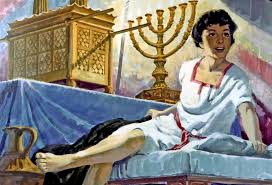
Reflection on 1 Samuel 2:1-11

Scripture

He will protect his faithful ones

The wicked will disappear in darkness.

No one will succeed by strength alone.

Observation

After bringing Samuel to the Tabernacle to serve the Lord, Hannah prays.

Hannah expresses joy that she ihas been vindicated before her enemies. The Lord [pulls down the arrogant and raises the humble.

The Lord is overturning all the accepted structures. The hungry are well-fed and those who are well-fed are now starving. The woman who had no children now has seven, but those with many children will waste away.

It is the Lord who gives and takes away. He will protect His faithful ones. Those who resist the Lord will be shattered.

Application

The world tells us that we must all look after our own interests first. But God promises to protect those who are faithful to Him.

With God in control, the strong and the wicked will not always get their own way. He pulls down down the proud and the arrogant to remind us that He is the Lord.

Nobody succeeds by strength alone. It is all the grace of God.

We should not be afraid or anxious about what might happen. God is in control. We should just trust Him.

The gates of hell will not prevail against the Kingdom of God. Those gates are strong, but God’s Kingdom is stronger. The powerful elites and embedded interests seem impregnable, but God is greater.

Prayer

Hallelujah! You O Lord are greater than all the powers and schemes of men. Please help me to trust you now and always. Amen.
Reflection on 1 Samuel 1:1-28

Scripture

“O Lord of heaven’s armies, if you will look upon my sorrow and answer my prayer and give me a son, then I will give him back to you. He will be yours for his entire lifetime, and as a sign that he has been dedicated to the Lord, his hair will never be cut.”

Observation

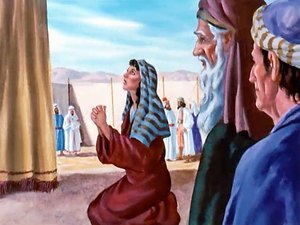
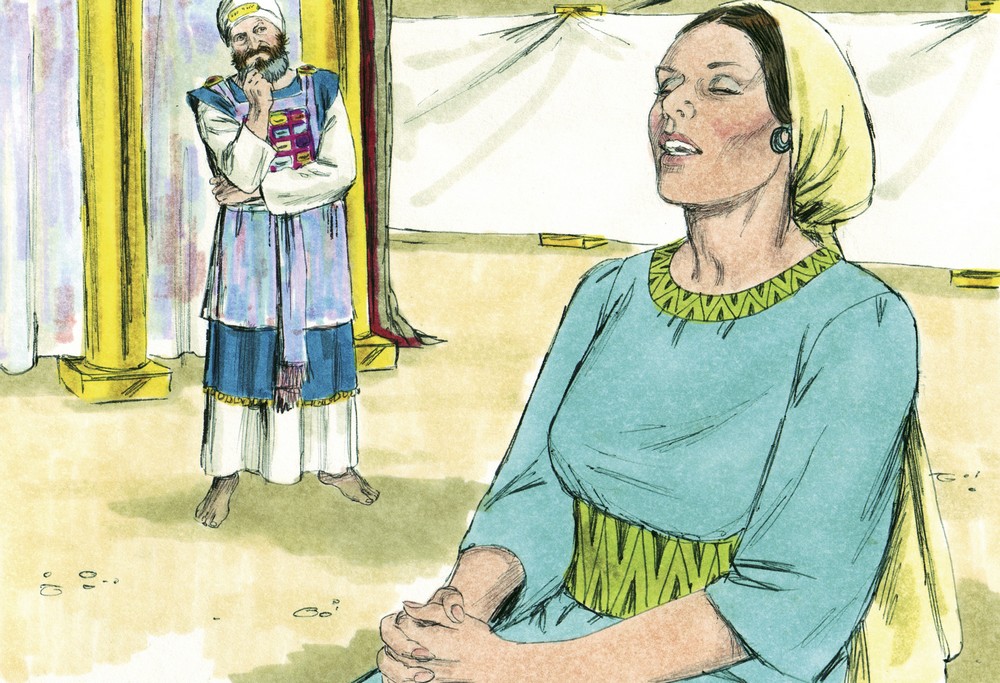
A man named Elkanah has two wives, one of whom, Hannah, has no children. One time, when they are at Shiloh for the annual sacrifice, Hannah goes to the Tabernacle. She is so fervent in her prayer for a son that Eli the priest thinks she is drunk.

In due course, Hannah becomes pregnant and gives birth to a son, and she names him Samuel. When the boy is weaned, Hannah takes him to the tabernacle to serve the Lord.

Application

Hannah’s prayer may seem strange to some. She is desperate for a child, but she promises to give him back to the Lord if he answers her prayer. Really Hannah is recognising that she has no right to hold on to something that comes to her as a gift from the Lord.

The followers of Jesus are required to lay down their lives, take up their cross, and live only for the Lord. Everything has to be sacrificed to Him.

What God gives back then comes to us as a double grace. He is not bound to give us anything, but still He gives us more than we could ask for.

When we yield to God the desires of our heart, then He blesses us abundantly.

Prayer

Thank you Father for the paradox of grace. When I give you the things that I most desperately want, you return to me a much greater blessing. Amen.

Reflection on 1 Samuel 1:1-20

1-Sam.jpeg

Scripture

In due time she gave birth to a son. She named him Samuel, for she said, “I asked the Lord for him.”

Observation

Hannah, one of two wives to Elkanah, is desperate for a child. One time after the sacrificial meal that the family shares at Shiloh, she goes into the Tabernacle to pray.

She is in such anguish of spirit that Eli the priest thinks she is drunk. When she explains her anguish and sorrow, Eli blesses her.

The family returns home, and Hannah eventually has a baby. She names him Samuel, and he grows up to be the great prophet to Israel.

Application

This passage tells us four things about prayer.

1. God reacts to real faith. Hannah knows that God can hear our prayers and she is certain about His faithfulness. Her faith is so deep that when Eli says to her, “May God grant your request”, she accepts that her prayer has already been answered.

2. God reacts to our struggles and the distress of our prayers. Prayer is not an intellectual exercise where we think nice thoughts. It is a deeply spiritual process that can engage our emotions. Hannah’s prayer was so emotional because it was fuelled by the distress in her heart. It was s emotional that Eli the priest thought she was drunk.

3. God is not limited by the corruption or godlessness of a religious system. Eli’s sons were notorious for eating the best parts of the food brought for sacrifice, which was against the religious law, but God was still at work. The voice of God was not heard in the land, but God was still at work.

4. God’s timing is not always the same as ours. Sometimes He delays answers to prayer to provoke us to a deeper faith in Him. Sometimes He gives us blessings and responsibilities before we think we are ready for them. His timing is always perfect, even if it seems inconvenient.

Prayer

Thank you Lord for the knowledge that you answer our prayers, the fervent prayers of a heart that is surrendered to you. Amen.

Reflection on 1 Samuel 3:1-21

1-sam-3

Scripture

As Samuel grew up, the Lord was with him, and everything Samuel said was proved to be reliable.

Observation

The boy Samuel grows up serving the Lord in the Tabernacle. In those days messages from the Lord were rare and visions were uncommon.

One night, as Samuel is sleeping, the Lord calls to him. Samuel thinks it is Eli calling so he goes to find out what is wrong. Eli tells him to go to sleep. This is repeated three times before Eli works out that it is the Lord calling Samuel.

So the Lord speaks to Samuel and warns him that judgement is about to fall on Eli and his two sons. Eli instructs Samuel to tell him everything the Lord has said.

As he grows up Samuel develops a reputation as a prophet who accurately hears from the Lord.

Application

What a sad time in the history of Israel that very few people heard from the Lord or saw visions from Him. Samuel comes onto the scene as someone special who hears the Lord and speaks boldly for Him.

We live in such an age in the church. Very few people accurately hear the Lord, but we should all be like Samuel. The Holy Spirit has been poured out onto the church and all we who are born again and filled with the Holy Spirit should be listening for the voice of the Lord.

Unbelievers are turning to all kinds of false teachers because they are desperate for a touch from the Lord. If they cannot get it in the church they will go elsewhere.

We need to be like Samuel, practising in listening to God, cultivating and growing in the gifts of the Holy Spirit.

Prayer

Lord, please help me to listen to your voice. Show me how to grow in discernment and in prophecy. Let your voice be heard in the church and beyond. Amen.

Reflection on 1 Samuel 3:1-20

eli-samuel

Passage: https://www.biblegateway.com/passage/?search=1+Samuel+3.1-20

Scripture

In those days the Lord hardly ever spoke to people, and he didn’t appear to them in dreams very often.

Observation

Samuel is serving in the house of the Lord. One night, as Samuel is sleeping on a mat near the Ark of the Covenant, the Lord calls his name. Samuel thinks it is Eli calling him, so he goes to ask Eli what he wants. This happens three times. Finally Eli works out that it is the Lord, so he tells Samuel that next time this happens he should say, “I am listening Lord, what do you want me to do?”

So the Lord calls Samuel again, and he asks Him What so you want me to do?” The Lord says that He is going to punish Eli and his family for disrespecting the sacrifices.

As Samuel grows up his reputation as a prophet increases across Israel.

Application

In the days before Samuel, the Lord rarely spoke to His people. This should have been a cause for some discomfort for the people of Israel, but we tend to accept things too readily.

The Lord is always speaking to us. His heart is to have relationship with us. If we are not able to hear from Him, the problem is on our side.

For some people the problem is simply lack of practice at listening. For others it might be fear or shame that makes them think that God does not have anything to say.

To start the process we might have to go back to basics. Like Samuel, we should ask, “Lord what do you want me to do?” It helps to write down what you think God is saying to you.

Be still and know that I am God!”

Be still- and let God speak to you.

Be still- and listen to the Holy Spirit

Be still.

Prayer

Lord, what do you want me to do? Help me to learn to hear your voice, the still small voice of your Holy Spirit. Amen.

Reflection on 1 Samuel 16:1-13

samuel_anoints_david

Passage: https://www.biblegateway.com/passage/?search=1+Samuel+16.1-13

Scripture

Then Samuel took the horn of oil and anointed him in the presence of his brothers; and the Spirit of the Lord came mightily on David from that day forward.

Observation

The Lord tells David to go to Bethlehem to anoint one of Jesse’s sons as king. He tells him to take a heifer and tell people he has come to make a sacrifice to the Lord. He is to invite Jesse and his sons to the sacrifice, and the Lord will show him which one to anoint.

So one by one Jesse’s sons are brought to Samuel. For each one the Lord tells Samuel, “This is not the one.” Finally, Samuel asks Jesse if there is another son. It turns out that there is another son, the youngest, David is out minding the sheep. When he is brought in, Jesse anoints him with oil, and the Lord fills him with His Spirit.

Application

Anointed for the task, the Spirit of God comes mightily on David.

A human act of anointing with oil signifies the divine act of filling. David is filled with the Holy Spirit for a purpose- to be king of Israel.

Yet David must wait several years and fight for the crown. There is anointing and then there is equipping and training.

We all need to be anointed or filled with the Holy Spirit in order to fulfil the task God has appointed for us. But often the anointing leads to training which doesn’t necessarily make any sense to us.

The Lord removes His blessing from Saul, yet Saul remains as king. He gives the blessing to David, but he must wait and learn to be the Lord’s king.

There are people who receive an anointing or a calling to ministry and then immediately assume they can start the ministry straight away without further training.

There are others who train for ministry but never had any calling or gifting, trusting in their own strength alone.

Either way can be a disaster. We need the anointing and we need the equipping.

Prayer

Thank you Lord for your Spirit so freely and abundantly given to all who follow Jesus. Help me to see what you have called me to, and to seek out your training for that task. Amen.

Reflection on 1 Samuel 1:1-20

Scripture

Then Eli answered, “Go in peace; the God of Israel grant the petition you have made to him.”

Observation

A man named Elkanah from Ephraim has two wives, Hannah and Peninnah. Peninnah has children but Hannah does not.

Each year, the family goes to sacrifice at Shiloh, and Elkinah portions out the sacrifice amongst the family. For Hannah this emphasises her barrenness.

Hannah goes to the temple to pray. She is so distressed that as she prays she weeps and no words come from her mouth. Eli the priest assumes she is drunk, but when she explains herself to him, he gives his blessing.

In time, Hannah conceives and bears a child.

Application

There is a time for orderly prayer.

There is a time for desperate shouts to the Lord.

And there is a time when words and voice fail us in our distress.

Religious people are always ready to disparage the prayer of desperation, whether they are noisy shouts or wordless sobs. They want religion to be controlled and controllable, civilised and respectable.

Faith is knowing that in the middle of the greatest hurt, at the centre of the worst storm, when life doesn’t make sense, then we cling on to God knowing that He has answers for our need.

Prayer

Lord God, thank you that you meet me in the darkest places. When hope eludes me and the darkness comes in like a flood, help me to hold tightly to you. Amen.

Reflection on 1 Samuel 18:1-16

Scripture
But all Israel and Judah loved David because he was so successful at leading his troops into battle.

Observation
Soon after David kills Goliath, he meets Saul’s son Jonathan. There is an immediate bond between the two and they make a covenant friendship.

Saul has David join his forces, and David does all that Saul asks of him. Saul makes David commander over all the army.

On their way home from the victory over the Philistines, some women meet them in the street with tambourines and cymbals, extolling Saul for killing thousands and David for killing tens of thousands. Consequently Saul becomes jealous of David.

The very next day Saul is overwhelmed by a tormenting spirit. On at least two occasions, Saul tries to kill David with a spear.

Application
Jealousy of someone on our own side, even a friend, is a very debilitating thing. For Saul this resulted in a tormenting spirit that drove him mad.

David was a man of great faithfulness, and Saul had nothing to fear from him. Instead of being jealous, Saul could have harnessed David’s talent and popularity to build up the nation. Instead he gave in to fear and jealousy.

We must be very wary of thoughts of jealousy, envy, coveting the gifts or abilities of others. This is a big gateway for through which satan can get in and ruin lives, churches and even whole nations.

Prayer
Father God, please protect my heart from jealousy. Let me always have a pure heart before you. Amen.