
All too often we see fake apologies in the media given by celebrities as a part of their branding efforts.
The cause is often that the person involved has been caught out saying or doing something that some people find offensive.
For example celebrity non-entity Red Foo was chastised for appearing in a song that is pretty well offensive to every human being on the planet. So he “apologised” to his fans (not to women who might have felt demeaned or genuinely outraged by his song). The apology was meant to sidestep an angry petition demanding his removal from X-Factor. It was not a recognition that the song portrays women as just objects of sexual gratification, but an attempt to placate fans and keep the money rolling in.
Football players who misbehave while drunk often get to read a fake apology usually to stop the sponsors from withdrawing their support.
I guess all of us try this on with God too- a form of words that we hope diverts wrath but with no real intention of changing behaviour.
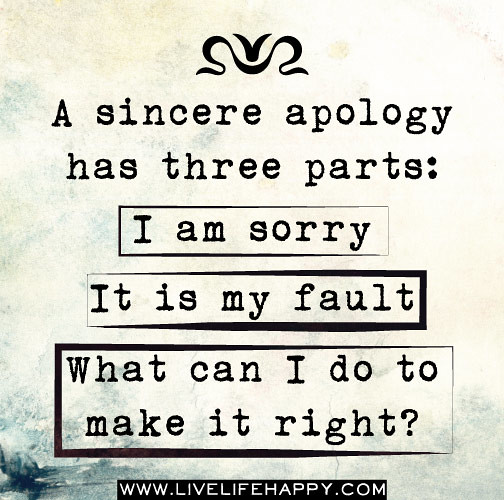 So what does a “fake” sorry look like and how is it different to a real sorry?
A fake sorry is big on the word “if, but a real sorry is unconditional. “I am sorry IF my actions offended anyone” is not real sorrow at all. A real sorry recognises that serious hurt has been caused and unconditionally apologises.
A fake sorry is all words (usually written by someone else!), but a real sorry leads to a change of heart and actions. Sometimes we say stupid things or do things without thinking how they affect others. Real repentance means we have learned something and we will not want to do it again.
A fake sorry leaves people apart, but a real sorry draws people together. Saying “sorry” is not about making me look better than I really am, but about genuinely wanting to repair a relationship. After saying the words, we will want to ask “How can I make this better?”
If you hurt someone,”sorry” is the starting point not the ending point.
That’s why christians are so big on repentance as the start of the journey with God. we have all sinned and we all need to be put right with God. The place to start is saying “sorry” to God and then living a life of walking in friendship with Him (that is, a life of obedience to His ways.)
When we do the fake apology with God, and try to impress Him with our spirituality, that is called religion. God describes those things as filthy rags, or in Paul’s words “a pile of crap.”
Yes “sorry” is a hard word for many to say. But a genuine repentance can open the doors to healthy relationships with people and with God.

 New Life Narrabri