This is a great teaching video by Roma Waterman.
More from Roma here; www.romawaterman.com

The sermon for May 26th 2024 is now available on the New Life web site.
In this sermon, which is based on Acts 1:1-11, I talk about the Seven Power Dimensions of the Baptism in the Holy Spirit.
Click here to listen in your browser or to download the mp3

People often get hung up about how to receive the Baptism in the Holy Spirit. Here are 4 simple steps. Follow these steps in a posture of humbly receiving from God.
It is obvious that the Lord delights to give good gifts to His children. Often, all you have to do is ask. In Luke 11:11-13, Jesus says:
“What father among you, if his son asks for a fish, will instead of a fish give him a serpent; or if he asks for an egg, will give him a scorpion? If you then, who are evil, know how to give good gifts to your children, how much more will the heavenly Father give the Holy Spirit to those who ask him!”
If you have never received the Holy Spirit, then ask your Father in heaven who will gladly give Him to you.
Faith is the key to every part of the Christian life. We receive when we believe.
Take hold of promises like Luke 11:11-13, and the other places where Jess promises the Holy Spirit. Read the book of Acts. Take hold of the promise that God wants you to be filled with the Holy Spirit.
The gift of speaking in tongues requires that you open your mouth and say something.
Some people really stumble over this. God will give you words to speak in your heavenly prayer language, but you have to speak them out. You might only get one word to start with but as you speak it by faith, more will come.
Some people see words in their mind, others hear words, yet others just speak fluently. God deals with each of us differently and according to our faith. So leet God give you the words to say.
To open your mouth and say something might involve a giant leap of faith, but do it anyway.
Our ongoing relationship with the Holy Spirit is a two way street.
God is wanting to speak to us, and we need to listen. The voice of God often comes to us as a whisper that is so easily overwhelmed by the noise of the world and our own thoughts. We need to “Be still and know that I am God.” (Psalm 46:10)
Take time to tune into the voice of the Holy Spirit.

Most Christians know the church was founded on the Day of Pentecost and many liturgical churches celebrate the day. But many ignore or overlook what happened that day—the Baptism in the Holy Spirit was given, including speaking in tongues.
There were many foreign visitors in Jerusalem that day and they heard their own languages. But this practice died down over the centuries until the modern Pentecostal movement that began with the Azusa Street revival of 1906 and which has swept the world.
Nevertheless, speaking in tongues has continued to be misunderstood and even controversial in many circles.
There are some genuine misconceptions about what speaking in tongues looks like and what purpose it serves the believers. No doubt Christians are divided about whether this gift has ceased or not, and there are even debates about when the proper time is to speak in a prayer language. Instead of debating with one another about tongues, I think it is best if we look at the four truths that are pertinent to this gift that I write about in my new book Spirit-Led Living in an Upside-Down World, which releases May 16.
1. Speaking in tongues is neither unbiblical nor outdated. Although not all Christians believe the same thing about the Baptism of the Holy Spirit and its accompanying evidence of speaking in “other tongues,” nothing in New Testament Scripture restricts or confines speaking in tongues to being only a first-century exercise.
The benefits of receiving a supernatural prayer language are profound. When we do not have the words to express our need, we can use our prayer language—a language understood by the Spirit, who speaks through us to the Father, and understood by the Father, who empowers the Spirit to work in our lives to give us victory.
2. Speaking in tongues is not a transcendental experience. There is really nothing weird about praying in a language we have never learned. As Jack Hayford puts it: “The ways of God in dealing with His redeemed children may be supernatural in the source of His operations, but they are not weird in their ways of working. To speak in tongues is not to resign the control of one’s mind or indulge one’s emotions to a point of extraction. The exercise of spiritual language does involve a conscious choice to allow God’s assistance to transcend our own linguistic limits, but it does not surrender to any order of a mystical, trance-like trip beyond oneself.”
3. Speaking in tongues is not a status symbol. There have been some abuses of tongues, including those who act is if they are spiritually superior to those who have never spoken in tongues.
The Bible doesn’t tell us tongues are to be used to impress other believers with the spiritual maturity of the one who speaks. The Bible tells us, “Now, brothers, if I come to you speaking in tongues, what shall I profit you, unless I speak to you by some revelation or knowledge or prophesying or doctrine?” In another place, the apostle Paul says, “So tongues are for a sign, not to believers, but to unbelievers.”
4. Speaking in tongues is not a substitute for spiritual growth. Using our prayer language and speaking in tongues will not cause us to grow spiritually even if we do it seven days a week and 24 hours a day.
The baptism of the Holy Spirit is available to all believers, not a select few. Just as we receive new life in the Son of God by a definite act of personal faith, so we receive supernatural power in the Spirit of God by an act of conscious faith.
Stephen E. Strang is the bestselling author of God and Donald Trump. The founder and CEO of Charisma Media, Strang was voted by Time magazine as one of the 25 most influential evangelicals in America. He has interviewed four U.S. presidents and has been featured on Fox News, CNN, MSNBC, CBN, Dr. James Dobson’s Family Talk, theDailyCaller.com and in many Christian outlets.
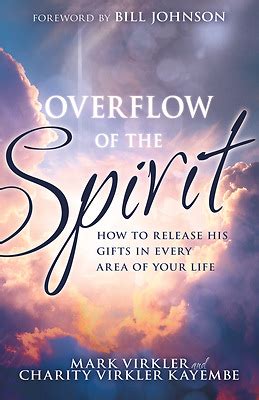
These keys for receiving the Holy Spirit are described in Mark Virkler’s book, “Overflow of the Spirit.” They are important for receiving the baptism in the Holy Spirit and the gift of tongues, but also in our regular renewal or refilling of the Holy Spirit.
I believe also that these are important keys in praying for revival, community transformation and any personal breakthrough.
1. Believe. Hebrews 11:6 says “And it is impossible to please God without faith. Anyone who wants to come to him must believe that God exists and that he rewards those who sincerely seek him.” Whatever we are praying for we must believe that God is wanting to give it to us. We are not talking about weak belief here but a deep trusting heart conviction that God is good and He blesses those who come to Him.
2. Desire. Do you really want more of the Holy Spirit? Do you really want revival? Are these things sweeter to you than ice cream on a hot day? Are you desperate for God to move?
3. Ask. It’s not enough to say “If it’s God’s will He will do it.” He partners with us and expects us to intercede for that which is important to us. James 2:2-3 says, “You want what you don’t have, so you scheme and kill to get it. You are jealous of what others have, but you can’t get it, so you fight and wage war to take it away from them. Yet you don’t have what you want because you don’t ask God for it. And even when you ask, you don’t get it because your motives are all wrong—you want only what will give you pleasure.” We have to ask and make sure that our asking is done with the motive to honour the Lord.
4. Unity with our brothers and sisters. We must ensure that there is no hint of contempt or even hostility and quarrelling with our christian brothers and sisters. God will not overflow in those who are at odds with His family. Confess this sin and seek the Lord’s forgiveness.
5. Yield. Every part of my will, body and mind must be submitted to God and to His purposes. I must set aside every personal ambition, pride, self-direction and totally surrender myself to God. To receive tongues I must yield my tongue, mouth and mind to Him. For other breakthroughs I must let go of my personal ambitions, expectations and judgements.



 New Life Narrabri