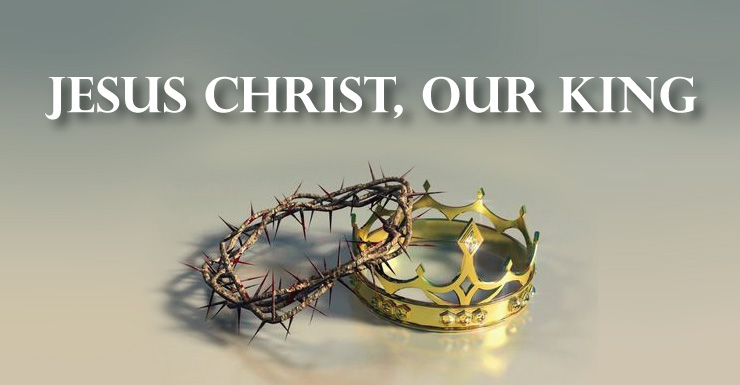
Reflection on Luke 21:25-36

Scripture

“Watch out! Don’t let your heart be dulled by carousing and drunkenness and by the worries of this life. Don’t let that day catch you unaware.”

Observation

There will be strange signs in the heavens. On earth, the nations will be in turmoil. People will be terrified, for the powers in the heavens will be shaken.

Everyone will see the Son of Man coming on a cloud with power and glory.

We can tell the seasons by the trees and plants. We see the signs in the natural. When we see these things happen, we know the Kingdom of God is here. This generation will not pass until these things happen.

Watch out! Don’t live like the pagans do, consumed by partying and the worries of this life. We are to be prepared, ready for the coming of the Son of Man.

Application

There is some dispute about whether this passage refers to events in the future or in the past, such as the destruction of Jerusalem in 70 AD. I think the most straightforward interpretation is that Jesus was warning his followers about the horrific events of 70 AD.

But the warnings apply to every Christian in every time period and every place.

Be ready for the coming of the Son of Man.

We are citizens of Heaven. We have a destiny in view that goes beyond this present life. As ambassadors of the Kingdom of God, our home is not in this world.

Therefore, we do not live as the people of the world do – consumed by entertainment, pleasure, and the endless anxieties that beset those who do not know that God is their Father.

We must live every day as if it were our last day, as if we could meet with Jesus tonight. We must always be ready to give an account of our lives.

This is not to say that we should live in misery and fear. It is not to say that we must never be happy or celebrate. We are the people, above all others, who are happy and joyful.

It is a matter of focus. Am I living for this life only, or do I set my heart on eternity?

Prayer

Lord, please help me to live everyday with the awareness of your presence. Amen.

Ephesians 6:21-22

Here is my commentary on Ephesians 6:21-22. I am publishing these once or twice a week, but you can read all of the available articles at our web-site, http://www.new-life.org.au

Ephesians 6:21-22

“So that you also may know how I am and what I am doing, Tychicus will tell you everything. He is a dear brother and a faithful minister in the Lord. I’m sending him to you for this very purpose, to let you know how we are and to encourage your hearts.”

In the letter to the Ephesians, Paul covers topics of cosmic significance, deep issues about our place in God’s Kingdom, and how we should live. He now turns to personal greetings because church is more than ideology and grand ideas. Even the greatest of our conceptions are based in relationship with God and with one another.

Paul is sending the letter with Tychicus, his dear friend and trusted coworker in the preaching of the gospel.

Paul knew that the Ephesians would want to know about how Paul was coping in his imprisonment. Their love for Paul is described clearly in Acts 20:13-37. They would value the opportunity to hear the news of Paul, not just advice and doctrine .

Tychicus is mentioned several times in the New Testament. He carried Paul’s letter to the Colossians and had been involved in part of Paul’s third missionary journey (Acts 20:1-4).

For people involved in Christian ministry, there is nothing like a faithful brother in the Lord who stands with you and encourages you over a long period of time.

Tychicus was a faithful minister in the Lord. Despite the many temptations to give up, he remained faithful to the Lord and to Paul.

We sometimes lament over preachers and pastors who lose their ministry because of scandalous sin. Some even announce that they have lost their faith in the Lord. For every celebrity pastor who falls, there are undoubtedly many other less known ministers who just get worn down by the constant pressure of being at the forefront of the Christian community.

Maybe we should rejoice in those who, like Tychicus, remain faithful to the Lord and to their assignment. When we think of the intensity of spiritual warfare that surrounds every believer, but especially those called to preach the gospel, it is only the grace of God that sustains them and strengthens them in the battle.

As well as being a messenger for Paul, Tychicus seems to have had the ministry gift of encourager. Paul wanted him to encourage the hearts of the christians at Ephesus.

Every church or christian community needs that one person (or more) who has this gift of encouragement. They are the people who remind us of our purpose in dark times. They believe in us as followers and ministers of Christ. They cheer us on when the battle gets difficult. They are the ones who hold our arms up when the battle goes longer than we can endure alone (Exodus 17:10-13).

Paul did not send just anyone to carry his messages. We live in an era of constant bombardment in emails, text messages, and phone calls by people who are not interested in us, but only in our money. Rather than sending just anybody to deliver his message, Paul considered this to be a ministry in its own right. The bearer of the message had to be the right man who would go on to do much more than merely carry a letter.

Key points in these verses:

  • The context of Ephesians is a personal relationship between Paul and the church
  • Tychicus was a beloved friend and coworker with Paul
  • We need to pray and encourage pastors and other ministers of the gospel
  • We all need encouragers

Reflection on 1 Thessalonians 3:9-13

Scripture

May the Lord make your love for one another and for all people grow and overflow, just as our love for you overflows.

Observation

Paul thanks God for the church at Thessalonica. They give him great joy whenever he prays, day or night.

Paul prays that the Lord will bring him to them soon. He prays that the Lord will cause their love for one another to increase and overflow. May their hearts be strong, blameless and holy.

Application

Paul’s prayer for the church of Thessalonica is that the Lord will make their love for one another and for other people to increase and overflow.

The hallmark of any true christian community should be love. God is love, so His followers should be growing in love for one another and for people outside the community of faith.

There is a sense in which love is commanded, and is therefore something we can do. “Love one another as I have loved you,” is the new commandment that Jesus gave to His disciples.

But equally, love is a part of the fruit of the Holy Spirit (Galatians 5:22). Love comes as a natural result of living in the Spirit.

Sometimes we find ourselves growing in love without any thought or action on our part. Other times, the Holy Spirit convicts us of attitudes or actions which might need to change.

The true christians community will be marked by three loves – love for God, love for other christians, and love for unbelievers.

Prayer

Thank you, Lord, for the grace to love other people. Please grow this in me so that, like Paul, I overflow in your love. Amen.

Ephesians 6:20

Here is my commentary on Ephesians 6:20. I am publishing these once or twice a week, but you can read all of the available articles at our web-site, http://www.new-life.org.au

Ephesians 6:20

“… for which I am an ambassador in chains. Pray that I may declare it boldly, as I must speak.”

Paul describes himself as an ambassador in chains for the gospel.

Every nation sends out ambassadors to other countries to represent the interests of the home nation abroad. An ambassador is a go between in many ways, communicating the views of their own government as well as informing their government if what is happening in the other nation.

To be an ambassador for the gospel means to represent the gospel amongst those who do not know it, to be the light in the darkness, so to speak.

Paul particularly saw himself as an ambassador to the gentiles. At this time of his life, that ministry is now focused on one particular person, the Emperor himself.

For Paul, the great culmination of years of preaching the gospel would be reached when he stood before Caesar to represent the Kingdom of Jesus. If he could share the claims of the gospel with the most influential people in Rome, the gospel would be more easily preached right through the Empire.

Paul’s dream did not come to pass in his own lifetime. He was executed by Nero around the year 65. Persecution of Christians continued sporadically through the Empire until Constantine became a Christian in the early 300’s. Within a generation of that date, Christianity had become the official religion of the Empire.

In every nation of the world, to be appointed as an ambassador is seen as a prestigious thing. Ambassadorships can be offered to career public servants or as a reward to political allies. While there are some positions that might be considered as less prestigious than others (e.g. remote locations in Africa or South America would be less exciting than London or Washington), nobody would want to be appointed as an ambassador in chains.

In the human way of looking at things, Paul was just another political prisoner or a religious zealot awaiting trial before the emperor, but Paul saw his position as God saw it. He was an ambassador of Jesus Christ!

We must not let our self-esteem be determined by the world’s judgements. If we are serving God, it is His assessment of us that matters, not the world’s .

Paul asks for the Ephesians to pray for him to be bold in his speaking.

We might think that Paul would want to tread carefully while he is in prison. In this situation, he is vulnerable to mistreatment by guards, other prisoners, and officials. It might be tempting to not say anything that might cause offence. Paul isn’t one to fly under the radar. He prays for the ability to speak the message boldly even in this vulnerable condition.

He is aware that he must speak. It isn’t clear whether he is thinking primarily about his eventual court case before the Emperor. Perhaps he is thinking about his daily encounters with various people.

He is conscious of the need to share the gospel. It is like a fire burning within him, a force that compels him. If he is going to speak, as indeed he must, he might as well do so boldly .

He needs prayer for this because it is all part of the spiritual warfare that he wrote of earlier in the chapter. As the ambassador of Christ in chains, his battle is not against human enemies, but against the principalities and demonic rulers of this present age.

Key points in this verse:

  • We are all called to be ambassadors for the gospel
  • whether we are In chains like Paul, it is God’s calling that gives us status not the rewards of men
  • Even though Paul’s desire to see the Emperor saved did not come in his lifetime, it did come to pass eventually
  • We must not soft-pedal the gospel even when we are tempted to do so
  • Everybody needs prayer to be able to share the gospel

Ephesians 6:19

Here is my commentary on Ephesians 6:19. I am publishing these once or twice a week, but you can read all of the available articles at our web-site, http://www.new-life.org.au

Ephesians 6:19

“Pray also for me, so that when I speak, a message may be given to me to make known with boldness the mystery of the gospel.”

Having asked his readers to pray for all the saints, Paul asks for prayer for himself.

Paul was at the front lines of the spread of the gospel and the planting of churches throughout the Empire. He was aware that, for this reason, he was in special need of prayer .

The proclamation of the gospel is not just a matter of putting together a message. It is a part of the war of the spirits that Paul alluded to earlier. Paul is the spearhead in this battle against satan, and therefore he needs extra prayer because he faces greater opposition.

We all need to pray for people whom we know in ministry. Our own pastors, small group leaders, evangelists, and missionaries. Every one of these is engaged in the most intense of battles, and they need our constant prayer.

Paul asks that when he opens his mouth to speak, a message is given to him. Paul, like many preachers, does not want just any message, he wants a word (“logos” is the words translated as message here) from God. The word from God changes lives, pulls down strongholds, demolishes opposition, raises the dead, and saves souls. This is the sort of word that Paul wants to speak. It only comes through prayer as our spirits are submitted to the Holy Spirit.

Paul wants to speak boldly. He has something of a reputation as being fiery and bold, but I suspect this was not his natural disposition. There is a boldness, a fire, that comes from the Holy Spirit, which is greater than human oratory. A man can persuade a crowd by force of personality and various manipulative techniques. When the Holy Spirit takes control of a preacher, the result is far greater than human abilities alone.

Every preacher should pay for both the message of the Lord and boldness in preaching it.

Paul wants to make known the mystery of the gospel. A mystery in the Bible refers to something previously hidden, but now being revealed.

The gospel, or Good News, is a mystery in the sense that until Jesus died on the cross and rose from the dead, there was so much about God’s plan of salvation that was hidden in plain view.

God promised in Genesis that the seed of the woman would destroy the serpent. In retrospect, we can see that this applied to Jesus who was not conceived in the normal way.

God promised King David that one of his descendants would sit on the throne of Israel forever. That seems to indicate that there would always be a Davidic dynasty reigning over Israel. But now we see that this, too, was a reference to Jesus reigning over the world for ever.

All of the Old Testament, in fact, points to the Good News that “ God so loved the world that He gave his one and only Son so that whoever believes in Him should not perish but have everlasting life.” (John 3:16)

The gospel can be deduced from the Old Testament, but only when we see Jesus is the key that unlocks the mystery.

So Paul request prayer for boldness to be able to preach this message under the anointing of the Holy Spirit.

Key points in this verse:

  • Paul requested prayer because he was on the front lines of the spiritual war
  • Every preacher needs a word or message from the Lord
  • Paul wanted to proclaim the gospel in boldness. We should also ask for the boldness of the Holy Spirit

Reflection on Jeremiah 33:14-18

Scripture

And this will be its name: “The Lord Is Our Righteousness.”

Observation

Jeremiah, writing at the time of the Exile, writes of Israel and Judah’s future hope.

The Lord will do all that He has promised. At the time of His choosing, He will raise up a righteous descendant of David. This man will do all that is just and right in the land. Judah will be saved, and Jerusalem will be called, “The Lord Is Our Righteousness.”

The Lord promises that David will have a descendant on the throne for ever, and that there will always be priests offering sacrifices and grain offerings to the Lord.

Application

The Lord is our righteousness.

We cannot be cleansed from our sin and guilt by our own efforts. We cannot earn it through religious sacrifices or by doing good deeds. Elon Musk does not have enough dollars to buy his righteousness.

No, the Lord is our righteousness. He is the one who declares that we are not guilty.

He does this because of the death of Jesus on the cross. The sin of the world was laid on Christ, and when He died, our guilt died with Him.

The Lord is our righteousness. He is the one who declares that our sin has been atoned for.

Now we are welcomed into His family, His Kingdom. Nothing can separate us from the Lord.

Prayer

Hallelujah! Lord I could never be good enough by myself. Sin always finds me. But you have declared that I am righteous. Please help me to live in your righteousness. Amen.

Ephesians 6:18

Here is my commentary on Ephesians 6:18. I am publishing these once or twice a week, but you can read all of the available articles at our web-site, http://www.new-life.org.au

Ephesians 6:18

“Pray in the Spirit at all times in every prayer and supplication. To this end, keep alert and always persevere in supplication for all the saints.”

Although prayer is not part of the armour of God, it is an essential part of the spiritual life. Paul here uses very expansive language, using words such as all, every, always. For the genuine Christian, there is never a time to neglect prayer. It should be as natural a part of our life as breathing.

Not just any prayer will do. This prayer is not a recitation of the Lord’s Prayer or reading from a prayer book. Paul is exhorting us to pray in the Spirit.

Praying in the Spirit means that we pray with an awareness of the Holy Spirit dwelling in us. We listen to what the Holy Spirit is directing us to pray. We pray with the knowledge that the Spirit Himself intercedes for us in groans beyond human understanding (Romans 8:26-27).

Praying in the Spirit means also praying in tongues, the language given to us by the Holy Spirit. We allow the Spirit to direct our words because our words alone are not enough.

We are to pray at all times. This takes discipline and endurance. Some of us have established specific times to pray, both alone and with others. This is good, but Paul is saying we need to learn to pray at all times.

By being conscious of our thoughts and the rhythm of our days, we can learn to direct every part of our lives to prayer. When people or situations go through our mind, rather than letting our brain idle past them, we can turn them to prayer.

We can learn to turn the routine and monotonous times of life to prayer. Tasks like mowing, cleaning, washing up, can easily become opportunities to pray in the Spirit.

We must pray every kind of prayer and supplication. This is a classroom of the Holy Spirit. It is the Spirit who can lead us into every kind of prayer. A supplication is a request. We listen to what the Holy Spirit is saying about a person or a situation, and then we make our request to the Father.

We must keep alert, listening to the promptings of the Holy Spirit. We are in partnership with the Lord. There are millions of testimonies from believers who received an impression, an idea, sometimes even an urgent summons to pray for someone. They pray earnestly for the person, and later find out that their prayers were needed at that exact time.

To keep alert means that we are not distracted by the things of the world. It is easy to fill every part of the day and night with external stimulation- music, social media, movies, TV, and the like. When we engross ourselves in these things, we are not being alert to the Holy Spirit. Like a sentry guarding a military target, we must keep our spiritual senses actively engaged for the prompting of the Holy Spirit.

We must persevere in supplication for all the saints.

We are not the only ones involved in spiritual battles. My Christian brothers and sisters are also fighting against the enemy. There are other people who are being targeted for persecution, suffering, or discouragement. Our hearts must never become so focused on our own struggles that we fail to support others in their struggles. Our prayers of supplication must be for others and not just for ourselves.

It is not easy to pray for “all the saints” as there are millions of people to pray for. We should regularly pray for the saints in we know, such as people in our church, members of our cell group or home group, pastors and other leaders, people who are sick, and those who are facing persecution in other countries. When the Spirit lays a burden for particular names into our heads, Then we should pray urgently and earnestly for those people.

The ministry of prayer is the duty and the privilege of all Christians. We must always look to the needs of other people and not just ourselves, and be alert to the leading of the Holy Spirit.

Key points in this verse:

  • Prayer is a key weapon in our spiritual warfare
  • We must constantly pray in the Spirit, allowing the Holy Spirit to prompt us to pray specifically
  • We must learn to pray on every occasion at all times
  • Our prayers should be directed towards the needs of other christians, as well as our own needs.

Reflection on Psalm 132

Scripture

The Lord swore an oath to David

with a promise he will not take back

I will place one of your descendants on your throne

If your descendants obey the terms of my covenant

and the laws I teach them

then your royal line will continue for ever and ever.

Application

What an awesome promise the Lord made to King David!

At first sight it seems to be saying that the Lord promised David an eternal dynasty. We assume in the natural that the promise is for a succession of descendants to sit on the throne for a very long time.

With the eyes of the spirit, we see that this is about Jesus, the one descendant who reigns for ever.

King Jesus will rule over all things, even defeating the last enemy, death itself. Every part of creation will kneel at the feet of Jesus and proclaim “You are the King of Kings!”

Then those who followed Him in this life will go on to live with Him for ever. Those who served their own desires will be condemned to the Lake of Fire.

Eternal life or eternal death.

Loyalty to the eternal king brings life forever.

Prayer

Lord Jesus, you are the everlasting King. I worship you and adore you. Thank you for the promise of eternal life. Amen.

Ephesians 6:17

Here is my commentary on Ephesians 6:17. I am publishing these once or twice a week, but you can read all of the available articles at our web-site, http://www.new-life.org.au

Ephesians 6:17

“Take the helmet of salvation, and the sword of the spirit, which is the word of God.”

We are told to take, or receive, the helmet of salvation. The helmet is obviously important to protect the head. A blow to the unprotected head can easily kill or render unconscious a soldier. This form of protection is vital.

salvation, in the sense of our redemption from sin by Christ’s death on the cross, is the first meaning of this phrase. To even get into the battle and to be spiritually alive, we need to first be saved. A person foolish enough to enter the battle without salvation will suffer a fate similar to that of the seven sons of Sceva (Acts 19:13-16).

The helmet of salvation protects our thought life after we are saved. Our thoughts are being constantly filled with ideas from outside. Some of these come from the Holy Spirit. Others come from human sources such as the media, entertainment, philosophy, politics, and so on. Still others come from demons seeking to undermine our determination to fight for the Lord.

When I first came to know Jesus, at the age of 18, I was excited to find out more about my relationship with God. I filled my mind with the Bible and with Christian books. The helmet of salvation protected my thought life from ideas opposed to God’s ways by filling my mind with His Word.

Over time we can tune out the Holy Spirit and allow other thoughts to enter our thinking. These might be thoughts about compromise, doubts, pleasure, or outright temptation to sin. If we allow these thoughts to take root in our mind, then our relationship with God can be destroyed.

To take the helmet of salvation means that we allow the Holy Spirit to direct our thinking. This might take self-discipline on our part as we learn to say “No” to thoughts that originated in the flesh or from demons.

If we allow our thinking to be corrupted by satan, it is every bit as fatal to our spirit as a blow to the head can be to the body. This helmet of salvation is vital.

Along with the helmet of salvation, we need to take up “the sword of the Spirit, which is the word of God.”

This connection between God’s Word and a sword is not unique to this passage. In Hebrews 4:12, we are told that “ the word of God is alive and active, sharper than any two-edged sword.” Revelation 1:16 describes Jesus as holding seven stars “ and from his mouth came a sharp, two-edged sword.”

The word of God is a powerful tool that the Holy Spirit uses to bring discernment and judgement to the heart. Like the helmet of salvation, this sword brings our thinking into alignment with God’s purposes.

The word for “sword” used in Ephesians 6:17 is makaira, a razor sharp sword used in close combat. The sword is an offensive weapon not a defensive implement like a shield or helmet.

We need to remind ourselves that the fight is against powers, principalities, and demons. Too often the Bible has been used as a bludgeon to bash people into acquiescence. We can quote the Word of God to condemn, humiliate, or repel people we do not like.

The proper use of the Word in warfare is against the spirits, that is, in prayer. We pray the promises of God; we command demons to flee on the basis of Scripture; by faith we speak things into being.

When the Bible is used to bring the power of salvation then it is used effectively as the sword of the Spirit. The word of God, properly, passionately, and pastorally preached is a powerful weapon in evangelism.

The phrase “ the word of God” can also be used in regard to spoken words brought through the agency of the Holy Spirit – words of knowledge, wisdom, faith, and prophetic words are amongst these. We should not think that Paul is exclusively thinking of Scripture in this verse. In 1 Corinthians 14, he speaks of how prophecy and tongues should be used in christian gatherings in order to bring the unbeliever to a place of repentance.

Key points in this verse

  • The helmet of salvation is essential protection in spiritual warfare
  • The Holy Spirit protects our thinking in order to help us overcome the evil one
  • The sword of the Spirit is the word of God
  • We need to use the Bible as a sword against evil spirits, not as a weapon to condemn people
  • The word of God includes not just the Scriptures but genuine words from the Holy Spirit spoken by individuals