Reflection on Matthew 24:29-51


Scripture
“So you too must keep watch! For you don’t know what day your Lord is coming.”


Observation
Jesus now addresses the questions about His return.


Jesus will come on the clouds of heaven with power and great glory. There will be a trumpet blast and then the angels will gather the chosen ones from all over the world.


A fig tree tells the approach of summer by growing buds and leaves. In the same way, we need to watch out for the signs of the return of Christ.


We can be sure that nobody knows the time it will happen, but it will happen suddenly. People in Noah’s day carried on living and partying right up until the flood came and swept them away.


We must keep watch. We must work at serving the Lord so that we are ready for the Master’s return.


Application
Nobody knows when Jesus will return. We don’t even know for sure how this all will happen.


We do know that it will be unexpected and sudden.


It will be unexpected because no one knows the time. There are signs that the Kingdom is near, but they may not be obvious even to all christians.


It will be sudden in the sense that one minute life is carrying on as normal, but the next minute there is a trumpet blast, Jesus is visible to everyone, and everything in the world changes.


Jesus tells us to keep watch. We do not do this by studying political and social developments or by scouring the news media for signs.


We keep watch by being faithful to Jesus day by day. We don’t know when He will come back. We don’t know when we will die and stand before God’s throne.


We must not delay in doing what it is that God has told us to do today.


Prayer
Lord, may I be found faithful and obedient to you when you return. Amen.c

Reflection on Matthew 24:15-28

Scripture

“For as lightning flashes in the east and shines in the west, so it will be when the Son of Man comes.”

Observation

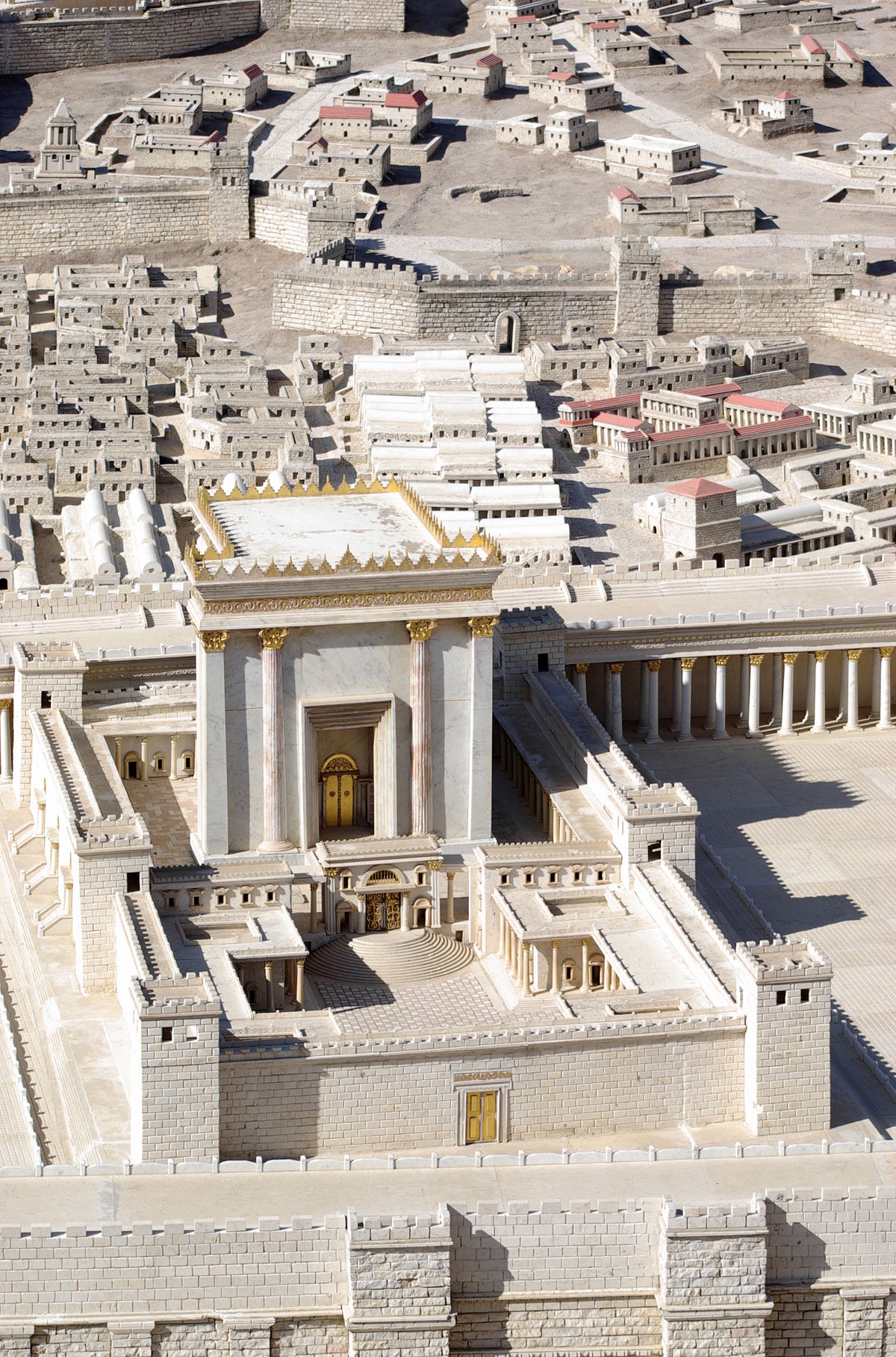
The day is coming, says Jesus, when the abomination of desolation foretold by the prophet Daniel will stand in the Holy Place of the Temple. Then people must flee without delay from Jerusalem and Judea. There will be great anguish and suffering.

We must not be misled by people claiming that the Messiah is here. When the Son of Man returns it will be as sudden and obvious as lightning in the sky.

Application

There is so much confusion in the Body of Christ about the End Times and the return of the Lord.

In this section, Jesus is warning His followers about some events that would soon happen. Not long after His crucifixion, nationalistic movements emerged in Israel. A revolution around the year 66 removed the Roman occupying forces from Jerusalem and parts of Judea. The impetus for this was the installation of military banners in the Temple, interpreted by many Jewish leaders as the “abomination of desolation” spoken of in Daniel.

The Romans returned in 70 AD and besieged Jerusalem. They were able to recapture the city and destroyed much of it, including the Temple. It was said that they crucified so many people that the forests were totally cleared of trees.

In Jesus’ time, a generation before these events, many people claimed to be the Messiah. Some stayed in the desert. Movements sprang up claiming that the Messiah had come , but was hidden- a spiritual coming that only the enlightened ones could see.

Jesus says that when He returns, you will not miss it. There will be no secret coming, but a return that the whole world will see.

Every knee will bow and every tongue confess that Jesus Christ is Lord.

Prayer

Lord Jesus, I know that you will come back one day. In the meantime, please help me to be faithful and obedient to you. Amen.

Reflection on Matthew 24:1-14

Scripture

“And the Good News about the kingdom will be preached throughout the whole world, so that all nations will hear it, and then the end will come.”

Observation

As Jesus and His followers leave the Temple precinct, Jesus points back at the Temple and says that all of the buildings will be completely destroyed.

Later, at the Mount of Olives, the disciples come and ask Him when these things will happen, and what will be the signs of the end of the age.

Jesus warns them that there will be many who come and claim to be the Messiah. There will be wars and rumours of wars, and many disasters. The disciples will be hated and persecuted all over the world. There will be rampant sin, but those who endure to the end will be saved.

The Good News about the kingdom will be preached throughout the world, and then the end will come.

Application

The end times are always popular, but there is very much confusion about these issues.

The phrase “the end of the world” should be translated as “the end of the age.” The destruction of the Temple was a real event that happened in the year 70, and it really marked the end of the age as far as Israel was concerned.

People have been confusing the end of the age with the end of the world for years, while overlooking the most obvious sign of all.

The end will come after the gospel is preached to all nations. Even when the gospel has gone to all nations, and the nations have heard it, there is no promise here that the end will come immediately.

We don’t have the time and date for the return of Christ, because that is for God alone to know.

We do know that God intends for every nation to hear the Good News. Instead of speculating and worrying about events that we cannot control, we should pray for the nations to receive the gospel.

Prayer

Lord, I pray for my nation of Australia. Send revival, Lord, and let this nation be transformed by your gospel. Amen.

Ephesians 5:1

Here is my commentary on Ephesians 5:1. I am publishing these once or twice a week, but you can read all of the available articles at our web-site, http://www.new-life.org.au

Ephesians 5:1

“Be imitators of God, therefore, as dearly loved children.”

All of the instructions that went before and after this verse have to be understood in the context that we are beloved children of God. The commandments are not given dispassionately or in a vacuum. The reason is that Paul wants us to be imitators of God.

To imitate God is to imitate him in a particular, narrow range. We cannot imitate His power or strength, His unlimited knowledge and wisdom, nor in His transcendence over creation. We are not to receive worship or prayer. We are not to pretend to be God.

To understand what it means to be imitators of God, we need to go back to the creation story. In Genesis 1:26 God says, “ Let us make men in our image, in our likeness.”

God’s initial plan was that people were to carry his likeness in their being. Our way of life was, in every way, meant to reflect the glory, the personality, and the character of God.

Of course, sin marred that somewhat. We no longer bear that image in a pure form. The likeness has become tarnished and corrupted.

In Christ, we are new creations. The old sinful nature has been put to death, and in its place the new nature, the image of Christ, has been raised to life in us.

When Paul says we are to imitate God, he is really saying that we need to make a conscious decision to let the Holy Spirit, the God in us, rise to the fore, and direct the way we live.

We imitate God, then, in areas of morality, integrity, and in relationships.

In the area of morality, the demand that we be holy as God himself is holy, overcomes our tendencies to greed, lust, and selfishness.

In the area of integrity, the law of God as summarised in the Ten Commandments, is activated in us by the Holy Spirit. We no longer need an external law to regulate our behaviour as we have the law- giver in our hearts regulating our desires.

In the area of relationships, the love of God constrains us. Where we were once dominated by sin to such an extent that selfishness, self protectiveness, and arrogance undermined all relationships, we are now filled with the love of Christ. In Christ we have learnt to give and not just take, to serve rather than to be served .

We imitate God because his image and his spirit are now in us. In discovering that God is our Father, we have become beloved children.

God loves us with a perfect love called agape love. This is love that is poured out solely for the sake of the beloved. There is no self interest in agape. Agape love does not depend on a response from its object, as it is given regardless.

God is love, and in love He is perfect. God’s love is eternal and unchanging because God is eternal and unchanging.

When we say that we are beloved children, this status is not something we earned or deserved. God loves us because He is good, not because we are worthy of being loved. We cannot earn God’s love .

We are children who are beloved, but we do not know how to return love. It is only as we experience what it means to be loved that we can become capable of loving God and loving other people.

In ancient cultures attitudes to children varied. Often there was a belief that they were not independent people or individuals in the way that we in the West would understand. The child was an empty vessel into which the parents poured their own skills, knowledge, and wisdom so that the child would become like the father .

It was expected that the son would grow up in the family business and would one day become so like the father that he would be worthy of running the business as the father had done before him. The son became like a reproduction of the father, so to speak.

The duty of the child, then, was to imitate the father. They were to learn the values of the father, about the skills of the father, and above all they were to honour the father and mother who gave them life.

As children of God who know that we are loved by God, we can therefore be imitators of God. We received the love of God. We hear about God’s character and incorporate that into our lives. We seek fellowship with the Father in order to be more like Him.

In doing these things, we show the world what God is like. We exalt His name in the world so that others will see Him, love Him, and become His beloved children also.

Key points in this verse:

  • We are to imitate God by carrying His likeness in our lives
  • We are to let the Holy Spirit direct our lives
  • We imitate God in areas of morality, integrity, and relationships
  • God loves us with perfect agape love
  • As his children, we are to grow up to show His character

Reflection on Matthew 23:25-38

Scripture

“I tell you the truth, this judgement will fall on this very generation.”

Observation

Jesus continues to condemn the hypocrisy of the Pharisees and religious leaders.

He condemns them for scrupulously washing the outside of their cups and plate, but inside they are full of greed and self-indulgence.

The teachers and Pharisees are like white-washed tombs- clean on the outside, but full of corruption on the inside.

They build monuments to the prophets whom their ancestors murdered. They claim that if they had been alive at the time they would have never got involved in killing them. Jesus will send prophets and teachers, and the Pharisees will persecute them. They will be held accountable for all of the deaths of godly people.

Jesus finishes with a lament for the people of Jerusalem. He wishes to gather them together and protect them but they would not let Him.

Application

This sounds like a very harsh judgement on the Pharisees and teachers of the Law. Yet, it is true that those who trust in their own deeds of righteousness and not in the blood of Christ to save them will be judged. There is one way, and one way only, to be saved from hell, and that is through faith in Christ.

Jesus warns them that the generation at that time in the world would face the judgement of God. This is not about the end times.

In the year 66, a group of revolutionaries managed to force the Romans out of Jerusalem and several other cities and established a free state of Israel. Rome responded in force, and in 70 AD besieged Jerusalem. Eventually they were able to retake it, and the city, including the Temple, was destroyed. Thousands of people were killed.

When God’s judgement falls on a people, it falls quickly and terribly.

Prayer

Lord, search my heart today. Convict me of any hypocrisy and false religion. Help me to trust you entirely for my salvation. Amen.

Reflection on Matthew 23:12-24

Scripture

“You are careful to tithe even the tiniest income from your herb gardens, but you ignore the  more important aspects of the law –  justice, mercy, and faith.”

Observation

Jesus launches into a condemnation of the religious teachers and the Pharisees. He warns them of God’s judgement for their sins.

Jesus accuses the Pharisees and teachers of shutting the door of God’s Kingdom in the faces of people. They themselves won’t go in, but they make it hard for others to go in as well. 

The teachers and Pharisees cross the land and sea to make a convert, and then they make that person twice the child of hell that they are. They corrupt the intention of the Law by teaching that a vow made “ by the altar” is not binding,, but a vow  made “ by the gifts on the altar”  is. 

Pharisees are diligent to tithe from the herbs in the garden, but they neglect the more important aspects of the law –  justice, mercy, and faith.

Application

God is not impressed by our virtuous tithing, if our hearts are not surrendered to him .

The problem with the Pharisees of Jesus’ day, and many Christians today, is that they see pleasing God as a matter of keeping rules scrupulously. They dot their i’s and cross their t’s only to discover that God is not reading their book.

Tithing is important. More important, though, is to love God with all of our heart, strength, soul, and mind.

Living righteously is important. More important, however, is that we love our neighbour as we love ourselves.

Prayer

Father, I confess that I sometimes feel morally superior to others because I don’t sin the way they do. Please help me to surrender myself completely to you and to seek your face in everything I do. Amen

Reflection on Matthew 23:1-12

 Scripture

“Those who exalt themselves will be humbled, and those who humble themselves will be exalted.”

Observation

The teachers and Pharisees are the official interpreters of the law of Moses, Jesus says, so follow their teaching. But do not follow their example, because they don’t practise what they teach. They are proud and do things for show and to be honoured by the other people. We should not call people” Rabbi”  or “ Father” or “teacher”.

The greatest among us must be a servant. Those who exalt themselves will be humbled, but those who humble themselves will be exalted.

Application

The kingdom of God Is upside down by most human standards. We should avoid revelling in titles, and to lead we have to be a servant.

When we try to push ourselves forward, or to call attention to our selves, it is almost certain we will be pulled down. The self-promoters fool very few people.

What inspires people is when they find a leader who is humble. It Is often called being genuine. In other words we  want leaders who show us that they are human and not just a projection of what they think we want to see.

Last weekend, world tennis number 1, Ash Barty, won Wimbledon for the first time. I’m not a tennis fan, but I have always been struck by the simple humility of this very talented athlete. She always takes time to thank her team for their support, something that you don’t hear often in individual sports people.

Jesus was always down to earth in his teaching and in his interactions with people. He did not make big statements such as “ I am the Messiah, worship me.”  He taught, He healed, He performed miracles, and He let people come to their own conclusion.

 If it’s good enough for the Son of God to  act that way, it’s good enough for me.

Prayer

Lord, please help me to remember that any success that I have comes as a gift from you. When I am tempted to be proud, let me humble myself. Amen.

Ephesians 4:32

Here is my commentary on Ephesians 4:32. I am publishing these once or twice a week, but you can read all of the available articles at our web-site, http://www.new-life.org.au

Ephesians 4:32

“Be kind and compassionate to one another, forgiving each other, just as in Christ God forgave you.”

Having written about the deeds of malice, anger, and slander, exhorting us to take these things off, Paul now tells us what put on in their place.

We are to be kind to one another.

Kindness could be described as love in action. Love is not a romantic feeling or a favourable disposition to another person. It is practical.

To be kind is to see what a person needs and to help them to gain it, whether in the form of a gift, through encouraging words, or by practical help.

To be kind means to be giving. We are concerned about the needs of others just as much as we are concerned about our own needs.

Of the early church, it was said, “there were no needy people amongst them for from time to time those who owned land or houses sold them, brought the money from the sales and put it at the apostles feet, and it was distributed to anyone in need.” (Acts 4:34-35). This is kindness on a big scale, people working to ensure that nobody is left out.

We are to be compassionate to one another . Some translations render this word as tenderhearted.

To be compassionate or tenderhearted to others is to empathise with their emotions and to react appropriately.

Kindness can be performed in a mechanical way, out of duty or habit. Tenderheartedness or compassion, demands an emotional involvement. We need to feel the heart of another person, to enter into their head space.

There are many so-called caring services these days. However the caring cuts out at 5 pm or whenever the service closes. People working in these fields are coached in not getting too close, establishing boundaries, and so on.

While there is a place for professional detachment, Paul is encouraging us to go deeper with one another. He wants us to be attached not detached, to be emotive in our caring and not leave it all behind at an office, taking weekends off.

When I see a Christian brother or sister in distress, I must be kind and tenderhearted, reacting out of compassion and love.

We are to forgive each other just as Christ has forgiven us.

Forgiveness is the antidote to bitterness.

Forgiveness is letting go of offences that others have committed against us in the past.

When we come to Christ seeking forgiveness, He wipes the slate clean. There is no longer any outstanding debt. There is not even a record kept of the sin. He no longer holds anything against us.

Forgiveness means that we no longer hold a sin against the person who has offended us. We let go of the hurt, the anger, and the sense that we are owed something .

Our forgiveness of others must be unconditional, just as his forgiveness of us Is unconditional. He does not wait for us to apologise to forgive, and neither should we.

Some might ask, “What about the need to confess and repent in order to be forgiven?” The truth is that confession is for our benefit not for God’s. It brings us to reconciliation rather than forgiveness, fellowship rather than exoneration.

When we forgive someone we are not saying that the offence was not significant. We are rather conforming our own attitude to that of the Father who chooses to forgive for the sake of fellowship.

Some sins are too severe to just “ forgive and forget” because the hurt to our soul is too great. Over time, we receive healing for our pain, and one key step in that healing is to forgive.

To forgive those who sin against us is to acknowledge that we too have been forgiven much. To forgive is to recognise that we have no right to keep a record of the wrongs of others.

Key points in this verse

  • We are to be kind and compassionate to others. Love has to be practical and exercised from the heart, not merely as a duty
  • To forgive others is to imitate Christ who forgives us
  • Forgiveness means to let go of the right to be offended
  • We must forgive regardless of whether the person expresses remorse
  • Forgiveness means that we do not keep score

Reflection on Matthew 22:34-46

Scripture

Jesus replied, “You must love the Lord your God with all your heart, all your soul, and all your mind. This is the first and greatest commandment.”

Observation

The Pharisees again come to test Jesus with a question, “What is the most important commandment in the law of Moses?”

Jesus replies with not one but two commandments: Love God with all your heart and love your neighbour. The entire law and the demands of the prophets rest on these two commandments.

Jesus then asks the Pharisees, “Who is the Messiah? Whose son is he?” They reply that he is the Son of David. Jesus asks how this can be when David himself calls him “my Lord”?

Application

The fundamental instruction at the heart of discipleship is that we love God with all that we are. Whole- hearted worship of the Lord is the only acceptable response to His love for us.

Jesus reminds us that worship of God must also lead us to love for God’s people, and so we must love our neighbours as we love ourselves.

Everything that christians do, then, must be motivated by love for God and for His people.

I must ensure that my heart is clean at this point, because it is so easy to deceive myself.

Do I really worship God with a pure motive?

Do I really serve my neighbour from love of for the approval of other people?

We shouldn’t lose ourselves in introspection, so that we end up loving neither God nor people. Rather we just need to keep our motivations clean.

A life of worship of God and serving the people around us us the life that God has planned for every person.

Prayer

Lord please help me to keep my eyes on you, to love you with all my heart and to love the people you have placed around me. Amen.