Ephesians 4:25

Here is my commentary on Ephesians 4:25. I am publishing these once or twice a week, but you can read all of the available articles at our web-site, http://www.new-life.org.au

Ephesians 4:25

“Therefore each of you must put off falsehood and speak truthfully to his neighbour, for we are all members of one body.”

In the previous section, Paul talked about putting away our old nature and putting on the new nature in Christ. We are ”created to be like God in true righteousness and holiness.” He gives specific instruction in how the new nature should replace the old.

In this verse, he addresses the issue of truth and falsehood.

We are to put off falsehood and speak truthfully to our neighbours.

Some translations use the word lying here, but the idea is broader than that. Yes, we are to put away deliberate lies, but there are many ways to deceive, and all of them are opposed to God.

Deception is any attempt to cause someone to believe something that is not true. That includes lies ( whether “black” or “white” lies), omissions or half-truths, using words in such a way as to make a seem better than we really are.

We must always speak truthfully to our neighbour, even if it seems difficult or costly.

We are followers of Jesus who called himself “ the Way, the Truth, and the Life.” Therefore, we are committed to truth-telling by virtue of the nature and authority of Christ.

Our culture is sometimes described as post-truth, that is sceptical or indifferent about issues about truth and falsehood. The argument is that there is no objective test of truth, and it is an obsolete concept.

Regardless of whether you seek truth or deny truth, the law of gravity still operates regardless of your opinion. It can be fatal to ignore some truths.

The Nazi propagandist Goebbels is credited with the statement that any lie repeated often enough becomes true. In our age of information saturation, people lack time or desire to investigate the veracity of political and commercial claims, and so blatant lies tend to become accepted as true.

We are not to live in this cynical way. We must remove all forms of deception and seek to be people of truth.

Paul now gives the reason for this as “ we are all members of one body.” This then raises the question “who is my neighbour?”

It might seem that Paul is limiting his definition of neighbour to fellow Christians. We have a duty to our Christian brothers and sisters to walk in honesty. Deception is about taking advantage of other people for our own game.

We must not use deception or falsehood in anyway in connection with the Christian family.

But Paul does not generally use the word neighbour to describe Christians. Jesus made it clear that to love our neighbour is to love everyone that we might interact with.

If we adopt this definition of neighbour, then Paul’s command here is open-ended. We must deal truthfully with everyone and not just our fellow christians.

In all of our business dealings, our family relationships, our friendships and so on, we must always speak truthfully.

This can be painful when we are filling in tax forms or don’t have enough cash to pay for items at a stall with an honesty box. It becomes very costly when we break the law and and are not caught.

Paul relates this commitment to truth in all situations to being a part of the Body of believers. God’s people are people of truth. Together we follow Christ, and He requires us to walk in truth. If one part of the Body is tainted by falsehood then the whole body is weakened.

Key points in this verse:

  • We are to put off falsehood
  • We must speak the truth, the whole truth, and nothing but the truth.
  • This commandment flows from the nature of Christ
  • We have to speak the truth always, not just within the church
Reflection on Matthew 17:10-21

Scripture

“You don’t have enough faith,” Jesus told them. If you had faith even as small as a mustard seed, you could say to this mountain, ‘Move from here to there’, and it would move. Nothing would be impossible.”

Observation

Jesus’ disciples ask Him why the teachers of the Law say Elijah must return before the Messiah comes. Jesus tells them that Elijah had already come, but they killed him, and they will do the same to Jesus.

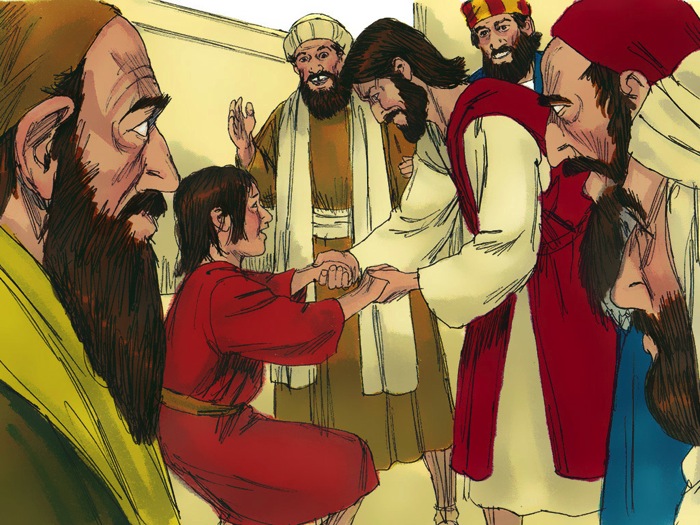
At the bottom of the mountain, they meet up with a man with a demonised son. The other disciples had failed to do anything for the son. Jesus commands the demon to leave, and the boy is healed. When the disciples ask Him why they were unable to remove the demon, Jesus says “You don’t have enough faith.”

Application

it only takes a tiny amount of faith to work miracles in God’s kingdom. A mustard seed is a tiny thing, but that amount of faith is enough to move mountains and to remove demons.

Atomic faith, nano-scale faith, microscopic faith – -how ever we picture it, the smallest quantity achieves miracles.

Paul says that we all have a measure of faith – whether it is a mustard seed or a whole forest of faith doesn’t matter.

Where had these disciples gone wrong? Perhaps the problem was that they copied Jesus’ words or actions but did not appropriate the power of God.

Real faith has its focus on God, not on the problem being dealt with. It is reliant on the Holy Spirit, not on a method or on getting the words right.

Faith in God changes lives.

Prayer

Lord, please help me to grow in faith in you, so that I can trust you to remove the greatest of mountains. Amen.

Ephesians 4:23-24

Here is my commentary on Ephesians 4:23-24. I am publishing these once or twice a week, but you can read all of the available articles at our web-site, http://www.new-life.org.au

Ephesians 4:23-24

“…, to be made new in the attitude of your minds; and to put on the new self, created to be like God in true righteousness and holiness.”

We are to be made new in the attitudes of our minds.

God is not impressed by our cognitive intelligence or academic abilities. He knows more than we can ever know. He desires us to have a new mind that is changed in its attitude.

Attitude describes our approach to life, to others, to God, and to ourselves.

An attitude of arrogance means that we have an opinion about ourselves that is higher than it should be. We treat other people as inferior, God as needing us, and our failure as somebody else is full.

An attitude of fear means that we approach life and other people as wanting to hurt us. We see God as a capricious judge ready to smite us if we step out of line.

An attitude of boldness means that we trust our own abilities, and talents to succeed in any situation.

These attitudes, and many others, are sinful. They belong to the old self, the old person. They are wrong because their emphasis is on self .

As Christians, our attitudes need to be renewed, made over, so that God is at the centre.

Arrogance should be replaced by humility that recognises that we are all made by God, and in that sense, I am no more entitled then any other person.

Fear should be replaced by faith. I am a child of God, and I can trust in His protection, provision, and direction at all times. If God is for us, who can stand against us?

Rather than being bold because of my own abilities, I can be confident in God’s purposes in my life .

Every self-centred attitude needs to be taken off and replaced by God’s attitude .

We take off our old self in order to put on a new self. The word here in Greek is kainos, which means something completely new. It is a new species, a new type, not something renovated and made new again.

In Christ, we have a new mind, a new nature, a new self. We might think of Christ’s resurrection body which was recognisable (most of the time) but had new powers that his old body did not have. Our new self has continuity with the old person, but we are something completely new and different.

We are told to put on this new self. This is not “reinventing myself” as some try to do. To put on the new self means that we co-operate with the Holy Spirit to get rid of all those qualities which Paul ascribes to the Gentiles and to become more like Christ.

This new self is created to be like God in true righteousness and true holiness.

This new self is being fashioned by God to imitate him. This is not a sausage factory cloning process in which we are all forced to be a particular personality. God creates unique reflections of His nature which we carry in a unique way.

The core of this new self is true righteousness and true holiness.

Righteousness is doing what is right all the time. We were once sinful people, but now we are righteous. We have been declared righteous by God through our faith in Christ. We now have to become righteous, that is to live out that state in our daily living.

There is a self-centred form of righteousness, which seeks to draw attention to itself, often by pointing out the failings of others. Self-righteousness is the self declaring that it is right and other people are not.

True righteousness, on the other hand, is the ability to live God’s way without drawing attention to the fact. It is a form of humility in which the person just gets on with living their own best life without seeking recognition or reward for doing what is right.

To be holy is to be dedicated to God’s use. A holy vessel is one which is set apart for worship .

To be a holy person means that my life is dedicated to God’s purposes, set apart for him. I no longer make any attempt to direct my life the way I want. My plans and ambitions are surrendered to God.

This does not mean that we stop aspiring to achieve things or to seek promotion. It does mean that we allow the Lord to set the parameters for every part of our life.

False holiness seeks to be recognised for religious deeds. This is a kind of fake religion which Jesus derided. He told us we are not to pray on the street corners or announce our giving with a fanfare.

True holiness seeks God for who God is, not for the accolades of men and women. I fast for God’s glory not for mine. I pray to seek God’s will not to impress others.

True righteousness and true holiness keep their focus on their source which is God. My good deeds, such as they are, flow from my relationship with God not from my own strength of character.

Key points in this verse:

  • God is remaking our attitudes so that He is our focus not ourselves.
  • We need to put on a new self which glorifies God rather than glorifying ourselves
  • We are created to be like God in a unique way.
  • True righteousness and true holiness flow from God as we seek Him for who He is

Reflection on Matthew 17:1-9

Scripture

As the men watched, Jesus’ appearance was transformed so that his face shone like the sun, and his clothes became as white a slight.

Observation

Jesus takes Peter, James and John up a high mountain in order to be alone. As the men look on, Jesus’ appearance is transformed so that His face and clothes shine like a white light. Then Moses and Elijah appear.

Peter says they should build some memorial shelters. A bright cloud overshadows them, and a voice comes from the cloud saying, “This is my dear Son.”

Suddenly it is all over, and they return back down the mountain.

Application

The three disciples who are closest to Jesus get to see Jesus as He really is. The curtains are pulled back and the glory of Jesus shines through.

One of the problems many of us have, including the first disciples, is that we do not see Jesus as He really is. Despite the miracles and the healings, even the resurrection, we easily forget that Jesus is the divine Son of God.

We too often see Him in earthly terms alone.

Yes, we know that He is God in human form, but we forget so easily. This is not just a man, this is GOD!

When we see Jesus as He really is, our old ways of thinking, of praying, of relating to God and to other people, all of this changes.

Prayer

Father, please give me a fresh revelation of Jesus. May I see Him high and lifted up, not just as a “best friend” but as The Lord. Amen.

Reflection on Matthew 16:21-28

Scripture

“What do you benefit if you gain the whole world but lose your soul? Is anything more valuable than your soul?”

Observation

Jesus begins to speak openly about His coming death in the cross. He will be killed, but on the third day He will rise from the dead.

Peter rebukes Him for saying these things. Jesus says to him, “Get away from me satan!”

Jesus warns His disciples that anyone who wants to follow Him must first take up their cross. To save our lives we must die. There is no benefit in gaining the whole world if we lose our soul.

Application

If we were to gain the whole world, but lose our soul in the process, it would be a loss not a win.

Many people pursue success as defined by the culture rather than God’s kind of success. They pursue career, wealth, relationships, prestige. They satisfy a worldly, fleshly life, but neglect their souls.

Many christians do this, paying lip service to seeking God’s kingdom while being really motivated by the things of the world.

Jesus is warning us that we must not forget to invest in spiritual growth in order to gain worldly satisfaction.

The most important thing we can do is to seek God. In John 15, Jesus uses the analogy of a vine and its branches. To bear fruit, even to just stay alive, we must stay connected to Him.

Is anything worth more than our soul? No! We must be as diligent about this as we are about our physical being.

Prayer

Heavenly Father, you promise eternal life for everyone who puts their trust in you. Please help me to grow in my relationship with you, investing time and energy in seeking your Kingdom. Amen.

Ephesians 4:22

Here is my commentary on Ephesians 4:22. I am publishing these once or twice a week, but you can read all of the available articles at our web-site, http://www.new-life.org.au

Ephesians 4:22

“You were taught, with regard to your former way of life, to put off your old self, which is being corrupted by its deceitful desires.”

We were not taught about Christ in terms of sin and worldliness. No, we were told about a Christ who was different, and the lifestyle we must follow is also radically different to the old nature.

Our way of life before we knew Christ was self-directed. We did what we thought was right, or more likely, what we wanted to do.

The old way living is now a former way of life. It has passed away because we died in Christ, and therefore have been raised in Him. The former way of life must remain in the past as we follow the way of Christ.

We have to” put off the old self” – literally it says to put off the old man, or old person.

The analogy is to taking off old worn out clothes in order to put on Christ, and our new nature in Him. but here Paul says we have to take off the old person in order to put on the new nature in Christ.

For some people, this is scary, and for most people it is difficult. How can I take off the old person that I was before Christ? I am quite attached to my self, and I can’t imagine being without my self. Does that even make sense?

Before we knew Jesus, our nature was corrupted by sin. Everything we did was polluted by sin. Our old nature is destined for death.

But then we came to know Jesus, and we were attracted to him so much that we asked him to come in and make us new. Part of becoming new is getting rid of the old.

This is not something we have to do ourselves. If we take up our cross to follow him, we will die to ourselves. The Holy Spirit takes our dead old nature and brings us back to life. The old man is gone and the new has come.

To put off our old nature is dying to ourselves, presenting ourselves to God as a living sacrifice. We bring ourselves to God with all of our sinful desires, and we say, “ Lord it is all yours. Do what you will with me.”

It is the Holy Spirit who makes it possible to put off the old self, the old person. All we have to do is die to our own ambitions, and let God do His work in us.

The old nature is being corrupted by its deceitful desires.

If we hold on to our old persona, then its deceitful desires will continue to corrupt us. If we demand that our old nature be allowed to live, then it will corrupt us and destroy our new life in Christ.

Our old nature is a breeding ground for corruption and sin. it is like an incubator for a deadly virus which ultimately kills everyone that touches it.

The corruption comes from the deceitful desires of the old nature.

We all have desires, some of which are healthy, and some of which are not healthy. A desire for food is good, but so easily corrupted into greed and obesity. A desire to be significant is a good thing, but can be switched to arrogance, pride and control .

Our desires are deceitful in a number of ways.

Firstly, they can distract us from what is really important. if I constantly give in to my snacking desire, I get nothing done for the Lord .

Secondly,they deceive us into thinking they cannot harm us. “ A little pawn might liven up my marriage.” “ A glass or two of wine never hurt anyone.” We find ways to justify those deceitful desires.

Thirdly, the desires of the old nature are deceitful because they pull us away from godly things. A favourite TV show does not come with the warning that we could be spending that hour in prayer. My need for social interaction may take precedence over the call of the Holy Spirit to spend a period of time in solitude and meditation.

This old person or former self must be put off. The desires which lead us away from God seem so appealing, until we learn that they take us away from the abundant life in Christ.

Key points in this verse:

  • The way to deal with our old way of life is to put off our old self
  • We must take up our cross and die so Christ’s life can fill us
  • The desires of the old nature are deceitful and will lead us away from our new life in Christ.

Reflection on Matthew 16:13-21

Scripture

“Then he asked them, “But who do you say I am?”

Observation

Jesus asks His disciples what people are saying about His identity. They report that some are saying He is John the Baptist, others Elijah or one of the prophets.

Jesus then asks them, “Who do you say I am?” Peter says that He is the Messiah, the Son of the Living God.

Jesus tells Peter that his confession about Jesus was a revelation from the Father, and not the result of human reason. Jesus then says that Peter will now be known, not as Simon, but as Peter- the Rock. Jesus will build the church, and the power of hell will not prevail against it.

Application

Here is the question that we must all answer for ourselves, and it is the question that determines our eternal destiny: “Who do you say i am?”

It is not enough to parrot other people’s opinions- He is Elijah. or a prophet, or a good man or a teacher. It is your confession, your belief, your understanding of Jesus’ identity that determines your salvation.

This is not a question that allows for an intellectual opinion. The answer must come from the heart.

Peter answered, “You are the Messiah, the Son of the Living God.” This is an all or nothing answer to an all or nothing question. If Jesus is who He says He is, then I have to give Him everything- my life my ambition, my desires.

Alternatively, I give Him noting and continue living for myself.

This was the understanding that I came to when I first had a vision of Jesus in 1976. that revelation from the Father changed everything for me. I had to choose between a salvation that would cost everything or reject the whole christian story as a myth. There was no grey area. There can be no following of God as a part-time hobby.

“Who do you say I am?”

Prayer

Lord Jesus, for you my salvation cost everything. Help me to give back everything in joyful gratitude. Amen.

Ephesians 4:20-21

Here is my commentary on Ephesians 4:20-21. I am publishing these once or twice a week, but you can read all of the available articles at our web-site, http://www.new-life.org.au

Ephesians 4:20-21

“You, however, did not come to know Christ that way. Surely you heard of him and were taught in him in accordance with the truth that is in Jesus.”

In verses 17 to 19, Paul describes the depravity of the Gentile unbelievers. living in darkness and ignorance, and therefore slaves to every form of sensuality with a lust for more.

Now Paul says, ”You did not come to Christ that way.” In other words, their knowledge of Christ is the light that broke through their ignorance and changed their thinking and behaviour.

Before we were saved, we may not have had any knowledge or interest in the person of Jesus Christ. His name, the Name above all names, may have just been a meaningless swear word. If we thought about Him in anyway, we might have assumed he was just a person like us.

But, Paul reminds us, Jesus was not a person just like everybody else. He certainly was not a person who lived in the depravity of thinking that Paul has described.

As we get to know Jesus, as we are taught in him, so our understanding of Jesus grows. We see a life lived in simplicity and holiness.

Paul now offers us a choice of two lifestyles – that of the unsaved Gentiles marked by sin and self-direction, or the life of Jesus marked by holiness and God- direction. These two diametrically opposed and cannot be mixed together .

To follow Jesus is not to adopt some kind of religious ideology or theory. Christianity must never be understood as merely a set of dogmas. Following Jesus or being “ in Christ” means that our lifestyle and worldview must undergo radical changes so that we live, speak, and think in a way that is consistent with the way of Christ.

To be “taught in him in accordance with the truth that is in Jesus” means firstly, a teaching of facts. The historic Creeds were an attempt to describe the basics of what Christians believe.

The facts, by themselves are not enough. We need to remember that we are following a person. This truth that is in Jesus must be seen in the words and actions of Jesus. in particular, we must absorb the reality of his death on the cross. The gospels show this clearly with each one describing incidents from the life of Jesus in the first half, and then moving to detailed descriptions of his trial, death, and resurrection in the second half.

To be a Christian, we must first know who Jesus is and why his death is important for us.

To follow Jesus we must also learn to have an ongoing personal relationship with him. This is the purpose of the Holy Spirit, given to us when we are born again.

Christianity is about imitating Christ, becoming like the “Son of Man.” To do this, we need both the truth about who Jesus is and a personal connection with Him so that He can direct our daily walk.

Key points in this verse:

  • We did not come to know Jesus as a sinful person, but as the divine Son of God
  • Christianity is more than a set of doctrines
  • We need an ongoing personal relationship with Jesus in order to follow him.

Reflection on Matthew 16:1-12

Scripture

“Watch out!” Jesus warned. “Beware of the yeast of the Pharisees and Sadducees.”

Observation

Some Pharisees and Sadducees come to Jesus, demanding that He perform a miraculous sign to prove His authority.

Jesus says, “Only an evil and adulterous generation demands a sign.” Later He warns His disciples to beware of the yeast of the Pharisees and Sadducees.

The disciples begin to argue among themselves because they had brought no bread with them. Jesus rebukes them because they have so quickly forgotten about how He had provided food for the crowds. Then they understand that the warning about the yeast of the Pharisees and Sadducees was not about food but about deceptive teaching.

Application

The deceptive teaching of the Pharisees and Sadducees is all around us still, but we often fail to see it.

The Pharisees were the legalists who took the Law of Moses and made it more extreme. If the Law said, “Do nor work on the Sabbath,” they took that law and defined carefully what actions were allowable and what were not.

They believed that if they were good enough, God would bless them and raise them to eternal life.

There are people in every church who think that they have to prove themselves to God. Just say the prayer the right way, be a good person, and so on. This is the yeast of the Pharisees.

The Sadducees did not believe in the resurrection. They were the people of unbelief, the “liberal” wing of the Jewish leaders. They believed in maintaining the traditions and co-operating with the pagan Romans.

If you believe that God does not heal people or perform miracles any more, you have the yeast of the Sadducees.

Prayer

Lord please deliver me from all forms of legalism and unbelief. I thank you that you love me, and that by your grace you have saved me. Amen.

Reflection on Matthew 15:29-39

Scripture

A vast crowd brought to him people who were lame, blind, crippled, those who could not speak, and many others. They laid them before Jesus, and he healed them all. The crowd was amazed!

Observation

A vast crowd gathers around Jesus, bringing people suffering all kinds of ailments. Jesus heals them all, and everyone is amazed. Those who have been healed praise the God of Israel.

Jesus calls the disciples together and tells them they need to feed the people. They find seven loaves and a few fish which Jesus multiplies to feed 4000 men plus women and children.

Application

A large crowd gather together to meet with Jesus. They are hungry for an encounter with the Lord. They bring everyone they know who is ill or maimed in any way. He heals them all. Nothing is too hard for the Lord.

When do we come together in church with an expectation that we will meet Jesus?

When is the last time Jesus healed everyone in church?

We have to regain that sense of anticipation, of wonder, of amazement at what God will do amongst His people.

We can make theories and excuses, but the fact is that often our experience of church is nothing like this gathering of people.

The Holy Spirit is here.

Let faith rest on this fact.

Can I expect that God might do something amazing his Sunday? Or even right now?

Prayer

Come Holy Spirit. Let my faith find your grace today. Come and heal the sick, feed the hungry, raise the dead. May the people in my community praise the God of Israel. Amen.