Reflection on Matthew 22:1-14

Scripture

“The feast has been prepared. The bulls and fattened cattle have been killed, and everything is ready. Come to the banquet.”

Observation

The kingdom of God is like a king who prepared a great wedding feast. When everything was ready the king sent out his servants to fetch the guests. They all refused to come.

The king sent out more servants. The guests ignored them, and some even killed the messengers.

The king was furious, so he sent his army to kill the murderers. Then he instructed his servants to bring in everyone “good and bad alike.” One man in the feast was not properly dressed and so the king had him thrown out into the darkness.

Application

The last few decades has seen a massive cultural change in the West. A centuries long tradition of adherence to christianity has been overturned by hypersexual individualism. No longer are christians in the majority in many countries, but they are becoming increasingly marginalised and harried by the cultural leaders.

There have been many attempts in the church to reverse this culture war. Christians have been made to feel guilty in many ways. If only we evangelised more or better. If only our churches were more welcoming of Generation Z’s or Millennials.

This parable was originally aimed against the leaders of Israel who failed to see Jesus was the long- awaited Messiah bringing in the promised Kingdom. They were the invited gusts who refused to come to the party.

But now we have a new culture where people have rejected the gospel. We are the invited guests living in the privilege of a culture that was dedicated to God’s values. We said “No” to the king’s invitation, and now the Spirit of God is calling people in Asia, Africa and South America to “Come.”

A faithful remnant intercedes for their nations and share the gospel. Will we see the invited guests change their minds and join the feast?

Prayer

Lord, I pray for Australia. Bring this nation back to a place of repentance before you. Revive us! Amen.

Reflection on Matthew 21:33-46

Scripture

“Anyone who stumbles over that stone will be broken to pieces, and it will crush anyone it falls on.”

Observation

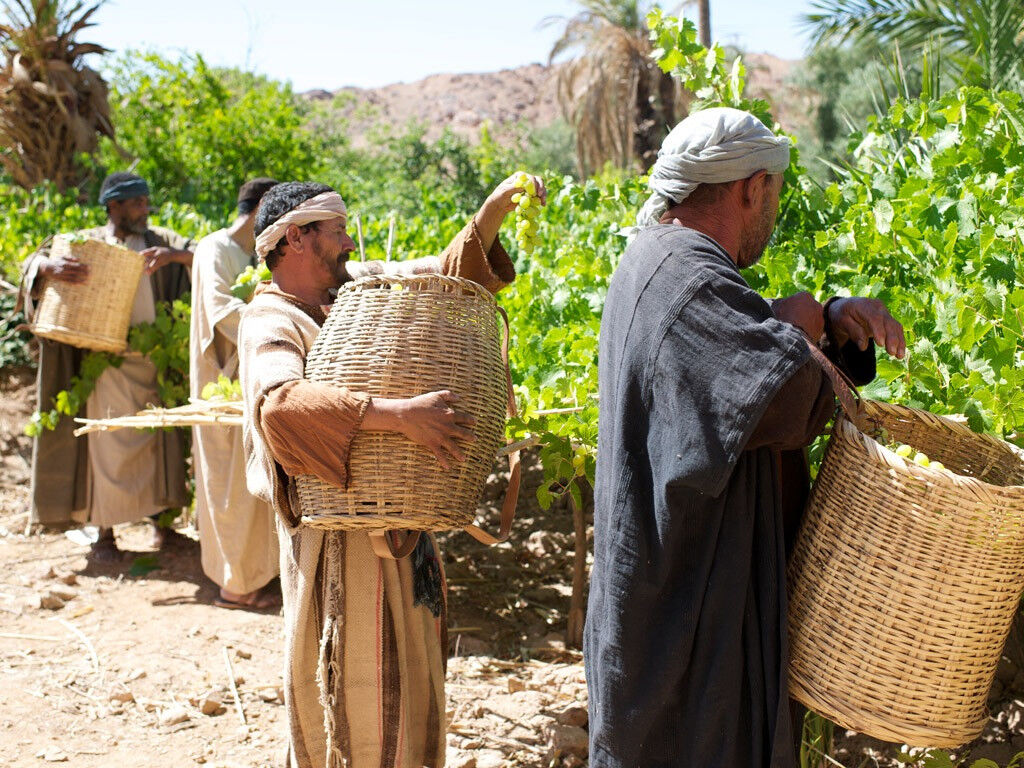
Jesus tells a story about a land owner who develops his land and then leases it out to some farmers. At the time of the harvest, he sends servants to collect his share. The farmers kill one of the servants and beat the others.

Finally he sends his son. He reasons that they will surely respect him. The tenants, though, think that if they kill the son, they will keep the estate. So they kill the son.

Jesus then asks the religious leaders what they think he will do to the farmers. They say that he will kill them and put different tenants in. But they know that He is speaking this parable against them.

Application

Jesus quotes Psalm 118:22-23 which says that the stone which the builders rejected has become the cornerstone. He is that stone. He adds a new twist when He says, “Anyone who stumbles over the stone will be broken to pieces, but it will crush anyone who it falls on.”

We can see in this saying that people have a choice about how they relate to Jesus, the stone.

Firstly, we can stumble up against Him and be broken. That means we allow Him to break our selfish ways, our sinful self-determination and our rebellion. In breaking us, God always rebuilds us. He recreates us in His image.

If we don’t stumble into Jesus, then the stone will fall on us, crushing us. In the end, everyone who refuses to worship Jesus will be judged by Him.

The Pharisees understood that Jesus was speaking this to them. He was offering them an opportunity to repent.

He still offers us that chance to turn to Him.

Prayer

Lord, I come to you now and acknowledge my sins. Please break me and mould me into your new creation. Amen.

Reflection on Matthew 21:23-32

Scripture

Then Jesus explained his meaning: “I tell you the truth, corrupt tax collectors and prostitutes will get to the kingdom of God before you do.”

Observation

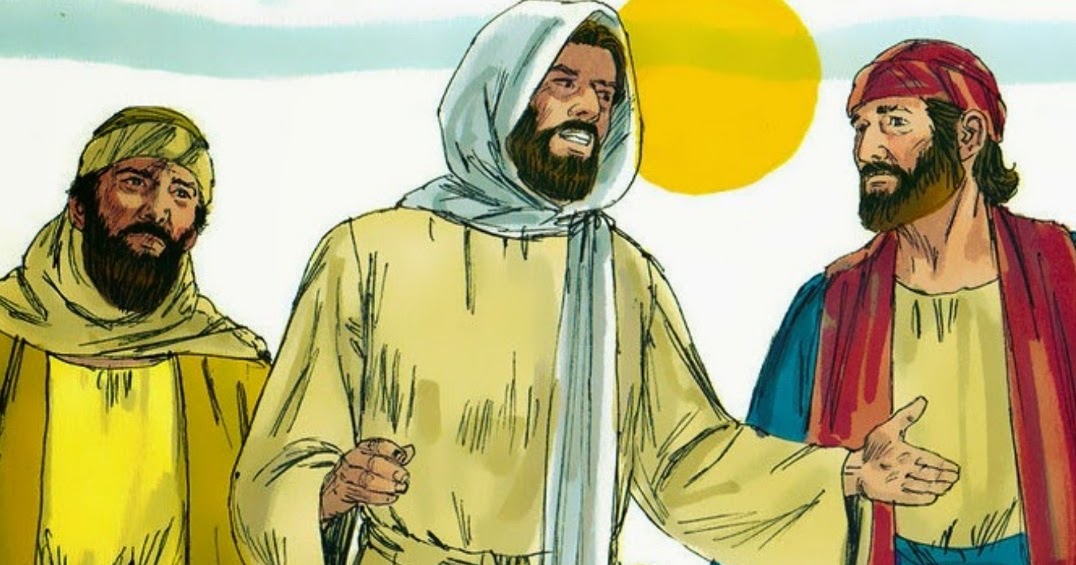
The priests and elders come to Jesus as He teaches in the Temple precinct. They demand to know in what authority Jesus teaches. He responds by asking them if John’s authority came from heaven or from himself.

The leaders recognise the trap in this question. If they say John’s authority came from heaven, Jesus will ask why they rejected John. If they say it was human authority, then the people will turn on them because John was recognised as a prophet.

Jesus goes on to tell a parable about a man with two sons. He asks them to go out and work in the vineyard. The older son says, “No”, but then goes anyway, and the younger one says “Yes” but stays inside.

Application

The truth is that many people whom we look down on will turn to Jesus and be in God’s kingdom. Those who claim to be righteous but refuse to obey God will not enter into God’s kingdom at all. They will end up in the torment of hell.

There are many people who claim to be born again, even Spirit-filled, but they have not surrendered their hearts and their wills to Jesus. They have said the “sinner’s prayer,” but their heart was untouched by the grace of God.

To be a wicked person is a terrible thing, but it does enable a person to recognise they need a Saviour. To be a self-righteous person may lead to disaster, because such a person thinks they are right with God when they really are not.

Prayer

Father, grant me a humble heart that I always live in dependence on you. I pray for everyone I know who is not yet right with you, both the wicked and the self-righteous. Lord bring them to the place of true repentance. Amen.

Ephesians 4:29

Here is my commentary on Ephesians 4:29. I am publishing these once or twice a week, but you can read all of the available articles at our web-site, http://www.new-life.org.au

Ephesians 4:29

“Do not let any unwholesome talk come out of your mouths, but only what is helpful for building others up according to their needs, that is may benefit those who listens.”

The words that come from our mouths reflect the reality of what is in our hearts. Just as it is humanly impossible for thieves to become generous givers (v.28), this change of heart that leads to a change in our speech can only come through the power of the Holy Spirit.

The word translated “unwholesome” in the NIV actually means corrupt, rotten, or putrid. Paul users this word for effect. We could say “ disgusting” if we wanted to be more accurate to his intent.

There are many forms of “ unwholesome talk” or” putrid words” that come from the mouths of Christians. We need to ensure that our words reflect the glory and purity of God.

Swearing is one such area. The casual dropping of words that were once considered beneath contempt and not suitable for speaking in public has become standard speech for many people including Christians.

Gossip is based on the actions and supposed motivations of other people. Gossip is always negative and seeks to pull down the standing of other people. We need to build up rather than pull down. Gossip is nearly always false.

Slander is a direct attack on the reputation of another person. It might be lies about what another person has done, or a telling of just part of the truth. We need to be careful that the words we speak about others are both true and build up their reputation amongst the brothers and sisters in the church.

Lies are a repudiation of the truth. Christians are supposed to be people of the truth as we follow Christ who said “I am the Way, the Truth and the Life.” We live in a post- truth age, but God is still requires us to speak only words of truth. Lying takes various forms in which we try to promote our own self interest at the expense of facts, and often the expense of other people.

Our unwholesome talk can take the form of inciting others to violence or to hatred. We promote false stereotypes that result in particular individuals or groups suffering unfairly.

There are two keys to not letting unfair unwholesome talk come out of our mouths .

First, we need to let the Holy Spirit completely renew our minds. If we don’t think it we can’t say it. Romans 12:2 says, “Do not conformto the pattern of this world,but be transformed by the renewing of your mind. “

We musttake seriously the doctrines that people bear the image of God, and that God loves all people. As a follower of Christ, how can I use words to injure a person for whom Christ died?

When we find that ungodly thoughts go through our heads, we need to confess them to the Lord and ask him to change our brains.

The second key is to apply a filter to our speech. Some people just blurt out every thought that goes through their heads. We need to think before we speak, and ask ourselves whether we need to say this thought out loud, or whether we should speak it in a more godly way.

We should only speak what is helpful for building up others.

In our conversations we should seek to build up the people we are speaking with or about. This doesn’t mean that everything has to be a kind of mindless positivity. it does mean that we must use a words to edify, exhort, and encourage. Our conversations are opportunities to help others to go deeper in Christ, to seek positive choices not negative.

We are to build others up according to their needs, that it may benefit those who listen.

Our words and conversations need to be other focused. Just as thieves are required to turn their attention from getting to giving (v.28), so all of us who speak and listen must turn our attention to someone else.

It is often noted that most people engage in conversation with their focus on themselves. While another person is speaking, we are looking for what we are to say next.

If we are trying to build others up according to their need, then we will be looking for what the person is needing rather than what can we say next. We listen to the words, the tone of voice, to what is not being said. How would Jesus respond to this person?

This posture in relating to others turns us around so that in our speaking and listening we are seeking to love our neighbour.

if I’m consciously wanting to love this person I am speaking with, then there will be no space, no reason, no desire for putrid or corrupt talk. All that will be in my head is how can I help this person?

Key points in this verse:

  • Unwholesome talk is rotten or corrupt talk, and it dishonours God
  • Corrupt talk takes many forms from swearing to gossip and slander
  • God wants me to focus on the needs of the person I am talking to, not on my own need
  • When we seek to love our neighbour in conversation, it benefits everyone who hears it
Reflection on Matthew 21:12-22

Scripture

Then Jesus told them, “I tell you the truth, if you have faith and do not doubt, you can do things like this and much more. You can even say to this mountain ‘May you be lifted up and thrown into the sea’, and it will happen.”

Observation

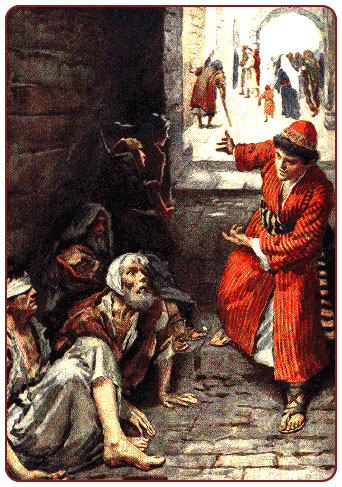
Jesus enters the Temple and drives out the people buying and selling animals for the sacrifices. He rebukes them for turning the house of prayer into a den of thieves.

The blind and lame come to to Jesus in the Temple. He heals them there. Even children are shouting praise to God, but the leaders are indignant.

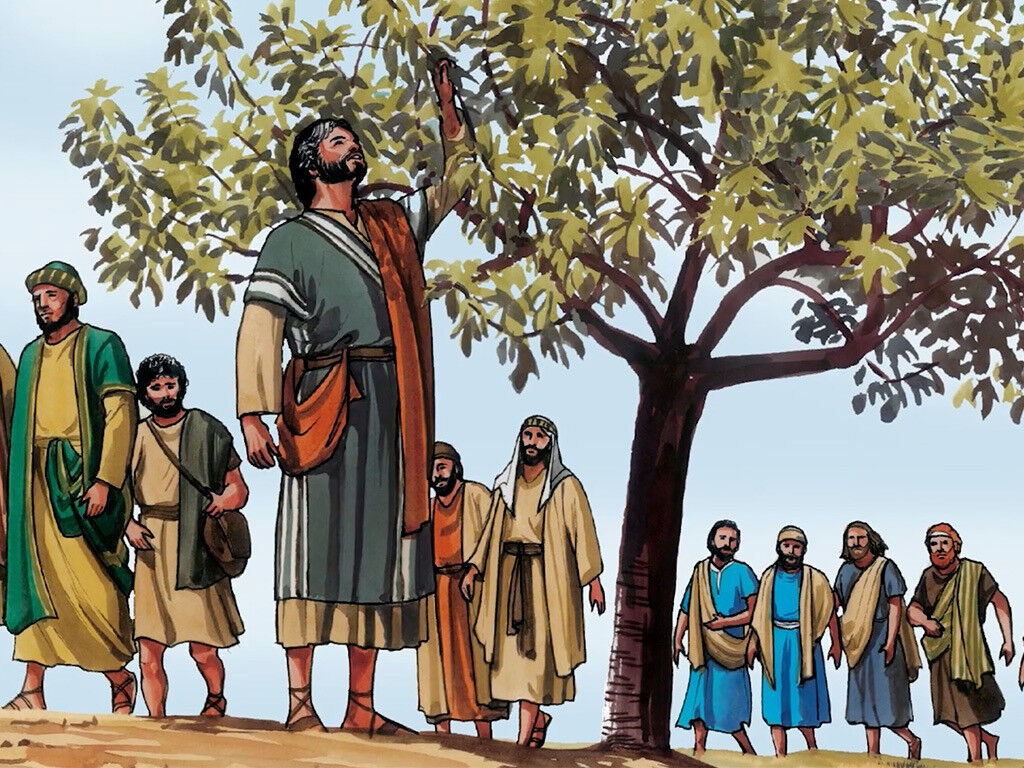
The next morning, Jesus sees a fig tree with no fruit, so He curses it. It immediately withers. He tells the disciples that with faith they will do much greater things than this.

Application

With faith and prayer we can achieve impossible things for God’s kingdom. Jesus gives the example of commanding mountains to relocate to the sea, but there are many other things that we can achieve through constant, passionate and prolonged prayer.

Physical healing comes to mind. Verse 14 says that Jesus healed the lame and blind in the Temple. The people of God should be healers of the sick, especially in the context of worship.

Lately we have been re-viewing the “Transformations” videos produced by George Otis Jr thirty years ago. In these productions, Otis documents how cities and regions have been transformed by the power of the Holy Spirit. At the heart of all these cases, there was passionate prayer born from desperation for their community. This is surely a greater miracle than a mountain being moved.

Whatever the issue, Jesus reminds us that breakthrough miracles happen in response to faith and prayer.

Prayer

Thank you Lord for the power of the Holy Spirit, unleashed when people pray in faith. Please help me to see where you are at work and to be faithful in prayer. Amen.

Ephesians 4:28

Here is my commentary on Ephesians 4:28. I am publishing these once or twice a week, but you can read all of the available articles at our web-site, http://www.new-life.org.au

Ephesians 4:28

“He who has been stealing must steal no longer, but must work, doing something useful with his own hands, that he may have something to share with those in need.”

In any church that is successfully winning people to the Lord, there will be some, perhaps many, who have come from a place where they have made an income from various dishonest means.

The Greek word for stealing here means pilfering, that is small time theft such as shoplifting or picking pockets, Rather than violent robbery or fraud. nonetheless, what Paul speaks of here should equally apply to these other forms of theft.

The principle here is that followers of Christ should never have to resort to dishonest means to survive. He has promised to supply what we need. To steal, then, under any pretext, is a sign of unbelief, that we do not trust our Lord.

To some people, this way of living seems easier than the drudgery of a nine to five job. It becomes a habit to steal rather than to work.

Paul says clearly here that if you were a thief before you came to Christ, you must stop this now and turn to an honest living.

Paul says that rather than stealing, such people should turn to working with their own hands. The Greek word here is korato which means the kind of physical labour which makes you tired at the end of the day. Rather than taking the easy route of theft, Paul says they must work hard for their living. In many senses, this is the most fulfilling kind of work, resulting in things being produced by our hands.

We are were created to be productive. This is clear from Genesis 2, where Adam and Eve were meant to co- labour with God in tending His creation. Unemployment can lead to despair and depression, a sense that we are not useful for anything .

The purpose of work is not just to earn an income with which to feather one’s own nest. People in the world are very good at finding ways to spend their cash on their personal comforts and entertainment. They see this as a reward for working hard. Once we have paid for our basic needs of food and shelter, we can believe that what’s left over is ours to spend as we like.

Paul says that the goal of working is to have something to share with others. Instead of focusing on what I can do with “my” money, Paul is saying that we must use it to meet the needs of other people.

In our very self-centred society, that is a strange notion. Surely we want to feed our family and ourselves. No, we work to feed those in need.

For people who are used to meeting their own needs by taking from others, this is a total reversal. They are to stop taking from others to gain an income, and instead they must work hard in order to give to others.

In the natural, this sort of lifestyle change is inconceivable. A leopard cannot change its spots. Christ turns us all around. Repentance is about a change of thinking that leads to a change in action. So, in Christ those who used to be thieves become generous donors. Their eyes move from themselves and their own needs to others and their needs.

Key points in this verse

  • Thieves who come to Christ are to stop stealing
  • All followers of Christ must find honest ways to support themselves
  • God honours productive work
  • The goal of working is to earn an income in order to share with the needy, not just for our own comfort
  • The kind of transformation that sees a thief become a generous giver is only possible in Christ

Reflection on Matthew 21:1-11

Scripture

Tell the people of Jerusalem,

“Look your king is coming to you.

He is riding on a donkey-

Riding on a donkey’s colt.”

Observation

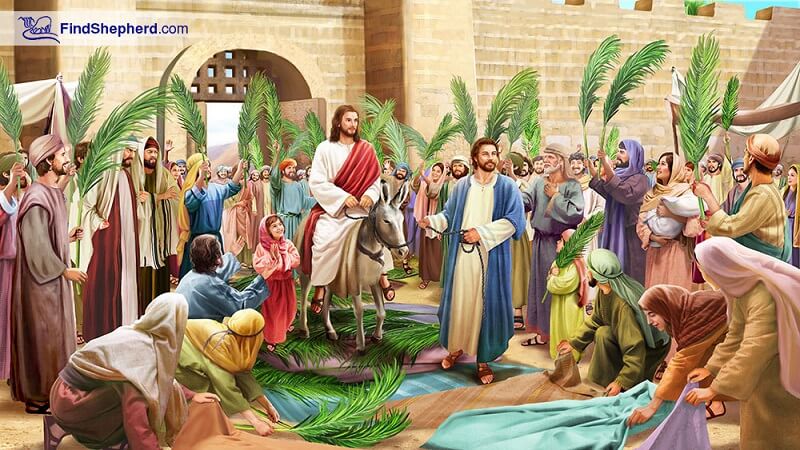
Jesus and His disciples come to Bethphage near Jerusalem. He sends two of His disciples into the town to collect a donkey. This is done to fulfil a prophecy in Zechariah 9:9 that Jerusalem’s king would come in humility on a donkey.

The crowd spreads garments and palm branches on the road ahead of Him. They shout “Hosanna to the Son of David!”

People in Jerusalem ask who it is they are making a fuss about. The people in the crowd tell them it is Jesus of Nazareth, a prophet.

Application

When I first came to know Jesus, it was as the loving and compassionate Son of God. At the time I was lost and not sure of where I fitted in the world. Jesus came to me and overwhelmed me with His love and peace.

This is the Jesus we see n the gospels, and particularly in the last week of His life on earth.

Yes, He is the King of Kings and the Lord of Lords. Yes, He will judge every single person that ever lived. Yes, He will conquer the most tyrannical of political and military rulers.

But He is the Lord of love, and He reigns in gentleness.

Jesus never coerces or instils fear.

He is firstly humble and gentle.

His followers, too, must excel in humility and gentleness. For many of us this does not come easily. We want our way and we want it now.

We follow a King who rides on a donkey not on a war horse. He lives by dying and wins by giving up everything.

Prayer

Father please help me to live a life marked by gentleness and humility. Amen.

Reflection on Matthew 20:17-28

Scripture

Jesus answered them by saying, “You will indeed drink from my bitter cup. But I have no right to say who will sit on my right or left. My Father has prepared these places for the ones He has chosen.”

Observation

Jesus takes the twelve disciples aside and tells them privately about His imminent death and resurrection.

The mother of James and John comes and asks Jesus to allow her sons to sit next to Him when He takes His Kingdom. Jesus replies that she doesn’t know what she is asking for. To follow Him means to drink from the same cup of suffering that He must drink.

He goes on to tell the disciples that anyone who wants to rule in His kingdom must first become a servant. Jesus came not to be served but to serve and to give His life as a ransom for many.

Application

To follow Jesus means that we must be ready to suffer for Him and for His Kingdom.

The path of Jesus has always been as odds with the world and the demonic powers that control it. Suffering is almost inevitable.

The so-called prosperity gospel promises wealth and success to those who believe in Jesus. While it is true that God’s favour can result in earthly advancement, it is also true that the world hates those who follow Jesus.

Persecution has been the lot of the majority of christians in the ages. But their experience has been that there is enormous blessing in suffering. Suffering for the faith brings an added dimension of the presence of Christ that those who follow Him in a place of comfort cannot understand.

We do not go out looking to be persecuted, but when suffering comes we should not flee it. Christ is always with us.

Prayer

Lord Jesus, when times of testing come, may I be found faithful. Amen.

Reflection on Matthew 20:1-16

Scripture

“Is it against the law for me to do what I want with my money? Should you be jealous because I am kind to others?”

Observation

Jesus tells a parable about a landowner who needs to hire workers for his vineyard. He goes out at dawn, 9 o’clock, noon, and again at 5 o’clock. He tells the workers at each stage he will pay them what is fair.

After sunset, he calls the workers and pays them all exactly the same amount- a full day’s wage. Those who were employed first argued with this. The landowner points out that they had agreed to work for the usual wage. If he paid the latecomers the same amount they were not cheated in any way.

Application

Everyone who labours in the Father’s vineyard gets the same reward regardless of how long they serve Him. We all get eternal life whether we are born christian, so to speak, or whether we meet Jesus minutes before we die.

To complain that one person does it very easy while another does not is to miss the whole point. We get to live forever with our Father.

We do not serve the Lord for a pay cheque. We serve Him in love.

Jacob served Laban for seven years to get Leah, whom he did not want, and another seven to get Rachel. He effectively worked 14 years for Rachel his beloved and not a day for Leah. Which did he love more?

The idea of working and receiving payment is the opposite of grace. Yet some people cannot help but think this way. “If I do this for God, He will save me.” They fail to see hat the price has been paid and our salvation does not depend on what we do for God.

Prayer

Thank you Father for the promise of heaven. I don’t have to do anything to earn your favour because you already love me. Hallelujah!

Reflection on Matthew 19:16-30

Scripture

“Everyone who has given up houses or brothers or sisters or father or mother or children or property for my sake, will receive a hundred times as much in return and will inherit eternal life.”

Observation

A young man comes to Jesus and asks Him what he must do to have eternal life. Jesus tells him he just needs to keep the commandments.

The man tells Jesus he has kept them all. Jesus tells him he just needs to do one thing- to sell his possessions and give the money to the poor, and then come and follow Him.

Jesus tells the disciples that it is very hard for a rich man to enter the kingdom of heaven. It is easier to pass a camel through the eye of a needle. He goes on to tell them that in the kingdom age, everyone who gives up anything for His sake will be rewarded a hundred times over, and will also inherit eternal life.

Application

The rich man was badly addicted to his money, or to be more accurate, the lifestyle his money made possible. He could not give that up, even for the sake of eternal life.

The pandemic has brought about immense changes to people’s lifestyles because of restrictions imposed by authorities. While many people have lost businesses built up over many years, the biggest question for many seems to be “When can I travel overseas?”

Jesus constantly nails the one thing we are dependent on and asks us to yield it to Him. He promises that whatever we yield to Him He will restore a hundred times over.

Bu tit is always the one thing I have set my heart on or worked hard for. He wants me to give that thing up, and I can’t because it is my identity, my achievement, my idol.

The good thing is that once we have decided that everything is His, we don’t even mind giving it up for Him.

Our idols keep us rooted in this planet. Jesus gives us vision for eternity. When we give it all to Him, He returns it and eternity as well.

Prayer

Lord, please show me the idols of my heart, and give me grace to surrender them to you. Amen.