Reflection on Matthew 10:1-15

Scripture

“Go and announce to them that the kingdom of heaven is near. Heal the sick, cure those with leprosy, raise the dead, and cast out demons. Give as freely as you have received.

Observation

Jesus chooses the twelve apostles and the sends them out to the people of Israel. They are to announce the good news, heal the sick and raise the dead.

The apostles are not to take any money, but to rely on the hospitality of people in the various towns they visit. If anyone refuses to welcome them, they are to shake the dust from their feet as they leave.

Application

Our task as disciples of Jesus is not complicated. Firstly, we are to tell people that the kingdom of God is here. That means that people should turn away from their selfish ways of living and submit to the authority of King Jesus.

To back up the claim about Jesus’ reign, we are to heal the sick, raise the dead and cast out demons. In other words, our message needs to be confirmed with miracles.

I read today about a couple who went to a remote village in Africa to translate the Bible into the local language. It was difficult at first because, although they had learned French which was an official language in that country, very few of the local people understood French. After several years of learning how to fit into that village, there was a boy who was suffering a life- threatening illness. There was no medical care available, so the missionary said to the pastor, “We should pray.” As he said the word “pray” the boy opened his eyes. They prayed for him and he was healed immediately.

This is the normal christian life. We need to take hold of the authority given to us in Christ and exercise it to His glory.

Prayer

Lord, teach me how to preach your gospel, heal the sick and raise the dead so that I can serve you effectively. Amen.

Reflection on Matthew 9:27-38

Scripture

“The harvest is plentiful, but the workers are few. Ask the Lord, therefore, to send out workers into His harvest field.”

Observation

Two blind men call to Jesus, “Have mercy on us, Son of David!” Jesus heals them and warns them not to tell anyone, but they spread the news about Him everywhere.

A mute demonised man is brought to Jesus, and He drives the demon out. The crowd is amazed.

Jesus goes throughout Israel preaching the Good news and healing the sick. He looks at the crowds with compassion and tells his disciples they must pray for the Lord to send out his workers into the harvest field.

Application

There are so many people who are desperate for salvation. The harvest is plentiful.

There was a time when this scripture was applied to what used to be called “the mission field.” Over recent decades we have discovered that it applies here at home also.

In Australia a little under 20% of people attend church at least once a month. This is a fairly low bar to describe what it means to be a christian. Yet about 60% identify as “christian” in the census.

The harvest is plentiful, even if we start a the easy place of sharing with the huge number of people who claim to be christian but don’t ever go to church and are not living in the Way of the Lord.

Jesus tells us to pray. We are not necessarily all called to be evangelists, but we all called to pray for the Lord to release workers into the harvest field.

Jesus also tells us to make disciples. We must share the gospel with our friends and family members. The people closest to us can judge whether the God stuff works in our lives.

We are not responsible for results, just to pray and witness.

Prayer

Father, please send your workers out into the harvest field. Show me who to talk to about you and how to do this. May the harvest be great. Amen.

Reflection on Matthew 9:14-26

Scripture

“No one puts new wine into an old wine skin. For the old skin would burst from the pressure, spilling the wine and ruining the skin. New wine is stored in new wine skins so that both are preserved.”

Observation

Some disciples of John the Baptist ask Jesus why His disciples don’t fast like they and the disciples of the Pharisees do. Jesus replies that this is a wedding feast and not a time for fasting. It is time for new wine and new wine skins, so the old seasons are passing away.

The leader of a synagogue comes and pleads with Jesus to raise his daughter who has just died. As Jesus is going to his house, a woman who has suffered prolonged bleeding comes and touches the hem of his garment. Instantly, she is healed.

At the synagogue leader’s house, Jesus removes the mourners. He then takes the girl by the hand and she stands up alive.

Application

The kingdom of God is a new age, a new era. The new wine, representing the Holy Spirit, is poured out on all who will receive it.

To contain this new wine, a new wine skin has been created. It is called the church.

The people of the Holy Spirit, the followers of Jesus, are birthed into a new way of living, a new way of relating to the Father that was not available in the old ways.

Religious practices such as prayer and fasting are repurposed. In the old age, people prayed and fasted to impress God, but now we pray and fast to draw near to God. Worship was once to a God “out there”, but now it is to the God who is “in here.”

In the past, the Holy Spirit was only available to a few people. But now He is in all of us.

We are the people of the new wine! Drink in all that He wants to give you.

Prayer

Lord Jesus, please forgive me for old wine skin thinking. Thank you for the Holy Spirit who gives me new life in all its fullness. Amen.

Ephesians 4:13

Here is my commentary on Ephesians 4:13. I am publishing these once or twice a week, but you can read all of the available articles at our web-site, http://www.new-life.org.au

Ephesians 4:13

“… until we all reach unity in the faith and in the knowledge of the Son of God and become mature, attaining to the whole measure of the fullness of Christ.”

The ministry or ascension gifts have been given to prepare God’s people 4 works of service and to build up the Body of Christ (v. 12).

The end goal of these gifts is:

  1. We all reach unity in the faith
  2. We all reach unity in the knowledge of the Son of God.
  3. We all become mature.
  4. We attain the whole measure of the fullness of Christ.

If anyone believes that the ministry gifts (particularly apostles and prophets) have been done away with, this verse should dispel that notion.

Christ’s desire is that the church should be “a radiant church, without stain or wrinkle or any other blemish but holy and blameless” (Ephesians 6:27). The ministry gifts are a part of this process of the church becoming all that God wants it to be.

The unity in the faith that is God’s heart for the church is not about a denominational structure that involves all Christians under one Pope. This is a unity that understands all christians share the same Saviour. We belong to the same family.

This is organic unity that allows differences in practice, in worship style, and in doctrinal emphasis, but brings a unified approach to ministry, mission, and oversight.

In the past (and in the present, too), the church has allowed doctrine to become a point of division. Denominations and movements have broken away because of convictions about beliefs. These have been understandable, but if “unity in the faith” means anything it must mean that God wants us to belong together even when we disagree.

Unity in the faith happens when congregations share together regardless of denominations. It happens when pastors meet together, pray together, and worship together.

At the local level, unity in the faith means recognising that there is one church in the town, that we are partners together in the gospel, and that God loves all of His people equally. It means that pastors and other ministers recognise the primacy of the local network over denominational loyalties and structures.

Unity in the knowledge of the Son of God is a growth in intimacy with the Saviour. The word for knowledge here suggests a process of growing into certainty.

This is not about doctrines so much as about relationship. As individuals grow in their knowledge of Christ (not knowledge about Christ), they will recognise that same perspective in others.

Those who know Jesus do not make judgements about appearances or denominational affiliation. The important thing is that we love each other because we love the Lord.

As we grow in the Lord, our love for Him increases our love for other believers .

This knowledge means we also know the ways of the Lord Jesus. As disciples, our aim should be to become more like Jesus. How can we do that unless we know him? How can we know him unless we give our lives to him as a living sacrifice? How can we know him unless we take up our cross and follow him?

As we join the fellowship of cross-carrying living sacrifices, we discover that all of our reasons for judging others fall away, and our reasons to encourage others become predominant.

The ministry gifts are to make us mature. There is a process of growth which is often misunderstood in the church.

Some believers think that once you say the prayer, you’ve got to the place of maturity. This is the starting point of discipleship, not the endpoint. Some think the baptism in the Holy Spirit is the goal, but again, this is just a start in our relationship with the Holy Spirit.

In our biological development, maturity is a moving goal and is multifaceted. We may marvel at the maturity of a 15 year old, but if she is still the same at 45 years, we may wonder why there are no emotional, social, or physical changes.

We seem to tolerate a very low level of spiritual maturity in the church. Often there is no encouragement to grow in prayer, in the use of spiritual gifts, in knowledge of the Bible and so on. Yet the purpose of the ministry gifts is to bring all believers to this place of maturity.

A mature believer is a person who is becoming increasingly like Jesus. He or she will be a person who has the combination of both love for God and people, together with holiness. The fruit of the Spirit (Galatians 5:22-23) develops in us the character of Christ, while the gifts of the Spirit (1 Corinthians 12:7-10) give us the ability to minister as Christ did.

A mature believer is someone who is growing in love for God. A significant portion of their time is spent in prayer, reading scriptures, worship, and service.

The final goal of the ministry gifts is that we all attain the whole measure of the fullness of Christ. This means that we recognise that Christ is all and that He is in all things. It means that we put Christ at the centre of all we do, of every relationship, of our work, of our family, of our church.

The fullness of Christ is not a measurement of a quantity, but a posture of the heart. In this place, I recognise that I am a child of God, a bond-servant of Christ, and that everything I do is for Him and to Him. I have dedicated my life to Him and now I live only for Him. I have died to myself and I am living to Him.

This does not mean that we are absolved of all the normal duties of living in a community. We still have family duties, but this is for Christ. We still serve in the church, but this is for Christ. We still work, but this is for Christ. We still eat and drink, but all of this is for Christ.

The goal of Christ is that we all move forward together. Not everyone will be at the same place of maturity or unity in faith, so in that sense the work of ministry never finishes.

Key points in this verse:

  • Ministry gifts are to bring all the church to maturity which includes unity and knowledge of Christ.
  • Unity in the Faith is an organic unity, not a structural unity.
  • God wants us to be united in our knowledge of the Son of God.
  • Maturity comes as we seek to put the Lord at the centre of all we do.
  • The measure of the fullness of Christ mean that Christ is everything to us.

Ephesians 4:12

Here is my commentary on Ephesians 4:12. I am publishing these once or twice a week, but you can read all of the available articles at our web-site, http://www.new-life.org.au

Ephesians 4:12

“… To prepare God’s people for works of ministry so that the Body of Christ may be built-up.”

The ministry gifts have a dual purpose- to equip the saints for ministry, and to build up the church, the Body of Christ.

There is an attitude amongst some Christians that the pastor is responsible for every ministry that happens in the church. As we stated in the previous verse, no one person can contain every ministry gift, let alone do everything that is needed to be done.

Pastors have responsibility for oversight, to give directions and set parameters for ministry in the congregation.

Pastors and the other five-fold ministers are to equip the saints, God’s people, for works of ministry. They are not responsible for doing all the ministry.

The way it should happen is that they first demonstrate the ministry. Then the disciples practice the ministry with supervision. Finally, they are declared to be competent ministers of the gospel .

The rabbinical model was for disciples to literally follow the Rabbi around everyday, observing and sometimes participating in the ministry. This was the model followed by Jesus and the Twelve.

So apostles should mentor future apostles, evangelists should mentor future evangelists, and so on. Because we are meant to be fathers to sons, the desire of the minister should be that the son should rise to greater levels of success in the Lord than he himself did. Any minister who is not seeking to raise up or to equip the saints is falling down on their job.

The expectation is not that every member of the body becomes a five-fold minister. The expectation is that every believer has the opportunity to participate in the ministry of the church and to do the works of ministry .

When this process is happening, the church becomes mature. Every christian should be taught how to share the gospel with unbelievers, how to pray for the sick, how to encourage the downhearted, and how to hear the Lord. These things flow from the hearts of the five fold ministers, and should flow to the hearts of the saints.

The second purpose of the five fold ministry gifts is to build up the Body of Christ.

The church needs strengthening to do its tasks, and the ministers are like coaches showing the body how to develop its gifts and become stronger in Christ. As different parts of the body learn to minister, the body as a whole is built up.

It is built up numerically through the witness of its members under the encouragement of the evangelists.

It is built up in purpose under the grace of the apostles and prophets, and it senses its purpose and direction as people learn their giftedness.

Pastors and teachers keep the body strong and on the right tracks. As the members of the body grow in understanding, they ensure at the whole body stays close to the Lord.

So the church is built up in every way through the correct operation of the ministry gifts of the Holy Spirit .

Key points in this verse:

  • The ministry gifts are given to equip the people of God.
  • It is not God’s intention for the gifted ones to do all the ministry.
  • Mentoring of rising ministers and equipping all the people are the focus of the five-fold ministries
  • As God’s people are equipped to do the works of ministry, the whole body is strengthened and built up.

Reflection on Matthew 9:1-13

Scripture

Fear swept through the crowd as they saw this happen. And they praised God for sending a man with such great authority.

Observation

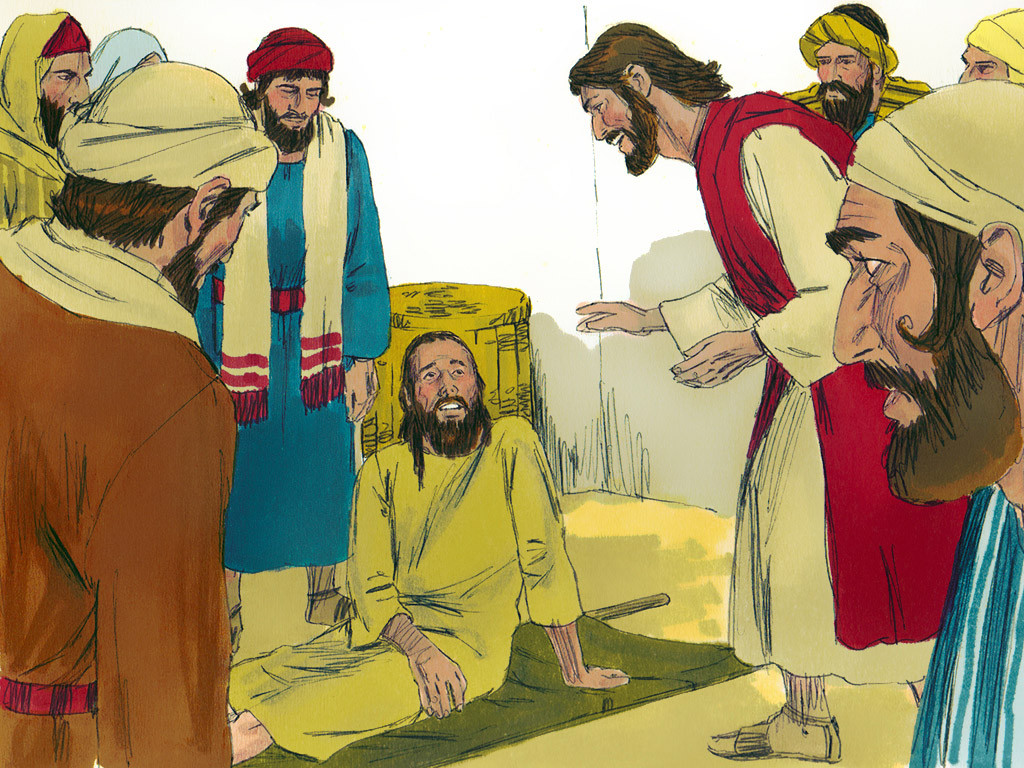
Jesus returns to Capernaum. There, some people bring on a mat a paralysed man. Jesus says to him, “Your sins are forgiven.”

Some of the teachers of the law are upset by this. Jesus says, “I will prove my authority to forgive sins.” He then heals the man.

Everyone is amazed by this, and the people marvel at Jesus’ great authority.

Jesus then sees a tax collector named Matthew whom He calls to follow him. The Pharisees question why Jesus associates with scum like tax collectors. Jesus responds by saying it is the sick people who need a doctor not healthy people.

Application

The question of authority seems to have been a big issue for some people. They were often questioning where Jesus got His authority from, whether it was authority to heal or teach or to forgive sins.

All human authority comes ultimately from God, whether we recognise it or not. He is the one who puts governmental rulers and spiritual leaders in place.

As christians, we have authority over the evil spirits, authority to heal and perform miracles, authority to preach the gospel. This authority flows from God and is dependent on us remaining in close relationship to God.

We need to be under proper authority in order to exercise authority.

Prayer

Lord, please show me how to walk in the authority you have given me. Amen.

Reflection on Matthew 8:22-34

Scripture

Then the entire town came out to meet Jesus, and they begged him to go away and leave them alone.

Observation

Jesus and the disciples cross the lake on a boat. A fierce storm breaks, threatening to sink the boat, but Jesus sleeps through it. The disciples wake Him up and ask Him to save them.

Jesus rebukes the wind and waves, and suddenly there is a great calm. The disciples are amazed at His authority.

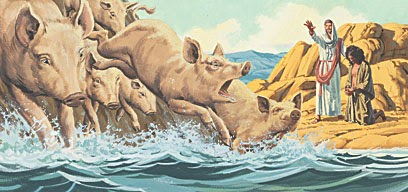
They arrive a the other side of the lake where they encounter two demonised men living in a cemetery. The demons recognise Jesus and start screaming. They beg Jesus to be sent into the herd of pigs nearby. So Jesus commands the demons to go, and the whole herd of pigs plunges down the hillside and into the lake.

The herdsmen flee to a nearby town, telling everyone what had happened. The entire town comes out to Jesus pleading with Him to go away.

Application

Many people want the benefits of Jesus without any cost to their lifestyle. This is why Jesus could truthfully say that many would call “Lord! Lord!” but not be saved.

The people of the town were not moved by the deliverance of the two severely demonised men. They were confronted by the loss of property and income that his freedom cost them.

They saw the miracle. They may even have recognised that Jesus was someone special. Yet, they wanted nothing to do with him, pleading with Him to leave them alone.

People can get excited about miracles and extraordinary healings. Then they go home unaffected.

In the end it is unbelief that holds people captive to sin. They refuse to believe that there is a better way to live, a better Lord to serve, than the one they have.

Jesus warns us to count the cost of following Him. Too many see the cost, but not the returns which are eternal.

Prayer

Lord, please help me to look to what I gain in following you, which is always a million times better than anything you ask me to give up for your sake. Amen.

Reflection on Matthew 8;14-22

Scripture

But Jesus said to him, “Follow me now. Let the dead bury their own dead.”

Observation

Jesus arrives at Peter’s house to find that Peter’s mother- in- law is sick with a fever. He touches her and she is healed.

Many demonised people are brought to Jesus, and he casts out their demons and heals the sick.

One of the teachers of the law promises to follow Jesus wherever he goes. But Jesus says, “I have nowhere to lay my head.” To another who wants to bury his dead father He says, “Let the dead bury their own dead.”

Application

Jesus has a way of identifying the idols that stop us from following Him whole heartedly. To a rich young man whom He perceives is addicted to his possessions, He says, “Go and give it all to the poor.”

To this man who wants to bury His father, Jesus says “Following me is more important than family obligations. Let the dead bury their own dead.”

He is not suggesting that we neglect our families because Jesus is more important. That would be an obnoxious religion.

Jesus wants to make it clear that He has to have the number one priority in our lives. Anything else, even burying a dead parent, comes second.

Usually this is not an either- or choice. In most situations in life we order our priorities so that all the different things in our life have an order to them, and we are able to arrange our various responsibilities.

But we need to make sure that in everything in our lives, Jesus remains number one. When conflict arises between family, work, social obligations, and so on, our commitment to Jesus must override everything else.

Prayer

Lord, I acknowledge that you are my king. I hand all parts of my life to you to use as you wish. Amen.

Ephesians 4:11

Here is my commentary on Ephesians 4:11. I am publishing these once or twice a week, but you can read all of the available articles at our web-site, http://www.new-life.org.au

Ephesians 4:11

“It was he who gave some to be apostles, some to be prophets, some to be evangelists, and some to be pastors and teachers.”

Christ gave some people to the church to be in leadership. These gifts are not abilities or facility in the use of a supernatural ability as we see in other lists of spiritual gifts. These particular gifts are the people themselves. God gave some apostles prophets, etc.

The wording of this verse makes it clear that not every believer is included in the list. We cannot all point to one item on the list and say, “That’s my gift.”

It should also be realised that not all of these people are in what might be called “full-time” ministry. Not everyone in full-time ministry doing the work of a pastor, for example, has been called and equipped by God for that role.

These gifts are often called “Ministry Gifts” because they are given for the building up of the church. Often the church, under the inspiration of the Holy Spirit, will recognise that some of its members have been especially gifted by Christ for ministry in the local church. There may be a setting apart or ordination ceremony. These people will be given extra responsibilities and opportunities to exercise their gifts.

Although the church has been reluctant at times to recognise these gifts, they have never disappeared. Although parts of the church have belittled or denied their place today, the Bible clearly teachers that the gifts will not cease until the church reaches unity in the faith and maturity in Christ (vs.12-13).

In the light of the above, the church must come to terms with these ministry gifts and order itself in such a way as to develop those who are called to these ministries. Otherwise, we will be condemned to an imperfect and impoverished life as the Body of Christ.

We also need to recognise that these ministry gifts are complimentary. No single person (other than Christ) has been able to contain or to work in all of these gifts. Apostles need the constraining insight of prophets. Evangelists are wonderful at bringing people to the new birth, but they need pastors and teachers to bring the convert to maturity, and so on.

Since the 1500s, the church has gradually been rediscovering these ministry gifts. The Reformation transformed the role of ministers from being priests, that is intermediaries between man and God, to being pastors who encourage congregations in their walk with the Lord. The teachers came to the fore in the 20th century as improved general educational standards and technology such as cassette recorders made it possible for people to absorb more detailed information. Evangelists came to the fore from the 18th century with people such as John Wesley bringing tens of thousands to the Lord. Prophets were rediscovered in the 1970s, apostles in the 1990’s.

The church is in a time of transition away from institution to a much more organic structure in which various gifts, rather than elected officers, prevail.

An apostle is a man (or, less commonly, a woman) who exercises an informal authority over several or many congregations, through the voluntary submission of pastors, teachers, prophets, and evangelists to their oversight.

This is different to a bishop who is appointed to rule over a geographic area within a denominational structure. Apostles are recognised by other ministers as carrying the grace of apostleship. Their network may consist of members of many denominations and others who have no denominational background.

Apostles speak of their authority in terms of fathers and sons. This is a relational authority which seeks to release those under them into the fullness of all the potential that is in them.

It is a relationship of equals rather than of a hierarchy. Both father and son seek to serve one another and enhance each other’s ministry .

The gift of apostleship is only recently being rediscovered in the church. There will no doubt he many missteps before the ministry is properly mature.

The gift of prophet is also in the process of being reestablished, and is not yet mature in its operations. It is interesting that prophecy appears in all three of the major list of gifts in the New Testament.

In this context the ministry gift of prophet refers to a person who is fluent in the operation of the gift of prophecy, and is recognised by the local church has such.

The ministry gift of prophet is analogous to the Old Testament prophets. They hear the word of God and declare it to the people of God.

Prophecy is different from preaching in that it tends to be more spontaneous and more heart directed then head directed. Prophecy is not about foretelling the future, but about speaking God’s desire in the present. It may include warnings about the future, but it’s emphasis is on what God is saying to us now.

Prophecy is often seen as most authentic when it is concerned with edifying, exhorting and comforting the people of God (1 Corinthians 14:3).

All prophecy should be evaluated by the church, especially to ensure that it is aligned with Scripture.

Evangelists work outside the boundaries of the faith community to bring unbelievers to faith in Christ. Their role can be seen as analogous to spiritual midwives. After proclaiming the good news, their responsibility is to bring new believers into the fellowship to be discipled by the Body, under the oversight of the pastor.

Although some evangelists are itinerant, the majority support the local church, and submit themselves to the church. Even itinerant evangelists must be under the oversight of an apostle and remain connected to a congregation. This makes them personally accountable, but also strengthens their ministry.

Pastors are responsible for the oversight and the spiritual growth of the congregation. They have God’s authority to preach and to proclaim His Word. They also have responsibility to ensure that those who seek to undermine or destroy the church are exposed and removed. For this latter role the support of prophets and apostles indispensable.

Pastors are also responsible for nurturing, encouraging, and exhorting the members of their church to live faithfully as followers of Christ. Traditionally this role was achieved through visitations and such, but these days is as likely to be done through small groups and other decentralised ministry strategies .

Finally, teachers are responsible for studying the Scriptures and teaching the members of the church the doctrines of the Bible. Their particular strength is often to develop structures of faith (theology) and finding new insights by bringing complimentary scriptures together.

Because there is overlap between the gifts of pastor and teacher, these gifts are sometimes combined, that is, pastor/ teacher. The Greek of this verse certainly allows that interpretation. .

These five gifts, then, are intended to bring the church to maturity and strength. Although they are very different in their focus, these gifts actually work together as pieces in a jigsaw puzzle, interlocking to bring unity to the body.

Key points in this verse

  • Christ has given certain people as ministry gifts to the church.
  • These gifts are by God’s grace not by appointment of the church
  • In the past, the church has been reluctant or unable to see these gifts. Some are only now being rediscovered by the church.
  • The five gifts are meant to work together to make the church strong and to raise believers to maturity in Christ
  • All of the gifts are meant to be in submission to one another and to the church
  • Scripture is the ultimate test of the validity of all of these gifts

Reflection on Matthew 8:1-13

Scripture

“I know this because I am under the authority of my superior officers, and I have authority over my soldiers.”

Observation

As Jesus comes down from the mountain, a leper approaches Him and asks to be healed. Jesus heals him and tells him to go to the Temple and make the required sacrifice.

When Jesus returns home to Capernaum, a Roman centurion asks Jesus to heal his servant. The centurion tells Jesus to just say the word and the servant will be healed. He knows about authority, being under authority himself.

Jesus is amazed by this man’s faith which is greater than any He has seen in the people of Israel. He tells him to go home for his faith has healed the servant.

Application

The centurion understood spiritual authority because of his experience of military authority. His own authority over his soldiers stemmed from his submission to higher authority. To be able to function in his role, he had to recognise his place in the chain of command. As long as he remained faithful to his superior officers, he knew they would back him up in his authority over the men under him.

Christians have authority on the basis of their submission to other people in the Body of Christ as well as their submission to Christ Himself. Anyone who tries to act outside of the Body will not be able to function on their own.

A centurion who only took orders directly from the Emperor and defied his commanders would not last long before being removed.

If we try to exercise authority over demons and diseases, and are not rightly located in the Body and submitted to others, then we will not be effective.

The reason that this is so important is that true humility is the hallmark of the christian life, and is vital in spiritual warfare. Humility is our weapon and can only be wielded by the person who submits to others.

Prayer

Thank you Lord for giving us authority over all things. Please help me to subject myself to proper authority so I can exercise authority. Amen.