Reflection on Acts 16:11-24

Scripture

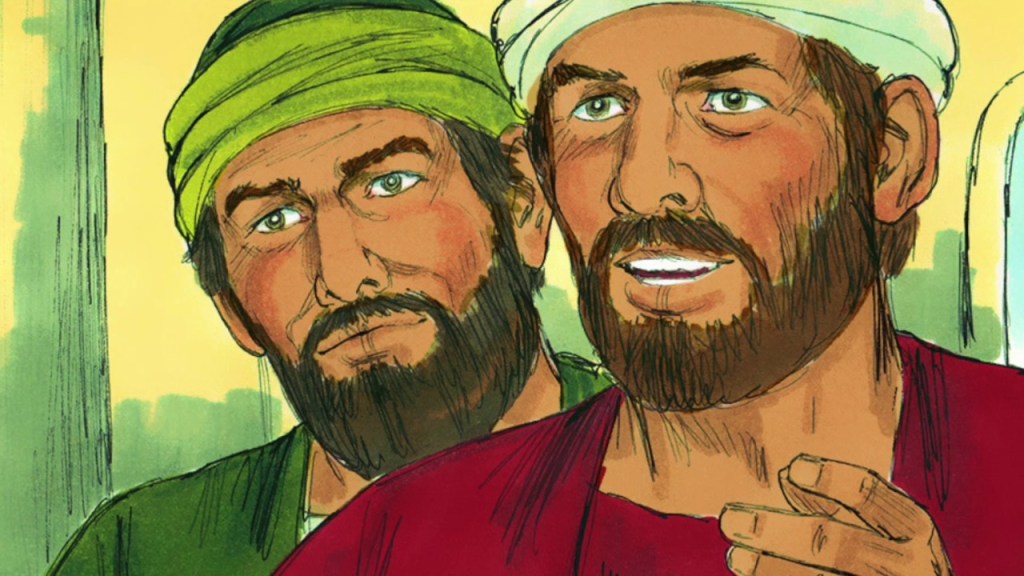
This went on day after day until Paul got so exasperated that he turned and said to the demon within her, “I command you in the name of Jesus to come out of her.” And instantly it left her.

Observation

Paul and his companions move on to Phillipi, a Roman city in Macedonia. On the Sabbath they go to the river bank, expecting a prayer meeting there. They meet some women there, including Lydia who accepts the message straight away.

On another day, as they are going to the place of prayer, a demonised slave girl starts following them. The evil spirit had given her the power to tell fortunes which made a lot of money for her owners. She starts shouting out that Paul and the others have come to tell people how to be saved. Paul becomes exasperated and commands the demon to leave.

Her masters’ business plan is wrecked, so they drag Paul and Silas to the authorities, who order them beaten and thrown into prison.

Application

Not every testimony is helpful. Testimonies from demons are definitely counter-productive.

On the surface, it seems that the demonised girl was stating the truth- the men were there to tell people how to be saved. But if the words were the same ones repeated over and over, or the volume was too loud, then it would have detracted from the message that Paul was trying to speak. The text does not tell us about the tone of voice the demon was used. It could have been sarcastic or mocking, contradicting the intent of the words.

Over the years, I have heard some testimonies that just did not ring true. The person was saying one thing, but living an entirely different kind of life. I have heard testimonies that used the right words, but left the hearer confused about what it all meant.

For me, the responsibility is to make sure that my life is as good as my testimony; in other words my actions must match my words.

Prayer

Holy Spirit, I invite you to bring conviction to my heart about unconfessed sin and any other action that would detract from the activity of Jesus Christ in my life.

Reflection on Acts 16:1-10

Scripture

That night, Paul had a vision: A man from Macedonia in northern Greece, was standing there pleading with him, “Come over to Macedonia and help us.”

Observation

Paul travels to Derbe and then to Lystra, where he meets a young man called Timothy. Paul invites Timothy to come with him, and together they travel around the area instructing the believers.

They continue travelling, but it becomes clear that the Holy Spirit is preventing them from entering the province of Asia. Finally, Paul has a vision of a man from Macedonia pleading for them to come there. So they travel immediately to Macedonia.

Application

God’s direction comes in a multitude of ways.

In this passage, we have a negative direction in that the Holy Spirit is preventing them from going to the province of Asia. The description is vague. Perhaps every time they headed that way, they felt uneasy or even physically uncomfortable.. Perhaps distractions and obstacles would come their way.

Then there is the very specific positive direction. Paul has a clear vision of a man from Macedonia, and immediately they know this is the Holy Spirit saying, “Go there!”

Sometimes we have to be hemmed in, discovering every possibility is cut off until we are ready to hear the way the Holy Spirit wants us to go.

The Bible demonstrates dozens of ways that the Holy Spirit uses to direct God’s people: dreams, visions, voices from heaven, internal voices, prophecies from other people, words of knowledge and wisdom, and many more.

The important thing is not the method God uses to speak to us, but that we are listening to whatever it is that God says, and are ready to obey Him.

Prayer

Lord, please help me to discern your voice, and to obey every direction you give me. Amen.

Reflection on Acts 15:22-41

Scripture

Their disagreement was so sharp that they separated. Barnabas took John Mark with him and sailed to Cyprus. Paul chose Silas.

Observation

The apostles and elders in Jerusalem choose delegates to send to Antioch in Syria, with Paul and Barnabas to report their decision. They take a letter to confirm the decision concerning the rules for Gentile converts.

The people in Antioch rejoice when they hear the encouraging news. Paul and Barnabas stay there for some time.

After a while, Paul suggests to Barnabas that they retrace their steps to encourage the believers in the places they previously visited. They have a quarrel because Barnabas wants to take John Mark, but Paul does not want this. They ultimately go separate ways.

Application

We often see the early church through rose coloured glasses, and it can come as a shock when normal human behaviour creeps in.

Paul and Barnabas had made a great team, but now they separate over the issue of whether they should take John Mark with them. John Mark has previously accompanied Paul, but had left him at Pamphylia. Paul had felt abandoned and didn’t want to take him on again. Barnabas the encourager asked to give him a second chance.

We can hold very deep convictions that can sometimes lead to arguments; yet God can be in the midst of this. In this situation, one team was broken up and two new teams were formed, giving valuable experience to John Mark and to Silas.

When christians differ we need to make sure that we do so in a way that honours God.

Many arguments are over trivial issues. We need to ask, “is this an issue to die for?” If it is truly a trivial issue we can, and should, back off.

We need to separate issues from people. We can love those we disagree with. Let’s get past the immediate differences of opinion and love one another with the love of the Lord.

When we argue we should continue to honour our opponents. These days it seems that arguments can quickly degenerate to name calling. Jesus calls us to be better than that.

Prayer

Lord Jesus it is inevitable that there will be disagreements among your people. Please help me to love those I disagree with, and help us all to find your way through topics of diverging opinions. Amen.

Reflection on Acts 15:1-21

Scripture

“We believe that we are all saved the same way, by the undeserved grace of the Lord Jesus.”

Observation

While Paul and Barnabas are in Antioch in Syria, some men from Judea come and start teaching that to be saved, believers must be circumcised. Paul and Barnabas go to Jerusalem to settle the matter.

In Jerusalem, Barnabas and Paul report how God has been saving the Gentiles. But some believers from the Pharisees demand these believers be circumcised and follow the law of Moses.

Peter says that he has seen how God gives the Holy Spirit to Gentiles- He makes no distinction.

James says that they should not make it difficult for Gentiles who turn to God, with only some minimal requirements placed on them.

Application

There is only one way that people are saved and that is through Jesus.

There was a tendency in the early church, mainly among Jewish believers, to want to make salvation dependent on obeying the law of Moses. The apostles were convinced and unmovable on the principle that we cannot add anything to what Christ has done for us on the cross.

This statement of Peter that “we are all saved the same way” should serve as a warning to people who want to say that Jews are saved by the law and Gentiles are saved by grace. No, we are all saved by grace alone- whether Jew or Gentile.

It is God’s undeserved grace that takes away our in. We can add nothing to what Jesus has done for us.

God has removed the dividing wall between all people. There is no longer Jew and Gentile, but only those who have been saved by Jesus and those who have not.

Prayer

Thank you Lord for the cross. Thank you that we are saved by the undeserved grace of the Lord Jesus. Amen.

Ephesians 2:7

Here is my commentary on Ephesians 2:7. I am publishing these once or twice a week, but you can read all of the available articles at our web-site, www.new-life.org.au

Ephesians 2:7

“In order that in the coming ages he might show the incomparable riches of his grace, expressed in his kindness to us in Christ Jesus.

God has” seated us with him in the heavenly realms in Christ Jesus” (v. 6) ”in order that in the coming ages…”

God’s purposes in seating us with Him are now revealed. It is firstly about the future.

God looks at the really, really long term outcome. From before the beginning of time He purposed to create a race of people capable of responding to His love, having first tasted the reality and consequence of sin.

The goal of this plan is expressed in the future, “in the coming ages.” The word “ages” here is the word which we derive aeon. it is a long period of time, a multi-generational period. When you are in the middle of it, it seems like it is all you have ever known, the only way things have ever been or ever will be.

There have been several such ages in history. One of them began with the death and resurrection of Jesus. It will end when Jesus returns for his church, and the new heavens and earth of Revelation are instituted.

This present age will come to an end. Nobody knows the day or the hour, except the Father. From Paul’s perspective, writing in the first century, that time was an aeon away. For us it might still be a long time away.

In the coming ages God will show the incomparable riches of his grace.

This phrase makes me think of another phrase,”trophy of grace.” Every born again follower of Jesus is a trophy, a prize won for God by his grace through the death of Christ.

We are in God’s trophy room or His treasure house as signs of His great victory in Christ. Often we don’t feel like we are rating very highly on the Christian league table. It doesn’t matter; the fact that we persevere in our walk of faith with Christ makes us his treasures.

Who is God showing the riches of his grace to?

Firstly, He is showing off to the rest of humanity what he has done for them in Christ. For as long as we live faithfully, our words and actions serve as an ongoing testimony of God’s rich grace. The Holy Spirit is constantly nudging people to see Christ in us.

On the Day of Judgement, we will each be rolled out as a testimony to God’s great love , both to those who are saved and to those who are unsaved alike.

To the saved, we will be an example of the same grace that they experienced. I used to think that Judgement Day was about God revealing all my secret and shameful sins, but now I see it as a day when God brags about all his beloved children, and his grace being on show to the universe.

To the unsaved, we will be the end of all excuses. If God could save me from my messed up life, and thousands of others who had all kinds of abuse, violence, and neglect to overcome, then there is no excuse for anyone to reject him.

Secondly, God wants to show off his grace to all the heavenly beings — the angels and seraphim , cherubim and living creatures. “These people, billions of them, were born in sin yet were saved by my love.” The miracle of salvation is something that angels have never experienced.

Finally, God wants to show off his great grace to satan, the great enemy. Satan rebelled because he wanted to be God, and he has projected that desire onto people ever since. Every believer is a testament against the deception of satan.

God desires to show the incomparable or immeasurable riches of His grace. God’s grace cannot be measured or compared to anything else.

When God was showing Abraham the destiny that God had for him, He used analogies such as the grains of sand on the seashore and the stars in the sky.

In our age we have become used to the huge numbers that scientists come up with. We know that the universe is bigger than Abraham could see. But God’s grace is greater still.

If you had all the gold in the world, all the mansions, all the privately-owned islands, all the cattle and sheep, it is just a fraction of God’s grace.

The incomparable riches of God’s grace.

His grace never gives up and never runs out. We can’t fly far enough to escape it; all we can do is close ourselves off from it.

Of course, the great tragedy is that so many people prefer to block out the grace of God rather than humble themselves to admit that they need it. The limitation is not in God, but in people.

God’s grace is expressed in his kindness to us in Christ Jesus.

Jesus did not have to die for us. He chose to do that out of love for us. You could describe that as an act of kindness.

We tend to think of kindness as a desire to give someone a treat or a gift for no particular reason other than we want to do it for that person. We might buy flowers for someone going through a hard time, forgive a small debt, buy dinner for someone.

Kindness is motivated by love, a tangible expression of love.

Our idea of kindness just fades into insignificance when compared to that of Christ.

He died for us. He received no personal benefit from the transaction except for the joy of our response. This is perfect kindness.

The reason why we are now seated in heavenly places is the kindness of Christ. He bore the brunt of our sin and our rebellion against God. He paid the price of our redemption.

He saw a need we could not fulfil ourselves, and rather than seeing us die, He died for us. The innocent died and the guilty ones were set free.

Every hope that we have for eternity is in Christ.

Key points in this verse:

  • God’s plan extends to the coming ages
  • This present age will come to an end, but God is looking to the future ages
  • We are both the riches of God’s grace and the recipients of the riches of His grace
  • God wants to brag about his children, showing us off as trophies of grace
  • God’s grace never fails and never runs out
  • We are saved by the ultimate kindness of Christ
Reflection on Acts 14:8-28

Scripture

Paul and Barnabas also appointed elders in every church. With prayer and fasting, they turned the elders over to the care of the Lord, in whom they had put their trust.

Observation

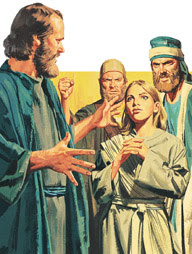
In Lystra, Paul comes upon a man lame from birth. Paul sees he has faith to be healed, so he commands the man to stand up, which he does.

The crowd sees this and proclaims that Paul and Barnabas are gods in human form. Then priests from the temple of Zeus bring sacrifices to worship the apostles. Paul and Barnabas are shocked by this, and say they are not gods but messengers of the one true God.

Some Jews from Antioch in Pisidia come and stir people up so that Paul is stoned and left for dead.

Paul and Barnabas go to Derbe then back track through the other towns they had preached in, appointing elders in each place. They finally return to their base in Antioch in Syria where they report all that God has done.

Application

One of the responsibilities of apostles, then and now, that is rarely mentioned is the grace to appoint elders in a locality.

Often apostles are seen as church planters or missionaries who go from place to place preaching the gospel before moving on. Others from different faith traditions see them as like bishops who are appointed to oversee a geographical area.

But there is more to apostles than this. Paul and Barnabas, having prayed and fasted, appointed elders in each church, then handed the work over to them.

This was no vote at a synod or an administrative decision. It was something seen as the work of the Holy Spirit, a spiritual process soaked in prayer and fasting.

The elders, once appointed, took full responsibility for God’s work in that locality. The apostles maintained a relationship of fatherly love and and advice, but the elders and the churches were autonomous.

Prayer

Thank you Father for apostles and elders, and other God- appointed leadership in the church. Amen.

Reflection on Acts 14:1-7

Scripture

The apostles stayed there a long time, preaching boldly about the grace of the Lord. And the Lord proved their message was true by giving them power to do miraculous signs and wonders.

Observation

Having been rejected in Antioch of Pisidia, Paul and Barnabas travel to Iconium. They preach in the synagogue and a great number of people are saved. They stay there for some time, preaching boldly and demonstrating god’s power in signs and wonders.

A plan arises amongst both Jews and Gentiles to attack Paul and Barnabas. They flee to Lystra and Derbe where they continue to preach the Good News.

Application

The apostles stayed a long time in Iconium, preaching boldly about the grace of the Lord. It must have been difficult for some Jewish people to accept that they were saved by grace and not by following religious laws.

This is a radical message, even for many christians. We find it hard at times to believe that we really are set free and forgiven by God’s grace. We find it hard to squash that belief that we can earn God’s favour by our own goodness.

Alternatively, we can fall into the trap of thinking that we must be sinning when God feels distant.

It is all grace. Our salvation, our relationship with God, our status of righteousness- everything is grace!

To prove the power of the message, the Lord blessed the apostles with the grace to perform signs and wonders. When we truly trust in God’s grace, we are set free in every part of our being- physical, emotional, spiritual.

There is power in the name of Jesus to break every chain. Not because the word is holy or magical, but because Jesus is powerful.

Prayer

Thank you Lord for your grace. Thank you for setting me free of every kind of sin. Amen.

Reflection on Acts 13:44-52

Scripture

And the believers were filled with joy and the Holy Spirit.

Observation

Many Jews and converts to Judaism follow Paul and Barnabas, so that the following Sabbath just about the whole city turns out to hear them. But some of the Jewish leaders start opposing their message.

Paul and Barnabas boldly declare that since the Jews have rejected them, they will now go to the Gentiles. The Gentiles rejoice that Paul will now focus his attention on them, and many become believers.

The Jews incite a mob and have Paul and Barnabas run out of town.

Application

This passage ends with Paul and Barnabas, having been ejected from the city, shake the dust from their feet and move on to Iconium. Then it says, “The believers were filled with joy and the Holy Spirit.”

This is not to mean that the believers were filled with joy because Paul and Barnabas were gone. I think that what it is saying is that the gospel and the church are bigger than even the greatest of leaders and preachers.

The church in Antioch continued to prosper because the people had the Holy Spirit. The Lord is the one who leads and directs the people of God. We have leaders who set directions and give encouragement, but when every believer knows they are filled with the Holy Spirit, then when leaders are taken away, it makes little or no difference to what God can do in and through the church.

The New Testament makes it clear that it is the Lord who appoints His leaders- apostles, prophets, evangelists, pastors and teachers. Leaders are essential to God’s purposes, and we ignore them at our peril.

In the end, we must recognise the gifts of leaders, but not be dependent on them above our dependence on the Lord.

Prayer

Thank you Lord for bringing order into the church, your community of faith. Thank you for pastors and other leaders. Thank you also that even when individual leaders move on, you do not leave us without direction. Amen.

Ephesians 2:6

Here is my commentary on Ephesians 2:6. I am publishing these once or twice a week, but you can read all of the available articles at our web-site.

Ephesians 2:6

God raised us up with Christ and seated us with him in the heavenly realms in Christ Jesus.

The work of God in saving us from sin and death is already completed. When God rose Christ from the dead, He also raised from the dead all who were, and all who would be, “in Christ.”

Even those of us who were born historically two millennia after Christ, were raised with him.

The Lord has a different perspective on time than we do, so it’s best not to get too caught up in chronology.

The fact that we have already been raised with Christ means that the work of salvation is completed. There is no doubt about whether God will do this for the followers of Christ as it has already been done.

There are all kinds of anxieties that can be set Christians.

  • Am I good enough?
  • Do I have enough faith?
  • Will God accept me?
  • What else do I have to do to be saved?

No! It has already been done. We’ve been raised up to new life in Christ. We have been raised to heaven and are sitting there with Christ now.

Because that work has been completed, it cannot be undone. It can’t be added to or taken away from.

When we know this in our hearts, then we can relax in Christ. There is no fear, no anxiety. We do not have to prove ourselves worthy of salvation or do enough good deeds. It is finished! We have been raised up.

Every church service is, or should be, a reminder that Christ died for me, and that He has been raised up to life, and therefore I am raised up also.

Our resurrection depends on being “with Christ.” It is as if we have to hold onto his hand as he is raised in order to be raised also.

Connection with Christ, or fellowship with him, is the central, most important duty of a Christian. It is in Christ that we are saved, and it is with Christ that we are raised to the heavenly realms.

Many Christians seem to struggle with maintaining a close relationship with Christ, but this is essential to our salvation. It is not enough to say just one prayer to be saved, although this is a good thing.

We have to maintain the relationship with Christ. There are various means for this such as reading the Bible, prayer, corporate worship, fellowship with other believers.

Many of us are like the man who told his wife, “ I told you I loved you on our wedding day. If there is any change to that I will let you know.”

No, our being with Christ or in Christ requires us to deepen the relationship.

We were raised on the first day we said “Yes” to Christ, but why would we settle for anything less than close communion with him?

God seated us with him in the heavenly realms in Christ Jesus.

When Christ was raised from the dead, He raised us with him, and when He was seated at the right hand of the Father, we were there too. We are there “in Christ Jesus.”

This means that I am both a creature of earth and of heaven. My physical body is on earth, but my spirit is united with Christ in the heavenly realms.

We see the world in three dimensional form, but there are many more dimensions that we do not see. We experience the world through physical senses, but the spiritual realm is often hidden from us.

Paul tells us that we are already seated in the heavenly realms with Christ- even if we are not aware of this.

Our sins have been washed away through Christ and we are now entitled to dwell in heaven. In the past, our sin cut us off from all fellowship with God, but now we have authority to be with him in the heavenly realms.

If we are already seated with Christ, we need to see all things from His perspective, from a heavenly perspective. We need to develop spiritual senses that enable us to see beyond the physical. Paul talks about this later in his discussion of spiritual warfare. We are not fighting in the flesh but in the spirit, overcoming spiritual powers.

As Christians, our real dwelling place is in the heavenly realms- in the spirit realms. This is not future but is a present reality founded on what God did in the past in Christ.

Key points in this verse:

  • We have already been raised from death in Christ
  • We do not need to add to Christ work. It is complete
  • We must pursue relationship with Christ
  • God has seated us in heavenly places in Christ
  • We must learn to see things from a heavenly perspective, not just the physical perspective

Reflection on Acts 13:13-43

Scripture

“Brothers, listen! We are here to proclaim that through this man Jesus there is forgiveness for your sins. Everyone who believes in him will be declared right with God- something that the law of Moses could never do.”

Observation

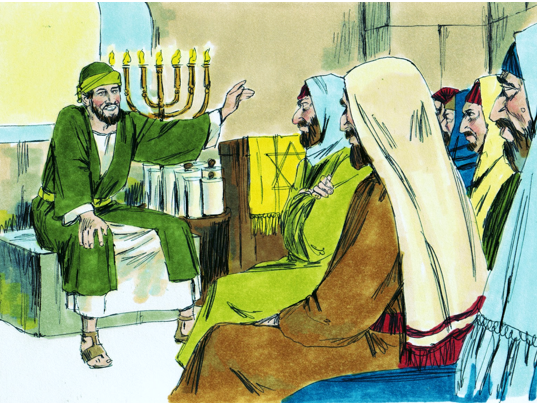
Paul and Barnabas sail to Pamphylia and then travel to Antioch in Pisidia. On the Sabbath they go to the synagogue where they are invited to bring a word of encouragement. Paul proceeds to go through the history of Israel and how God has always led His people. He uses the scriptures to encourage them to become followers of Jesus.

Application

In the Jewish religion there was a temptation to believe that righteousness could be earned by obeying all the requirements of the Law. There was also the opposite temptation of despairing at never being able to do enough to please God.

Both of those failings can be found in the church today, but only when people fail to understand that righteousness comes only as a gift through Jesus.

As Paul says in this Scripture, “through the man Jesus there is forgiveness of sins.” We cannot earn our way to righteousness; all we can do is put our trust in Jesus who has paid the price for our forgiveness.

Everyone who believes in Jesus is declared right with God. Instead of my sin falling on my head, it falls on Christ.

God declares that I am righteous. My sins are forgiven and my debt is paid. I can stand secure in my relationship with God.

This is seriously Good News!

Prayer

Thank you Lord Jesus for paying the price for my sin. Thank you that in you there is true righteousness. Amen.