In 2012, Pope Leo XIV Slammed the Media for Its Liberal Bias and Promoting Abortion

From Lifenews.com

More than a decade before he was elected and addressed the media as pontiff, Pope Leo XIV had spoken about evangelisation amid modern media in an address that is still accessible, a Vatican expert spotlighted this week.

In 2012, then-Father Robert Prevost gave an address at a Synod about evangelisation convened by Pope Benedict XVI, Sandro Magister explained in a May 13 article for his blog. The address considers how several Church Fathers responded to the non- and anti-Christian media of their time, which in turn provides insight for evangelising amid the present-day’s media culture.

Please follow LifeNews.com on Gab for the latest pro-life news and info, free from social media censorship.

Magister described then-Fr. Prevost’s remarks as “astonishing, for the acuteness of the diagnosis of the mediatic distortions of today’s society, but even more for the reference to the Fathers of the Church — from Augustine to Ambrose and Leo the Great to Gregory of Nyssa — as teachers brilliant in taking up the challenges of communication of their time, and therefore in understanding how to best evangelize the society of the late empire.”

In his address during the 2012 Synod on Evangelization, then-Fr. Prevost said that mass media in the West “is extraordinarily effective in fostering within the general public enormous sympathy for beliefs and practices that are at odds with the Gospel; for example, abortion, homosexual lifestyle, euthanasia.”

Mass media may be tolerant of religion when the latter does not directly contradict the media’s positions on ethical problems, but if religious leaders do speak out, the media label their messages “as ideological and insensitive in regard to the so-called vital needs of people in the contemporary world,” he said.

In order to effectively evangelize against media-created ethical falsehoods, catechists and religious leaders need to develop better understanding of laboring amid the current media climate, he urged.

Church Fathers were successful in evangelizing “in great part because they understood the foundations of social communication appropriate to the world in which they lived,” then-Fr. Prevost said. “Consequently, they understood with enormous precision the techniques through which popular religious and ethical imaginations of their day were manipulated by the centers of secular power in that world.”

Magister shared the full text of the address, which can be accessed here.

LifeNews Note: McKenna Snow writes for CatholicVote, where this column originally appeared.

Consecrated Virgins

From the ABC:

What is ‘consecrated virginity’ and why are modern women marrying Jesus?

RN By Siobhan Hegarty for Soul Search

Posted about an hour ago

Zara Tai closing her eyes, kneeling and praying at St Patrick's Cathedral, Parramatta.

PHOTO: Zara Tai received her rite of consecration of virginity at St Patrick’s Cathedral in Parramatta. (Supplied: Cyron, Captured Frames)

Zara Tai didn’t wear white on her wedding day, but then again, it wasn’t a conventional ceremony.

She wasn’t marrying a long-term boyfriend or even a high school sweetheart — this Parramatta-based town planner was saying “I do” to Jesus.

Ms Tai is one of nine women in Australia known as a “consecrated virgin”.

It’s a title bestowed to virgin women who promise to remain physical virgins, as brides of Christ, for the sake of the kingdom of God.

Consecrated virgins dedicate their life in prayer and service to the Church, but unlike nuns and sisters, they live and work in the secular world.

“Consecrated virginity, as a concept, developed in the early Church at the time where Christians were being persecuted,” Ms Tai says.

“They were women who consecrated themselves to Christ in lieu of getting married [to men].”

Many of them, she explains, were martyred for their beliefs.

Fifteenth century painting of St Cecilia at the spinet by the Sandro Botticelli school.

PHOTO: St Cecilia, patroness of musicians, was a consecrated virgin before being martyred in 230 AD. (Getty: DeAgostini)

The rise of monasticism in the third and fourth centuries enabled women to join religious groups as nuns or sisters.

Some adopted the “rite of consecration of virginity”, as well their vows of poverty, chastity and obedience.

But gradually this became the only option for single, virgin women wanting to serve the church — as it had become difficult for women to live in the community without being married.

That was until 1970, when Pope Paul VI revised and reintroduced the rite and allowed it to be used for virgin women living in the secular world.

A modern way

Today, it’s estimated there are 5,000 consecrated virgins worldwide. Only nine are in Australia; the majority live in Europe, the US and South America.

A growing number of religious women are choosing this pathway over nunhood and Ms Tai isn’t surprised.

“In a religious order you might have some say in what you do, but you are under a vow of obedience, so if [the church diocese] wants you to be a teacher, a nurse or something else, you go off and do it,” she explains.

“But [consecrated virgins] have professions, we have careers … we have lives, basically, that are outside the structure of the church.

“It’s a modern way; it gives a lot of freedom to do whatever you like to do.”

'Consecrated virgin' Zara Tai wearing purple and white floral shirt.

PHOTO: Zara Tai says it was “in her veins” to become a consecrated virgin with the Catholic Church. (ABC RN: Siobhan Hegarty)

More than ‘permanently single’

Ms Tai’s journey towards becoming a consecrated virgin hasn’t always been easy.

It took 15 years from when she raised the idea with her local church to the day of her consecration.

One of the greatest roadblocks was the lack of historical religious knowledge.

“There was not much known about the vocation … some felt I ought to become a nun,” she recalls.

Even after her consecration, Ms Tai wasn’t embraced by all members of the clergy.

“Some priests have said, ‘Oh, so you’re a permanent single person?'” she says.

“That’s clearly not the case, I am married to Christ.

“They’re still fitting me into a box that is not [correct]. They obviously don’t know the history of the church.”

Zara Tai performing prostration, lying flat on the floor face down, during her consecration ceremony.

PHOTO: Ms Tai performed prostration, lying face-down on the floor, during her consecration ceremony. (Supplied: Cyron, Captured Frames)

‘Secret service of the church’

Ms Tai’s decision also drew questions from her family.

Born to a Chinese-Malaysian father and a mother of Maltese origin, she was baptised Catholic, but didn’t practise the faith in her childhood.

“I grew up with two brothers and was a typical tomboy, so going to church was the last thing on our minds,” she reflects.

“We were always at the beach, playing cricket or going on adventures — being religious doesn’t meld with any of that.”

Upon turning 15, Ms Tai felt “a big call to God” and began pursing a religious life.

But her tomboy traits remained. When she’s not working or studying theology, Ms Tai can be found kayaking, hiking or “bodysurfing with the boys”.

Zara Tai kayaking in the ocean, with Argentina's Perito Moreno glacier in background.

PHOTO: Ms Tai says becoming a consecrated virgin hasn’t affected her independence or freedom to travel. (Supplied: Zara Tai)

She says her greatest contribution is being where the church is not.

“A lot of people come to me for different questions, but they may not go anywhere near a church or a church official,” Ms Tai says.

“In fact, Rome has often called us the ‘secret service of the church’ because we are in all walks of life.”

In a time where religious institutions are criticised for female exclusion and male privilege, Ms Tai say consecrated virginity is “one for the women”.

“Sometimes I get asked: ‘Oh, you’re part of the hierarchy of the church — do you feel put down or submissive?’

“Absolutely not. In my experience, the diocese has given me scope to do almost anything I like.

“I belong to Christ and I’m totally happy with it.”

The Royal Commission Into Child Sexual Abuse

download

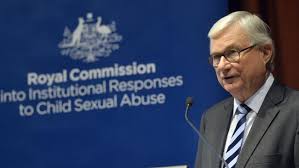
Julia Gillard’s greatest triumph (her only one), The Royal Commission Into Institutional Responses to Child Sexual Abuse published its 17-volume report today. As is usual with such reports there are a million recommendations written in the turgid style expected of such institutions.

The report will be noted, implemented and ignored as usual and the recommendations likewise.

One of the things I noted in the process was the arrogance and the contempt of the commissioners towards religious leaders from all denominations. Naturally this attitude comes out in the recommendations. Yes I read them all- I have no intention of reading the 17 volumes of the report, though.

So here are the notable recommendations relating to religious institutions:

Recommendation 7.3
State and territory governments should amend laws concerning mandatory reporting to child protection authorities to achieve national consistency in reporter groups. At a minimum, state and territory governments should also include the following groups of individuals as mandatory
reporters in every jurisdiction:
a. out-of-home care workers (excluding foster and kinship/relative carers)
b. youth justice workers
c. early childhood workers
d. registered psychologists and school counsellors
e. people in religious ministry.
Recommendation 7.4
Laws concerning mandatory reporting to child protection authorities should not exempt persons in religious ministry from being required to report knowledge or suspicions formed, in whole or in part, on the basis of information disclosed in or in connection with a religious confession.

Recommendation 16.9
The Australian Catholic Bishops Conference should request the Holy See to amend the 1983 Code of Canon Law to create a new canon or series of canons specifically relating to child sexual abuse, as follows:
a. All delicts relating to child sexual abuse should be articulated as canonical crimes
against the child, not as moral failings or as breaches of the ‘special obligation’ of
clerics and religious to observe celibacy.
b. All delicts relating to child sexual abuse should apply to any person holding a ‘dignity, office or responsibility in the Church’ regardless of whether they are ordained or not ordained.
c. In relation to the acquisition, possession, or distribution of pornographic images, the delict (currently contained in Article 6 §2 1° of the revised 2010 norms attached to the motu proprio Sacramentorum sanctitatis tutela) should be amended to refer to minors under the age of 18, not minors under the age of 14.

Recommendation 16.18
The Australian Catholic Bishops Conference should request the Holy See to consider introducing voluntary celibacy for diocesan clergy

Recommendation 16.44
Consistent with Child Safe Standard 5, each religious institution should ensure that all people in religious or pastoral ministry, including religious leaders, are subject to effective management and oversight and undertake annual performance appraisals.

Recommendation 16.48
Religious institutions which have a rite of religious confession for children should implement a policy that requires the rite only be conducted in an open space within the clear line of sight of another adult. The policy should specify that, if another adult is not available, the rite of religious confession for the child should not be performed.

In a democracy, the State is required to be separate from the Church (and other religious institutions). The State does not have the ability to tell religious groups what to do, or believe.

The Royal Commission thinks that it can tell the Conference of Bishops to tell the Vatican to change Canon Law. The Royal Commission thinks that it should tell churches how to conduct confessions. The Royal Commission thinks that it has the right to overturn centuries of Catholic practice to require priests to reveal what they are told in confidence in the confessional, despite the history of priests going to prison or even death rather than reveal a confession.

The Royal Commission thinks that it has the right to tell the Vatican that celibacy is a bad thing, despite the evidence that sexual violence is about abuse of power not about sexual frustration, and that the primary indicator of potential for abuse is unsupervised access to children.

The Royal Commission thinks lots of people should be “mandatory reporters”, including clergy, but not the one group which has the most access to children and often the most trust of children, teachers.

All these recommendations are all very well but in the end they won’t do much for the protection of children. You can have all the rules in the world and the truly evil person will get around them. You can tell priests that they can only hold confessions in the sight of another person, but the priest who is determined will make sure that the supervising adult is someone who supports his evil ways.

The best thing to come from the Royal Commission is the realisation that churches and other institutions that relate to children cannot cover up abuse or ignore it. Everything else is likely going to be just the usual bureaucratic bulldust requiring people to have policies and procedures documented.

Jennifer Le Claire: Pope Francis, Mary Is Not My Mother, and I Am Not an Orphan

Sadly, it appears that Pope Frances isn’t as “evangelical” as we might have hoped

From Charisma News

Pope Francis, Mary Is Not My Mother, and I Am Not an Orphan

Pope Francis
Pope Francis leads his weekly audience in Saint Peter’s Square at the Vatican Thursday. The pope sent a controversial tweet Tuesday that violates Scripture. (Reuters/Alessandro Bianchi )

Pope Francis has been a breath of fresh air for many Catholics seeking greater liberty and a growing concern for conservative Christians who take issue with his comments about homosexuality and other cultural issues.

But the pontiff’s latest statement is sparking an uproar from believers around the world. Pope Francis sent a tweet Tuesday that absolutely violates the truth of Scripture:

“The Christian who does not feel that the Virgin Mary is his or her mother is an orphan,” Pope Francis tweeted. As of the time I wrote this column it had been retweeted about 4,000 times and many of the responses were unkind.

Some suggested the pontiff is “completely bonkers,” while others asked if he had been inhaling too much incense, and yet another told the Argentine Jesuit to stick with the “peace is good” stuff. It gets worse from there, but it’s not appropriate to attack the man for his unscriptural tweet. It’s more appropriate to share the truth.

Mary the Mother to the World?

First, let’s explore how the pope expanded on his exaltation of Mary. During his weekly address in Rome, the pope positioned the Roman Catholic Church as a “mother” to the world and encouraged Catholics to follow Mary as an example of godly motherhood.

“In our catecheses, we have often noted that we do not become a Christian on our own, but by being born and nurtured in the faith in the midst of the people of God, that is the church. She is a true mother who gives us life in Christ, and in the communion of the Holy Spirit, brings us into a common life with our brothers and sisters,” the pope said.

“The model of motherhood for the church is the Blessed Virgin Mary, who in the fullness of time conceived through the Holy Spirit and gave birth to the Son of God. Her motherhood continues through the church, who brings forth sons and daughters through baptism, whom she nourishes through the Word of God.”

What About Romans 8:14-15?

So, let’s start dispelling this error with Scripture. Romans 8:14-17 shines light on the issue of orphans in Christ—there are no orphans in Christ:

“For as many as are led by the Spirit of God, these are sons of God. For you did not receive the spirit of bondage again to fear, but you received the Spirit of adoption by whom we cry out, ‘Abba, Father.’ The Spirit Himself bears witness with our spirit that we are children of God, and if children, then heirs—heirs of God and joint heirs with Christ, if indeed we suffer with Him, that we may also be glorified together.”

Nowhere in these verses does it make mention of Mary. Rather, we see the Father, the Christ and the Holy Spirit at work in a believer’s life. That’s Bible. If that’s not enough, Jesus Himself stated plainly: “I will not leave you orphans; I will come to you” (John 14:18). I don’t mean this in a sarcastic manner at all, but please note that Jesus did not say Mary would come to them, or that He would bring Mary with them, or that Mary is praying for them, or that they should pray to Mary.

There are many issues in the Catholic religion that don’t line up with Scripture, but suggesting that “The Christian who does not feel that the Virgin Mary is his or her mother is an orphan” is an obvious heretical statement that cheapens our salvation. Christians are justified by faith (Rom. 5:1)—the righteousness of God in Christ (2 Cor. 5:21). Mary was a blessed vessel God chose to bring the Messiah into the world, but Jesus did not exalt her, and neither should we.

Jennifer LeClaire is news editor of Charisma. She is also director of Awakening House of Prayer in Fort Lauderdale, Florida, and author of several books, including The Making of a Prophet and The Spiritual Warrior’s Guide to Defeating Jezebel. You can email Jennifer at jennifer.leclaire@charismamedia.com or visit her website here. You can also join Jennifer on Facebook or follow her on Twitter.