Families in Cell Groups

Photo by Rajiv Perera on Unsplash

Families in Cell Groups

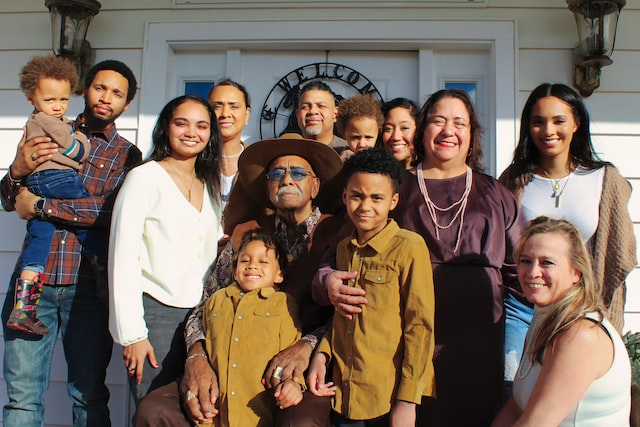
Every member of the family is created in God’s image, from the youngest to the oldest. Children are meant to be a part of the cell group. They can hear God and they can minister to other people just as powerfully as any adult.


I was talking to someone a month or so ago who said their cell group hadn’t met all year, partly because some of the children were a problem. They hosted the group at their home, but were tired of the children spending group time in their children’s bedrooms and “trashing the joint.” They were thankful when renovations made the home unsuitable for hosting the group.


My wife told these people, “If you do not include the children now, you won’t have them at all later.” We shared some resources and tips to include children in the group.


I lead a group in our church that is specifically family focused. We try to make it children friendly and also relevant to the adults. I am always sure to include worship music and some child-related videos that relate to the theme of the day. We also have a Bible passage that I encourage the children to read.


Food is important. We have the children prepare something that can cook during the cell meeting and they look forward to that for the end of the group.


Sometimes the kids are unruly, and the parents don’t discipline them or hold them accountable for their behaviour. Sometimes the adults are out of sorts and refuse to join in.


But other times I see the lights go on in the hearts of a child or a parent and I think, “Yes! God is working here, despite everything!”


Children need to be included as much as possible in group life. Some groups have a separate lesson time for children. They include the children for the Welcome and Worship segments, and then a different adult each week takes the children to another room for the Word part. That approach works, but make sure that you have child safe protocols in place- both the legal requirements for Working With Children Checks and your church policies and guidelines for children’s ministry.


Also, when you are thinking about whether the group is getting to the size where it needs to multiply (i.e. 12-14 people), make sure you count the children. They are people too, and they are apart of the inter-personal dynamics of the group.


So let’s keep on persevering in including all people of all ages in our groups, and celebrate the wonderful things that God can do.

Cell Ministry

In biology, a cell is the smallest unit of life. Your body is made up of millions of cells, all of which carry your DNA and all of which contribute to the functioning of your body.

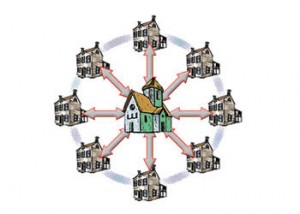
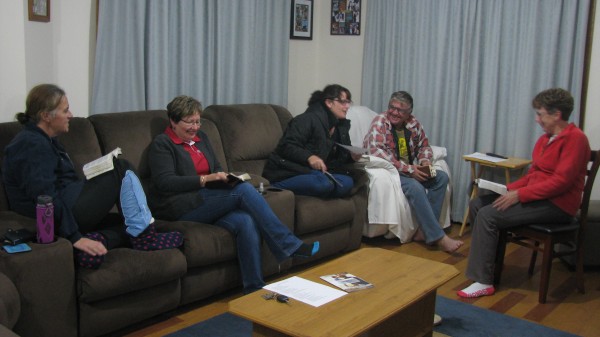
In church life, a cell is a small group, usually numbering 5 to 14 people, which meets regularly to worship, read the Bible, to pray for one another and to pray for people who do not know Jesus.

These simple activities lead to growth in the quality of our walk with Jesus. We can encourage one another and prompt one another to do better in the Lord. Because we meet together often, we form deep friendships which can help us to keep moving forward with God, especially in times of crisis.

A typical cell group meeting runs for about 90 minutes and follows a four fold agenda:

1. Welcome. An ice breaker may be used to stimulate discussion and to break down barriers between people.

2. Worship. In worship, we turn our eyes upwards to God. He is the reason we are here. He is the reason we live. He needs to be the focus of our lives

3. Word. We read the Bible together as it is the revelation from God above all others. It teaches us about who God is and how we should live as we try to follow the way of Jesus.

4. Witness. Every cell group is charged with the responsibility to make disciples. We pray for people who are not saved. We look for ways to include our friends in the group. We plan special events specifically for the purpose of including people who are not yet members of the group.

Sometimes a particular need of one of the members comes out in the discussion. At those times, we divert from the set agenda and we take time to minister to that need in whatever way we can.

Cell groups are awesome expressions of the love of God made real in the lives of individuals. If you are not part of a cell group, join one today. You can find details at our web-site http://www.new-life.org.au

Yarning Circles

Recently we had the privilege of meeting a well-known Aboriginal pastor, Henry Weatherall. Henry has moved around regional NSW and ministered in places like Moree and Condobolin, as well as an itinerant ministry through much of the nation.

During our conversation, Henry said that he likes to get into prisons and minister to young indigenous inmates in yarning circles. In a small group, people share their stories and why they are there. Henry also shares his story of how God set him free from alcoholism and turned his life around.

Henry said that indigenous people really need to have these opportunities to get their hurts and struggles out in the open. Everybody needs that, otherwise we just carry the soul sickness around with us and never receive healing.

At New Life we emphasise our own yarning circles, which we call cell groups. In cell groups we have opportunities to share our stories and to minister to one another, all in the safe environment of people who care about each other. We laugh together, we worship together, we cry together and we pray together. All the time the Holy Spirit is deepening our love for one another and for Him.

This is an important part of our life together. We want to be healed, whole and strong to take the gospel of the kingdom to our friends and families.

Yarning circles – cell groups – whatever the name, they are a great idea.

Cell Ministry in the 21st Century

Not long after we moved to Narrabri, a town of 7000 people in the wheat belt of Eastern Australia, the Lord started talking to us about a “new thing” that He wanted to do with us in this place. We weren’t sure what this new thing was, but in 1996, we stepped out in faith and left our denomination to start New Life Christian Fellowship.

About that time, I read Ralph Neighbour’s book, “Where Do We Go From Here?” which documents in great detail the decline of the evangelical churches in the USA since the glory days of the 1950’s. That trend has only increased into the current century, as leaders have recognised that a whole generation has left the church.

This decline has also been felt in Australia, perhaps more so. Since I became a christian in 1976, churches generally have lost their influence in the community and many people are suspicious, even hostile, towards any expression of christian faith.

Ralph goes on to describe the new- old cell church paradigm for churches that was far more effective than the Program Based Design. While PBD churches add never-ending programs to meet the expressed needs of special groups in the church, the cell church disciples everybody in small groups designed to grow disciples and reach out to the local neighbourhood.

In the traditional style of church, Bible Studies were optional extras for the committed members, but in the cell church the cell was the primary expression of the church. Later on, Ralph would coin the phrase “Christ’s Basic Bodies” to describe the primacy of cell groups.

This description of cell church hit me as a revelation of what Jesus intended the church to be. I was so excited to be planting a church at the same time that I was seeing what we needed to do.

Over the last 24 years I have devoted my time and energy as a Pastor to encouraging my cell leaders and equipping them for their task. Of course we gather on Sunday morning for worship and preaching of the word, but my thoughts are always about growing our cell groups. At times it has been exhilarating, at other times disappointing. Regardless of my feeling at the time, we know this is the path God has set for us.

When we started out, I believed that we would eventually grow to be a church of 1000 people. When I prayed into that, I would envisage a large auditorium filled with a huge crowd of people. Now I see 100 cell groups spread across the town and the surrounding farm lands, shining the light of Christ into the darkness.

Following a television promotion some years ago, our town was crowned “The Sportiest Town in Australia,” but by God’s grace I hope that one day it will be “The Godliest Town in Australia” as our cell groups take seriously the commission to make disciples.

Cells And The New Testament

I love the fact that Cell Church is not a recent invention, but has always been at the heart of the way God’s people have discipled one another.

The Great Commission that Christ gave the church was to “Go and make disciples of all nations” (Matthew 28:19). Evangelism is an important part of the process, but it is only the start, in the same way that child birth is just the start of parenting. Maturity is the goal in both cases.

Just as Jesus ministered to both “the crowds” and the Twelve, the church has often recognised that effective ministry has to operate as both celebration and cell.

In the New Testament we are given many commands that end in “one another.” These are the practical daily keys to growing in maturity as followers of Christ.

The most well known of these commands is Jesus’ command: “A new command I give you: Love one another. As I have loved you, so you must love one another.” (John 13:34). Love is a personal thing. You cannot love a thousand people in a large group. It is possible to love one another in a much smaller group where there is space to get to know one another and to share deeply.

In Romans 12:16, Paul tells us to “Live in harmony with one another.” I live in a town of 7000 people. We don’t need instruction to live in harmony with one another. As long as we show consideration for one another, remember to drive on the correct side of the road and don’t make too much noise at night, everyone is happy. When you need instruction to live in harmony with one another, that suggest that people are close up and personal and needing to make adjustments to their words and actions. We call that love in action.

Paul tells the church at Colossae (and us also), “Let the message of Christ dwell among you richly as you teach and admonish one another with all wisdom through psalms, hymns, and songs from the Spirit, singing to God with gratitude in your hearts. (Colossians 3:16). There is a measure of openness here that cannot be seen in a big group. Admonishing is counselling or exhorting someone to a course of action. That is very uncomfortable in a medium or large sized group. But it is what groups of 6 to 12 people do very well.

As you search through the Scriptures and find so many “one another” commands, you realise just how intimate and caring relationships in the church are meant to be.

We are called to live together in an open community where deep and loving relationships develop, but which encourages new members to feel included.

Joel Comiskey: The Priority of Prayer

Joel Comiskey writes:

The Priority of Prayer

By Joel Comiskey, check out Living in Victory

Most pastors and leaders are pragmatic. They want to know what will work. Immediately. Most are fascinated by techniques that promise quick growth.

Yet, the only ministry worth having is the one that God himself brings to life. And such a cell or cell church requires prayer at its very foundation—the root level. Only God can break down the barriers to growth and help the leader make disciples who make disciples. A church, in fact,  cannot survive without prayer. Norman Dowe, an experienced church planter, writes: 

I have failed at planting a church twice. My first reaction is to blame my lack of giftedness on my failure. I am a pastor/teacher not an evangelist, nor an apostle. After my last fiasco, the Lord took me to Zech. 4:6 in the context of Jerubbabel rebuilding the temple. I failed not because of my gift but because of my reliance on my experience, training, and reading. I failed because I did not rely on the Spirit. I am no longer infatuated with structures but am trying to replace that with true spirituality. I read once that Cho was asked the secret to his success. He said, “I pray and obey.”

In contrast to Norman Dowe’s church planting experience, Rob Campbell, JCG board member and frequent blogger, started his church with prayer. When he planted Cypress Creek Church in Wimberley, Texas, he made prayer his first priority. He not only exemplified prayer but hired Cecilia Belvin, the pastor of prayer, as the first staff person. Today Cypress Creek Church has one of the most vital prayer ministries in existence. God has blessed this church abundantly because they’ve placed Him first.

All of us should follow Paul’s exhortation, which he wrote from a Roman prison at the end of his life:

Devote yourselves to prayer, being watchful and thankful. And pray for us, too, that God may open a door for our message, so that we may proclaim the mystery of Christ, for which I am in chains. Pray that I may proclaim it clearly, as I should. Be wise in the way you act toward outsiders; make the most of every opportunity. Let your conversation be always full of grace, seasoned with salt, so that you may know how to answer everyone (Colossians 4:2-4).

Leading a cell or a cell church is  a spiritual battle. Satan and his demonic hordes laugh at powerless, prayerless ministers.  These same dark forces become extremely worried when we dedicate ourselves to fervent and effectual prayer.

I recommend that each leader find a group of intercessors to pray for them(Peter Wagner’s book Prayer Shield, talks about how to do this). Inform these people about what’s happening in your life and ministry. They will become your prayer shield and help provide guidance and direction in your life and ministry. They will serve as your protection and covering.

“Jesus, help us to become men and women of prayer.”

Empowering People

empowered

I have noticed something very exciting happening in my church lately- people don’t need my permission to do things.

Other pastors try to encourage, cajole, pressure their people to talk about their faith with their friends, but I just hear stories of how it is happening naturally. There is no training programme, 40 Days of Purpose, Evangelism Explosion or visiting evangelist.

One of the great benefits of being a cell church, that is a church which honours both large groups and home-based small groups as important expressions of the Body of Christ, is that leadership is dispersed and not just embodied in one person. (See our web site for articles on the cell church). Everyone gets to share in ministry under the guidance of mature christians, and so it is not a big leap for people to think they can do stuff.

People will find their own calling and their own ways of doing things. One lady in our church who is a teacher is inviting some teacher friends to her home to watch the movie “The War Room.” One of our men who travels big distances finds opportunities to talk to customers about Jesus and daily texts encouraging scriptures to his friends. Others find ways to encourage and support one another in informal ways.

This takes a lot of pressure away from the Pastor. I don’t have to try to do everything because the church is being the church- every member learning how to embody Jesus in their normal every day life.

At the heart of this is the core value that christians grow best when they meet together intentionally in cell groups. Our Sunday gathering gives me the place to provide oversight and good teaching as well as providing a focus for the unity of the congregation. The weekly cell groups provide fellowship and encouragement together with a base for outreach.

I praise God for what He is doing with our people.

Book Review: “Leading Small Groups In The Way of Jesus” by M. Scott Boren

I’ve read dozens of books on small group leadership, group dynamics, cell church principles and so on, but none are quite like this book by Scott Boren.

There are many books that explain cell minsitry from a pragmatic view point and many that talk about groups as a powerful evangelistic strategy, and there are some that show how small groups have always been at the heart of healthy church movements through the ages.

This is the first book that I’ve read that shows how our group leadership practices must reflect the character of Christ so that the groups and the people in them learn to grow in the ways of Jesus.

Boren describes eight “Pracitces” that together lead us in the way of Jesus:

  • Hear the rhythms of the Jesus Way
  • Gather in the Presence
  • Lead collaboratively
  • Be yourself
  • Hang out
  • Make a difference
  • Fight well
  • Point the way to the Cross.

Each chapter left me saying “Wow!” as I picked up new aspects to the ministry of cell leadership, and pastoral ministry for that matter.

This book is descriptive rather than prescriptive. In other words, the author does not give directions for leading a group. Rather he describes how each practice can be experienced and encouraged in the group. There is no 4-step plan for dealing with the over-talkative member, but there are principles for dealing with conflict in a godly, loving and healing way.

This is a book I will be returning to often, maybe picking up insights from a chapter at a time.

However, it is not a book that I can recommend to my cell leaders, or at least not to all of them. The book is written in a style that people who have had only a High School level of education would struggle with. People who do not read for enjoyment will struggle with this book. That’s not a criticism but an observation about the style, the concepts and the use of language.

It’s a great book even though it’s not for everyone. The content is too important to not share, though. My cell leaders will be learning about this in our meetings and training.