Listening to the news and the panic coming from our politicians and activists over the last few weeks, you would think that Australia is a very violent place and that women are being killed by the millions by out of control partners.
Official statistics from the Australian Institute of Criminology tell a different story.
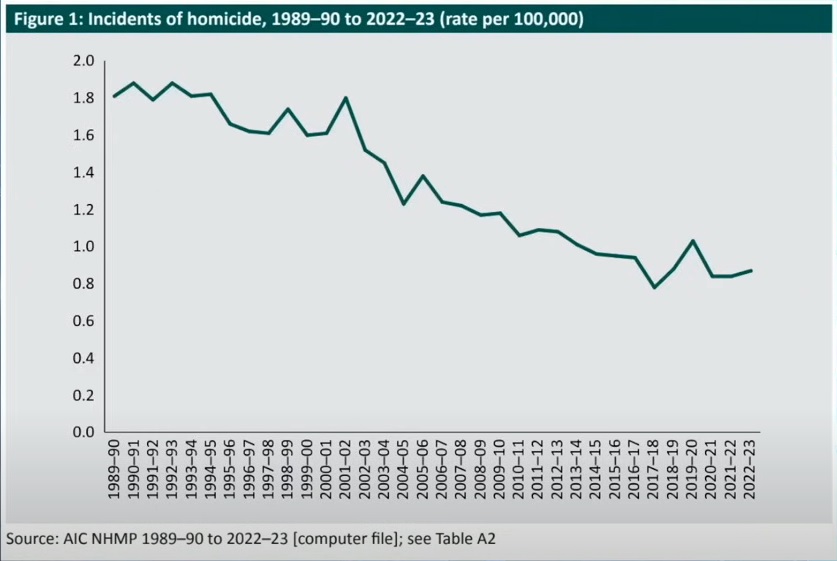
Firstly the rate of murders in Australia per population is declining, and has been for many years.
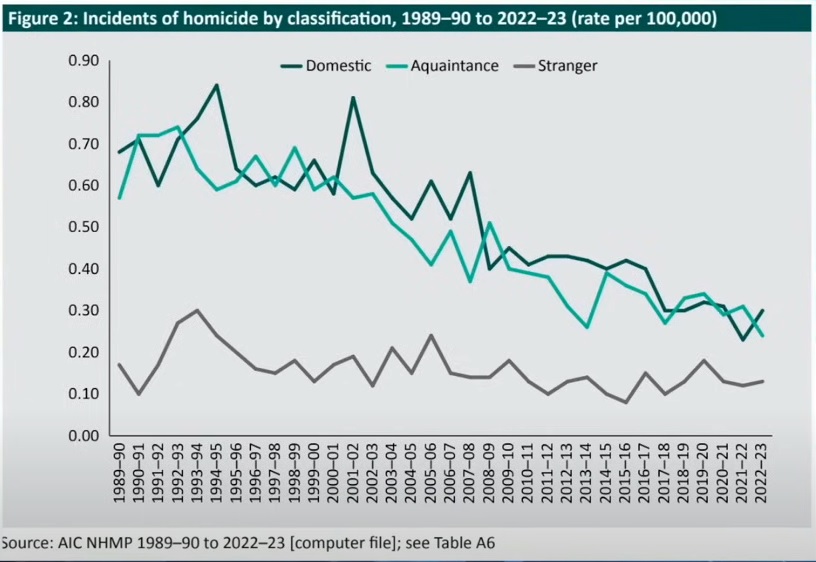
Well maybe the rate of death in domestic violence cases is exploding. After all those feminists must be jumping up and down about something. While every death at the hand of a partner is tragic, there is no need for the kind of moral panic we have been seeing in the media and governments lately. Homicides by domestic partners or even by friends is on the decline.
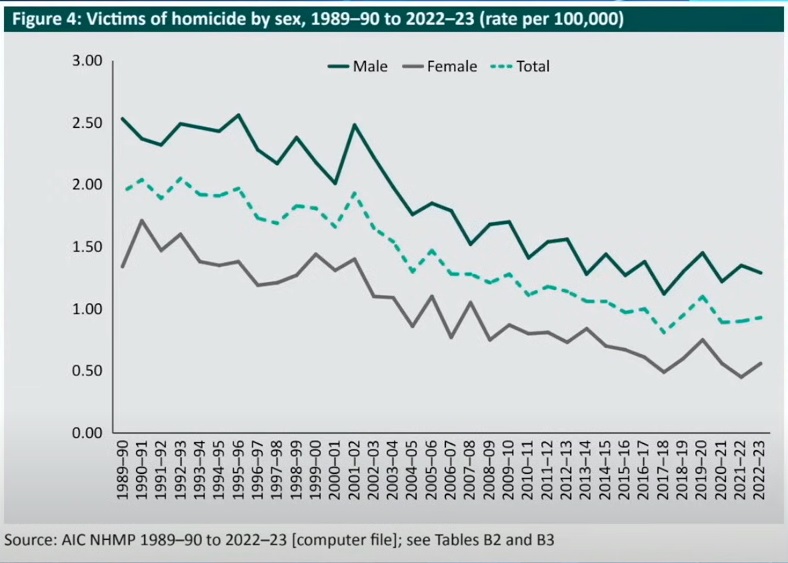
What about women then? Are they more likely to be killed by toxic masculinity in the home?
It is the case, and probably always has been, that more men are murdered than women. Why are we not seeing the media jumping up and down about that?
Murder is evil. Domestic violence is evil. But when the stats are so obviously out of kilter with the hype you have to wonder what is going on.
Either Julia Baird is on a crusade against churches or she has no clue about how to interpret statistics. Judging by her previous articles it is both.
Having said that, the substance of the survey is disturbing.
The authors of the report admit that the respondents were self-selecting. Something along the lines of “Call us if you want to take part in research into domestic violence in churches.” Obviously those who have some experience of the issue are more likely to reply to that invitation.
So we don’t know from this that the figure is one in four of all churchgoers. It could be one in ten or one in twenty.
Having said that, any domestic violence (perpetrated by men or women) within a church is unacceptable. What is scary is their statement that independent or newly established evangelical and charismatic churches are more likely to have DV happening in their midst. This would be especially true in the rapidly growing churches and those with superficial relationships.
Anyway, it looks like I might need to do some research and preventative work at the very least.
One in four churchgoers has experienced domestic abuse in their current relationship, according to a new study in Britain.
The research, conducted in Cumbria by academics at Coventry University and the University of Leicester in conjunction with Christian charity Restored, has led to urgent calls for churches in Britain and Australia to expose and counter abuse in their midst, with the authors finding more priests need to publicly condemn abuse “from the pulpit”.
Almost half of those who sought help from their church (47.2 per cent) said they were unlikely to do so again, if they experienced abuse in the future.
Only two in seven thought their church was adequately equipped to deal with a disclosure of abuse.
Mandy Marshall, a co-founder of Restored, a global Christian alliance that aims to end violence against women, said: “One of the biggest barriers we have faced is Christians not believing that domestic abuse could happen in their church.”
She added: “My hope is that this research is a wake-up call to all churches to recognise that domestic abuse happens in churches, too, and that we need to respond appropriately and effectively when domestic abuse is disclosed.”
The study comes after an ABC News investigation found women in Australian Christian communities — a number of them clergy wives — were being told to endure or forgive domestic violence and stay in abusive relationships, and that churches of all denominations had too often ignored their reports, failed to recognise the different forms abuse took and did not ensure safety or provide adequate care.and humiliation.
Dr Kristin Aune, of Coventry University, the study’s lead author, said: “A quarter of the people we heard from told us they had been physically hurt by their partners, sexually assaulted, emotionally manipulated, or had money withheld from them.”
The most commonly experienced form of abuse was emotional.
Barbara Roberts, the leader of A Cry For Justice, a website for Christian survivors of domestic violence, said the new research gives Australian church leaders a strong mandate to address domestic abuse more forcefully.
“We need clergy to speak up about domestic abuse,” Ms Roberts told ABC News. “But when they speak without much knowledge, they can do more harm than good.”
Andrew Bolt has been doing a fantastic job of defending the church from the ABC’s lies and misrepresentations about Domestic Violence. Now one of Julia Baird’s main sources for her report claiming that evangelical christians have the highest rates of Domestic Violence has spoken up.
ABC’S SOURCE: ABC WAS NOT FAIR IN SMEARING CHRISTIANITY
Andrew Bolt, Herald Sun
an hour ago
The ABC falsely claimed our worst wife beaters were evangelical Christians who went to church sporadically.
On the one hand, the church is charged with “both enabling and concealing (domestic violence)”…
But it also states: “Research shows that the men most likely to abuse their wives are evangelical Christians who attend church sporadically.” Here, they are drawing on my research on religion and American marriages (they neither contacted me nor mentioned me in the story, even though they relied heavily on my empirical findings). They speculate that it’s the kind of men “who are often on the periphery (of church life), in other words, who sometimes float between parishes or sit in the back pews”, who are most likely to abuse. That’s not the full story, if they are basing this claim on my research. In my study of the nominal evangelical husbands who were most abusive, I found that it was evangelical Protestant men who infrequently or never attended church who were most violent.
How do you blame Australian churches for a big domestic violence problem if it is men who infrequently or never attend church who have the highest likelihood of being violent? How would bad Christian preaching, teaching or counselling be a major factor in spousal abuse if the worst abusers are rarely or never in the pews? It doesn’t follow.
Indeed, what may be happening in the real world is that churches and religious institutions actually reduce the odds that husbands or wives abuse one another. On average, messages about love, forgiveness and fidelity may actually make for better husbands and wives, especially when they are reinforced by a community of believers that is struggling to live out values and virtues generally supportive of strong marriages.
Indeed, in the US, the evidence suggests religious attendance reduces the odds of domestic violence. Work by University of Texas sociologist Christopher Ellison shows that husbands and wives are less likely to report they are abusive if they attend weekly; they are also less likely to report they have been abused if they are part of a church community. My research indicates couples report significantly higher quality relationships if they attend church together.
The point is not to suggest that abuse is not present in the church in Australia, or that lay and clerical leaders have not made big mistakes in addressing abuse. Abuse, and failures to adequately address it, can be found throughout the nation — including the church.
But it is to suggest that the ABC story completely ignores the possibility that churches and religious institutions may be having some positive role in reducing the prevalence of domestic violence among their active adherents. Instead, the story fails the basic journalistic test of fairness by presenting an almost completely negative picture of Christian approaches to domestic abuse, one that does not square with the evidence that churchgoing couples, in America at least, appear to be less likely to suffer domestic violence and more likely to enjoy happy marriages.
The ABC reports that this article was based on a year-long investigation. So they had a year to get this right.
But the truth conflicted with the agenda, you see, and once again the agenda won. Christianity must be portrayed as malevolent.
The ABC has been making misleading reports about how evangelical men are the most likely to abuse their wives. It’s simply not true. The report actually said that men who occasionally attend an evangelical church are more likely to engage in violence than men who don’t attend church- that’s a whole different bunch of information. But the ABC never lets the facts stand in the way of a good opportunity to bash christians.
Recently the (Australian) ABC reported that the men most likely to beat their wives were evangelicals. It’s not true, they made it up. There is no evidence. What evidence exists points to the transforming power of the gospel.
Marxist feminist Elizabeth Brusco set out to study the impact of evangelical conversion on family life in Columbia. Here’s what she discovered by careful research:
The asceticism required of evangelicals brings about change in the behavior of male converts, particularly in relation to the machismo complex in Latin America. Drinking, smoking, and extramarital sexual relations are forbidden. By redirecting into the household the resources spent on these things, such changes have the effect of raising the standard of living of women and children who are in varying degrees dependent on the income of these men.
My data on Colombian evangelical households support the conclusion reached by virtually every other analyst of Latin American Pentecostalism, that is, that conversion of both a woman and her husband improves the material circumstances of the household. Quite simply, no longer is 20 to 40 percent of the household budget consumed by the husband in the form of alcohol. Ascetic codes block many of the other extra-household forms of consumption that characterize masculine behavior in Colombia: in addition to drinking, smoking, gambling, and visiting prostitutes are no longer permitted.
Furthermore, an emphasis on male as well as female fidelity within marriage prohibits a man from keeping a woman other than his wife, and so a man’s limited resources are no longer split among two or more households dependent on his wage.
In re-forming male values to be more consistent with female ones (i.e., oriented toward the family rather than toward individualistic consumption) the movement provides a “strategic” challenge to the prevailing form of sexual subordination in Colombia. [pp 5-6]
Bruscho concludes:
The tangible changes and improvement in the standard of living of women and children in dependent households is only a symptom or an indicator of something much more remarkable that is happening.
With conversion, machismo is replaced by evangelical belief as the main determinant of husband-wife relations. The machismo role and the male role defined by evangelicalism are almost diametrical opposites . Aggression, violence, pride, self-indulgence, and an individualistic orientation in the public sphere are replaced by peace seeking, humility, self-restraint, and a collective orientation and identity with the church and the home. [p 139]
Bettina Arndt is not your average men’s rights campaigner- in fact she isn’t one at all. In this article she takes aim at the Domestic Violence industry and the way it skews all debate on DV to just one perspective.
The word is getting out and the ruse further exposed of the White Ribbon campaign in Australia. This Guest Article by Bettina Arndt published today.
For years now, all the key players in our well-orchestrated domestic violence sector have been singing from the same page, happily accepting government money to promote the idea that domestic violence is all about dangerous men terrorizing their partners. Malcolm Turnbull is on record boasting that the government is spending “hundreds of millions” of dollars on domestic violence – a tribute to the grip this powerful lobby group has on this country.
But now a few cracks are appearing. Recently an extraordinary article was published inThe Daily Telegraph, written by Nina Funnell who has built her career on being a domestic violence “survivor.”
In her article entitled: “Why you should never give a cent to White Ribbon,” Funnell took issue with the suggestion that Eddie McGuire should be required to donate $50,000 to White Ribbon as penance for his remarks about Caroline Wilson. Funnell said that she and many other survivors won’t give a cent to White Ribbon which is just a “fundraising club that made some blokes and a whole lot of politicians feel good.”
It’s just a redemption industry, suggests Funnell. “The reality is that much of White Ribbon’s $3.7 million revenue is spent on self-congratulatory feel-good talk-fests and various other empty virtue signalling initiatives.”
Very little of the White Ribbon’s “sorry money” is spent on services like domestic violence shelters says Funnell who has served on the boards of organizations supporting the shelters.
Given that such shelters continue to cry poor, it’s about time someone asked where all Turnbull’s hundreds of millions are going. The answer is not just White Ribbon but the multitude of government-funded domestic violence organizations like OurWatch, DV Connect, ANROWS, Domestic Violence Victoria. The list is endless. What started out as a sensible campaign to raise money for an important cause – providing support for battered women – has morphed into a huge propaganda industry determined to promote a simplistic male-blaming perspective on this complex social issue.
Support for the shelters gets remarkably little attention from the powerful female bureaucrats running these thriving organizations which downplay statistics demonstrating women’s role in family violence and promote the myth that the only way to tackle domestic violence is through teaching misogynist men (and boys) to behave themselves. Never mind that this flies in the face of the huge body of research showing most family violence involves aggression from both partners and that sexist attitudes are not a major risk factor for DV in Western countries like Australia.
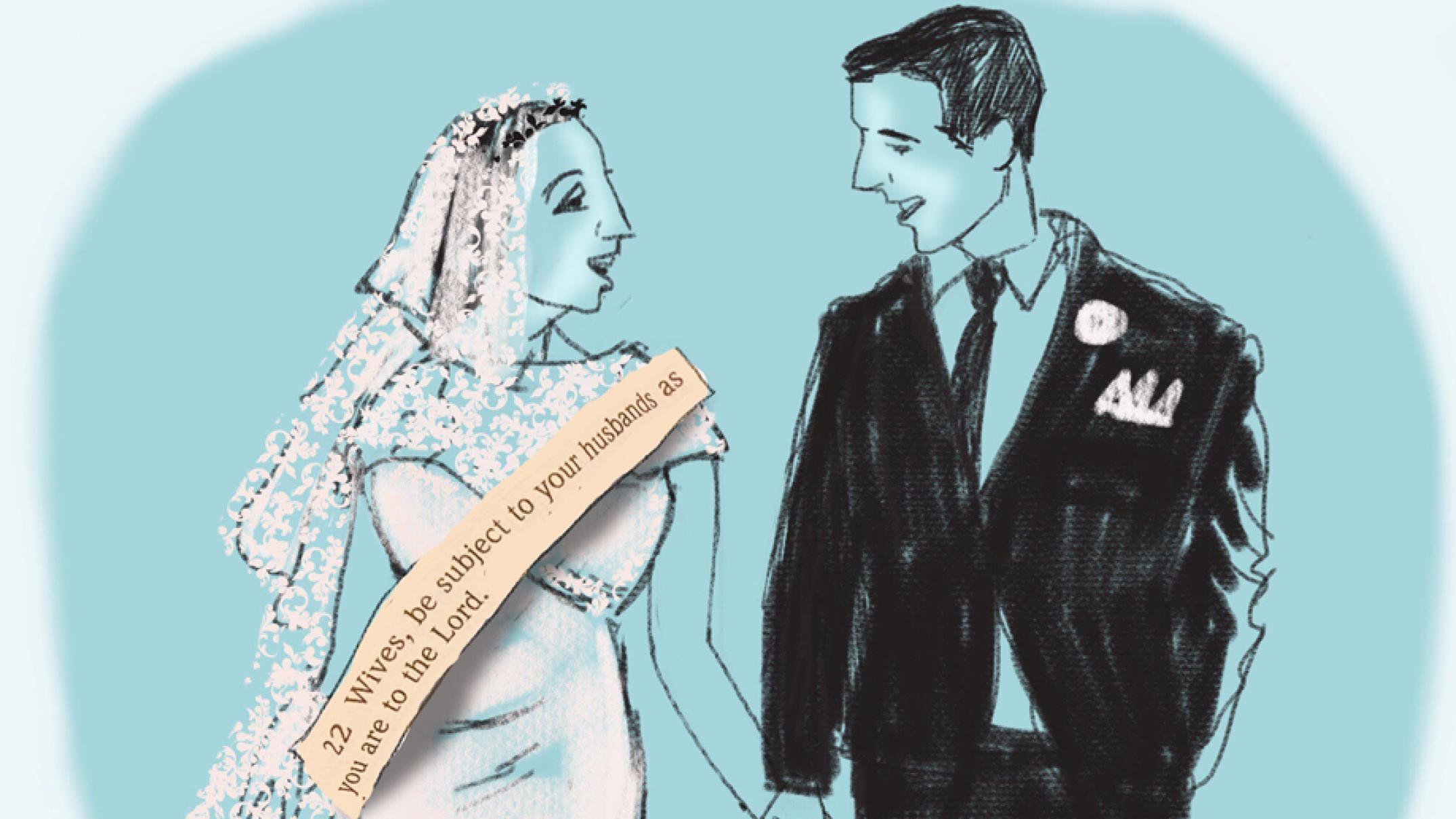
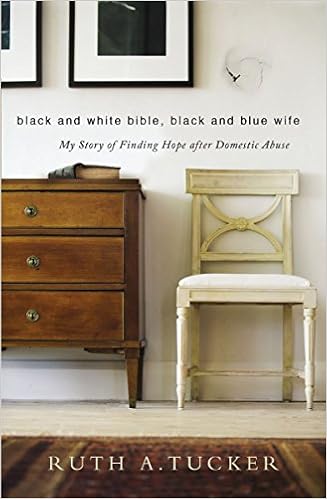
Ruth Tucker is one of all too many women who find that home is not a refuge but a place of violence. Married to a controlling husband who abused the Biblical doctrine of submission, she was regularly beaten before finally escaping with her son.
Ruth combines her testimony of her violent marriage with theological reflection about how misreading scripture can give rise to all kinds of evil behaviour that clearly contradicts scripture. She writes clearly and in a way that draws the reader into her story.
This is essential reading for all christians, especially pastors who hold a high value on the Bible and can therefore inadvertently blame the victim in counselling with couples.
Let me start by saying I abhor violence in general, murder in particular and domestic violence above all.
I am sickened by the statistic that already in 2015 35 women have been murdered in Australia, many of them by an intimate partner or ex-partner.
But surely all people murdered should count. When organisations like Destroy the Joint, ably supported by the ABC, just put up one side of the story we get a skewed picture. They deliberately muddy the waters by suggesting that all those women were victims of family violence.
The true story is this: men are much more likely to be murdered than women.
In 2006-07 the Australian Institute of Criminology reported there were 55 women murdered in Australia which is bad enough. But there were 244 men who were murdered in the same year. In other words more than 80% of murder victims were men.
Common sense tells us that if you want to make any change in any field you tackle the big figures first because a change at the margins makes a big difference. But the feminist activists just want us to look at the women who make a much smaller part of the overall violence picture.
In the particular issue of family violence, it is not just a story of men beating up women. About 1/3 of all victims of DV are men, and child killers are roughly split between men and women.
According to AIC, 78 men were killed by “Intimates” and “Family Members” compared to 37 women.
Family Violence is not a women’s issue. It is a people issue.
By putting out figures of how many women have been killed, with no context, activists risk diverting resources away from areas that would make a big difference to satisfy a narrow objective. That is always a Bad Thing.
Researchers have identified a “tipping point” linking rapid rises in the rate of domestic violence to the number of liquor outlets in an area.
A study by the New South Wales Bureau of Crime Statistics shows the frequency of domestic assaults jumps rapidly in local government areas where there are more than two hotels per 1,000 residents.
The statewide research also found that non-domestic assaults “increased markedly” in such areas, while violence was also linked to the number of other liquor outlets such as clubs.
Bureau director Dr Don Weatherburn said the study may help planning authorities, who receive many applications for additional liquor licences.
From the report:
Overall, the results of this investigation confirm that there is a relationship between the concentration of licensed premises in a particular area and levels of assault, even after controlling for other covariates.
Our work suggests that new hotel licences in areas where the concentration of hotels is already above two per 1,000 residents should be of particular concern to regulatory authorities.
“Up to this stage they haven’t had a threshold. They’ve often come to the bureau and said, well is there a threshold number? Is there some kind of point at which it becomes a big problem?” he said.
“We haven’t known the answer to that question and now I think we’re starting to get and inkling of at what point you really need to think carefully about agreeing to handing out additional liquor licences.”
Dr Weatherburn said the relationship between violence and the density of liquor outlets was a complex one, but the big surprise was how rapidly assault rates rose once the critical threshold was reached.
“You’ve got a bit of tipping point there once you pass the two mark for hotels,” he said.
“That’s when your problems start to escalate.
“There are very few places in New South Wales that have more than that number.
“Most of them are located in country areas like Hay or Bourke or Harden or Bland, and these areas do have significant problems with alcohol-related violence.”
Dr Weatherburn said the research backed up similar findings in Victoria and would be presented at the Applied Research in Crime and Justice Conference in Darling Harbour.




 New Life Narrabri