Jo Nova- Govt. Admits Renewables Will Never Beat Coal

By Jo Nova

At the top of the Faraway Tree, the cheapest form of energy need more subsidies. Just keep pouring the money…

The Australian Energy Market Commission (AMEC) has finally quietly admitted that they’ve given up on wind and solar power becoming cheaper than coal. Instead, renewables are so uncompetitive they will need another ten years of subsidies, or however long it takes until the last coal plant shuts off.

It’s so revealing. Once upon a time they might have thought (or at least pretended) that subsidies were there to get the unreliable generators ‘over the development hump’ so they could compete in a free market. But after 20 years of subsidies, there are no new economies of scale left to wait for. We got to the bottom of the cost efficiency curve and we’re going up the other side. Costs are now rising as the new projects have to go to far flung fields and wait for impossible transmission towers to appear. Windmills kept getting bigger until there was a nasty surprise in the maintenance bills that wiped 36% off Siemens shares in a single day.

AMEC opine about getting back to a free market once the coal plants are forced off the grid by the Big Government subsidies. They might as well be telling the world that wind and solar will never be as cheap as coal is.

How could the new unfree market, post coal, possibly be cheaper than the old one?

Green energy subsidies here until nation exits coal, says Australian Energy Market Commission

Perry Williams, The Australian

Australia’s official energy policy adviser says government subsidies for renewables will likely be kept in place for as long as coal-fired power generation keeps operating, locking in underwriting schemes for at least another decade.

It’s not renewables fault, it’s because we need “an orderly transition” (to a forced, fixed, and unfree market):

The Australian Energy Market Commission said underwriting mechanisms were needed to ensure there was an orderly transition to green energy as coal generation exited the nation’s power grid.

Sorry, did we say the subsidies would end?

“Are we going to get past this at some point when we won’t have governments underwriting new capacity. Maybe once we’ve seen coal exit and we’ve built out this phase of the transition,” AEMC commissioner Tim Jordan told the Citi Australia and New Zealand Investment Conference on Tuesday.

All the talk of free markets is just an illusion:

“We can then return to a more market-led approach where underlying demand growth will determine whether new capacity enters.”

Mr Jordan said the industry and government should aim for “market principles to take over again” once the transition from coal to renewables was complete.

What do we call a free market when the cheapest competitor is banned?

If the green subsidies can’t end until coal power is gone, it looks more like their primary goal was not to help renewables so much as to destroy coal…

Jo Nova: Fossil Fuel Comeback

Fossil Fuel Fightback: The gears shift on the Renewable Crash Test Dummy — Eraring coal lives, wind and solar slump

Australia's Renewable Transition plane,

By Jo Nova

If the whole renewables fantasy was crumbling, it would look something like this

Despite the Labor Government throwing money at unreliable energy, renewables hopes are quietly unraveling. The largest energy retailer in the country just announced a nice 26% profit jump, based on fossil fueled gas, and they also announced they’d be keeping Australia’s largest coal plant open longer. The two year extension for Eraring, is now a four year extension. Despite reaping in gas profits and keeping the planet-destroying-plant operating, the share price promptly leapt 6% to a ten year high.

Significantly, Giles Parkinson at Reneweconomy also noticed that Origin’s annual report includes talk of batteries, but no wind or solar projects, which seems like an important oversight in a nation belting headlong towards the Green Utopia.

Meanwhile, for the first time I can recall, a fossil fuel CEO is daring to defend the industry. The shift in confidence in palpable.  Mike Wirth, the Chevron CEO, is not only saying “oil is not evil” but he clearly isn’t afraid of the Australian government. He’s so unafraid he also delivered a “stinging rebuke” — saying that high costs, red tape and environmental rules have made Australia so uncompetitive, investors are leaving to spend their money in the US and the middle east instead. Indeed, Chevron had a plan to double their Australian gas production but have abandoned that now. Australia used to be the world’s largest LNG exporter but Qatar and the US outpaced us.

In a similar theme, Ampol just surprised the market by spending $1 billion dollars to double the number of petrol stations it owns, making it the largest retailer in the country. The CEO Matt Halliday said the unthinkable: “The transition [to EVs] will take decades, and combustion engines are going to still make up a large chunk of the national car fleet beyond 2050.” It was a very unfashionable and backward thing to say, but shares leapt 8% on the news yesterday.

Australia’s biggest energy retailerhits go slow button on wind and solar, mulling options on Eraring

Giles Parkinson, Reneweconomy

Origin Energy, Australia’s biggest energy retailer, appears to have hit the go-slow button on the rollout of new renewable energy projects, and is still mulling options on the already extended Eraring coal generator, the country’s biggest, which is officially due to close in 2027.

Curiously, in its annual report, the company says: “With the Eraring Power Station’s closure planned for August 2027, failure to deliver our major renewable generation projects may affect Origin’s future supply capacity, financial prospects and reputation.” Yet it has made no commitment to build those projects in that timeframe.

Think of the irony of putting the nations biggest battery next to the nations biggest coal plant, as if it needed back up:

But this is made up entirely of big batteries, including the giant 700 MW, 2,800 MWh Eraring battery being next to the coal generator…

It [the annual report] includes no wind or solar projects. The technologies did not even rate a mention in the results presentation, apart from the giant 1.45 gigawatt (GW) Yanco Delta wind project in the south-west of NSW, which has gained grid access rights but is still to complete environmental approvals.

Read the rest of the article here

Jo Nova: Renewable Fiasco: If Germany just kept nuclear power, it could have saved $600b and cut emissions by 73%

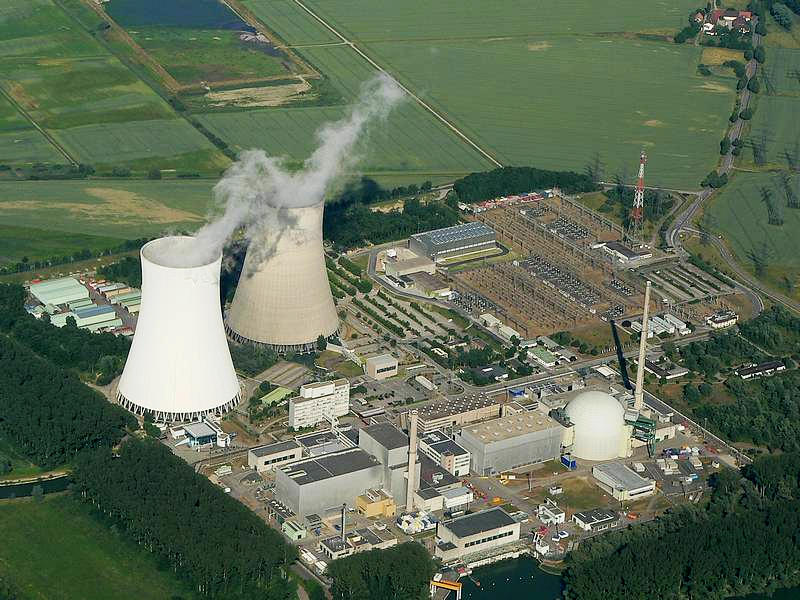
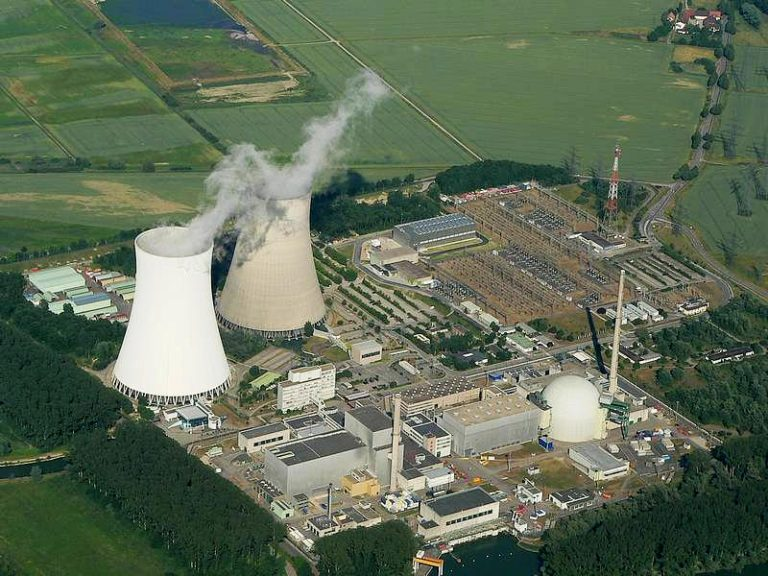
Phillippsburg Nuclear Power Plant by Lothar Neumann, Gernsbach

By Jo Nova

If the Germans just did nothing at all, it would have been Greener

Germany already had nuclear power in 2002, if they just kept it and didn’t build all the wind and solar plants, they wouldn’t have had to spend 697 Billion Euro on subsidies, and would have cut their emissions by 73% more.

If ever there is a statistic that says there is something rotten in the State of Climate Panic, this is surely it. I mean, does CO2 matter or doesn’t it? Do the Greens care at all, or even a bit? If there was a climate emergency and The Greens were worried about CO2, they might have protested that the EnergieWende was a reckless experiment. Instead the  But if the Greens were tools for communists, foreign states or banker-investors, then they might keep choosing options that benefit other countries, help Bankers or just make Big Government bigger.

Either the German Greens have utterly failed at the very task they set out to do, or they were really aiming at something else.

Ross Pomery writes at RealClearScience and  WattsUpWithThat

Study Quantifies Germany’s Disastrous Switch Away From Nuclear Power

At the dawn of the millennium, Germany launched an ambitious plan to transition to renewable energy. “Die Energiewende” initiated a massive expansion of solar and wind power, resulting in a commendable 25 percent reduction in carbon emissions by 2022…

In 2002, nuclear power supplied about a fifth of Germany’s electricity. Twenty-one years later, it supplied none. A layperson might think that cheap wind and solar could simply fill the gap, but it isn’t so simple.

Jan Emblemsvåg, a Professor of Civil Engineering at Norway’s NTNU just published a study comparing the ambitious German Energiewende renewable program with nuclear power:

“what if Germany had spent their money on nuclear power and not followed their policy from 2002 through 2022 (20 years); would Germany have achieved more emission reductions and lower expenses?”

Even German bureaucrats admit Energiewende “poses a threat to the German economy”:

German Federal Accounting Office (Bundesrechnungshof) writes about the German policy dubbed ‘Die Energiewende’ in German, and it concludes: ‘The Bundesrechnungshof warns that the energy transition in its current form poses a threat to the German economy and overburdens the financial capacity of electricity-consuming companies and households’ (Bundesrechnungshof Citation2021a).

A whole lot of wind (green) and solar (orange) power were added to the German grid and it was worse than useless:

Energiewende, Germany

Given these results, there can be no doubt whatsoever that if Germany had invested in NPPs [Nuclear Power Plants] instead of VREs [Variable Renewable Energy], Germany would have decarbonised more with far less nominal expenditures. The short conclusion is that Germany would have reached its climate goals with a substantial margin at half the expenditures of Energiewende.

The Germans have done this experiment so we don’t have to

Just burn that money in a pyre to the Weather Gods:

https://www.tandfonline.com/doi/full/10.1080/14786451.2024.2355642#d1e128

These costs do not included the added burden of expensive electricity on businesses and homes, the opportunity costs of money that could have been spent elsewhere, or the loss of talent, brains and industry to other countries.

Building new nuclear plants was still cheaper than wind and solar

The paper goes through another scenario where more nuclear plants were built with careful estimations of the costs and long times to construct plants and still concludes that the Germans would have saved $330 billion euro.

https://www.tandfonline.com/doi/full/10.1080/14786451.2024.2355642#d1e128

Not coincidentally, in 2024 Germany has some of the most expensive electricity in Europe, business confidence is low, and  VW have just announced that after 87 years in production, they might have to close their German factories.

Volkswagen, which was founded in 1937, said on Monday that it could no longer rule out unprecedented plant closures in Germany as it seeks ways to save several billion euros.

Chief executive Oliver Blume said: “The economic environment has become even tougher and new players are pushing into Europe. Germany as a business location is falling further behind in terms of competitiveness.”

Volkswagen employs around 650,000 workers globally, almost 300,000 of whom are in Germany, and the threat of factory closures sparked an immediate fierce backlash …

REFERENCE

Emblemsvåg, J. (2024). What if Germany had invested in nuclear power? A comparison between the German energy policy the last 20 years and an alternative policy of investing in nuclear power. International Journal of Sustainable Energy, 43(1). https://doi.org/10.1080/14786451.2024.2355642

Jo Nova: Hertz To Sell One Third of EVs Because Customers Don’t Want Them.

What does this say really about the future of Electrical Vehicles?

From jonova.com

rollercoaster

By Jo Nova

With the western world hurtling into new cars that are more costly, inconvenient, slower to refuel, and prone to burning down carparks and cargo ships, it was only a matter of time before the cracks in the socialist car market started to show.

EV, electric car.

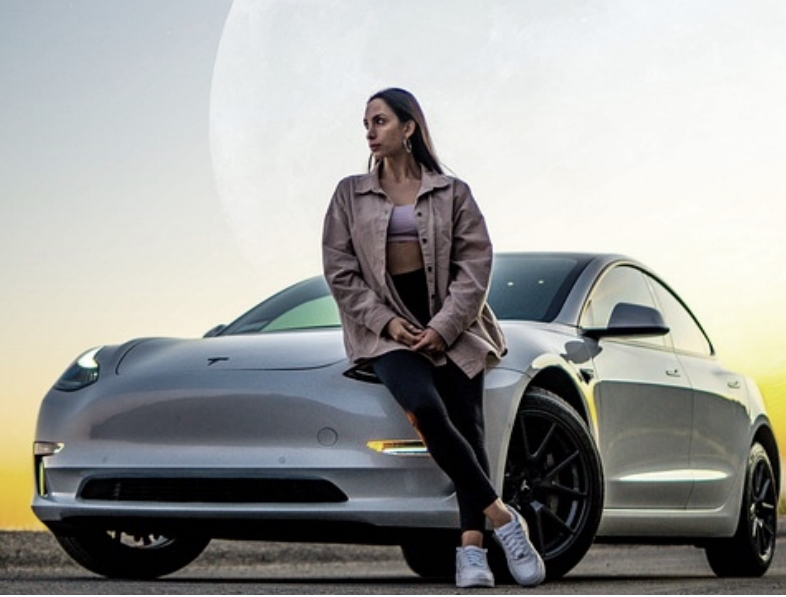
Around the world tonight headlines are sharing the news that Hertz is selling off 20,000 EVs, one third of their fleet, in order to buy some more fossil fuel cars. That can’t be inspiring news for customers thinking of giving up their gas guzzlers. As Oilprice said: Hertz’s Big Move Into EVs Turned Out To Be A Dud.  And as Reuters headlined: Rental giant Hertz dumps EVs, including Teslas, for gas cars.

It was the perfect storm in a bad way. Apparently the customers didn’t want to rent them, and when they did and they scratched them, they cost too much to fix. (Repair costs were twice as high).  Then the bottom fell out of the second-hand market, and to recover the depreciation losses, Hertz would have to raise the prices on a product customers already didn’t want. There was no way this was going to work.

The official dry Hertz announcement politely says that customers want fossil fueled cars and EV’s were too expensive to fix:

“..expenses related to collision and damage, primarily associated with EVs, remained high in the quarter”

“The Company expects to reinvest a portion of the proceeds from the sale of EVs into the purchase of internal combustion engine (“ICE”) vehicles to meet customer demand.”

Back in October 2021 it was all champagne and fireworks

Hertz put in an order for 100,000 EVs which was so exciting it pushed Tesla shares up 9% briefly to “a trillion dollar valuation”. (Two years later Tesla is worth 30% less.) At the time, Hertz expected to get the 100,000 cars by the end of 2022. Luckily for them, this didn’t happen. Instead they only got 50,000 by the end of 2022. This worked out to be about 11% of the Tesla total fleet. So these EV’s are not even very old. No one can say “the new models are better, because these are new models.

Some of the cars are already on the market. Two year old Telsa Model 3 EV’s are going for $22,000 US.

Hertz will book a $250 million dollar loss, and stocks in both Hertz and Tesla fell on the news.

With uncanny timing the Australian Albanese government is about to launch emissions standards we don’t need to coerce people to buy a product they don’t want, in the hope, they say, of changing the weather.

The insanity would be hard to fathom if EV’s weren’t also the ideal tool for spying, data collection, law enforcement, and political control. Benefits that can launch a thousand political careers…

The European Rebellion Against Net Zero

Jo Nova writes on The Aussie Wire:

The European rebellion against the Sacred Quest for NetZero spreads — Green investors “shocked”

The European rebellion against the Sacred Quest for NetZero spreads — Green investors “shocked”
Spread the love
Fantasy NetZero

Turtle Castle image by SAIF 4

The following post on the topic of NetZero is syndicated from jonova.com.au

Rishi Sunak’s delay in the NetZero Quest was the crack in the Uniparty Wall

Thanks to NetZeroWatch

It threatens to ignite a climate election.  It matters, because now, suddenly, one party can point out the absurdities and the costs. They can be an Opposition, and mock the sacred cows. That doesn’t mean Sunak will do that, but the fork in the road has opened, the world is watching — and his party is suddenly up four points.

The Green funds cartel is “in shock” sayth Bloomberg, at the Sunak shift — so it must be pretty serious.  Green investors are using the words “dismay” and “bewilderment”, which they almost never use. Green investment relies almost entirely on crowd psychology and government subsidies, so normally bad news is padded and fluffed so it doesn’t look so bad. We wouldn’t want to lose momentum would we? Boy are they losing momentum.

Meanwhile Sweden has not only cut climate money a bit, it’s unshackled some taxes off fossil fuels as well, leaving the centre left apoplectic and threatening to move motions of no-confidence. It is unthinkable, apparently, but Sweden might even increase emissions.

Germany has suspended draconian building efficiency standards and stepped back from their full gas boiler ban. They had wanted to ban all new “fossil” heaters from 2024, but after fierce protests, have instead brought in a much diluted and delayed version due to be adopted in 2028.  President Emmanuel Macron must have been watching the German and British debacles. His new plan rules out a complete ban on gas boilers, and talks about protecting vulnerable people in rural areas, and even how the French love their cars.

What’s more scary than climate change? —  The rise of the far-right

The quote of the day is from a German politician who sums up the major driver of these policy shifts.

Earlier this month, German Finance Minister Christian Lindner told Politico that stricter energy efficiency rules for buildings could fuel the rise of the far-right, amid growing apathy across Europe over plans to reach net zero.

 CleanEnergyWire

So Climate Change might cause the sixth mass extinction of life on Earth, but nothing is more frightening than the possibility of the far-left losing power at elections.*

Polls have leapt for the conservative government in the UK since Rishi Sunak slowed the NetZero train

This is what all the Climate-believer politicians are afraid of. Deep down, they know the NetZero quest is not popular with the masses, even though they say it is all the time. If they thought climate policies were really winners with the workers, they wouldn’t be so afraid of their opponents catching the skeptical train would they? Instead, they are aghast when their opponents dare suggest other priorities might be higher than changing the weather.

Read the full article here

Renewable Paradise: Australia Set For Blackouts This Summer

From Jo Nova


#d6b15c">Blackouts are coming: Australian grid so fragile, expensive, cement giant already shuts down nearly every day

Fantasy, dystopia, plane in the sky.

Image by Vicente Godoy from Pixabay

By Jo Nova

We can’t even run a cement factory all day anymore

Get your candles for summer! Unlike the last three years the Australian national grid won’t be rescued by another cooler La Nina this summer. Fears of rolling blackouts this summer are fraying nerves at The Australian Financial Review Energy & Climate Summit. The transition is described as stuttering, gridlocked, faltering, and the government as “desperate”.

Things are so bad, former CEO’s of major generators are warning that “the lights are going to go out” and accusing one Energy Minister of speaking “complete and utter horseshit” because they don’t think we need reliable peaking gas plants to replace coal power. Said Energy Minister has responded by refusing to even take his calls. That’s really going to work. Meanwhile Japan is getting nervous just watching us, afraid we have screwed things up so badly we can’t be relied on to keep sending them gas.

Not only is summer nerve-wracking, but things are already so bad, one of our largest cement producers is shutting down nearly every day because it can’t afford to pay for the peak electricity spikes even in springtime. Here in Renewable World it’s cheaper to let 5,500 workers sit around for 30 minutes than pay for electricity. The company was paying 54% more for electricity than the year before.

Riding the Express Train to the Renewable Faraway Tree

The numbers are staggering. Australia is racing headlong to the glorious 82 per cent renewables target by 2030. The catch is that the national grid at the moment uses coal for 62% of its electricity. The opposition energy spokesman is calling it “lunacy”, which it is.  To reach the land of sunshine and breezes, our grid manager, the AEMO, is theoretically going to close two-thirds of the country’s existing coal power generation in the next ten years.

To put this in perspective, since the last hot summer we’ve shut down Liddell Coal plant, and still haven’t fixed the coal turbine that blew up in Queensland two years ago. New renewable investment has ground to a halt when it clearly should be going gangbusters. No one wants to build new wind and solar plants until someone builds the 10,000 kilometers of high voltage lines to reach distant cheap windy real estate, and no one wants to live or farm next to those transmission towers, so the protests are fierce.

Energy Summit confirms stuttering transition is not on track

Decarbonising Australia’s fossil-fuelled electricity grid is proving slower and more costly than previously advertised, with reliability risks increasing as the exits of coal-fired power plants run ahead of cleaner and reliable replacement generation.

Nerves are frayed “We’re not having an honest conversation”:

‘Get your candles’: energy experts are ‘terrified’ about this summer

Angela MacDonald-Smith, Australian Financial Review

Former Snowy Hydro CEO Paul Broad said, “the lights are going to go out” in a return to normal conditions after three mild summers and said politicians were not listening to the warnings about the risks around supply, while the industry was not speaking up enough.

“That’s our problem,” he said. “We’re not having the honest conversations and us in the industry we’re not speaking up.”

Mr Broad, who abruptly exited Snowy Hydro last year after a run-in with Mr Bowen, accused Victorian Energy Minister Lily D’Ambrosio of speaking “complete and utter horseshit” in her refusal to recognise the need for peaking gas power plants in Victoria as coal power exits the system.

He listed Ms D’Ambrosio among energy sector figures who would no longer take his calls as he tried to get the message through, including former Australian Energy Market Operator Audrey Zibelman.

We can’t even run a cement factory all day anymore:

The startling reason Boral is stopping production almost every day

Chanticleer, The Australian Financial Review

Mr Bansal [the chief executive of Boral] told the Summit that Boral’s electricity price rose by 54 per cent in the 12 months to the second half of last year, and have not retreated, counter to expectations.

He said Boral had about 5500 “blue collar” workers who were being told to stand aside and do nothing for 30 minutes at a time when power prices made it too expensive to operate.

“At a certain price during the day, when the price goes up [to] a certain level, our manufacturing stops because we’ve worked out economically it’s actually better to have thousands of people waiting idle for the prices to come down then actually do the work,” he said.

“That’s a real issue we are facing every single day on 300 manufacturing sites across the country. So we are extremely nervous what that means.”

The chief at Boral pointed out that he’s not willing to sign up to 20 year electricity contracts because everything is so uncertain.

They still don’t understand the difference between reliable and unreliable power

It’s OK, the believers protest, Australia has added 20 gigawatts of solar.

“Australia has three-and-a-half-million solar systems installed and that represents around 20 gigawatts of potential output,” Westerman says.

“That’s more than seven Eraring power stations at full output and capable of meeting almost half the energy demand in the day when the sun is shining at its brightest.”

As if solar panels can be measured on the same page as a coal plant. For half an hour a day, on a good day, only in summer, and as long as the clouds don’t roll over, the peak output might be like seven coal plants. These people are crazy.

Finland Electricity Prices Drops to BELOW ZERO Due to Efficiency of Nuclear Power Plants

From Geller Report

Finland Electricity Prices Drops to BELOW ZERO Due to Efficiency of Nuclear Power Plants

This is what common sense looks like.

Insider: Finland was dealing with an unusual problem on Wednesday: clean electricity that was so abundant it sent energy prices into the negative. While much of Europe was facing an energy crisis, the Nordic country reported that its spot energy prices dropped below zero before noon (Insider).

Marian L Tupy: Finnish electricity price drops BELOW ZERO after the latest nuclear reactor is switched on. That is what the world could have looked like if the greens did not stop humanity from expanding nuclear power. Remember: nuclear power = no CO2 emissions (Twitter)

#f6f6f6;color: ;font-family: sans-serif">Finnish Nuclear Plant Throttles Output After Electricity Prices “Become Too Cheap”

As we detailed in early May, the transition from testing to regular output last month saw Finland’s first nuclear power-plant drive electricity prices dramatically lower.

by Tyler Durden, Zero Hedge, May 25, 2023 – 02:45 AM

As yle reports, the Olkiluoto 3 nuclear reactor in Eurajoki, southwest Finland, started regular electricity production in mid-April, about 14 years behind schedule

Since then prices for power in Finland have continued to plunge as the efficiency of the plant flooded the grid with ‘new’ energy.

So much in fact that early on Wednesday of last week, the market price for electricity dropped below zero cents per kilowatt-hour (kWh) and for hours after that the price was only 0.3 cents per kWh at its highest, according to the country’s grid operator, Fingrid.

That was unacceptable and prompted the plant’s owner, Teollisuuden Voima (TVO) to significantly cut back its output…

Electricity production must also be profitable for nuclear power plants, and when the price is particularly low, there may be situations where output is limited,” TVO communications manager, Johanna Aho, said.

According to Aho, cutting back on nuclear power production due to excessively low electricity prices is very rare, but not unheard of.

Janne Kauppi, an energy markets advisor at Finnish Energy, agreed with that sentiment.

“There haven’t been many situations where nuclear power output has been regulated specifically because of low prices,” Kauppi explained.

“When prices go negative on the electricity market, basically anyone who can adjust their production will do it, so that they don’t have to pay for their own production,” Kauppi noted.

The Finnish example is a testament to how nuclear can play a part in solving the current energy crisis, with consumers still paying sky-high fees for energy in many European countries.

However, the hypocrisy is of course that when power prices were extremely high in 2022, hurting consumers – it was all Russia’s fault; but now that prices are plummeting, operators can’t have that and withdraw supply to hurt consumers.

Do you see a pattern here?


Jo Nova: Exxon says NetZero degrades global standard of living so much there’s only a remote chance it will happen

By Jo Nova

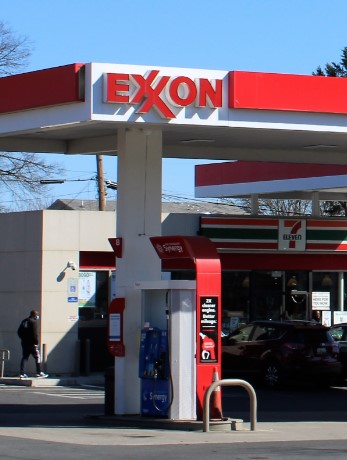
Exxon petrol gas station.

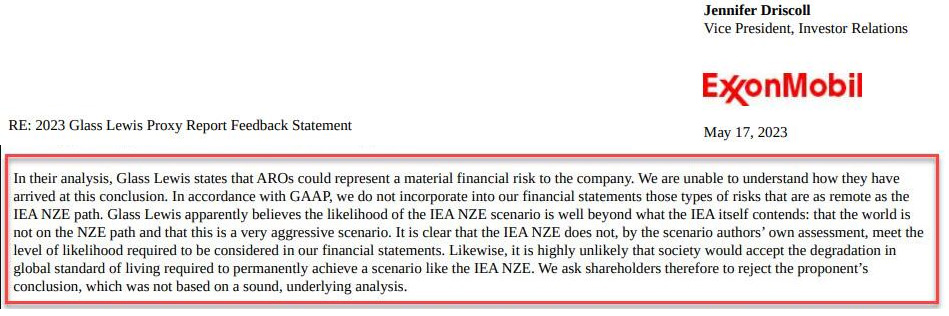
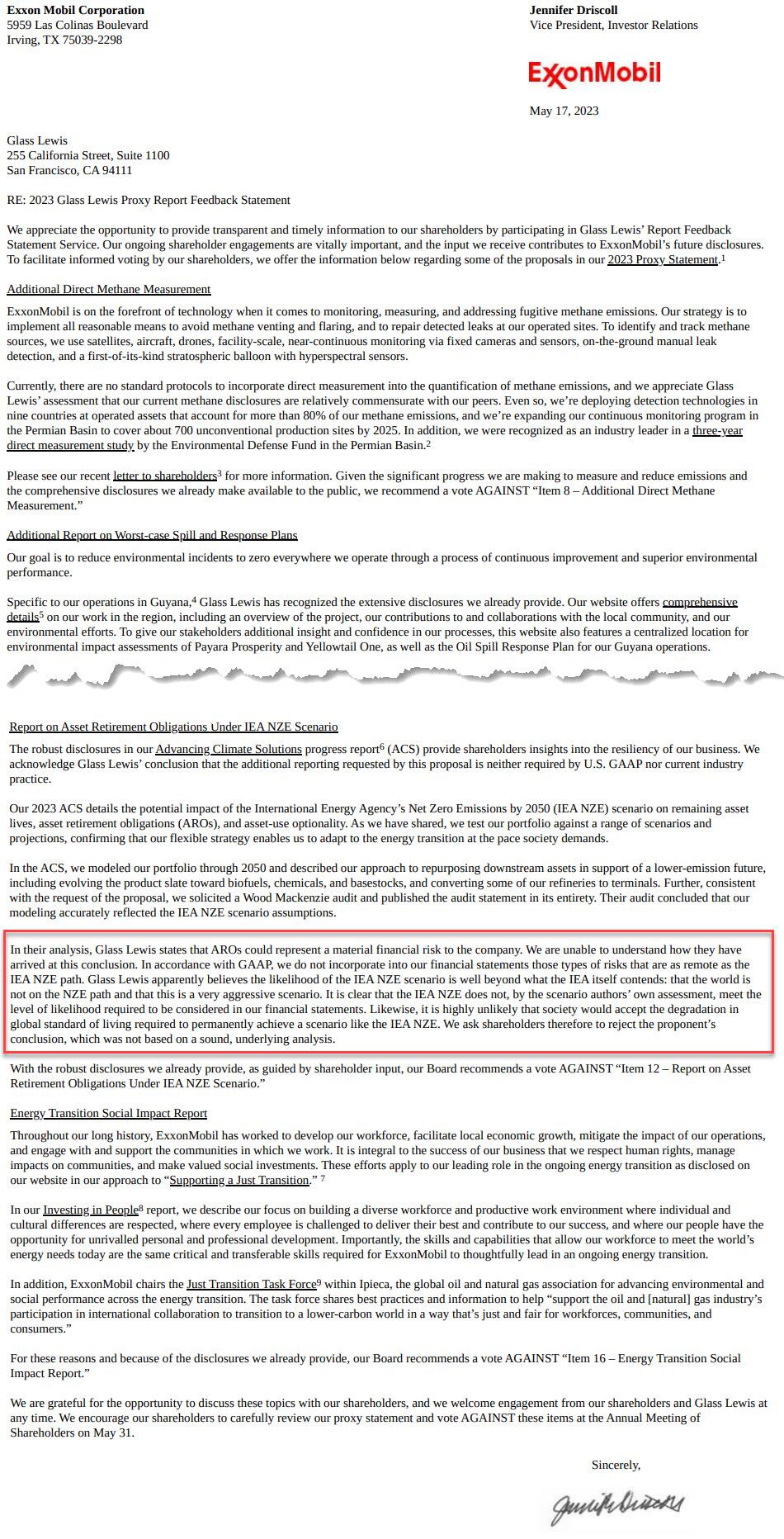
Exxon was told to jump through circus hoops like a performing seal and report the risks of NetZero to Exxon shareholders. But Exxon pushed back by pointing out that NetZero-by-2050 is so impossible it will never happen, and therefore the risks are not even worth assessing. Furthermore, and rather damningly, Exxon said, society would be unlikely to “accept the degradation in the global standard of living required“.  Exxon has taken was was supposed to be another PR win for the narrative and turned it into a media weapon.

This is exactly why the Big-Gov-Corporatist cartel wants to co-opt or destroy independent profitable corporations. In this case, companies that don’t need Big-Gov are free to point out the hypocritical inanity and absurdities which the lap-dog dependent industries like wind power and solar cannot.

Sadly, companies like Exxon still need to be brave because Big-Gov is so big, it is always the largest potential client and holds the sword of mendacious legislation, licensing and regulation as well.

Exxon Crushes Progressive Dreams That “Net Zero” Has Any Chance By 2050: It Would Mean Collapse In “Global Standard Of Living”

By Tyler Durden, ZeroHedge

The US supermajor pushed back against investors pressing the company to report on the risks to its business from restrictions on greenhouse gas emissions and potential environmental disasters when in a reply to proxy advisor Glass Lewis, Exxon said the prospect of the world achieving net-zero carbon dioxide emissions by 2050 is remote and should not be further evaluated in its financial statements.

A shareholder proposal seeking a report on the cost of having to abandon projects faces a shareholder vote on May 31. Glass Lewis backed the initiative, concluding Exxon could face material financial risks from the net-zero scenario.

Exxon disagreed, and said the world is not on a path to achieve net-zero emissions in 2050 as limiting energy production to levels below consumption demand would lead to a spike in energy prices, as observed in Europe following oil sanctions against Russia over Ukraine.

Exxon, is of course, correct however that won’t stop the green fanatics from beating the drum that somehow the world can transition to “green” energy (at a cost of some $150 trillion mind you) in the next 27 years without an energy cataclysm.

Click to enlarge — Source Exxon (via ZeroHedge)

Moments like this expose why the Government-Corporate cartel doesn’t choose to support any “low emissions” industry that is financially viable in and of itself. They can’t support clean high temperature coal plants, even though it would be a sensible and cost effective way to reduce CO2. These new plants could have independent voices which might say inconvenient things and we can’t have that.

Companies that sell useful products don’t need the government like unreliable, uncompetitive wind and solar plants always will. But companies that depend on government rules, subsidies and largess will always be cheerleaders for the biggest government possible. They will always obey.

Europe Shuts Down Due To “Green Energy”

Australia is not far behind as we lurch towards the madness of “Net Zero”

From Jo Nova

#d6b15c">UK close to nation wide blackout, while 12% of entire Germany GDP paying for energy crisis

By Jo Nova

Green Europe is running out of electrons

Last Monday in Great Britain the entire steel industry shut down because the wind stopped and wholesale prices reached £2,586 a megawatt-hour.  As winter cranks up, British factories are getting ready to shutdown, as the threat of small, medium and blockbuster blackouts loom. In the fifth largest economy in the world, thousands of people are using communal warm spaces because they can’t afford electricity any longer, and the largest North Sea gas producer has decided not to drill for more gas just when the country needs it. The government has slapped a new tax on it, thus achieving the exact opposite of what the government aimed for.

Meanwhile over in Germany one eighth of the entire national economy is now consumed with paying for the energy crisis of 2022. They tried to hold back the seas in 2100 but forgot to secure their own electricity a year in advance.

These are very expensive experiments

They aren’t telling you this but UK is close to nationwide blackouts

by David Maddox , Daily Express

UK Flag, Britain, United Kingdom.

But the one nobody is discussing is the real possibility the lights could go out. Two stories this week should set the alarm bells ringing. The first was that Drax had been ordered to put its (mothballed) two coal-fired power stations in North Yorkshire on standby. The second came yesterday when a power cut left 2,800 homes in Shetland without electricity. In one of the coldest snaps in recent history where energy use has been peaking, they underpinned a briefing received by Express.co.uk that Britain is teetering on the edge of a catastrophe.

According to someone close to Mr Rees-Mogg [former Business and Energy Secretary], his conclusion was: “If the lights don’t go out this winter or next it will be more luck than judgement.”

His assessment, confirmed by a Whitehall source, was the margins of available energy supply to need were so low that “just one major problem would be enough for the lights to go out.”

The reality is that Whitehall sources and former ministers have confirmed to the Daily Express the well-intentioned headlong pursuit for Net Zero carbon emissions has left the UK in a precarious position.

After becoming the minister Rees-Mogg apparently had to badger staff for two whole weeks just to get an inventory of Britain’s energy supplies. Were they slow because they didn’t want to give him the bad news, or because they had never added them up?

Britain braces for winter of factory shutdowns as freezing conditions strain energy crisis
Jacob Paul, Daily Express

Gareth Stace, director of industry association UK Steel, told the Telegraph that the eye-watering wholesale electricity prices on Monday forced all his members to shut down some production until rates went back to normal.

He said: “We’re just priced out of the market. There would be no point in the energy companies telling our members to turn off, because they know that they will. You just couldn’t keep going, you just lose money for every tonne of steel you make with [energy] prices at these levels.”

Think of what €440 billion euro’s could have done instead?

German FlagThat’s how much Germany has spent on energy bailouts and schemes since Russia invaded Ukraine. And it probably doesn’t include another 100 billion euro money bomb that was just approved in the German lower house.

Germany’s half-a-trillion dollar energy bazooka may not be enough

Reuters

Michael Groemling at the German Economic Institute (IW) said… “The national economy as a whole is facing a huge loss of wealth.”

The money set aside stands at up to 440 billion euros ($465 billion), according to the calculations, which provide the first combined tally of all of Germany’s drives aimed at avoiding running out of power and securing new sources of energy.

That equates to about 1.5 billion euros a day since Russia invaded Ukraine on Feb. 24. Or around 12% of national economic output. Or about 5,400 euros for each person in Germany.

They could have bought 20 nuclear reactors and secured half their electricity supply for decades to come.

Trump warned about this in 2018, but this trainwreck has been coming for twenty years.

Thanks to NetZeroWatch

Army Bushmaster “E-Tanks” Work Great If You Can Find A Charging Station

From Daily Declaration:

Army Takes Us For a Ride With Its New E-Vehicle

Daily Declaration by Guest Writer

e-vehicle

If we are to rely on e-vehicles to transport our soldiers through warzones, the Australian Defence Force is certainly doomed. Perhaps we should consider an even more environmentally-friendly, natural means of transport.

Last month, amid great fanfare, an electric version of the battle-tested Australian Bushmaster (a concept E-Protected Mobility Vehicle) was launched in Adelaide.

The original, diesel-powered Bushmasters built in Bendigo served in the Afghanistan theatre. So impressive were they that allied combatants including the Netherlands and Britain purchased 120-plus of them.

Currently, 20 Bushmasters are en route to active service with the Ukrainian Army. Other defence force customers of the Bushmasters include New Zealand, Fiji, Japan and Indonesia.

The diesel-powered vehicle has an operational range of 800 kilometres.

So, now, an all-singing all-dancing concept electric prototype is ready for Army trials. It is anticipated that these e-Bushmasters will be silent and not generate the heat signature of a diesel vehicle.

Limitations

According to your ABC News of August 11, it is anticipated that the e-vehicle will have an impressive operational range of 1,000 kilometres.

That is not yet the case, according to the Defence Department’s release of August 19, which says: “The first version has about a 100-kilometre range, but a planned larger battery should increase this to 350 kilometres. There’s also work to mount small external generators, increasing the range to about 1,000 kilometres.”

A small detail missed in the media hype was that the e-vehicle could not drive to the Adelaide launch. This was confirmed by the Minister’s office, which said the e-vehicle was transported from Newcastle (NSW) on the back of a motorised vehicle.

Lumbering Death Trap

The e-vehicle is a child sired by the Army’s “Power and Energy Paper” of March 2020.

The lithium battery utilised in the e-vehicle features high-speed recharging; about three hours at an EV station; or, if the crew pull up outside a farmhouse and use the household plug, about seven hours.

An inconvenient feature of the large lithium battery is that if a bullet or shrapnel pierces its casing, the crew will probably be roasted alive. If it should happen in dense scrub, there is the possibility of a bushfire.

A convoy of E-Bushmasters rolling at 100 kilometres per hour from Melbourne to Sydney (870 km) would, with nine stops at EV points, take 36 hours (1½ days) to arrive; while the same 870-km trek in outback South Australia, Queensland, Western Australia or the Northern Territory stopping at farms to recharge would take 72 hours (three days). Diesel-powered Bushmasters can cover the same distance – with driver breaks every two hours – in about 11 hours (half a day).

But do not despair; Assistant Minister for Defence Matt Thistlethwaite said the electric Bushmaster is part of building a “future ready” Army.

Standard Operating Procedure for an army field-force convoy movement is to place the slowest vehicles in the lead. A worry for any convoy commander if he was moving a mixed convoy of motorised and e-vehicles would be the requirement to halt every 100 kilometres to recharge the electric units.

Moreover, not all e-vehicles would stop at the same location because some might “run out of puff” after 90 kms, others at 95 kms, or 98 kms, well short of the recharge point. A convoy with 20 e-vehicles would require a recharge point with 20 EV stations or 20 power points at a farm.

Missing in Action

A timely lesson for the Army comes from the Gloucestershire Constabulary, which boasts the largest full electric fleet in Britain, 91 vehicles. Its problem is simple: the force cannot respond to crime because the batteries “keep going flat”.

Police and Crime Commissioner Chris Nelson said officers had experienced problems finding recharging facilities in the county as the e-vehicles “run out of puff”, and staff needed to change police cars.

Police Scotland invested £20 million ($A34 million) providing 23 stations with e-vehicles but no EV charging points. When their vehicles were plugged into the station’s regular power point, the latter blew up. Now the e-vehicles are left at council car parks overnight with officers reverting to combustion-powered vehicles.

The e-Bushmasters engaged in a limited conflict in the remote outback or even in rural areas and “running out of puff” would certainly meet the Army’s “silent” criterion.

Natural Alternative

While it is easy to criticise a work in progress, any correspondent worth his salt should provide an interim workable solution that will work until the Army’s R&D e-vehicles are perfected before we face an invasion or shortage of liquid fuels.

Luckily, there is a solution to this self-defeating “carbon-constrained economy” nonsense: the camel.

Australia has (perhaps) a million feral camels roaming the Outback. Australian soldiers rode camels into battle during World War I in the Mesopotamia campaigns. Camel trains were used in remote Australia as each animal could carry 100 kilograms of stores, or be harnessed in teams to haul wagons.

In a military emergency, camel teams could haul “out-of-puff” e-vehicles to the nearest power point. A good camel will travel at five km/h; so, she’ll be right, no urgency; the troops can wait.

The Army’s use of camels would be an innovative carbon-reduction “work in progress” of Labor’s Climate Change Bill, now before the Senate, and would easily impress the UN’s climate barons and other assorted global-warming alarmists.

___

By Tony O’Brien.
Originally published at News Weekly.
Photo: Assistant Defence Minister Matt Thistlethwaite inspects the electric-powered Bushmaster armoured vehicle.