Solar Power in Germany- Awesome

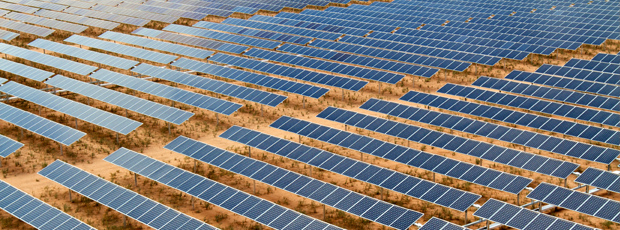
Jo Nova writes about the awesome results of solar power in Germany- 10 hours of sunshine for the whole month, and even that at a very low angle above the horizon. They have 40 GW of installed solar PV (in theory, half their total power requirements) but when the sun don’t shine you get no power.

German solar: 10 hours of sun in December makes 40 Gigawatts of nothing

From Pierre Gosselin at No Tricks Zone:

Germany needs 80GW of electricity. It has 40GW of installed solar PV.

See the graph: The red line is what the country used, and the orange bumps are the solar contribution.

Clearly, solar power will take over the world.

Solar Energy, Germany, December 2017

In December, Germany got ten hours of sunlight. That’s not a daily figure, that’s the whole month. So in summer on a sunny day, solar PV can make half the electricity the nation needs for lunch. In winter, almost nothing. From fifty percent, to five percent.

Imagine what kind of havoc this kind of energy flux can do. Not one piece of baseload capital equipment can be retired, despite the fact that half of it is randomly unprofitable depending on cloud cover. Solar PV eats away the low cost competitive advantage. Capital sits there unused, spinning on standby, while wages, interest, and other costs keep accruing. So hapless baseload suppliers charge more for the hours that they do run, making electricity more expensive.

They just need batteries with three months supply. It will be fine once Germany turns the state of Thuringia into a redox unit.

Read about it:  Dark Days For German Solar Power, Country Saw Only 10 Hours Of Sun In All Of December!

It’s rare for Germans to botch up an engineering task on quite this scale.

Another “Green”Hare-brain Scheme

The ABC is breathlessly reporting that London busses may soon be powered by waste coffee grounds. This is a relief to those who also bought the story about global warming, if unchecked, could reduce the area suitable for coffee cultivation.

So here’s the plan. You go to all those coffee shops around London, scrounge their bin for a litre or two of waste, take it to the factory, refine it and there you have it- “bio-diesel” for your bus fleet.

Here is the problem. You have a choice of a product that is low and variable quality and distributed in small quantities over a large area which then  has to be refined in a small scale facility and then sent to the bus fuel station. Or you could use a product of known and standardised quality, produced in huge quantities through known processes and with already established distribution facilities.

It’s not hard to work out which is going to win hands down.

I started to try to work out a rough estimate of costs but there isn’t enough information to go on. I suspect that residents of London will end up paying more in the name of saving the planet, with no real guarantee that they are reducing CO2 emissions which is given as the aim of the process.

When Green Policies Fail (Nearly Always)

The unrelenting push for so-called renewable energy to replace coal in order to save the planet has its collateral damage. If you push up the price of electricity to make renewables competitive and decrease overall usage then people are going to find that alternatives become economically feasible- like ditching grid power for diesel generators. That’s got to be a win for the environment.

Jo Nova writes:

Some South Australian farmers going fully diesel for electricity

Diesel generator.  Coupole d'Helfaut in 1944,

Maybe they’ll get one like this one? ;-) Circa 1934.*

Green management of the South Australian grid scores another big success for the environment:

The Manns’ electricity costs have more than doubled in five years, from about $200,000 per annum to $500,000.

Due to the high prices, the family will this summer switch to diesel power to run their 116-stand rotary dairy and 14 irrigation centre pivots at Wye in the lower south east of South Australia.

The Manns are among Australia’s top 10 dairy producers, in terms of volume, milking up to 2300 cows and producing 19-21 million litres annually.

If only South Australia had more “cheap” solar and wind power, their electricity might be as low cost as the coal-fired Victorians:

Their move comes as South Australia’s dairy lobby has calculated the state’s dairy farmers paid about 40 per cent more for power than their Victorian neighbours last season.

The Mann’s are definitely going diesel this summer, but may set up a mixed solar-diesel-battery plan in the long run:

“Its embryonic, but information we have is saying we could get a payback within five years of (setting up a system on-farm) not connected to the grid, a combination of solar, diesel and batteries.

Imagine how expensive your electricity has to be for a small diesel generator to be cheaper than mass produced coal power? This could be the first time in 130 years that people connected to coal turbines switch off to use their own small fossil fueled generators because it’s cheaper.

Another world first for South Australia. And possibly a mark of the grid saturation point of intermittent renewables.

Electricity Price Shock

Electricity-bill-shock-energy-cost

The brave new world of energy poverty is about to hit one of the most prosperous and energy-rich nations in the world. With electricity prices jumping by about 20% next month we are in for a tough time economically and financially. And of course the burden will as always fall hardest on the poor.

As Jo Nova points out this is how the climate change scare mongering policy is working out:

Many are blaming a “failure of energy policy”, but miss the point entirely — this is not failure but success. The aim of those energy policies was to close down coal fired stations and it worked. The Renewable Energy Target, the carbon tax, and other anti “carbon” policies did what they were supposed to do and forced the closure of both the Port Augusta power stations and Hazelwood (which supplied as much as 5% of Australia’s electricity). That left us dependent on gas instead of having the flexibility to ignore the current gas price outlandish cost.

With politicians and Chief Scientist Finkel colluding to drive up the price of electricity by forcing more renewables on us, there is no way that electricity prices are going to stabilise or fall.

At the moment, Government policy requires that retailers must take all wind and solar available at whatever price is set. Coal generators then get the left overs, but here is the rub- they cannot quickly slow down their systems (or speed them up for that matter) and coal generators run most efficiently at close to maximum power. Ironically all those wind turbines and solar cells do little to reduce the CO2 production at these plants.

So the operators of coal generators have to basically burn more coal than they optimally need to, take the price set by the Energy Market Operator and provide the “left overs” that wind and solar cannot supply on any day. Despite all the hidden subsidies in the electrical supply market, wind costs about $80 per Megawatt hour, solar $100 MWh and the wholesale price for coal is about $20 MWh.

The system is set up to destroy our cheapest form of energy generation in the long term. There will be no  more coal powered generators constructed because the current policy makes them unviable The only reason the we have any coal powered generators left in Australia is that the costs of constructing them were paid off decades ago.

Throw into that horrible mix the requirement of the Finkel review that all renewable systems must include batteries, that must surely double the cost of power generated that way- great for energy security but lousy for affordability. And then require all operators to give three years notice before exiting the industry- you have to maintain a loss-making business for three years- what planet are these people living on?

Meanwhile all of that heavy industry that used to be the life blood of Australia’s economy will go to places where electricity is cheaper- India and China most likely. Ironically the cheaper electricity in those two countries is partially fuelled by Australian coal. And of course under the Paris agreement those two countries get a free pass until 2030 from any reductions in their carbon emissions.

Australia is either being run by lunatics or traitors. I’m not sure which.


Renewables and Energy Policy Are Killing Us

From Jo Nova:

Stupid Nation: Australians crave cheap energy, yet think “low cost” renewables need support

It’s like an Easter Island moment for an advanced economy: somehow “cheap” energy can’t compete in a free market without government subsidy. A Nation of Serfs have forgotten what a free market is. Will cheap desirable stuff sell itself, or not?

The contradictions mount. Electricity and gas prices are hitting escape velocity:

The wholesale electricity spot prices was about $35 a megawatt hour during 2011, rose to $58 after the carbon tax was introduced and is now about $130 as gas prices push up energy generator costs.

Not surprisingly 70% of Australians want cheaper, more reliable electricity. Only one person in four would rather cut emissions than cut the bill. Yet the agitprop telling people that renewables are “cheap” has been so pervasive that fully 38% of Australians think the government should raise the renewable energy target, and 23% think it should stay the same. It follows that around 4 in 10 Australians apparently hold the bizarre idea that wind and solar are cheap and yet in need of government support, as if there are no investors willing to put money into supplying something that 100% of people want at a price cheaper than what they currently pay. So screwed is our national commentary that a large slab of the nation think a cheap and highly desired product can’t profit without complex schemes and assistance.

Message to Australia, if renewables were cheap they wouldn’t need a RET, LET or CET scheme. People would just buy them!

No wonder there is policy gridlock. The situation won’t be resolved until the propaganda bubble pops and the national debate advances to the point where people know how expensive renewables are. Find me one country in the world running on wind and solar that has cheap electricity and no interconnector supplying coal or nuclear powered electrons. Exactly.

The answer for the Liberal-conservatives is clear, unless they get the message out that renewables are a hideously expensive deadweight burning a hole in our wallets they can’t possibly win this debate. As long as the nation blindly drinks from the Kool-aid-Cauldron the Conservatives are on a hiding to nothing –  locked into endless cycles of “uncertainty” and hip-pocket pain.

Welcome to the clean green future — pack the whole family under one electric blanket while boat loads of our cheap coal set sail for China.

Canberra offers tips on snuggling up for a clean, green winter

Angela Shanahan

A few weeks ago I received a pamphlet from the ACT government on energy-­saving tips. For winter it featured a picture of a family all in overcoats and beanies, huddled under an electric blanket.

Welcome to your clean green future huddled under an electric blanket, and reverting to wood fires to keep the house warm.

The Finkel report aims to provide incentives for all energy ­sources that produce electricity with lower greenhouse gas emissions, but the suggested benchmark means a high-efficiency, low-emissions power plant with carbon capture and storage would not qualify. That is why plenty of people think this is a backdoor attempt to block coal and even gas with an effective “tax on coal”.

The crisis has arisen because of the over-reliance on wind and solar power. In South Australia, combined with the closure of two coal-fired power plants, one in SA and one in Victoria, it has destabilised the whole grid. Added to that is the shortage of gas and the lack of storage for renewables.

Meanwhile, despite the domestic opposition to coal, we send our coal to Japan and China to be used in high-­efficiency, low-emissions coal-fired generators to produce cleaner and cheaper power where people don’t have to sit ­inside wearing beanies under an electric blanket.

Greens Logic

meltedturbine

A report by the National Electricity Operator (AEMO) found that NSW suffered a big shortfall in electricity production last week due to problems with some of the traditional generators. A couple of smaller generators were off-line due to mechanical or gas supply issues.

So this morning’s ABC Radio News featured the obvious response from the Greens: “Fossil fuel generators are not reliable and need to be replaced with renewable energy sources.”

So Greens logic is that you can depend on wind and solar which only operate when the weather is right, but not on coal or gas generators which run night and day regardless of the weather. Yes traditional generators do break down and do need to be taken down for maintenance some times. But so do wind generators and solar systems.

Brilliant logic from the Greens, as usual.


Action on Climate: Stealing From the Poor to Give to the Rich

You never hear from the Greens about how their policies hit the poor and favour the rich.One example of course is that subsidies for roof top solar force up electricity prices for those who cannot use solar power- renters and the poor. But it gets a lot worse as these examples from the US show.

From WUWT:

The Hood Robin Syndrome

Guest Post by Willis Eschenbach

There’s a new study out, under the imprimatur of the Energy Institute of the Haas School of Business in Berkeley, California, entitledThe Distributional Effects of U.S. Clean Energy Tax Credits.  As the title implies, it looks at who actually profited from the various “green energy” tax credits across the United States. SPOILER ALERT! It wasn’t the poor folks.

How much money are we talking about? Well, the paper says that from 2006 to 2012, the taxpayers have been on the hook for $18 BILLION DOLLARS to fund these subsidies, money that would have otherwise gone into the General Fund.

And just how much money is eighteen billion dollars? Here’s one way to think about eighteen gigabucks, regarding safe, clean drinking water.

Water Wells for Africa reports from their ongoing projects that on average it has cost them about $3.50 per person ($7,000 per well serving 2,000 people) to provide people with clean safe well water. Soeighteen billion dollars is enough money to drill drinking water wells for three-quarters of the world’s 7 billion inhabitants.(Yes, I know that’s a gross simplification, some folks don’t live over a subterranean water table, and so on, but it isstill enough money to drill the two and a half million wells that would be needed.)

So what did we do with this huge amount of money, enough wealth to truly change the lives of the world’s poor?

Well, following the brilliant policies pushed by the Obama Administration and the climate alarmists, we took enough taxpayer money to truly change the lives of the world’s poor folks … and instead, we gave it to the American rich folks.

No kidding! This is not a joke. This is what passes for moral activism in the liberal American universe. Throwing money at the rich is seen as striking a noble blow for POSSIBLY saving the poor from a tenth of a degree of warming by 2100.

Sadly, it’s no joke at all—the whole war on carbon has been a tragedy for the poor. In this case, the result of these misguided tax subsidies, of the type which have been pushed by climate alarmists for years, has been to create a real climate “hockeystick”.

Read the rest here

Why Obama is Wrong

In any sane society the climate change myth would have died long ago, giving rise to real science on climate. In the latest episode of arrogance, President Obama has dedicated his nation to higher electricity prices and reduced economic wealth to solve a non-problem and reduce the earthg’s temperature by at most 0.1 degrees.

If Obama was shown this graph, and had it interpreted proprly for him, he would have found there is zero correlation between CO2 concentration and temperature.

And if has shown this graph, he would have  seen how CO2 emissions and energy usage actually do correlate with human health, wealth and well-being.


The climate myth continues despite 18 years of no measurable change in temperature and steady release of CO2 into the atmosphere.

King Canute understood he had no power to control the sea, but our modern day emperors have the pride to believe they can control the weather.

ETS- fake market with fake words

Jo Nova explains that an ETS is a tax and there is no free market involved in CO2


The Emissions Trading Scheme monster idea is back – but the conversation is booby-trapped with fake words


It’s a tax that’s “not a tax” and a “free market” that isn’t free.

Joy. An emission trading scheme (ETS) is on the agenda again in Australia. Here’s why the first priority is to clean up a crooked conversation. If we can just talk straight, the stupid will sort itself out.

The national debate is a straight faced parody — it could be a script from “Yes Minister”, except no one would believe it. Bill Shorten argues that the Labor Party can control the world’s weather with something that exactly fits the definition of a tax, yet he calls it a “free market” because apparently he has no idea what a free market really is. (What union rep would?) It’s like our opposition leader is a wannabe entrepreneur building a  Kmart that controls the clouds. Look out Batman, Billman is coming. When is a forced market a free market? When you want to be PM.

The vandals are at the gates of both English and economics, and we can’t even have a straight conversation. The Labor Party is in flat out denial of dictionary definitions — is that because they can’t read dictionaries, or because they don’t want an honest conversation? Let’s ask them.  And the idea central to modern economics — free markets — when will the Labor Party learn what one is? It’s only a free market when I’m free to buy nothing.

A carbon market is a forced market. Who wants to buy a certificate for a reduction in carbon dioxide emissions? Only 12% of the population will even spend $2 to offset their flight emissions. How many Australians would choose to spend $500? Why don’t we ask them?! Why — because Bill Shorten knows what the answer would be.

Then, on top of all that, is the hypocrisy — the Labor Party say an ETS is the most efficient way to reduce carbon, but they know it isn’t true, because they also insist we buy 50% of our electricity from renewables. Even with an ETS, no one would choose wind power or solar to reduce CO2. They are that stupid.

But a fake free market will help the Global Financial Houses. Buy a carbon credit and save a Banker!

When will Labor start to speak English?

Definition of “Tax”: noun

1.a sum of money demanded by a government for its support or for specific facilities or services, levied upon incomes, property, sales, etc.
2.a burdensome charge, obligation, duty, or demand.

So let’s call it what it is, the ETS-tax. Confront the Labor Party with their inability to speak honest English. There is deception here, written into their language. As long as they won’t speak English, how can we even discuss their policy?

Can someone tell Labor what a “free market” is?

Real free markets are remarkable tools and very efficient, but we can never have a real free market on a ubiquitous molecule used in all life on Earth. It’s an impossibility.

The Labor Party is simply stealing a good brand name. This fake market in air certificates does not meet even the basic requirements of a true free market. It’s a market with no commodity, no demand, no supply, and no verifiability of goods delivered. You and I are not “free” to choose to buy nothing. Most of the players in this market are not free to play — who pays for yeast, weathering, or ocean cycles?

As I said in The Australian:  people who like free markets don’t want a carbon market, and the people who don’t trust capitalism want emissions trading. So why are socialists fighting for a carbon market? Because this “market” is a bureaucrat’s wet dream.

A free market is the voluntary exchange of goods and services. “Free” means being free to choose to buy or to not buy the product. At the end of a free trade, both parties have something they prefer.

To create demand for emissions permits, the government threatens onerous fines to force people to buy a product they otherwise don’t need and most of the time would never even have thought of acquiring. Likewise, supply wouldn’t exist without government approved agents. Potentially a company could sell fake credits (cheaper than the real ones) and what buyer could spot the difference? Indeed, in terms of penance or eco-branding, fake credits, as long as they were not audited, would “work” just as well as real ones.

Despite being called a commodity market, there is no commodity: the end result is air that belongs to no-one-in-particular that has slightly-less-of-a-trace-gas. Sometimes it is not even air with slightly less CO2 in it, it is merely air that might-have-hadmore-CO2, but doesn’t. It depends on the unknowable intentions of factory owners in distant lands.

How strange, then, that this non-commodity was at one time projected to become the largest tradable commodity in the world – bigger even than the global market for oil…


Desperate Shorten Threatens Australian Economy

copper-crossing-solar-power-2-fw

I woke up to the news on the ABC this morning that Bill Shorten wants to take a proposal to the ALP National Conference that would make it policy to at a target of 50% renewable electricity by 2030.

It seems that Shorten is as thick as two short planks- not only is this likely not achievable, but it will drive the cost of power through the roof either through direct charges to consumers or through ever increasing Government subsidies.

The drama about changes to the Renewable Energy Target earlier this year was not driven by anti-renewable ideology as the media and the ALP portrayed it. It was basically about the fact that there was no way we could achieve the 20% by 2020 mandated by Kevin Rudd and consequently there would be massive penalties imposed on the electricity generators, driving up the price of power.

Here is the thing. Renewable energy, most likely in the form of solar will soon become economically viable. It is almost competitive with the cost of installing new coal powered generators, which is the only reason why AGL announced with great fanfare it would not be investing in any new coal-fired generators.

By the time we get to 2030 it is quite possible that new solar power stations will produce power so cheaply that existing coal powered stations will be closed down and replaced by power, simply by the laws of economics. The technology around both the generation and storage of power is going through such a revolution at the moment that it will make financial sense to invest without subsidies and targets imposed by Government.

Andrew Bolt’s take, complete with pretty pictures:


Opposition Leader Bill Shorten is set to unveil a bold climate policy goal requiring half of Australia’s large-scale energy production to be generated using renewable sources within 15 years.


This means more than doubling green power but without using more of the hydro electricity that so far produces most of it. (Labor won’t build more dams.):

image

That vast expansion of wind and solar will not happen without paying a fortune in subsidies and forcing consumers to use more green power, givenhow expensive it is:

image

This will potentially cost taxpayers and consumers billions more each year, when we already subsidise green power by around $3 billion a year.

Effect on global warming?Nil.

Effect on the economy? Business lost, jobs lost.