It Seems Those Paper Straws Might Be Worse For The Environment

From Jo Nova:

#d6b15c">Paper straws have ‘forever chemicals’ that may be worse for us and the environment than plastic

Written by Jo Nova

Would you like PFAS with that?

Paper StrawsWouldn’t you know — to make paper straws resistant to water, it seems we have to add Teflon type chemicals that stick around for thousands of years.

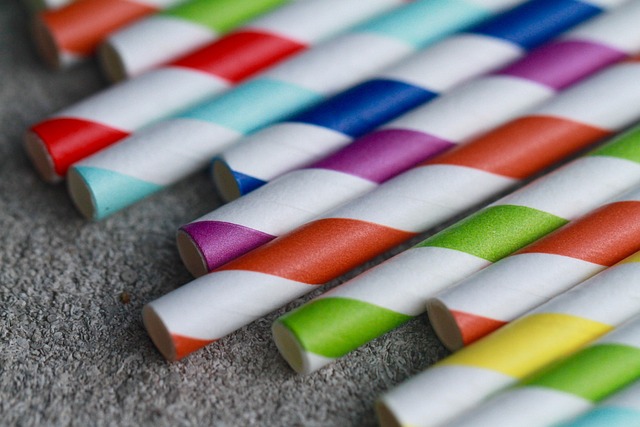
Researchers analyzed 39 brands of straws in Belgium and found two thirds contained PFAS, and the paper straws were the worst. Fully 90% of all the paper straws contained some form of PFAS. 80% of Bamboo straws did too, as did 75% of plastic straws. Even 40% of glass straws contained PFAS. The only type of straws that were free of it were steel.

The UK, Canadian, Belgium, New Zealand, and Australian governments banned plastic straws, as did some US States because “they were bad for the environment”.

Paper drinking straws may be harmful and may not be better for the environment than plastic versions

Science Daily

In the first analysis of its kind in Europe, and only the second in the world, Belgian researchers tested 39 brands of straws for the group of synthetic chemicals known as poly- and perfluoroalkyl substances (PFAS).

PFAS were found in the majority of the straws tested and were most common in those made from paper and bamboo, the study, published in the peer-reviewed journal Food Additives and Contaminants, found.

PFAS are used to make everyday products, from outdoor clothing to non-stick pans, resistant to water, heat and stains. They are, however, potentially harmful to people, wildlife and the environment.

They break down very slowly over time and can persist over thousands of years in the environment, a property that has led to them being known as “forever chemicals.”

They have been associated with a number of health problems, including lower response to vaccines, lower birth weight, thyroid disease, increased cholesterol levels, liver damage, kidney cancer and testicular cancer.

Maybe accidental, maybe not…

It isn’t known whether the PFAS were added to the straws by the manufacturers for waterproofing or whether were the result of contamination. Potential sources of contamination include the soil the plant-based materials were grown in and the water used in the manufacturing process.

However, the presence of the chemicals in almost every brand of paper straw means it is likely that it was, in some cases, being used as a water-repellent coating, say the researchers.

Calling these straws “paper”, 100% biodegradable and fully compostable seems like false advertising.

Jo Nova: Microbes Are Dealing With The Plastic “Crisis”

Jo Nova writes:

Plastics are not forever: Bugs already evolved 30,000 new plastic eating enzymes
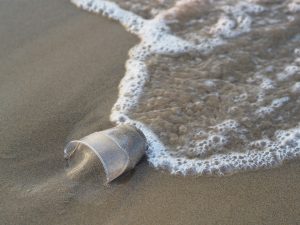
Plastic cup at the beach. Photo

flockine

Plastics are a free dinner for life on Earth so it was just a matter of time before microbes evolved to eat it.

A PET bottle normally takes 16 – 48 years to break down, but if it were lunch for microflora it would take weeks instead. Hydrocarbons are ultimately just different forms of C-H-O waiting to be liberated as carbon dioxide and water. The only question was “how long” it would take bacteria and fungi to break those unusual bonds.

Sooner or later all plastic will be biodegradable.PET Plastic, Polyethylene-terephthalate
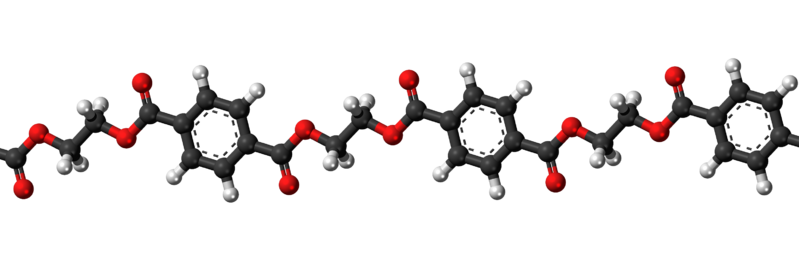
Polyethylene-terephthalate (PET)

The first bacteria known to chew through PET bottles was discovered at a Japanese rubbish dump in 2016. But we had no idea then just how advanced the microbial world of plastic processing was.

A new study shows. Instead of hunting for single bacteria Zrimec et al mined through collected metagenomes of soil and ocean and found not just 5 or 10 new enzymes but 30,000. It appears that they could metabolize at least ten different types of plastic.

And in places where there was more plastic pollution, there were more enzymes. All over the world a whole new ecosystem is rising out of the puddles and bubbles and grains of sand.

Enzymes that degrade plastics are found all over the worldMap od plastic degrading microbes
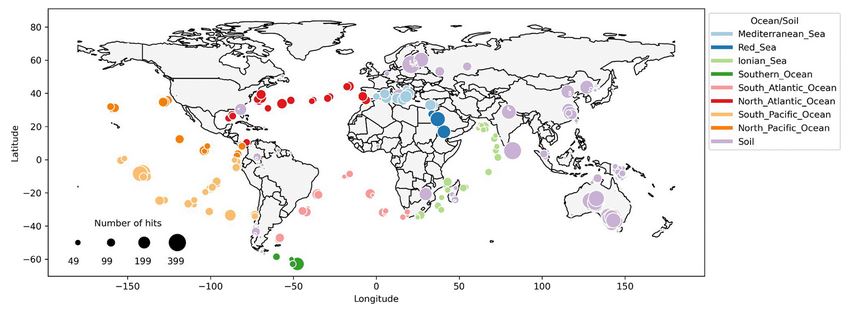
FIG 2 Plastic-degrading enzymes across the global microbiome. Depicted are 11,906 enzyme hits in the ocean and 18,119 in the soil data sets, obtained by constructing HMMs of known plastic-degrading enzymes and querying them across metagenomic sequencing data sets. The potential to degrade up to 10 and 9 different plastic types was observed in the respective ocean and soil fractions (Fig. S3A).

Mother Nature has a big toolshed of genes to play with:

With a library like this, is it any wonder life on Earth could find and amplify the right tools to process plastics?

For example, global ocean sampling revealed over 40 million mostly novel nonredundant genes from 35,000 species (35), whereas over 99% of the ∼160 million genes identified in global topsoil cannot be found in any previous microbial gene catalogue (34)

So there are 200 million genes to work with.

Bugs across globe are evolving to eat plastic, study finds

Damian Carrington, The Guardian, 15 Dec 2021

The explosion of plastic production in the past 70 years, from 2m tonnes to 380m tonnes a year, had given microbes time to evolve to deal with plastic, the researchers said. The study, published in the journal Microbial Ecology, started by compiling a dataset of 95 microbial enzymes already known to degrade plastic, often found in bacteria in rubbish dumps and similar places rife with plastic.

About 12,000 of the new enzymes were found in ocean samples, taken at 67 locations and at three different depths. The results showed consistently higher levels of degrading enzymes at deeper levels, matching the higher levels of plastic pollution known to exist at lower depths.

The soil samples were taken from 169 locations in 38 countries and 11 different habitats and contained 18,000 plastic-degrading enzymes. Soils are known to contain more plastics with phthalate additives than the oceans and the researchers found more enzymes that attack these chemicals in the land samples.

Nearly 60% of the new enzymes did not fit into any known enzyme classes, the scientists said, suggesting these molecules degrade plastics in ways that were previously unknown.

The not so apocalyptic plastic crisis
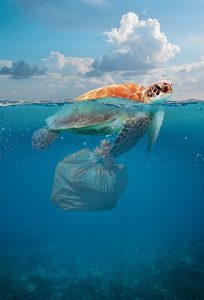
TheDigitalArtist, Turtle Ocean.

TheDigitalArtist

The new 250 page “Consensus” Study (their words) by the National Academies of Science, Engineering and Medicine, is as out of date and useless as it sounds. While it is scoring headlines, scaring us about accumulating plastics, it largely writes off the idea that microbes will evolve to degrade plastic, saying “measurable biodegradation (complete carbon utilization by microbes) in the environment has not been observed.” Which is one of those true but useless statements.

Some 40 year old theory says it won’t happen:

Plastics with hydrolysable chemical backbones (e.g., PET and polyurethanes) may be more susceptible to enzymatic degradation and eventual biodegradation than those with carbon-carbon backbones (Amaral- Zettler, Zettler, and Mincer 2020), as illustrated by the discovery of PET-degrading bacteria isolated from a bottle recycling plant (Yoshida et al. 2016). However, Oberbeckmann and Labrenz (2020) argue, based upon Alexander’s (1975) paradigm on microbial metabolism of a substrate, that the very low bioavailability and relatively low concentration of plastics in the ocean together with their chemical stability render these molecules very unlikely candidates for biodegradation by marine microbes, despite their potential as an energy and carbon source.

But if plastics are so tiny and low in concentration, it’s a big “so what” — they are unlikely to be a problem. If they were concentrated in one place or collected in an organism, they could be bad, but then, of course, they also become fodder for microbes.

The bottom line: We don’t want to drown dolphins and trap turtles, but we shouldn’t demonize plastics either.

Don’t throw rubbish in the ocean or toss hype in national news. It’s all litter.

Hat tip to Kip Hansen at Watts Up.

REFERENCES

Zrimec et al (2021) Plastic-Degrading Potential across the Global Microbiome Correlates with Recent Pollution Trends, ASM Journals mBio Vol. 12, No. 5 DOI: https://doi.org/10.1128/mBio.02155-21 

Reckoning with the U.S. Role in Global Ocean Plastic Waste, (2021) ISBN 978-0-309-45885-6 | DOI 10.17226/26132  https://www.nap.edu/download/26132

Full article
The Horrors of the Deep

Plastic literally at the bottom of the ocean. Very sad!

From news.com.au

Man-made horrors lurk at the bottom of the Mariana Trench, the deepest part of the ocean

Way, way down at the deepest point of the ocean lies a disaster of humanity’s own making that will never die – with untold consequences.Shannon Molloy3 min readNovember 24, 2021 – 1:18PM24 comments

A helium balloon decorated with characters from the film Frozen at the bottom of the Mariana Trench. Picture: Mariana Trench – In Pursuit of the Abyss

A helium balloon decorated with characters from the film Frozen at the bottom of the Mariana Trench. Picture: Mariana Trench – In Pursuit of the Abyss

The Mariana Trench is the deepest part of the ocean, and the deepest part of Earth itself, measuring some 11km down.

So unforgiving are the pitch-black, pressured and near-freezing conditions that we know little about what lurks below, with untold marine treasurers still waiting to be discovered.

Scientists consider the absolute lowest beds of the sea to be about as hard to reach as space.

Victor Vescovo was the last human to do so, reaching a new record depth of 10.9km in April 2019 in a Triton 36000/2 submarine, built to withstand the extreme pressure.

Over five dives to the bottom of the Mariana Trench, the American explorer found previously unknown crustacean species, witnessed brightly coloured outcrops and came across a pink snailfish.

Then, scattered throughout a place only two others have ever managed to physically reach, Vescovo saw plastic.

Lolly wrappers and a plastic shopping bag, to be precise.

CHECK OUT NEWS.COM.AU’S NEW YOUTUBE CHANNELhttps://www.youtube.com/embed/oJU8UrFg2rE

Nowhere is safe from humanity

Vescovo’s shock find almost overshadowed his remarkable achievement and the scientific promise of his sea life discoveries.

And for good reason.

“We always had this sense that there was a part of the planet that was beyond, that was untouched by human action,” Eric Galbraith, an ocean biochemist at the Catalan Institution for Research and Advanced Studies in Barcelona and adjunct professor at McGill University in Montreal, told the magazine Maclean’s.

“That used to be true. And now it’s no longer true.”

And unfortunately, Vescovo’s discovery isn’t the first, with previous unmanned voyages to the depths of the Mariana also encountering plenty of plastic pollution.

Showing how extensive the problem is – and how quickly waste can sink down – one dive found the remnants of a helium balloon decorated with characters from the children’s film Frozen, released in 2013.

Vision captured of that dive shows the balloon and, resting next to it, a heavy duty 20-litre plastic bucket.

A scene from the film Mariana Trench – In Pursuit of the Abyss shows plastic waste found by unmanned craft. Picture: YouTube

A scene from the film Mariana Trench – In Pursuit of the Abyss shows plastic waste found by unmanned craft. Picture: YouTube

A Frozen balloon and a plastic bucket was seen in the near-inaccessible area. Picture: YouTube

A Frozen balloon and a plastic bucket was seen in the near-inaccessible area. Picture: YouTube

In 2018, researchers from the Institute of Deep Sea Science and Engineering in China took samples of water and sediment at depths ranging from 2.5km to 11km.

“Man-made plastics have contaminated the most remote and deepest places on the planet,” they wrote in analysis published in the journal Geochemical Perspectives Letters.

“The (deepest Mariana) zone is likely one of the largest sinks for microplastic debris on Earth, with unknown but potentially damaging impacts on this fragile ecosystem.”

Read the rest of the article here

German Study Shows Added CO2 Has Led To 14% More Vegetation Over Past 100 Years!

Great news from wattsupwiththat.com


Fantastic Findings: German Study Shows Added CO2 Has Led To 14% More Vegetation Over Past 100 Years!

Reposted from The NoTricksZone

By P Gosselin on 7. May 2021

Almost everyone with even just a fraction of a science education knows Co2 is fertilizer to vegetation and that the added 100 or so ppm in our atmosphere over the past decades have been beneficial to plant growth and thus led to more greening of the continents.

Yet, some alarmists still sniff at this fact, or deny it.

More trees (+7%) and vegetation (+14%)

In the 34th climate video, Die kalte Sonne here reports on a recent German study by Merbach et al that looks at the question of just how beneficial the added CO2 has been to plant growth globally.

The authors’ findings: Over the past 100 years, there has been increased global vegetation growth.

“The global vegetation cover increased approximately 11- 14%, of which 70% can be attributed to the increased CO2 in the atmosphere,” reports Die kalte Sonne on the findings.

Another result: “Since 1982, the inventory of trees has increased more than 7%”.

Crop yields will rise by up to 15% by 2050

The news gets even better, the scientists show. Food production is expected to surge due to the increased amounts of CO2:

Chart source: Cropped here

As the diagram above shows, crops such as soy bean (Soja), wheat (Weizen), rice (Reis) and corn (Mais) will surge as CO2 concentration rises to 550 ppm by 2050, thus lending a huge hand in feeding the planet’s growing population, which could reach 10 billion by mid century.

Germany: more than 30% higher crop yields since 1990

Another example cited is Germany: “From 1990 to 2015 in Germany, crop yields for wheat, barley, corn and potatoes rose more than 30%, which the researchers attribute in part to the higher CO2 concentrations,” Die kalte Sonne reports.

“The authors hope that the CO2-related crop yield increase will secure the food and feedstuffs production and contribute to feeding the world’s growing population.”

Healthy Polar Bears and Thriving Tigers: The Common Climate Tale

From cornwallalliance.org

by Vijay Jayaraj and E. Calvin Beisner

Last year, the world applauded Greta Thunberg’s emotional “How Dare You!” speech at the UN summit in New York. The teenager famously said, “Entire ecosystems are collapsing. We are in the beginning of a mass extinction.”

The mainstream media’s narrative is similar. Ecosystems are dying. Animals are going extinct. Our evil desire to consume fossil fuels is to blame!

What do you think? Are species going extinct because of manmade global warming? Christians, who honor God as Creator, should care about these matters. But caring by itself isn’t enough. We also need truth, for there is a way that seems right, though its end brings death (Proverbs 14:12).

Take two key species as examples. Polar bears have been climate alarmists’ mascots for years. Tigers are an important species in South Asian jungles.

Tigers: No Longer Crouching

To the dismay of climate doomsayers, tiger populations are on the rise!

Tigers are a keystone species. The integrity of their ecosystems is crucial to their welfare. Thriving tiger populations are evidence of healthy ecosystems.

So, what do you suppose is up with tigers?

India’s tiger numbers have doubled since 2006. That’s despite the country’s ever-expanding cities, industries, and mines. India counted 2967 tigers in its latest census. That is more than double the number in 2006.

Celebrating International Tiger Day, Indian Environment Minister Prakash Javadekar noted that “the country today has 70 percent of the world’s tiger population.”

Two-thirds of these tigers live in forest zones categorized as tiger reserves. The remaining third is a testament to the safe habitations outside highly protected zones.

Recent surveys affirm the healthy state of Indian forests on which tigers depend. Total forest and tree cover in India increased by 5,188 square km from 2017 to 2019. I witnessed the health of these ecosystems as a field ecologist in the buffer zones of a tiger reserve in the heart of India.

The primary concern of tiger conservationists in India is unlawful encroachment, not climate change. Climate change in the past decade has impacted tiger populations positively.

Tropical forest ecosystems in India are not dying. They remain healthy and are expanding. Tiger numbers benefit.

Read the rest of the article here

Runaway Global Warming

We hear a lot about runaway global warming and how awful the world is getting due to evil CO2. We hear a lot about it when we have bad bushfire seasons and drought as we did last year. Not so much in cooler, wetter years. Almost none at all in Covid years!

So how much is the planet warming? Here is the “money quote” from the article below:

The linear warming trend since January, 1979 remains at +0.14 C/decade (+0.12 C/decade over the global-averaged oceans, and +0.18 C/decade over global-averaged land).

Yes in 100 years it will be just 1.4 degrees warmer. And Governments are spending trillions of dollars on “decarbonising”, companies and individuals are paying higher electricity prices and taxes to stop the globe warming by an almost imperceptible amount over 100 years.

From wattsupwiththat.com

Global Temperature Update for September 2020: +0.57 deg. C

by Roy W. Spencer, Ph. D.

The Version 6.0 global average lower tropospheric temperature (LT) anomaly for September, 2020 was +0.57 deg. C, up from from the August, 2020 value of +0.43 deg. C.

The linear warming trend since January, 1979 remains at +0.14 C/decade (+0.12 C/decade over the global-averaged oceans, and +0.18 C/decade over global-averaged land).

For comparison, the CDAS global surface temperature anomaly for the last 30 days at Weatherbell.com is +0.38 deg. C.

With La Nina in the Pacific now officially started, it will take several months for that surface cooling to be fully realized in the tropospheric temperatures. Typically, La Nina minimum temperatures (and El Nino maximum temperatures) show up around February, March, or April.

Read the rest of the article here

Amazing! Australian Bush Optimised For Fire

This morning I woke to the astounding news that biologists have discovered that the populations of frogs in areas “devastated” by last summer’s bushfires have rebounded, including some “threatened” species.

This follows earlier reports that koalas, snakes and other animals are doing OK despite “literally billions” of deaths last year. Also platypuses in the Peel River aren’t doing too badly now that the drought is over.

Amazingly, glow worms in the Blue Mountains that were thought to have been wiped out are doing well, having sheltered in a disused railway tunnel – ironic that, given that in modern times the greenies would not allow that tunnel to be built because it would be a threat to the environment, and probably the exact same glow worm population.

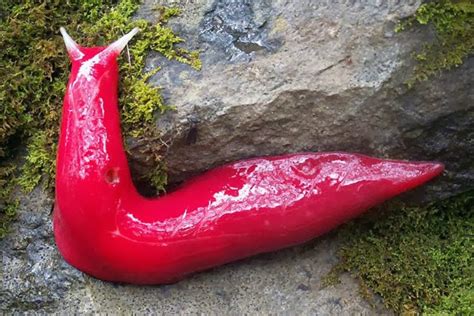
My favourite example is the giant pink slug which lives in the Mount Kaputar National Park, near Narrabri. It was only discovered 20 years ago, but the usual climate worriers panicked that the slug had been destroyed by fires. Surprisingly, the slug which has weathered droughts, bushfires, torrential rain, earthquakes, plagues of locusts and other natural disasters despite our total ignorance of its existence, managed to survive this event.

So this morning, after my usual outburst of “What is wrong with these people?”, I worked it out.

The pseudo-scientific discipline called ecology is founded on two fundamental doctrines:

  1. The natural ecosystem is very complex, with many interacting species, and so it is potentially fragile as the disappearance of one species may cause the system to collapse.
  2. People are always bad for the environment.

In actual fact, natural ecosystems are very resilient because they are complex. They can self-correct as different parts of the system adapt to change.

That is why bush environments regenerate after fires and droughts. They have been doing it for thousands of years without the assistance of humans.

The other factor that is generally ignored is that everything was created by an infinitely wise creator. He designed Australia with a warm, dry climate and the slugs, frogs, koalas to suit that climate.

Strangely, God is better at being God than people are.

Good News For Pollution Reduction

From the University of Sydney

Engineers use electricity to clean up toxic water


Powerful electrochemical process destroys water contaminantsUniversity of Sydney engineers have used electricity to clean up heavily polluted industrial wastewater. They hope the findings will help wineries, pharmaceutical manufacturers and other industries that must comply with strict wastewater regulations.

Julia Ciarlini Junger Soares showcasing her work at the University of Sydney. The researchers used an advanced oxidation process that eliminated stubborn organic aqueous pollutants. Credit: Julia Ciarlini Junger Soares, University of Sydney

A team of engineers may be one step closer to cleaning up heavily contaminated industrial wastewater streams. 

Researchers from the School of Chemical and Biomolecular Engineering developed an electrochemical oxidation process with the aim of cleaning up complex wastewater that contained a toxic cocktail of chemical pollutants. 

“Our study, published in Algal Research, involved industrial wastewater that had been heavily contaminated with a cocktail of organic and inorganic species during a biofuel production process”, said Julia Ciarlini Junger Soares, who is completing a PhD in Chemical and Biomolecular Engineering under the supervision of Dr Alejandro Montoya.

The wastewater, which contained carbon, nitrogen and phosphorus, was generated in a pilot plant, designed by the team for the production of biofuels using naturally abundant microalgae.

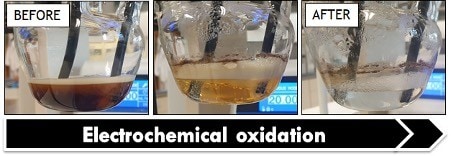
The process involved treating wastewater with electricity using specialised electrodes. They discharged electricity, then drove oxidation reactions near the electrode surfaces, transforming the organic contaminants into harmless gasses, ions or minerals.

“We have employed an incredibly powerful process that eliminates even the most persistent non-biodegradable pollutants, such as pharmaceuticals and pesticides, as well as various classes of organic compounds that can be found in many industrial effluents,” she said.

The water before, during and after treatment. Credit: Julia Ciarlini Junger Soares, University of Sydney 

“The process is relatively simple, does not require the addition of chemicals or severe operation conditions, and does not produce additional waste streams.

“Wastewater is a significant issue for our environment, as well as for many industries who use substantial volumes of water in their processes, such as in reactions, transport, and washing and cooling. Finding suitable solutions for reuse or disposal is often very challenging and costly. 

“The electrochemical method that we used can be readily applied to industries that must comply with strict regulations for wastewater disposal, such as pulp and paper processing, wineries, as well as pharmaceutical production facilities.

“Worldwide, researchers are investigating methods for the development of biofuels from algae. Developing alternatives for the treatment and reuse of this industrial effluent is a hot research topic and can bring opportunities for energy and resource recovery within a circular bio-economy framework.”

The team will soon carry out research focused on specific contaminants to better understand the chemical transformations that take place during electrochemical oxidation and will upscale the process.

A 2017 UNESCO report found that the opportunities from exploiting wastewater as a resource were vast, and that safely managed wastewater is an affordable and sustainable source of water, energy, nutrients and other recoverable materials. 

Worms Love Cotton Trash

This is great news for the cotton industry and for wormkind!

From the ABC:

Cotton waste composter uses earthworms to turn waste into high-grade fertiliser

A long mound of white and brown fluffy cotton waste in a field.
Cotton trash can take years to break down naturally.(ABC Landline: Tim Lee)
From afar, the Worm Tech composting facility in southern New South Wales resembles a run-of-the-mill domestic rubbish tip.

Key points:

  • Australia’s multi-billion-dollar cotton industry produces waste that can take years to break down
  • A NSW entrepreneur has created a composting business to turn the waste into fertiliser
  • The process uses earthworms to break down the tough cotton residue

Look closer and you’ll see lines of white, woolly material.

It’s cotton trash, the residue leftover from processing, and it has long been a problem for Australia’s multi-billion-dollar cotton industry.

But as the saying goes, one man’s trash is another’s treasure.

To Adrian Raccanello, cotton residue is the backbone of his burgeoning composting business.

“It’s got a lot of properties,” the former viticulturist said.

A man in a high-vis jacket kneels on the ground, holding soil in his cupped hands.
Adrian Raccanello displays some of his millions of earthworms.(ABC Landline: Tim Lee)

“The broader the mix of organic material, the better the end product.”

In the past year, Mr Raccanello has trucked out about 50,000 tonnes of high-grade fertiliser.

Soon he expects to produce 200,000 tonnes annually.

Much of it is going back onto the region’s cotton fields in the form of fine, granular worm castings.

A spreader puts compost back onto a brown, bare cotton field.
Cotton compost is spread back onto a cotton field.(ABC Landline: Tim Lee)

Using an underground army

The business began as a bare field in a vast paddock adjacent to the Rivcott Cotton Gin at Carrathool, in southern New South Wales, in 2010.

The aim was to find a way to turn thousands of tonnes of cotton residue into fertiliser.

The secret was getting the right mix, one that could maximise a natural asset: earthworms.

A close-up shot of a man's hands holding wet soil with red earthworms in it.
The cotton compost mix promotes the growth of earthworms, which break down the materials.(ABC Landline: Tim Lee)

So Mr Raccanello won some contracts to process domestic organic waste from regional towns, such as Mildura and Wagga Wagga.

He blended the waste with cotton trash and carefully tended his rows of waste material to ensure optimal conditions for worms.

He soon found the perfect recipe, and so was born a unique compost product that will soon be available to the retail market as well.

“We basically just feed the top 4 to 6 inches [10 to 15 centimetres],” Mr Raccanello said.

“Then the worms work their way through it and just break it down.

A green harvester in a field of white cotton.
The cotton industry is now proudly part of what’s called the ‘circular economy’.(ABC Landline: Tim Lee)

From waste to valuable resource

Some cotton gins have their own composting programs in place for cotton residues, but in a good year, there’s simply too much to handle.

Local cotton grower Peter Tuohey is thrilled to see the Carrathool venture succeeding.

“The gin produces thousands of tonnes of the cotton residue and Worm Tech have been able to take that product and convert it into a very, very valuable commodity that we buy off them and spread back out on the land,” Mr Tuohey said.

A man in a cap and black jacket stands in front of a cotton bale.
Carrathool cotton grower Peter Tuohey is a keen supporter of the nearby worm farm.(ABC Landline: Tim Lee)

“So it’s really waste to resource,” added Mr Raccanello.

It’s rather startling what this unseen underground army of worms is capable of chewing through.

Cotton trash is fibrous and left out in the weather, it sets into hard mounds that can take years to decompose, between eight and 10 years in its natural state.

A mound of brown and white fluffy material.
Mounds of cotton trash have long been a problem for the industry.(ABC Landline: Tim Lee)

“We’re combining it with other waste to give it diverse ingredients and we’re doing it in about eight weeks,” he said.

His plan to dramatically upscale the business means he’s seeking more organic waste from municipal councils across southern Australia.

“We want to be a receptacle for untapped organic waste,” he said.

A yellow farm machine loads a brown, powdery material into a spreader.
Mr Raccanello’s cotton compost is now sought-after.(ABC Landline: Tim Lee)

Once, people thought he was mad when they saw him alone amongst the cotton trash heaps in the midst of winter. Others simply thought he would fail.

Now those same people are lining up to buy his organic fertiliser.

“I haven’t had to advertise, it’s all been word of mouth,” Mr Raccanello said.

Watch this story on ABC TV’s Landline at 12:30pm on Sunday, or on iview.

Another Environmental Fuss Over Nothing

They keep saying “Plastic is forever” and wanting to ban plastic bags and straws to save the planet. It turns out that plastic does degrade realtively rapidly in the environment, under the influence of sunlight and microbes.

This article talks about plastic in the ocean, and we still need o be responsible in disposing of rubbish. There is no denying that animals near coastlines can be badly damaged by plastic, but outside of that particluar niche, not so much.

From wattsupwiththat.com

Plastics: Science is Winning

Kip Hansen / 2 hours ago October 18, 2019

Guest Essay by Kip Hansen — 18 October 2019

Science is beginning to win in the long battle over misinformed anti-plastic advocacy.  It has been a long time coming.  The most recent paper on the subject of pelagic plastic (plastic floating in the oceans) is from a scientific team at the Woods Hole Oceanographic Institution on Cape Cod, Mass., and the Massachusetts Institute of Technology.

The study is “Sunlight Converts Polystyrene to Carbon Dioxide and Dissolved Organic Carbon” by Collin P. Ward, Cassia J. Armstrong, Anna N. Walsh, Julia H. Jackson and Christopher M. Reddy.   It is good basic science.

styrene_cups

We are all familiar with polystyrene — it is prevalent in modern packaging, both as a solid,  such as yoghurt cups, or in expanded form used for disposable foam drink cups.  Much of the plastic flotsam found on the worlds beaches and floating  in rivers is this ubiquitous plastic, particularly the expanded foam.

The new abstract of the new study starts with this:

“ABSTRACT:   Numerous international governmental agencies that steer policy assume that polystyrene persists in the environment for millennia.  Here, we show that polystyrene is completely photochemically oxidized to carbon dioxide and partially photochemically oxidized to dissolved organic carbon. Lifetimes of complete and partial photochemical oxidation are estimated to occur on centennial and decadal time scales, respectively. These lifetimes are orders of magnitude faster than biological respiration of polystyrene and thus challenge the prevailing assumption that polystyrene persists in the environment for millennia.”   [ bolding mine — kh ]

It is about time that someone scientifically challenged the activist position held and promulgated by many environmental, anti-plastics and anti-corporate groups that “Plastic is Forever”.

Plastic is not forever.  Glass, both natural and man-made,  is forever, but not plastic.

Read the rest of the article here