A COVID Apology to the World on Behalf of the Evangelical Church

From Caldron Pool

A COVID Apology to the World on Behalf of the Evangelical Church

“…the response of the professing evangelical and even Reformed church during the coronavirus has been one of the most discouraging and disheartening parts of this whole year.”

DC Talk’s 1995 hit “What If I Stumble?” starts with someone reading these lines: “The greatest single cause of atheism in the world today is Christians who acknowledge Jesus with their lips, then walk out the door and deny Him by their lifestyle. That is what an unbelieving world simply finds unbelievable.” Like it or not, true Christians have to deal with the consequences of the professing church. Many unbelievers look at the professing church’s lack of faithfulness and conclude that such is what true Christianity is.

As such, for many a true follower of Jesus, the response of the professing evangelical and even Reformed church during the coronavirus has been one of the most discouraging and disheartening parts of this whole year. Dealing with government overreach, media-induced fear, and hysteria without end would have been bad enough. But the one place where Christians should have been able to find refuge was in the church. There, believers should have found a different spirit—a spirit of faith and trust, and courage. A spirit of freedom and peace. Believers should have been able to point to the church—the called out ones—and said to a watching world, “Behold, there is something otherworldly, something different from the world.” Sadly, that wasn’t the case for most churches. Uncertainty, fear, cancellations of fellowship, mask requirements, and social distance regulations thrived in the church just as much as in the world.

I’ve entitled this “A COVID Apology to the World, on Behalf of the Evangelical Church.” This is what I believe the professing evangelical and Reformed church should say to the world. And, of course, she should not only say it but change course accordingly.

The Apology (7 parts):

We’re sorry. We had a once-in-a-lifetime opportunity to show you how different Christianity is from the world. And we failed.

Years ago, Leonard Ravenhill said, “The world out there is not waiting for a new definition of Christianity; it’s waiting for a new demonstration of Christianity.” The COVID debacle of 2020-2021 was the perfect opportunity for us to give you that new demonstration of Christianity. We could have shown you what it means to live a life free from fear. We could have shown you what it means to value spiritual things more than material things. We could have shown you that Christians are different. Instead, most evangelical churches acted just like the world. Our profession of faith made little difference in our lives. Our churches closed their doors just like the Lion’s Club and community BINGO night. It’s too late for us now to change how we responded. But the least we can do is say that we’re sorry.

We’re sorry we contradicted so much of what we had told you previously. Prior to the coronavirus, we told you that it was vital for Christians to gather together and fellowship. We preached about passages such as Hebrews 10:25: “not neglecting to meet together, as is the habit of some, but encouraging one another, and all the more as you see the Day drawing near.” We told you about Christians throughout church history who were willing to meet despite the dangers of persecution, oppression, and even death. We held these men and women up as examples of faithfulness. And then, when the coronavirus struck us, we scattered like sheep without a shepherd. Forgive us.

Prior to the coronavirus, we told you that living for Christ was worth more than anything this world could offer, including safety, health, and prosperity. We told you about Christians—going all the way back to the apostles—who truly understood the gospel and were willing to give up everything to follow Jesus. We told you about the missionaries and housewives, preachers and plowboys, who were willing to die if they could only read the Scripture. We told you that obedience to Christ was not an optional part of discipleship, but the very essence of following Jesus. And then, when it was going to cost us something to stand for Jesus and stand against the world, we crumbled like a house of cards. Forgive us.  

We’re sorry we perverted the glorious and beautiful blessing of Christian fellowship. We neglected fellowship. For some of us, it didn’t even take one week for us to cancel fellowship. We dressed it up with a lot of explanations and qualifications, but the bottom line is that we told everyone to stop meeting together as a church body. We did not accurately demonstrate the doctrine of Christian fellowship. We made Christianity look no different than a social club or sports league, willing to cancel gatherings on the word of a pagan tyrant.

But even worse than abandoning Christian fellowship, we perverted fellowship. We encouraged you to think that Christians view “online” events as gatherings, fellowship, or services. This is all a gross perversion of what God intended for the church. We know that none of these things are fellowship, but we continued to act as if they were. To our shame, when we finally found some courage to meet (or, if we’re honest, when the state allowed us to meet), we continued to enforce mask and distancing mandates. We showed that we really don’t care if true fellowship occurs—where believers can interact with one another, see each other’s faces, and act as family—we really only cared about continuing to present a façade of Christianity. We did have good motives and intentions. But the road to hell is paved with good intentions. Truth be told, we caved to the pressure. Our actions are a stain upon the true church’s testimony concerning the doctrine of Christian fellowship.   

We’re sorry we conformed to the world. Christians are supposed to look different from the world. The fear that characterizes so much of our world, amplified to the extreme during the coronavirus, is unbecoming for a true Christian church. We know that we have been charged to not be conformed to this world (or “age,” see Romans 12:2). However, we found the temptation too strong and the potential cost too high for us to have our minds transformed during the coronavirus. Instead of standing as a city upon a hill as a light for a lost, confused, and scared world, we acted just like everyone else. Just like the pagans in the plagues of the second and third centuries, we encouraged you to stay away from others.

We understand if you now view Christianity as simply a pie-in-the-sky religion that has no real practical consequences for life. We lived as if that was the case. You might not believe us now—and we can hardly blame you based on how we have responded—but that’s not true Christianity.

We’re sorry we made our faithful brothers and sisters—those churches that stood firm from the very beginning of the COVID lockdowns—look like outliers. While most of the professing church conformed to the world’s thinking, a faithful remnant of congregations did not soil their garments with the fear and paranoia of the world. These congregations are worthy of godly admiration. But even when we had these godly examples right before our very eyes, we made them look like the extremists. We told you that we were doing the loving thing by not allowing the church to meet together. We made it look as if the true churches were unwise, unloving, and uncharitable. We made it look like those churches that followed God’s Word and honored the individual’s conscience were fools. We showed you that forcing congregants to wear masks and stay away from each other was the “loving” thing. We’re sorry. We simply didn’t have the courage or the backbone to make such a stand. Part of us admired those churches that actually lived out the Christian faith, but we just felt much more comfortable in the safe place of conformity to the world. We preferred hearing, “Well done, good and faithful servant,” from our governor than from the Lord Jesus Christ.

We’re sorry we misrepresented Christianity. We made it so painfully easy for you to misunderstand Christianity. We made it shamefully confusing as to what a true church really is. We made Christianity look like another version of worldliness and humanism. We did this because we based our decisions not on God’s Word, but on the shifting sands of the culture around us. We took the powerful, courage-inducing message of Christianity, and, like cowards, we hid it in the sand. We made physical safety and political correctness more important than the spiritual wellbeing of souls headed for an eternity in either heaven or hell. The message of the gospel is that your soul is of far greater value than anything in this life. Instead of faithfully proclaiming that message, we shamelessly peddled an insipid and effeminate version of Christianity. That is not what Christianity is. What you saw from the vast majority of professing churches was worldliness. We’re sorry we didn’t have the strength to show you true Christianity.

We’re sorry we made Christianity look like a pansy religion that causes her adherents to be unwilling to face the consequences for faithfulness. We had centuries of godly examples of faithfulness to God’s Word despite serious consequences and we simply ignored them. We made it seem like our situation—with a virus which has an incredibly low death rate—was worse than anything that has come before us. We pretended that our situation was so “unprecedented” that the worthy examples of church history could be admired but not emulated. We pretended the coronavirus was worse than the plague that occurred in Germany when Luther was unwilling to stop meeting with believers. We acted as if it was worse than the outbreak the Asiatic cholera in London when Spurgeon kept meeting with Christians. We admit that was just an easy way for us to avoid the cost of discipleship. We have done a really good job of looking to church history for motivation, but we have done a really bad job of following in their footsteps.

But even more than the examples of church history, we had God’s precious Word and the everlasting gospel. True Christianity causes people to be willing to suffer the consequences for faithfulness to Jesus. The true church is composed of those who are willing to suffer loss for the sake of Jesus (Mark 9:34-38) and those who love “not their lives even unto death” (Revelation 12:11). True Christianity involves “counting the cost” (Luke 14:25-33). It is a message which is so powerful and beautiful and moving that its followers will “count everything as loss because of the surpassing worth of knowing Christ Jesus” (Philippians 3:8). We pretended like we still believed that. We pretended like we would still lay down our lives for Jesus if we had to, all the while we were unwilling to even meet with fellow believers because we might get sick or fined. Sometimes, it’s a lot easier to say you’d die for Jesus, than it is to actually live for him.

Martin Luther said, “A religion that gives nothing, costs nothing, and suffers nothing, is worth nothing.” We presented Christianity as a religion that gives nothing, costs nothing, suffers nothing, and is worth nothing. We’re sorry. That is not true Christianity.

We’re sorry that, even after a year of this, we continue to misrepresent what actually happened. Our evangelical leaders continue to write things like, “Approximately one year ago, North America was hit with the COVID-19 pandemic. Its impact has been so devastating that we’ll only know the full extent years from now. We lost the ability to worship corporately for a time” (emphasis added). We’re sorry we keep perpetuating this lie. We know it’s not actually true. We didn’t lose the ability to worship any more than first-century Christians in Rome lost the ability to worship because they could be thrown to the lions or burned alive as human torches. We didn’t lose the ability to worship any more than the 16th-century Separatists lost the ability to worship because the crown forced them to attend state-sanctioned services.

We’re sorry we keep presenting it like this, but it is just so much easier for us to tell ourselves that this was beyond our control and we were “forced” to no longer follow God’s clear command. It’s easier for us to keep telling ourselves that we did the right thing, and we had “no choice” but to follow the government’s mandate than it is for us to acknowledge that we sinned. Again, we’re sorry. We continue to mispresent not only the Christian doctrine of following Jesus and the fellowship of the saints, but also repentance.

We had so many good things to say to you and to share about the gospel, but we simply chose not to live them out. It wasn’t forced upon us. We had the ability to continue to meet, but we chose to fall in line with the world. We presented Christianity as if it is no different than any other social club.  We have no grounds now to critique those “worldly churches” that provided “online services” prior to the coronavirus. We have no grounds now to critique a shallow, take-it-or-leave-it approach to true Christian fellowship.

The message we offered during the coronavirus was cheap. It cost us nothing, it asked nothing of you, and it offered nothing to the watching world. It’s painful to say it, but the world would have been better off without most professing churches during the past twelve months. She would have been better served by a small remnant of those faithful churches, accurately representing Christianity, who believed in Jesus and were willing to face the consequences for that belief.

Jesus once warned his followers about the scribes and Pharisees. He said this: “The scribes and the Pharisees sit on Moses’ seat, so practice and observe whatever they tell you—but not what they do. For they preach, but do not practice” (Matthew 23:2-3). That’s us: the leaders of the professing evangelical and Reformed church. By and large, we preached one thing for years. And then, when the rubber met the road, we did something else. Please, take Jesus’ advice regarding the scribes and Pharisees and apply it to us. Please don’t do what we did. Please don’t emulate us. We preached to you, but we didn’t practice. We told you of the glorious gospel of Jesus, and the infinite worth of faithfulness to Jesus, no matter the cost, and then we capitulated, without even a fight. We listened to the voice of Fauci instead of the voice of the Shepherd. Our church leaders acted beyond the authority granted them and told their congregants that they could not gather as a corporate body, and when they could, that they had to wear masks.

Unless you saw one of those true churches that stood on God’s Word—unwilling to cancel fellowship, unwilling to force her congregant to cover their faces and stay away from each other like pagans during a plague—then what you saw this past year was not Christianity. It was worldliness dressed up in Christian garb. True Christianity offers you something different than the world does, but true Christianity will cost you. And there will be consequences.

What you saw from most of the professing church was a fearful and cowardly display of the fear of man and the love of this world. If you are willing, please give us another chance. And if we continue to act as we did, without acknowledging how we sinned and admitting our fear, than go find a group of Christians that are willing to face the music for the faithfulness. Find a group of Christians who will meet together as followers of Jesus, without covering their faces in fear. Find a group of Christians who live out their faith. There you will find true Christianity.


This article was originally published at Reformed Hope. It was initially delivered in the form of a sermon, available on SermonAudio. To read more about the coronavirus and the gathering of the church, read Chris’ book Essential Service, available as a free download here.

Leila Abdallah: ‘If it wasn’t for my faith, I wouldn’t be standing where I am today”

From “Eternity”


Return to the Eternity News Homepage

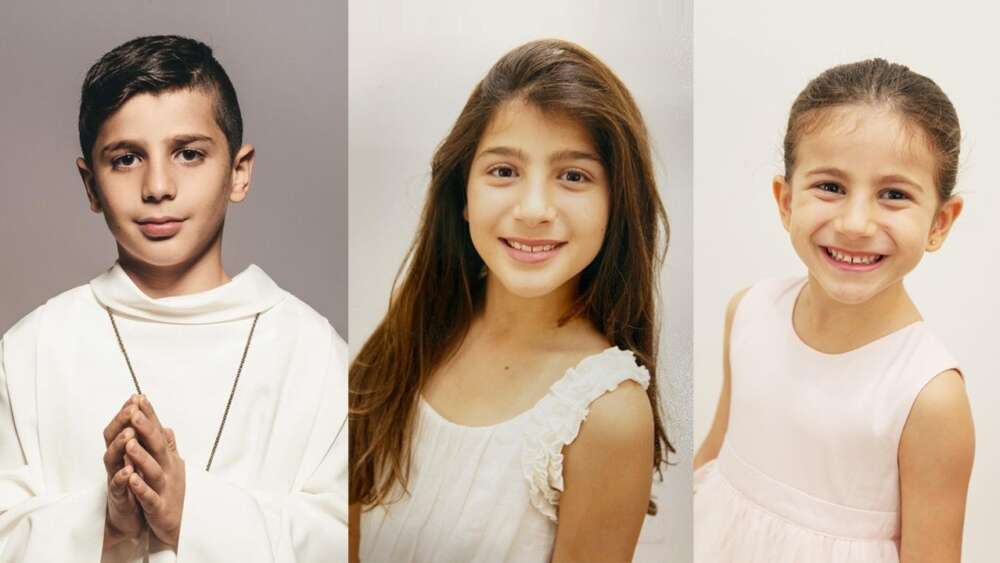
AbdallahAntony, Angelina and Sienna Abdallah.

“God uses you in the midst of your suffering,” Leila Abdallah tells me this week.

One year ago, most of us met Leila and her husband Danny for the first time and under terrible circumstances. The couple from Oatlands, near Parramatta in Sydney, became headline news after three of their six children were killed by a drunk driver on February 1.

Antony (13), Angelina (12) and Sienna (8) had been riding their bikes to get an ice cream. They died at the scene, alongside their cousin Veronique Sakr (11).

Trying to describe to someone what being in the midst of suffering looks like, you might point to the grief and pain of the Abdallah family. Yet when you catch even just a glimpse of the torment experienced by Leila during the past year, there’s something else that stands out. The way she and her husband have responded to what so many of us would consider unimaginable.

“When you read the Bible, Jesus said, ‘Carry your cross and follow me.’ He didn’t say we are going to have a good life … He asked us to carry the cross,” says Leila, who has been a Christian all of her life.

“When Jesus walked this earth, he demonstrated to us how we should live our lives.”

“For me, I look up to him. I think that if Jesus carried the cross, then I’m going to look to him, look at the glory awaiting us in heaven, and I want to carry my cross with dignity and a smile.

“Don’t get me wrong. I feel mixed emotions. I’m heartbroken. I miss my kids, especially coming to the one year mark. I was crying this morning; I cry ever day … but I have accepted my cross and I believe that if Jesus didn’t want my kids, they still would be alive. A miracle would have happened.”

Leila is right. The Bible does record Jesus telling his followers that to follow in his footsteps will include suffering, pain and the toll of rejecting a world at odds with his humble leadership. It’s just that many of Jesus’ followers – this writer included – hope that our faith won’t be put to the sort of test Leila and Danny Abdallah are going through.

But it’s through that very test that Leila has witnessed God using her and Danny. You would have witnessed it as well. Within what seemed like minutes of their children’s deaths, the Maronite Catholic couple – members of Our Lady of Lebanon Co-Cathedral at Harris Park – spoke clearly and powerfully about the forgiveness and peace that flows from God. And they were saying those things about the man who was charged with killing their children.

“The guy, I know he was [allegedly] drunk, driving on this street. Right now I can’t hate him. I don’t want to see him, [but] I don’t hate him,” Leila told the media during the days after the accident.

“I think in my heart to forgive him, but I want the court to be fair. It’s all about fairness. I’m not going to hate him, because that’s not who we are.”

Talk about people putting into practice what they claim to believe and live by.

Leila feels “like God used my lips on that day” with how she immediately spoke about Samuel William Davidson who, last October, pleaded guilty to four counts of manslaughter, as well as other charges. He will be sentenced in March.

Leila and Danny’s approach to Davidson has remained the same ever since. So much so that the first anniversary of the accident, February 1, will be i4Give Day. Created by the Abdallahs and supported by the Federal and NSW Governments, i4Give Day encourages everybody to know and practice that “there is freedom in forgiveness”.

Leila hopes that rather than remembering a tragedy, February 1 becomes an annual day “where you could find someone you can forgive or ask for forgiveness”.

Many people have asked the Abdallahs how they can forgive. Leila continues to point people back to her Christian faith – “forgiveness is essential to us Christians ” – explaining how parts of the Bible shape her outlook.

“Our Father has forgiven our trespasses as we forgive those who trespass against us,” says Leila, speaking of how she wants to live out the Lord’s Prayer. “[Also] Jesus last words on the cross were ‘Forgive them Father, for they do not know what they are doing.’ And he asked us to forgive 70 times seven times … So I forgave [Davidson] because I trust God. He’s a justice God and I leave it in his hands.”

“God is great. God is good. God is giving us the peace of mind that they are in heaven. God is comforting us. He is close to the weary. If it wasn’t for my faith, I wouldn’t be standing where I am today.”

Leila fondly speaks of her three deceased children and their own faith. How Angelina loved praying and Antony wanted there to be a prayer room in the Abdallahs’ new home. To celebrate her eighth birthday, Sienna wanted to be “like Jesus, feeding the less fortunate people”.

“My children loved God so much.”

Before and after the February 1 accident, Leila and Danny’s values stayed the same – God and family. In that order. And Leila’s fierce bond with God even helped her to not blame him for what happened.

“When that accident happened to my kids, my love for God was so strong that I kneeled down to pray to my Father,” remembers Leila. “I [said to] God, ‘I’m crying over my kids. I’m upset.’ And God has revealed to me, ‘You’re upset about your kids – but how do you think I am feeling over the lost souls?’ If anything, that made me relate to him rather than blaming him.”

“God created the heavens and the earth, so how is God feeling about the people who don’t recognise him?

As they have done in the public gaze this past year, Leila again turns our attention back to faith and trust in God, through Jesus Christ. Her discoveries about who God is and how he relates with us have come through immense suffering on her part – but she’s willing to share insights that we all need to grasp.

This ongoing display of Christian hope through the Abdallahs has been noticed by everyone from close neighbours to people they’ve never met on the other side of the world.

“They reach out to me to tell me how much they are affected and how it touched them,” describes Leila about how people from “everywhere” have steadily contacted her family. Just as Leila and Danny have done a remarkable job of counselling other people going through grief, they too have felt loved and supported by family members, total strangers – and God.

“Grieving is already hard. Imagine having to add to it anger and bitterness?” asks Leila. “This is where you end up in mental [anguish]. But when you are grieving and you free up your heart – and you forgive others – and you surrender to God, God will send you the peace from above.

“God will carry you through it and God will give you the strength to deal with everyday life.”

Leila has relied a lot upon God to get through everyday life. “The cross does get heavy, of course, because this is your kids. It’s your life. You are aching and hollow. The most precious gift in life is your kids. The most expensive thing in life has been taken away from us; half of my kids have gone to be with the Lord.”

“Any time you feel that the cross is too heavy, just ask God and he will give you the strength to keep going and keep going and keep going.”

Leila finds strength in prayer, listening to worship music or opening the Bible. “When you ask God to come to you and touch your heart, he will give you the peace that comes from above.”

“The strength doesn’t come from within; this strength comes from God.”

Leila and Danny know life is for a relatively brief time so they want to live well for God.

“In everything we want to do, I just want to serve the Lord with all our hearts and honour God and our kids. Really, that’s what matters to us.”

“I’m a shy person but the reason that I do media is that it my chance to honour God on television and media. For people to see God … and what he wants us to be.

“I love my God. I love my God.”

From eternity.com.au

Buffet Style Christianity

From “My Christian Daily”

‘Buffet-Style’ Christianity: 1 In 3 Evangelicals Believe Jesus Is Not God

Kevin SimingtonOctober 26, 2020


A recent study called “The American Worldview Inventory” has revealed that about a third of Americans who claim to be evangelicals do not believe that Jesus Christ is God. The study, conducted by Arizona Christian University, confirmed what has already become obvious over the last decade. Traditional Christian beliefs and values are on the decline – not just in society as a whole, but even with the Christian church itself.

The new ‘progressive’ version of Christianity that is beginning to gain traction is one of open-minded acceptance of many beliefs and practices that contradict the Bible. Progressive Christianity does not accept the Bible as God’s inerrant, authoritative Word. In particular, it tends to regard the accounts of Jesus Christ’s incarnation, miracles and resurrection as myths. This new ‘enlightened’ version of Christianity also embraces the LGBTQI movement and regards the Bible’s prohibitions against homosexuality and pre-marital sex as out-dated.

Of course, this type of liberal Christianity has existed for many years, particularly since the Age of Enlightenment in the 18th century. But it has gained significant momentum in recent decades. Today, gay pride flags adorn church buildings that were once bastions of orthodox beliefs. Christian publishing houses that once exclusively published orthodox evangelical works now promote a wide diversity of ‘progressive’ books that openly dispute the Bible’s authority and call for a re-imagining of what it means to be a Christian.

John Stonestreet, in his article, “Why Progressive Christianity is Another Gospel”, (in The Christian Post, Oct 19) says:

“Today, there is an effort to update Christianity, to adapt and re-form it according to the spirit of the age.” 

I recently heard a podcast interview with Alisa Childers, a member of the Christian pop group, “Zoe Girl”. Alisa spoke about her shock when she learned that her church Pastor was a sceptic. At one point, he apparently confronted her with arguments against the Bible’s reliability and authority, as well as admitting that he doesn’t believe that Jesus rose from the dead or that his death on the cross purchased forgiveness for sins. Even more shocking to Alisa, was her Pastor’s admission that he wasn’t even sure that God existed and, if he did exist, his assertion that God certainly isn’t at all concerned with our sexual choices and behaviour.

This is typical of the new open-minded Progressive Christianity – a form of religion which is much more concerned with social justice and personal autonomy than with what is perceived as narrowly-defined, out-dated, restrictive dogma.

Read the rest of the article here


I had a heart attack at 17, wealth at 27 and was homeless at 28

From “Eternity

I had a heart attack at 17, wealth at 27 and was homeless at 28′


Return to the Eternity News Homepage

Get Stories In Your Inbox

Scott Faith Story
Scott’s story | Not what you expected

“I had a heart attack when I was 17. I’d been playing tennis at a high level … and I was in the Queensland Championships. After the match, I went home and I jumped into our backyard pool. My heart went into spasm and I woke up in the cardiac ward at Brisbane Hospital. It was full of old guys who were about to die. One of them said to me, ‘What are you doing here?’”

‘It gave me a new perspective on life. After 12 months, I was allowed to play tennis again … and I threw myself into everything. For the next ten years, I tried to be the best I could possibly be, in every part of life – in tennis, and in work. I got involved in a really successful company doing building design. I bought a house and an MG. I moved to Sydney to start up a Sydney branch. We were turning over six million dollars a year. It was ridiculous. I was only 27 years old and I had all that responsibility and stress. Eventually, it led to a mental and physical breakdown. I lost everything and I became homeless at age 28. I moved on to my mate’s lounge.

“I now think that God was trying to show me about certainty – that I was never in control, and I never had been, no matter how high I’d climbed the tree.

“A few months later, I started asking everyone I knew about the meaning of life. What did they believe in? Where was the book? How did they know? I was hungry for meaning.

“Then I met Janelle, through a friend. We went on a date, and I told her I was trying to figure out the meaning of life. She told me that she was a Christian and she invited me to church.

“I said, ‘No way, I’d never go to church. They’re a bunch of hypocrites.’

“We were very honest with each other. A few months later, she invited me to a carol sing-a-long. I went and afterwards, I talked to the minister … for two hours. I was getting all the answers I’d been hassling people for. He invited me to have lunch with him and we kept meeting, weekly. We became friends. Janelle went overseas. After a while, the minister and I started reading the Gospel of Mark together. But it didn’t really click. Then he asked me to do [evangelistic course] ‘Christianity Explained’. I said I wasn’t ready to make a commitment, but I went anyway.

“We got up to the page on condemnation. I can still remember it. There was a black and white line drawing of a group of people shunning their faces from the glory of God.

“Suddenly, I was an absolute, blubbering, out-of-control mess, on the floor. It happened in a split second. I was stripped bare before a holy God. It was an absolutely powerful encounter with the Holy Spirit. I became aware of my sin for the first time, and I totally understood the grace of God – the incredible mercy of God – that he should forgive me and save me, through Jesus. It was beautiful!

“Everything changed in an instant. The first verse I memorised was Philippians 4:6-7, ‘Do not be anxious about anything, but in every situation, by prayer and petition, with thanksgiving, present your requests to God. And the peace of God, which transcends all understanding, will guard your hearts and your minds in Christ Jesus.’

“Before that, I’d always been anxious and striving. I couldn’t cope with uncertainty. But I read that verse and I prayed and I read the Bible (all the way through, twice!) And I felt peace, every time I prayed. It transcended understanding! And now, I love uncertainty. I can’t tell you what God has done since then. It’s been exponentially better than anything I could have imagined.

“Janelle and I got married. We had two kids and we went off to Cambodia, as missionaries. And now, even in tough times, uncertainty doesn’t faze me. I know that God is sovereign. And he’s got it!”

Faith and Healing

A frequent question that is asked is “Why does God not heal people like He did in the Bible, or still does in poor countries?”

I think a big part of the answer to those types of questions has something to do with faith.

In my devotional time today, I read this:

In Lystra there sat a man who was lame. He had been that way from birth and had never walked. He listened to Paul as he was speaking. Paul looked directly at him, saw that he had faith to be healed 10 and called out, “Stand up on your feet!” At that, the man jumped up and began to walk.

Acts 14:8-10 (NIV)

We have a lame man who has heard the gospel message from Paul, and he has faith to be healed. Paul sees this and says “Stand up!”, and the man is instantly healed.

In Acts 3 there is a similar story also involving a lame man, but it is Peter and John who are used by God to heal the man. The way the story is told, the man has no expectation of being healed, but Peter is the one with faith in the name of Jesus.

It seems to me that faith is an important ingredient in miracles generally, including healing.

But in the West, even the most miracle- believing people have more faith in the medical profession than we do in God. In Australia most procedures are readily available for free if you go through the public system or at fairly low cost if you have health insurance. We can see a doctor any time and pop a pill for many ailments.

I am not denigrating the great work of health professionals. In fact over recent months I have been greatly helped by doctors, nurses, sonographers, pathologists and many more. I thank God for these wonderful people and the excellent facilities we have in this country.

We all need to learn to call out to God first, to put our trust in Him like we say we do. Then we might start to see miracles happen.

So how do we learn to grow our faith?

There are two things here:.

Firstly, just start praying for yourself and family members. Just do it! Faith is like a muscle that gets stronger with use.

How about next time you get a headache, instead of reaching for paracetamol which takes 20 minutes to kick in, try praying for 20 minutes instead? Praise God for His goodness, praise Him for the miracles and healings you read about in the Bible, thank Him that He wants to heal you.

Secondly, as you learn to pray for more serious issues, perhaps chronic pain and disability, start to visualise what it would be like for the person to be healed. The man in Acts 14 could imagine himself walking, something he had never done. What would it be like if you were healed? What might you do that you can’t do now? Start to declare healing and to thank God for it.

It is time for all of us to rise in faith, and to learn to take hold of God’s blessings for us, for our families and for the people around us. Many of us have faith, in fact all christians have a “measure of faith,” we are told in Ephesians. Let’s go for it, believing that the God who put us together has the power to restore the parts of us that are broken.

Why Albo’s got to get to grips with God: Peter Kurti

From the Centre For Independent Studies

Why Albo’s got to get to grips with God

Peter Kurti

One of the first things new Labor leader, Anthony Albanese, needs to emphasise to his demoralised party is that they will not return to government without showing they take religion seriously.

Albo’s own seat of Grayndler — which Labor holds with a margin of nearly 16 per cent — is one of a number of Labor-held Western Sydney seats where the electorate includes many voters who are about God.

It matters to Australia’s Muslim, Christian, and Hindu voters — and all the others who have a religious affiliation — that they are free to practise their faith; and, if they wish, to talk about it openly.

No wonder Labor frontbenchers have warned Albanese that Labor needs to work constructively with the Morrison government to address concerns about religious freedom by passing new laws.

It sounds like simple and sensible advice. But the problem for the new Labor leader is that a decision to cooperate with the government on matters of religion is likely to further divide his party.

For a deep and possibly irreparable fissure has opened up — and runs right through the heart of the ALP.

On one side stand Labor’s traditional blue-collar and middle-class voters respectful of belief in God. But on the other side stand the battalions of Labor’s inner-city intellectuals who sneer at religion, dismiss faith as primitive superstition, and wield the cudgels of identity politics.

It is not the deity that commands the unswerving devotion of the elites, but diversity. And they impose on the rest of us what political scientist, Kenneth Minogue, once described as “a dictatorship of virtue”.

The ALP is going to have to get to grips with God if it hopes to occupy the government benches in the House of Reps again. But in order to do that, Albanese is going to have to work a miracle of his own.

Peter Kurti is a Senior Research Fellow at the Centre for Independent Studies and author of The Tyranny of Tolerance.

Mike Willesee: A premonition, plane crash and testing miracles

From the ABC:

Mike Willesee: A premonition, plane crash and testing miracles

Updated 

Veteran journalist Mike Willesee has revealed how miraculously surviving a plane crash changed his life forever, kick-starting a journey back to his Catholic faith.

It is this faith, and the support of his family, that has sustained Willesee through his current battle with throat cancer and a debilitating course of radiation therapy that ended only recently.

The legendary current affairs presenter and reporter was too unwell to attend his induction into the Australian Media Hall of Fame on Friday in Sydney.

In a pre-recorded acceptance speech he said: “To be a journalist, for me, has been a gift that just keeps on giving.”

If it wasn’t for an extraordinary twist of fate 20 years ago, Willesee’s career could have been cut short well before now.

In 1997 he and his cameraman Greg Low were about to board a twin-engine Cessna plane in Nairobi, Kenya, bound for Southern Sudan to film a documentary.

But before they took off, Willesee said he had a premonition the aircraft would crash.

“I couldn’t understand it. I had this fight in my own head before I got on the plane. How do I tell Greg that it’s going to crash?

“I don’t believe in premonitions. Did I believe it was going to crash? Absolutely.”

Media player: “Space” to play, “M” to mute, “left” and “right” to seek.

VIDEO: Everyone aboard the Cessna aircraft was unharmed. (ABC News)

The plane took off in a tropical downpour and shortly after began experiencing problems.

For Willesee, the experience was surreal.

“When it stalled, and it stopped for this one excruciating second and then started to spiral and go down, the only thought I could get out of my head was, ‘I was right’, which is pretty freaky.

“I said my first prayer to a God who I didn’t understand and whose existence I was quite unsure of.”

That wasn’t the end of the drama. When the aircraft finally settled, the pilot and the other two passengers got out as fast as they could, leaving Willesee and Low in their seats.

“Greg’s seat buckle was jammed because he had his camera on his lap and we thought the plane would explode and burn because of the noise and incredible amount of smoke.

“So I ran back into the plane and Greg freed himself as I got in and we got out.”

The plane crash was the start of a long journey back to the Catholic faith of his childhood.

“The plane crash changed me a lot,” Willesee said.

“It still took me I think maybe two years, for me to actually say there is a God.”

Read the full story here

3 Reasons to Not Believe

Some satire from “The Babylon Bee”

Here Are 3 Totally Solid Reasons To Believe Jesus Came Back From The Dead, But I Don’t Believe Them Because I’m Not A Weak-Minded Moron


It’s that time of year again—sheeple everywhere are celebrating the death and resurrection of Jesus. Religious simpletons who choose to regurgitate the blind faith their parents hammered into their skulls when they were children are gathering in church buildings and worshiping their magic sky fairy who has “come back from the dead.”

It’s interesting that the Christian religion sort of hinges on this event, and I’ll admit that there are a number of reasons why it actually makes sense to believe that the resurrection of Christ is a historical fact. I would probably even believe it myself, if I were a low-brow, dunderheaded flat-earther.

Well, just for fun on this Easter weekend, I thought I’d go over a few of these rationales. So here are three totally solid reasons to believe Jesus came back from the dead, which I don’t believe because I’m not a weak-minded moron.

1.) The tomb was empty. Jesus was publicly executed and laid in a guarded tomb in the city of Jerusalem. I mean, these are verifiable things that played out in front of people, you know? And with so many authority figures viciously opposed to Jesus, the entire Christianity thing could’ve been squashed right off the bat—all they had to do was produce his dead body (which, you better believe, they tried to do). But nobody could, because his body was gone. The empty tomb is quite a convincing reason to believe in the resurrection, but I never will because I’m not a mentally challenged dolt.

2.) He appeared to lots of people after his death. So tons of people claimed to have encountered the resurrected Jesus. Which is crazy. The Apostle Paul was one of them—and he gave up his enviable life of privilege in exchange for imprisonment, beatings, stonings, starvation, shipwrecks, and traveling thousands of miles to tell people that Jesus had come back from the dead, before being executed. Which would be weird for him to go through if he were just making it all up. And the disciples of Jesus—they all claimed to have encountered the back-from-the-dead Jesus. And they all maintained his resurrection as truth, all the way to their bloody, torturous deaths for claiming so. Which again, you know, wow. They literally could’ve stopped being tortured in horrific ways by denying that Jesus was risen. That’s a legit reason to believe that they were not actually lying, and they had actually seen the resurrected Christ with their own eyes and knew he was Lord and Savior, but I just can’t accept that because I’m not a feeble-minded, Bible-thumping robot.

3.) Christianity totally exploded. Jesus’s death should’ve killed Christianity, you know? Like, OK, no more Jesus, no more Christianity. Seems simple. Especially in that place and time—that population was staunchly opposed to the idea that people came back from the dead, and the idea of worshiping a man, to them, would have been the lowest form of blasphemy. But what happened? Well, starting from the place Jesus was crucified—which is the same place tons of people started claiming he had risen from the dead—Christianity exploded and believers were multiplied exponentially. Now if you think about it, the only thing that can really account for that would be the hundreds, or even thousands of people who told everyone they knew that they had literally seen the resurrected Jesus with their own eyes, and were willing to risk any form of punishment rather than deny what they had seen and knew as truth. Seriously, guys, think about that. I’m so glad I’m not a religulous, room-temperature-IQ-having buffoon, because If I were, I totally might believe that. But then I would be an emotional-crutch-needing dimwit. And people might make fun of me.

So there you have it. Those three reasons are pretty legit, are they not? Told you. They’re super-solid. I feel sorry for you lunkheads who take them to heart. You’re laughably weak-minded and unintelligent. I, on the other hand, am neither—which is why I don’t believe them.

I’m so glad I’m not a brainwashed half-wit, otherwise I’d probably believe all of this sound evidence.