Bill Muehlenberg: Christians Are To Be Different

Bill Miehlenberg nails it again- to be a follower of Jesus means we are to be different from the people who are not following Him. Not weird or super-spiritual but holy, loving, compassionate.

Yes, Christians Are To Be Different

Jul 25, 2017

Here is my thesis, short and sweet: if you claim to be a follower of Jesus Christ, but you are living just like everyone in the world is, then chances may be good that you really are not a Christian at all. I do not say this by my own authority of course, but by the authority of the Word of God.

Everywhere Scripture highlights how God’s people are to be living lives radically different from those who are not God’s people. Thus if the life you live is indistinguishable from what any non-Christian lives, then it may be time to ask yourself some hard questions.

And when I say different, I don’t mean in a superficial or nominal way. Some Christians are different all right, but mainly because they are just plain weird. It is not that they are holy and Christlike, just odd and perhaps too religious. They may have all sorts of man-made taboos, habits and things they run with, but they demonstrate no real godliness or Holy Ghost spirituality.

differentBut the born-again Christian will think differently, act differently and relate to others differently. I will explain what this looks like in more detail in a moment. But let me first mention why this article has come about. There have been two main reasons for writing this piece.

The first is something I just caught a glimpse of on TV, while the second is an author I have been reading through of late. The first can be covered quite quickly: it turns out to have been a UK documentary on cam girls. The 60 seconds or so that I saw was enough to leave me all rather gobsmacked.

One moment it was showing what this gal was doing for her paid customers, and the next minute it showed her with her flatmate at the dinner table praying. (Was it perhaps her lesbian partner? I did not stay around to find out.) But it showed them before the meal praying together, asking God’s blessing on all they did.

As I say, I was just floored. Here we had sleaze and sexual sin at its most blatant, yet the folks involved actually seemed to consider themselves Christians with whom God was perfectly happy. Um, yes, we can speak about God’s pleasure and blessing on an ex-cam girl, or an ex-prostitute, or an ex-sex-worker, or an ex-murderer, etc., but not on those still proudly living in known, overt sin.

I thought this was just so utterly bizarre, and reflected on it for a few moments. It occurred to me that there are likely millions of people who live just like the world, or live just like the devil, who have convinced themselves that they are nonetheless just peachy Christians whom God is perfectly happy with. This is deception of the highest order.

The other thing I was doing at the time offered a very nice counter piece to all this. I was reading some of John Stott’s writings. He was terrific in almost everything he wrote, and was such a champion of biblical Christianity. See my introductory article on him here:billmuehlenberg.com/2011/07/28/notable-christians-john-stott/

I have around 25 of his books, and they are always worth pulling off the shelves and rereading. So I was looking at his short but really excellent 1978 commentary on the Sermon on the Mount (Matthew 5-7). Of interest, he subtitled the book,Christian Counter-Culture.

Of course that is a concept I am fully familiar with. I was part of the original secular counter-culture of the late 60s and early 70s. We radical lefties, hippies, druggies and peaceniks really did think we could set up a counter-culture to replace what we considered to be the corrupt, authoritarian, violent, patriarchal, hung-up middle class America.

Stott picks up on this theme and argues that the real message of the Sermon on the Mount is that we Christians are to be a genuine counter-cultural force. We are to be different. That is the major emphasis of these three chapters. Let me offer some lengthy quotes from the opening pages of this excellent commentary.

He begins by speaking about the great tragedy of the church conforming to the world. He says this:

No comment could be more hurtful to the Christian than the words, ‘But you are no different from anybody else.’ For the essential theme of the whole Bible from beginning to end is that God’s historical purpose is to call out a people for himself; that this people is a ‘holy’ people, set apart from the world to belong to him and to obey him; and that its vocation is to be true to its identity, that is, to be ‘holy’ or ‘different’ in all its outlook and behaviour.

He notes how this was certainly the case with the people of Israel: they “were his special people,” they “were to be different from everybody else. They were to follow his commandments and not take their lead from the standards of those around them.”

But sadly they did not do what was demanded of them, and soon enough they were saying, “We want to be like the nations, like the peoples of the world” (Ezekiel 20:32). Stott continues:

All this is an essential background to any understanding of the Sermon on the Mount. . . . It portrays the repentance (metanoia, the complete change of mind) and the righteousness which belong to the kingdom. That is, it describes what human life and human community look like when they come under the gracious rule of God.
And what do they look like? Different! Jesus emphasized that his true followers, the citizens of God’s kingdom were to be entirely different from others. They were not to take their cue from the people around them, but from him, and so prove to be genuine children of their heavenly father. To me the key text of the Sermon on the Mount is 6:8: ‘Do not be like them.’ It is immediately reminiscent of God’s word to Israel in olden days: ‘You shall not do as they do’ (Leviticus 18:3). It is the same call to be different. And right through the Sermon on the Mount this theme is elaborated.
Their character was to be completely distinct from that admired by the world (the beatitudes). They were to shine like lights in the prevailing darkness. Their righteousness was to exceed that of the scribes and Pharisees, both in ethical behavior and in religious devotion, while their love was to be greater and their ambition nobler than those of their pagan neighbors.
There is no single paragraph of the Sermon on the Mount in which this contrast between Christian and non-Christian standards is not drawn. It is the underlying and uniting theme of the Sermon; everything else is a variation of it.…
Thus the followers of Jesus are to be different – different from both the nominal church and the secular world, different from both the religious and the irreligious. The Sermon on the Mount is the most complete delineation anywhere in the New Testament of the Christian counter-culture. Here is a Christian value system, ethical standard, religious devotion, attitude to money, ambition, life-style and network of relationships – all of which are totally at variance with those of the non-Christian world. And this Christian counter-culture is the life of the kingdom of God, a fully human life indeed but lived out under the divine rule.

This my friends is the normal Christian life. But we do not hear this sort of teaching anymore, so it sounds strange, harsh, austere and even unChristlike. We think we can live any way we like and God is fully happy with us. We even think we can strip and gyrate before lustful men as a cam girl and still ask God for his blessings.

As I said above, if you are living just like anyone in the world is living, you may be in desperate need of a spiritual check-up. It is time we all get back on our faces before God and seek him afresh. Reading the Sermon on the Mount while on our knees in an attitude of humility, brokenness and penitence would be a good way to begin.


Full article here

Stacy Lynn Harp: The American (Australian) Church is a Whorehouse

Some very confronting words here for the American church and the Australian church also. Just change the nationality as you read.

Stacy Lynn Harp writes:

The American Church is a Whorehouse: Tullian Tchividjian Shows Us ThatScreen Shot 2015-06-23 at 12.11.22 PM   

I have many things on my heart as I have thought about writing what I’m about to share, so before I go any further, I’d like to ask that you don’t shoot the messenger and instead consider what I am sharing, then weigh in with your thoughts.


Yesterday the very sad, but not really all that surprising, news broke about the grandson of Billy Graham.  In case you’re not awareTullian Tchividjian admitted to adultery, after he was confronted by some in his church, and he resigned as the pastor of the church.  Note that he didn’t actually do the honorable thing and just resign when he knew he was doing these things, he had to be confronted by those in his church.  I actually think it’s a little miracle the leadership even did that.    The public statement that he released also revealed that his wife had also committed adultery.

I have to say that I remember when Tchividjian first came on the scene as the new pastor of the church because I found it sad that the grandson of Billy Graham was given the pastorate instead of someone who was apart of Coral Ridge at the time.  I remember thinking, “Here we go again, another Christian celebrity with the Graham name.”  I heard him being interviewed all over Christian media and I never understood why.  Why was he so great?  Because he’s related to the famed evangelist?  So what, big deal.

In case anyone hasn’t noticed, the Graham family doesn’t have the most stellar record of righteousness.  There’s been divorce among the children, adultery and even departure from the faith.  Even Anne Graham Lotz has written about her time away from the church because of her husband and her being thrown out of the church.

So, seeing another famous relative of the famed evangelist fall from “grace” as they all say, isn’t all that surprising and in fact, it’s to be expected.

I’m someone who didn’t have a Christian heritage growing up and I used to feel envious of those who were “blessed” to be raised in the church.  I no longer feel envious because most of what we see in this culture of Christian celebrity is nothing but hypocrisy.

The church in America has prostituted herself out for fame, money and personality.  To be even more blunt, the church in America is a whorehouse.  Now maybe that offends a few people and maybe you don’t agree with me, but that’s what I see.  There isn’t a day when there isn’t some news about a pastor “falling from grace” or someone involved in ministry of some type that isn’t caught busted in some “moral failure”.  Those “moral failures” are often sexual in nature, but not always, sometimes it involves money.  Other times it involves abuse of power and personality.

If we want actual revival in America, then it’s time to buck tradition and shut down the whorehouse.

Read the full article here

Ray Ortlund: What Kind of Men Does God Use?

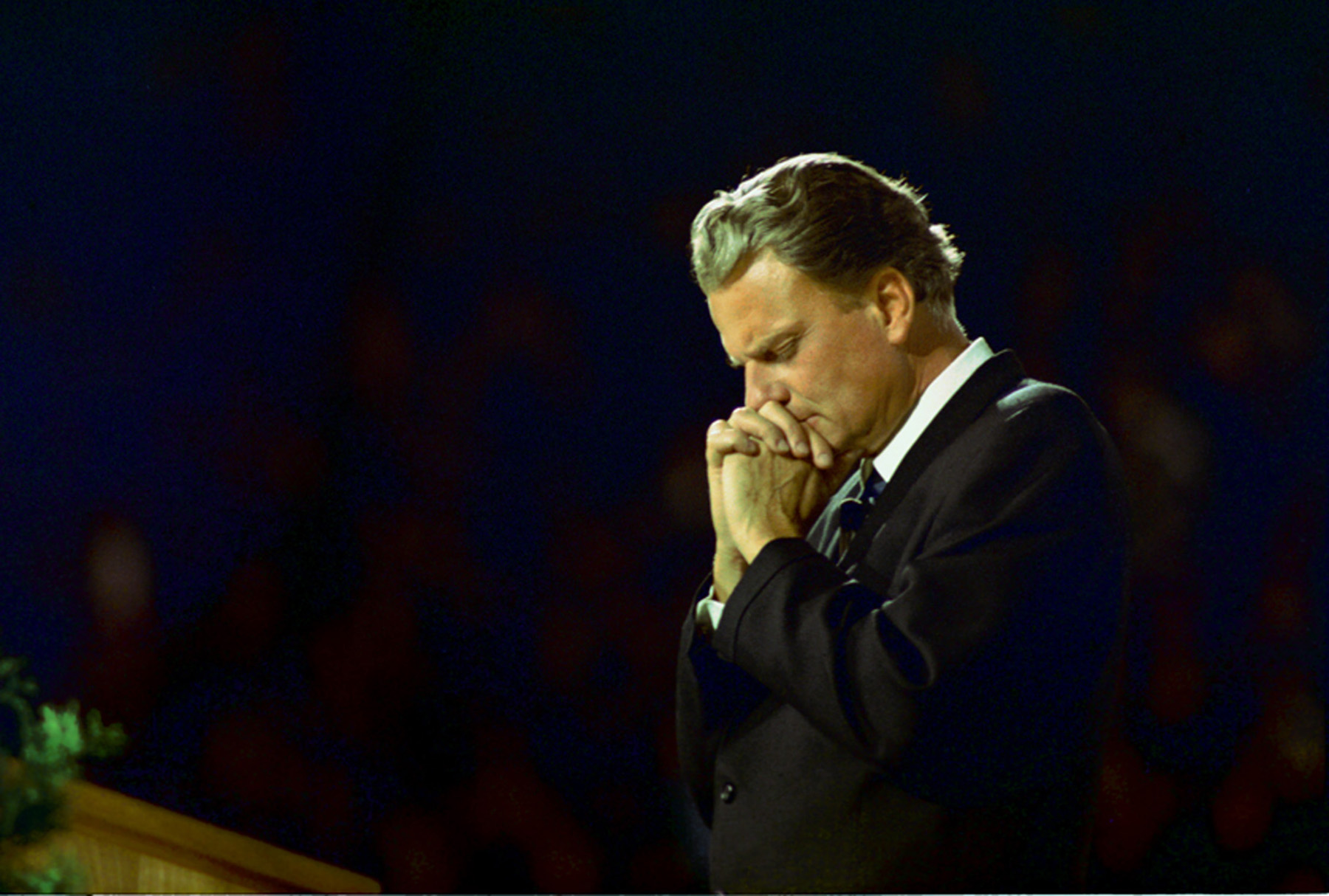
billygraham-praying

The Bible says, “If anyone cleanses himself from what is dishonorable, he will be a vessel for honorable use, set apart as holy, useful to the master of the house, ready for every good work” (2 Timothy 2:21).  This is a big part of the power of the gospel.

Horatius Bonar painted that picture with greater detail after observing the kind of “vessels” God clearly used with divine power.  Writing the preface to John Gillies’ Accounts of Revival, Bonar proposed that men useful to the Holy Spirit for revival stand out in nine ways:

1.  They are in earnest: “They lived and labored and preached like men on whose lips the immortality of thousands hung.”

2.  They are bent on success: “As warriors, they set their hearts on victory and fought with the believing anticipation of triumph, under the guidance of such a Captain as their head.”

3.  They are men of faith: “They knew that in due season they should reap, if they fainted not.”

4.  They are men of labor: “Their lives are the annals of incessant, unwearied toil of body and soul; time, strength, substance, health, all they were and possessed they freely offered to the Lord, keeping back nothing, grudging nothing.”

5.  They are men of patience: “Day after day they pursued what, to the eye of the world, appeared a thankless and fruitless round of toil.”

6.  They are men of boldness: “Timidity shuts many a door of usefulness and loses many a precious opportunity; it wins no friends, while it strengthens every enemy.  Nothing is lost by boldness, nor gained by fear.”

7.  They are men of prayer: “They were much alone with God, replenishing their own souls out of the living fountain, that out of them might flow to their people rivers of living water.”

8.  They are men of strong doctrine: “Their preaching seems to have been of the most masculine and fearless kind, falling on the audience with tremendous power.  It was not vehement, it was not fierce, it was not noisy; it was far too solemn to be such; it was massive, weighty, cutting, piercing, sharper than a two-edged sword.”

9.  They are men of deep spirituality: “No frivolity, no flippancy . . . . The world could not point to them as being but slightly dissimilar from itself.”

Source

Paul Tripp- If God Weren’t Angry

An excellent (but too brief) desription of the holy anger of God


If God Weren’t Angry

Called to represent God’s work of grace in the lives of others, many of us in ministry need to reevaluate how we think about the anger of God. Sometimes we can treat God’s anger like the embarrassing uncle in our extended family. It’s as if we’re working hard to keep this attribute of God away from public exposure. Are we secretly worried about causing undue embarrassment to the family of faith? We’re tempted to act as if anger were the dark side of God’s character.

God doesn’t have a dark side! John says, “God is light; in him there is no darkness at all” (1 John 1:5). It’s impossible for there to be anything evil in God. It is impossible for him to feel or act unrighteously. He’s entirely holy in every respect. He’s completely good in everything he does. He’s not evil, can’t be tempted by evil, and doesn’t tempt anyone to do evil. He’s perfectly holy, always, and in every possible way.

Implications for a Fallen World

All of this has very important implications as we seek to live and minister productively in this fallen world. If God is holy and angry at the same time, then anger is not evil in and of itself. If it were, God would never be angry. The many passages that teach us God is angry simply wouldn’t be in the Bible (see Exodus 32:10, 34:6; Deuteronomy 29:28; 2 Kings 22:13; Psalms 2:12, 30:5; Romans 1:18; and more). Therefore, it is not merely possible to be holy and angry at the same time, it is a calling. If you recognize and treasure the unchanging holiness of God and his call to be holy as he is holy, you’ll find it impossible to be in contact with anything that’s in any way evil and not be angry.

This means if we’re to take seriously the call to imitate our Father in heaven, calling ourselves and others to act and respond as he does within our human limitations, we must be angry. Not selfishly angry because we’re not getting our own way, but worshipfully angry in the face of anything that’s a violation of what God says is right, good, loving, and true.

The Anger of Grace

Let’s be very clear. God’s anger is the anger of grace. It isn’t the violent anger of unbridled and unrighteous fury. God’s anger always works to right what’s wrong. That’s what grace does. This gracious anger has two sides to it: justice and mercy. In the gracious anger of justice, God works to punish wrong, but he does even more. God isn’t satisfied merely with punishing wrong. His hunger for right is so strong that he will not relent until wrong has been completely destroyed. He will not rest until evil is no more and justice and righteousness reign forever and ever!

There is also another side to his gracious anger. It’s the anger of mercy. In mercy he works to convict—that is, to produce in us a sorrow for the wrongs that we think, say, and do. In mercy he works to forgive—that is, to clear our moral debt. In mercy he works to empower—that is, to give us everything we need to resist wrong and to do what’s right. And in mercy he works to deliver. He won’t be satisfied until every microbe of sin is completely eradicated from every cell of the heart of every one of his children.

Where do we see both sides of God’s anger coming together in one moment? On that hill outside the city gates where Jesus hung. That’s where we see justice and mercy kiss. As he hung there, Jesus bore the full weight of the justice of God’s anger. He paid the penalty our sin required. And on the cross Jesus became the instrument of God’s merciful anger that every sinner needs. He purchased our forgiveness.

If God were incapable of anger, there would have been no cross. You see, preaching the gospel of Jesus Christ forces us to deal with God’s anger. It requires us to help those to whom we minister to think of God’s anger in a deeper, more richly biblical way. Think about it: no anger, no cross; no cross, no hope of the final victory of righteousness, mercy, and justice. This would leave us in a world where evil exists inside us and outside us with nothing that we could do about it. The entire world and everyone in it would literally be going to hell, and we’d be along for the ride with no way of getting off. We would be both victims and also victimizers living in a now and future hell of separation from God and everything that is good, watching darkness get darker with no hope of light. There’d be no redeeming hope, no message worth taking the time to prepare and preach.

Anger is one of God’s most beautiful characteristics. For God’s children, his anger is a place of bright hope. Because he’s righteously angry with sin every day, we can rest assured that everything sin has broken will be restored. Everything sin has twisted will be straightened. Everything that’s gone wrong will be made right again. God’s anger assures us that all things will be made new.

Read more