Recent uprisings, violent crackdowns, and escalating tensions with the U.S. have brought added international attention to Iran, a nation of 93 million people, most of whom are Shia Muslim.
Though Iran’s regime has been repressive for most of its citizens, conditions are more tenuous yet for its Christian minority. And there is no tolerance whatsoever for Iranians from Muslim backgrounds who choose to become Christian.
But many are doing so.
“Darius” is one of them.
He is a thoughtful and dedicated follower of his adopted (and, for him, highly illegal) Christian faith.
He is also among the minority of Iranian converts who have chosen Orthodox Christianity. While there are a significant number of Orthodox churches in Iran, basically everyone involved with them is an ethnic minority of ancient Christian lineage.
As a person of Iranian Muslim background, Darius cannot just walk in and join.
Authorities monitor these churches. And Iran’s regime unleashes severe punishments (the death penalty is technically possible, but lengthy imprisonment is far more likely) not just for the Muslim-background converts but also for those who are viewed as assisting in their conversion or being receptive to their conversion.
From what Darius can tell, Orthodox Christian clergy in Iran “don’t dare to answer any Muslim” seeking to convert.
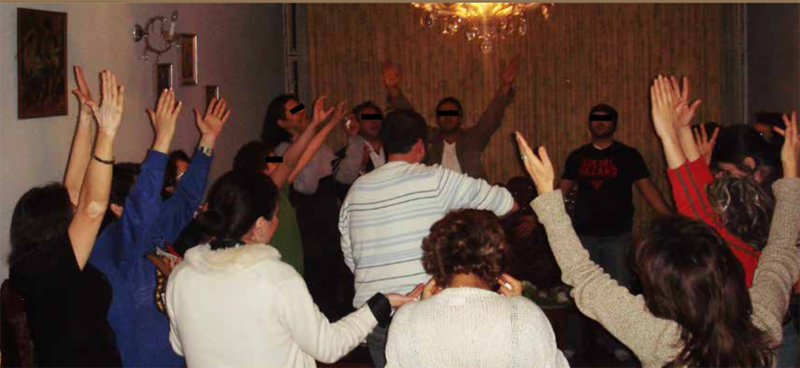
Therefore, most Christian converts in Iran choose Protestantism. Darius said these Christians either join or establish underground churches or else leave the country, often heading to neighboring Turkey, where they “keep their faith to themselves.”
If you can keep a low enough profile, converting to Christianity in Iran has become easier in at least one important way: Darius said he doesn’t have to try hard to pretend he’s still Muslim because, at this point, few people around him go to mosques, recite the Quran, or make any visible manifestations of faith.
Religious adherence to Islam in Iran has declined significantly during the last few decades.
“Nowadays mosques are mostly empty,” Darius said, adding that, to a large extent, “Just old people and supporters of the regime go there.” He also noted that the consumption of alcohol, though officially banned, has risen in popularity.
“I just need to watch my mouth and don’t say anything about Christianity,” he remarked.
In the meantime, he reads his Bible and prays. He also belongs to an Orthodox online community — moderated by an Iranian woman — that offers prayers, lessons, and advice. (Having much experience as a Muslim praying in Arabic, he already understood Arabic Orthodox chants.) He became acquainted with another Iranian convert to Orthodox Christianity via Instagram.
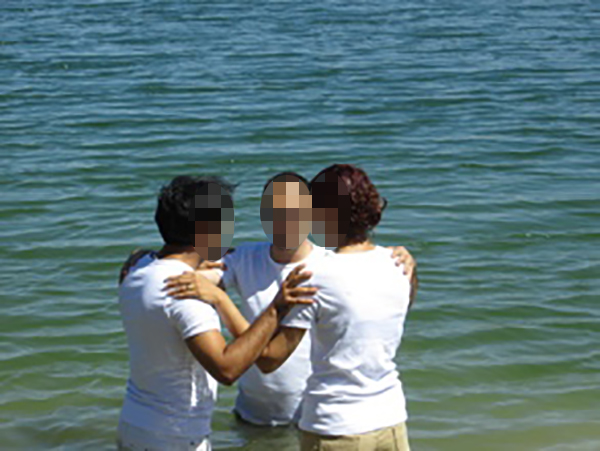
Darius would like to get to Europe, so he could “escape from this hell [his long-suffering homeland] and have a future.” He also wants to “get baptized more easily and without fear.”
He added that, at this point, even most religiously adherent Muslims in Iran have come to detest the regime.
Though regime authorities, along with a few fervent supporters and assorted nationalists, are every bit as hostile as you might imagine, Darius said most Iranians don’t hate the West or have any strong opinion about Christianity.
And indeed, a significant number find it increasingly compelling. Many media venues have reported that Iran has the world’s fastest-growing Christian community.
“People here get familiar with Christianity through different means,” Darius said.
“There used to be some ads on YouTube introducing Jesus,” he recalled. He also mentioned that some people become interested in Christianity through dreams and spiritual experiences. One such example involved an acquaintance of his who “said he saw Jesus when he was imprisoned by the regime.”
Darius himself had once been a devout Shia Muslim. At the same time, he was “open-minded” and “would always question [his] beliefs.”
He ultimately decided he no longer believed in his own religion.
“After I left Islam, I felt lost and was looking for a guide in my life,” he said. At the same time, he had not given up on God.
When visiting family in Isfahan, he would make a trip to the legendary Vank Cathedral (as a regular tourist, not as an aspiring convert).
“I was and still am amazed by its paintings,” Darius said.
He was also a fan of musician Johnny Cash, who had many songs that touched on religious themes and “really made me interested in Christianity.”
One night, he had a dream in which he saw icons of the 12 apostles and three Orthodox saints.
“When I woke up, I knew that Jesus had called me,” he said.
He later had a strange encounter in a crowded part of Tehran (the Iranian capital city), where he came upon a woman selling the Bible in Persian, Iran’s main language, also known as Farsi.
Darius said he bought it for a “reasonable price” and that the woman was also selling a sacred book of Zoroastrianism, a major pre-Islamic faith in the region and one that has seen a growing number of Iranian converts.
“She’s just an open-minded Muslim who tries to make some money,” Darius said of the bookseller. He added that he has never seen the Bible sold anywhere else in his country.
Selling Bibles in Iran is a dangerous career path. Buying one is also unsafe.
Darius understands his spiritual journey has put him at considerable risk. But he seems to have accepted the circumstances, saying, “The true way is not always the way we want and like.”
Story by R. Cavanaugh
 New Life Narrabri
