Christians in Afghanistan.

Underground church thrives despite Taliban

From God Reports

When a church leader and his family were all killed by the Taliban in Afghanistan in 2014, it sent a shockwave of fear over the underground church.

“This fear affects people,” says Ramazan Rafee, an Afghan who became a Christian. “But at the same time when you’re thirsty, it is not matter what will happen. I know it is dangerous. I know it is it is hard for me and for my family. But it is worth it.”

Ramazan eventually escaped Afghanistan. His bears witness that the church under the iron grip of Islamic rule in his country thrives, deep underground, despite proclamations by the Taliban government that there is no Christianity in the nation.

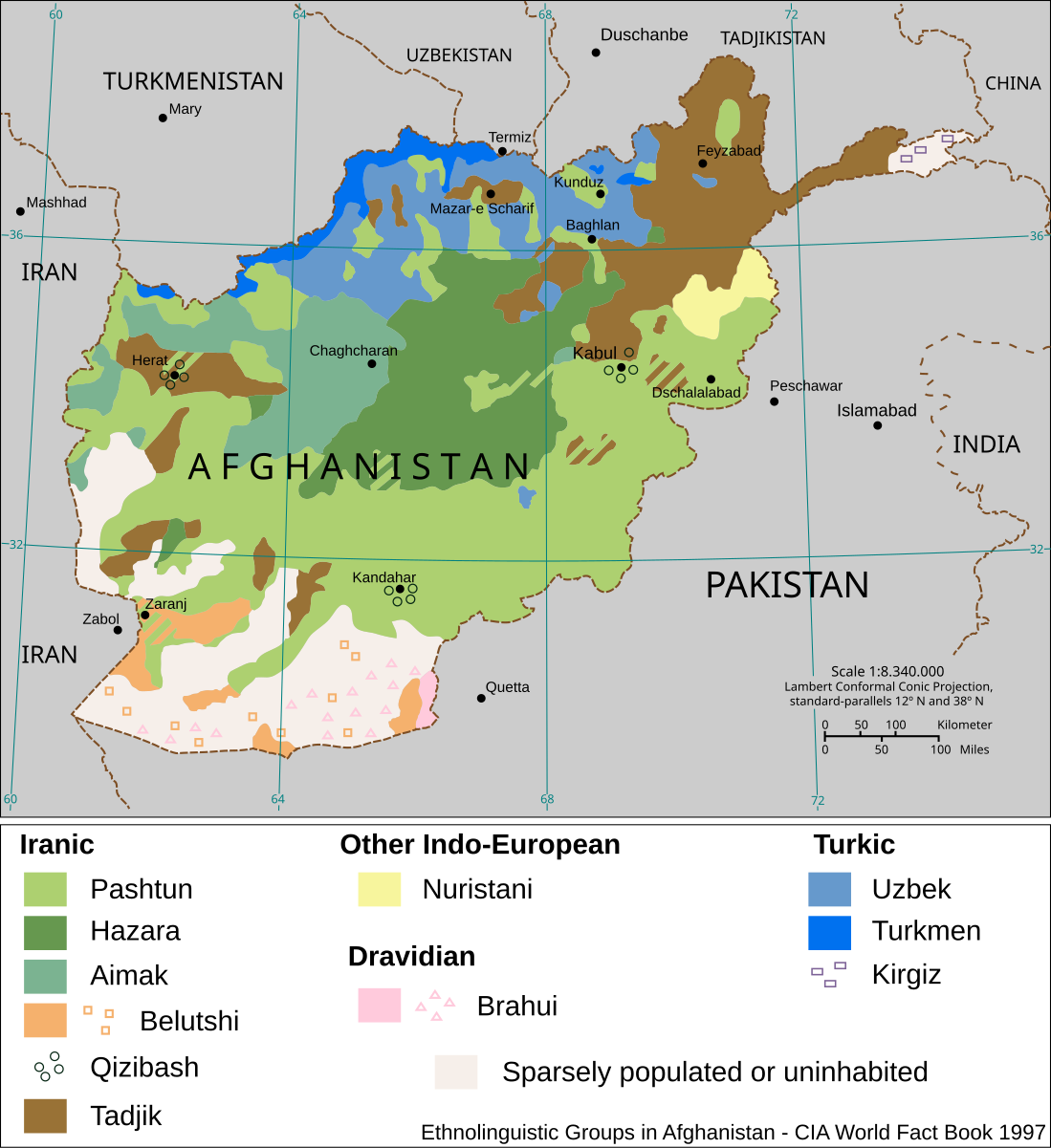
Ramazan Rafee was born into a Hazara family who believed in the strictest application of Sharia law. His own father was a mullah, a Muslim scholar.

But Ramazan began to doubt Islam because 60% of the Hazaras have been killed by the Afghan authorities (for belonging to the Shia branch of Islam because Taliban is Sunni).

“In Islam, they give you a boundary. If you would walk other side of that red line, then they label you as infidel,” Ramazan says. “I had a lot of questions about the nature of God, human suffering and the suffering of my people. Around 60 to 62% of Hazara people were killed by the authorities. Those authorities they were Muslim as well.”

Ramazan found himself staring down the barrel of a rifle — and his dad was the on aiming it with his finger on the trigger.

“I will kill you,” his dad growled.

His mother jumped in.

“First kill me, then Ramazan,” she screamed.

Ramazan left his village for the city of Kabul. At the time, the U.S. armed forces were still in Afghanistan with the hopes of building a Westernized democracy. There was some freedom in Kabul while the U.S. was there.

Ramazan had rejected Islam but believed there was a Creator, so he embarked on a quest to learn about different world religions. The Bible was a banned book in public. But Hitler’s Mein Kampf was available. That seemed strange.

“Is the Bible that bad?” he wondered. The fact that Bible was banned made it seem like they wanted to keep the truth away from him. “I thought, there is something going on here.”

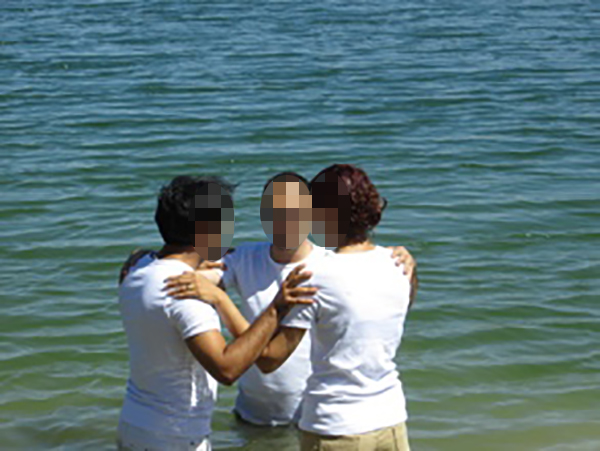
Eventually, Ramazan found a foreigner who gave him a Bible and proceeded to study it with him. Ramazan got saved in 2009. “I was on fire. I shared the gospel with my family, with friends and classmates. Within a year, we were 12 individuals and two families,” he says.

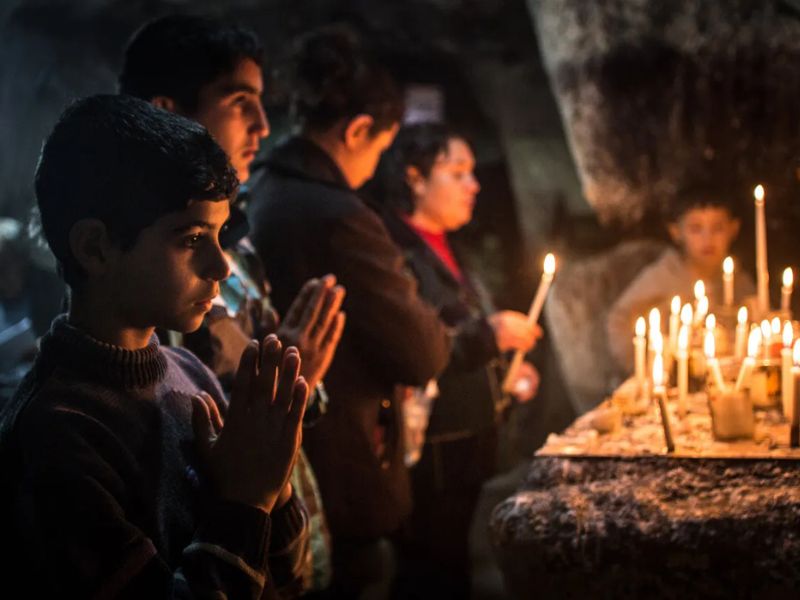
The foreigner left Afghanistan, and Ramazan was left alone with his group of Christians. He integrated in the underground church, a network of more believers. It was dangerous — especially for house church leaders.

In 2014, one friend was killed, with his family, by the Taliban, despite the U.S. supposedly controlling the city and setting up a Westernized government.

Then the U.S. left abruptly in 2021. The military withdrawal under Biden was a disaster, with much military hardware left abandoned in the country. But things were worse for the Christians. The Taliban swept in and took over Kabul.

“I woke up and everything was different. I kissed my wife and kids and said, ‘Ok, maybe today is our last day,’” Ramazan says. He and church members deleted every Christian resource on their phones and laptops. “The Taliban were here. It was chaos like in a movie.”

A pastor stopped by to pick him up with his family. He had no idea where they were going or what the future held. They didn’t make it out of the country. They were at the airport when a bomb blast prevented people from leaving. They tried leaving in car.

For 36 days, they were moving around, constantly changing their location, on the run from the authorities.

“When the last airplane left Afghanistan, I said, ‘Ok, it’s over. God wants us to die here,’” he says. “The only thing I was praying was that when the Taliban would take us, they would shoot all of us, not only shooting me and take my wife and children.”

Ramazan wrestled with God during these days of anxiety. Amazingly, God calmed him.

Finally after 36 days, a security team showed up and took Ramazan and his family in cars to the northern border. They crossed nine checkpoints. There were flown to Qatar. “When I landed in Doha, Qatar, I was reading Psalm 18 God, you are my rock.”

Many of his brothers and sisters in Christ also made it out of the country. Still others stayed and went deep underground. Not only are the Christians there, there are new converts among them too.

“It’s more dangerous than ever to be a Christian in Afghanistan, yet people are still coming to Christ,” says Jamie Dean, of Radical. “The Spirit just moves.”

Exposing the ‘shameful silence’ of pro-Palestinian activists

From God Reports

By Charles Gardner —

(YouTube screenshot)


The shocking hypocrisy of left-wing posturing over the supposed evils of Israel in their dealings with Palestinians has been brilliantly exposed in a major Daily Mail(1) article.

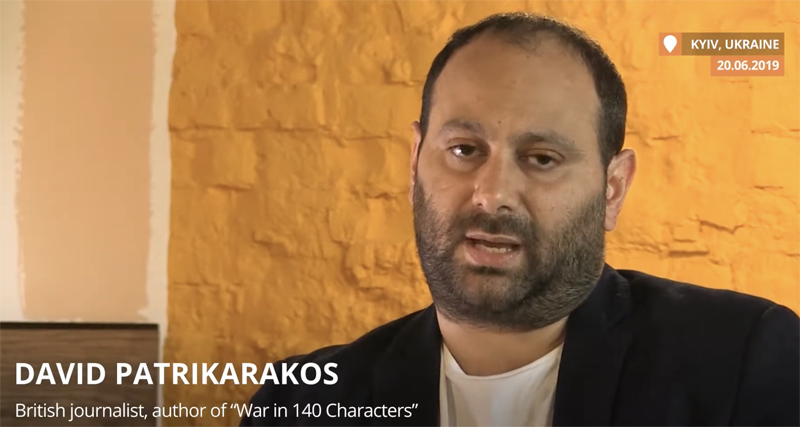
In a feature titled ‘Shameful Silence of the Left’, David Patrikarakos highlighted the terrible atrocities carried out by Islamic groups in Sudan and Nigeria involving the brutal massacre of numbers far in excess of those reputed to have died in the recent Gaza conflict.

And yet the progressive left is strangely silent over the plight of the victims who are – in the main – Christian.

Tragedies calling for outrage among the left, he writes, “must provide a villain who flatters Western fantasies of resistance – ideally a white, Western or Jewish oppressor – and a victim that appeals to our sense of colonial guilt.”

He continues: “Trendy urban baristas don’t get to feel like freedom fighters by bellowing about African killers or Arab militias. There is no moral glamour in calling out crimes that cannot be laid at the feet of the West.”

Their outrage is not universal, he adds. “It is selective – and therefore hollow.”
He points to the case of a Sudanese rebel fighter who confronted an unarmed restaurant owner. When asked what tribe he belonged to, the man replied that he was from the non-Arab Berti tribe.

At this, ignoring his desperate pleas for mercy, he was shot dead. The same man also ordered the shooting in cold blood of 460 hospital workers, including patients, their companions and anyone else present.

Meanwhile Nigeria is being torn apart by overlapping conflicts that together have produced a body count that amounts to a multiple of Gaza’s death toll over the past decade.

In 2023, he writes, over 5,000 Nigerian Christians were murdered for their faith. And yet, in the West, it still barely registers. It is in fact a blind-spot of the Western conscience.

“Until Sudan and Nigeria fill our streets with the same fury the activists reserve for Gaza, their outrage will remain a performance – and the bodies of black Africans will continue to be buried in silence.”

But thankfully the unfolding genocide in Nigeria has been thrown into the spotlight by none other than U.S. President Donald Trump, threatening possible action against Islamic militant groups.

“At least it shows he cares, which is more than can be said for most of those whose lives seem devoted to relentless displays of public sanctimony.”

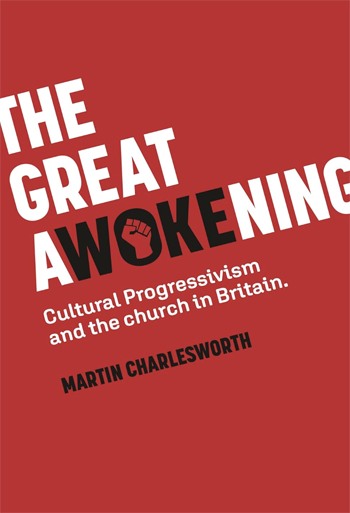
We do not need a Great Awokening, as a new book by Martin Charlesworth has been aptly titled. We need another Great Awakening to the reality of God in our midst, of his judgment and mercy, and of his beloved Son, our Lord Jesus Christ.

Forced Out For My Faith in Christ

From persecution.org

By Sameer Patel 

On Saturday, Sept. 27, my mother came to me with a troubled expression. Her voice trembled as she spoke to me. 

“You must leave the village!” she urged. “I heard it with my own ears — the villagers are plotting to kill you and attack your family. You need to go now to save your life!” 

I was shocked but remained calm.  

“I believe in God, the same God who healed my wife from her sickness and gave us peace and hope,” I told her. “No one can take my life without his will.” 

A few minutes later, my younger brother came to me, tears rolling down his face.  

“Please, leave. If you stay, we may never see you again,” he pleaded. “They are planning to kill you. If you go, at least we’ll know you’re safe somewhere.” 

The concern in his voice moved me deeply. I turned to my wife and told her about the situation. I said I would leave for now and return once things settled down. That evening, I quietly left my village in Central India. 

The next morning, around 9 a.m., I received a phone call from my brother.  

“The entire village is at your house,” he said. “They’re demanding to know — will you deny Jesus or let your house be destroyed?” 

I told him with a firm heart, “When my wife was on her deathbed and we had no hope, Jesus healed her. He gave us life. How can I deny him now? Even if I must give my life, I will not deny Christ and his rule in my life.” 

The Hindu nationalist mob ridiculed my wife and mocked her. 

“Leave this village and don’t look back,” one of them screamed at her. “Go to your God, let him protect you!”  

“I have experienced God’s love,” my wife replied. “He healed my deadly sickness. My God will save me and my family.” With that, she too left the village. 

Soon after, the mob destroyed our house. They damaged everything we owned and declared that I was excommunicated from the village — all because I follow Jesus and attend church. 

My wife, our children, and I fled our village, traveling nearly 80 kilometres (50 miles) to find safety. We are now staying with fellow believers, Christians we got to know through church. 

I accepted Jesus three years ago. A friend had introduced me to the church and prayer when my wife was seriously ill, almost at the point of death. I had taken her to many hospitals, spent all I could, but nothing helped. She couldn’t even move without my help. 

But through the prayers of a pastor and the faith we had in Jesus, she was miraculously healed. That day, we knew the love and power of God, and we gave our lives to Christ. 

Since then, the persecution started. From the day I accepted Jesus, I have faced opposition. But through it all, the Lord has been faithful.  

I will continue to follow Jesus, no matter what. It may be difficult to return to my village because the people there have vowed to make the entire village Christian-free. But I know God is with me. I need to start my life from scratch; I know God will help me as I trust in him for love and care. 

*Name changed for security reasons 

To read more news stories, visit the ICC Newsroom. For interviews, please emailpress@persecution.org. To support ICC’s work around the world, please give to our Where Most Needed Fund.

Over 200 Christian Farmers Killed Before, After Nigeria’s Democracy Day

6/16/2025 Nigeria (International Christian Concern) — More than 200 Christian civilians, including children and the elderly, were killed in coordinated attacks carried out by armed Fulani militants in Nigeria’s Middle Belt, just before and after the country’s Democracy Day holiday.

The attacks, which spanned from the evening of June 11 through the early hours of June 13, struck Christian farming communities in Plateau and Benue states.

On the evening of Wednesday, June 11 — just hours before the public holiday — Fulani militants ambushed a group of Christian farmers in Rigwe Chiefdom, Bassa County, Plateau state. According to local sources, four victims, including a 9-month-old infant, were killed near Nkiedonwro village as they were returning from their farms with harvested vegetables.

The victims, identified as Musa Chega, 40, Gali, 43, Uhwie Emmanuel, 25, and her infant daughter, Mary Emmanuel, were attacked with machetes. Two other villagers sustained severe injuries. The farmers were reportedly headed to the Jos Vegetable Market before being intercepted on the road.

Only two days later, in the early hours of June 13, heavily armed militants conducted another deadly assault in Yelwata, a predominantly Christian farming settlement in Guma County of Benue state, which borders Nasarawa state. The attack lasted from around 11 p.m. to 1 a.m., and 200 people were feared dead, according to community reports.

Internally displaced persons (IDPs) were among the victims. Many had fled earlier violence in Nasarawa and Benue and were sheltering in stalls and lock-up shops at Yelwata market. Witnesses said attackers poured gasoline on the shops and set them ablaze, killing entire families who had taken refuge inside.

Matthew Mnyam, a former state education official and community leader in Yelwata, confirmed the scale of the destruction.

“Some families were completely wiped out,” he said. “A man, his two wives, and all their children were burned alive. It was a well-coordinated assault from both eastern and western flanks of the community.”

In a related incident that same night, suspected militants also attacked a military post near Daudu town, killing at least two soldiers. Earlier reports suggested up to five soldiers may have died, though the Nigerian Army has not confirmed the exact number.

According to Leadership News, Benue State Police confirmed the attack but declined to provide a death toll, stating investigations were ongoing.

“Our tactical teams responded swiftly, and some of the attackers were neutralized,” Deputy Superintendent of Police Sewuese Edet said. She added that several civilians were killed and wounded in the attack.

In recent weeks, Fulani militias have shifted tactics, launching broad daylight ambushes on farmers in Plateau state. According to the Miango Youth Development Association (MYDA), a series of ambushes and killings occurred in Rigwe land between June 3 and June 9, resulting in at least 10 fatalities and multiple injuries.

Joseph Chudu Yonkpa, national publicity secretary of the Irigwe Youth Movement, warned that such ambushes often precede larger massacres.

“Before the Zike massacre last year that killed 54 people, there were two weeks of daily ambushes,” he said. He added that recent intelligence suggests that Nkien-whie, Miango, and Teegbe districts are currently being targeted.

A data report compiled by the Rural Youth Integral Support Initiative (RUYISI) shows that 65 communities in Irigwe Chiefdom have been attacked by Fulani militants between 2001 and 2023, with some villages struck multiple times. The highest spike occurred in 2021 when 44 communities were attacked in a single year.

The growing pattern of impunity has raised concerns among civil society and local leaders who accuse security forces of delayed or passive responses. In the case of Yelwata, local sources say security personnel stationed nearby failed to intervene during the two-hour onslaught.

Many of the recent victims were Christian subsistence farmers, forced to flee their ancestral homes only to be attacked again in makeshift shelters. The attacks came during the national celebration of Democracy Day, a public holiday commemorating Nigeria’s return to democratic rule.

These incidents mark one of the bloodiest weeks in Nigeria’s Middle Belt this year.


From International Christian Concern

Another slaughter of christians in Nigeria

Herdsmen Slaughter 42 Christians in Taraba State, Nigeria

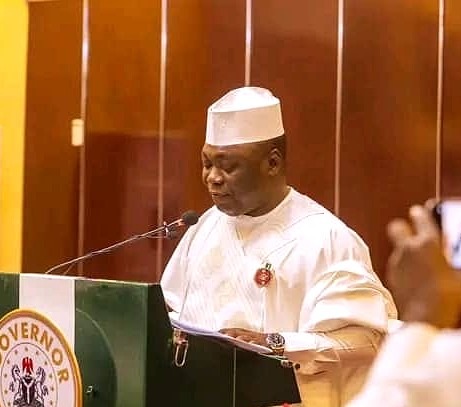
Taraba state Gov. Agbu Kefas. (Agbu Kefas Media)

Taraba state Gov. Agbu Kefas. (Agbu Kefas Media)

ABUJANigeria (Christian Daily InternationalMorning Star News) – Fulani herdsmen in the early hours of Saturday (May 24) killed 42 people in three predominantly Christian communities in Taraba state, northeast Nigeria, sources said.

In Karim Lamido County, the assailants invaded Munga Dosso, Munga Lelau and Bandawa villages, destroying homes as well as slaughtering residents, according to officials and residents.

“My people in Karim Lamido Local Government Area, who are mostly Christians, have been attacked by Fulani herdsmen. Our houses have been burnt, and more than 42 Christians killed,” Miriam Silas told Christian Daily International-Morning Star News in a text message.

Taraba Gov. Kefas Agbu described the attacks as a “direct assault on the peace- loving people of the area” and “horrendous and unacceptable.”

The governor said he would ensure the assailants would be found, arrested and prosecuted.

“Our citizens’ safety is my top priority. We have activated all necessary security measures to prevent further violence and bring those responsible to book,” Agbu said through a statement by spokesman Emmanuel Bello.

Area residents sent distressed messages on Saturday (May 24).

“A devastating attack by herdsmen on three communities has claimed the lives of 42 Christians and forced hundreds of others to flee their homes the early morning of Saturday,” Obadiah Abbawa said in a text message. “The attack led to the destruction of houses and left the communities in complete ruins.”

Another area resident, Zion Chaffi, said, “Karim Lamido area is being attacked by Fulani herdsmen. Pray for God’s intervention for us.”

Dr. Tijo Kenneth Mingeh, a prominent Christian resident of the area, described the attacks as tragic.

“This tragic attack has brought untold pain and disruption to lives, homes and livelihoods,” Mingeh said. “These communities have been torn apart by this unfortunate incident.”

James Leshen, spokesman for the Taraba State Command, said police were deployed to the areas.

Numbering in the millions across Nigeria and the Sahel, predominantly Muslim Fulani comprise hundreds of clans of many different lineages who do not hold extremist views, but some Fulani do adhere to radical Islamist ideology, the United Kingdom’s All-Party Parliamentary Group for International Freedom or Belief (APPG) noted in a 2020 report.

“They adopt a comparable strategy to Boko Haram and ISWAP and demonstrate a clear intent to target Christians and potent symbols of Christian identity,” the APPG report states.

Christian leaders in Nigeria have said they believe herdsmen attacks on Christian communities in Nigeria’s Middle Belt are inspired by their desire to forcefully take over Christians’ lands and impose Islam as desertification has made it difficult for them to sustain their herds.

Nigeria remained among the most dangerous places on earth for Christians, according to Open Doors’ 2025 World Watch List of the countries where it is most difficult to be a Christian. Of the 4,476 Christians killed for their faith worldwide during the reporting period, 3,100 (69 percent) were in Nigeria, according to the WWL.

“The measure of anti-Christian violence in the country is already at the maximum possible under World Watch List methodology,” the report stated.

In the country’s North-Central zone, where Christians are more common than they are in the North-East and North-West, Islamic extremist Fulani militia attack farming communities, killing many hundreds, Christians above all, according to the report. Jihadist groups such as Boko Haram and the splinter group Islamic State in West Africa Province (ISWAP), among others, are also active in the country’s northern states, where federal government control is scant and Christians and their communities continue to be the targets of raids, sexual violence, and roadblock killings, according to the report. Abductions for ransom have increased considerably in recent years.

The violence has spread to southern states, and a new jihadist terror group, Lakurawa, has emerged in the northwest, armed with advanced weaponry and a radical Islamist agenda, the WWL noted. Lakurawa is affiliated with the expansionist Al-Qaeda insurgency Jama’a Nusrat ul-Islam wa al-Muslimin, or JNIM, originating in Mali.

Nigeria ranked seventh on the 2025 WWL list of the 50 worst countries for Christians. 

If you would like to help persecuted Christians, visit https://morningstarnews.org/resources/aid-agencies/ for a list of organizations that can orient you on how to get involved.  

If you or your organization would like to help enable Morning Star News to continue raising awareness of persecuted Christians worldwide with original-content reporting, please consider collaborating at https://morningstarnews.org/donate/?

###

© 2025 Christian Daily International-Morning Star News. Articles/photos may be reprinted with credit to Christian Daily International-Morning Star News. https://morningstarnews.org 

53 Christians Killed in a Day in Congo

At least 53 Christians were killed on 15 January in two Islamist attacks in Lubero, North Kivu, north-eastern Democratic Republic of the Congo (DRC).

The Islamic State Central Africa Province (ISCAP, also known as the Allied Democratic Forces) announced the killings in two social media posts, according to the Terrorism Research and Analysis Consortium (TRAC).

One of the two posts declared, “By the grace of God Almighty, the soldiers of the Caliphate attacked the village of Makoko in the Lubero region and killed 41 Christians [who] were stabbed with knives.”

The other post confirmed killing of 12 others in the village of Masakuki.

The terrorist group also abducted 16 Christians, as well as burning houses and motorcycles.

Attacks of this type have been carried out consistently by ISCAP since the group first affiliated to Islamic State (IS, ISIS, ISIL, Daesh) in 2017. However, the scale and frequency of the attacks has increased in the past few weeks.

Relentless targeting of Christians

Including the 15 January attacks, at least 128 have been slaughtered in North Kivu and the neighbouring province of Ituri since Christmas Day 2024.

A TRAC analysis concludes that the brutality of these attacks underscore “the group’s relentless targeting of the Christian population in the region”.

“ISCAP’s repeated assaults on Christian civilians exploit the absence of a consistent security presence in the region,” the analysis continues.

“ISCAP’s tactic of successive attacks on the same village exacerbates the psychological toll on residents. By revisiting recently targeted areas, the group ensures an ongoing state of fear and insecurity among survivors.

“This strategy often results in higher casualties as panicked civilians struggle to navigate the aftermath of consecutive assaults.”   

Inside the Church in North Korea

The church on North Korea is one of the most harshly persecuted in the world. North Korea consistently ranks number 1 in the list of places where christians are treated the most harshly. Despite this the number of Christians there is growing.
Watch this video to find out the remarkable things God is doing in this isolated country.

Andrew Thorburn Vindicated For Faith Position

Andrew Thorburn, who was briefly CEO of Essendon AFL Club in October before being sacked for belonging to a church, has settled with the club over the affair.

The original issue was big news, but you have to go digging through the news sites to find the latest development. Typical of the spineless media.

Thorburn has at all times acted with integrity and in a Christ-like attitude, and it is good to see him being vindicated.

As one commentator noted this morning, there is a fair level of legal protection of religious beliefs in Australia, even though most corporations just bow to the woke mob on these issues. Hopefully there will be more recognition of the concept of freedom of religion in the public sphere.

Recently re-elected Victoria Premier Daniel Andrews also needs to make an apology to Thorburn for his slanderous and vicious comments in October, but I wouldn’t hold my breath waiting for that.

From the ABC on MSN:

Essendon Football Club apologises to Andrew Thorburn over handling of his short stint as CEO


The Essendon Football Club has apologised to former CEO Andrew Thorburn over the way it handled the events leading to his departure after just one day in the role.

Mr Thorburn was appointed as the Bombers CEO in October, but resigned a day later after public commentary over his involvement in a church which had shared controversial views about homosexuality and abortion.

Mr Thorburn said at the time it was clear to him that his personal Christian faith was “not tolerated or permitted in the public square”, despite his leadership record.

In a joint statement released on Tuesday, the two parties said they had resolved the dispute over the matter and would work to “enable a wider community conversation on the importance of freedom of conscience, religion and belief”.

Essendon Football Club said it acknowledged “that the events of October should have been handled better and apologises for the impact it had on Mr Thorburn, his family and others”.

“Both parties consider that elements of the public commentary at the time were extreme and wrong and counter-productive to the respectful community dialogue they agree is critical,” the statement said.


“Mr Thorburn remains welcome at the Club. The Club reiterates that he is a person of integrity who treats others, whether at work or elsewhere, with dignity and respect.

“He has a strong track record of leadership including with respect to diversity and inclusion of LGBTIQ and other minority groups.”

The statement noted genuine diversity should include people of faith and “everyone should be able to openly express their personal position, in a respectful way, without fear and still feel that they belong”.

As part of the dispute resolution, the Essendon Football Club will make a donation to an ethics institute to prepare a paper on how sporting organisations can build “inclusive communities recognising freedoms including those relating to race, religion and sexuality”.

The statement did not specify which institute would be funded to prepare the paper.


Escaping Radical Islam to Live Life with Christ

From persecution.orgEscaping Radical Islam to Live Life with Christ

11/16/2022 Turkey (International Christian Concern) – Leyla is a loving mother and wife in her forties who grew up in a family that still practices radical Islam. After getting married, her husband became a catalyst for her acceptance of Christ and becoming a believer. Christ is a part of her daily life, but initially, she needed to keep this hidden from her family. They eventually found out, which was the beginning of some tough times in her life.

Leyla’s father learned about her husband’s faith during a visit from out of the city and confronted his daughter. Without giving her a choice, he took her back home with him and told her she was not allowed to see her husband and would divorce him. She compares this to being a hostage with her children, “I was so scared that I couldn’t say anything. I was just praying to the Lord. To help us overcome these problems. I spent three weeks like a nightmare at my father’s house.”

Leyla’s husband, Murat, had to stay away from his wife and children during this time. Leyla and her husband have a loving family, but while separated, they felt their souls were wounded living with the fear, pressure, and uncertainty of the situation. Murat made the decision to speak to his father-in-law, but this frightened Leyla because of the radical Islamic beliefs that she knew could drive her father to harm or even kill her husband. This is all because he chose to leave their religion and become a Christian, which means that he “lost” the right to be her husband and father to her children; in the eyes of her family, he was contaminated. Despite all these risks, he went home where no one spoke to him or ate at the same table with him as it was haram, according to Islam.

Murat wanted his wife and children home and was able to meet with his father-in-law and tell him how he came to know Christ and how his life was changed. He declared he would not give up on Christ, but he would also not give up on his family.

Leyla expresses what happened between her father and her husband as follows; “Thank God the Lord heard my pleas. My father agreed to this on one condition. My husband would never take my children and me to church. My father told my husband that if he heard such a thing, he would sacrifice him with one bullet. Even that was a great miracle for us. Because I knew my father very well. I knew I would never come home again. My husband also accepted my father’s request, seeing how strict my family was and realizing they would no longer give us peace in this country. My husband’s aim was primarily to take me and my children with him. Because if we had stayed with my family, we would never have been able to get together. My children would never see their father again. And they would brand my children as ‘children of the infidel’. If I had stayed with my family, they would have married me to someone else after I divorced my husband. This is unfortunately a common occurrence in our culture. This was going to be a very difficult and heavy situation for me.”

When they were preparing to return home, Leyla’s father told his grandchildren, “If this man, who will be your father, takes you to the church among the infidels again, you will inform me immediately. I’ll come and get you, and you’ll never see your father again.” He instructed and warned the children.

One of their children, afraid of what her grandfather said, cried along the way; “Please let’s not go to church, mom.” she begs her mother.

Leyla had returned to her home, but now that the family had learned about the situation, the pressure to stay in the Islamic faith began to increase. Leyla said, “My family is constantly video-calling me to check where I am. And when they don’t call, my sister sends my nephews to our house. Since we cannot go to church on Sunday, we want to attend our meeting online, but we cannot do that because my family is constantly following us.”

Other family members who learn about the situation continue to pressure this family differently. Leyla’s aunt tells her, “You will send your children to Qur’an courses; you will teach them to read the Qur’an and pray until the semester break!” Her aunt still gets angry with her, and many threats are spoken to them her family is under control.

Leyla and Murat considered moving to another city to be safe but moving would not protect them from the danger they would face. This is because wherever they go, Leyla’s family has enough leverage to find them.

Leyla believes it is too risky for them to live in Turkey now because of her family’s extreme Islamic beliefs. Leyla says, “My family has a point of view that sees anyone who doesn’t think like them as ‘infidels.’ If it is learned by our big family that we are Christian, they can easily reach us even if we change the city we live in. And in such a case, our safety is in serious danger.”

Layla does not want her children to grow up without a father, but if their life continues like this, the whole family will learn that they are Christians in time. For this reason, Leyla and her husband decided they would move out of the country, even though this would be very difficult. They will move to a place where the language and culture are different, and her husband will quit his job and risk their safety so that they can have the right to raise their children in a healthy way with the love of Christ. This move will be painful and disrupt their way of life, but it will be worth it, according to Leyla.

Leyla’s father threatens to kill his son-in-law without caring about his daughter’s future or feelings. He believes he is justified simply because his faith allows him to do so because of his Christianity. He has the will, power, and motive to do so, and until they leave, they will not be safe.

The World Hates You

If you love the Lord, then the world will hate you.

The Bible uses the word “world” in three different was, as we do in English:

  • the physical planet on which we live
  • humanity in general “God so loved the world…”
  • the system of culture, governance and business that operates independently of God, and often in opposition to Him.

It is that world as system which hates all Christians.

Andrew Thorburn was on Monday night announced as CEO of the Essendon AFL Club. By Tuesday he was fired.

His huge crime was that he is also Chairman of the Board of City On a Hill Church, a church which describes itself as being in the Anglican tradition.

Apparently back in 2013 somebody there preached a sermon that was against abortion and another person preached a sermon that said homosexuality is a sin. He was not the preacher of either message, but merely associating with such people is an unforgivable sin.

Dictator Dan Andrews, the Premier of Victoria, condemned him as “hateful” and a “bigot”, currently the worst judgement that can be bestowed on a person by the State of Woke.

So he resigned before he even started,

For the axe of Cancel Culture to have fallen so swiftly, it is clear that there was a “dirt file” already in existence. There are people who are so dedicated to destroying christians that they have already done the research on those whom they hate.

So the AFL, and organised sport more generally, justify their actions by wanting to make the sport inclusive and diverse. Their inclusion and diversity will come by excluding Christians.

The world really does hate you.

Any christian who works in an organisation big enough to have an HR Department now needs to have a Plan B.

Churches and other christian organisations, especially schools, also need to consider what might happen if the Government takes exception to their beliefs, which they will.

We live in a culture that has rejected God’s ways, and rather than seeing the church as a comfort and an ally, it sees the church as the enemy.