Reflection on 1 Samuel 18:1-30

Scripture

Saul was afraid of David, for the Lord was with David and had turned away from Saul.

Observation

David and Jonathan meet, and they instantly form a strong friendship .

David does everything successfully that Saul commands him. When David and Saul return from battle against the Philistines, the women sing, “Saul has killed thousands, and David tens of thousands.” This makes Saul jealous.

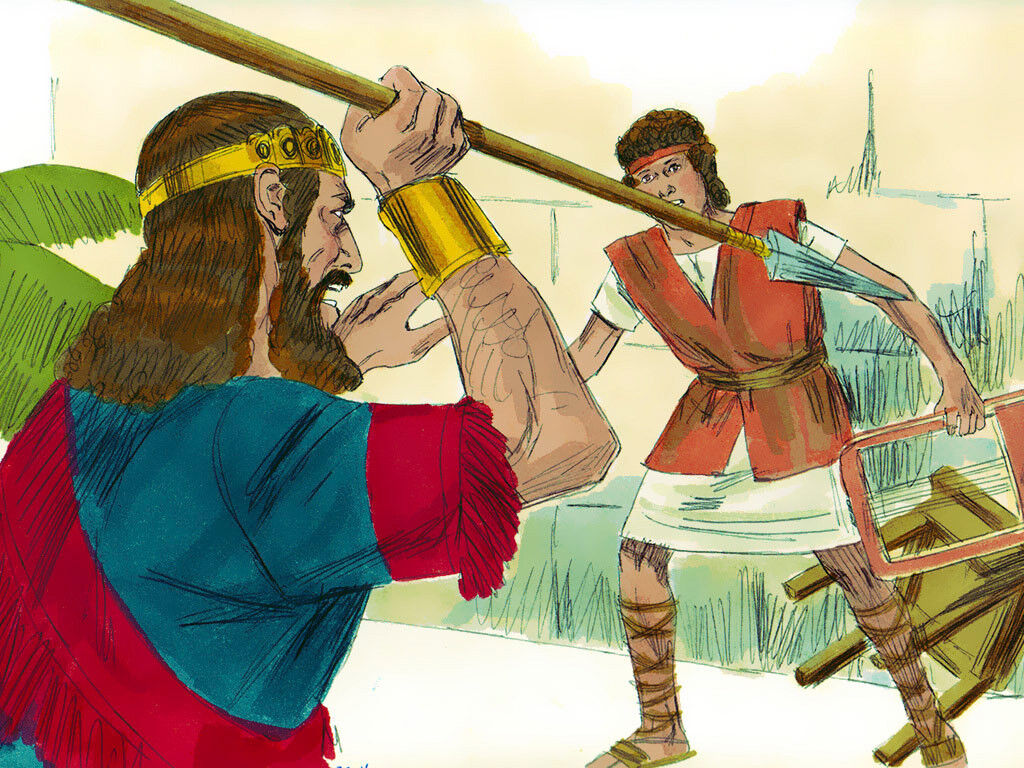
A tormenting spirit comes against Saul. He raves like a madman, and tries twice to kill David.

Michal falls in love with David. Saul offers Michal to David for the bride price of 100Pphilistine foreskins. Saul reasons that David will be killed by the Philistines. David and his men go and kill 200 Philistines. So David marries Michal.

Application

Fear and jealousy start to consume Saul. He can see how successful and popular David is, and he becomes afraid for his own position.

This kind of deception is a favourite tool of the devil. He stirs up negative emotions such as fear and jealousy to keep us isolated from other people. When we are isolated, he can amplify the emotions and make us quite irrational.

Saul had no cause to be afraid or jealous of David. David was loyal and had no desire to depose him. But satan is the father of lies, and Saul swallowed the deception.

Even though the Lord had rejected Saul as King over Israel, Saul could have repented of his sins and drawn close to the Lord. He could have been protected from his feelings of fear and jealousy. Instead, he chose to isolate himself and believe the lies rather than seeking the truth.

What a sad outcome this was. Many people follow a similar trajectory as they ignore the call of the Lord on their lives.

Prayer

Father, please help me stay close to you. Help me to always walk in the light of your word and the discernment that comes from your Holy Spirit. Amen.

Reflection on 1 Samuel 17:1-58

Scripture

David replied to the Philistine, “You come to me with sword, spear and javelin, but I come to you in the Name of the Lord of Heaven’s Armies – the God of the Armies of Israel whom you defied.”

Observation

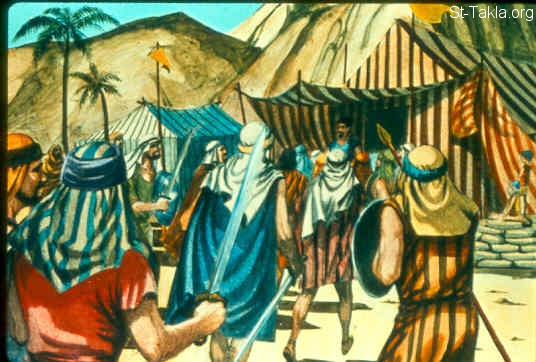
David, at his father’s request, leaves the flocks to take supplies to his brothers in Saul’s army. There he sees that a giant named Goliath taunts the Israelites, demanding that someone come out to fight him.

David finds out that the king has promised his daughter and exemption from taxes to the man who defeats Goliath. He volunteers and discovers that Saul’s armour and sword are too heavy for him.

So David responds to Goliath’s taunt. He frames Goliath’s challenge as a defiance against the Lord. Armed with just his sling, David kills Goliath. Emboldened by this, the Israelite army massacres the fleeing Philistines.

Application

David recognises that the Philistines’ hostility to Israel was not just a military or political issue, but a matter of spiritual warfare. They were not fighting against flesh and blood, but against the Lord of Heaven’s hosts.

He could go without armour or sword because his trust was in the Lord. He knew that the battle belonged to the Lord.

Similarly, our battles are not in the flesh, but in the spirit realm. We must fight these battles in the spirit realm using the gifts and weapons of the Holy Spirit.

Whether it is family or work issues that overwhelming us, it is the Lord’s battle. Human wisdom will not give us victory, but the power of the Holy Spirit will.

Prayer

Thank you Lord that, as I put my trust in you, then you will help me to overcome the giants in my life. Amen.

Reflection on 1 Samuel 16:1-23

Scripture

The Lord said to Samuel, “Don’t judge by his appearance or height, for I have rejected him. People judge by outward appearance, but the Lord looks at the heart.”

Observation

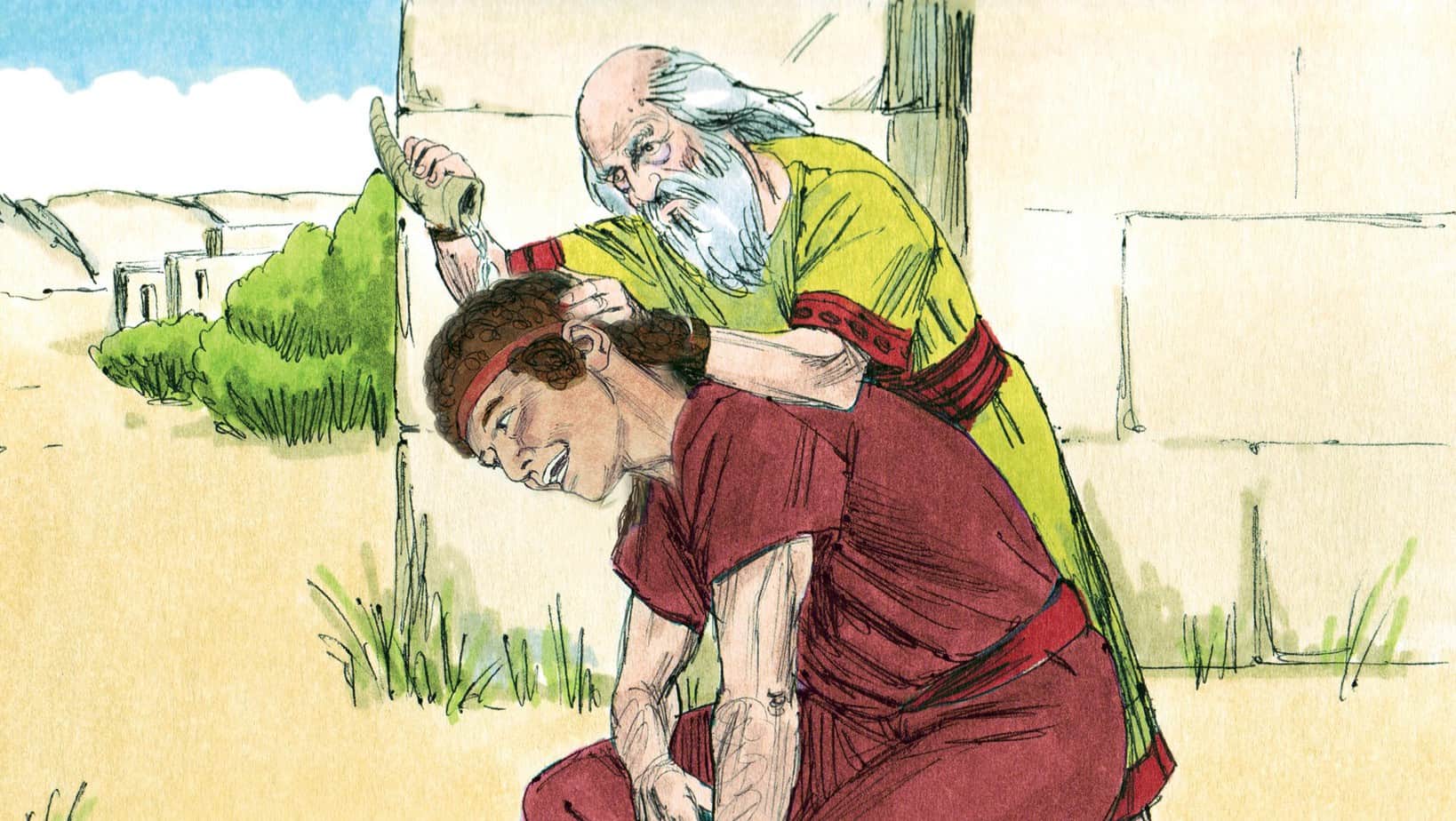
The Lord sends Samuel to Bethlehem to anoint one of Jesse’s sons as king. Samuel takes a heifer with him and invites Jesse and his sons to a sacrifice.

Samuel looks of each of Jesse’s son’s in turn, thinking they must be the Lord’s anointed servant, but the Lord rejects each one. Finally, Jesse sends for his youngest son David, and the Lord tells Samuel to anoint him as the next king.

The Spirit of the Lord has left Saul, and he is tormented by a spirit of depression and anxiety. Saul’s servants send for David to come and play music for Saul to soothe his spirit. David becomes Saul’s armour-bearer and is greatly loved by him.

Application

The Lord does not judge us by our outward appearance, but by what is in our hearts.

People made all sorts of judgements about people they have never met based on their appearance – ethnicity, clothing, apparent wealth, and so on. In fact, the fashionable ideology of Critical Race Theory says that everything about a person is determined by race.

God looks at your heart, the “content of your character” as Martin Luther King described it. Everything else is secondary .

If you love the Lord, it doesn’t matter whether you are short or tall, fat or thin, young or old, European or Asian. These things are secondary to our love for the Lord and our desire to walk in the ways of Jesus.

Prayer

Lord, thank you that you love me for the person you created me to be. Thank you for your unfailing love. Amen.

Reflection on 1 Samuel 15:1-35

Scripture

“Listen! Obedience is better than sacrifice

And submission is better than offering the fat of rams.

Rebellion is as sinful as witchcraft,

And stubbornness is as bad as worshipping idols.”

Observation

Samuel tells Saul that the Lord has decided to settle accounts with the Amalekites. Saul is to go and destroy them completely – every person regardless of age and all of their livestock.

Saul and his men slaughter the Amalekites, but they spare King Agag and only kill the weakest of the animals.

Samuel finds saul and confronts him about sparing the animals. Saul says they only kept them to sacrifice to the Lord. They destroyed everything else.

Samuel says that obedience not sacrifice is what pleases the Lord. Rebellion is as bad as witchcraft or idolatry.

Samuel tells Saul that because Saul has rejected the Lord, the Lord has rejected him as King over Israel. Samuel then kills King Agag.

Application

Obedience to God is far more important than religious sacrifices or heroic deeds.

We must settle it in our hearts that, regardless of the cost, we will always obey the Lord. That is what it means when we say that Jesus is Lord; Jesus is King, Master, the one who directs our lives.

Any other attitude towards Jesus is of the same category as witchcraft or idolatry.

The Lord does not want our tithes and offerings, our attendance at church meetings, or anything else. He wants me and my heart surrendered to Him.

Prayer

Lord, I see that obedience is far better than sacrifice. Please help me to yield to you in everything I do. Amen.

Reflection on 1 Samuel 14:24-52

Scripture
Now the men of Israel were pressed to exhaustion that day, because Saul had place them under an oath, saying, “Let a curse fall on anyone who eats before evening – – before I have full revenge on my enemies.”

Observation
In the aftermath of the battle with the Philistines, Saul orders his men to not eat until they have full victory. Jonathan did not hear that order, and when he comes across some honeycomb he dips a stick into it and gets some honey which immediately refreshes him.

Evening comes, and the men slaughter the captured animals for food. They are so desperate to eat that they fail to drain the blood from them first. Saul sets up an altar to the Lord and orders his men to slaughter the animals in a way that honours the Lord.

Saul goes on to secure his grasp on the throne. he successfully defends Israel from attacks from the neighbouring nations, but the Philistines continue to be a problem for him

Application
Saul seems to be a man who recognised the authority of the Lord. He wanted to do what was right and sought the Lord’s directions on some key decisions. On the other hand, he could be impulsive and foolish, and this got him into trouble.

One key to living successfully with the Lord is to submit everything to Him. It is easy to remember to commit the big decisions to the Lord. The daily decisions that we make in our family, our relationships, and at work, often set our directions over the longer term.

We need to learn to live in constant communion with God, listening to the still small voice of the Holy Spirit as we navigate through our days.

Prayer
Speak, Lord, your servant is listening. Amen.

Reflection on 1 Samuel 14:1-23

Scripture

“Perhaps the Lord will help us, for nothing can hinder the Lord. He can win a battle whether he has many warriors or only a few.”

Observation

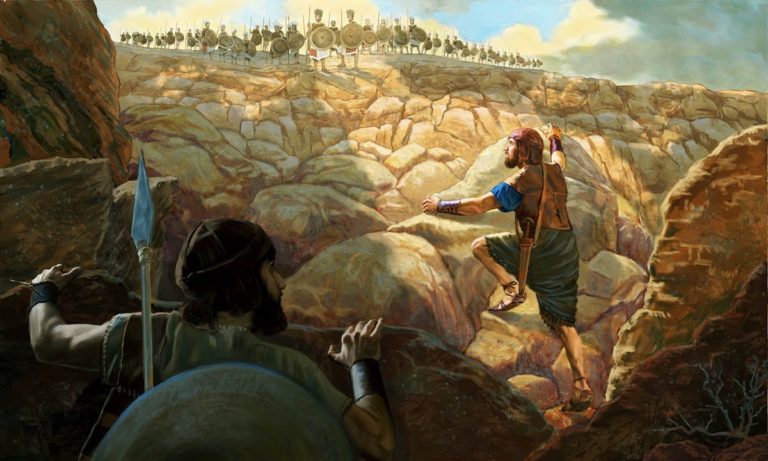
Jonathan takes his armour bearer to a Philistine outpost, away from the main camps. To get to the outpost, he has to go between two rocky cliffs. He reasons that the Lord may help them even though there is just the two of them, because the Lord is able to win the battle regardless of the number of warriors.

The Philistines see them, and invite them to come and fight. Jonathan sees that the Lord is in this, so they climb up the cliff. They kill 20 men, and then the Lord sends the Philistine camp into a panic. The Philistines flee in all directions, and Saul sends his men to chase them down.

Application

Whether we are facing a military battle, a work fight, a legal threat, or family issues. the Lord is in control of it all.

Like Jonathan, we need to recognise that the Lord can give us a victory regardless of whether we seem to be out manned, out gunned or out manoeuvred.

It is all about our readiness to trust the Lord. Surrender it to Him in prayer and ask Him what you should do. In every situation, the Lord is able to win a victory in the most impossible of circumstances.

Prayer

Lord, there are many occasions in Scripture where you intervened causing an enemy to flee. Please help me to always remember that you are in control and able to bring impossible victories. Amen.

Reflection on 1 Samuel 13:1-25

Scripture

“How foolish!” Samuel exclaimed. “You have not kept the command the Lord your God gave you. Had you kept it, the Lord your God would have established your kingdom over Israel forever. Your kingdom must end for the Lord has sought after a man after his own heart.”

Observation

Saul’s son Jonathan leads a troop of 1000 men to victory over the Philistines. As a result, the Philistines hate the Israelites and plan a great counter-attack.

As the Philistines assemble, Samuel sends a message to Saul telling him to wait 7 days until Samuel can get there. Samuel doesn’t come when he said he would, so Saul sacrifices the offerings himself. Then Samuel arrives, and he rebukes Saul for his action. The kingdom will be handed over to a man after God’s own heart.

Application

It seems that Samuel was delayed in getting to the army camp, but not by much. Motivated by fair and perhaps arrogance, Saul offers the sacrifices himself.

The issue here is not the sacrifices, but Saul’s heart. He was tested and found wanting, so the kingship would be removed from him and passed on to someone after the Lord’s heart.

In many ways, Saul was a good king, but his heart was not surrendered to the Lord. David made many mistakes as king, but his heart was always close to the Lord.

This is so important to us in our walk with Jesus. The Lord doesn’t care whether you are successful in the ways of the world or not. He is not looking for history-makers and world-changers. He wants sons and daughters who give everything they are back to him.

Prayer

Thank you Lord for the knowledge that all you want from me is to yield my life to you. Please help me to trust you with everything I am and all that I have. Amen.

Reflection on 1 Samuel 12:1-25

Scripture

“Don’t be afraid,” Samuel reassured them. “You have certainly done wrong, but make sure that you worship the Lord with all your heart, and don’t turn your back on him.”

Observation

Samuel addresses the people of Israel. He tells them that the king is now their leader. They testify that Samuel has never taken a bribe or cheated anyone.

Samuel reminds the people of their history. Despite the Lord being their God, they turned to idols repeatedly.

He calls on them and the king to follow the Lord so that all will go well with them. Even though they have rebelled by seeking a king, the Lord will not abandon them because they are His chosen people.

Application

Samuel remains convinced that in requesting a king, the people of Israel had rejected the Lord as their King. But he held out a promise. If they worship the Lord and reject idols then the Lord will bless them and look after them.

With the Lord, the door to mercy is always open. There is no sin too big or too egregious that the Lord will not forgive.

All that is necessary is the desire to walk in humble obedience with the Lord. We don’t have to be perfect to be forgiven; just acknowledge our imperfections. The Lord loves each one of us with an unquenchable love that is greater than any simple rebellion.

Prayer

Thank you Lord for this assurance that your love for me will never run out. Amen.

Reflection on 1 Samuel 11:1-15

Scripture

Then the Spirit of God came powerfully upon Saul, and he became very angry.

Observation

King Nahash of Ammon threatens the town of Jabesh-gilead. The people plead for peace with Nahash. He makes peace conditional on each man in the town having one eye gouged out. The elders of Jabesh ask for seven days to send for help from Israel. If nobody comes to help, they will submit.

When Saul hears about this, the Spirit of the Lord comes upon him, and he becomes very angry. He quickly mobilises an army of 330,000 men.

Saul launches a surprise attack against the Ammonites, slaughtering and scattering the whole army.

Application

Many Christians are afraid of anger, but here there is given a direct connection between the Holy Spirit and Saul’s anger.

Anger is bad when it is just about my perceptions about wrongs committed against me, especially if we allow it to consume us.

Anger, when it is a response to evil, can be a good thing. Anger can motivates us to take action to overcome injustice or cruelty, in ways that we normally would not consider.

The Spirit of God came upon Saul and made him very angry. He left his fields and in a few days mobilised an army to protect a vulnerable group. People were afraid of his anger and so responded rapidly to do the right thing.

Prayer

Lord, please help me to distinguish between good anger and selfish anger. May your Spirit provoke my emotions to motivate me to carry out your purposes. Amen.

Reflection on 1 Samuel 10:1-27

Scripture

“The Spirit of the Lord will come upon you in power, and you will prophesy with them; and you will be changed into a different person.”

Observation

Samuel takes a flask of oil and pours it on Saul’s head. He tells Saul that there will be three signs of Gods favour:

1. He will meet two men who tell him the donkeys have been found.

2. At the Great Tree at Tabor, he will meet two men, one of them will give him two loaves of bread.

3. He will meet some prophets, and the Spirit of the Lord will come on him and he will prophesy.

So Saul goes away, and the three signs are fulfilled that day.

Later, Saul summons the elders of Israel and presents Saul to them as their King.

Application

The three signs that Samuel describes a very specific and a little out of the ordinary. They could not have been pre-planned by Samuel, and they could not have been coincidences or chance events.

Unusual but specific signs were given so that saul would know that God had chosen him, and so that the whole nation would know that God was leading them into a new era.

When God is it work, He does not always give us confirmation signs, but the signs He does give are often unusual and beyond the realms of normal expectations.

We should not ask God for a sign in the normal daily decisions that we make. But we should have eyes of faith that see where God is at work.

Prayer

Father, I thank you for the signs that you sometimes give to confirm my direction. Please increase my ability to see your deeds. Amen