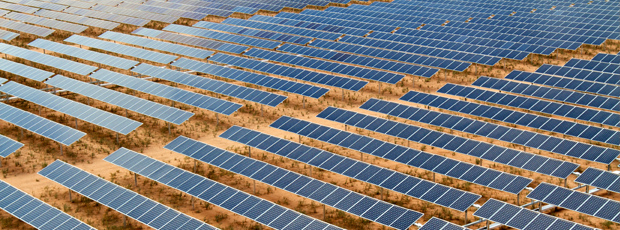
Jo Nova: Secret comms devices, radios, hidden in solar inverters from China. Would you like a Blackout with that?

Image by Maria Godfrida from Pixabay

By Jo Nova

Nice grid you have there, shame if someone suddenly… switched it off

Two insiders at the US Dept of Energy say they have found covert devices inside solar panel inverters and batteries that would allow them to communicate with China. Even though firewalls have been put in place, these backdoor devices could operate around them.

Last August a Dutch white hat hacker got into 4 million panels in 150 countries in an effort to warn the West that major infrastructure was vulnerable. A month later an Australian cyber expert warned that a foreign hacker could turn our home batteries into “pager-bombs” too. If a hostile power turned off the overcharge protection on a sunny day, millions of solar panels would be pumping excess electricity into batteries that have no safety cut off. A few houses start to go off like popcorn, and an hour later we’re all living at the Western Front. How exactly would our firemen cope if 1 in 100 homes caught fire at the same time, and then we had a blackout? Anyone?

Individual solar panel inverters are generally too small to trigger national security assessments, but right now at lunchtime solar power is the largest single source of electricity in Australia — making 13 gigawatts out of 27. That’s half our national supply. In summer it’s worse.

We’ve turned our duck curve into a sitting duck…

Australian electricity Generation May 14th 2025

It’s a win every which way for China if we install more solar panels. Not only are we paying them for the panels, and sanctifying their slavery, but we set fire to our electricity prices, driving our factories to China where they burn our coal. Now to ice this Gridkill Gateau we hand them a backdoor for sabotage or extortion should they ever get the urge to use it.

No wonder China is funding climate activists in the US and UK. They’d be crazy if they weren’t doing it here too.

This is Fall of Rome type stuff, and we’ve got Chris ‘Blackout’ Bowen to save us…

The only good thing about this is that while we were destroying our industrial base with solar panels anyway, the hidden transmitters are so overtly hostile, so in-your-face nasty, that sleeping Westerners might even wake up. Holy smoke. Does anyone think those secret radios were put there to help us?

Reuters: Rogue communication devices found in Chinese solar power inverters

LONDON, May 14 (Reuters) – U.S. energy officials are reassessing the risk posed by Chinese-made devices that play a critical role in renewable energy infrastructure after unexplained communication equipment was found inside some of them, two people familiar with the matter said.

However, rogue communication devices not listed in product documents have been found in some Chinese solar power inverters by U.S experts who strip down equipment hooked up to grids to check for security issues, the two people said. Over the past nine months, undocumented communication devices, including cellular radios, have also been found in some batteries from multiple Chinese suppliers, one of them said.

The rogue components provide additional, undocumented communication channels that could allow firewalls to be circumvented remotely, with potentially catastrophic consequences, the two people said.

“We know that China believes there is value in placing at least some elements of our core infrastructure at risk of destruction or disruption,” said Mike Rogers, a former director of the U.S. National Security Agency. “I think that the Chinese are, in part, hoping that the widespread use of inverters limits the options that the West has to deal with the security issue.”

In November, solar power inverters in the U.S. and elsewhere were disabled from China, highlighting the risk of foreign influence over local electricity supplies and causing concern among government officials, three people familiar with the matter said.
Reuters was unable to determine how many inverters were switched off, or the extent of disruption to grids. The DOE declined to comment on the incident.

The Communist Party could have said that they would never sanction such a hostile act, and it must be a company acting alone, but they didn’t:

A spokesperson for the Chinese embassy in Washington said: “We oppose the generalisation of the concept of national security, distorting and smearing China’s infrastructure achievements.”

Infrastructure achievements indeed. A Freudian slip?

There is plenty of risk to share around:

The European Solar Manufacturing Council estimates over 200 GW of European solar power capacity is linked to inverters made in China – equivalent to more than 200 nuclear power plants. At the end of last year, there was 338 GW of installed solar power in Europe, according to industry association SolarPower Europe.

Though Europe is saved, somewhat, by having lots of interconnectors and not much sun. That is, apart from Portugal, Spain and Greece, and we still don’t know what caused that blackout that started in the solar farms?

In Australian Senator James Paterson was warning this was possible in August 2023, saying 58% of solar panel inverters in Australia were made by companies headquartered in China. And what have we done?  We installed another half a million solar PV units on homes in Australia.

Gangbusters on the gang-plank.

Solar Roads Epic Fail

Remember the hype a few years ago about “solar roads”? These were roads with embedded solar panels that would generate enough power to save the planet. It seems that, as any engineer can tell you, the real world is a much tougher place than a lab. Things get dirty and wear out so that you $6 million dollars investment in 1 km of road in a cloudy part of France might not be terribly effective.

From Jo Nova

Solar road is $6m epic disaster — 4% capacity, broken and so noisy speed-limits were cut

Solar Road, Normandy, France, photo.

Solar Road, Normandy, France   |  Credit: KumKum

Would you like to drive slower, add to noise pollution and waste money? Then solar roads are for you:

The world’s first solar road has turned out to be a colossal failure…

Ruqayyah Moynihan and Lidia Montes, Business Insider

  • Two years after the world’s first solar road — the Normandy road in France — was set up, it’s turned out to be a colossal failure, according to a report by Le Monde.
  • The road has deteriorated to a terrible state, it isn’t producing anywhere near the amount of energy it had previously pledged to, and the traffic it has brought with it is causing noise problems.

The original aim was to produce 790 kWh each day, a quantity that could illuminate a population of between 3,000 and 5,000 inhabitants. But the rate produced stands at only about 50% of the original predicted estimates.

Even rotting leaves and thunderstorms appear to pose a risk in terms of damage to the surface of the road. What’s more, the road is very noisy, which is why the traffic limit had to be lowered to 70 kmh.

Despite costing up to roughly $6.1 million, the solar road became operational in 2016.

The 1km road is in Tourouvre-au-Perch, Normandy, France made by Colas.

Leaves fall on the road, then cars grind the leaves on the beautiful polymer surface. The road isn’t angled towards the sun, gets brutally hot, and both reduce efficiency. If the top polymer layer was thicker and tougher, less solar energy would get through. Planting trees beside the road would cool it, but the shade…

Who likes trees anyhow? Not the Greens.

 Getting 50% worse than expected every year:

Anna Versai, Technowize, Aug 19th, 2019

The stretch of the road in Tourouvre-au-Perch, Normandy, France was meant to produce about 150,000 kWh a year, which is enough to provide light to up to 5,000 people, every day. Instead, it made less than 80,000 in 2018, and fewer than 40,000 by July 2019.

Meant to power lights for a city of 5000 people:

Translating the Le Monde article, for €5 million in public funds they now generate € 1,450 worth of electricity per year and falling.

Financed by public funds of € 5 million and supported by Colas (Bouygues Group), the subsidiary Wattway aimed to provide the equivalent of the annual consumption of public lighting in a city. of 5,000 inhabitants.

The general director of services of the departmental council of the Orne made his accounts: “The revenue from the sale of electricity produced by the road should bring us 10 500 euros per year, details Gilles Morvan. In 2017, we received 4,550 euros. In 2018, 3,100 euros, and for the first quarter of 2019, we are at 1,450 euros. “

Not much sun there to start with? From Science Alert:

There proved to be several problems with this goal. The first was that Normandy is not historically known as a sunny area. At the time, the region’s capital city of Caen only got 44 days of strong sunshine a year, and not much has changed since. Storms have wrecked havoc with the systems, blowing circuits. But even if the weather was in order, it appears the panels weren’t built to capture them efficiently.

There’s 40 smaller roads like this?

For its part, Colas has admitted the project is a bust. “Our system is not mature for inter-urban traffic,” Etienne Gaudin, Colas’ chief executive of Wattway, told Le Monde. The company also operates 40 similar solar roads, smaller than the one in Normandy.

A solar bike path in the Netherlands works better:

In the Netherlands, a solar bike path has been declared a success. Dubbed the SolaRoad, the bike path is exactly what its name suggests. The electricity generated by SolaRoad is used for various purposes such as traffic management systems, public lighting, households, and electric mobility.

At the beginning of the trial, an energy yield of between 50 and 70 kWh/m2/year was expected. SolaRoad exceeded expectations by yielding 73  kWh/m2/year (first version, built in 2014) and 93 kWh/m2/year (second, improved version, built in 2016).

There were hiccups despite its impressive results. Due to poor weather conditions, a top layer of the solar bike path came off, and a major path had to be shut down.

The French solar road has a capacity factor of 4%

And this was a year ago. Probably that capacity factor is now 2%.

Dylan Ryan, The Conversion, Sept 2018

One of the first solar roads to be installed is in Tourouvre-au-Perche, France. This has a maximum power output of 420 kW, covers 2,800 m² and cost €5m to install. This implies a cost of €11,905 (£10,624) per installed kW.

While the road is supposed to generate 800 kilowatt hours per day (kWh/day), some recently released data indicates a yield closer to 409 kWh/day, or 150,000 kWh/yr. For an idea of how much this is, the average UK home uses around 10 kWh/day. The road’s capacity factor – which measures the efficiency of the technology by dividing its average power output by its potential maximum power output – is just 4%.

In contrast, the Cestas solar plant near Bordeaux, which features rows of solar panels carefully angled towards the sun, has a maximum power output of 300,000 kW and a capacity factor of 14%. And at a cost of €360m (£321m), or €1,200 (£1,070) per installed kW, one-tenth the cost of our solar roadway, it generates three times more power.

Dylan Ryan is a lecturer in Mechanical & Energy Engineering at Edinburgh Napier University.

In Idaho a solar road had an 83% failure rate:

Andrew Follet, Daily Caller, October 2016

Despite massive internet hype, the prototype of the solar “road” can’t be driven on, hasn’t generate any electricity and 75 percent of the panels were broken before they were even installed. Of the panels installed to make a “solar footpath,” 18 of the 30 were dead on arrival due to a manufacturing failure. A short rain shower caused another four panels to fail, and only five panels appear to be presently functional. The prototype appears to be plagued by drainage issues, poor manufacturing controls and fundamental design flaws.

Can’t power a whole microwave oven, April 2017

The Solar FREAKIN’ Roadways project generated an average of 0.62 kilowatt hours (kWh) of electricity per day since it began publicly posting power data in late March. To put that in perspective, the average microwave or blow drier consumes about 1 kWh per day.

Desperate Shorten Threatens Australian Economy

copper-crossing-solar-power-2-fw

I woke up to the news on the ABC this morning that Bill Shorten wants to take a proposal to the ALP National Conference that would make it policy to at a target of 50% renewable electricity by 2030.

It seems that Shorten is as thick as two short planks- not only is this likely not achievable, but it will drive the cost of power through the roof either through direct charges to consumers or through ever increasing Government subsidies.

The drama about changes to the Renewable Energy Target earlier this year was not driven by anti-renewable ideology as the media and the ALP portrayed it. It was basically about the fact that there was no way we could achieve the 20% by 2020 mandated by Kevin Rudd and consequently there would be massive penalties imposed on the electricity generators, driving up the price of power.

Here is the thing. Renewable energy, most likely in the form of solar will soon become economically viable. It is almost competitive with the cost of installing new coal powered generators, which is the only reason why AGL announced with great fanfare it would not be investing in any new coal-fired generators.

By the time we get to 2030 it is quite possible that new solar power stations will produce power so cheaply that existing coal powered stations will be closed down and replaced by power, simply by the laws of economics. The technology around both the generation and storage of power is going through such a revolution at the moment that it will make financial sense to invest without subsidies and targets imposed by Government.

Andrew Bolt’s take, complete with pretty pictures:


Opposition Leader Bill Shorten is set to unveil a bold climate policy goal requiring half of Australia’s large-scale energy production to be generated using renewable sources within 15 years.


This means more than doubling green power but without using more of the hydro electricity that so far produces most of it. (Labor won’t build more dams.):

image

That vast expansion of wind and solar will not happen without paying a fortune in subsidies and forcing consumers to use more green power, givenhow expensive it is:

image

This will potentially cost taxpayers and consumers billions more each year, when we already subsidise green power by around $3 billion a year.

Effect on global warming?Nil.

Effect on the economy? Business lost, jobs lost.

So You Want To Be Coal Free by 2100?

Earlier this week, the G7 countries proudly announced a target to be free of fossil fuels by the end of the century. What a joke, setting a target for something when the date is long after they are all no longer on the planet.

But if such a thing is possible and even desirable, why are the same countries actually increasing their usage of coal?

The brave new religion of global warming where lip service is far more important that actual deeds. The exact opposite of true faith.

From Jo Nova:

Forget momentum for renewables. Five of the G7 nations increased their coal use

Spot the contradictions. Oxfam want us to believe we can be “coal free” in France, the UK and Italy by 2023. Then they tell us that most of these richest of rich nations are already trying and failing to do that. They are using more coal.

Then there is a nifty graph below, which seems to suggest that in these same nations solar is cheaper than coal. If solar is so cheap then, we don’t need any schemes, markets or subsidies. Right?

Welcome to reality — even the richest greenest nations need more coal:

Five of the world’s seven richest countries have increased their coal use in the last five years despite demanding that poor countries slash their carbon emissions to avoid catastrophic climate change, new research shows.

Britain, Germany, Italy, Japan and France together burned 16% more coal in 2013 than 2009 and are planning to further increase construction of coal-fired power stations. Only the US and Canada of the G7 countries meeting on Monday in Berlin have reduced coal consumption since the Copenhagen climate summit in 2009.

The US has reduced its coal consumption by 8% largely because of fracking for shale gas. Overall, the G7 countries reduced coal consumption by less than 1% between 2009-2013, the Oxfam research shows.

A tad ambitious?

The UK could feasibly stop burning coal for its energy supply by 2023, according to Oxfam’s report.

….  and in the US and Canada by 2030

There is a reason Africa is poor and Africans want to come to the West.

The briefing paper comes as nearly 200 countries meet in Bonn ahead of crunch climate talks in Paris later this year, and shows that G7 coal plants emit twice as much CO2 as the entire African continent annually, and 10 times as much as the 48 least developed countries put together.

Read the full article here. If you have trouble understanding the map, consider this. Some parts of Australia that are too remote to be connected to the mainly coal-fired national electricity grid have discovered that solar power is cheaper than using diesel generators to power the town. Therefore the whole of Australia is coloured as solar is cheaper than “conventional.”

Solar Power Saving Lives in India

Simple technology revolutionising the lives of the very poor in India. Notice how it’s private enterprise, not Government subsidy achieving this.

From the ABC:

Australian solar company Pollinate Energy brings light to slums of India

With indoor air pollution from kerosene lamps and stoves the second largest cause of death in India, one company, founded by Australians, has come up with a solution to the problem.

Every night in the sprawling shanty towns of the country of 1.2 billion people, the air fills with dense, black smoke.

“We used to get oil from the market and pour it into the lamp and light it; the house used to get full of soot and dirt,” said Abdul, a slum-dweller in Bangalore who lives in a hut made of wooden board and tarpaulin.

That was until Abdul bought a portable solar light from a company called Pollinate Energy, founded by five young Australians.

“After we got this solar lamp a lot of things improved,” Abdul said.

“Now we don’t worry that there will be a fire.”

Read the full story here

Technology to Kill Coal?

An interesting article from the ABC points out that improving and cheaper technology will make coal powered generation obsolete “within years.” The interesting observation is that “solar plus storage” will be competitive with grid-supplied electricity in many parts of the U.S. within 4 years.

I wonder how that will impact the local coal mines.

Technology, not regulation, will kill coal fired power

Updated1 hour 20 minutes ago

The Obama administration’s plan to reduce power plant emissions may be a bold effort to put climate change back on the political agenda, but it doesn’t exactly have the big generators in the US quivering with fear.

Not yet anyway.

In a detailed analysis, Bank of America-Merrill Lynch’s energy team argue the EPA draft rule, which mandates a 30 per cent reduction in emissions by 2030, is “a relatively soft requirement.”

On BoA-Merrill Lynch figures, the rule changes to the Clean Air Act effectively amount to a 1 per cent per year reduction in carbon from 2013 levels.

The baseline year for the 30 per cent reduction is 2005, which is pretty well the peak of carbon emissions in the US – only in 2007 were emissions higher.

Since then, the closure of numerous coal fired power stations, the gradual switch to gas fired generation and lower demand have seen emissions in the US fall by about 16 per cent, making any reduction trajectory less onerous.

The BoA-Merrill Lynch team says the EPA’s move had already been anticipated by the market and is not a “material surprise” to valuations. If anything the rule changes are “a light touch”.

However, another report put out by a different investment bank two weeks before the EPA came out with its new carbon rules may give the coal burners a far greater concern for their future.

Full article here