APRIL 14, 2022BY ARCHBISHOP BORYS GUDZIAK
As Ukraine is being crucified by the enemy, millions of its people go through the same experience of darkness and a sense of the absence of God as Jesus did on the cross. Let us not doubt that God is with the suffering and that his truth, peace, and love will prevail.
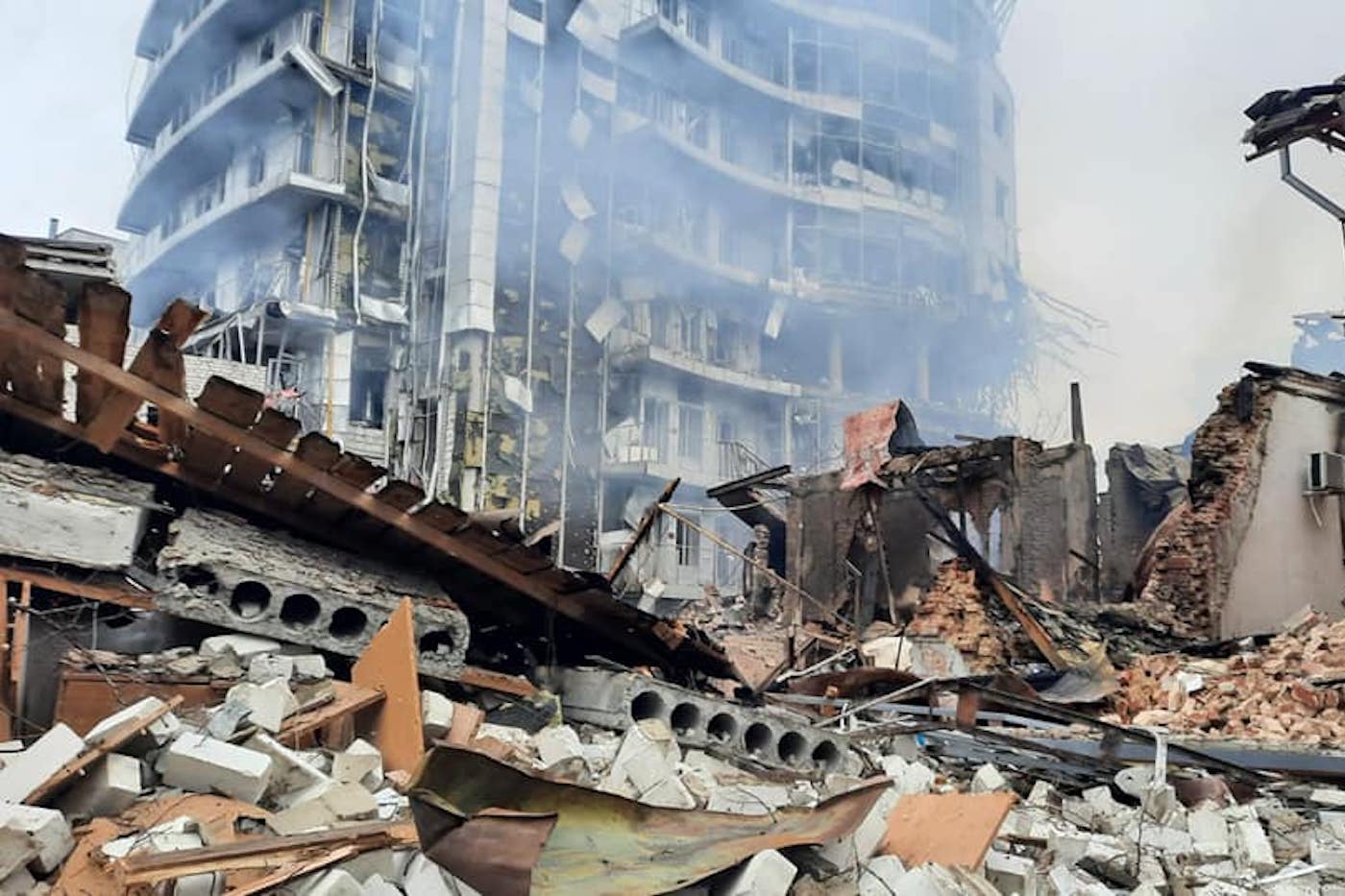
Christians of different traditions begin Lent on different dates. For Ukrainians of all denominations, their spiritual pilgrimage this spring started on February 24 at 4 AM. War and Lent have been deeply intertwined this year.
Lent is a time to discern evil, especially in one’s own life. Understanding violent and destructive passions is difficult amid the modern world’s comfortable, soft circumstances. For centuries, the Church’s tradition has helped us detach from worldly comforts during the Lenten journey through fasting, prayer, and works of charity. The war in Ukraine has given Lent a deeper resonance. Violence and suffering, sin and evil, compassion and sacrifice, virtue and heroism reveal themselves. War was something known to the monks of Constantinople and Jerusalem who wrote the prayers and hymns for our Lenten journey. And it was known to generations of our ancestors. But now we experience war in Lent first-hand.
His Beatitude Sviatoslav Shevchuk, Head of the Ukrainian Greek Catholic Church, also reflected on Ukraine’s violence-hewn Lent in his address on April 5, 2022, the 41st day of the war.
The Christian faith teaches us not to turn our eyes away from God who became human, from God whom humans dishonored, crucified, and killed in the most shameful way. The Christian faith teaches us to honor the wounds of Christ, to kiss them, because we know that by His wounds we are healed [cf. Isaiah 53:5], as the Prophet Isaiah writes.
These days Ukraine is experiencing her Golgotha, her crucifixion. Today I ask all of us—all Christians of the whole world, all people of goodwill—not to turn your eyes away from the humiliation and suffering, the death and wounds of Ukraine. . . . Just a few tens of kilometers from the center of Kyiv we see today hundreds of dead who were shot in the back of the head. We see the wounds of the Ukrainian people.
This Lent has made reality clearer to me than ever. The work of evil, the wicked will of the Enemy of humankind, and the frailty of our human nature are on display. We witness Adam’s grab. Adam had all the trees and their fruit in the garden of Eden. God the Giver gave Adam everything he needed. And yet, he decided not to live with God and be like God the Giver. Despite being forewarned, he decided to grab that which would lead to his death.
Grace amid Horror
Today we witness the leader of a contemporary empire that extends across eleven time zones grab for more. Unprovoked, he decides to invade a sovereign, independent country. In the account of Christ’s Passion, we see that Judas, blinded by greed, stretches out his arm to snatch silver in exchange for the Savior. These are different episodes of the same story of human sin. All of them lead to death.
Yet Easter gives us hope for salvation and new life. God repeats and renews His gift. Amid the brutality and horrors, there are many signs of grace. In this world, which is characterized by compulsive self-reference and the dictatorship of relativism, we see people giving their lives for others and for the truths of dignity, freedom, and justice. Ukrainians are demonstrating that greatest love defined by our Lord in John 15:13: “No one has greater love than this, to lay down one’s life for one’s friends.” As we recall and celebrate the salvific sacrifice completed on the Cross, we see the sacrifice of our contemporaries—brothers and sisters in Ukraine, military and civilians—who are willing to give their lives to protect the innocent. Through their sacrifice, we get a glimpse into the sacrifice of the Son of God once more.
Holy Week’s rich liturgical traditions help us understand reality. As Father Alexander Schmemann noted, in our liturgical celebrations, we do not merely remember past events. The power of liturgy is that it “transforms remembrance into reality.” Lazarus Saturday, celebrated by Byzantine-rite Christians on the day before Palm Sunday, places before us the reality of death. “It stinketh,” Jesus is told as he approaches Lazarus in the tomb. Schmemann writes that at the grave of Lazarus, God encounters Death, “the reality of anti-life, of destruction and despair.” Jesus weeps “because He contemplates the triumph of death and destruction in the world created by God.”
At the beginning of April, the world was shocked by the dreadful images of bodies and violence discovered in Bucha, Borodianka, Irpin, and other towns near Kyiv; these were people Russian soldiers slaughtered during the weeks of occupation. We see death’s ugly face. And we weep as Jesus did. In the recent words of Bishop Erik Varden, “His tears show him aggrieved, indignant at the scandal of death’s reign in beings made for immortality, who long for paradise lost and lost friendship. Having wept, he goes up to Calvary to work our redemption.” The deaths Ukraine is experiencing bring the reality of Christian liturgy into full view.
After Jesus’s glorious entry into Jerusalem, we begin Holy Week by remembering the Lord’s last days on the earth before his salvific Passion and death. But the death on Great Friday will not be the closing of our week. Holy Week will be crowned by the feast of the Resurrection. The Resurrection provides all-important perspective on the suffering that Jesus, the Innocent One, endured.
Read the rest of the article here


 New Life Narrabri