Scripture
In due time she gave birth to a son. She named him Samuel, for she said, “I asked the Lord for him.”
Observation
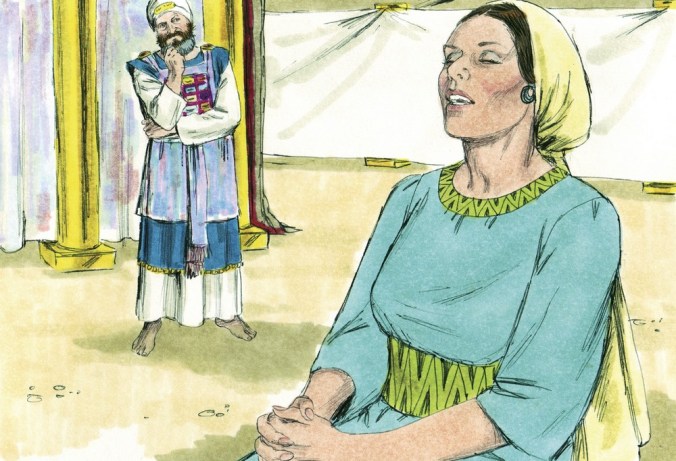
Hannah, one of two wives to Elkanah, is desperate for a child. One time after the sacrificial meal that the family shares at Shiloh, she goes into the Tabernacle to pray.
She is in such anguish of spirit that Eli the priest thinks she is drunk. When she explains her anguish and sorrow, Eli blesses her.
The family returns home, and Hannah eventually has a baby. She names him Samuel, and he grows up to be the great prophet to Israel.
Application
This passage tells us four things about prayer.
1. God reacts to real faith. Hannah knows that God can hear our prayers and she is certain about His faithfulness. Her faith is so deep that when Eli says to her, “May God grant your request”, she accepts that her prayer has already been answered.
2. God reacts to our struggles and the distress of our prayers. Prayer is not an intellectual exercise where we think nice thoughts. It is a deeply spiritual process that can engage our emotions. Hannah’s prayer was so emotional because it was fuelled by the distress in her heart. It was s emotional that Eli the priest thought she was drunk.
3. God is not limited by the corruption or godlessness of a religious system. Eli’s sons were notorious for eating the best parts of the food brought for sacrifice, which was against the religious law, but God was still at work. The voice of God was not heard in the land, but God was still at work.
4. God’s timing is not always the same as ours. Sometimes He delays answers to prayer to provoke us to a deeper faith in Him. Sometimes He gives us blessings and responsibilities before we think we are ready for them. His timing is always perfect, even if it seems inconvenient.
Prayer
Thank you Lord for the knowledge that you answer our prayers, the fervent prayers of a heart that is surrendered to you. Amen.
 New Life Narrabri