I don’t spend a lot of time out in the sun in the middle of the day, and when I do, I prefer to wear a hat. If this is confirmed, it is bad news. Also the point about Vitamin D is really important – we all need to spend about 10 minutes a day in the sun to get enough Vitamin D.
From Focal Pints via Vigilant Fox
Study Finds Sunscreen Use Linked to Higher Risk of Multiple Skin Cancers
A 470,000+ person study found sunscreen users faced dramatically higher risk of melanoma, basal cell carcinoma, and squamous cell carcinoma — even after accounting for major skin cancer risk factors.
Jun 14, 2026

This article originally appeared on Focal Points and was republished with permission.
Guest post by Nicolas Hulscher, MPH
A UK Biobank study involving over 470,000 people found that individuals who reported using sunscreen more frequently had substantially higher risk of multiple skin cancers — even after researchers accounted for major confounding factors like age, sex, skin type, tanning ability, sunburn history, sunlamp use, and time spent outdoors.
Join 142K+ Substack readers and 1.9 million 𝕏 users following Vigilant Fox. Get critical news and exclusive stories the media won’t cover — all in one place. Subscribe today.Subscribe
The findings are worrisome:
• MELANOMA: +292% higher risk (RR = 3.92)
• BASAL CELL CARCINOMA: +140% higher risk (RR = 2.40)
• SQUAMOUS CELL CARCINOMA: +126% higher risk (RR = 2.26)
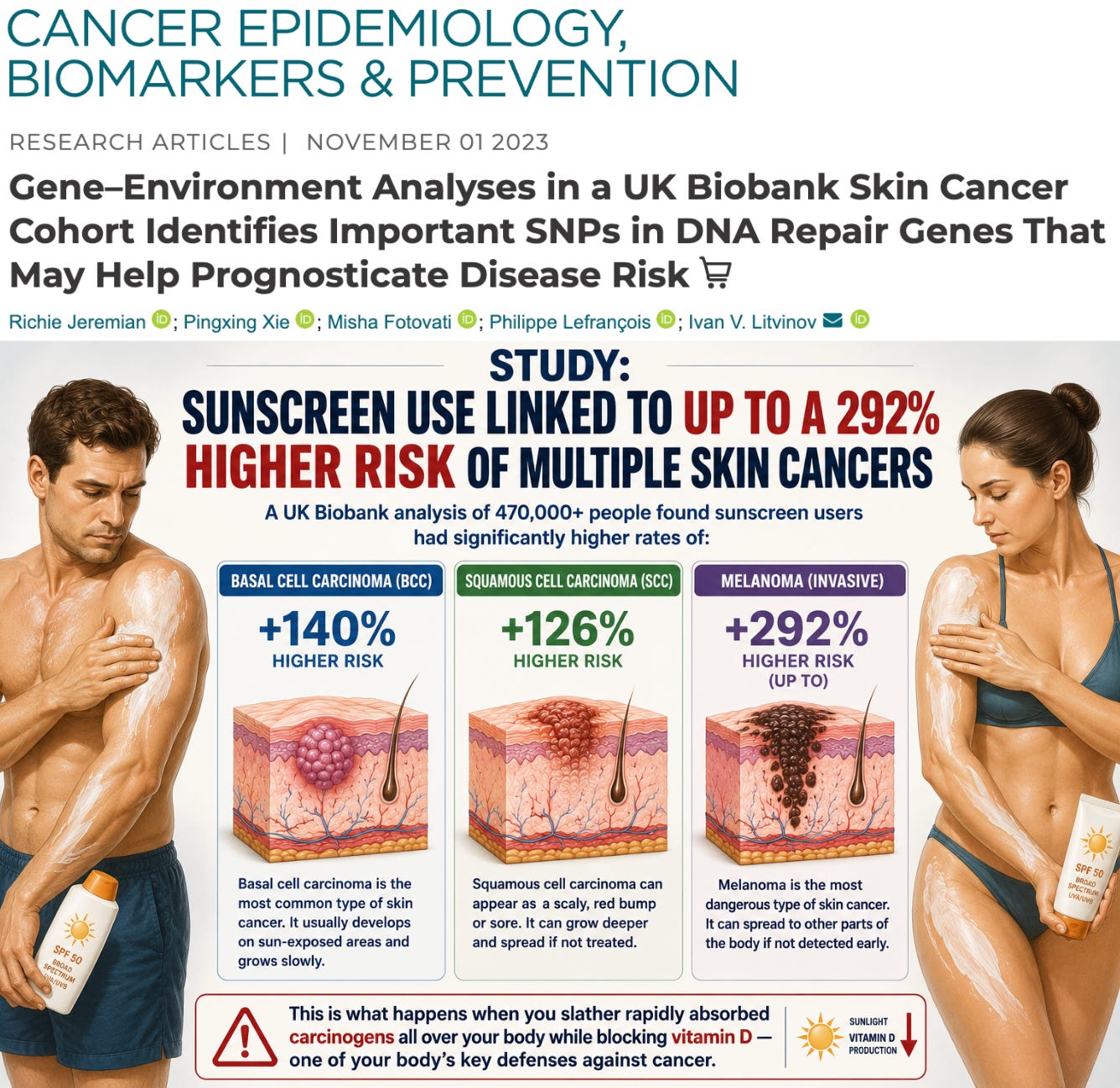
The researchers categorized sun protection habits from “never/rarely” to “always” and found the strongest associations among the most frequent sunscreen users.
In other words: the more sunscreen use reported, the higher the observed skin cancer risk.
This was an observational study, meaning it cannot prove sunscreen directly caused cancer. However, the study was also not a simplistic comparison of random sunscreen users versus non-users. Researchers statistically accounted for many of the biggest known skin cancer risk factors — including skin color, hair color, tanning ability, childhood sunburns, tanning bed exposure, outdoor time, age, and sex.
Even after all of that, the association remained.
Many chemical sunscreens contain hormone disruptors that are rapidly absorbed into the bloodstream, including compounds like oxybenzone, octocrylene, and homosalate.
Some formulations have also been found contaminated with benzene, a known human carcinogen.
And then there is the vitamin D issue. Sunlight is how the human body produces vitamin D, a hormone precursor involved in immune regulation, cellular repair, inflammation control, and cancer defense. People who never receive sunlight exposure without sunscreen are likely to become vitamin D deficient.
That does not mean people should recklessly burn in the sun. Sunburns are clearly harmful. Aim for sensible sunlight exposure — spending enough time in the sun reap the benefits without reaching the point of burning. If you’ll be out in the sun for hours on end during mid summer, consider opting for zinc-based (mineral) sunscreens rather than heavily absorbed chemical formulations.
The takeaway is not to fear sunlight, but to respect it.
 New Life Narrabri