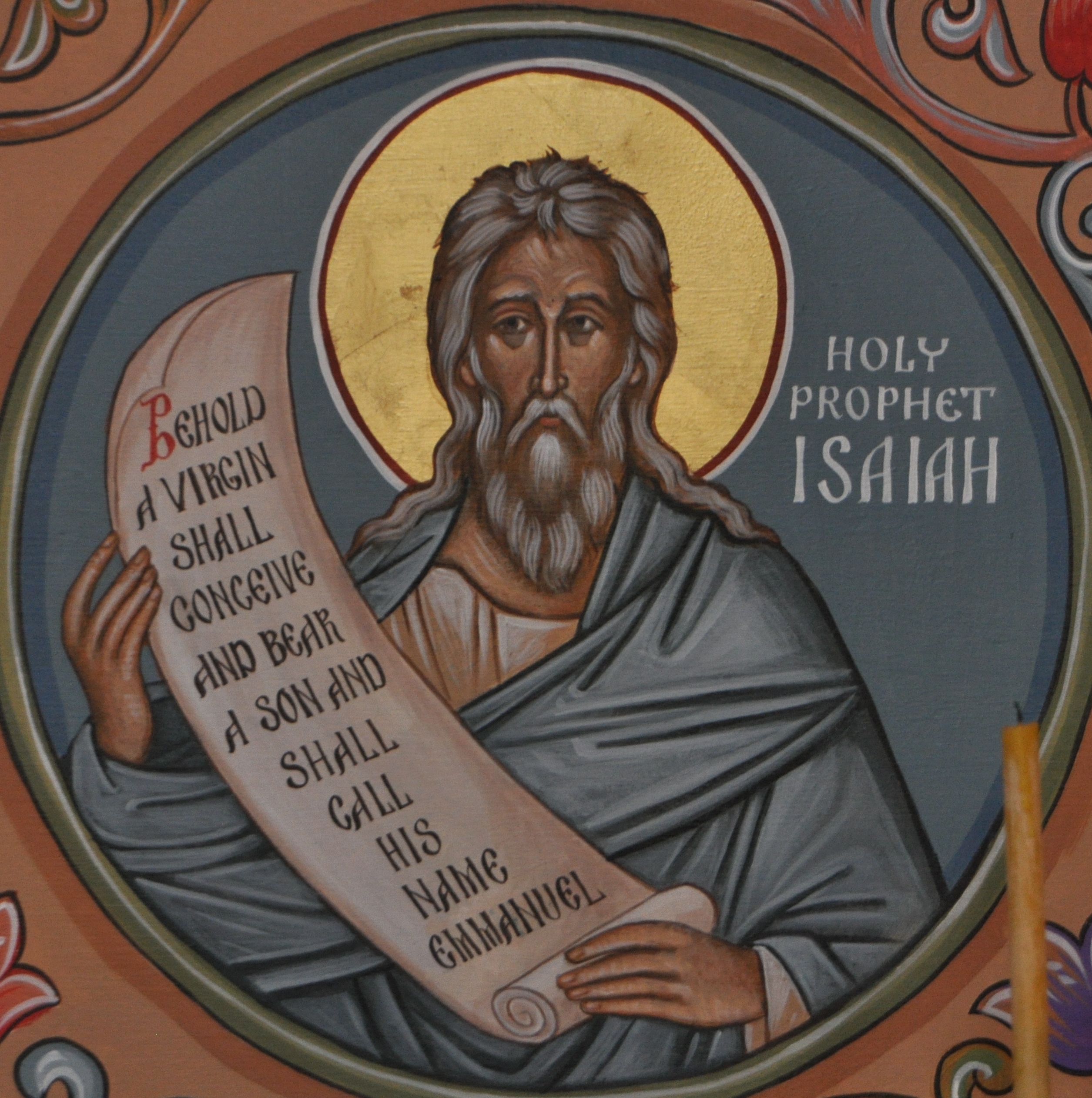
Jesus replied, ”Your mistake is that you don’t know the scriptures, and you don’t know the power of God.”
Observation
The Pharisees and Herodians decide to trap Jesus. After buttering him up with flattery, they ask Him, is it right to pay taxes to Caesar? Jesus replies by telling them to give to Caesar what is Caesar’s, and to give God what belongs to God.
Later on the same day, the Sadducees decide to test Jesus also. The Sadducees do not believe in the resurrection of the dead. Their question concerns the law that says a wife whose husband dies should be cared for by his brothers. So, in the resurrection that they do not believe in, they ask, ”Whose wife will she be?”
Jesus’ response is quite blunt. These men neither know the Scriptures nor the God they claim to serve. The resurrection life is very different to this life, and so there is no marriage in heaven. Everything is at a whole different level of existence.
Application
There are many christians, including leaders, who know neither the Scriptures nor the power of God.
Some people, for example, see the church as a meeting place for good people. They have been saved by Jesus, and now live such holy lives that sinners are not welcome in their midst.
Some denominations teach that there is no place for spiritual gifts today. The completion of the New Testament rendered the power of the Holy Spirit outdated and irrelevant. These people deny the poser of god, but they also are ignorant of the Scriptures which do not teach anywhere that the Baptism of the Holy Spirit is a transient thing.
We must approach God and other people with humility. I do not have all the answers, and I do not lead a perfect life.
We should see the church not s a meeting place for righteous people, but rather as a collection of sinners redeemed by grace and always open to more redeemed sinners.
Prayer
Father, please set me free from all pride and arrogance. Help me to understand you more and to rejoice in your power to change lives. Amen.
The current heat wave is being relentlessly blamed on increasing levels of carbon dioxide in the atmosphere, but there is a much more plausible explanation, one that is virtually endorsed by two of the world’s leading scientific organizations. It turns out that levels of water vapor in the atmosphere have dramatically increased over the last year-and-a-half, and water vapor is well recognized as a greenhouse gas, whose heightened presence leads to higher temperatures, a mechanism that dwarfs any effect CO2 may have.
So, why has atmospheric water vapor increased so dramatically? Because of a historic, gigantic volcanic eruption last year that I – probably along with you — had never heard of. The mass media ignored it because it took place 490 feet underwater in the South Pacific. Don’t take it from me, take it from NASA (and please do follow the link to see time lapse satellite imagery of the underwater eruption and subsequent plume of gasses and water injected into the atmosphere):
still from the time lapse photos
When the Hunga Tonga-Hunga Ha’apai volcano erupted on Jan. 15, it sent a tsunami racing around the world and set off a sonic boom that circled the globe twice. The underwater eruption in the South Pacific Ocean also blasted an enormous plume of water vapor into Earth’s stratosphere – enough to fill more than 58,000 Olympic-size swimming pools. The sheer amount of water vapor could be enough to temporarily affect Earth’s global average temperature.
“We’ve never seen anything like it,” said Luis Millán, an atmospheric scientist at NASA’s Jet Propulsion Laboratory in Southern California. He led a new study examining the amount of water vapor that the Tonga volcano injected into the stratosphere, the layer of the atmosphere between about 8 and 33 miles (12 and 53 kilometers) above Earth’s surface.
In the study, published in Geophysical Research Letters, Millán and his colleagues estimate that the Tonga eruption sent around 146 teragrams (1 teragram equals a trillion grams) of water vapor into Earth’s stratosphere – equal to 10% of the water already present in that atmospheric layer. That’s nearly four times the amount of water vapor that scientists estimate the 1991 Mount Pinatubo eruption in the Philippines lofted into the stratosphere. [emphases added]
NASA published the above in August 2022. Half a year later, a newer study increased the estimate of the water vapor addition to the atmosphere by 30%. From the European Space Agency:
In a recent paper published in Nature, a team of scientists showed the unprecedented increase in the global stratospheric water mass by 13% (relative to climatological levels) and a five-fold increase of stratospheric aerosol load – the highest in the last three decades.
Using a combination of satellite data, including data from ESA’s Aeolus satellite, and ground-based observations, the team found that due to the extreme altitude, the volcanic plume circumnavigated the Earth in just one week and dispersed nearly pole-to-pole in three months. [emphasis added]
Volcanic eruptions rarely inject much water into the stratosphere. In the 18 years that NASA has been taking measurements, only two other eruptions – the 2008 Kasatochi event in Alaska and the 2015 Calbuco eruption in Chile – sent appreciable amounts of water vapor to such high altitudes. But those were mere blips compared to the Tonga event, and the water vapor from both previous eruptions dissipated quickly. The excess water vapor injected by the Tonga volcano, on the other hand, could remain in the stratosphere for several years.
This extra water vapor could influence atmospheric chemistry, boosting certain chemical reactions that could temporarily worsen depletion of the ozone layer. It could also influence surface temperatures. Massive volcanic eruptions like Krakatoa and Mount Pinatubo typically cool Earth’s surface by ejecting gases, dust, and ash that reflect sunlight back into space. In contrast, the Tonga volcano didn’t inject large amounts of aerosols into the stratosphere, and the huge amounts of water vapor from the eruption may have a small, temporary warming effect, since water vapor traps heat. The effect would dissipate when the extra water vapor cycles out of the stratosphere [Emphases added]
So there you have it: we are in for extra atmospheric heat “for several years” until the extra water vapor injected by this largest-ever-recorded underwater volcano eruption dissipates.
Jeff Childers, who brought this scientific data to my notice, writes:
Here’s why corporate media is ignoring the most dramatic climate even[t] in modern history: because you can’t legislate underwater volcanoes. You can try, but they won’t listen. So what’s the fun in that? Corporate media only exists to further political ends. Since volcanoes aren’t subject to politics, why bother?
He brings up the work of Ethical Skeptic:
Ethical is suggesting that the water is heating the air — instead of the other way around. And the Earth’s core is heating the water. It’s a theory that explains everything.
Meanwhile, “science” is baffled. From just a month ago, in mid-June:
See? But though scientists are baffled, corporate media and its repulsive allies are busily blaming ocean warming on carbon dioxide — a ludicrous notion.
I am the first to admit that none of this – not the atmospheric CO2 theory of global warming, nor the effect of the largest ever known undersea volcanic eruption – is scientifically proven. But before we impoverish ourselves trying to reduce CO2 emissions (while watching China dramatically increase them), let’s practice real science and not jump to conclusions based on an imaginary “consensus.”
Jesus tells a parable about a king who prepares a great wedding feast for his son. He sends messengers to summon the guests, but they all refuse to come. The king sends more messengers, but again the invitation is ignored, and some guests even kill the servants.
The king is furious. He sends his army to destroy the towns of the murderers. Then he sends out his servants to bring in everybody they can find to celebrate the wedding.
The king notices a man without appropriate clothing. He orders the servants to throw this man at into the darkness.
Jesus concludes with the words,“Many are called but few are chosen.”
Application
The king in this story invites people to come and celebrate his son’s wedding. The people who were invited refused to come, so he invites more people in. Even among the late batch of invitees there is at least one person who is refusing to honour the king.
The nub of this parable is this: Regardless of whether you are Jewish or Gentile, you are invited to be a part of God’s Kingdom. However, there is a prerequisite that you must honour the king.
A heart attitude of rebellion against God will see you thrown out of the Kingdom on the day of judgement.
Many people hear the call of the gospel, the call to follow Jesus. Some reject it outright. Others say,“yes” but their hearts remain heard towards God. Perhaps they want to be safe from the fires of hell, but have no real relationship or love for God .
God is calling everyone to be a part of the kingdom. Very few will respond and enter it.
Prayer
Lord Jesus, you are my king. I give my life into your hands and I trust you to bring me into full salvation. Amen
The point here is important: you can think you have a good and successful organisation that is functioning well according to the criteria you set down, but that apparent success may be an illusion. You can look at your organisation and say ‘Yes! This is great’, but when God looks at it what does he see? Stephen Judd et al
The crucial point here is that you do not have to intend to be sinful to carry out sin. You just need to lose your sense of truth versus falsehood and allow yourself to become cognitively dislocated and disoriented from the fundamental reality that is God.