Watch right to the end for the punchline!
Author: newlifenarrabri
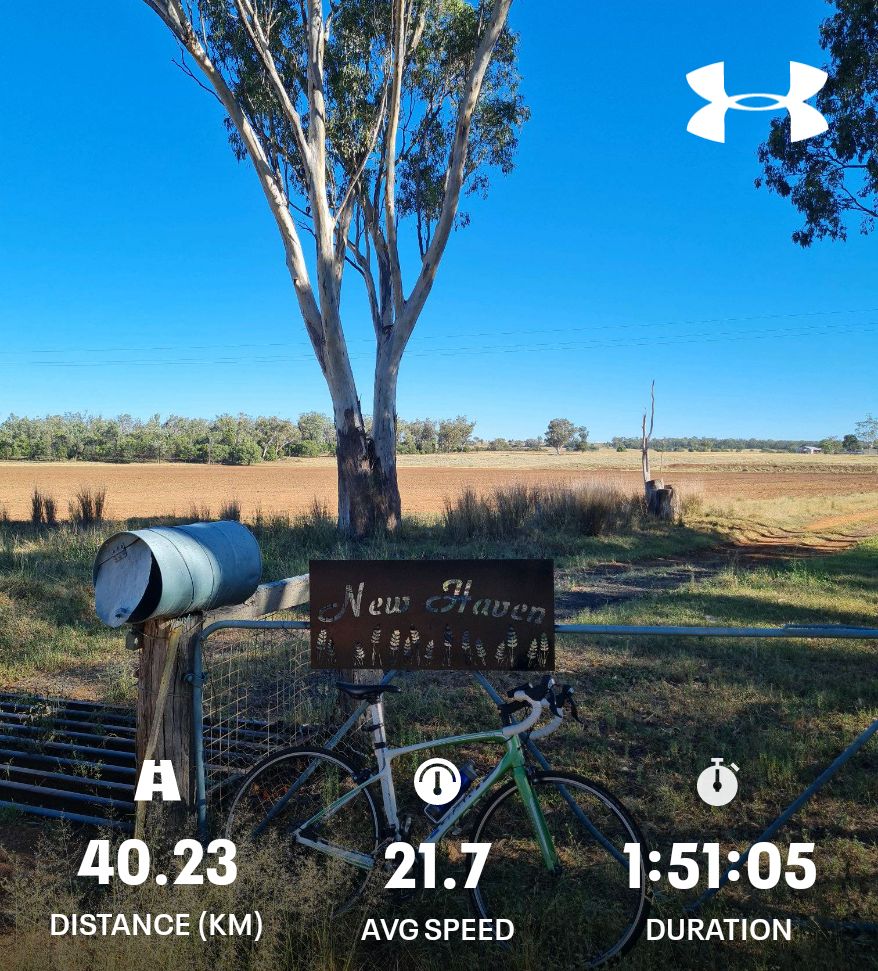
Today’s Bike Ride
All over the continent, normally drab looking bushes and trees herald spring by bursting forth bright yellow flowers. There are dozens of species from the tropics to Tasmania that we give the generic name Wattle. They even have their own day, September 1st, Wattle Day. Monty Python honoured them with a poem.
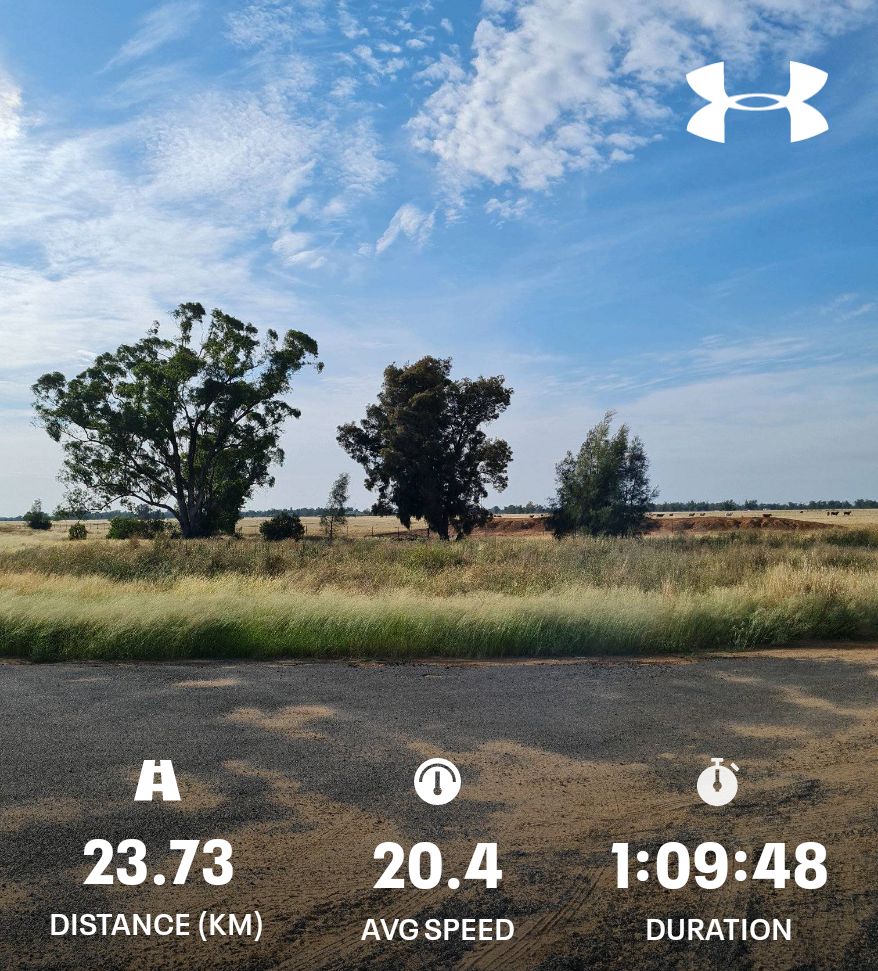
This was one of many wattles on Yarrie Lake Rd this morning.

Behaviour Chains
Have you ever thought about why you do the things you do?
A lot of the things we do every day are habits that have built up over the years. Some habits are good, some not so good.
Psychologists call the unconscious process behind a habit the behaviour chain. The behaviour chain goes like this: A trigger causes a thought, leading to an action that leads to a consequence.
So, for example, as the time approached 10.30 at night, my body tells me to get ready for bed. That is an environmental trigger caused by the time. After that a whole train of actions follow: turn the TV off, fill the dishwasher, go to the toilet, brush my teeth, go to the bedroom, get undressed, pull back the blankets, lie in bed, close my eyes. Finally, the long-awaited consequence is going to sleep.
That’s a great behaviour chain, because I don’t have to remember all the things I need to do to go to bed.
A bad behaviour chain for me involves the arrival of 8.30 pm, when my brain tells me to go to the fridge and get chocolate, regardless of whether I am hungry or not. Then the thought is “Eat chocolate” and the consequence is an ever-expanding waistline.
Remember when you started to drive? You had to be told everything. But after a few months, the complex processes of driving become habits, and you can drive without any conscious thought.
Sometimes people tell me they can’t find time to pray or read the Bible, which are two of the most important daily habits christians need to develop. The way to start this process is to set up a behaviour chain. Program an alarm into your phone to go off at, say breakfast time. The alarm goes off and reminds you to read the Bible at breakfast time. After a while, you don’t need to be reminded that it’s time, because the smell of toast or the boiling of the kettle will be the trigger.
God has given us awesome brains, and we should use things like behaviour chains to replace bad or harmful habits with habits that draw us closer to Him.
Quote for the Day
If we substitute ourselves for God, then we end up with a false picture of the world. If we cannot see the world clearly, we cannot live and act faithfully within it. We end up living in what Chris Hedges has called an ‘Empire of Illusion.’ Stephen Judd et al

Reflection on Matthew 21: 33-46
Scripture
“I tell you the Kingdom of God will be taken from you and given to a nation that will produce the proper fruit. Anyone who stumbles over that stone will be broken to pieces, and it will crush anyone it falls on.”
Observation
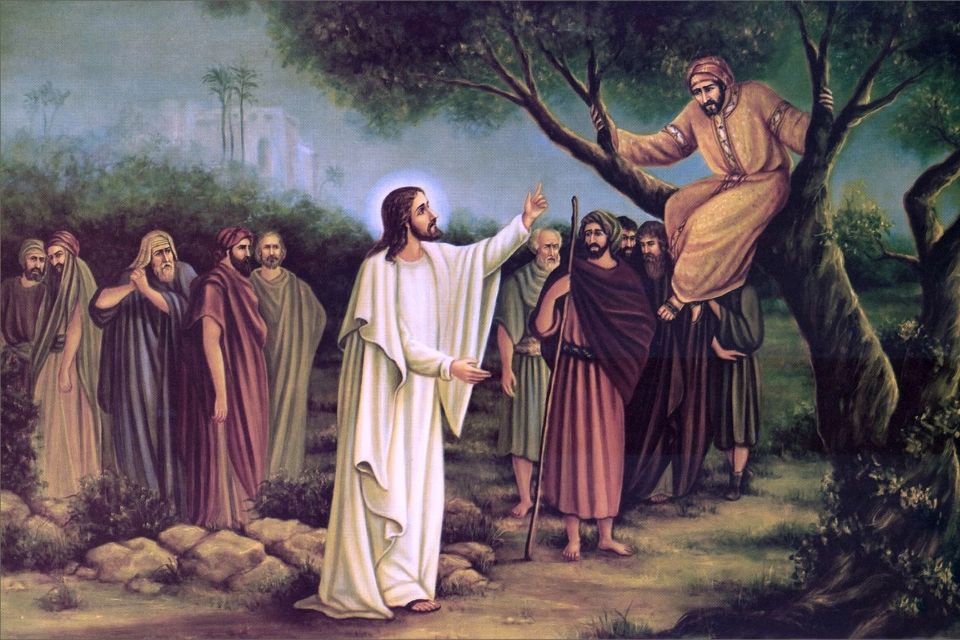
Jesus tells a story about a land owner who plants a vineyard, builds a wall and a wine press, and then leases it to share farmers.
When the time comes for harvest, he sends servants to collect his share of the harvest. The share farmers kill them, so the owner of the vineyard sends a bigger group of servants but with the same outcome. Finally he sends his own son. The farmers reason that if they kill the son, they will keep the estate. So they murder the owner’s son.
Jesus asks the Pharisees what happened next. They reply that the owner will kill the farmers and lease the land to some people who will give him his share of the harvest.
Jesus then says that the Kingdom will be taken away from these people and given to a nation that will produce fruit.
The priests and Pharisees then realise that the story was aimed at them.
Application
If we stumble over the stone that the builders rejected and later became the cornerstone, then we will be destroyed by that same stone.
This seems to be a harsh word. Jesus wants us to know that our choice, either for him or against him, carries grave consequences.
Jesus did not only bring salvation into the world, but also judgement for those who reject him (john 3:16-18)
If we are drowning in a river, an approaching rescue boat will bring salvation. We might take offence at the colour of the boat or the person driving it, and choose death rather than life. Them eans of Salvation then becomes the sign of judgement against our own choice.
Our eternal salvation depends on the choice that we make now – to follow Jesus or to follow our own way.
Prayer
Thank you Jesus for saving me even though I did not deserve it. May I produce the fruit worthy of salvation. Amen.
Today’s Bike Ride
I rode out to Bunnings and around the edge of town before going down to Riverbend this morning. It’s surprising to see hay bales in a paddock in suburbia, but that’s how we roll in the country 😂🚲 #cycling #Narrabri #Biketooter

Quote for the Day

No matter where a Christian is placed, they should faithfully approach their work with an enthusiasm and energy that assume the Lord Jesus is sovereign over every organisation. Within this context, they need to be ready to share their faith gently and respectfully with anyone who asks (1 Pet 3:15). Stephen Judd et al
Jo Nova: It’s Not That Hot
Climate panickers think that if it’s summer, it must be the hottest ever. The Medieval Warm Period was warmer than where we are now, and no nasty coal and oil to blame then.
Jo Nova writes:
European heatwaves: Soldiers died in the heat in 1160, Rivers ran dry in 1303, animals fell dead in 1393
By Jo Nova
Medieval “climate change” was filled with heatwaves, droughts, and crop failures
One thousand years ago, “rivers ran dry under the protracted heat, the fish were left dry in heaps and putrefied in a few hours.” Men and animals venturing in the sun in the summer of 1022 fell down dying.”
It was so hot in 1132 that the rivers ran dry and “the ground was baked to the hardness of stone”. Around 1200 at the Battle of Bela “there were more victims made by the sun than by weapons”. In 1303 and 1304, the Seine, the Loire, the Rhine, and the Danube could all be crossed with dry feet, and they dried up again in 1538-1541. In 1393 and 1394 the crops were “scorched up” and “great numbers of animals fell dead”. In 1625 in Scotland, it was so hot “meat could be cooked merely by exposing it to the Sun.”
And so it goes — history that was known in the 1800’s appears to be disappearing, leaving us with a generation of snowflakes who think they are the only humans who ever faced hot weather. They with their airconditioned bedrooms, mobile phones and filtered water.
In 879, agricultural laborers, who must have been as tough as nails, were struck down after “just a few minutes in the sun”.
Thanks to Tony Heller at RealClimateScience who has a resource page: “1500 Years of Heatwaves”
Gaillard’s Medical Journal – Google Books
The Medieval Warm Period was a global phenomenon, see the graphs, the pollen, the sea sediments and tree rings. And the IPCC knew it in 1990 too.
They’ve been rubbing out the Medieval Warm Period ever since. Even though Hubert Lamb did the graph in 1982, scores of different proxies have gone on to support it on every continent. References at the link above plus at the tag Medieval Warm Period.
h/t also Paul Homewood at Notalotofpeopleknowthat
Text copied below:
“Hot Weather.—Many a man has mopped his brow during the summer months of 1884, declaring it was the hottest weather the world ever knew, which, of course, would not be true, for the extreme heat in the record of the past has not been approached during the late summer.
In 627, the heat was so great in France and Germany, says the London Standard, that all springs dried up; water became so scarce that many people died of thirst.
In 879, work in the field had to be given up; agricultural laborers persisting in their work were struck down in a few minutes, so powerful was the sun. In 993, the sun’s rays were so fierce that vegetation burned up as under the action of fire. In 1000, rivers ran dry under the protracted heat, the fish were left dry in heaps and putrefied in a few hours. Men and animals venturing in the sun in the summer of 1022 fell down dying.
In 1132, not only did the rivers dry up, but the ground cracked and became baked to the hardness of stone. The Rhine in Alsace nearly dried up. Italy was visited with terrific heat in 1189; vegetation and plants were burned up. During the battle of Bela, in 1200, there were more victims made by the sun than by weapons ; men fell down sunstruck in regular rows. The sun of 1277 was also severe; there was an absolute dearth of forage.
In 1303 and 1304, the Rhine, Loire and Seine ran dry. In 1615, the heat throughout Europe became excessive. Scotland suffered particularly in 1625 ; men and beasts died in scores. Meat could be cooked by merely exposing it to the sun. Not a soul dared to venture out between noon and 4 p.m. In 1718, many shops had to be closed; the theatres were never opened for several months. Not a drop of water fell during six months.
In 1753 the thermometer rose to one hundred and eighteen degrees. In 1779, the heat at Bologna was so great that a large number of people died. In July, 1793, the heat became intolerable. Vegetables were burned up and fruit dried upon the trees. The furniture and woodwork in dwelling-houses cracked and split up; meat became bad in an hour.
In Paris in 1846, the thermometer marked one hundred and twenty-five degrees in the sun. The summers of 1859, 1860, 1869, 1870, 1874, etc., although excessively hot, were not attended by any disaster.”
Today’s Bike Ride
Another perfect morning for riding! This morning’s ride was to Jacks Creek and Gun Club Roads. #cycling #Narrabri #Biketooter

Quote for the Day
The renowned English academic C.S. Lewis is even more blunt: ‘Theology is practical … if you do not listen to Theology, that will not mean that you have no ideas about God. It will mean that you have a lot of wrong ones.’ Stephen Judd et al