Rare Baby Sunfish

From Australian Geographic

Rare baby sunfish reveal early life of one of the ocean’s weirdest fish
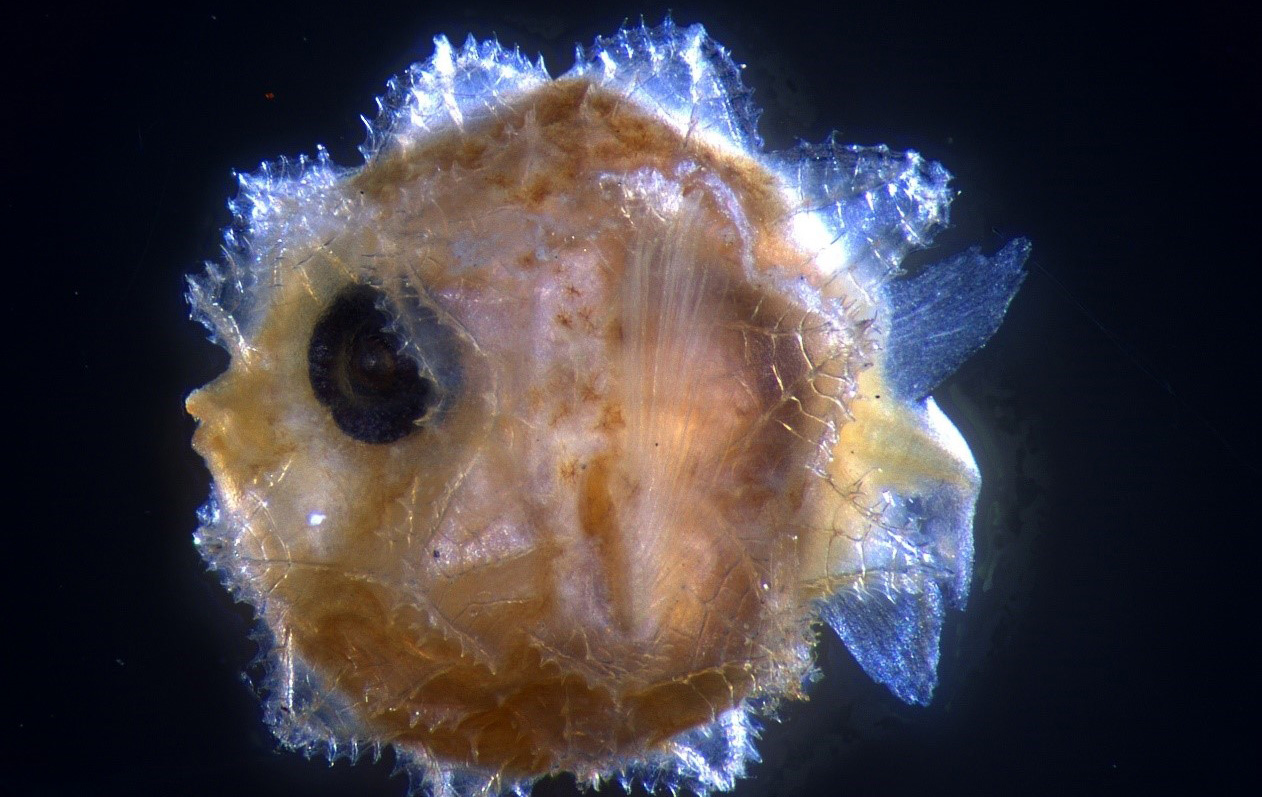
For the first time ever, scientists have been able to identify a species of sunfish larvae.
By Angela Heathcote • July 22, 2020 • Reading Time: 2 Minutes

Image credit: Kerryn Parkinson/Australian Museum

LITTLE IS KNOWN about the early life of sunfish, one of the world’s most bizarre-looking marine animals. And while baby sunfish, or larvae, have been found in small numbers across the world, scientists have, until now, been unable to identify which species the larvae belong to.

Using DNA from sunfish larvae caught off the NSW coast and comparing it to sunfish larvae stored in the Australian Museum collections, scientists found it was a perfect match to the bump-head sunfish (Mola alexandrini) – one of the three known species of Mola.
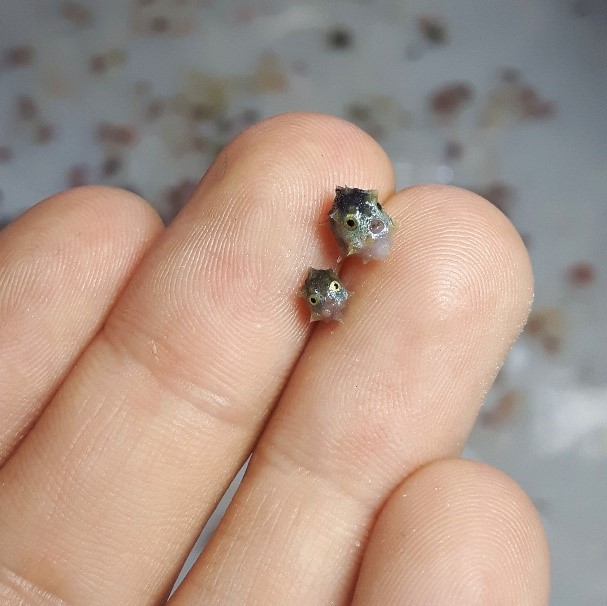
The teeny-tiny larval sunfish. (Image credit: Amy Coghlan)

The scientific journey to this eureka moment has been a long one. “These sunfish larvae were being found by scientists all the way back to 1766, and they were initially described as a completely different species of fish, because they just looked so different from their adult form,” says sunfish expert Marianne Nyegaard, the lead scientist on the discovery.

The larvae also have no recognisable features that would otherwise make it simple to tell a fully developed bump-head sunfish apart from a hoodwinker sunfish. “This is one of the key reasons we’ve never been able to get it to species level. The larvae sampled in Sydney look the same as the ones in the Atlantic [Ocean].”

Another major barrier was that, up until now, no one has been able to do genetic analysis because specimens are so rare. “They’re so valuable so they’re just put away in museum collections,” Marianne says. “I was lucky a friend knew I was looking for Mola larvae.”

The genetic analysis of the sunfish larvae by the Australian Museum’s molecular biologist Andrew King was painstaking, using DNA from a single eyeball to minimise any potential damage.
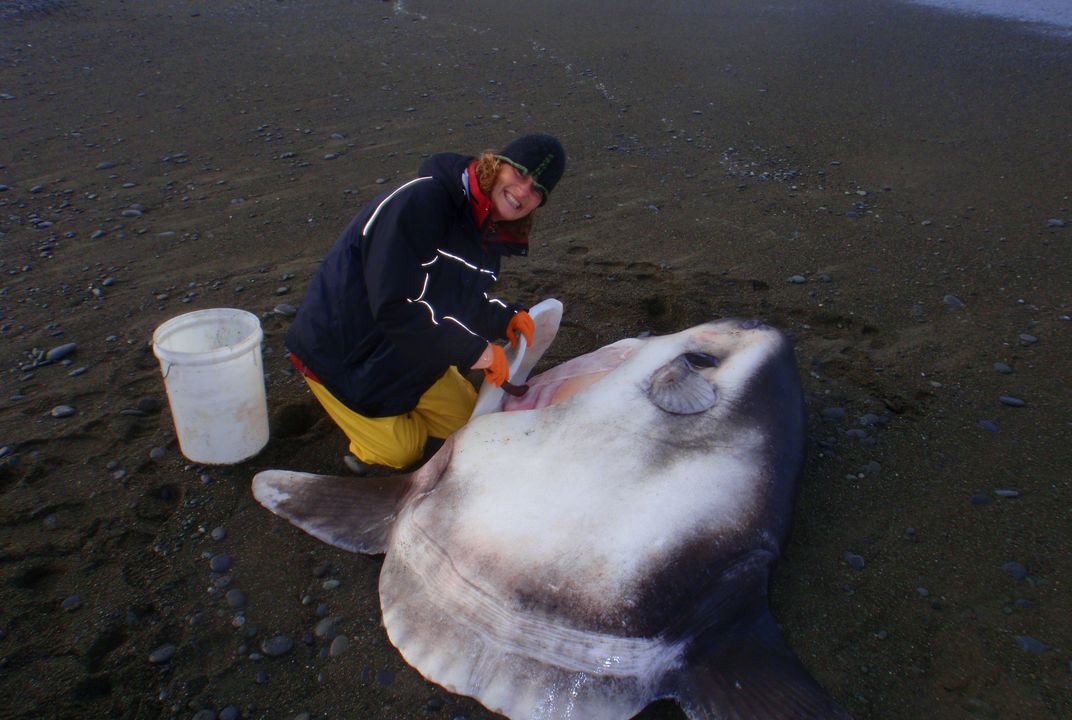
Scientist Marianne Nyegaard with a sunfish.

Scientists now have their hands on 20 sunfish larvae at varying sizes, all sourced from NSW waters, and they hope to piece together their early development from these specimens.

Marianne says this new genetic ID will act as an “anchor” to better understanding what she describes as the “deepsea pokémons” of the ocean. Her goal is to identify the last two species of sunfish larvae so they can all be told apart.

Beyond identification, Marianne still has questions about this stage in a sunfish’s life. “Few Mola larvae are found around the world; where are the larvae? Why don’t we find them more often?

“We don’t really understand where or when they spawn, and how many eggs catch and which ones survive. What habitat are they living in at this stage in their life? These are the things I’m desperate to know.”
Fish Experiment Week 5

The algae seems to still be stable, so today I decided to double the dose. This is recommended where the tank is heavily infested. and I think my tank qualifies for that.

The plan is for 3 weeks of double dosing to see if that improves things. If there is ot significant improvement by then, I will have to conclude that “Vibrant” does not work, and return to my long standing regime of mechanical cleaning.

Fish Tank Experiment Week 4

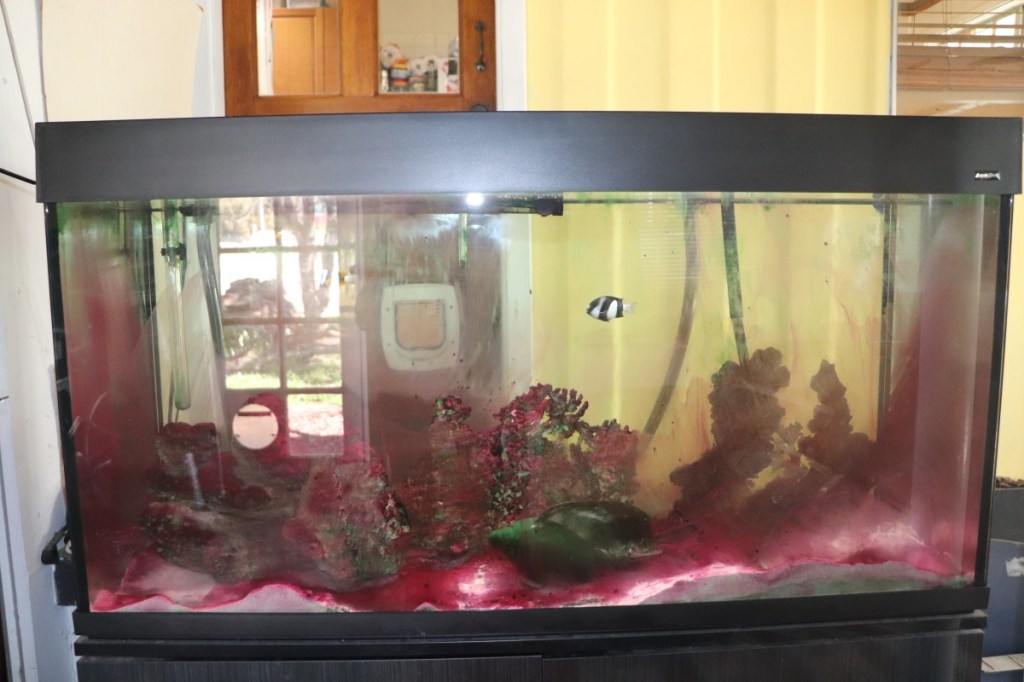
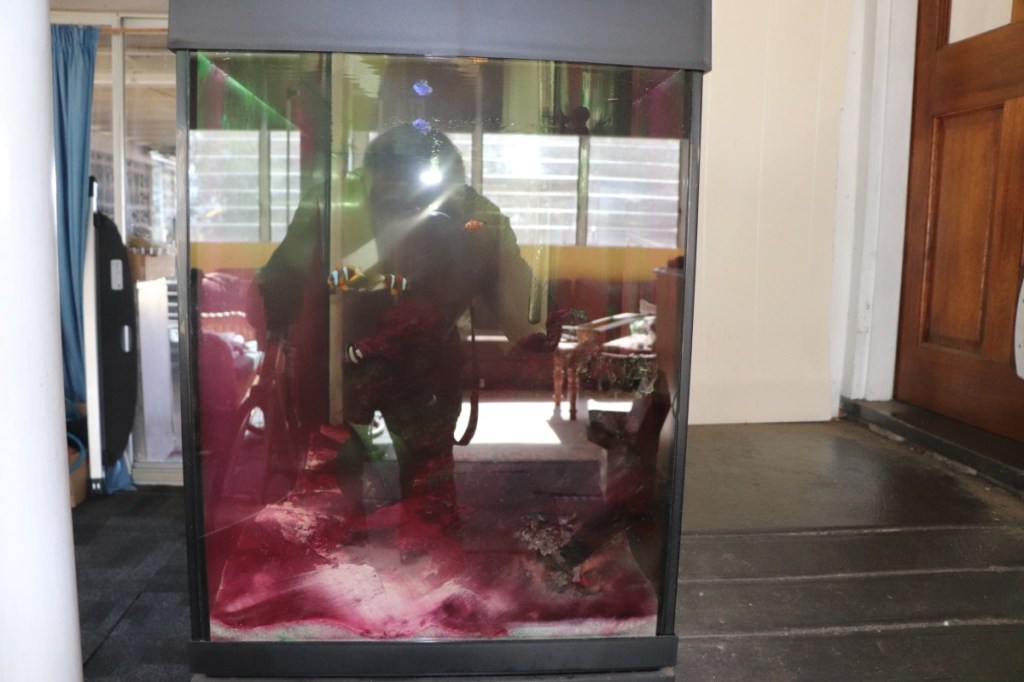
The algae in the fish tank is still stable, possibly a little worse.

During the water change today, I noticed that the filter was not operating properly. It was running but no water was going through. That might explain why the Vibrant is not very effective. Also cyanobacter prefer still water so perfect conditions.

I cleaned out all the accumulated gunk from the filter and reinstalled it. It took a while to get the pump primed and running, but now it is doing well.

Foggy Morning

It was a delightfully foggy morning in Narrabri today. Fog is always good as it means there is plenty of moisture in the air.

The visibility was down to about 50 metres which is about as thick as fog gets around here.

Fish Tank Experiment Week 3

This is week 3 of my test of “Vibrant.”

Each week I have been adding 10 ml of “Vibrant” to my tank when I do my usual weekly water change.

This week I think the growth of algae and cyanobacter has stabilised. As far as I can see, everything is similar to where it was last Monday.

I would have expected a much bigger growth of cyanobacter and the black “sticky” algae.

It appears that the Vibrant is having an effect.

Worms Love Cotton Trash

This is great news for the cotton industry and for wormkind!

From the ABC:

Cotton waste composter uses earthworms to turn waste into high-grade fertiliser

A long mound of white and brown fluffy cotton waste in a field.
Cotton trash can take years to break down naturally.(ABC Landline: Tim Lee)
From afar, the Worm Tech composting facility in southern New South Wales resembles a run-of-the-mill domestic rubbish tip.

Key points:

  • Australia’s multi-billion-dollar cotton industry produces waste that can take years to break down
  • A NSW entrepreneur has created a composting business to turn the waste into fertiliser
  • The process uses earthworms to break down the tough cotton residue

Look closer and you’ll see lines of white, woolly material.

It’s cotton trash, the residue leftover from processing, and it has long been a problem for Australia’s multi-billion-dollar cotton industry.

But as the saying goes, one man’s trash is another’s treasure.

To Adrian Raccanello, cotton residue is the backbone of his burgeoning composting business.

“It’s got a lot of properties,” the former viticulturist said.

A man in a high-vis jacket kneels on the ground, holding soil in his cupped hands.
Adrian Raccanello displays some of his millions of earthworms.(ABC Landline: Tim Lee)

“The broader the mix of organic material, the better the end product.”

In the past year, Mr Raccanello has trucked out about 50,000 tonnes of high-grade fertiliser.

Soon he expects to produce 200,000 tonnes annually.

Much of it is going back onto the region’s cotton fields in the form of fine, granular worm castings.

A spreader puts compost back onto a brown, bare cotton field.
Cotton compost is spread back onto a cotton field.(ABC Landline: Tim Lee)

Using an underground army

The business began as a bare field in a vast paddock adjacent to the Rivcott Cotton Gin at Carrathool, in southern New South Wales, in 2010.

The aim was to find a way to turn thousands of tonnes of cotton residue into fertiliser.

The secret was getting the right mix, one that could maximise a natural asset: earthworms.

A close-up shot of a man's hands holding wet soil with red earthworms in it.
The cotton compost mix promotes the growth of earthworms, which break down the materials.(ABC Landline: Tim Lee)

So Mr Raccanello won some contracts to process domestic organic waste from regional towns, such as Mildura and Wagga Wagga.

He blended the waste with cotton trash and carefully tended his rows of waste material to ensure optimal conditions for worms.

He soon found the perfect recipe, and so was born a unique compost product that will soon be available to the retail market as well.

“We basically just feed the top 4 to 6 inches [10 to 15 centimetres],” Mr Raccanello said.

“Then the worms work their way through it and just break it down.

A green harvester in a field of white cotton.
The cotton industry is now proudly part of what’s called the ‘circular economy’.(ABC Landline: Tim Lee)

From waste to valuable resource

Some cotton gins have their own composting programs in place for cotton residues, but in a good year, there’s simply too much to handle.

Local cotton grower Peter Tuohey is thrilled to see the Carrathool venture succeeding.

“The gin produces thousands of tonnes of the cotton residue and Worm Tech have been able to take that product and convert it into a very, very valuable commodity that we buy off them and spread back out on the land,” Mr Tuohey said.

A man in a cap and black jacket stands in front of a cotton bale.
Carrathool cotton grower Peter Tuohey is a keen supporter of the nearby worm farm.(ABC Landline: Tim Lee)

“So it’s really waste to resource,” added Mr Raccanello.

It’s rather startling what this unseen underground army of worms is capable of chewing through.

Cotton trash is fibrous and left out in the weather, it sets into hard mounds that can take years to decompose, between eight and 10 years in its natural state.

A mound of brown and white fluffy material.
Mounds of cotton trash have long been a problem for the industry.(ABC Landline: Tim Lee)

“We’re combining it with other waste to give it diverse ingredients and we’re doing it in about eight weeks,” he said.

His plan to dramatically upscale the business means he’s seeking more organic waste from municipal councils across southern Australia.

“We want to be a receptacle for untapped organic waste,” he said.

A yellow farm machine loads a brown, powdery material into a spreader.
Mr Raccanello’s cotton compost is now sought-after.(ABC Landline: Tim Lee)

Once, people thought he was mad when they saw him alone amongst the cotton trash heaps in the midst of winter. Others simply thought he would fail.

Now those same people are lining up to buy his organic fertiliser.

“I haven’t had to advertise, it’s all been word of mouth,” Mr Raccanello said.

Watch this story on ABC TV’s Landline at 12:30pm on Sunday, or on iview.

Jo Nova: “Everything you have heard about koalas is wrong.”

Koalas are meant to be a highly scattered population. There is no rick of koalas becoming “extinct” in NSW. Jo Nova writes:                                                                                                            

Koalas extinct? Hardly. “Nearly everything you have read or heard about koalas, is wrong”

Since Europeans arrived Koalas have been booming and busting

The calls were out this week saying that koalas will be extinct in New South Wales in 30 years. But they didn’t mention that Koalas thrive and multiply so fast that in the right conditions scientists talk of ‘plagues’. On Kangaroo Island last year, there were so many koalas, the South Australian government has been trying to sterilize or relocate thousands of them over the last twenty years.  Periodically scientists even discuss whether we have to cull them (the horror!).

They’ve survived twenty megafires in 200 years. They can recover. Ponder that Koalas were only introduced to Kangaroo Island in the 1930′s but by the 1990′s there were 14,000 of them and even though they are considered a tourism asset they are also considered a problem and pest too.

“Nearly everything you have read or heard about koalas, is wrong” — Viv Jurskis

Photo, Koala eating young gum leaves.

Koalas favorite snack  |      Photo by pen_ash

Viv Jurskis is a veteran forester and fire expert who studied them for years. He’s written The Great Koala Scam, Green propaganda, junk science government waste and cruelty.

Jurskis estimates that thanks to European settlers there are more koalas now than there were 250 years ago.

He describes how koalas have been booming and busting for two centuries. Before the first fleet arrived, koalas were so rare that the new settlers didn’t even see one for fifteen years! But after the indigenous cool burns programs stopped, dense forests grew which were choc-full of tender new shoots that koalas love to eat. So koala populations would flourish and boom right up until a fire wiped them out. In other areas farmers cleared land, but the “paddock” trees would get sick and resprout continuously, which also worked out pretty well for koalas. So koalas boomed in the valleys too. Sooner or later a drought would come and the valley koalas would starve and get sick themselves.

Jurskis recommends we use koala rescue funds to start doing better forest management with cool burns so the megafires don’t incinerate the next oversupply of koalas. It’s a man-made cycle of pain and suffering.

You’d think The Guardian and The ABC would be able to give us a more rounded view, especially since they covered the boom stories and the Koala Wars.  Here’s the ABC in 2002:

Scientists say the only solution to this crisis is to begin culling Koalas. Against the scientists are people who believe we need to be creating more habitats or the koalas. The Australian Koala Foundation are planting wildlife corridors to link koala habitats. But the scientists say this is just going to feed the problem – wherever the koalas have been introduced they thrive and eventually destroy their habitat.

Last year gave up sterilizing them to stop the plague on Kangaroo Island:

Koala and kangaroo culling considered as numbers become ‘overabundant’

  A report from a parliamentary inquiry has recommended the state’s environment minister make an immediate decision to declare koalas, western grey kangaroos, long-nosed fur seals and little corellas overabundant in some areas. The committee heard that sterilisation of the Kangaroo Island koala population had had little success.“Population numbers on the Island continue to rise and their impacts are threatening its biodiversity,” the report says. — The Guardian, 12th July 2019


Read the rest of the article here

A Fish Tank Experiment

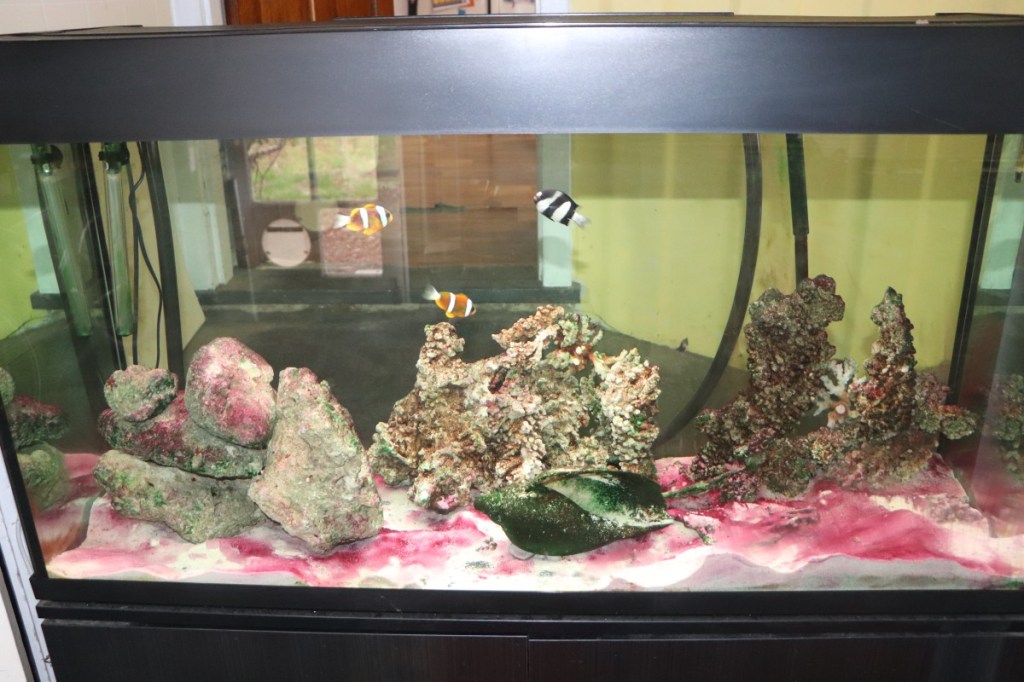
For many years, since I was 18 years old, I have kept a saltwater fish tank. I love the colours of reef fish. Over the last couple of decades, the hobby has moved on, and many people keep reef tanks with living corals and other invertebrates. The equipment required for keeping the pristine conditions and lighting necessary for corals is beyond my means so I have stayed with the FOWLR system- fish only with living rock.

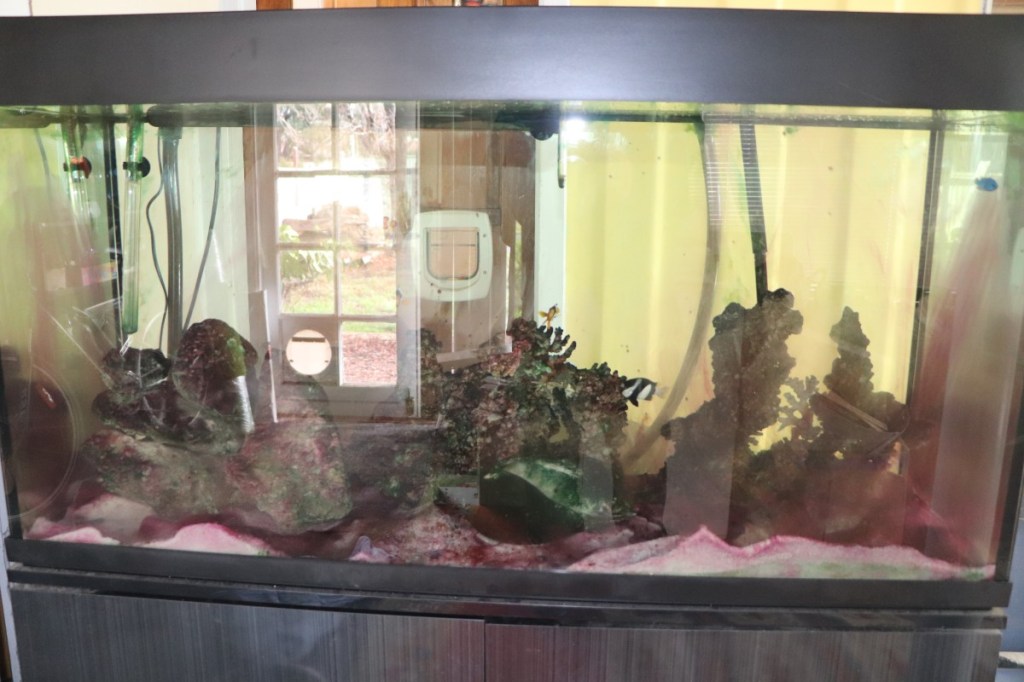
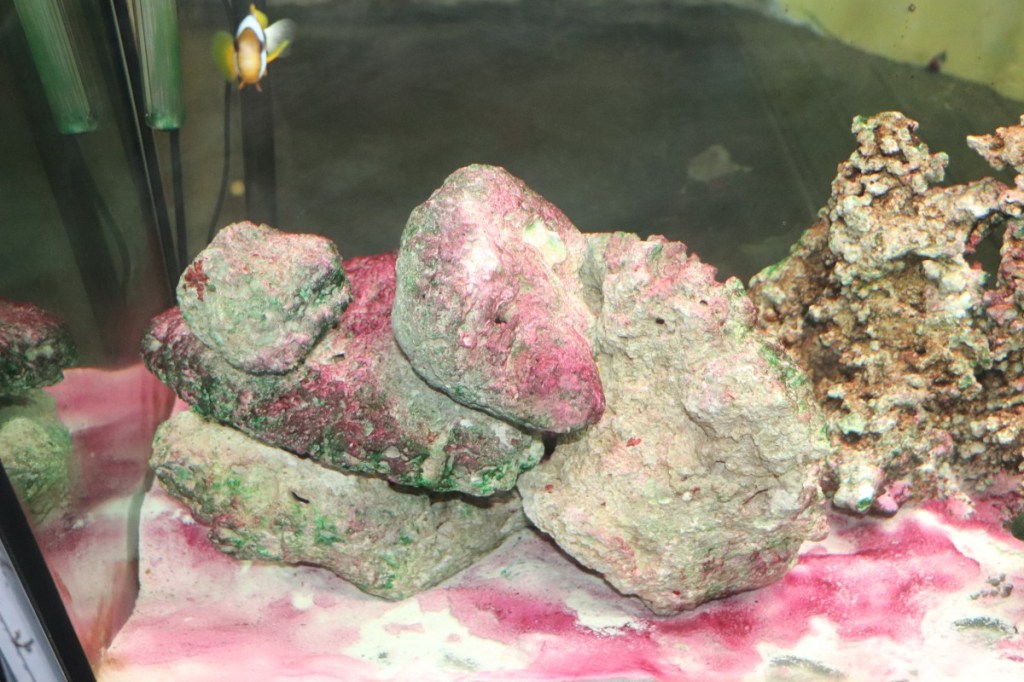
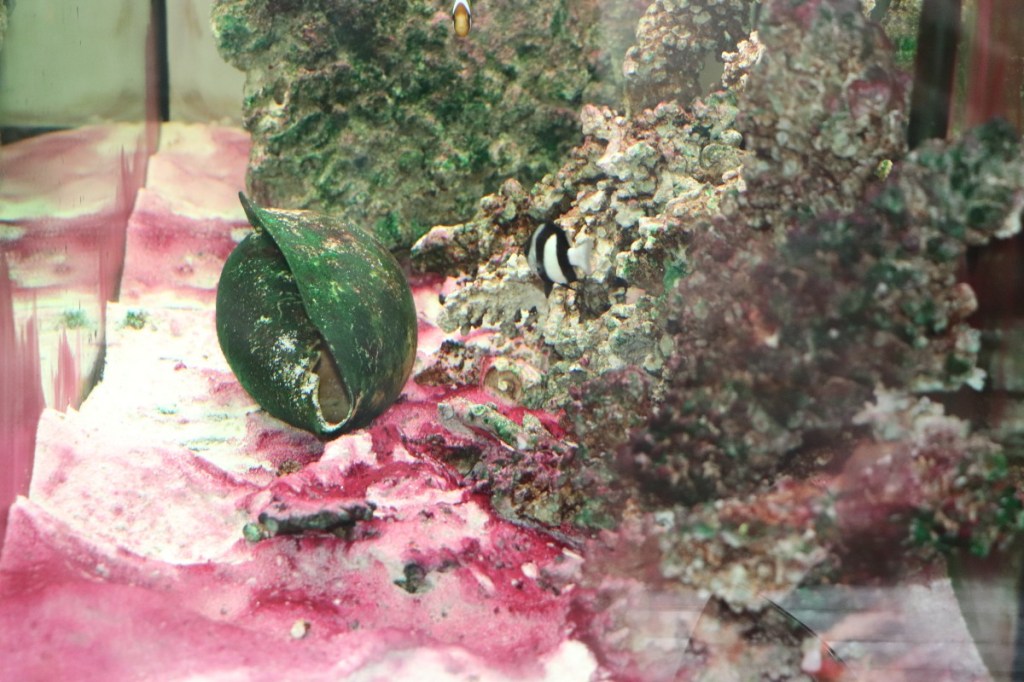
I have never really found algae control a problem, although in the current location we get a fair bit of light coming in from outside. In this picture you can see a lot of green algae on various parts of the aquarium. The reddish material is actually bacteria called cyanobacter.

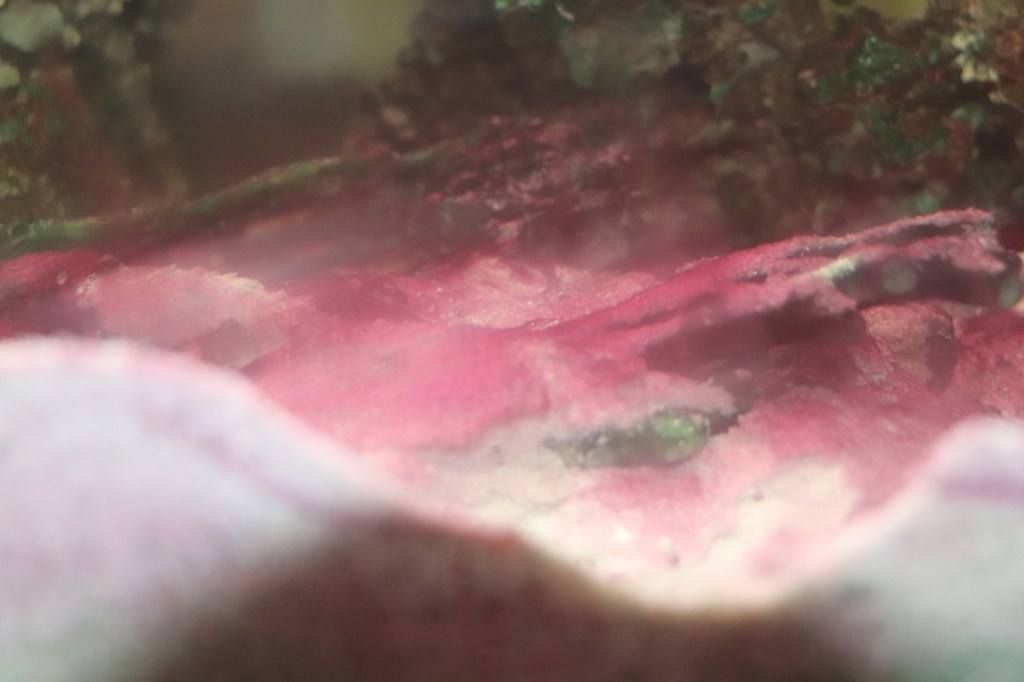
In the image on the right, there is a small black blob- out of focus- just above the low point in the sand. It is a very sticky algae which adheres to the glass and literally has to be scrubbed off.

My procedure until now is every week I do a 9 litre water change, clean the inside of the glass and remove about a third of the ornaments for cleaning with a hose connected to my rain water tank. During the water change I try to siphon off as much cyanobacter from the sand as I can.

It’s all good. In less than an hour a week I keep the water quality good and the tank fairly clean.

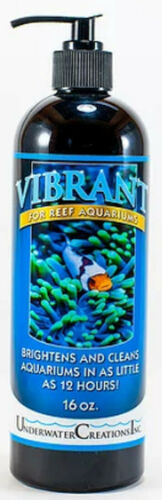
Last week i read about this product:

I ordered some after seeing a video test on Youtube which looked quite impressive. They took some very badly algae encrusted test tanks and dosed them with Vibrant twice a week. Over about 6 weeks the algae of several different species just about disappeared from all tanks.

I am going to dose my tank once a week and see how the tank responds. I will not be cleaning the sand or rocks, but just doing the regular water changes.

Vibrant is a culture of various bacteria that has been developed for use in marine tanks. There is a version that is for fresh water tanks.

What I like abut it is there are no poisonous chemicals involved, so it should be safe for the fish.

We will see how it goes over the next few weeks,

Doing My Head In.

Vibrant is an additive for aquariums. A bacterial culture, it helps to eliminate algae from tanks. I’ve seen Youtube videos showing the vast improvement in various aquariums over a number of weeks.

I am looking forward to using it and recording my experience in photos over the next few weeks.

The instructions are straight forward: use 1 ml per 10 gallons each week.

What?

You can’t mix unit systems like that! Every High School maths and science teacher knows (and constantly hammers it into the heads of their students) you have to use consistent units- always.

To make matters worse the bottle is labelled as containing 16 oz- which is a weight measurement. It should be fluid ounces or fl. oz.

I’m not even sure whether we are talking imperial or US gallons here. An imperial gallon (the real British unit) is 4.5 l while the poor cousin midget US gallon is just 3.9 l. Since the product is manufactured in the US it’s probably safe to assume it is US gallons.

The US and UK systems start at a good point. A fluid ounce is the volume of 1 ounce of water- an ounce is, of course, 1/16th of a pound.

So yes a US fl oz and a UK fl oz are the same. Yay for consistency!

But it crumbles rapidly from there. A pint in the UK is 20 fl oz while in the US a pint is just 16 fl oz. Congratulations to the US for a bit of internal consistency- a US pint of water then weighs 16 ounces or 1 pound. A UK pint is 20 ounces or in the words of the rhyme I learnt as a child- A pint of pure water weighs a pound and a quarter.

From there, in both systems a gallon is 8 respective pints.

What we call a 44 gallon drum in Australia is a 55 gallon drum in the US or 200 l everywhere. Of course, the standard drum can hold 218 l, so your actual volume of product may vary a little from what we call standard.

Back to the aquarium.

For many years I used to have a standard 4 foot tank (about 120 cm long), or as my wife says “120 by 14 inches.” I used to calculate a volume of 140 litres of water for the purposes of medicating the fish. You have to allow for the volume taken up by rocks, gravel etc.

My current fish tank is 118 cm long by 59 cm high by 43 cm deep. So a quick calculator gives me 299 l or 79 US gallons. That suggests it is meant to be an 80 gallon tank.

So my dosage will be 1 ml per 10 gallons or 8 ml.

That was simple.