Jo Nova: Climate experts wrong on Australian frosts, and media say nothing

From Jo Nova:

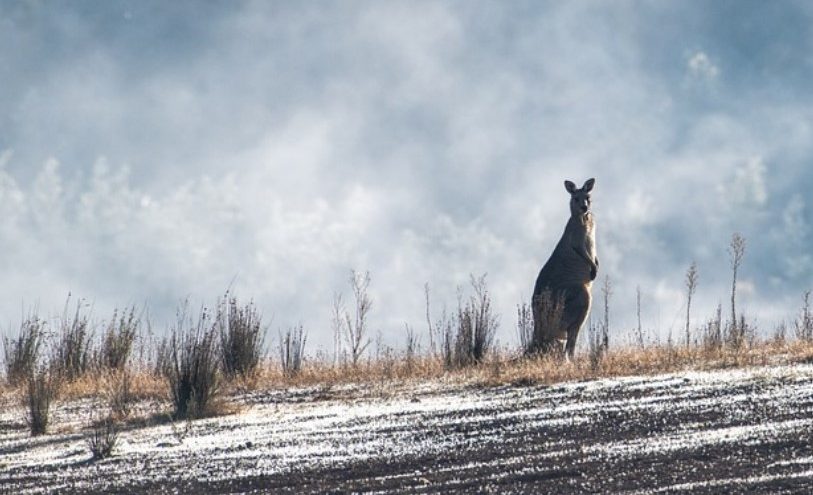
A Kangaroo on the Frost, Australia

Image by Penny from Pixabay

Climate experts wrong on Australian frosts, and media say nothing

The IPCC experts were sure would be less frosts in Australia, but buried in a government funded ABC weather report was the virtually unknown admission that the frost season is actually growing across southern Australia, not shrinking. And in some places by an astonishing 40 extra days a year. What’s more, the researchers have known about this long term trend for years but didn’t think to mention it, and the ABC didn’t have a problem with that either. (It’s not like farmers need to know these things?)

When asked for an explanation for the increase in frosts, the ANU climate expert said “I think this is one of those climate surprises,” as if the IPCC unexpectedly won a game of Bingo, instead of getting a core weather trend 100% wrong.

We note the ABC feigned journalism to cover up for the Bureau of Meteorology and IPCC failures. Where were the headlines: “Climate Change causes more frosts, not less”, or “IPCC models dangerously misleading on frosts?” Did any Australian farmers and investors buy up properties and plant the wrong crops based on the global warming misinformation repeated or tacitly endorsed by the ABC, BoM and CSIRO?

Frost damage costs Australian farmers around $400 million each year. (Perhaps if we sold the ABC we could cover that).

Frost expected across nearly every state and territory in Australia this weekend

By Tyne Logan, ABC Australia

Buried under 450 words of weather, trite caveats, and preamble the ABC journalist finally gets to a new virtually unknown climate trend that affects farmers, investors, researchers, and rural Australia:

The latest Intergovernmental Panel on Climate Change report projected, with high confidence, that frost events would decrease, in general, across southern Australia in the future with climate change.

ANU climate applications scientist Steven Crimp said some parts of New South Wales were now experiencing five more frost events on average each year, compared to 1960.

And he has known for years:

He said this was based on local weather station data between 1960 and 2018, but the trend was unlikely to have changed much in the past five years.

“I think this is one of those climate surprises,” he said.

Scientifically they are not caught unaware because climate models are useless politicized fantasies, it’s because there is more “climate-nuance” around now:

“Despite the sort of overall warming trend in our temperatures, the extremes of our temperatures, be they hot or cold, are acting in a slightly more nuanced and complex way, which can be quite surprising at times,” he said.
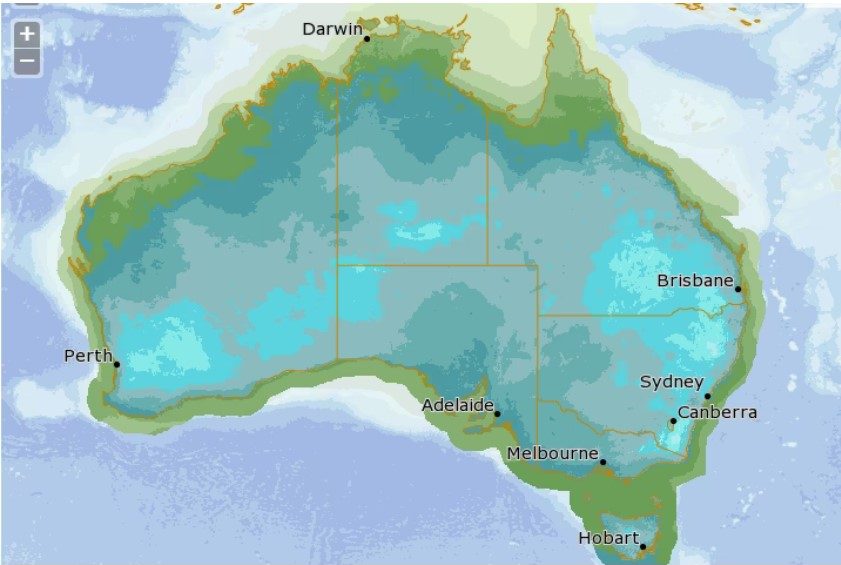
Below zero temperatures in Australia.

BOM forecast overnight minimum temperatures to fall well below zero across large swathes of the country [last] Sunday.

#302226;font-family: Candara, Verdana, sans-serif">But jokes aside, this actually seems like a trend that matters:

Dr Crimp said they had also found the frost season was lengthening across southern Australia.

“So if we think about the east coast first, we see an earlier start and a later finish to that frost window,” he said. “In some cases, the extension of that frost window is greater than 40 days.

“But in Western Australia in particular, we see that it’s less to do with the later frost occurrence, but more earlier frost occurrence.”

The frosts are due to the dry conditions, says Dr Crimp, putting in an admirable effort at scientific-word-salad to cover up for what he’s not allowed to say — that they have no idea.

Why aren’t frost days decreasing?

Dr Crimp said, ironically, the observations could be explained by the types of weather system that brought warmer, drier weather. That was high pressure systems which often produced the clear, still nights needed for frost to settle.

“As anyone knows who’s outside at night in winter, you have to have those clear night skies and the atmosphere needs to be very dry,” he said.

“That way the surface of the Earth loses heat very rapidly and any moisture in the air then condenses as a frost. “So because we are getting those dry conditions that are starting to emerge, that is more conducive for frosts to occur.”

But the truth is that, on average, and a priori — global warming would increase humidity and global cooling would  dry the air out. And carbon dioxide is supposed to work at night time too — increasing minimum temperatures. All these factors make frosts less likely.

And yet the frosts happen.

Finland Electricity Prices Drops to BELOW ZERO Due to Efficiency of Nuclear Power Plants

From Geller Report

Finland Electricity Prices Drops to BELOW ZERO Due to Efficiency of Nuclear Power Plants

This is what common sense looks like.

Insider: Finland was dealing with an unusual problem on Wednesday: clean electricity that was so abundant it sent energy prices into the negative. While much of Europe was facing an energy crisis, the Nordic country reported that its spot energy prices dropped below zero before noon (Insider).

Marian L Tupy: Finnish electricity price drops BELOW ZERO after the latest nuclear reactor is switched on. That is what the world could have looked like if the greens did not stop humanity from expanding nuclear power. Remember: nuclear power = no CO2 emissions (Twitter)

#f6f6f6;color: ;font-family: sans-serif">Finnish Nuclear Plant Throttles Output After Electricity Prices “Become Too Cheap”

As we detailed in early May, the transition from testing to regular output last month saw Finland’s first nuclear power-plant drive electricity prices dramatically lower.

by Tyler Durden, Zero Hedge, May 25, 2023 – 02:45 AM

As yle reports, the Olkiluoto 3 nuclear reactor in Eurajoki, southwest Finland, started regular electricity production in mid-April, about 14 years behind schedule

Since then prices for power in Finland have continued to plunge as the efficiency of the plant flooded the grid with ‘new’ energy.

So much in fact that early on Wednesday of last week, the market price for electricity dropped below zero cents per kilowatt-hour (kWh) and for hours after that the price was only 0.3 cents per kWh at its highest, according to the country’s grid operator, Fingrid.

That was unacceptable and prompted the plant’s owner, Teollisuuden Voima (TVO) to significantly cut back its output…

Electricity production must also be profitable for nuclear power plants, and when the price is particularly low, there may be situations where output is limited,” TVO communications manager, Johanna Aho, said.

According to Aho, cutting back on nuclear power production due to excessively low electricity prices is very rare, but not unheard of.

Janne Kauppi, an energy markets advisor at Finnish Energy, agreed with that sentiment.

“There haven’t been many situations where nuclear power output has been regulated specifically because of low prices,” Kauppi explained.

“When prices go negative on the electricity market, basically anyone who can adjust their production will do it, so that they don’t have to pay for their own production,” Kauppi noted.

The Finnish example is a testament to how nuclear can play a part in solving the current energy crisis, with consumers still paying sky-high fees for energy in many European countries.

However, the hypocrisy is of course that when power prices were extremely high in 2022, hurting consumers – it was all Russia’s fault; but now that prices are plummeting, operators can’t have that and withdraw supply to hurt consumers.

Do you see a pattern here?


Jo Nova: Exxon says NetZero degrades global standard of living so much there’s only a remote chance it will happen

By Jo Nova

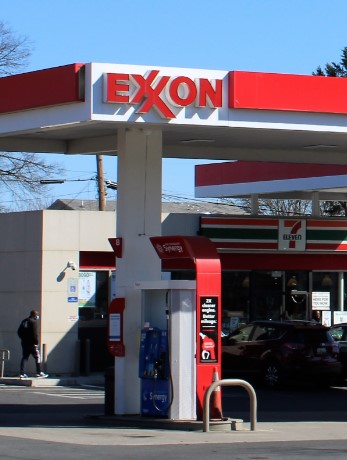
Exxon petrol gas station.

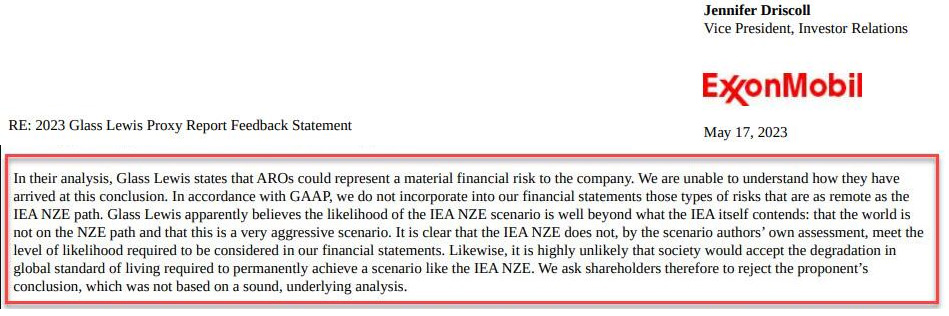
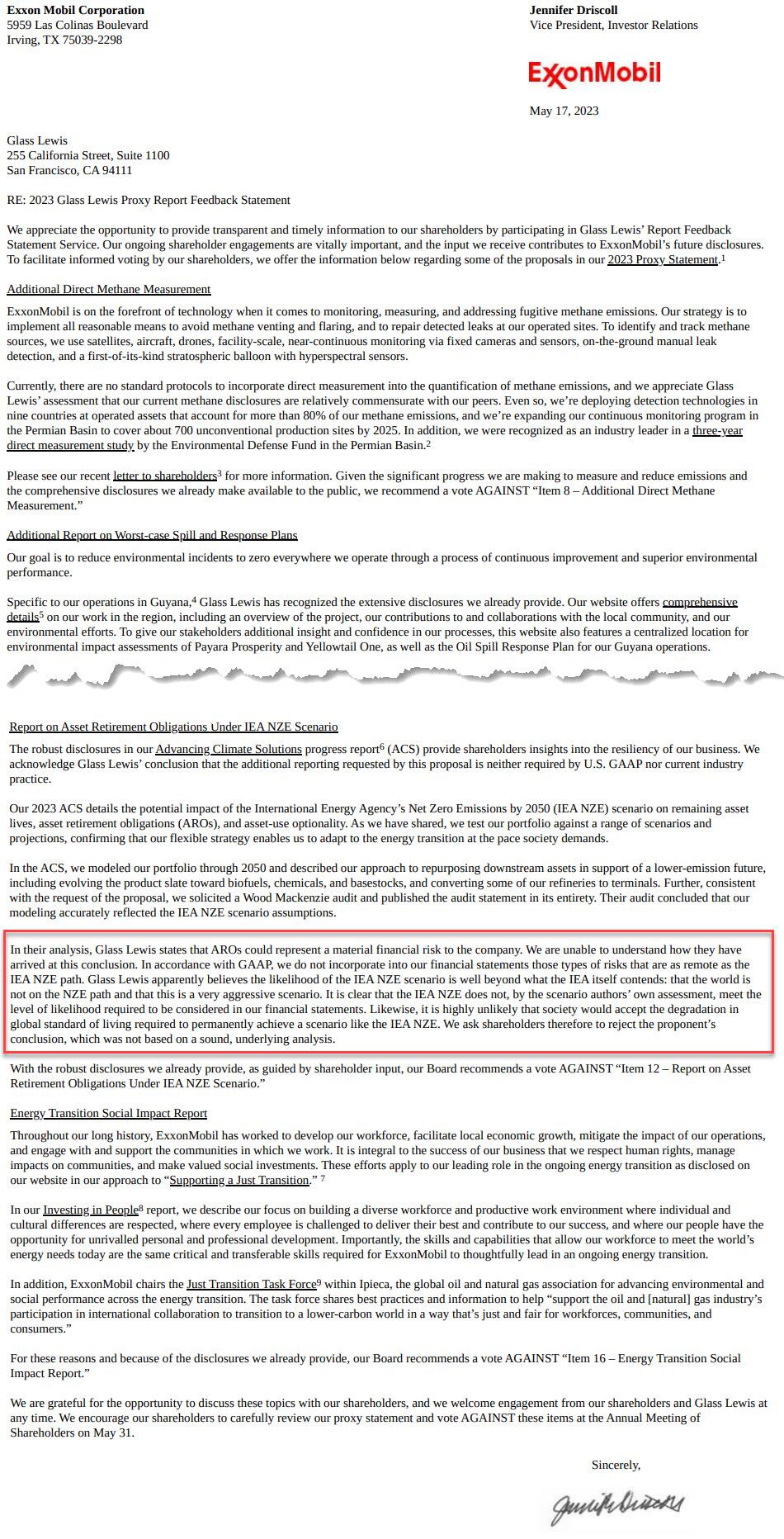
Exxon was told to jump through circus hoops like a performing seal and report the risks of NetZero to Exxon shareholders. But Exxon pushed back by pointing out that NetZero-by-2050 is so impossible it will never happen, and therefore the risks are not even worth assessing. Furthermore, and rather damningly, Exxon said, society would be unlikely to “accept the degradation in the global standard of living required“.  Exxon has taken was was supposed to be another PR win for the narrative and turned it into a media weapon.

This is exactly why the Big-Gov-Corporatist cartel wants to co-opt or destroy independent profitable corporations. In this case, companies that don’t need Big-Gov are free to point out the hypocritical inanity and absurdities which the lap-dog dependent industries like wind power and solar cannot.

Sadly, companies like Exxon still need to be brave because Big-Gov is so big, it is always the largest potential client and holds the sword of mendacious legislation, licensing and regulation as well.

Exxon Crushes Progressive Dreams That “Net Zero” Has Any Chance By 2050: It Would Mean Collapse In “Global Standard Of Living”

By Tyler Durden, ZeroHedge

The US supermajor pushed back against investors pressing the company to report on the risks to its business from restrictions on greenhouse gas emissions and potential environmental disasters when in a reply to proxy advisor Glass Lewis, Exxon said the prospect of the world achieving net-zero carbon dioxide emissions by 2050 is remote and should not be further evaluated in its financial statements.

A shareholder proposal seeking a report on the cost of having to abandon projects faces a shareholder vote on May 31. Glass Lewis backed the initiative, concluding Exxon could face material financial risks from the net-zero scenario.

Exxon disagreed, and said the world is not on a path to achieve net-zero emissions in 2050 as limiting energy production to levels below consumption demand would lead to a spike in energy prices, as observed in Europe following oil sanctions against Russia over Ukraine.

Exxon, is of course, correct however that won’t stop the green fanatics from beating the drum that somehow the world can transition to “green” energy (at a cost of some $150 trillion mind you) in the next 27 years without an energy cataclysm.

Click to enlarge — Source Exxon (via ZeroHedge)

Moments like this expose why the Government-Corporate cartel doesn’t choose to support any “low emissions” industry that is financially viable in and of itself. They can’t support clean high temperature coal plants, even though it would be a sensible and cost effective way to reduce CO2. These new plants could have independent voices which might say inconvenient things and we can’t have that.

Companies that sell useful products don’t need the government like unreliable, uncompetitive wind and solar plants always will. But companies that depend on government rules, subsidies and largess will always be cheerleaders for the biggest government possible. They will always obey.

The not-so-sustainable EV’s that have to be written off after a scratch

Jo Nova shares another flaw in Electric Vehicles and the sustainability claims made for them:

#d6b15c">The not-so-sustainable EV’s that have to be written off after a scratch

car accident.By Jo Nova

Save the world with disposable EV’s?

After children in the Congo have dug out the cobalt for the blessed batteries we’d hope the cars would be sustained as long as possible. Alas, apparently there is just one more design flaw on top of the low mileagedelays, expense, spontaneous fires, and the need for a whole new grid.

After a minor accident, no one quite knows how to assess the safety of the battery, so it’s easier to throw it away. That means more waste in the landfill and higher insurance premiums to cover the cost of writing off near new cars. Where are the Greens? If child slaves and emissions matter, isn’t it better to reduce consumption by saving your old car from landfill, especially if your new one might end up there as well? Reduce, reuse, recycle…

Meanwhile the UN is demanding Net Zero targets, which are not even theoretically possible, be achieved ten years sooner.  Half the technologies we need are not even invented yet. Infinity-minus-ten is a number that won’t get you to work, but it powers whole careers at the UN.

h/t David and Notalotofpeopleknowthat

#302226;font-family: Candara, Verdana, sans-serif;padding-left: 80px">Scratched EV battery? Your insurer may have to junk the whole car

By Nick Carey, Paul Lienert and Sarah Mcfarlane, Reuters

LONDON/DETROIT, March 20- For many electric vehicles, there is no way to repair or assess even slightly damaged battery packs after accidents, forcing insurance companies to write off cars with few miles – leading to higher premiums and undercutting gains from going electric.

And now those battery packs are piling up in scrapyards in some countries, a previously unreported and expensive gap in what was supposed to be a “circular economy.”

“We’re buying electric cars for sustainability reasons,” said Matthew Avery, research director at automotive risk intelligence company Thatcham Research. “But an EV isn’t very sustainable if you’ve got to throw the battery away after a minor collision.”

Amazing what uncertainty can do to the value of a good car:

Allianz [an insurer] has seen scratched battery packs where the cells inside are likely undamaged, but without diagnostic data it has to write off those vehicles. …

It already costs more to insure most EVs than traditional cars. According to online brokerage Policygenius, the average U.S. monthly EV insurance payment in 2023 is $206, 27% more than for a combustion-engine model.

The Reuters team found many low mileage EV’s at salvage yards in Europe:

At Synetiq, the UK’s largest salvage company, head of operations Michael Hill said over the last 12 months the number of EVs in the isolation bay – where they must be checked to avoid fire risk – at the firm’s Doncaster yard has soared, from perhaps a dozen every three days to up to 20 per day.

“We’ve seen a really big shift and it’s across all manufacturers,” Hill said.

The UK currently has no EV battery recycling facilities, so Synetiq has to remove the batteries from written-off cars and store them in containers. Hill estimated at least 95% of the cells in the hundreds of EV battery packs – and thousands of hybrid battery packs – Synetiq has stored at Doncaster are undamaged and should be reused.

It’s just another bump on the road to Renewable World that shows that no one really cares how “clean-n-green” anything is. Your emission of CO2 are irrelevant, it’s only the power, control and profits that matter.


People Don’t Believe The Climate Change Religion

At last the people can see that the emperor has no clothes.

Jo Nova writes:

#d6b15c">This is Kryptonite for fake science preachers: 60% of voters agree Climate Change is a religion

By Jo Nova

The faith in Wind Power. It's like a religion.

The expert science bubble has popped. New polling shows 60% of US voters agree that that Climate Change is a religion and has nothing to do with the climate. Even more shocking is that 47% of US voters strongly agree.   

It’s an Exocet for the priests of Climate Science. Their power depends on people believing “they are The Science”, and The Science is sacred. But word is spreading that the experts are more like prophets-of-gloom than disciplined researchers. And once the idea is seeded, it won’t go away. People who didn’t notice before will suddenly see the failed predictions, the ice age that never came, the droughts that become floods and the snow that children wouldn’t know. Humans are excellent at pattern matching, just give them the right pattern to look for…

This is an idea that has barely been mentioned in mainstream TV yet half the nation are already 100% sold.

Ten days ago Vivek Ramaswamy talked about the climate religion on Fox News, and so Rasmussen asked the punters. And thus the emperor has no clothes —  fully six out of ten agree that “Climate is a religion”.

#fffbde;padding-left: 80px">Vivek Ramaswamy  on FoxNews:

…the climate religion actually has nothing to do with the climate. It is all about power, control, dominion and apologizing for America’s own success. And the reason why is that this religion looks the other way when PetroChina picks up the projects that American companies drop. Last time I checked, it was global climate change, and also it’s hostile to nuclear energy, which is truly bizarre because that’s the best form of carbon-free energy production known to mankind.

This Rasmussen question is Kryptonite

There is no pussy footing around the question, no ambiguity, no caveats:

“Do you agree or disagree with this statement: Climate change has become a religion that actually has nothing to do with the climate and is really about power and control?”

AGREE – by Party

      • DEM: 45%
      • IND: 59%
      • GOP: 79%                        All Voters: 60%

Even nearly half the democrats agree.  Does anything show better that democracy is not about voters anymore? There are no vote winners for pushing the climate faith, instead there is a vast untapped sea of voters who think climate change is a money making scam. They want someone to vote for, not a politician who says I’ll be less of liar than the other guy.

Strong questions bring out strong answers

In a world of wishy-washy surveys, just saying the flagrant bleeding truth in full technicolor will bring out a stronger response than tip-toeing around the point.  Sometimes just asking the question provokes the answer. How many people heard the question and went — oh yeah, now that you mention it…

The last dynamite poll in the world of surveys was in late 2015 when Donald Trump stepped out and said “climate change is a total hoax”, and when asked, 31% of US voters agreed, which was astonishing in an era when three quarters of Americans would also say “climate change is happening” and “was a threat” to the US.

Now, half the voters are so cynical they believe the media is actively trying to deceive them.  And the meme is even more dangerous because it’s closer to the truth — “climate is a religion” not only includes the hoax, but also explains the blind passion of the teenage throwers of soup and glue. They are not hoaxers, they’re just deluded kids.

Live by the smear, die by the smear

For 30 years the Climate Crisis Team have talked about the dark influence of fossil fuel money, like it was Gore’s Law of Physics, and it worked to inure sleepy people against skeptical points. But now the tables are turning and the insidious suggestion that “it’s all about power, control and money” will work every bit as well against those who never once spoke up to stop the namecalling and demonization of other scientists.

They could have told the world there are no sacred cows in science, instead they created the cows —  “there is a consensus!”. They could have said that science is not a religion because there is no bible, but instead they held up the IPCC reports like The Word of Mother Nature. Instead of debating skeptics, with their overwhelming evidence, they called them deniers and fled from the room.

97% of climate scientists acted like science was a religion. Karma comes back to get them.

h/t ColA via Gateway Pundit

Europe Shuts Down Due To “Green Energy”

Australia is not far behind as we lurch towards the madness of “Net Zero”

From Jo Nova

#d6b15c">UK close to nation wide blackout, while 12% of entire Germany GDP paying for energy crisis

By Jo Nova

Green Europe is running out of electrons

Last Monday in Great Britain the entire steel industry shut down because the wind stopped and wholesale prices reached £2,586 a megawatt-hour.  As winter cranks up, British factories are getting ready to shutdown, as the threat of small, medium and blockbuster blackouts loom. In the fifth largest economy in the world, thousands of people are using communal warm spaces because they can’t afford electricity any longer, and the largest North Sea gas producer has decided not to drill for more gas just when the country needs it. The government has slapped a new tax on it, thus achieving the exact opposite of what the government aimed for.

Meanwhile over in Germany one eighth of the entire national economy is now consumed with paying for the energy crisis of 2022. They tried to hold back the seas in 2100 but forgot to secure their own electricity a year in advance.

These are very expensive experiments

They aren’t telling you this but UK is close to nationwide blackouts

by David Maddox , Daily Express

UK Flag, Britain, United Kingdom.

But the one nobody is discussing is the real possibility the lights could go out. Two stories this week should set the alarm bells ringing. The first was that Drax had been ordered to put its (mothballed) two coal-fired power stations in North Yorkshire on standby. The second came yesterday when a power cut left 2,800 homes in Shetland without electricity. In one of the coldest snaps in recent history where energy use has been peaking, they underpinned a briefing received by Express.co.uk that Britain is teetering on the edge of a catastrophe.

According to someone close to Mr Rees-Mogg [former Business and Energy Secretary], his conclusion was: “If the lights don’t go out this winter or next it will be more luck than judgement.”

His assessment, confirmed by a Whitehall source, was the margins of available energy supply to need were so low that “just one major problem would be enough for the lights to go out.”

The reality is that Whitehall sources and former ministers have confirmed to the Daily Express the well-intentioned headlong pursuit for Net Zero carbon emissions has left the UK in a precarious position.

After becoming the minister Rees-Mogg apparently had to badger staff for two whole weeks just to get an inventory of Britain’s energy supplies. Were they slow because they didn’t want to give him the bad news, or because they had never added them up?

Britain braces for winter of factory shutdowns as freezing conditions strain energy crisis
Jacob Paul, Daily Express

Gareth Stace, director of industry association UK Steel, told the Telegraph that the eye-watering wholesale electricity prices on Monday forced all his members to shut down some production until rates went back to normal.

He said: “We’re just priced out of the market. There would be no point in the energy companies telling our members to turn off, because they know that they will. You just couldn’t keep going, you just lose money for every tonne of steel you make with [energy] prices at these levels.”

Think of what €440 billion euro’s could have done instead?

German FlagThat’s how much Germany has spent on energy bailouts and schemes since Russia invaded Ukraine. And it probably doesn’t include another 100 billion euro money bomb that was just approved in the German lower house.

Germany’s half-a-trillion dollar energy bazooka may not be enough

Reuters

Michael Groemling at the German Economic Institute (IW) said… “The national economy as a whole is facing a huge loss of wealth.”

The money set aside stands at up to 440 billion euros ($465 billion), according to the calculations, which provide the first combined tally of all of Germany’s drives aimed at avoiding running out of power and securing new sources of energy.

That equates to about 1.5 billion euros a day since Russia invaded Ukraine on Feb. 24. Or around 12% of national economic output. Or about 5,400 euros for each person in Germany.

They could have bought 20 nuclear reactors and secured half their electricity supply for decades to come.

Trump warned about this in 2018, but this trainwreck has been coming for twenty years.

Thanks to NetZeroWatch

Jo Nova: The coldest summer day in Australia and nobody notices

It’s funny how the BOM is always banging on about the “hottest year ever”, the “warmest winter day on record”, “unprecedented rain”, but nobody notices the coldest summer day on record. Maybe it doesn’t fit the approved narrative

#d6b15c">The coldest summer day in Australia and nobody notices

By Jo Nova

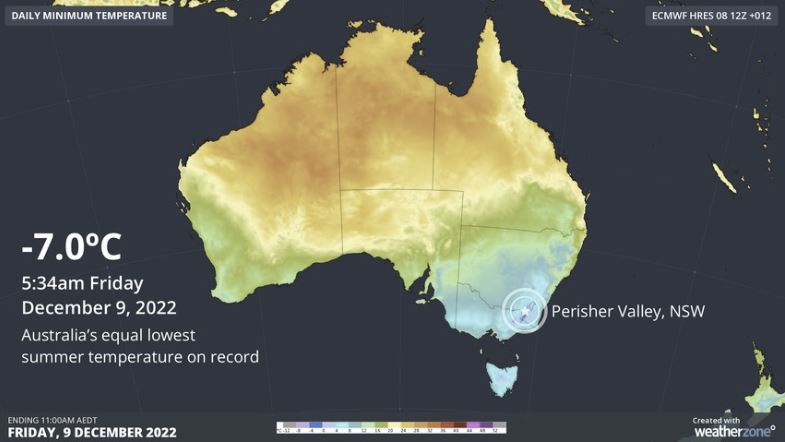
Weatherzone report that Thursday was the equal coldest morning ever recorded anywhere in Australia in summer time. Oddly, there were no preemptive emergency warnings the night before, no news stories announcing the area “might” hit a new record, no camera teams visited the scene and the BOM did not invent a Coldsnap Emergency Alert System to tell Australians to put on a jumper.

On Thursday, Perisher Valley in the Australian Alps got down to minus 7.0 C (19F) equaling the record set in Perisher in January 1979 and which was also reached at Charlottes Pass in December 1999.

Oddly, no one blamed this on climate change, or mentioned that it would have been worse if we hadn’t burnt all that coal. After all, without CO2, it would have been minus ten, right?

There were more news headlines about the heat that didn’t happen than there were about the cold that did.

While no media outlets have mentioned this cold record, many have run the story that temperatures might reach 48C this weekend and they issued plenty of warnings. As it happens the 48C was a fizzer on Saturday (the hottest was 44.9), and looks like missing tomorrow too (the forecast peak is now 45C). Hence imaginary heatwaves beat actual cold.

Apologies to Northern Hemisphere friends in winter, we know “it’s nothing”. But it is supposed to be hot here in December. Yet snow has continued to fall on Australian ski fields in NSW, Victoria and Tasmania this year with a “staggering 25cm” falling on Perisher just days before summer officially began.


From Jo Nova

Jo Nova: Corals On The Nullarbor

Jo Nova reports the astounding find of corals way above current sea levels. Maybe we could restore those coal fired power stations, burn some fossil fuels and restore the reef.

Corals covered the Australian desert once – maybe they’ll grow back if we screw in the right light globes?

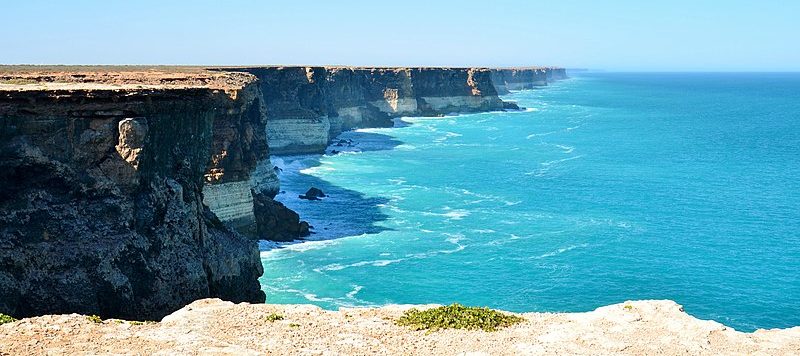
The remnants of a long gone coral reef are not in the water here, but on top of the cliff. This is what real climate change looks like:

Bunda Cliffs, Nullarbor, Great Australian Bight. Photo.

The whole coral reef is now 100 m out of the water | Bahnfrend |

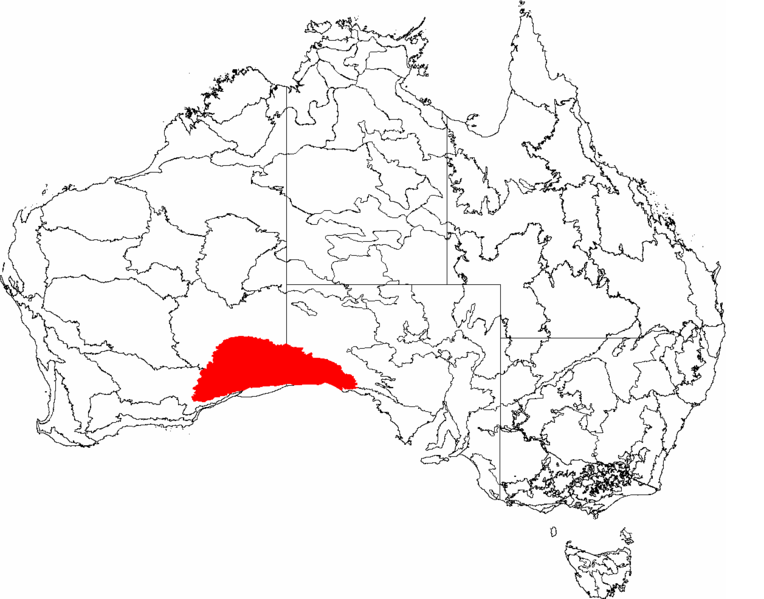
Nullabor plain map. Australia

The Nullabor Plain.

It turns out the high plateau desert called the Nullarbor was once a coral reef. It’s a thousand kilometer stretch without a tree that’s now about 100m above sea level. Obviously it’s a wilderness that’s begging to be restored to its true Miocene glory. The question is whether we can put on enough solar panels to save this reef, or if we can melt the Antarctic and raise the oceans…

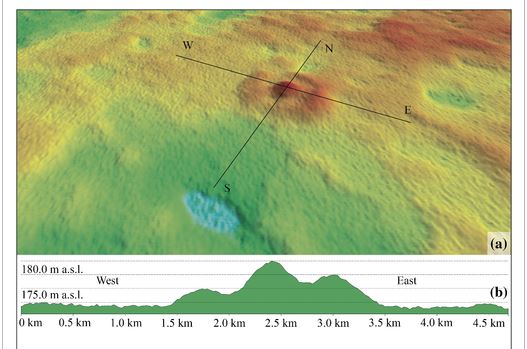
Researchers looking at satellite images spotted a suspicious looking dome and ring (below) . They figured out it was not a meteor crater but probably a former coral atoll. It’s about one kilometer across and corals built this (probably) 14 million years ago. Tectonic shifts lifted the land out of the ocean. If only the polyps had put in a carbon tax?

The Nullarbor is a bit special because the surface is well preserved. There is not a lot of rain, no rivers to speak of, humidity is low, storm surges don’t wash over it and sediments don’t settle on it. Plus the nearest glaciers are in New Zealand.

““So even though it’s exposed, it’s kind of like a land that time forgot … the erosion is so slow, [these features] get preserved for millions and millions of years, kind of capturing a snapshot of how environments were at different times.” —WA Today

Coral Dome, remnant, Nullabor Australia

Coral Dome, remnant, Nullabor Australia

Once fish frolicked in the afternoon sun among the anenome here. Now there is saltbush.

This is the kind of climate change we need to teach children at schools. Geological, not Gretalogical.

Imagine the effect if students knew almost nothing was permanent, life was adaptable, and the climate changed all the time.

Coral reef nullabor

The remnants of a 14 million year old reef

ScienceAlert:

Mysterious Reef From Millions of Years Ago Discovered in Vast Australian Desert

Most of Australia is now arid and dry, with vast inland deserts. Millions of years ago, though, during the Miocene, the continent was teeming with life; not just dense, thriving forest ecosystems, but huge inland seas.

“Through high-resolution satellite imagery and fieldwork we have identified the clear remnant of an original sea-bed structure preserved for millions of years, which is the first of this kind of landform discovered on the Nullarbor Plain,” says geologist Milo Barham of Curtin University in Australia.

The ocean that covered the Nullarbor started to dry up around 14 million years ago, exposing the shallow-water limestones deposited during the middle Cenozoic.

That means the Nullarbor is effectively a clean record of geological processes and features dating back to the Miocene.

“Evidence of the channels of long-vanished rivers, as well as sand dune systems imprinted directly into limestone, preserve an archive of ancient landscapes and even a record of the prevailing winds,” Barham says.

“And it is not only landscapes. Isolated cave shafts punctuating the Nullarbor Plain preserve mummified remains of Tasmanian tigers and complete skeletons of long-extinct wonders such as Thylacoleo, the marsupial lion.”

That’s not all. “At the surface,” adds Barham, “due to the relatively stable conditions, the Nullarbor Plain has preserved large quantities of meteorites, allowing us to peer back through time to the origins of our Solar System.”

REFERENCE

Lipar et al (2022) Enigmatic annular landform on a Miocene planar karst surface, Nullarbor Plain, Australia,  Earth Surface Processes and Landforms.  https://doi.org/10.1002/esp.5459

Army Bushmaster “E-Tanks” Work Great If You Can Find A Charging Station

From Daily Declaration:

Army Takes Us For a Ride With Its New E-Vehicle

Daily Declaration by Guest Writer

e-vehicle

If we are to rely on e-vehicles to transport our soldiers through warzones, the Australian Defence Force is certainly doomed. Perhaps we should consider an even more environmentally-friendly, natural means of transport.

Last month, amid great fanfare, an electric version of the battle-tested Australian Bushmaster (a concept E-Protected Mobility Vehicle) was launched in Adelaide.

The original, diesel-powered Bushmasters built in Bendigo served in the Afghanistan theatre. So impressive were they that allied combatants including the Netherlands and Britain purchased 120-plus of them.

Currently, 20 Bushmasters are en route to active service with the Ukrainian Army. Other defence force customers of the Bushmasters include New Zealand, Fiji, Japan and Indonesia.

The diesel-powered vehicle has an operational range of 800 kilometres.

So, now, an all-singing all-dancing concept electric prototype is ready for Army trials. It is anticipated that these e-Bushmasters will be silent and not generate the heat signature of a diesel vehicle.

Limitations

According to your ABC News of August 11, it is anticipated that the e-vehicle will have an impressive operational range of 1,000 kilometres.

That is not yet the case, according to the Defence Department’s release of August 19, which says: “The first version has about a 100-kilometre range, but a planned larger battery should increase this to 350 kilometres. There’s also work to mount small external generators, increasing the range to about 1,000 kilometres.”

A small detail missed in the media hype was that the e-vehicle could not drive to the Adelaide launch. This was confirmed by the Minister’s office, which said the e-vehicle was transported from Newcastle (NSW) on the back of a motorised vehicle.

Lumbering Death Trap

The e-vehicle is a child sired by the Army’s “Power and Energy Paper” of March 2020.

The lithium battery utilised in the e-vehicle features high-speed recharging; about three hours at an EV station; or, if the crew pull up outside a farmhouse and use the household plug, about seven hours.

An inconvenient feature of the large lithium battery is that if a bullet or shrapnel pierces its casing, the crew will probably be roasted alive. If it should happen in dense scrub, there is the possibility of a bushfire.

A convoy of E-Bushmasters rolling at 100 kilometres per hour from Melbourne to Sydney (870 km) would, with nine stops at EV points, take 36 hours (1½ days) to arrive; while the same 870-km trek in outback South Australia, Queensland, Western Australia or the Northern Territory stopping at farms to recharge would take 72 hours (three days). Diesel-powered Bushmasters can cover the same distance – with driver breaks every two hours – in about 11 hours (half a day).

But do not despair; Assistant Minister for Defence Matt Thistlethwaite said the electric Bushmaster is part of building a “future ready” Army.

Standard Operating Procedure for an army field-force convoy movement is to place the slowest vehicles in the lead. A worry for any convoy commander if he was moving a mixed convoy of motorised and e-vehicles would be the requirement to halt every 100 kilometres to recharge the electric units.

Moreover, not all e-vehicles would stop at the same location because some might “run out of puff” after 90 kms, others at 95 kms, or 98 kms, well short of the recharge point. A convoy with 20 e-vehicles would require a recharge point with 20 EV stations or 20 power points at a farm.

Missing in Action

A timely lesson for the Army comes from the Gloucestershire Constabulary, which boasts the largest full electric fleet in Britain, 91 vehicles. Its problem is simple: the force cannot respond to crime because the batteries “keep going flat”.

Police and Crime Commissioner Chris Nelson said officers had experienced problems finding recharging facilities in the county as the e-vehicles “run out of puff”, and staff needed to change police cars.

Police Scotland invested £20 million ($A34 million) providing 23 stations with e-vehicles but no EV charging points. When their vehicles were plugged into the station’s regular power point, the latter blew up. Now the e-vehicles are left at council car parks overnight with officers reverting to combustion-powered vehicles.

The e-Bushmasters engaged in a limited conflict in the remote outback or even in rural areas and “running out of puff” would certainly meet the Army’s “silent” criterion.

Natural Alternative

While it is easy to criticise a work in progress, any correspondent worth his salt should provide an interim workable solution that will work until the Army’s R&D e-vehicles are perfected before we face an invasion or shortage of liquid fuels.

Luckily, there is a solution to this self-defeating “carbon-constrained economy” nonsense: the camel.

Australia has (perhaps) a million feral camels roaming the Outback. Australian soldiers rode camels into battle during World War I in the Mesopotamia campaigns. Camel trains were used in remote Australia as each animal could carry 100 kilograms of stores, or be harnessed in teams to haul wagons.

In a military emergency, camel teams could haul “out-of-puff” e-vehicles to the nearest power point. A good camel will travel at five km/h; so, she’ll be right, no urgency; the troops can wait.

The Army’s use of camels would be an innovative carbon-reduction “work in progress” of Labor’s Climate Change Bill, now before the Senate, and would easily impress the UN’s climate barons and other assorted global-warming alarmists.

___

By Tony O’Brien.
Originally published at News Weekly.
Photo: Assistant Defence Minister Matt Thistlethwaite inspects the electric-powered Bushmaster armoured vehicle.