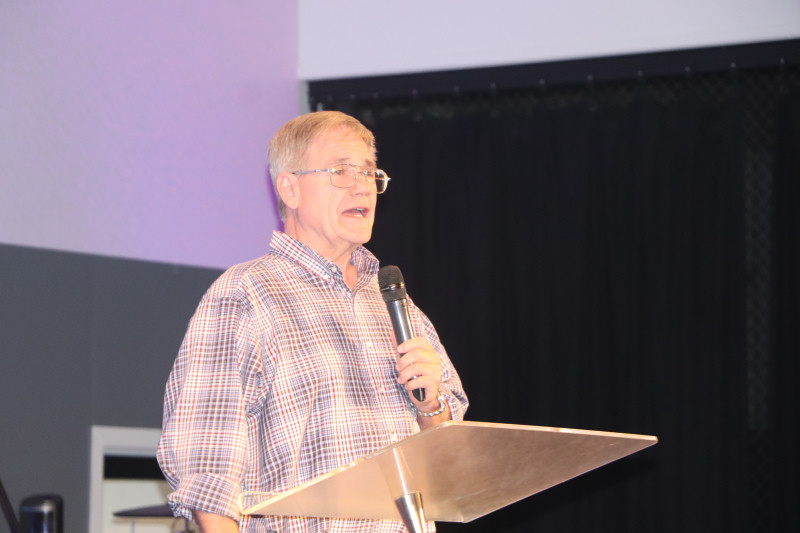
In this session, Dr Ben from Ghana shared by teleconferencing about his experience with John’s apostolic covering.
Derek Ott talked about the original slander against God and how the apostles witness to overcome satan’s accusations.
1 Kings 22:17-21 God has a heavenly household. He wants us to be involved in his counsel.
Deuteronomy 13:1-2 False prophets are allowed in order to test God’s people.
Deuteronomy 32:7-8 God gives nations inheritance We are God’s nation and we need to be cleansed and purified. The Lord’s portion is His people. All the other nations were ruled by lesser spirits but Israel ruled by God.
The first person to be slandered was the Lord by satan. Genesis 3.
Numbers 14 You have rebellion in church, God had rebellion in heaven. People are rebellious because they believe bad report. God threatens to destroy the people but Moses said if you do this the nation’s will think God is not able to save.
1 Corinthians 4:9 Apostles are witnesses. God’s answer to slander is apostles. They model the goodness of Christ and it multiplies through the church. This is the answer to the original slander against God.
Acts 8:4 Revival in Samaria but distracted by Simon the Sorcerer. He wants to buy the power to give the Holy Spirit. V. 21.He had not repented. They needed the apostles to come and bring discernment and confrontation.
Promise Isaiah 59: 21
“As for me, this is my covenant with them,” says the Lord. “My Spirit, who is on you, will not depart from you, and my words that I have put in your mouth will always be on your lips, on the lips of your children and on the lips of their descendants—from this time on and forever,” says the Lord.
Charles Harrison comes form the United States Mid-West. He is a quietly spoken, depp thinking man.
When Charles came to meet John, he came not to learn doctrine but to meet the man and find out whether he is a true reflection of Jesus. He has come to love the people of Peace Church, who stood by him when his wife passed away. He loves the fact that the church building is just a shed. We must seek God’s glory not glamour.
The opponents of the apostolic movement think that anyone can govern a church – teachers, pastors, evangelists – except apostles.
One concern that is expressed is that apostles are said t make decrees. John feels that this is a wrong term. Decrees are made by God and by kings. However, any christian can make a declaration or a command with justification, because we are made in the image of God. Our words carry power.
God trusted men to write scripture, so He can trust people to speak His words.
The opponents think that prayer is limited to making requests of God. The Bible talks of wrestling with spirits and powers. The Lord requires active, hands on, engagement.
In Acts 9, Peter prays to get in the Spirit, and then commands Tabitha to get up. In Joshua 10, Joshua issues a command for the sun to stand still. All of this is evidence that Jesus honours commands and declarations.
It was unusually cool this morning, but warmed up as the day progressed.
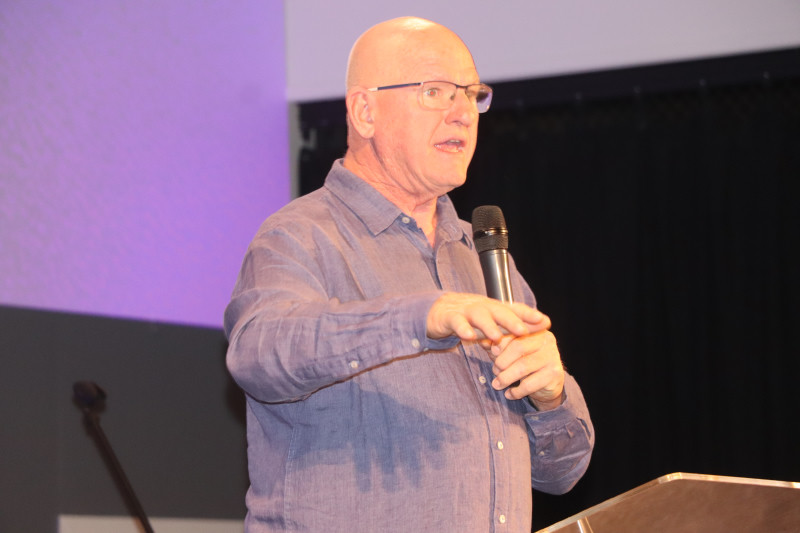
It was Lloyd Gill’s time to share. Lloyd has probably as close a relationship with John as anyone. His special area of ministry is Africa.
When people say they are honouring John & Hazel (or anyone else for that matter), we are in fact honouring Christ who moulded them, raised them, placed them in families, and gifted them.
While it is true that there are false apostles, sometimes it means that they are people who have a calling but are not yet mature enough to take up the calling. This is like Moses who was called at the burning bush, but did not step into leadership of the Hebrews for another 40 years.
In Exodus 3:4-10, God says “I am coming to rescue your people so go and do it.” The fact is that God always uses people to achieve His purposes.
Whatever your call is, it is holy ground, whether that is to be an apostle or a mother or a labourer.
The Friday evening session started with testimonies fro Peter Staines and Veronika Ott about how the Lord had led them into partnership with Apostle John Alley.
John then proceeded to talk about the error of cessationism, the doctrine that the gifts of the Holy Spirit and miracles ceased after the death of the first apostles or the completion of the New Testament.
Biblical errors of cessationism as evidenced in a polemic against NAR 1.Signs and wonders = miracles but see Hebrews 2:4
2. Signs are meant to confirm a message from the Lord. But miracles often come without a message
3. Signs and wonders confirm end times teaching by NAR
3. They assert that people always responded to Jesus’s miracles with faith. False.
4. If NAR miracles are to equal Jesus’s miracles, they should be easy to see.
5. Miracles will be so highly acclaimed leads to public news.
6. Surely the world would know if these miracles happened by NAR people. Countless people get miracles, but they are to meet needs not to be signs. The world is not interested in miracles and tends to ignore or dismiss them.
7. For the time being the NAR people have not changed the world in the way they claim.
“We are a civilised people,” intones John Alley in announcing that we will have 30 minutes for morning tea, even if we are running late. We were running to time, but John likes to ensure that there is time for fellowship between the sessions.
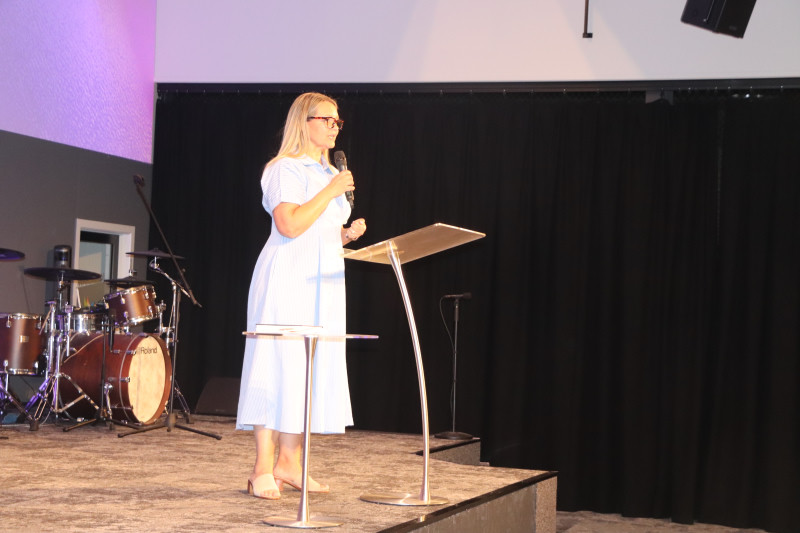
Debbie Gadd is the pastor of Snowy Valley Community Church in Tumbarumba, NSW. As you might guess, it is a cold place, even in summer. Debbie shared how she and her church came to be participants in the fellowship of John Alley’s apostolic network.
Derek Ott is a prophet and teacher from Arizona in the USA. It is the opposite of cold for most of the year. Derek was the main speaker for Session 3.
We were baptised into Christ’s death, and so our responsibility is to live from Christ not from ourselves. As spiritual sons of John Alley, we all need to step up in a bigger way in joining with John’s battle. If God calls a father to a mission. He is certainly calling the sons also. We need to be aware that battle weariness can catch up with us, but God prepares a feast for us on His holy mountain (Is. 25.) We are moving into a season where instead of fighting battles, we are sharing in this feast prepared by Jesus for His people,
For some reason I didn’t sleep well last night, so I was quite weary to start off with.
Mostly, everyone so-operated and we got to the church with a couple of minutes to spare.
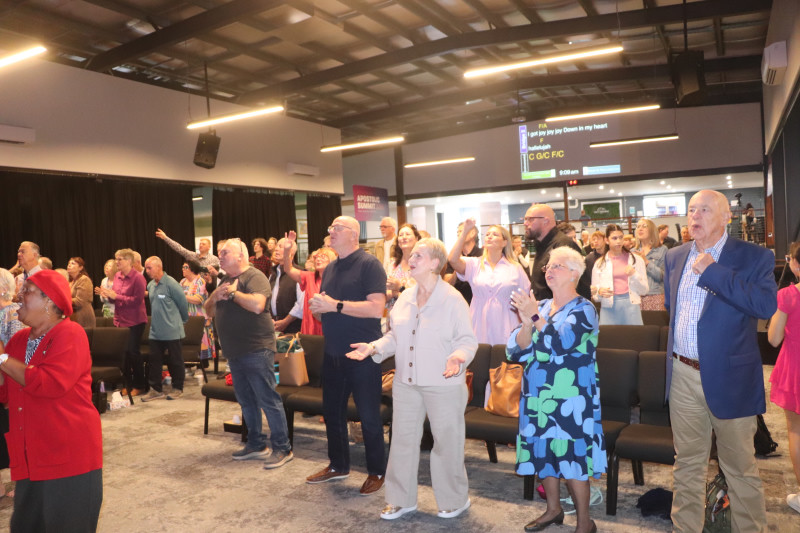
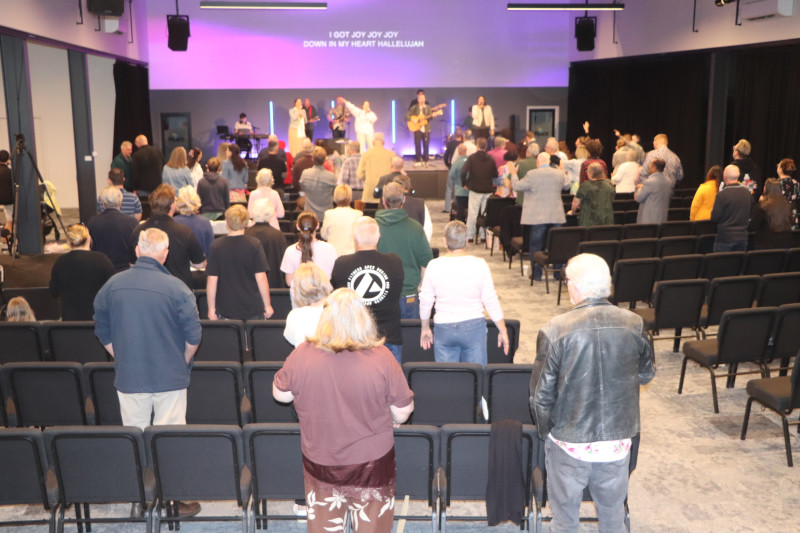
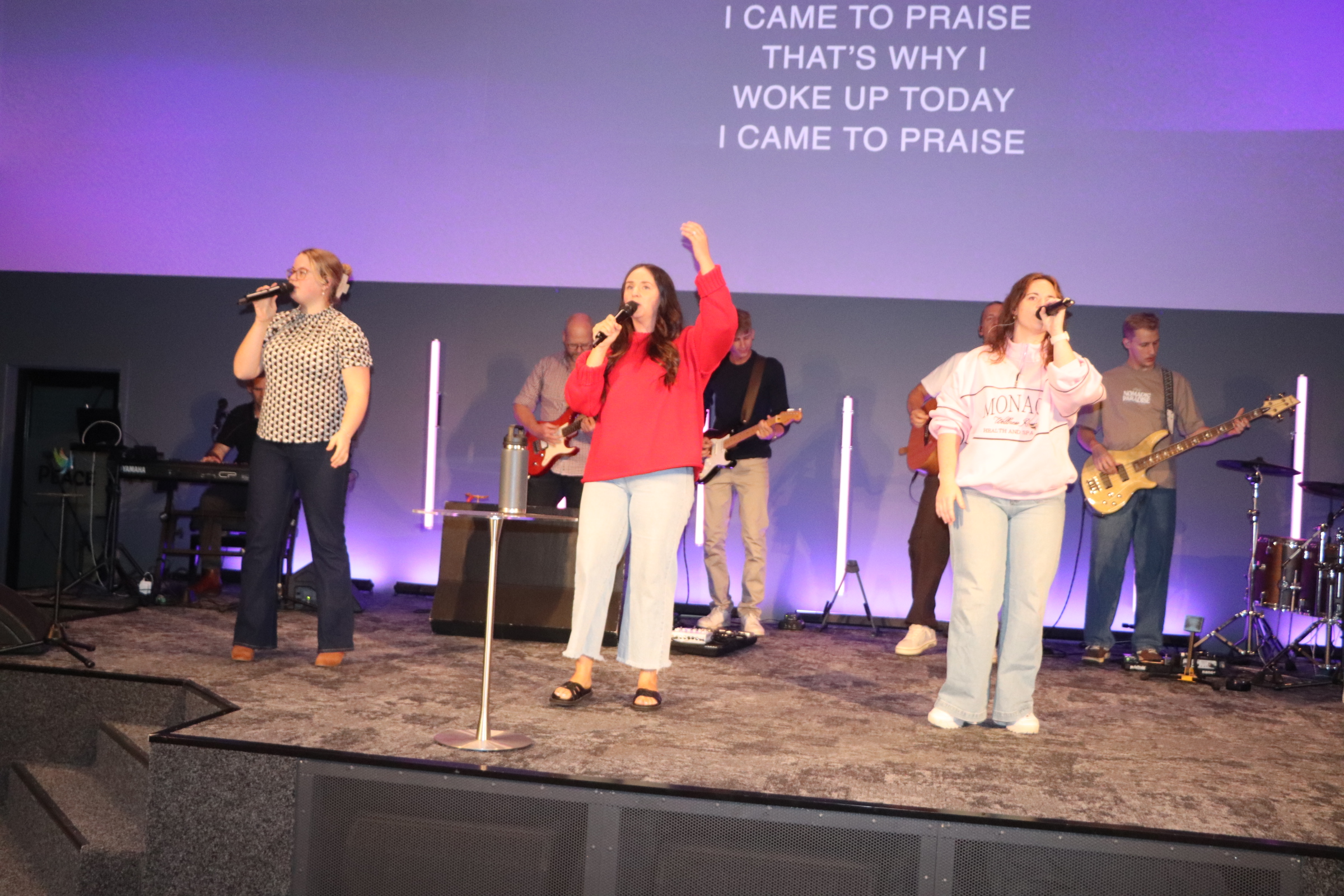
The session started with a powerful time of worship. Linden Scilley spoke about why he believes that John Alley is a genuine apostle. Linden is a Salvation Army officer based in south western Sydney.
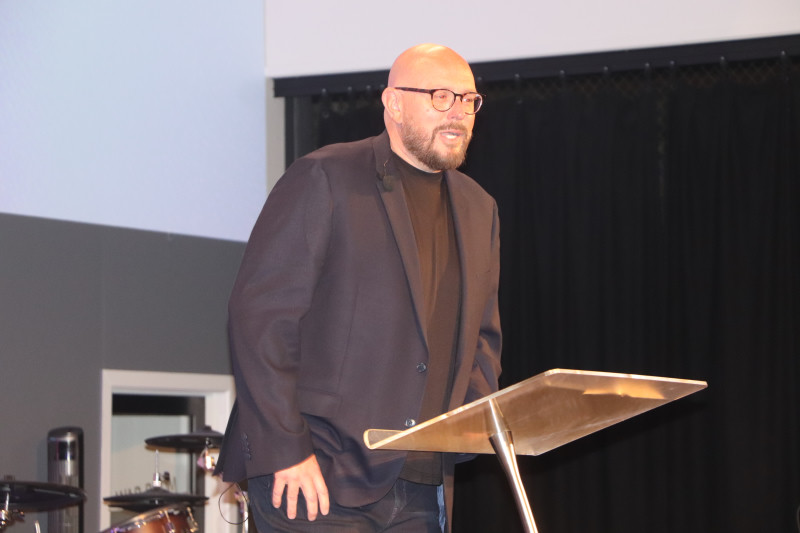
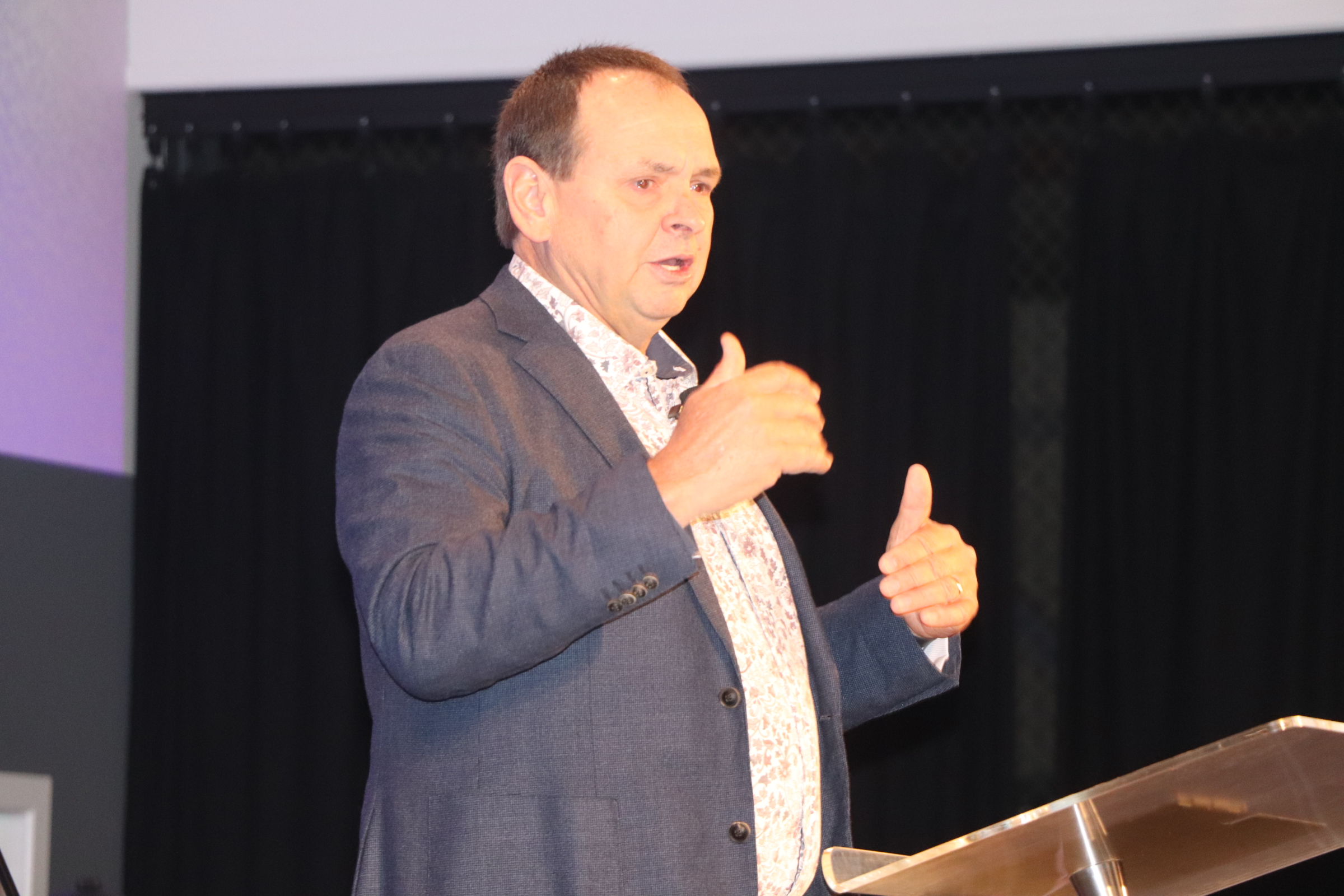
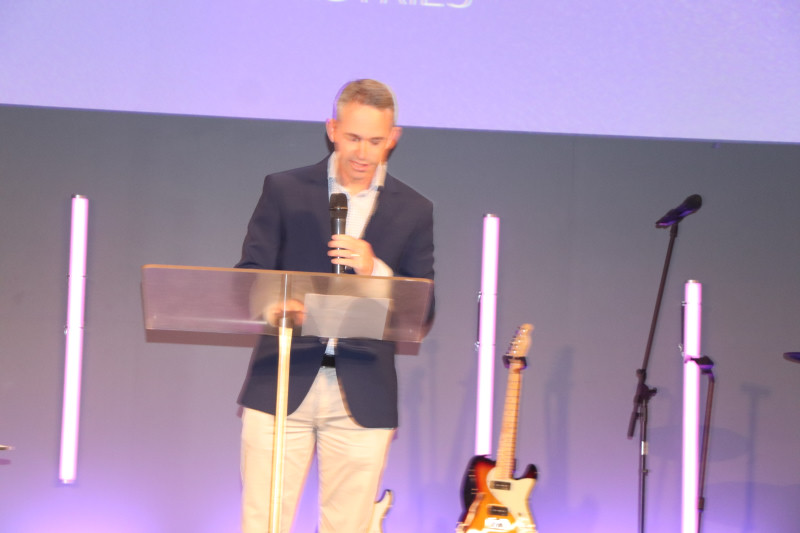
The main speaker was David Alley, John’s eldest son, who was born in Narrabri when John and Hazel were stationed there. David is now the pastor of Peace Church, and has worked tirelessly amongst the pastors and priests of Rockhampton, bringing a very real sense of unity amongst the churches.
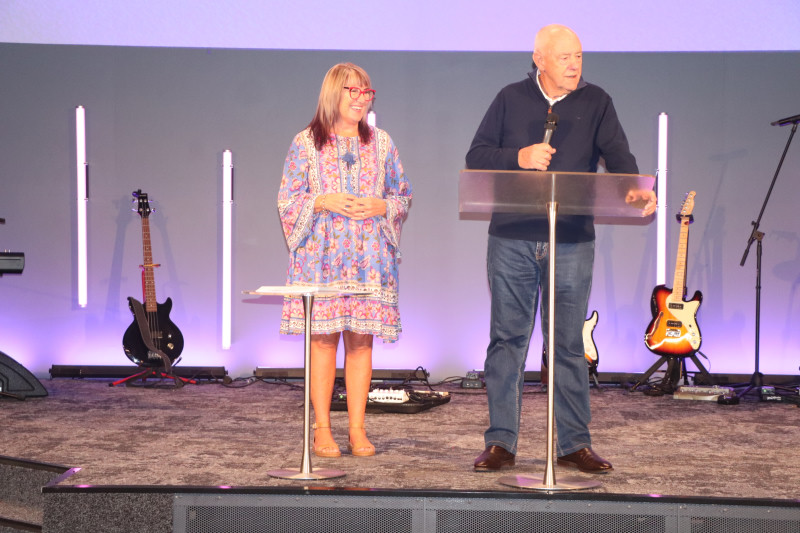
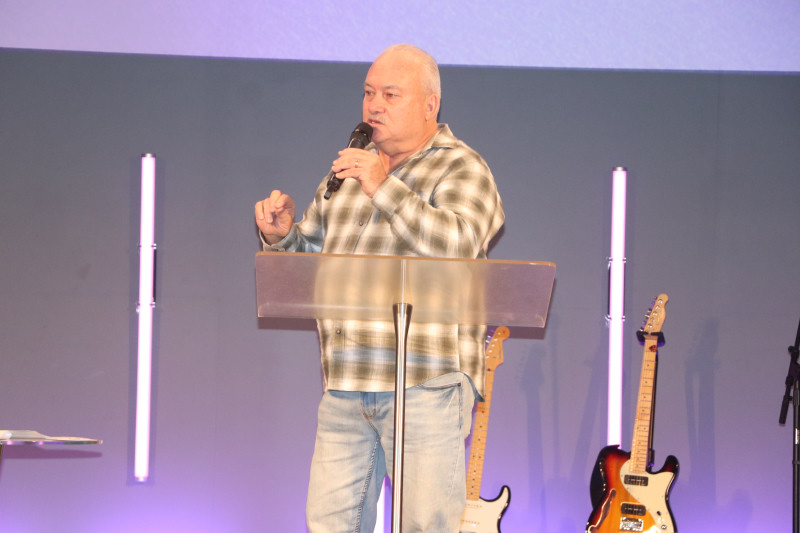
The lighting of the stage has been confusing for the camera, and for some reason ir decided not to fire the flash.
David talked about how we can learn to feel love for other christians, especially those who are not of our “tribe.”
Make a deliberate choice to feel God’s love for me- we cannot love others until we have experienced God’s love as a reality.
Make a deliberate choice to ask God to give you love for others. Some people are easy to love; others not so much.
Make a deliberate choice to pray for God’s people. Prayer is like an investment. We pray for things that are important to us. Equally when we pray for other christians, we start to care about them
On Thursday we set off on the epic pilgrimage to Rockhampton for the 2026 Apostolic Summit. This year, we took Kate and Daniielle, which made it a cosy fit in the back seat.
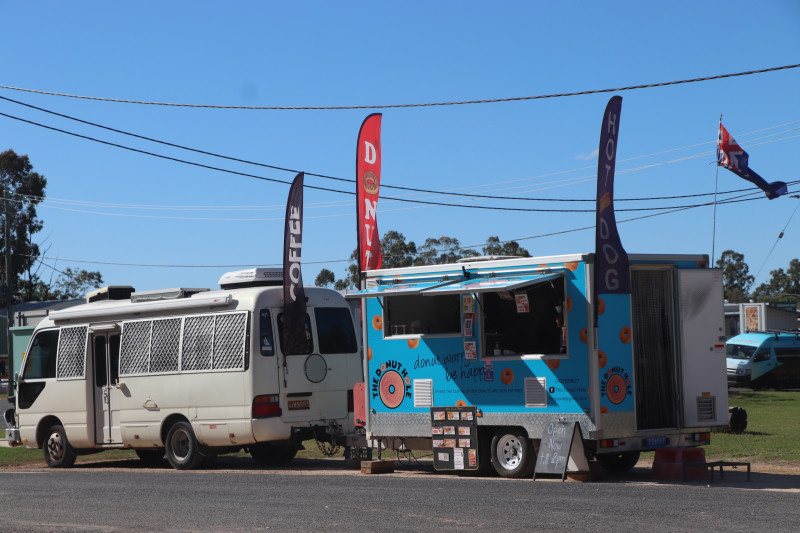
We left at 7 am, arriving for our traditional lunch time stop of Condamine. Thursday is Donut Day in tiny Condamine. The donuts here are excellent, and the centres are guaranteed to be 100% fat free!
We arrived at the Peace Church after a quick dinner, and in time for the start. We met up with the Coopers and the Boltons, all of us thankful for a safe journey of nearly 1000 km.
In the first session, John talked about the New Apostolic Reformation (NAR), which we are definitely not part of.
There are criticisms made of NAR, some of which are valid and some of which are not. The problem with many critics of the NAR is that they typically have little or no experience or knowledge of the charismatic and Pentecostal movements. They lump anyone who is prophetic or apostolic in with NAR. Many Pentecostal/ charismatic ideas and organisations are also seen as “contaminated” or “influenced” by the NAR, even those that were around long before the NAR.
This led on to a discussion of the idea of revelation. Again some critics of the NAR teach that when people have a “revelation” from the Holy Spirit, they are putting their own ideas as equal to Scripture. No, Scripture is the test of whether a personal revelation is genuinely from God or not.
The session concluded with prayers for more revelations, prophecies and words of knowledge for the attendees.
If prayer helps patients heal, why is it still treated with suspicion?
Stories of nurses and doctors facing disciplinary action for wearing a cross at work or offering to pray with patients have become increasingly common. In many healthcare settings, there is a hardline and strict boundaries when it comes to discussions of faith and spirituality. But what if such policies are actually denying patients significant aid in their healing?
Researchers at the University of Maryland School of Medicine have found that just five minutes of in-person Christian prayer can significantly reduce both pain and anxiety, with effects lasting for weeks.
According to the study, prayer proved even more effective than listening to music for the same duration of time.
The randomised trial, conducted by the Department of Family and Community Medicine, involved 180 patients who were divided into two groups: one received five minutes of in-person prayer, while the other spent five minutes listening to music.
Researchers then tracked patients’ self-reported pain and anxiety levels immediately after the intervention, as well as two and six weeks later.
While both groups experienced improvements, the prayer group reported substantially greater reductions in both pain and anxiety. Notably, the anxiety benefits remained statistically significant six weeks after the prayer session.
Dr Katherine Jacobson, assistant professor at the University of Maryland School of Medicine, told Fox News that 97 per cent of participants were either neutral or supportive when asked whether this type of prayer should be available as part of medical visits.
There is little doubt that many churches would gladly send volunteers to nearby hospitals to offer brief prayer sessions to sick and dying patients. The question is whether our institutions are willing to set aside their atheistic bias and allow such care to become a normalised option for those who want it.
The findings, published in the Annals of Family Medicine, add to a growing body of research exploring the role of spiritual care in health and recovery. Yet much of the scientific and medical establishment remains constrained by a materialist worldview—the belief that human beings are nothing more than physical matter, with no soul, spirit, or immaterial dimension.
If that assumption is mistaken—and it is—then the therapeutic value of prayer may be addressing a part of the human person that modern medicine has largely neglected.
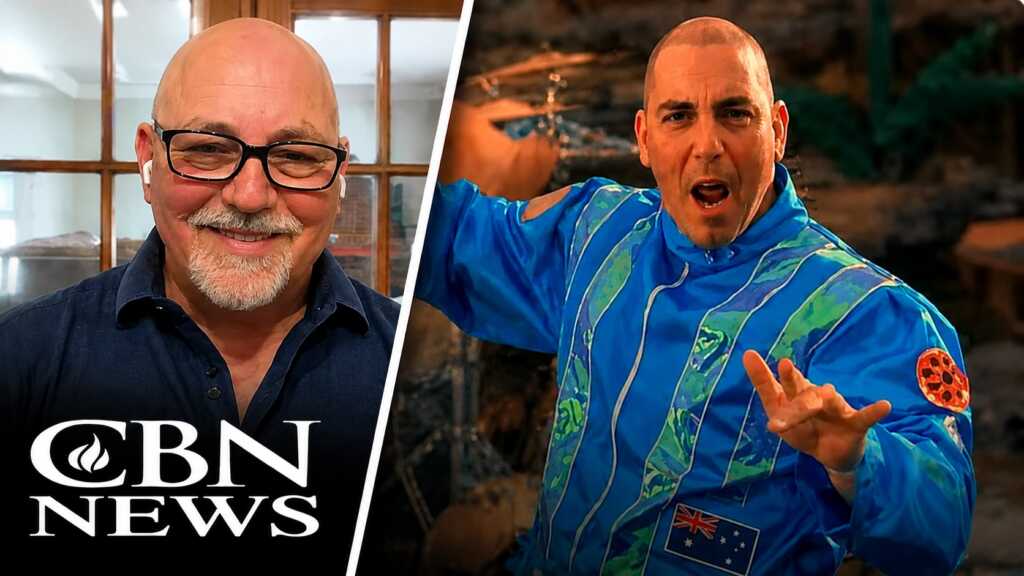
Tucked smack-dab in the middle of John James’ new book — a memoir of his rise and fall with the Newsboys — is a gritty and vulnerable truth: “I had disqualified myself.”
Another piece of the story is, before Tait took on the role of frontman, there was Peter Furler, and, before Furler, there was James.
James, a native of the coastal suburb of Mooloolaba, Queensland, in Australia, recently appeared on CBN’s Faith in Culture Podcast, where he spoke openly not only about his own past — the double life that led to his undoing — but also the heartrending legacy of the Christian rock band he helped create with Furler and Wes Campbell in a garage some four decades ago, in 1985.https://open.spotify.com/embed/episode/1rCVvjxDgJtSOkW6tPQk1r?utm_source=generator
Now in his early 60s, James is sharing his own testimony, an honest revelation coinciding with Tait’s downfall. At the height of the Newsboys’ early success, James’ own life was falling apart: he was caught up in the instant-messaging craze of the 1990s that led him into several compromising conversations, which quickly devolved into internet-based emotional affairs rife with sexual dialogue.
That, coupled with a growing struggle against alcoholism, led James to an uncomfortable confession to Furler while the band was working on its seventh studio album, “Step Up to the Microphone,” released in 1998. After his exit from the Newsboys, James’ life continued to unravel. His first marriage dissolved, illicit drugs became an escape, and a deep depression took over.
Now remarried and dedicated to missionary work, James said it was “authentic repentance” that restored him, healing him from his drug addiction, breaking the cycle of shame over his past sexual sins, and lifting the heavy weight of depression that had crippled him.
“It wasn’t because of anything I could do,” he said, “but it was the mercy and grace of God, that He constantly and lovingly drew me back to the foot of the cross in repentance.”
“That was more than just a prayer I said [at the altar],” James continued. “[It was] allowing the Holy Spirit … to address the brokenness and the sin in my life.”
From there, he added, the singer “started to bear fruit in accordance to repentance.”
James, now a missionary to the U.S. alongside his wife, Tanya, cautioned, though, the path to healing isn’t one that can be traveled “overnight.” It was — and is — “a long journey.”
That perspective, one that is aware of the need for accountability while making room for Bible-based redemption, gives James — who parted ways with the Newsboys 30 years ago — a unique opportunity to speak into the devastating Tait scandal that has dominated Christian news over the last year and a half.
Looking at all that has unfolded, James said, “It breaks my heart to see the legacy end this way.”
“My heart goes out to the people who were wounded, the victims, the people who were betrayed, just absolutely tragic,” he began, noting there are “absolutely” consequences to sin but that “no one is beyond redemption.”
He continued, “I carry the consequences and the scars of my mistakes and my sin that shipwrecked my time with the Newsboys. I carry those scars for the rest of my life. But we cannot take redemption off the table.”
“My prayer for everyone involved with the Newsboys tragedy is that, somehow, God would weave a redemptive story out of it,” James said. “I don’t know how, I don’t know how long, but one day, we would look back and think, ‘Man, that was the worst thing that ever happened. But man, what a testimony, God, of forgiveness, of repentance, of mercy, of grace, of healing that You brought out of that.’”
Redemption from sin, he added, is God’s “specialty.”
Listen to our entire conversation with James in the Faith in Culture Podcast episode above.
Among the recommendations the Index puts forward is an Australian Freedoms Act that would provide enforceable nationwide protections for speech, religion, conscience and association.
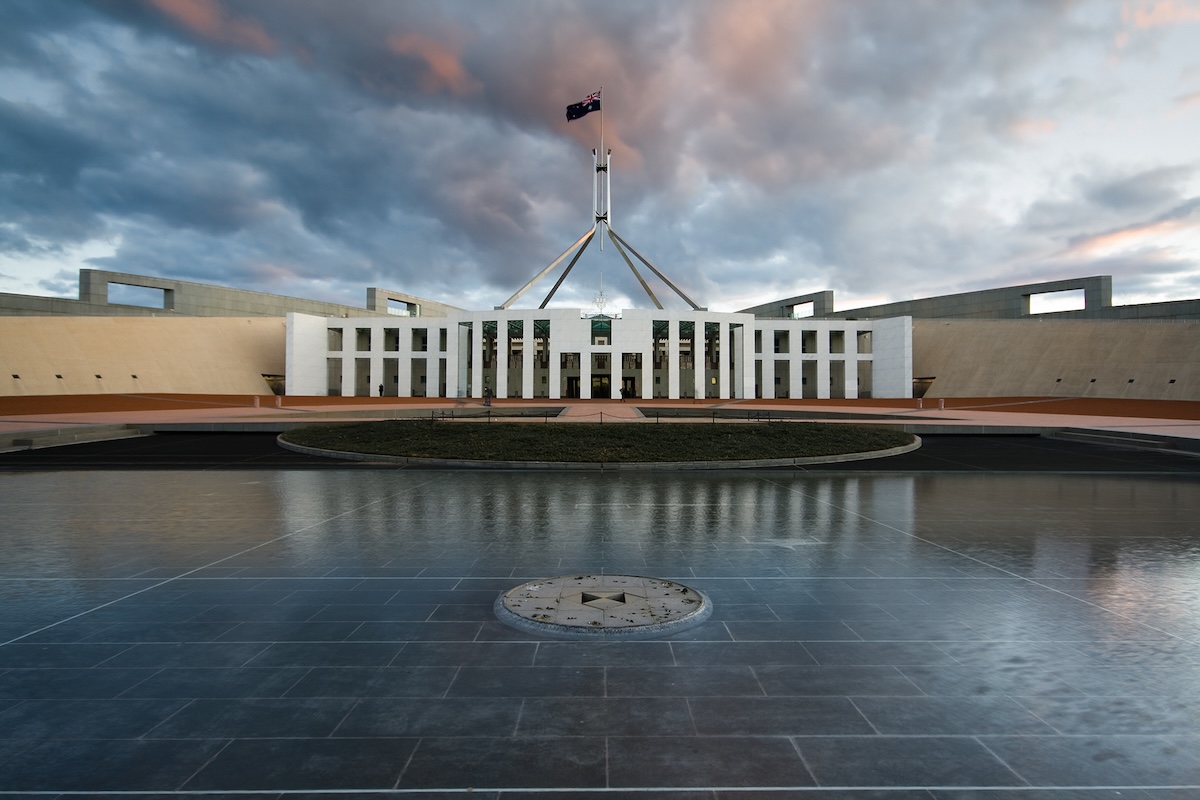
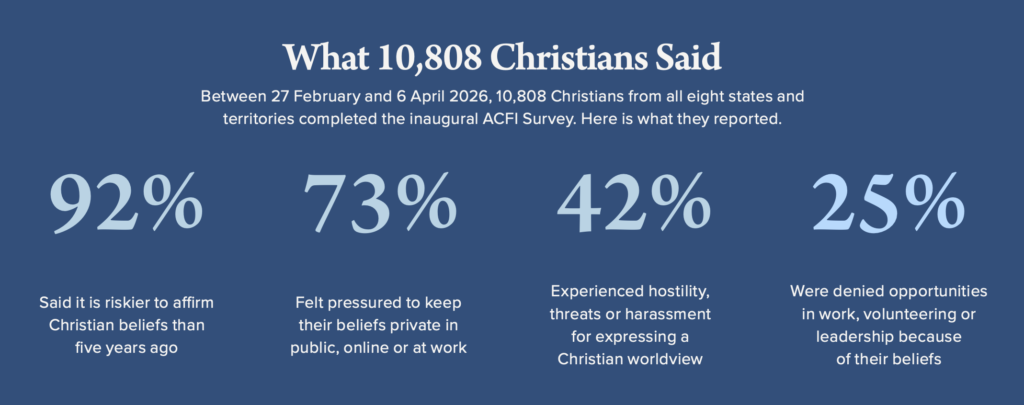
Australia’s first systematic audit of Christian freedom launches at Parliament House in Canberra tomorrow morning, with preview data already showing that nine in ten Australian Christians believe it has become riskier to affirm their faith publicly than it was just five years ago.
The Australian Christian Freedom Index (ACFI) 2025 — a 108-page report produced by the Canberra Declaration in partnership with the Australian Christian Lobby, FamilyVoice Australia, the Australian Family Coalition, CitizenGo, and the Human Rights Law Alliance — will be released at a bipartisan breakfast in the Reps Alcove at 7am on Thursday 28 May.
Representatives from the Labor, Liberal and National parties, along with One Nation, are expected at the event, with organisers around a dozen parliamentarians.
Seven of the report’s eleven authors will give a short speech at the launch event. Every attendee will receive a hand-signed copy of the report.
What the Report Will Show
A companion guide released ahead of tomorrow’s launch — available here — previews the report’s major findings.
The full data draws on 10,808 survey responses collected from Christians across every Australian state and territory between 27 February and 6 April this year.
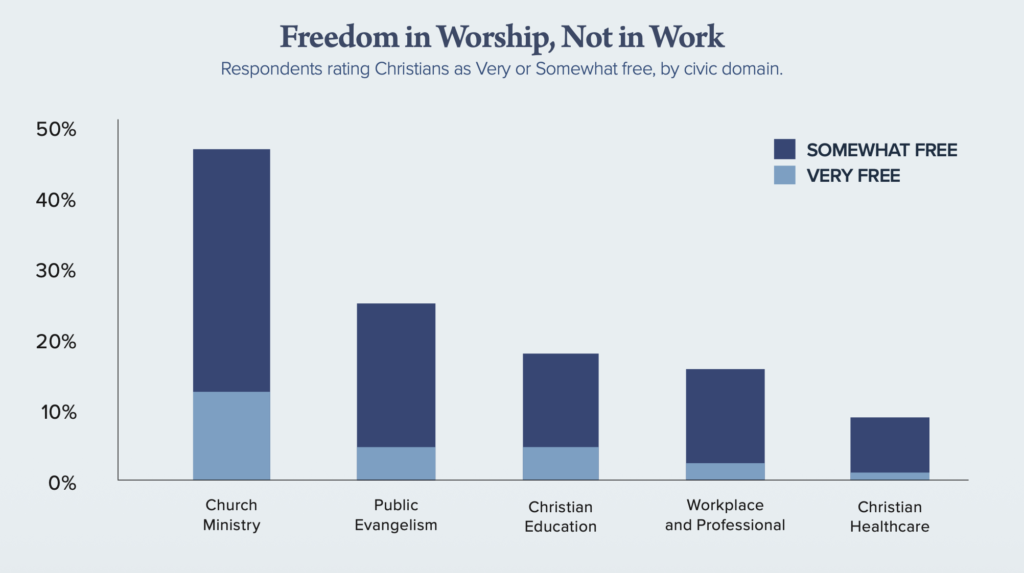
The companion guide shows perceptions of freedom varying sharply by civic domain. Respondents rated Christians as most free in church ministry and worship — the only domain where close to half rated Christians as at least somewhat free.
That figure fell to roughly one in four for evangelism, and dropped even further for Christian education and the workplace.
The lowest result was for Christian healthcare, where just 8% of respondents rated Christians as somewhat or very free to operate according to their beliefs.
The report’s legislative audit, which covers 74 Acts across nine jurisdictions from 2000 to 2025, documents a sharp acceleration in restrictive legislation.
Victoria ranks as the most legislatively restrictive jurisdiction; Western Australia the least.
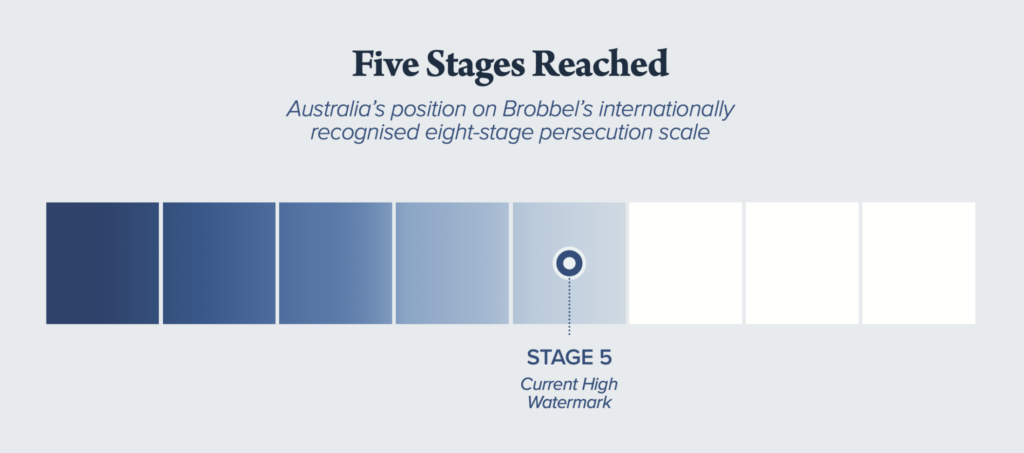
Using the eight-stage persecution scale developed by Floyd A. Brobbel of Voice of the Martyrs Canada — a scale that runs from ridicule through harassment, discrimination, defamation and attack, to detainment, torture, and martyrdom — the ACFI locates Australia’s documented cases across the first five stages.
42 Recommendations
The report does more than document the problem: it makes 42 concrete recommendations across three audiences: parliaments, church leaders, and individual Christians.
For parliaments, the ACFI calls for an Australian Freedoms Act that would provide enforceable nationwide protections for speech, religion, conscience, and association — a positive legislative right to replace what it describes as the current patchwork of exemptions.
It also calls for restored religious hiring exemptions for faith-based schools across all jurisdictions and an end to compelled participation in abortion and assisted suicide for healthcare workers with conscientious objections.
For church leaders, the report urges public advocacy for Christians facing legal pressure, stating plainly that silence has only increased hostility.
The index also calls for the establishment of a national register of anti-Christian incidents, a mechanism that does not currently exist in Australia.
For individual Christians, the report calls on believers to maintain their public witness, engage their elected representatives, and share the findings of the report.
Most Australians — including most Christians — remain unaware of the scale of what the report documents, the companion guide notes.