As a pastor, one of my great passions is to see people mature in their faith, growing in their walk with the Lord and becoming all that God destined them to be.
At a few places in the New Testament this same passion is expressed in terms of moving on from a baby diet of milk to a more mature diet of solid foods. Nobody wants to be a baby forever- except some christians who just consume and never give out.
In Hebrews 5:12-13 we read:
You have been believers so long now that you ought to be teaching others. Instead, you need someone to teach you again the basic things about God’s word. You are like babies who need milk and cannot eat solid food. For someone who lives on milk is still an infant and doesn’t know how to do what is right.
When we just look after our own needs we are acting like a baby. When church is all about me “getting fed”, or the music that I like or a nice message, that is just the milk of faith. You can be a christian conference junkie getting the best Bible teaching week after week, or spend three years at Bible College, and still be a baby, living on milk.
How do we move onto maturity and get the solid food? The writer to Hebrews says it is when we are teaching others. Teaching means passing on knowledge or skills. This does not have to be standing in front of a group of people giving a lecture.
It could mean
praying with and for people in a cell group- that’s passing on your knowledge of prayer,
helping the leader of your cell group through offering to take responsibility for some part of group life
sharing the Good News with your friends
being on the maintenance team at church
singing or playing an instrument in church or cell group
The amazing thing is that when knowledge is put into action in these ways, we grow immensely because faith was never meant to be kept to ourselves. Church is meant to be a community where everybody brings their gifts and talents and uses them to help others. It was never meant to be a professional performance where the “experts” do it all.
I am often amazed by children in church. You ask them a question about walking with the Lord, and you get the mumbled answers and the standard answers, but then maybe 5% of answers will carry so much wisdom that you gasp and think, “Where did you get that from?” It says in the bible that even a child will lead them. (Isaiah 11:6)
Are you sill on the milk of faith? Are you for ever taking in and never giving out, like the Dead Sea? Or have you seen the power that giving to others actually grows you more than it grows them?
Move on from the milk and the childish ways of doing things.
In the contemporary church, the dominant strategy for growth has been church planting. Networks, denominations, and movements invest enormous resources into launching congregations, gathering crowds, securing buildings, and sustaining programs. Yet despite sincere intentions, many church plants do not endure. Based on my own observation—especially in New York City—numerous churches planted since the early 2000s are no longer here.
One key reason for this fragility is that we have often been trained to start churches built on crowd-centered models, rather than on disciple-forming communities. The New Testament emphasis was never primarily on planting churches as institutions, but on forming communities of disciples who lived under the lordship of Jesus. When you plant communities of disciples, strong churches inevitably emerge. When you plant churches without disciples, you may gain attendance—but you may not gain endurance.
(A New Testament disciple is one who is under the direct tutelage of a mature believer who has committed themselves fully to the Lordship of Jesus Christ).
The book of Acts makes this unmistakably clear. In Acts 1, the followers of Jesus are already identified as disciples (Acts 1:15). This language flows directly from Jesus’ commission in Matthew 28:19, where He commands His followers to “make disciples of all nations.”
On the Day of Pentecost, about 3,000 people were converted (Acts 2:41). Yet Scripture does not immediately call them disciples. Instead, Acts shows us a process of formation. The term “disciples” becomes prominent again only later, once believers are grounded, shaped, and tested in community (Acts 6:1).
Acts 2:42 explains how this happened: “They devoted themselves to the apostles’ teaching and fellowship, to the breaking of bread and the prayers.” These converts were not rushed into leadership or counted as mature followers; they were immersed in doctrine, shared life, and spiritual practices. Only after this formation does Luke begin to emphasize the multiplication of disciples rather than simply converts.
Paul followed the same pattern. In Acts 14:21–23, after preaching the gospel, Paul and Barnabas “made many disciples” and then returned to strengthen them, exhorting them to continue in the faith. In Acts 19:1–10, when Paul entered Ephesus, his first action was to seek out disciples (Acts 19:1). He then taught daily in the Hall of Tyrannus for two years (Acts 19:9–10). The result was not merely a large gathering but a deeply formed community that confronted spiritual powers, challenged the cult of Artemis (Acts 19:23–27), and eventually gave rise to multiple churches—seven of which are addressed in Revelation 2–3.
History confirms this biblical pattern. The church in Iran today is growing faster than at any point in its history because it operates as a disciple-making movement, not a church-planting industry. Likewise, after 1949, when Western missionaries were expelled from China and church buildings were destroyed, the church grew exponentially. The focus shifted to small, committed communities of disciples—ordinary believers willing to suffer, lead, and multiply without dependence on Western professionals or structures.
Below are ten reasons why the church must refocus its energy on planting communities of disciples rather than merely planting churches.
1. Jesus Commanded Disciple-Making, Not Church-Planting
The Great Commission is explicit: “Go therefore and make disciples” (Matthew 28:19). Churches are the fruit of obedience to this command, but they are not a substitute for it.
2. The Early Church Counted Disciples, Not Churches
Acts 6:1 states, “The number of the disciples was multiplying.” Scripture measures growth by formed lives, not facilities ,crowds or programs.
3. Conversion Was Followed by Formation
After Pentecost, believers were immediately immersed in teaching and community (Acts 2:42–47). Discipleship preceded structure, leadership offices, and expansion.
4. Paul Strengthened Disciples Before Expanding Churches
Paul revisited cities “strengthening the souls of the disciples” (Acts 14:22). His priority was endurance, not momentum.
5. Disciple Communities Produce Resilient Churches
When persecution arose, disciples remained faithful (Acts 8:1–4). Movements survived because believers were formed, not merely gathered.
6. Disciple-Making Develops Indigenous Leaders
In Acts 20:17–28, Paul entrusts leadership to local elders formed through shared life and instruction, not imported professionals.
7. Discipleship Confronts Spiritual Powers
Paul’s disciple-making in Ephesus dismantled the economic and spiritual stronghold of Artemis (Acts 19:26–27). Depth, not spectacle, brought transformation.
8. Discipleship Communities Multiply Organically
“The word of God spread, and the number of the disciples multiplied greatly” (Acts 6:7). Multiplication flowed from formation.
9. Disciples Carry the Mission Everywhere
Scattered believers preached wherever they went (Acts 8:4). The mission advanced without buildings or centralized programs.
10. Churches Are the Fruit of Discipleship, Not the Foundation
Healthy churches emerged wherever disciples did life together (Acts 11:26). The church grew because disciples were first made.
Conclusion
I obviously believe in church planting and buildings, my point is they are not sufficient if disciple making is not the primary focus. Scripture, church history, and modern movements testify to the same truth: disciple-making is the engine of lasting gospel impact. Churches are essential, but they must arise from communities shaped by Jesus, not merely crowds gathered from smart branding.
If we want churches that endure, cities that are transformed, and movements that outlive their founders, we must return to the original mandate. The future of the church will not be secured by better branding or larger launches—but by communities of disciples who live, suffer, and multiply for the glory of Christ.
This video shows how the Rapture is a very recent doctrine that was not thought of for hundreds of years, and is still rejected by the majority of Christians in the world.
“The early church did not look for an escape but waited expectantly for resurrection.”
Australian Engagement on YouVersion Reaches Historic High over Holy Week
In Australia, Bible engagement increased by 17.6% across the YouVersion Family of Apps during Holy Week compared to last year, with more than a quarter of a million Australians engaging in the Bible on Good Friday. In fact, Easter Friday and Saturday are ranked as the highest days for Bible engagement ever recorded nationally, and Easter Sunday also ranking among the highest days in YouVersion Australia’s history.
The surge reflects not just a seasonal moment, but a broader pattern emerging in how Australians are engaging with questions of meaning, hope and faith. The Bible App has now been installed more than 8.2 million times in Australia and is opened more than 200,000 times every day.
Historic App Highs
While Easter has long been a focal point, in 2026 it has coincided with an unusual and sustained surge in engagement. Nine of the top ten days for daily active users in Australia have all occurred this year. Even outside traditional peaks, engagement has remained elevated, pointing to a deeper shift beyond seasonal patterns.
YouVersion Australia Hub Leader Dave Adamson said the data points to a shift not always captured in headlines or census data.
“This data suggests a shift in how Australians are engaging with the Bible,” he said. “While public narratives often emphasise decline, everyday habits are pointing to something more.”
Part of this reflects the rhythm of Lent, a season historically associated with reflection and return. It also coincides with a broader global atmosphere of uncertainty, where people are often drawn to deeper questions of hope, peace and meaning.
“Faith tends to surface most clearly in lived experience and it often becomes visible in how people navigate uncertain or challenging moments. We’ve never had more access to information, yet many people feel more uncertain about what it all means,” Adamson said.
“And increasingly, their deeper questions are showing up in search bars. In fact, four of the top five searches are positive: love, hope, healing and peace. That’s not people running from something. That’s people reaching for something deeper.”
Records Broken Across the Globe
Easter remains one of the most significant moments for Bible engagement each year, with Australians, from lifelong Christians to the spiritually curious, turning to Scripture during Holy Week. Last year, the most read verse in Australia during this period was John 15:13: “Greater love has no one than this: to lay down one’s life for one’s friends.” In 2026, Matthew 28:6 emerged as the most popular Holy Week passage.
Globally, 21.6 million people engaged with the Bible on Easter Sunday across the YouVersion Family of Apps, continuing a series of record-breaking days following an historic milestone of one billion installs last year.
YouVersion Founder and CEO Bobby Gruenewald says: “Over the last several months, worldwide interest in the Bible has continued to increase. It’s encouraging to see people searching for and consistently coming back to Scripture for guidance, encouragement and answers. We especially see this at Easter where more people are either reflecting on their faith or trying to understand who Jesus was for themselves. Seeing people around the world encounter Scripture, many for the first time, is exactly why we exist.”
Good Friday? A PR Disaster, Until Sunday Fixed It!
If I weren’t a Christian, I’d at least be curious.
I mean, how do you explain a religion that describes the Friday on which their God died as “Good Friday”?
How is it good?
“Deeply Unfortunate Friday” would be closer to the mark.
“Catastrophic Miscalculation Friday” has a certain ring to it.
“End of Days Friday” is … probably a little dramatic … but still … it makes more sense than “GOOD Friday”.
What’s So Good About Good Friday?
But then, Christianity has always struck me as being a little bit strange.
Not “strange” as in bizarre. Strange as in… unexpectedly compelling. The kind of strange that makes you lean in rather than back away.
That Jesus was a historical figure is not seriously contested. There’s more evidence for the existence of Jesus than there is for Plato or Socrates or a Liberal Party Immigration Policy.
That Jesus died on the cross is also not controversial. The Romans were many things, but vague record-keepers wasn’t one of them.
The Most Audacious Claim in History
But Christianity doesn’t stop at “good man, tragic end”.
It makes the rather audacious claim that this was God Himself — stepping into human history, living the life we should have lived, and dying the death we all deserved.
Which is either the most profound truth ever told … or the most outrageous claim ever made.
If it’s true, it’s both humbling and encouraging.
It’s humbling to hear that, apparently, I’m not fixable with a few minor adjustments and a better morning routine.
It’s encouraging because if God was willing to die on my behalf … then perhaps I’m not quite as disposable as I sometimes suspect.
Did He Actually Rise?
But is it true?
Well, that’s where Easter Sunday comes in. Speaking of Easter Sunday, don’t miss The Macpherson Angle at 8 p.m.
But back to the other Saviour of the world.
If, as The Washington Post once said, Good Friday was the premature end to a gentle Jew’s promising teaching career… then Christianity collapses like a poorly built Ikea shelf.
But if Jesus DID rise from the dead… that changes everything. And I mean everything.
It means there is a God.
It means there is a God who is interested in us.
And it means there is life eternal beyond the dark horizon that confronts each of us personally at one stage or other, and all of us collectively at moments when Labor is in power.
Is it all about the bunnies and the eggs? I love chocolate, but this year they seem to be even more expensive than filling the fuel tank.
One headline I saw said this: “Modern Aussie Easter made easy: Barramundi with charred pineapple and a stunning upside-down apple & quince cake” So it’s all about the food then.
For other people, the long weekend is a perfect time to get away, possibly camping. Four days off work and time to de-stress. The hardware shops will all tell us now is the time to buy that camping gear and paint the house, definitely a mixed message there.
So what is Easter about?
It all goes back to around the year 33 AD in the city of Jerusalem. Jesus Christ had become a problem for the authorities. His ability to draw crowds with lively preaching and miracles of healing was upsetting the religious authorities. Worse still, there was the possibility that riots might erupt, political turmoil develop and the occupying Roman authorities clamp down on everybody.
The religious and civil leaders hatched a plan. They rigged a show trial, complete with false witnesses who claimed that Jesus was stirring up trouble, The Roman governor didn’t have any qualms about crucifying one more Jew.
So on the day we now celebrate as Good Friday, Jesus was nailed to a cross at about 9 o’clock in the morning, dying six hours later. He was buried in a tomb. The authorities thought that episode was over, and life could get back to normal.
However, on Sunday morning, the day we call Easter Sunday, it became clear that Jesus had risen from the dead. Over the next few weeks hundreds of his followers reported seeing Jesus alive, in a restored body.
Easter is a celebration of two things.
We remember that Jesus died for us on Good Friday. His death paid for the things that we did that are wrong.
We also celebrate that Jesus has won the victory over death. He died and returned to life and promises that everyone who trusts him will also live forever.
The most famous verse in the Bible says, “God so loved the world that he gave his only Son so that whoever believes in him shall not perish but have everlasting life.
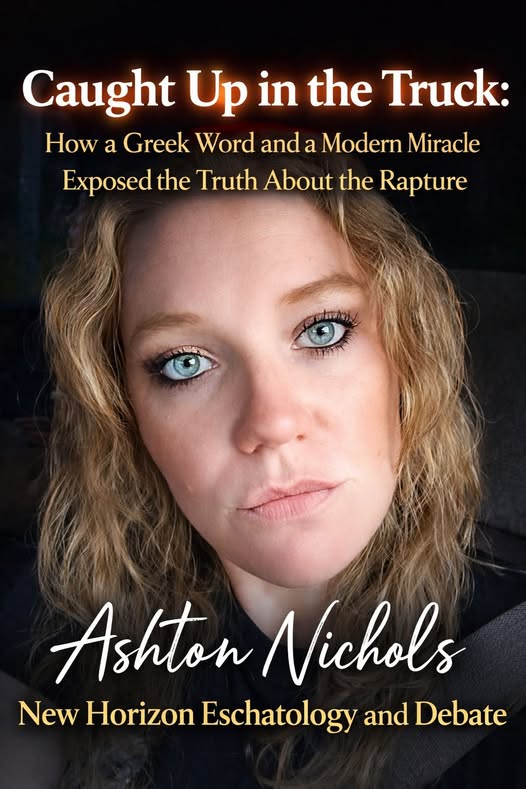
Caught Up in the Truck: How a Greek Word and a Modern Miracle Exposed the Truth About the Rapture
We often read the scriptures through the lens of what we’ve been told, rather than what is actually written on the page. For years, I viewed the “Rapture” as a physical exit from this world—a literal flight into the clouds. But what if we’ve been missing the most beautiful part of the mystery? By diving into the original Greek and reflecting on a life-changing encounter in the passenger seat of my truck, I’ve come to realize that being “caught up” isn’t about leaving the earth—it’s about a spiritual awakening that is available to us right here, right now.
The Mystery of the “Air”
I recently learned something I was previously unaware of while reading John Noe’s book, The Apocalypse Conspiracy. Specifically, it concerns the Greek word used for “air” in 1 Thessalonians 4:17.
Most people who focus on the Rapture emphasize being “caught up,” but they often overlook the rest of the verse or fail to examine the original Greek meaning of the word “air.”
1 Thessalonians 4:17
”After that, we who are still alive and are left will be caught up together with them in the clouds to meet the Lord in the air.”
There is no mention here of being in heaven or at God’s throne; it simply says we are caught up in the clouds to meet the Lord in the air. In the New Testament, there are two primary Greek words used to translate “air”:
• Ouranos: This refers to atmospheric air, where birds fly, or higher.
• Aer: This refers to internal breath, derived from a verb meaning “to breathe unconsciously.”
Aer is the specific word the Apostle Paul used in 1 Thessalonians 4:17. Interestingly, the corresponding Hebrew word is “spirit,” which aligns perfectly with John’s description in Revelation 1:10, where he says, “I was caught up in spirit on the Lord’s day.”
This is also reminiscent of Paul’s own experience described in 2 Corinthians 12:2-4:
”I know a man in Christ who fourteen years ago was caught up to the third heaven. Whether it was in the body or out of the body I do not know—God knows… he heard inexpressible things, things that no one is permitted to tell.”
Paul didn’t even know if he was in his physical body or out of it; he simply knew he was “caught up” and heard things he couldn’t describe.
What About the Clouds?
The original Greek word used in 1 Thessalonians 4:17 is nephos (νεφος). While it can mean a physical cloud, its metaphorical meaning is a “dense crowd” or a “multitude.” This same word is used in Hebrews 12:1: “Therefore, since we are surrounded by such a great cloud of witnesses…”
It seems Paul was not referring to the literal clouds in the sky. This mystery is spiritual. It has nothing to do with physical death or being sucked into the sky; it has everything to do with being caught up in your spirit into God’s presence. This applies to all believers, here and now.
My Personal Experience
I want to share an experience that happened to me a little over three years ago.
I was in a dark place, feeling that God didn’t love me or want me. My husband and I were driving down the road in our truck, and I was staring out the window, consumed by negative thoughts. Suddenly, something happened that is honestly hard to put into words. I heard the words, “I do love you!” very clearly.
Not only did I hear it, but my body felt strange. An unexplainable peace washed over me—something I had never felt in my life. I heard that I would see miracles, along with a few other things that I curiously cannot remember. Tears streamed down my face. I wasn’t sad; I just couldn’t stop them. It felt as if time stopped and my body was frozen.
While this was happening, my husband was apparently trying to get my attention to see what was wrong. I was unaware of this. When I finally “came to,” it took a while for my speech to return. When I finally told my husband, the look on his face was one of pure shock. I will always remember that He said He loved me. That experience changed my life.
One of the miracles that immediately followed involved our home. We were about to lose our house because work had been so slow. That very same day, God used one of our clients to pay off our debt entirely. We also ended up with extra jobs that caught us up on everything else. We were completely out of our financial pickle! It happened so fast it was unbelievable.
God said “miracles,” and since that is plural, I assume there may be more to come. I haven’t had an experience like that since, but I have been changed ever since. I was “caught up” with the Lord that day, and I didn’t even fully understand it until recently.
A Call to See with New Eyes
If this study of the Word and my personal testimony has opened your eyes, I hope you see that this has nothing to do with the traditional rapture. That teaching often keeps people waiting for a physical escape that isn’t coming, causing them to miss the spiritual reality available to them right now.
When we stop looking at the sky and start looking at the Spirit, we realize that “meeting the Lord in the air” is about the internal breath—the Aer—and being caught up in the overwhelming love of the Father.
Please share this with someone who needs to hear it. If this has resonated with you, help others move from carnal confusion to spiritual clarity. Let’s remind them that they don’t have to wait for a future event to be “caught up” in God’s presence; they can experience His miracles and His love today.
Saint Patrick is one of the great men of God in church history. It is sad that our culture has removed the man from the celebration, a bit like what they have done with Christmas.
Here is a powerful prayer that he wrote:
Lorica of Saint Patrick (Saint Patrick’s Breastplate)
I arise today Through a mighty strength, the invocation of the Trinity, Through a belief in the Threeness, Through confession of the Oneness Of the Creator of creation.
I arise today Through the strength of Christ’s birth and His baptism, Through the strength of His crucifixion and His burial, Through the strength of His resurrection and His ascension, Through the strength of His descent for the judgment of doom.
I arise today Through the strength of the love of cherubim, In obedience of angels, In service of archangels, In the hope of resurrection to meet with reward, In the prayers of patriarchs, In preachings of the apostles, In faiths of confessors, In innocence of virgins, In deeds of righteous men.
I arise today Through the strength of heaven; Light of the sun, Splendor of fire, Speed of lightning, Swiftness of the wind, Depth of the sea, Stability of the earth, Firmness of the rock.
I arise today Through God’s strength to pilot me; God’s might to uphold me, God’s wisdom to guide me, God’s eye to look before me, God’s ear to hear me, God’s word to speak for me, God’s hand to guard me, God’s way to lie before me, God’s shield to protect me, God’s hosts to save me From snares of the devil, From temptations of vices, From every one who desires me ill, Afar and anear, Alone or in a multitude.
I summon today all these powers between me and evil, Against every cruel merciless power that opposes my body and soul, Against incantations of false prophets, Against black laws of pagandom, Against false laws of heretics, Against craft of idolatry, Against spells of women and smiths and wizards, Against every knowledge that corrupts man’s body and soul. Christ shield me today Against poison, against burning, Against drowning, against wounding, So that reward may come to me in abundance.
Christ with me, Christ before me, Christ behind me, Christ in me, Christ beneath me, Christ above me, Christ on my right, Christ on my left, Christ when I lie down, Christ when I sit down, Christ in the heart of every man who thinks of me, Christ in the mouth of every man who speaks of me, Christ in the eye that sees me, Christ in the ear that hears me.
I arise today Through a mighty strength, the invocation of the Trinity, Through a belief in the Threeness, Through a confession of the Oneness Of the Creator of creation.