China’s Back to Jerusalem missions succeed where Westerners fear to tread

From godreports.com

By Exjani Rojas —

ISIS operatives killed two Chinese missionaries in Balochistan’s capital in Pakistan in broad daylight. The mother of one of the missionaries publicly forgave the killers and speculated their deaths would spark revival.

“I believe these two will be like seeds to bring greater revival,” she said, per translation on Back to Jerusaelm podcast. “I pray that God would forgive the sin and evil of ISIS because they know not what they do. These two children are now gone; I trust they will inspire the church in China to be united for the sake of the Gospel and that the fires or revival will spread from China to the nations.”

Mom’s words show why Chinese missionaries will succeed in the Muslim Corridor where Western missionaries have failed. Their movement — called Back to Jerusalem because it traces the spread of Christianity from China back to its origin — is the greatest unreported phenomenon of the world.

The Chinese figure they can in the so-called 10/40 window — the most unevangelized region of the world between latitudes 10 and 40 — slip in easier, exist more successfully and evangelize more off radar than a Westerner (who stands out and draws resentments).

The Chinese missionary movement is also called “Between the Walls” — from the Great Wall of China to the Wailing Wall of Jerusalem. They want to mobilize 100,000 missionaries for the Muslims, Hindus, Buddhists and animists who dominate in the region.

The Back to the Jerusalem missionary movement dates back to the 1920s, to early Chinese Christian groups such as the Jesus Family in Shandong Province, who preached across villages in China. It got a resurgence out of China’s underground church in the 1980s.

‘The church was filled with the Holy Spirit,’ a pastor recalls

“In 1988 in Henan, the church was filled with the Holy Spirit, and people starting sharing the Gospel,” a leader says in Chinese on a Back to Jerusalem documentary. “I would say 2010 was the second great filling. We started sending missionaries. Why are so many workers going overseas now? It was the work of the Holy Spirit, sending them to specific nations.”

Pastor Shen XiaoMing presides over 10M Chinese Christians in the China Gospel Fellowship. He says the taking up of the call to send missionaries into Muslim lands began with the youth.

“The Holy Spirit was working in China’s house church. Especially the youth, we experienced God’s call to reach the whole world,” XiaoMing says in Chinese. “We started praying for nations.”

Youths began studying the languages of the Muslim countries. The mission set up a training center in the Philippines. Doors began opening, young people got passports and visas, they began going to places where it was dangerous to preach the Gospel — and they were mentally and emotionally ready for it because of the persecution the Chinese church has faced for decades from the communist government.

They went to Cambodia, where they evangelized the land once decimated by Pol Pot’s Killing Fields genocide ot 2M+.

“We go inside the Buddhist temples and preach the Gospel,” a missionary says, per translation. “We love to teach the children and tell them Jesus loves them. Often, the first, second or third time, they reject us, saying ‘Why do you come here to our village to change our religion? I have been a Buddhist since youth.’”

Breakthrough comes with the miraculous healings. In a village of 600, many got healed; people see the genuine power of God and convert, the missionary says.

“There was an older woman who had a serious disease,” he says. “We prayed for her and asked if she felt better. She shook her head. Later when we were leaving, she stopped the car and told us, ‘I have been healed. Praise God!’”

They went to India, where they lifted spirits of the Indian church

“We were really encouraged to hear how God moved in China,” said and Indian pastor whose identity was obscured. “The Chinese pastors and believers had to go through extreme persecution, being jailed. In spite of all this, the Chinese church grew. That really encouraged the church (in India) to share the Gospel more joyfully.”

In India, revival is spreading in villages. Like Cambodia, supernatural healing is a gamechanger, he says.

Back to Jerusalem podcaster Eugene Bach says that when Chinese missionaries join Indian locals in spreading of the gospel, you have the teaming up of the Land of the Dragon and the Land of the Elephant.

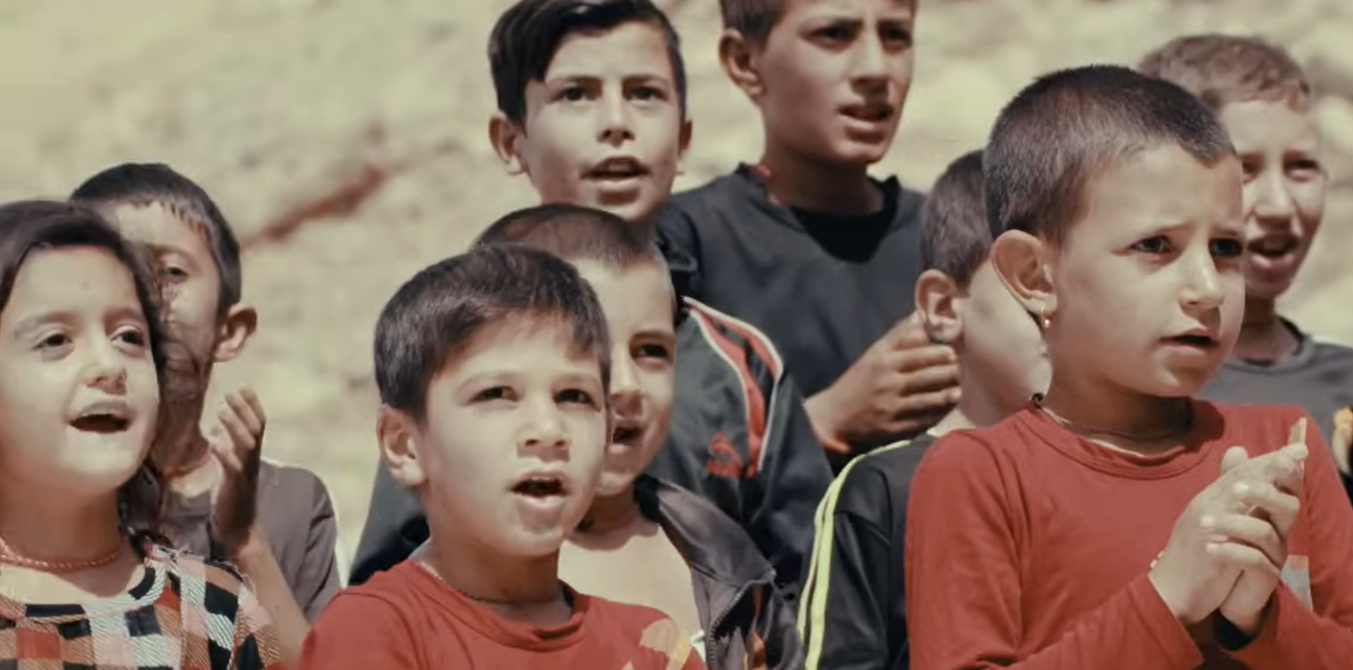
They went to Iraq under ISIS and ministered to Kurdish and Yazidi refugees running from terrorists who sold off women and girls as sex slaves and killed men and boys who did not convert, brainwash and become militants.

Chinese missionaries in Iraq, with faces obscured, minister to refugee children

Bach documents the landing of three Chinese missionaries in Kurdish region of Iraq sometime in 2013-14 when ISIS erupted on the international scene, taking over much of Syria and Iraq. While taking care of refugees and bringing joy to children who had lost their parents, they present the gospel.

Back to Jerusalem podcaster Eugene Bach says that when Chinese missionaries join Indian locals in spreading of the gospel, you have the teaming up of the Land of the Dragon and the Land of the Elephant.

They went to Iraq under ISIS and ministered to Kurdish and Yazidi refugees running from terrorists who sold off women and girls as sex slaves and killed men and boys who did not convert, brainwash and become militants.

Bach documents the landing of three Chinese missionaries in Kurdish region of Iraq sometime in 2013-14 when ISIS erupted on the international scene, taking over much of Syria and Iraq. While taking care of refugees and bringing joy to children who had lost their parents, they present the gospel.

Demons manifested when she accepted Jesus

From godreports.com

By Asaiah Logan –

When Yasuko Fleming first prayed to accept Jesus in London in 1993, demon spirits showed up enraged.

“Buddha’s face was there. All the gods I used to pray to were right in front of me,” she said. “They told me, ‘Don’t do that.’ … They grabbed me on my shoulder and pull me back and then I I felt my neck was choked.

After an hour of prayer, praise and scripture reading from the woman who led her to Christ, Yasuko was free.
Yasuko Fleming, from Japan, took a year to study in London. Her landlady was a born-again Christian and invited her to know Jesus.

“I didn’t know anyone who believed in Jesus,” she says. “When she said there is only one God, I didn’t agree,” Yasuko said. “I believed in many gods. It made me feel safe. I didn’t want to get disappointed by one or two gods. I wanted to believe as many as I can so that I feel secure.”

The landlady read her a verse about the people who trust God will not be disappointed. It confronted her directly and convinced her that God was speaking to her.

“When I heard that, it felt like a wall inside my mind fell down,” Yasuko said. “I thought, wow, this feels true.”
So she received Jesus into her heart.

Immediately, the demons manifested and engaged in a battle for her soul that lasted an hour. It turns out that the landlady had been praying and fasting for three days to bring Yasuko to Jesus.

“After that, I felt clean,” she said. “I felt peace for the first time in my life.”

Today, Yasuko leads a Christian art and dance community in Tokyo.

Little by littler, her family members all came to Christ. Japan is 1% Christian and has a strong culture of conserving traditional values, so people are resistant to the gospel.

“It was really hard,” she said. “It’s okay if it takes 10 or 20years Just love your family members. Pray for them. Don’t rush. God is patient.”

She says Japan can be reached one person at a time. “Jesus started with twelve people,” she said. “We can start with whoever is near us.”

Now at All Nations Art Community in Tokyo, she teaches dance and English, runs a café, leads a prayer room, and holds small church services. Sometimes she sings or dances outside. “People stop and watch,” she said. “I can feel the whole atmosphere change.”

Even after all these years, she remembers that first prayer. “Jesus walked toward me,” she said. “And I felt like He had been waiting for me for a long time.”

This article first appeared on Pilgrim Dispatch

Christians in Afghanistan.

Underground church thrives despite Taliban

From God Reports

When a church leader and his family were all killed by the Taliban in Afghanistan in 2014, it sent a shockwave of fear over the underground church.

“This fear affects people,” says Ramazan Rafee, an Afghan who became a Christian. “But at the same time when you’re thirsty, it is not matter what will happen. I know it is dangerous. I know it is it is hard for me and for my family. But it is worth it.”

Ramazan eventually escaped Afghanistan. His bears witness that the church under the iron grip of Islamic rule in his country thrives, deep underground, despite proclamations by the Taliban government that there is no Christianity in the nation.

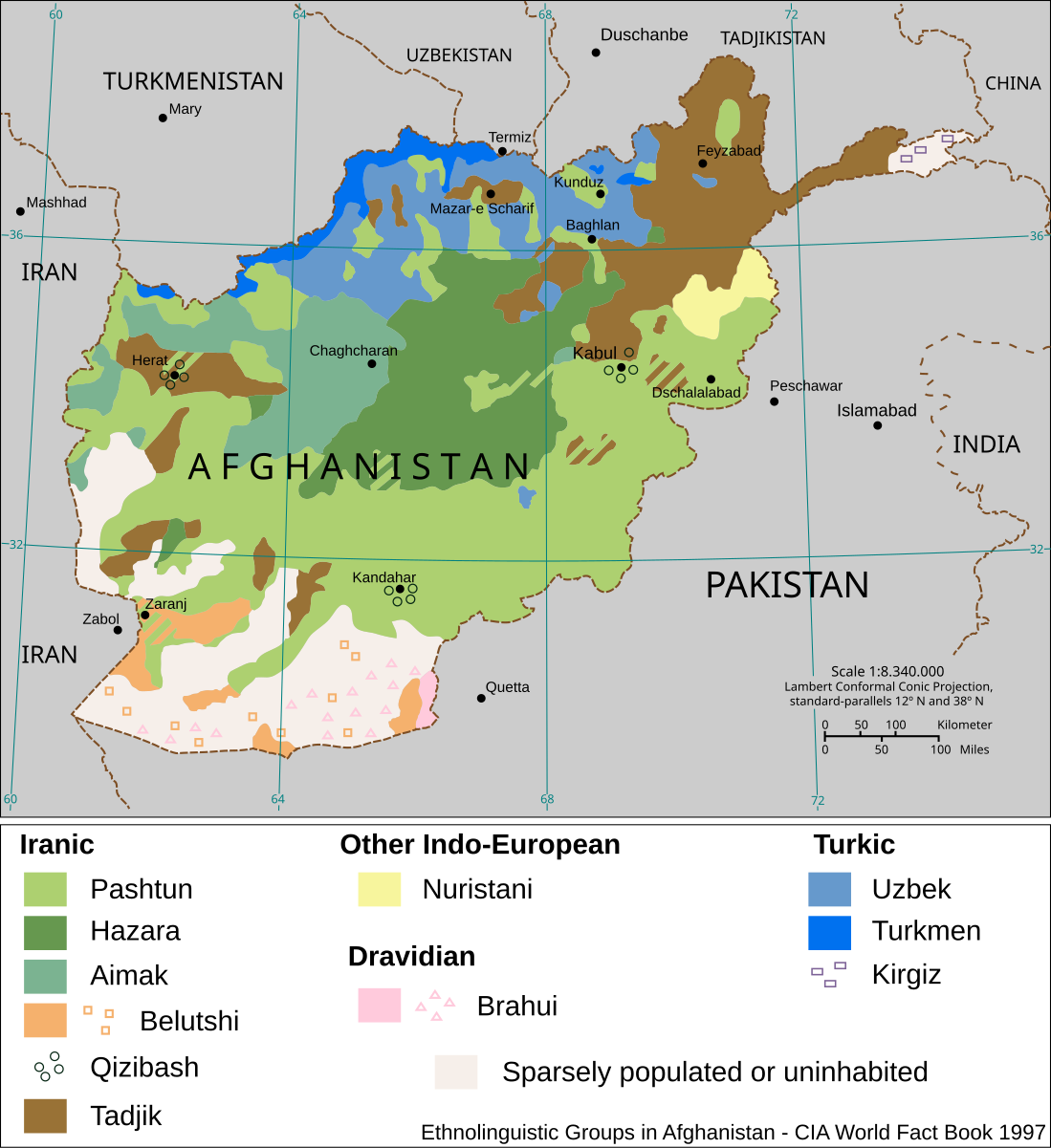
Ramazan Rafee was born into a Hazara family who believed in the strictest application of Sharia law. His own father was a mullah, a Muslim scholar.

But Ramazan began to doubt Islam because 60% of the Hazaras have been killed by the Afghan authorities (for belonging to the Shia branch of Islam because Taliban is Sunni).

“In Islam, they give you a boundary. If you would walk other side of that red line, then they label you as infidel,” Ramazan says. “I had a lot of questions about the nature of God, human suffering and the suffering of my people. Around 60 to 62% of Hazara people were killed by the authorities. Those authorities they were Muslim as well.”

Ramazan found himself staring down the barrel of a rifle — and his dad was the on aiming it with his finger on the trigger.

“I will kill you,” his dad growled.

His mother jumped in.

“First kill me, then Ramazan,” she screamed.

Ramazan left his village for the city of Kabul. At the time, the U.S. armed forces were still in Afghanistan with the hopes of building a Westernized democracy. There was some freedom in Kabul while the U.S. was there.

Ramazan had rejected Islam but believed there was a Creator, so he embarked on a quest to learn about different world religions. The Bible was a banned book in public. But Hitler’s Mein Kampf was available. That seemed strange.

“Is the Bible that bad?” he wondered. The fact that Bible was banned made it seem like they wanted to keep the truth away from him. “I thought, there is something going on here.”

Eventually, Ramazan found a foreigner who gave him a Bible and proceeded to study it with him. Ramazan got saved in 2009. “I was on fire. I shared the gospel with my family, with friends and classmates. Within a year, we were 12 individuals and two families,” he says.

The foreigner left Afghanistan, and Ramazan was left alone with his group of Christians. He integrated in the underground church, a network of more believers. It was dangerous — especially for house church leaders.

In 2014, one friend was killed, with his family, by the Taliban, despite the U.S. supposedly controlling the city and setting up a Westernized government.

Then the U.S. left abruptly in 2021. The military withdrawal under Biden was a disaster, with much military hardware left abandoned in the country. But things were worse for the Christians. The Taliban swept in and took over Kabul.

“I woke up and everything was different. I kissed my wife and kids and said, ‘Ok, maybe today is our last day,’” Ramazan says. He and church members deleted every Christian resource on their phones and laptops. “The Taliban were here. It was chaos like in a movie.”

A pastor stopped by to pick him up with his family. He had no idea where they were going or what the future held. They didn’t make it out of the country. They were at the airport when a bomb blast prevented people from leaving. They tried leaving in car.

For 36 days, they were moving around, constantly changing their location, on the run from the authorities.

“When the last airplane left Afghanistan, I said, ‘Ok, it’s over. God wants us to die here,’” he says. “The only thing I was praying was that when the Taliban would take us, they would shoot all of us, not only shooting me and take my wife and children.”

Ramazan wrestled with God during these days of anxiety. Amazingly, God calmed him.

Finally after 36 days, a security team showed up and took Ramazan and his family in cars to the northern border. They crossed nine checkpoints. There were flown to Qatar. “When I landed in Doha, Qatar, I was reading Psalm 18 God, you are my rock.”

Many of his brothers and sisters in Christ also made it out of the country. Still others stayed and went deep underground. Not only are the Christians there, there are new converts among them too.

“It’s more dangerous than ever to be a Christian in Afghanistan, yet people are still coming to Christ,” says Jamie Dean, of Radical. “The Spirit just moves.”

Mark Virkler: The Night God Chased Me Down

In 1979 the Lord woke me up with a booming bass voice (the only time I have ever heard God as a booming bass voice!) and said, “Mark, get up, I want to teach you how to hear My voice.” This was after six months of intense searching to answer the question of how I could hear God’s voice. I sat bolt upright in bed, wide awake. Then I lay back down and said, “You can teach me here.” He again said, “Get up and go to your office! I am going to teach you to hear My voice.”

So I got up, went to my office, and He showed me that Habakkuk did four specific, simple things to hear God’s voice (Hab. 2:1,2). They are: stop, look, listen and write.

  1. Stop – Become still– “Went to my guard post” means he quieted himself down to listen and hear.
  2. Look – Look for vision – “Kept watch to see” means he was looking for vision.
  3. Listen – Recognize God’s voice as spontaneous thoughts – “What He will speak to me” means he recognized God’s voice. We define God’s voice as flowing or spontaneous thoughts, because John 7:37-39 says the Holy Spirit within is sensed as flow. Likewise God’s vision is flowing pictures.
  4. Write – Two-way journaling – “Record the vision” means he wrote down the flowing words and flowing pictures (visions) that were coming to him.

If you think about it, this is what we naturally do when conversing with a friend. We stop thinking about other things and put our focus on them; we look at them; we listen carefully; and when it is important, we write down what they are saying so we don’t forget it. It is completely normal and accepted to record words that we consider important, as for example, a stenographer would do in a courtroom. We are simply saying why not apply these steps to our conversations with God? Are not the words of our Lord to us the most important words we will ever hear?

So Who Else in Scripture, Besides Habakkuk, Used These Four Keys?

It is now 35 years later, and I hear the Lord speaking within me that I should take note that the four keys that Habakkuk used were used by others throughout Scripture, from Genesis to Revelation. So let’s take a look at ten individuals in the Bible who used these four keys and wrote over half the Bible.


The Apostle John used the same four keys when he wrote the book of Revelation. In Rev. 1:9-11 we see:
  1. Stop – “I was in the Spirit on the Lord’s day”
  2. Listen – “I heard a voice behind me saying”
  3. Write – “Write in a book”
  4. Look – “what you see”

King David was a man after God’s own heart and he certainly used the same four keys:
  1. Stop – “Be silent my soul before Him” (Ps. 62:1).
  2. Look – “I have set the LORD continually before me; Because He is at my right hand, I will not be shaken” (Ps. 16:8); “I saw the Lord always in my presence; for He is at my right hand” (Acts 2:25) means he saw the Lord with the eyes of his heart, with him constantly.
  3. Listen – After King David would quiet himself (i.e. Selah), God would speak. “Hear, O My people, and I will speak; O Israel, I will testify against you; I am God, your God” (Ps. 50:7).
  4. Write – David journaled out the details of the Tabernacle, and as he did, he said it was the Lord’s hand upon him (1 Chron. 28:19). In addition, he recorded many of his prayer times in the Psalms.

How about the Apostle Paul, did he also use these four keys?
  1. Stop – “… appeared to Paul in the night” (Acts 16:9)
  2. Look – “Was caught up into Paradise” (2 Cor. 12:4)
  3. Listen – “Heard inexpressible words” (2 Cor. 12:4)
  4. Write – Paul prayed for revelation (Eph. 1:17,18; Col. 1:9), and then wrote Ephesians and Colossians which are both FULL of divine revelation. I am convinced his epistles record the revelation Paul received from God during his prayer times.

How about Abraham, the Father of Faith – did he use the four keys?
  1. Stop – “A deep sleep fell upon Abram” (Gen. 15:12,13)
  2. Look – “The word of the LORD came to Abram in a vision…” (Gen. 15:1)
  3. Listen – “Now the LORD said to Abram, ‘Go forth from your country…’” (Gen. 12:1)
  4. Write – Since Genesis 15 was written by Moses, I am going to assume that Abraham recorded it in some way so it was available later for Moses to draw upon.

Moses used the four keys (Ex. 3:1-5).
  1. Stop – Moses said, “I must turn aside…”
  2. Look – He looked and behold the bush was burning.
  3. Listen – God called to him from the midst of the bush and said…
  4. Write – Moses wrote out this experience in the book of Exodus.

Did Isaiah use the four keys when he heard God’s voice?
  1. Stop – He wakens me morning by morning (Isa. 50:4)
  2. Look – “The vision of Isaiah the son of Amoz concerning Judah and Jerusalem, which he saw” (Isa. 1:1)
  3. Listen – For the LORD speaks… (Isa. 1:2)
  4. Write – Obviously he is writing it down, as that is how we got the book of Isaiah.

Jeremiah used the four keys to receive from the Lord.
  1. Stop – Jeremiah was a priest who was ministering before the Lord (Jer. 1:1)
  2. Look – “What do you see, Jeremiah?” … “I see a rod of an almond tree.” (Jer. 1:11)
  3. Listen – “The word which came to Jeremiah from the LORD, saying” (Jer. 30:1)
  4. Write – “’Write all the words which I have spoken to you in a book’” (Jer. 30:2)

Ezekiel used the four Keys (Ezek. 1:1-4).
  1. Stop – “While I was by the river …”
  2. Look – “As I looked, behold, a storm wind was coming …”
  3. Listen – “the word of the LORD came expressly to Ezekiel …”
  4. Write – He wrote the book of Ezekiel.

Daniel used the four keys.
  1. Stop – As he lay on his bed (Dan. 7:1)
  2. Look – “I was looking in my vision by night” (Dan. 7:1)
  3. Listen – “I approached one of those who were standing by and began asking him the exact meaning of all this. So he told me and made known to me the interpretation of these things” (Dan. 7:16)
  4. Write – He wrote the dream down (Dan. 7:1)

Peter used the four keys.
  1. Stop – “I was in the city of Joppa praying” (Acts 11:5)
  2. Look – “I saw a vision, an object coming down like a great sheet” (Acts 11:5)
  3. Listen – “I also heard a voice saying to me, ‘Get up, Peter; kill and eat.’” (Acts 11:7)
  4. Write – We have a biblical record of his encounter.

These biblical writers composed 663 chapters of the 1189 chapters in the Bible (over 50%). That is not to say that the rest of the writers didn’t also use these four keys. If we explored the Minor Prophets and discovered they also used the four keys of stop, look, listen and write that would add another 68 chapters to the total.

An American Theme Park Tells the Christmas Story

From godreports.com

Snoopy ice show at Knott’s: A Christ-centered moment brings wild applause


By Mark Ellis —

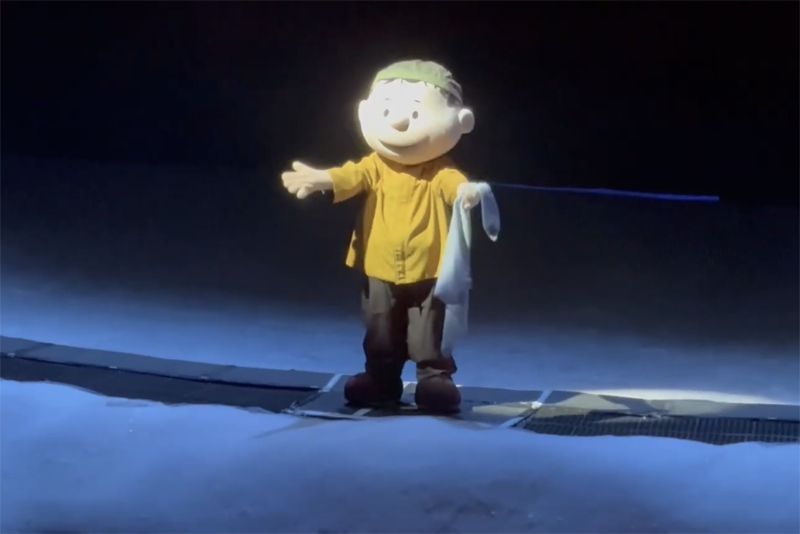
Scene from ice show (sixflags.com)

As the sun dipped low over Buena Park, my wife Sally noticed a long line of people forming outside the Walter Knott Theater for the latest production of “Snoopy’s Night Before Christmas.”

We jumped in line with our son and daughter-in-law and two granddaughters, with low expectations for a free, ice-skating Peanuts show in a secular theme park.

Within minutes my heart was overflowing with delight, not only because of the spectacular skating, but also its meaningful content.

In an age when many Christmas productions tiptoe around the real reason for the season, Knott’s has done something courageous: they’ve let Linus take center stage and quote the Gospel of Luke verbatim, exactly as he did in the immortal 1965 TV special, A Charlie Brown Christmas.

Under the skilled direction of the incomparable ice show team at Knott’s, the Peanuts gang glides across the 5,000-square-foot Royal Welcome Ice Stage in a delightful retelling of Clement Clarke Moore’s famous poem. Snoopy dreams of sugarplums (and perhaps a certain Red Baron), Woodstock flits about in panic, Charlie Brown frets over Christmas meaning something more than commercial fuss, and Sally still wants “tens and twenties.” It’s all charming, funny, and impressively skated.

Scene from 2024 show (YouTube screenshot)

But then came the moment that may have caught many by surprise in the audience, including my wife and me.

The lights dimmed. Linus, wrapped in his trademark blue blanket, skated to the center of the rink with the same quiet confidence millions of us remember from childhood. The orchestra fell silent. And in his gentle, endearing voice he proclaims:

“And there were in the same country shepherds abiding in the field, keeping watch over their flock by night. And, lo, the angel of the Lord came upon them, and the glory of the Lord shone round about them: and they were sore afraid…”

Word for word. Luke 2:8-14, King James Version, just as Charles Schulz insisted on 60 years ago when network executives tried to cut it from A Charlie Brown Christmas.

In 2025, in a major American theme park, with thousands of families from every background watching, Linus finishes with the line that has brought tears to generations: “And that’s what Christmas is all about, Charlie Brown.”

The audience erupted in wild applause — the biggest response of the evening. In an era when the meaning of Christmas is obscured, here was a humble beagle and his blanket-carrying friend declaring the story of Christmas without apology, the Scripture undiluted, without a single content warning.

Linus recites from Luke 2 in 2024 show (YouTube screenshot)

The decision to include Linus quoting the Gospel of Luke verbatim comes from the creative team at Knott’s Berry Farm (specifically the entertainment division under Cedar Fair/Six Flags) in collaboration with Peanuts Worldwide LLC, the company that now owns and licenses the Peanuts intellectual property.

However, that scene is a loving and deliberate homage to Schulz’s original insistence in 1965. When CBS executives tried to remove Linus’s recitation of Scripture from A Charlie Brown Christmas, Schulz famously replied, “If we don’t tell the true meaning of Christmas, who will?” and refused to budge.

Because that moment is now considered inseparable from the Peanuts legacy—and is protected as a core element of the brand—modern licensed Peanuts Christmas productions (including the Knott’s ice show, the stage musical, and some theme-park parades) almost always retain the Luke 2 reading when Linus appears in a Christmas context.

The rest of the show features spectacular spins, lifts, and jumps set to arrangements of Peanuts classics, with Snoopy stealing many scenes. Yet everything circles back to that sacred midpoint. The skating is world-class (several performers have Olympic and Disney on Ice credentials), the costumes sparkle under the colored lights, and the storytelling is tight—perfect for families with short attention spans.

When the finale arrived and snow gently fell inside the open-air theater, I found myself thanking God for Charles Schulz, a devout Christian who refused to let the networks remove the Scripture from his special, and now, decades later, for Knott’s Berry Farm choosing to honor that same conviction.

While Schulz himself had no hand in the current Knott’s production (he died 24 years before the current version opened), the inclusion of the biblical Christmas story is a direct result of the stand he took six decades ago.

“Snoopy’s Night Before Christmas” is a bright, unashamed proclamation that Jesus is still the heart of the Christmas message. Bring your kids and grandkids and let Linus point them that enduring truth.

Martyr For The Faith: John Chau

From “Voice of the Martyrs”

As a teenager, John Chau sensed God calling him to take the gospel to the people of North Sentinel Island. For nine years, he prepared himself to go to the island, live among the people, learn their language and share Christ with them.

John knew the risks. He knew the Sentinelese had been violent toward visitors before, but he also knew God had called him to go.

“I believe that the measure of success in the kingdom of God is obedience,” John said shortly before his death. “I want my life to reflect obedience to Christ and to live in obedience to him. I think that Jesus is worth it. He’s worth everything.”

On Nov. 15, 2018, John went ashore on North Sentinel Island for the first time. On Nov. 16, 2018, he went ashore on North Sentinel Island for the final time.

On the afternoon of Nov. 14, before boarding a fishing boat and heading toward North Sentinelese Island, John wrote this prayer in his journal: “Thank you, Father, for using me, for shaping me and molding me to be Your ambassador. … Holy Spirit, please open the hearts of the tribe to receive me and by receiving me, to receive You. May Your kingdom, Your rule and reign come now to North Sentinel Island. My life is in Your hands, O Father, so into Your hands I commit my spirit.”

The next morning before dawn, John went ashore and buried two cases of supplies for his stay on the island. Later that morning, he kayaked along the shore, hoping to show his good intentions by delivering fish and other gifts to the islanders. “My name is John,” he called out. “I love you, and Jesus loves you.”

The first islanders to appear carried their bows with unstrung arrows. Later, when they strung arrows in their bows, John paddled out of range and back to the boat. He approached again that afternoon, delivering more gifts and getting close to an islander before a young Sentinelese launched an arrow that lodged firmly in the waterproof Bible he was carrying.

On his second contact attempt, John got out of his kayak, hoping to appear less threatening. But when islanders, one with a bamboo knife, got between him and the kayak, he had to leave it behind — with his U.S. passport inside — and swim back to the boat. After that eventful day, he poured out his heart in the pages of his journal, which the fishermen later delivered to Christian friends.

The plan now is to rest and sleep on the boat and in the morning to drop me off by the cache and then I walk along the beach toward the same hut I’ve been giving gifts to. It’s weird — actually, no, it’s natural:

I’m scared.

There, I said it. Also frustrated and uncertain — is it worth me going on foot to meet them? Now they have attached me to the gifts … Lord yet you will be close. If you want me to get actually shot or even killed with an arrow, then so be it. I think I could be more useful alive though, but to you, God, I give all the glory of whatever happens. I DON’T WANT TO DIE! Would it be wiser to leave and let someone else continue? No. I don’t think so — I’m stuck here anyway without a passport and having been off the grid. I still could make it back to the US somehow as it almost seems like certain death to stay here. Yet there is evidenced change in just two encounters in a single day. Will try again tomorrow.

John’s journal also includes sociological and linguistic notes; he tried to learn as much as he could from each encounter with the Sentinelese. Later that evening, John added another entry.

Watching the sunset and it’s beautiful — crying a bit … wondering if it’ll be the last sunset I see before being in the place where the sun never sets. Tearing up a little.

God, I don’t want to die. WHO WILL TAKE MY PLACE IF I DO? … Why did a little kid have to shoot me today? His high pitched voice still lingers in my head. Father, forgive them if they succeed.

Lord strengthen me as I need Your strength and protection and guidance and all that You give and are. Whoever comes after me to take my place, whether it’s after tomorrow or another time, please give them a double anointing and bless them mightily.

On Nov. 16, 2018, John went ashore on North Sentinel Island for the last time. When the fishermen returned the next day, according to the police report, they saw “a dead person being buried at the shore which from the silhouette of the body, clothing and circumstances appeared to be the body of John Allen Chau.”

Nothing is known about what happened between John’s arrival on the beach and his death. The young man who would later be ridiculed as a “colonizer” had approached the Sentinelese without a weapon — even after being shot at — clearly willing to give up his own life. John’s body was never recovered; he had requested that if killed, his body be left on the island.

Following his death, a storm of vitriol was unleashed on John, his family and, at times, anyone who would dare to think of sharing the gospel with another human being. The fishermen who took John to the island were arrested, as were other Christians who had spoken with John in the Andaman Islands.

Many news reports and opinion pieces implied that John had been foolish to contact a people group known to be violent toward outsiders. What they didn’t know was that John had prepared for years to reach the Sentinelese with the Good News of Jesus Christ.

The end of John’s life on earth should not be viewed as the end of the whole story; we know how that story ends. In one of John’s last journal entries, he wrote, “The eternal lives of this tribe are at hand, and I can’t wait to see them around the throne of God worshiping in their own language, as Revelation 7:9–10 states.”

Perhaps in eternity, we will see John standing among the Sentinelese gathered around the throne, crying out in a loud voice with them, “Salvation belongs to our God!”

What Does “Fruit” Mean In The Bible?

In John 15, Jesus tells us that His disciples must bear fruit:
“I am the true vine, and my Father is the vine dresser. Every branch in me that does not bear fruit he takes away, and every branch that does bear fruit he prunes, that it may bear more fruit. Already you are clean because of the word that I have spoken to you. 
“Abide in me, and I in you. As the branch cannot bear fruit by itself, unless it abides in the vine, neither can you, unless you abide in me. I am the vine; you are the branches. Whoever abides in me and I in him, he it is that bears much fruit, for apart from me you can do nothing. 
“If anyone does not abide in me he is thrown away like a branch and withers; and the branches are gathered, thrown into the fire, and burned. If you abide in me, and my words abide in you, ask whatever you wish, and it will be done for you. 
By this my Father is glorified, that you bear much fruit and so prove to be my disciples.” (John 15:1-8, ESV)

If this issue of fruit production is so important, we must ask what kind of fruit is Jesus looking for? Clearly this fruit is the result of staying connected (abiding) to Christ. But what is the fruit that abiding in Christ produces?

To answer that question I looked at every occurrence of the word “fruit” in the Bible, and how it is used. I found the following 17 different uses of the word:

  1. Literal Fruit
    (Gen 1:11-12, 29, 3:2-6, Gen 3:12, Ex. 10:15, Lev 19:23-25, 23:40, 26:4, 26:20, 27:30, Deu 20:6, Josh 24:13, Jdg 9:11, 2Sam 16:2, 2Ki 19:29, Neh 9:25, Ps 148:9, Ecc 2:5, Song 8:11, 8:12, Isa 32:10, Isa 37:30, Isa 65:21, Jer 31:5, Eze 25:4, Amo 9:14, Mic 7:1, Hab 3:17, Zec 8:12, Mat 21:19, 21:34, Mat 26:29, Mar 4:20, Mar 11:14, Mar 12:2, Mar 14:25, Luk 13:6,7, Luk 20:10, Luk 22:18, John 12:24, John 15:2, 1Co 9:7, Rev 6:13

2. Metaphor for Produce Generally
Gen 4:3, Lev 25:19, Num 13:20, Num 13:26, Num 13:27, Deu 1:25, Deu 7:13, Deu 11:17, Deu 26:2, Deu 26:10, Deu 28:4, Deu 28:11, Deu 28:18,
Deu 28:30, Deu 28:33, Deu 28:42, Deu 28:51, Deu 30:9, Deu 30:9, Jos 5:12, Neh 9:36,Ps 72:16, Ps 105:35), Isa 4:2, Jer 7:20, Hos 14:8, Joe 2:22, Jas 5:7), Jas 5:18, Rev 18:14)

3. Babies- Fruit of the Womb
Gen 30:2, Deu 7:13, Deu 28:4, Deu 28:11, Deu 28:18, Deu 28:53, Deu 30:9, Deu 30:9, Ps 127:3, Isa 13:18, Lam 2:20, Eze 36:8, Eze 36:30, Mic 6:7, Luke 1:42

It is easy to see that Jesus is not expecting His followers to be farmers and vine-dressers. Nor is He requiring us to have lots of babies.

  1. Firstfruits
    This refers to the practice of offering part of the harvest, the first part gathered, back to the Lord in thanksgiving and in faith that He will protect the remainder of the harvest.
    (Exo 23:16) You shall keep the Feast of Harvest, of the firstfruits of your labour, of what you sow in the field. You shall keep the Feast of Ingathering at the end of the year, when you gather in from the field the fruit of your labour.

(Neh 10:35) We obligate ourselves to bring the firstfruits of our ground and the firstfruits of all fruit of every tree, year by year, to the house of the LORD;

(Neh 10:37) and to bring the first of our dough, and our contributions, the fruit of every tree, the wine and the oil, to the priests, to the chambers of the house of our God; and to bring to the Levites the tithes from our ground, for it is the Levites who collect the tithes in all our towns where we labour.

  1. Fruit of the Heart
    (Deu 29:18) Beware lest there be among you a man or woman or clan or tribe whose heart is turning away today from the LORD our God to go and serve the gods of those nations. Beware lest there be among you a root bearing poisonous and bitter fruit,

(Jer 11:19) But I was like a gentle lamb led to the slaughter. I did not know it was against me they devised schemes, saying, “Let us destroy the tree with its fruit, let us cut him off from the land of the living, that his name be remembered no more.”

  1. Metaphor for Strength and Vitality
    (2Ki 19:30) And the surviving remnant of the house of Judah shall again take root downward and bear fruit upward.

(Ps 1:3) He is like a tree planted by streams of water that yields its fruit in its season, and its leaf does not wither. In all that he does, he prospers.

Ps 80:12, Ps 92:14, Isa 27:6, Isa 37:31, Jer 11:16, Jer 12:2, Jer 17:8, Dan 4:12, 4:14, 4:21, Hos 9:10, 9:16, 10:1, Amo 2:9)

We could possibly see this as something that Jesus is expecting of His people. Abiding in Him produces the fruit of spiritual and emotional steadfastness.

  1. Return From Work Or Effort
    (Ps 128:2) You shall eat the fruit of the labour of your hands; you shall be blessed, and it shall be well with you.

Job 20:18, Ps 78:46, Ps 104:13, Ps 105:44, Pro 27:18, Pro 31:16, 31:31, Eze 23:29

  1. Return From Living A Sinful Life
    This would be the exact opposite of what the Lord requires.

(Pro 1:31) Therefore they shall eat the fruit of their way, and have their fill of their own devices.

(Hos 10:13)
You have ploughed iniquity; you have reaped injustice; you have eaten the fruit of lies.

Pro 14:14, Jer 6:19, Amo 8:1-2, Rom 6:21, Rom 7:5.

  1. Wisdom or Righteousness
    (Pro 8:19) My fruit is better than gold, even fine gold, and my yield than choice silver.

(Mat 3:8) Bear fruit in keeping with repentance.

Pro 11:30, 12:12, Isa 3:10, Isa 11:1, Isa 27:9, Isa 45:8, Jer 17:10, Jer 21:14, Jer 32:19, Eze 34:27, Amo 6:12, Mic 7:13, Mat 3:10, Mat 7:17-19, Mat 12:33, Mat 13:23, Luk 3:9, Luk 6:43-44, Luk 8:14-15, John 4:36, John 15:4-8, 16, Rom 6:22, Rom 7:4, Gal 5:22, Eph 5:9, Php 1:11, Php 4:17, Col 1:10, Heb 12:11

  1. Words- Fruit of the Lips
    I think Jesus is actually saying that He wants fruit that is in some way tangible, not just words, especially as the Old Testament prophets condemned Israel for honouring God with their words only.

Pro 12:14, Pro 13:2, Pro 18:20, Isa 57:19

  1. Sexual Love
    This is only used in the Song of Songs, and in the context, this is not what Jesus is talking about.

(Son 2:3, Son 7:8)

12.A Snake
(Isa 14:29)
Rejoice not, O Philistia, all of you, that the rod that struck you is broken, for from the serpent’s root will come forth an adder, and its fruit will be a flying fiery serpent.

  1. People
    Mainly used as an analogy by the Old Testament prophets, to refer to the people of Israel.

(Isa 17:6)
Gleanings will be left in it, as when an olive tree is beaten— two or three berries in the top of the highest bough, four or five on the branches of a fruit tree, declares the LORD God of Israel.

Eze 17:8-9,23 19:12-14

  1. New heavens and earth blessing
    (Eze 47:12) And on the banks, on both sides of the river, there will grow all kinds of trees for food. Their leaves will not wither, nor their fruit fail, but they will bear fresh fruit every month, because the water for them flows from the sanctuary. Their fruit will be for food, and their leaves for healing.”

(Rev 22:2) through the middle of the street of the city; also, on either side of the river, the tree of life with its twelve kinds of fruit, yielding its fruit each month. The leaves of the tree were for the healing of the nations.

  1. Sacrifices on the Altar
    (Mal 1:12) But you profane it when you say that the Lord’s table is polluted, and its fruit, that is, its food may be despised.
  2. People being saved
    (Col 1:6) which has come to you, as indeed in the whole world it is bearing fruit and increasing—as it also does among you, since the day you heard it and understood the grace of God in truth,
  3. Praise
    (Heb 13:15) Through him then let us continually offer up a sacrifice of praise to God, that is, the fruit of lips that acknowledge his name.

Conclusion
Some of these categories seem to be easily excluded. Looking at the context of John 15, it would seem that Jesus is saying that if we abide in Him, then outcomes such as a righteous life (9), or a sense of vitality and strength (6), people being saved (16) and praise from our lips( 17) should be expected.

In the end it is not about our efforts alone; after all a fruit tree does not strain to produce fruit. If we are true followers of Christ, then certain things will follow. We can often tell who the true christians are in a group or a community by observing the way they speak and act. This is the fruit of Christ within.

Names of God

While meditating on the names of God lately, I have been thinking about the lovely word “Abba.”

This term, which comes from a Syrian word, is often left untranslated in our Bibles. We are often told that it means something like “Daddy,” a more intimate word than other words which might be translated as “Father.” This leads some people to pray to God addressing Him as “Dad”, “Daddy” or “Papa.”

The word Abba occurs three times in the New Testament, and not at all in the Old Testament.

Mark 14:36  “Abba, Father,” he cried out, “everything is possible for you. Please take this cup of suffering away from me. Yet I want your will to be done, not mine.”

Romans 8:15  So you have not received a spirit that makes you fearful slaves. Instead, you received God’s Spirit when he adopted you as his own children. Now we call him, “Abba, Father.”

Galatians 4:6  And because we are his children, God has sent the Spirit of his Son into our hearts, prompting us to call out, “Abba, Father.”

It is interesting to see that every time the word “Abba” is used, it is paired with “Father” (in Greek pater.) In other words the informality of “Abba” is paired with the more formal, respectful Pater.

In Roman culture, fathers were absolute dictators in their household and children were considered their possession to do with as they wished. There was no legal restriction against beating, abusing, or even killing children.

For this reason, children were required to always be respectful to their fathers. They would never be encouraged to regard a father as being a friend or mentor. He was the king and he was to be feared.

In Israel, the Jewish people would have considered God to be a Father to the nation. They would never have addressed Him in prayer in such a personal way. He was the Lord, whose name was too holy to be spoken out loud.

Jesus shocked the religious leaders in many ways, but not the least in the way He addressed God as “Abba, Father.” This was an outrageously intimate way to come to God. As Jesus is God the Son, it is most appropriate, but it was offensive to the religious people used to keeping God at a distance.

Paul tells us that the Spirit of God has been given to us. We have been adopted into the family of God, and therefore we can address God as “Abba Father: in the same way that Jesus did.

Note it is always “Abba Father” and never “Abba.”

Our culture, under the influence of the feminist movement, is largely dismissive of the unique place of fathers in a family. We are now in the opposite place from Roman culture to a point where men in general and fathers in particular are often portrayed as useless and out of touch. If anything we need more respect in our language toward the Lord than simply “Dad.” While God is abounding in love and tolerance towards His children, He is not blessed by a flippant approach to the throne of grace.

Often people will use “different” names for God to show they have a more intimate, superior relationship with God than the rest of us. They imagine that by addressing God in this way they will impress others. Jesus had something to say about people who pray to impress (Matthew 6:5-7).

Whether we are alone with God or praying in a group, God looks at our hearts. He sees the attitude with which we pray and our motives.

I think it is marvellous to meditate on the names of God revealed in Scripture, and to even try them out in loving reverence in our personal prayer times. Even so, I still think it best to stick to the names He has given us: Lord, Father, Jesus, Holy Spirit, even Abba Father.

Christian monument to feature 250,000 answered prayers

From christianpost.com

Construction is set to begin this week on what is being described as Britain’s largest Christian monument, after the team behind the project met an initial $50 million fundraising target.

The Eternal Wall of Answered Prayer, to be built near Coleshill between the M6 and M42 motorways outside Birmingham.

It will stand at 167 feet tall — more than twice the height of the Angel of the North — in the shape of a Möbius strip. 

The monument will be made of 1 million bricks, each linked to a story of “answered prayer” that can be accessed via smartphones. Organizers said about 120,000 such stories have already been submitted from 125 countries.

A groundbreaking ceremony was held on Wednesday. The monument is expected to open to the public in 2028 when it’s hoped it will feature 250,000 prayer stories.

The project has received support from more than 20,000 donors worldwide, according to its developers.

Richard Gamble, a former Leicester City football club chaplain who founded the initiative, said he first conceived the idea more than two decades ago and spent the past 10 years gathering support.

“I am delighted we are creating a monument that will share a million stories of hope and that people will be able to discover Jesus, who listens to and answers prayer. We have faced many delays and challenges. I believe the timing is perfect,” he said.  

“Everyone at Eternal Wall is deeply grateful to the thousands of people who have backed this project according to their ability — for every dollar donated, every hour volunteered, and every prayer offered to bring us to this point. 

“This is the moment to build a landmark of hope … a lasting testimony to the power of prayer, preserving the Christian heritage in our nation.”

The project has been designed by Snug Architects, selected through a Royal Institute of British Architects competition, with VSL appointed as the main contractor.

Land for the monument was donated by IM Properties, owned by Midlands businessman Lord Edmiston, whose company also contributed to the construction costs.

Organizers expect the site to attract about 250,000 visitors annually once completed. The plans include 10 acres of landscaped grounds, a car park and, in later stages, a visitor center and conference facility.

An additional $7 million is still needed to complete the site’s infrastructure, the group said.

Lord Edmiston said: “Eternal Wall is designed to remind our nation, and people everywhere, of God’s goodness. 

“It is a testament to present and future generations of the Creator of the universe, who has answered numerous prayers over centuries past and still is answering them today.

“If we don’t remember the God who stood by us in our darkest hours as a nation, then we are condemned to have a future absent of His divine guidance and protection. I am therefore proud that my company has had the opportunity of being a significant donor to this project.”

This article was originally published at Christian Today