Stephen McAlpine: Australia Is Coming Apart: The Church Can Point a Way Forward.

Stephen McAlpine writes:

Australia Is Coming Apart: The Church Can Point a Way Forward.

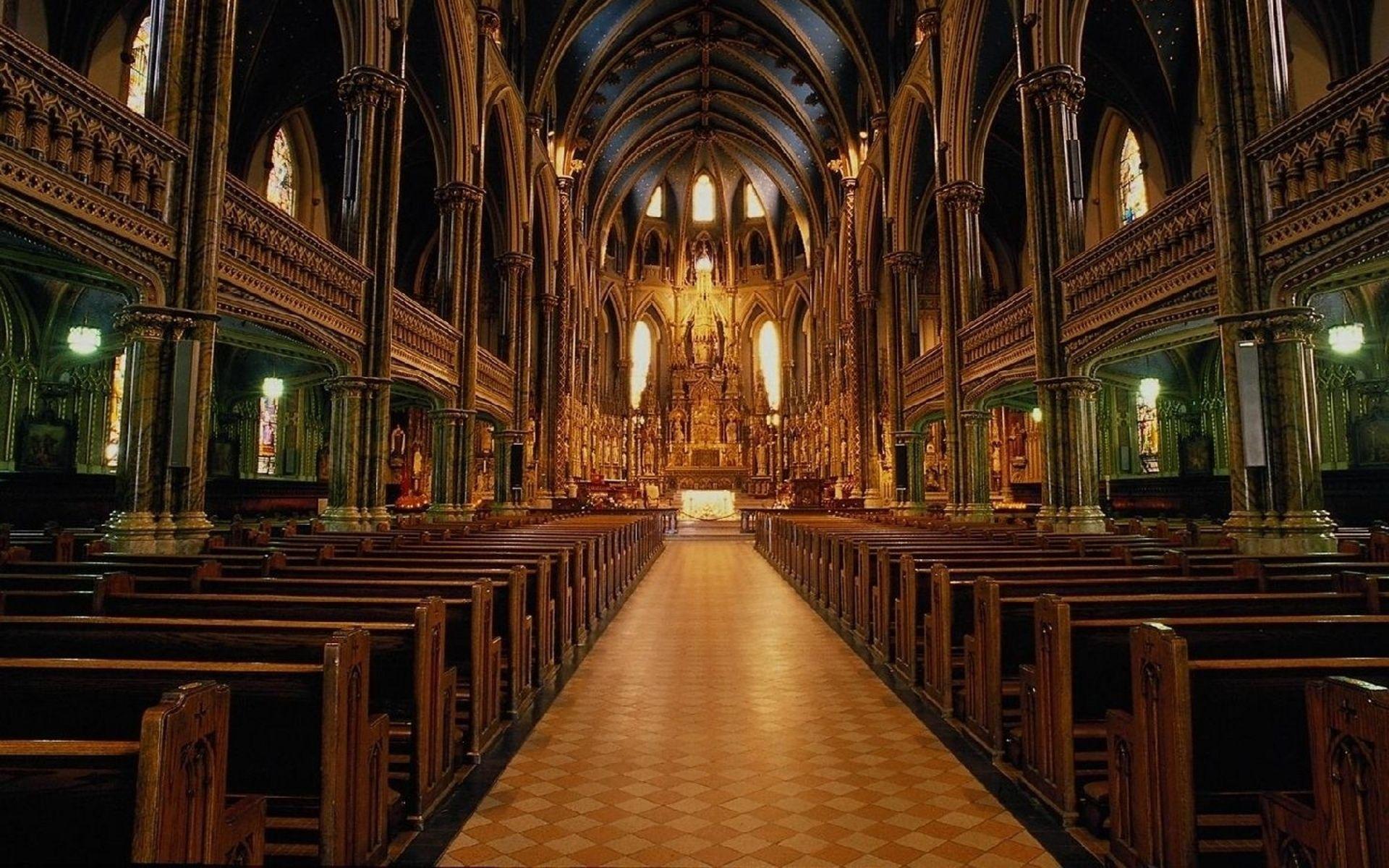
This past Sunday at church I watched as an elderly man – a long time member – walked into church and went to the front row. I won’t name him, but it would be fair to say that life has not been easy for him. He’s had his fair share of struggles. He’s generally not someone who is going to be in the photographs on the front page of your church’s website. Okay, switch out the word “generally” in that last sentence and that’s probably more accurate.

Afterwards over coffee we all had the usual chatting and talking and encouraging, and he too was in that mix. Eventually everyone packs up and we all leave (Jill and I always seem to be there until they turn out the lights – one of us is a chatterbox, but who can tell which one!)

But as this bloke said hello to a few people, raised a hand in greeting, and as a couple of people responded before he sat down just before having to stand up again as we began to sing, it struck me once again what a magnificent thing the church is.  Where else?

Where else is there such a levelling of people. Or indeed such a raising up? I have not seen it anywhere else.  It does not exist anywhere else. Indeed our rector over coffee a day or so later was observing that in the other communities to which he belongs – those outside the people of faith – there is much talk about togetherness and community. Many ideas about fairness and equality. But talk and ideas are not the same as tangible proof.

Where else? It simply does not exist. Not in the long term.  And I’ve seen this over and over again. I recall one complex character, loveable, smart, loud and pretty broken, and who could use up a lot of your time (and did when life got bad). A parishioner said to me

I am going to treat him in such a way that in the New Creation I won’t look back in shame or embarrassment at how I acted towards him.

Naturally we baulk at that because we think that we are more noble than that. We think that we are more innately good than that. We think that others might behave poorly towards such a person, but not I. Not magnanimous I!

Piffle. You are not magnanimous. You just are not.

Humans are tribal, self-selecting in their relationships, mistrustful of anyone not like them enough, and determined to be the birds who stick together with those whose feathers they recognise as their own.

It is only the gospel of Jesus, nay, Jesus himself who both compels and empowers us to be any different.  When James writes to Christ followers – mostly Jewish converts – he leans into our inability in our own flesh to be welcoming to the stranger. And by stranger I don’t mean someone we don’t know, I mean someone we don’t want to know. Someone who might be a risk to our time and attention and energy.

You see, people who are like us, share our values, our social status, our educational standards etc, they are not strangers to us, even if they come into church new. Yes of course we don’t know them, but we’re pretty quick to change that. We lean into them.

Other types? Not so much. We lean away.

That’s why James has to say this:

My brothers, show no partiality as you hold the faith in our Lord Jesus Christ, the Lord of glory. For if a man wearing a gold ring and fine clothing comes into your assembly, and a poor man in shabby clothing also comes in,and if you pay attention to the one who wears the fine clothing and say, “You sit here in a good place,” while you say to the poor man, “You stand over there,” or, “Sit down at my feet,” have you not then made distinctions among yourselves and become judges with evil thoughts?

We recognise that in ourselves don’t we? But notice that James’ first call is not to lean into the humility of Jesus as a reason to show no partiality, but rather the glory. And the fact that he has to state this so clearly in the very first generation of the church, demonstrates that it is counter intuitive.

James then goes on to say that the strangeness of God – certainly strangeness in terms of the gods of the Roman Empire of their day – is that he chooses the very things that the culture despises. And that the culture assumes that the gods would despise:

Listen, my beloved brothers, has not God chosen those who are poor in the world to be rich in faith and heirs of the kingdom, which he has promised to those who love him?

In this one verse James flips the script and shows that God is the role reverser.  And that has always been the case when salvation is on the table.  It was the case for Hannah prior to the birth of Samuel when she prays:

The Lord makes poor and makes rich;
    he brings low and he exalts.
He raises up the poor from the dust;
    he lifts the needy from the ash heap
to make them sit with princes
    and inherit a seat of honor.
For the pillars of the earth are the Lord‘s,
    and on them he has set the world.

Words that are echoed in the Magnificat centuries later by Mary.  And note that last verse, it is because God is in control that such reversals occur. This is not saying that God cares for the weak because he is weak, but precisely because he is strong. He rescues the poor because he is rich. The one who has no need lifts up the needy.

You can imagine receiving James’ letter. You can imagine being a small, insignificant group of people, on the fringes of the culture, both as Jewish people and as Jewish people who have decided that Jesus is Messiah. Yet you cannot imagine that that role reversal, that script flipping, would become the very power that swept away the Roman idea of power (or at least put a hand up to stay it over the centuries).

Four months ago I wrote a blog post called Australia Is Coming Apart. In it I said this:

if Australia – and indeed the West – is to avoid the devastation of coming apart, we will need some priests of history, as Associate Professor at Australian Catholic University, Sarah Irving Stonebraker, puts it. If anyone has a remit to hand on the baton of the truth, to rightly divide the word of truth, and to speak truth to a fractured and fractious world in which competing visions of reality are tearing us apart, then the church certainly has that remit.

I was promptly poo-pooed by another Christian leader online about the idea that we are coming apart as a nation, who said it’s still great place to live. Sure, by certain indices in certain places it is. Ironically, the offline conversation that ensued led to a social media unfriending. We came apart.

Even more ironically the next day Charlie Kirk was murdered, which exposed huge faultiness in belief and values not just across Australians, but within the church.. And not three months later the Bondi massacre. The division, unrest and indeed the hatred is only going to increase.

There was a short show of unity before it all came crumbling down again. We are not going to “Kumbaya ourselves out of this one, don’t kid yourself that we are.

And we’ve all got something to say. We are all cultural and geo-political experts suddenly. We all have a view of Venezuela even though we don’t know any Venezuelans and couldn’t point it out on a map, and have no clue why their oil is different to the oil that the Saudis have. Yet we all have something to say.

I don’t want us all to turn inwards. There is work to be done socially and politically. I don’t want evangelicals to retreat to quietism, much less only focus on church.

I don’t think we’ve been given a mandate to do that. I think we’ve been given a mandate to both preach the gospel AND to shape the world for good in the public square through our gifts, talents and experiences even in the culture’s fallen state. I also think my own tribe in Australia the past thirty years hasn’t been at the forefront of that public task and is playing catch up.

Yet at the same time, I return to that scene I saw on Sunday morning at church and I think “Wow! Where else?” Yet at the same time I lament as I experience – and listen to – a disturbing number of relational schisms, outright ungodly behaviour and frantic attempts to cover it us, among our self-declared theological finest.

If the events of the past three to four months have disturbed us, then you can imagine how disturbing they are to those without hope and without God in the world. The cultural, political and social spasms of the past couple of years is exactly why we are seeing the Quiet Revival. It’s exactly why we are seeing “full fat faith” among previously secular young people.

How should we prepare for such eventualities? Tidy up our church grounds? Get our “Ms” in place? Ensure we have our staff teams and vision sorted? Sure, why not. But perhaps a cursory read of the Book of James might be a place to start. And then to ask ourselves, how are we going to flip the increasing crazy and disturbing cultural, political and social script we are witnessing today?

How are we bringing people together at the very time that society is pushing them apart.

The Power of Tongues

Here is a conversation I had with the Lord this morning about praying in tongues.

Lord this morning in my prayers, I felt you were talking to me about praying in tongues. What would you say to me about this?

Keith, I love it when you pray in tongues. This is the highest, most exalted form of prayer. This is why it is usually the first gift of my spirit that people receive or express.

Tongues is good because it is direct, you to me, with no filter. When you pray in English, It is your desires being expressed, which can be pure, but can also be at times filtered through fleshly and even sinful desires.

Soulish prayers, or praying answers is an example of this. Using prayer to curse others rather than bless is also more common than you would expect amongst my people.

But when you speak in tongues, it is a new dimension. It is your spirit speaking in the power of my Spirit directly to me, the Father. There is no filter, no pollution from the mind, just pure intercession direct to me.

Some people claim that one of the benefits of praying in tongues is that satan can’t understand or interpret it. Some say he can’t even hear it. No, he hears it and fears it. He knows that praying in tongues is powerful intercession.

Satan cannot interpret tongues because it is pure. The language is the language of light. Human language always contains some of the sin of the speaker, indeed the sin of all humanity. But speaking in tongues has no sin content in it

In John’s gospel you can read that the light has come into the world and the darkness cannot overcome it or apprehend it Because tongues is pure, Satan cannot understand its content. He hears the words and understands the words, but he cannot understand the purity of love, the clarity of intent and the holiness of the request.

This is the true power of tongues. It can never be sidestepped or undermined in any way.

Lord, this is exciting! Paul says, “I will pray with the mind and also in the spirit. What is the balance?

Keith, the balance is not in time; it’s not 30 minutes of each every day. No, the balance is to switch between the two naturally. When you pray in tongues and you have a thought, switch to English to pray. When you pray in English and it feels like there is more to be expressed, then switch to tongues.

This is the best form of prayer.

Jacob Edson: Christmas Facts and Fictions

From biblegateway.com

Christmas Facts and Fictions: Sorting Through Myth, History, and Scripture for the Real Story Behind the Season

Every year around this time the same questions arise, among both Christians and non-Christians: when and where was Jesus really born? Is Christmas secretly a pagan holiday? And what’s the deal with the chubby guy in red?

Since the biblical narrative often gets blended with extrabiblical tradition, art, and carols, I’m going to clear up the confusion with a bit of background info, a dash of mythbusting — and some surprising discoveries along the way.

What I’m not going to do is spoil anybody’s Christmas fun. Christmas is one of my favorite times of year, for a host of reasons extending from cozy family vibes to incarnational soteriology. I’m not going to tell you how you should or shouldn’t celebrate this holiday!

Instead, my goal is to add to the fun with some biblical context and historical facts that will help you understand and appreciate the “what” and “why” of many of our Christmas traditions — and make your own educated decision about which of them to include in your celebrations.

Was Jesus Actually Born on December 25?

Let’s get this one out of the way: the Bible does not give a date for Jesus’ birth — not in the prophets, not in the gospels, not in Paul’s letters. We don’t even get a season, though some scholars have tried to make guesses based on the fact that the sheep were out in the fields at the time (Luke 2:8), which possibly — though inconclusively — suggests warmer weather.

Indeed, the earliest attested dating of Jesus’ birth is given by Clement of Alexandria as May 20. But that was about 200 years after the fact, and Clement adds that it is disputed by other Christian groups.

It wasn’t until at least 300 AD that December 25 became the popular date.

Why December 25?

The most commonly repeated theory is that early Christians chose late December to replace pagan solstice festivals that happened around that time. Logically, that makes a lot of sense — after all, we do know that Christians occasionally adapted some aspects of pagan festival celebrations.

There’s just one problem: there’s no actual evidence for it among any ancient sources.

As Yale professor and Anglican priest Andrew McGowan explains, the earliest patristic sources (e.g., Tertullian and Augustine) determined that Jesus must have been conceived on the same day that he was crucified, which they calculated as March 25.

And what’s nine months after March 25?

You guessed it.

The truth is that we do not and cannot know on what day Jesus was born; Scripture is silent on the matter. But December 25 is as good a date as any to celebrate the birth of our Lord — especially with 1700 years of tradition behind it.

Read more here

Millions of Christians Must Secretly Celebrate Christmas – International Christian Concern

From persecution.org

December 19, 2025

Each year, Christ followers worldwide eagerly anticipate Christmas, remembering and celebrating how their Savior entered the world. The story of Jesus’ arrival is read from the Scriptures and meditated upon; lights are hung, and worshippers sing songs commemorating the most precious birth ever to take place.

As this occurs, large numbers of our fellow believers must approach the day with caution and keep their Christmas joy to themselves.

Christians living in Brunei, China, Iran, North Korea, and Somalia must celebrate the birth of Jesus in secret or else face legal consequences, including imprisonment.

Brunei

In Brunei, public displays of Christmas are banned. While Christians are allowed to recognize the holiday inside their homes or churches, they can’t hold any public Christmas celebrations. The nation officially banned public Christmas displays in 2014, fearing that they could lead Muslims away from Islam.

Muslims found violating the ban, by wearing Santa hats or in some fashion partaking in banned Christmas festivities, could face up to five years in prison. Additionally, Christians are prohibited from spreading the gospel to Muslims.

China

China allows approved groups to hold restricted Christmas celebrations, which vary by region. Individuals younger than 18 years old are forbidden to attend Christmas church celebrations, and authorities continue their campaign to force churches to inject communism into Christian worship.

Iran

In Iran, Christmas gatherings are allowed in registered churches and approved districts. Small, unregistered house-churches, particularly those of Muslim converts to Christianity, are often raided by authorities. In November 2025, two individuals who converted to Christianity from Islam began serving a two-year prison sentence for charges related to their participation in a Christian house church.

According to Barnabas Aid, their “arrests resulted from a raid by 30 intelligence agents on a house church gathering in Shahriar … in December 2023, when some 25 worshippers had gathered to pray and to plan their Christmas celebration.”

In addition, all church services are forbidden to be conducted in Farsi, Iran’s native language. Instead, foreign languages, such as Armenian or Assyrian, are typically used to curb the spread of Christianity to native-born Muslim-Iranians.

North Korea

Christmas worship and displays are banned in North Korea. The communist government views Christianity as a threat to its leadership and Christmas as a menace to society. Freedom of religion is non-existent in the nation, and owning a Bible or celebrating the birth of Christ is a serious offense. In 2016, the dictator of the nation, Kim Jong-Un, announced a decree mandating North Koreans to worship his grandmother, Kim Jong-suk, who was born on Dec. 24, 1919, to preempt any focus on Christ and his birth.

Somalia

Public Christmas celebrations are banned in Somalia, a predominantly Muslim nation. Officials outlawed Christmas observance in the country in 2015. That same year, Reuters reported that Somalia’s ministry of religion, “sent letters to the police, national security intelligence and officials in the capital Mogadishu instructing them to ‘prevent Christmas celebrations.’” The ban is still in effect.

Although many Christians have little to no access to religious freedom, large majorities of them continue to follow Christ in their hearts and celebrate Christmas in quiet, meaningful moments. The outward appearance of such celebrations appears instead within their hearts.

For those of us blessed with the freedom to celebrate Christmas publicly, let us also remember and lift up our brothers and sisters in Christ who cling to him, regardless of the cost.

Are ALL Dreams from God? by Charity Kayembe & Mark Virkler

Image by kinkate from Pixabay

I had the wonderful opportunity of teaching at a school of ministry in Germany via Zoom last week. It was a blessing to be able to resource the students with materials in their heart language and everyone was hungry to hear from heaven through their dreams.

They asked excellent questions through our translator during the Q&A, and one question that came up, as it almost always does, was: “Which dreams are from God that we should pay attention to, and which ones are just from the subconscious, or worse yet, satan, and should be discounted and dismissed?”

That is a good question! And whether I give an hour-long introduction to dreams or a full-day training workshop, this is the number one question people want a clear answer to.

Because there is a tremendous amount of confusion around this, my dad and I collaborated on an in-depth article, tackling this topic from a biblical perspective and our combined seven decades of dream interpretation experience. However, we posted it more than two years ago, and since then many new dreamers have joined our online family via this blog.

Therefore, I’m re-printing below one of the most popular posts we’ve shared. My hope is that as you consider the truths presented, click on the links to other articles to dig deeper, and pray the activation prayer from your heart at the end, you will receive an even deeper revelation and expectation for just how often your heavenly Father is speaking to you through your dreams. Amen!

A joint article by Mark Virkler & Charity Virkler Kayembe

If the enemy can deceive us into believing that most of our dreams are not from God
we will ignore the wisdom, revelation, and counsel Heaven is downloading nightly.

From Mark Virkler

How can I believe dreams bring a reliable message from God when I have sexual dreams and terrifying dreams and nonsense dreams and “pizza dreams”? Well, that is a very good question. Let’s see if we can’t find an answer.

The weight of biblical evidence is that God gives the dream

The Bible says dreams contain reliable messages which are to be acted on: I will bless the LORD who has given me counsel; My heart also instructs me in the night seasons (Ps. 16:7 NKJV). Over 50 dreams are discussed in Scripture and when people awoke they acted on these dreams. About 1/3 of the Bible records these stories, so that is hundreds of chapters in support of dreams. We explore these in depth in two of our books, Hearing God Through Your Dreams and Hear God Through Your Dreams Workbook. Please review them both for a complete discussion concerning this.

Sexual dreams

For an examination of four potential foundations of a sexual dream, you may review this blog. We also discuss this more in the Nightmares session of our DVD series (viewer discretion advised). And if we question whether God can speak through sexual symbolism, we need look no further than the book of Song of Solomon.

Terrifying dreams

Repetitive, traumatic nightmares may be the cry of an unhealed heart, inviting you to apply the prayer ministries of inner healing and deliverance. However, occasional terrifying dreams may come from God as illustrated in this verse: Now when the sun was going down, a deep sleep fell upon Abram; and behold, terror and great darkness fell upon him. Then He said to Abram… (Gen. 15:12).

False dreams

False dreams come from others, evil people who are seeking to turn the hearts of God’s people away from God. Each of the following warnings illustrates this. You will see that every warning is about others’ dreams – not your own dreams – and in each case they are seeking to turn people from the living God (Jer. 14:14; 23:16,25-27,32; Ezek. 12:24; 13:1,7; Deut. 13:1-5; Jer. 27:9-11; Zech. 10:2).

Sin can open the door to demonic attack

“Now a word was secretly brought to me, and my ear received a whisper of it. In disquieting thoughts from the visions of the night, when deep sleep falls on men, fear came upon me, and trembling, which made all my bones shake. Then a spirit passed before my face; the hair on my body stood up. It stood still, but I could not discern its appearance.

A form was before my eyes; there was silence; then I heard a voice saying: ‘Can a mortal be more righteous than God? Can a man be more pure than his Maker? If He puts no trust in His servants, if He charges His angels with error, how much more those who dwell in houses of clay, whose foundation is in the dust, who are crushed before a moth? They are broken in pieces from morning till evening; they perish forever, with no one regarding. Does not their own excellence go away? They die, even without wisdom.’” (Job 4:11-21)

So that could probably be debated if the message came from God or from an evil spirit. It surely does contain negatives and would appear a bit accusative, so one could argue it is from the accuser.

In the chapter immediately preceding the above quote from Job, we find Job saying “For the thing I greatly feared has come upon me, and what I dreaded has happened to me” (Job 3:25). So fear was his sin and provided an open door for demonic attack.

We know sin opens the door for satan to have a legal right to attack us. As I poll people in my seminars they confirm that as they grow in their Christian life, demonic attack in their dreams diminishes. Some people totally tear down their spiritual walls of protection before they come to Christ by participating in drugs, immorality, the occult, etc. Others grow up in more protected Christian environments and accept the Lord at a very young age, before they have torn down their spiritual walls. The former group is likely to have more demonic interference in their early Christian life, and the latter group less.

In my own experience working with dreams I have had only one dream that God told me in my journaling, “Do not consider it. It is from satan.” It was a dream of intense fear, my body awoke frozen in place, and it took several minutes before I could even move. At that point in my life I had a demon of fear, which has since been cast out. Except for that one dream, the rest have been from God. So based on my four decades of dream work, I would guess that 99% of my dreams have come from God.

Only ONE passage in the Bible warns about paying attention to my own dreams!

Wow, hundreds of positive verses and chapters and ONLY one passage warning me to be cautious about listening to my dreams. This scripture needs to be examined as it sure seems to be in opposition to the general revealed will of God concerning dreams.

“For the dream comes through much effort and the voice of a fool through many words… For in many dreams and in many words there is emptiness.” (Eccl. 5:3,7 NASB)

So what is this passage talking about? “Much effort” is involved in the process. The Hebrew word translated “much effort” shows up 8 times and in the KJV it is translated “travail” 6 of these 8 times. So do my nighttime dreams come through much effort and travail? I don’t think so. They effortlessly appear. No work, effort or travail required.

So what kind of a dream comes with much effort? May I propose accomplishing a “destiny dream”? For example, Abraham was given a destiny dream at age 75 that he would be the father of a multitude (Gen. 15:5-6). It took him until age 100 to see the beginning of this destiny dream fulfilled, which was accomplished through the birth of his son, Isaac (Gen. 21:1,5).

Yes, there was a lot of effort put into this birthing process, and some mistakes along the way (Gen. 16). So instead of suggesting this one passage negates and nullifies the other hundreds of positive verses on dreams in the Bible, we can understand that God did not change His mind, that He does speak through dreams, and that it is our waking life destiny dreams that come through much effort.

The Right Question – by Charity Kayembe

We know that in order to get the right answers, we must ask the right questions. During the Q&A portion of my dream workshops I am often asked: Are all dreams from God? I explain the Scriptures covered above, but then clarify and offer an even better question we could be asking. The real concern on most people’s hearts is: Are all my dreams from God? And that is much easier to answer.

Holy days bring holy nights. That means if you are saved and Spirit-filled, if you’ve been through deliverance and built up your walls of protection, if you are in the Word and filling your mind and heart with truth, and if you are living as holy as you know how to live – then YES, all of your dreams can come from God.

How do I know? Because all mine do.

I’ve been interpreting my dreams for over 30 years, and as I share in our book, I don’t believe I’ve ever had a dream that wasn’t from God. And if that is my experience, then it is definitely available as a potential and possibility for every other follower of Jesus as well. We know the character of God; He is a good, good Father. Does He stop guarding us when we’re most vulnerable? Can He not be trusted to protect us while we’re asleep?

What I’ve found is that the biggest reason people don’t believe that God is the Giver of their dreams is because they simply don’t understand the symbolic picture language He speaks at night. They get confused by their scary or sexual dream and mistakenly assume if dreams are valid, these dreams must be revealing they are being attacked by satan at best, or they are a lustful, carnal Christian at worst. If we can just dismiss these confusing dreams as “pizza dreams” and not from God, then we don’t need to pay attention to them. The enemy makes us feel ashamed of the dreams, so ignoring them becomes the easiest course of action.

Satan’s Sneaky Strategy

Most everyone believes God can speak through dreams, but they think it happens once in a lifetime or once every few years, and it’s clear and literal and they wake up with an immediate and perfect understanding of the dream’s message. That’s how they know they’ve heard from God.

I believe one of the most successful strategies satan has used against the Church in recent years is to deceive them into believing one simple lie. By and large, most Christians in our western culture believe the lie that most of their dreams don’t come from God. Sure, they concede He might use dreams occasionally, but we need to sift through our dreams, categorize them, and disregard most of them because they don’t make sense to us, so they must not be from Heaven.

This may appear to be a minor misunderstanding, but it is, in fact, huge. God declared in His Word that He speaks oftentimes through dreams. He speaks over and over again while we’re sleeping, but nobody even notices or pays attention:

“For God speaks again and again, though people do not recognize it. He speaks in dreams, in visions of the night, when deep sleep falls on people as they lie in their beds. He whispers in their ears and terrifies them with warnings. He makes them turn from doing wrong; He keeps them from pride. He protects them from the grave, from crossing over the river of death… Behold, God does all these oftentimes with men, to bring back his soul from the pit, that he may be enlightened with the light of life.” (Job 33:14-18, 29-30).

Satan doesn’t need to intercept the messages God is sending to us through our dreams; he just needs to convince us to ignore them. If the enemy can trick us into believing that the silly dreams and scary dreams and strange dreams aren’t from God, then he has successfully stolen the vast majority of revelation God is downloading to us nightly. Even though God is speaking through our dreams and we are receiving and remembering those dreams – if we don’t believe they are valuable – we will continue to discount, dishonor and entirely dismiss that revelation as not being worthy of our time to give consideration to.

So again, it doesn’t matter if unbelievers’ dreams are from God. In fact, we know scripturally that many of them are! People who did not worship Yahweh – for example, Abimelech, Nebuchadnezzar, Pharaoh, Pilate’s wife – all received legitimate and accurate revelation from Heaven through their dreams. So if those who don’t follow God are able to hear from Him while they sleep, why wouldn’t we, as the Church, expect to hear from our heavenly Father nightly ourselves?

Silly and Sacred Simultaneously

We must be aware of the enemy’s tactics and not come into agreement with his lies. He whispers, “That dream was silly, that’s not from God. It was strange, it was sexual, it was scary – those dreams aren’t from Heaven. You better not tell anyone about it or else everyone will think you’re crazy.”

Well, a loaf of bread destroying a military encampment sounds pretty crazy to me. Good thing Gideon didn’t think so and write that off as a “pizza dream.” He would have never gone to war and defeated the Midianites, delivering God’s people from oppression. Instead of dismissing the dream because of its symbolic nature, he honored the translation of the picture language, acted on the interpreted revelation, and made the dream come true (Judges 7:9-22).

What about some sheaves of wheat bowing to you? Or the sun, moon, and stars bowing down to you (Gen. 37:6-10)? Oh my, that sounds like idolatry! Extremely strange, not to mention extraordinarily prideful. That’s obviously a soulish dream and not to be received. Good thing Joseph didn’t feel that way. What we might call “weird dreams,” God considers “the word of the Lord” (Ps. 105:19). And as ultimate confirmation, the prophetic revelation hidden in those odd dream symbols did come true (Gen. 43:26-28).

What about farm animal dreams? What if we saw some skinny cows devouring some fat cows? Sounds like a twisted version of the Nature Channel documentary I watched before bed; I’ll chalk that up to my tired brain recycling irrelevant leftovers from my day. Thankfully, Pharaoh had the intuitive wisdom to not ignore the picture language God was communicating to him through in the night. The people of Egypt, Israel, and all the surrounding countries would have perished in the upcoming famine if he hadn’t paid attention to his seemingly silly bovine dream (Gen. 41:1-57).

Or how about a little stone attacking a big statue and then transforming itself into a gigantic mountain that covers the entire planet? Nebuchadnezzar – the pagan ruler who besieged Jerusalem and took the Israelites captive – had this dream (Dan. 2:1-49). So besides his dream being metaphorical and unclear, it’s probably from satan since he’s an unbeliever, right? Well, thankfully even this evil king had enough humility to recognize an incredibly important principle: Just because the dream didn’t mean anything to him, didn’t make the dream meaningless. And even though it was full of symbols and strangeness, Daniel was able to translate the picture language and interpret God’s message to him through the dream.

Why All Bad Dreams Aren’t

But what about scary dreams? If I fall asleep and darkness and terror come upon me, surely God has nothing to do with that, does He? We always go back to Scripture for our answers and as we’ve already discussed, Abram received an extraordinary gift from God through his “bad” dream (Gen. 15:12-21). It was a dark and terrifying nightmare. Good thing Abram didn’t just dismiss that as demonic attack but instead honored the dream from Heaven.

The establishment of the Abrahamic covenant was God’s supernatural contract with the Jews, pledging His faithfulness as they were called and chosen by Him. God’s covenant with Abraham was the promise that Jesus would come one day, and in Him, all the world would be blessed (Gen. 18:18). The foundation of thousands of years of faith began with this spiritual agreement between our heavenly Father and Abraham, our father of faith. And it all happened in a dream.

While you may appreciate these biblical examples, what if they feel a bit foreign and far-removed from you? You still might be wondering how this is relevant to your life and what it means for your ostensibly disturbing and dark dreams. While we unpack all of these concepts much more thoroughly in our training resources, let me share a couple of contemporary examples from my own dream life and that of my students to give you a vision for how this actually works.

Soulish or Spiritual

Many believers mistakenly assume if there is an unpleasant emotion in the dream, then it is soulish and should be dismissed as “not from God.” However, what I have found most often is that if I feel anxiety or anger in my dream that is actually Holy Spirit highlighting that emotion, encouraging me to surrender it to Him so He can replace it with His peace and love. If I (consciously or not) ignore or suppress my feelings during the day and don’t process them before I go to sleep, I’ll end up having these types of dreams at night. They are simply a red flag from the Lord indicating some prayer work needs to be done. Therefore it is not a “soul” dream to disregard; it is an invitation from God to have a conversation with Him about these heart issues.

Similarly, when teaching on children’s dreams I often share the testimony of two boys who picked up on the spiritual atmosphere of the city they were staying in on a mission trip. The children both had violent and bloody nightmares two nights in a row, which might be dismissed as simply their own fears of being in an unfamiliar place, or most likely, a demonic attack.

However, the boys’ parents rightly honored the dreams as revelation from God, recognizing they were receiving a word of knowledge and flowing in the gift of distinguishing spirits. Children are naturally prophetic and sensitive to the supernatural realm and through their dreams they were accurately discerning the spiritual environment.

Upon conferring with the local pastor, it was discovered the massacres the boys witnessed in their dreams had, in fact, taken place on that land generations before. The mission group acted on these nightmares, understanding them to be “supernatural intelligence” for strategic prayer. The team did identificational repentance for the sins committed that were allowing demons to remain in that place, they received communion and took authority in Jesus’ name, and through their intercession and worship they cleansed and shifted the atmosphere.

Not surprisingly, the resulting outcome was peaceful dreams and no more nightmares. Again, what could have easily been dismissed as demonically sourced, I would see as accurate spiritual discernment. It was not an attack from the enemy, but a gift from God.

We see then how Holy Spirit speaks through all kinds of dreams. What might seem ridiculous is actually revelation. What might seem silly is simply symbolic, and is, in fact, a sacred message to us from Heaven.

What About You?

I encourage you to prayerfully consider what you believe. Have you been deceived into thinking that most of your dreams are not from God? If so, what kind of revelation and warnings and gifts and prophecies are you missing out on simply because you have believed a lie?

If you have been quick to categorize most of your dreams as silly or strange or soulish or satanic, dismissing the vast majority as meaningless and leaving only a handful of dreams for God to speak to you through, you can change your thinking today. Biblically speaking, “repentance” means to change your thinking, so right now I invite you to change your mind on what you’ve believed about dreams and pray this prayer with me from your heart:

Dear heavenly Father, You are so awesome. We thank You for Your love for us and that You always want to connect with us. Thank You so much for dreams and communicating to us through them.

If we have not honored dreams in the past, we repent for that. We change our thinking to line up with Your thinking and perspective, God. We know You spoke in the Bible through dreams over and over again and You want to do the same thing in our lives today (Job 33:14-18).

We purpose in our heart by Your grace to honor dreams and receive Your revelation through them. We know interpretations belong to You and we thank You for Your Spirit’s power that helps us remember our dreams and translate Your messages through them (Gen. 40:8; Jn. 14:26).

God, we see in Scripture how You not only spoke through dreams, but even spoke through nightmares (Gen. 15:12-14). We see how You warn and protect us through these dreams, so we choose to honor them too (Matt. 2:22). Thank You, Father, that You transform bad dreams into blessings. We purpose to hear from You through all of our dreams and act according to Your counsel.

Your Word says You give to Your beloved in our sleep (Ps. 127:2). Thank You that You declared You would reveal Yourself to us in visions, You promised You would speak to us in dreams (Num. 12:6). Thank You that Your Word says that You visit us in the night and give our hearts counsel and instruction while we sleep (Ps. 17:3; 16:7).

We pray that the eyes of our hearts would be enlightened, that we would see You and hear You in our visions of the night (Eph. 1:18). Father God, thank You that the dream is certain and its interpretation sure, and that You will do whatever is necessary to get Your message though to us because You love us so much (Dan. 2:45).

Father, thank You for Your relentless pursuit of our hearts. Thank You that when we are asleep our hearts are awake to commune with You, our Beloved (Song of Solomon 5:2). Thank You for Your contingency plan of dreams. You are amazing, God. You thought of everything!

We bless You, we honor You and we love You, in Jesus’ name we pray, Amen.

Christmas Traditions

It’s that time of the year again when we hear a lot of complaints about disappearing Christmas traditions.

This year, the Martin Place Christmas Tree is bedecked with the words “Happy Holidays” rather than “Merry Christmas.” I love it when we try to pretend that the day being celebrated has nothing to do with Christ, but a more generic “holiday.”

David Jones copped criticism because they have abandoned the traditional Christmas window displays, which many people have for generations travelled into the city with children or grandchildren in tow to view each year.

The biggest outcry was reserved for rumours that Fire and Rescue NSW are abandoning the traditional lolly run due to health and safety concerns. Rather than throwing lollies at children while on the move, fire engines will have to stop to hand out the treats. This is out of concern for children running onto roads than any fear of hitting them in the eye with a hard lolly.

It is interesting just how much people value these traditions, even people who never set foot in church to celebrate the birth of Jesus. It is like the generational memory of faith in Jesus, attending church services and celebrating real Christmas and Easter festivals continues to anchor people despite our rapidly changing culture.

Christmas is a time of incredibly good news, in a time when there is such a shortage of good news. It’s more than a long weekend, a time to get together with the family, or even a special time for the kids.

Christmas is about a God who cares about people so much that He came down to earth to live with us. The baby in the shed with the animals turned out to be the creator of everything in a human form. The story reaches its climax at Easter when we recall that Jesus Christ died to cover the wrongs of every single person.

If you haven’t been to church for a while, why not start a new tradition this Christmas?

China’s Back to Jerusalem missions succeed where Westerners fear to tread

From godreports.com

By Exjani Rojas —

ISIS operatives killed two Chinese missionaries in Balochistan’s capital in Pakistan in broad daylight. The mother of one of the missionaries publicly forgave the killers and speculated their deaths would spark revival.

“I believe these two will be like seeds to bring greater revival,” she said, per translation on Back to Jerusaelm podcast. “I pray that God would forgive the sin and evil of ISIS because they know not what they do. These two children are now gone; I trust they will inspire the church in China to be united for the sake of the Gospel and that the fires or revival will spread from China to the nations.”

Mom’s words show why Chinese missionaries will succeed in the Muslim Corridor where Western missionaries have failed. Their movement — called Back to Jerusalem because it traces the spread of Christianity from China back to its origin — is the greatest unreported phenomenon of the world.

The Chinese figure they can in the so-called 10/40 window — the most unevangelized region of the world between latitudes 10 and 40 — slip in easier, exist more successfully and evangelize more off radar than a Westerner (who stands out and draws resentments).

The Chinese missionary movement is also called “Between the Walls” — from the Great Wall of China to the Wailing Wall of Jerusalem. They want to mobilize 100,000 missionaries for the Muslims, Hindus, Buddhists and animists who dominate in the region.

The Back to the Jerusalem missionary movement dates back to the 1920s, to early Chinese Christian groups such as the Jesus Family in Shandong Province, who preached across villages in China. It got a resurgence out of China’s underground church in the 1980s.

‘The church was filled with the Holy Spirit,’ a pastor recalls

“In 1988 in Henan, the church was filled with the Holy Spirit, and people starting sharing the Gospel,” a leader says in Chinese on a Back to Jerusalem documentary. “I would say 2010 was the second great filling. We started sending missionaries. Why are so many workers going overseas now? It was the work of the Holy Spirit, sending them to specific nations.”

Pastor Shen XiaoMing presides over 10M Chinese Christians in the China Gospel Fellowship. He says the taking up of the call to send missionaries into Muslim lands began with the youth.

“The Holy Spirit was working in China’s house church. Especially the youth, we experienced God’s call to reach the whole world,” XiaoMing says in Chinese. “We started praying for nations.”

Youths began studying the languages of the Muslim countries. The mission set up a training center in the Philippines. Doors began opening, young people got passports and visas, they began going to places where it was dangerous to preach the Gospel — and they were mentally and emotionally ready for it because of the persecution the Chinese church has faced for decades from the communist government.

They went to Cambodia, where they evangelized the land once decimated by Pol Pot’s Killing Fields genocide ot 2M+.

“We go inside the Buddhist temples and preach the Gospel,” a missionary says, per translation. “We love to teach the children and tell them Jesus loves them. Often, the first, second or third time, they reject us, saying ‘Why do you come here to our village to change our religion? I have been a Buddhist since youth.’”

Breakthrough comes with the miraculous healings. In a village of 600, many got healed; people see the genuine power of God and convert, the missionary says.

“There was an older woman who had a serious disease,” he says. “We prayed for her and asked if she felt better. She shook her head. Later when we were leaving, she stopped the car and told us, ‘I have been healed. Praise God!’”

They went to India, where they lifted spirits of the Indian church

“We were really encouraged to hear how God moved in China,” said and Indian pastor whose identity was obscured. “The Chinese pastors and believers had to go through extreme persecution, being jailed. In spite of all this, the Chinese church grew. That really encouraged the church (in India) to share the Gospel more joyfully.”

In India, revival is spreading in villages. Like Cambodia, supernatural healing is a gamechanger, he says.

Back to Jerusalem podcaster Eugene Bach says that when Chinese missionaries join Indian locals in spreading of the gospel, you have the teaming up of the Land of the Dragon and the Land of the Elephant.

They went to Iraq under ISIS and ministered to Kurdish and Yazidi refugees running from terrorists who sold off women and girls as sex slaves and killed men and boys who did not convert, brainwash and become militants.

Chinese missionaries in Iraq, with faces obscured, minister to refugee children

Bach documents the landing of three Chinese missionaries in Kurdish region of Iraq sometime in 2013-14 when ISIS erupted on the international scene, taking over much of Syria and Iraq. While taking care of refugees and bringing joy to children who had lost their parents, they present the gospel.

Back to Jerusalem podcaster Eugene Bach says that when Chinese missionaries join Indian locals in spreading of the gospel, you have the teaming up of the Land of the Dragon and the Land of the Elephant.

They went to Iraq under ISIS and ministered to Kurdish and Yazidi refugees running from terrorists who sold off women and girls as sex slaves and killed men and boys who did not convert, brainwash and become militants.

Bach documents the landing of three Chinese missionaries in Kurdish region of Iraq sometime in 2013-14 when ISIS erupted on the international scene, taking over much of Syria and Iraq. While taking care of refugees and bringing joy to children who had lost their parents, they present the gospel.

Demons manifested when she accepted Jesus

From godreports.com

By Asaiah Logan –

When Yasuko Fleming first prayed to accept Jesus in London in 1993, demon spirits showed up enraged.

“Buddha’s face was there. All the gods I used to pray to were right in front of me,” she said. “They told me, ‘Don’t do that.’ … They grabbed me on my shoulder and pull me back and then I I felt my neck was choked.

After an hour of prayer, praise and scripture reading from the woman who led her to Christ, Yasuko was free.
Yasuko Fleming, from Japan, took a year to study in London. Her landlady was a born-again Christian and invited her to know Jesus.

“I didn’t know anyone who believed in Jesus,” she says. “When she said there is only one God, I didn’t agree,” Yasuko said. “I believed in many gods. It made me feel safe. I didn’t want to get disappointed by one or two gods. I wanted to believe as many as I can so that I feel secure.”

The landlady read her a verse about the people who trust God will not be disappointed. It confronted her directly and convinced her that God was speaking to her.

“When I heard that, it felt like a wall inside my mind fell down,” Yasuko said. “I thought, wow, this feels true.”
So she received Jesus into her heart.

Immediately, the demons manifested and engaged in a battle for her soul that lasted an hour. It turns out that the landlady had been praying and fasting for three days to bring Yasuko to Jesus.

“After that, I felt clean,” she said. “I felt peace for the first time in my life.”

Today, Yasuko leads a Christian art and dance community in Tokyo.

Little by littler, her family members all came to Christ. Japan is 1% Christian and has a strong culture of conserving traditional values, so people are resistant to the gospel.

“It was really hard,” she said. “It’s okay if it takes 10 or 20years Just love your family members. Pray for them. Don’t rush. God is patient.”

She says Japan can be reached one person at a time. “Jesus started with twelve people,” she said. “We can start with whoever is near us.”

Now at All Nations Art Community in Tokyo, she teaches dance and English, runs a café, leads a prayer room, and holds small church services. Sometimes she sings or dances outside. “People stop and watch,” she said. “I can feel the whole atmosphere change.”

Even after all these years, she remembers that first prayer. “Jesus walked toward me,” she said. “And I felt like He had been waiting for me for a long time.”

This article first appeared on Pilgrim Dispatch

Christians in Afghanistan.

Underground church thrives despite Taliban

From God Reports

When a church leader and his family were all killed by the Taliban in Afghanistan in 2014, it sent a shockwave of fear over the underground church.

“This fear affects people,” says Ramazan Rafee, an Afghan who became a Christian. “But at the same time when you’re thirsty, it is not matter what will happen. I know it is dangerous. I know it is it is hard for me and for my family. But it is worth it.”

Ramazan eventually escaped Afghanistan. His bears witness that the church under the iron grip of Islamic rule in his country thrives, deep underground, despite proclamations by the Taliban government that there is no Christianity in the nation.

Ramazan Rafee was born into a Hazara family who believed in the strictest application of Sharia law. His own father was a mullah, a Muslim scholar.

But Ramazan began to doubt Islam because 60% of the Hazaras have been killed by the Afghan authorities (for belonging to the Shia branch of Islam because Taliban is Sunni).

“In Islam, they give you a boundary. If you would walk other side of that red line, then they label you as infidel,” Ramazan says. “I had a lot of questions about the nature of God, human suffering and the suffering of my people. Around 60 to 62% of Hazara people were killed by the authorities. Those authorities they were Muslim as well.”

Ramazan found himself staring down the barrel of a rifle — and his dad was the on aiming it with his finger on the trigger.

“I will kill you,” his dad growled.

His mother jumped in.

“First kill me, then Ramazan,” she screamed.

Ramazan left his village for the city of Kabul. At the time, the U.S. armed forces were still in Afghanistan with the hopes of building a Westernized democracy. There was some freedom in Kabul while the U.S. was there.

Ramazan had rejected Islam but believed there was a Creator, so he embarked on a quest to learn about different world religions. The Bible was a banned book in public. But Hitler’s Mein Kampf was available. That seemed strange.

“Is the Bible that bad?” he wondered. The fact that Bible was banned made it seem like they wanted to keep the truth away from him. “I thought, there is something going on here.”

Eventually, Ramazan found a foreigner who gave him a Bible and proceeded to study it with him. Ramazan got saved in 2009. “I was on fire. I shared the gospel with my family, with friends and classmates. Within a year, we were 12 individuals and two families,” he says.

The foreigner left Afghanistan, and Ramazan was left alone with his group of Christians. He integrated in the underground church, a network of more believers. It was dangerous — especially for house church leaders.

In 2014, one friend was killed, with his family, by the Taliban, despite the U.S. supposedly controlling the city and setting up a Westernized government.

Then the U.S. left abruptly in 2021. The military withdrawal under Biden was a disaster, with much military hardware left abandoned in the country. But things were worse for the Christians. The Taliban swept in and took over Kabul.

“I woke up and everything was different. I kissed my wife and kids and said, ‘Ok, maybe today is our last day,’” Ramazan says. He and church members deleted every Christian resource on their phones and laptops. “The Taliban were here. It was chaos like in a movie.”

A pastor stopped by to pick him up with his family. He had no idea where they were going or what the future held. They didn’t make it out of the country. They were at the airport when a bomb blast prevented people from leaving. They tried leaving in car.

For 36 days, they were moving around, constantly changing their location, on the run from the authorities.

“When the last airplane left Afghanistan, I said, ‘Ok, it’s over. God wants us to die here,’” he says. “The only thing I was praying was that when the Taliban would take us, they would shoot all of us, not only shooting me and take my wife and children.”

Ramazan wrestled with God during these days of anxiety. Amazingly, God calmed him.

Finally after 36 days, a security team showed up and took Ramazan and his family in cars to the northern border. They crossed nine checkpoints. There were flown to Qatar. “When I landed in Doha, Qatar, I was reading Psalm 18 God, you are my rock.”

Many of his brothers and sisters in Christ also made it out of the country. Still others stayed and went deep underground. Not only are the Christians there, there are new converts among them too.

“It’s more dangerous than ever to be a Christian in Afghanistan, yet people are still coming to Christ,” says Jamie Dean, of Radical. “The Spirit just moves.”