“Messy Seniors”

Messy Church was started as a format for families and children, but really it’s for everyone.

‘Messy Seniors’ brings church to the people

The Rev. Heather Liddell shares the story of “Messy Seniors” at the Messy Church Canada Conference October 27 at Wycliffe College in Toronto. Photo: Joelle Kidd

Holy Trinity Anglican Church in Edmonton, Alta., thought Messy Church would be a perfect fit. The largest church in its diocese, Holy Trinity runs large children’s and youth programs and has an active congregation.

It seemed like a good idea. The all-ages monthly service centred around craft activities, storytelling and sharing a meal; kids and grown-ups enjoyed the biblical learning activities. “We built blanket forts in the sanctuary, we packed lunches for our trip with the three Magi,” recalled the Rev. Heather Liddell, associate curate at Holy Trinity, during a workshop she led October 27 at the Messy Church Canada Conference at Wycliffe College in Toronto, Ont.

While kids and families were a target audience of Messy Church, Liddell and her team tried intentionally to include single people, childless adults and seniors in the ministry.

Eventually, they noticed, these groups were far more interested in attending the Messy Church than the young families were. “We realized a traditional Messy wasn’t the best fit for our context when we admitted that every session was a struggle,” Liddell wrote in an email to the Anglican Journal. It was difficult to get volunteers, attendance was low and it was not uncommon for Liddell to be “up until the wee hours prepping crafts, alone…or cleaning up, alone.”

The team at Holy Trinity realized they had launched the program without thinking about who was in their community and who it was designed to serve.

To find out who actually lived in their community, Liddell said, the team pulled census data for the area. They were surprised to find that almost no kids lived nearby. “What we found was a lot of really lonely seniors,” Liddell told conference attendees.

The area is populated with retiree and assisted living homes. “We started asking the question, ‘What would Messy Church look like with them?’ ”

The answer to that question became Canada’s first Messy Church ministry directed toward senior citizens. (“Messy Vintage,” a U.K. initiative, offers something similar.)

“Messy Seniors” is held in a high-needs home for seniors with advanced cases of dementia and Alzheimer’s. Liddell hopes that other Messy Churches can be started in other seniors’ homes in their community.

Bringing the church into the care home was an exercise in contextualizing. Using the core values of Messy Church—Christ-centred, for all ages, creativity, hospitality and celebration—Liddell and her team adapted the program for a new setting.

The context had its challenges; care home rules prevent bringing in outside food, for example, meaning they were unable to follow the typical Messy Church model of eating a hot meal together. With so many attendees struggling with arthritis or failing eyesight, crafts that require dexterity or heavy reading were not ideal. However, because of Messy Church’s “free-flowing structure,” Liddell says, it was easy to adapt for different needs. What’s more, she says, it brought together children and seniors. “It is precisely that intergenerational piece that is so important and so often missing from our church’s [across the Communion] approaches to care for seniors.”

In fact, at the “Messy Seniors” Church, children lead the service as “trained volunteers.” Empowering children to lead the church activities “gives them the opportunity to interact with someone they wouldn’t have a chance to in their regular lives.”

“Is there any better picture of the kingdom of heaven than a little girl helping a wheelchair-bound man in his 90s—whose family is faraway and too busy to visit very often—tie knots (that his fingers are too arthritic to make) in a simple star mobile while talking about God’s promise to make Abraham’s descendants more numerous than the stars?”

One young girl who wasn’t sure she wanted to come because “old people are gross and smell funny,” “left walking on air and asking when she can come back,” Liddell said. “She is by far our best recruiter for volunteers.”

Our society, Liddell says, has “sequestered the aging process,” and children don’t get much chance to spend time with the elderly. “It is mostly a fear of the unknown—once kids start interacting with the elderly, they realize not only how fun they can be, but that they’re people, too.”

The Messy Church model, with its emphasis on hands-on activities and storytelling, is “fun, silly and familiar without being infantilizing,” says Liddell. With many residents in the care home struggling with memory and eyesight loss, hearing a familiar story, lovingly told, is precious.

“Life is messy, and getting older is difficult. It changes our perspectives any time we step out of our comfort zones and encounter a new aspect of life. It’s the same if you’re 6, 10, 25 or 90.”

The Same Sex Marriage Vote

voting

We had our say, and the nation overwhelmingly voted “Yes” to same sex marriage. I am disappointed but not surprised.

What should Christians make of this?

Firstly, it should be a wake up call for anyone who maintains that Australia is a “Christian country.” It is not, and 60% of the population showed that they are not in favour of a strictly Christian society. Interestingly, the electorates where there was a majority “No” vote were those with a larger than average immigrant population- both Middle East and Asian.

Secondly, it should be a sign to the church that we need to be more intentional in missions. That is, we must take the message of Christ to the streets, to the workplace, to our neighbourhoods. There will be a temptation to withdraw from the public square, to sit in our comfortably padded pews and hope that nobody notices. Instead we need to get out and win hearts, minds and souls to the kingdom.

Thirdly we need to prepare for persecution for our beliefs. By that I don’t mean that Christians will be thrown into prison for being Christians. No it will be much more subtle than that. Human Rights Tribunals and other quasi-judicial bodies will prosecute individuals and groups who oppose the dominant narrative. If you dare to state that marriage should be between a man and a woman in any context other than a place of worship you may soon be liable to a complaint. If you think that is unlikely, consider the Bishop of Tasmania who was forced to appear before that state’s tribunal for publishing a booklet explaining the church’s position on marriage and supporting the current legal definition of marriage.

Finally we need to pray as never before. We must pray for our friends and neighbours to receive the gospel. People have been rejecting God for a couple of generations now and that trend is not showing any signs of being reversed. We live in a society that is increasingly narcissistic, because it is made up of people who think they are gods. We must repent of our own self-centredness and give ourselves anew to serving God and God alone.


Mike Willesee: A premonition, plane crash and testing miracles

From the ABC:

Mike Willesee: A premonition, plane crash and testing miracles

Updated 

Veteran journalist Mike Willesee has revealed how miraculously surviving a plane crash changed his life forever, kick-starting a journey back to his Catholic faith.

It is this faith, and the support of his family, that has sustained Willesee through his current battle with throat cancer and a debilitating course of radiation therapy that ended only recently.

The legendary current affairs presenter and reporter was too unwell to attend his induction into the Australian Media Hall of Fame on Friday in Sydney.

In a pre-recorded acceptance speech he said: “To be a journalist, for me, has been a gift that just keeps on giving.”

If it wasn’t for an extraordinary twist of fate 20 years ago, Willesee’s career could have been cut short well before now.

In 1997 he and his cameraman Greg Low were about to board a twin-engine Cessna plane in Nairobi, Kenya, bound for Southern Sudan to film a documentary.

But before they took off, Willesee said he had a premonition the aircraft would crash.

“I couldn’t understand it. I had this fight in my own head before I got on the plane. How do I tell Greg that it’s going to crash?

“I don’t believe in premonitions. Did I believe it was going to crash? Absolutely.”

Media player: “Space” to play, “M” to mute, “left” and “right” to seek.

VIDEO: Everyone aboard the Cessna aircraft was unharmed. (ABC News)

The plane took off in a tropical downpour and shortly after began experiencing problems.

For Willesee, the experience was surreal.

“When it stalled, and it stopped for this one excruciating second and then started to spiral and go down, the only thought I could get out of my head was, ‘I was right’, which is pretty freaky.

“I said my first prayer to a God who I didn’t understand and whose existence I was quite unsure of.”

That wasn’t the end of the drama. When the aircraft finally settled, the pilot and the other two passengers got out as fast as they could, leaving Willesee and Low in their seats.

“Greg’s seat buckle was jammed because he had his camera on his lap and we thought the plane would explode and burn because of the noise and incredible amount of smoke.

“So I ran back into the plane and Greg freed himself as I got in and we got out.”

The plane crash was the start of a long journey back to the Catholic faith of his childhood.

“The plane crash changed me a lot,” Willesee said.

“It still took me I think maybe two years, for me to actually say there is a God.”

Read the full story here

Adam Piggott: The Art of Consistency and The Riot Act

Adam Piggott is not a christian, but here he nails the key to the christian life- consistency. Our growth generally does not come in big events (although we might get a high that helps to propel us forward), but in the daily plod of life, work, worship, quiet times, prayer, cell group. That might seem boring to many, but it’s being consistent day after day that grows in us the kingdom of God.

Adam Piggott writes:

The art of consistency and the riot act.

I am sure that my learned readers are familiar with Aesop’s fable of The Tortoise and the Hare. The hare is spectacularly advantaged over his opponent but it is the tortoise’s consistency which gets him over the line. To put it bluntly, the hare goofs off. To put it even more bluntly, the tortoise knew that the hare would good off which was why he challenged him to the race to begin with. Always know your opponent better than he does.

There are lots of lessons in that little fable but the one that I want to elaborate on today is the art of consistency. Consistency is to success in life what confidence is to success with women.

Right now I’m having the best results in the gym that I have ever had over the course of 30 years of lifting the weights. The program that I’m following is undoubtedly a big part of that, as is the fact that I am being so careful with my technique. But what has really nailed it for me is my consistency. The program states that I have to go three days a week on Monday, Wednesday, and Friday, and by God I’m going three days a week. Consistently.

The biggest gains that I’ve had, (moar gainz!), have been in the past four months, and it is no coincidence that this has coincided with my rigorous consistency. I followed this same program for almost a year in Australia but I was less consistent. Three days one week, then two days the next, then maybe back to three or it might have been just a single day. You get the idea. I didn’t see any of the gains that I’m getting now. Same program, same technique – less gains.

It’s the consistency, baby.

Back when I was teaching English in Italy, my greatest success story was a barber from a little mountain town with no real education to speak of. He decided to come along to a course and he didn’t have the imagination to second guess what I was teaching. He followed my directions to the literal letter. After six months I told him that he didn’t need my services any more. He wasn’t particularly intelligent but he was entirely consistent.

If I look back over my life, my greatest achievements have one common element to them – consistency. Whether it was learning the guitar, becoming a rafting guide, opening my own bar, learning Italian, publishing my first book, or any other goal or pursuit in which I excelled, being consistent was the difference between success and failure. Equally, if I consider where I failed then it was my lack of consistency that let me down.

This blog has become a success due to my consistency.

Last weekend I had occasion to discuss consistency with someone. This young guy has spent 2017 turning his life around. At the start of the year he was a dope smoking loser with a girlfriend that sponged off him and he was close to getting fired from his job due to his lack of commitment, an outcome that would not have been unfamiliar to him. Nine months later and he has jettisoned the girlfriend, completely abandoned the drugs, is killing it at the same job, and is tearing it up on the football field.

His consistency has been a big part of his success but yesterday I needed to remind him of that. Because there was talk of him maybe needing to go traveling, to lie in the sun somewhere; after all, he “deserved” it.

It’s all too easy to wander off track when you’re on the mundane journey known as adult life. After all, what could the harm be? The little voice in your head convinces you that you’re wasting your time anyway. Surely it would be better to be off somewhere having fun. The trouble is, this guy spent the past ten years doing exactly that. But now that he’s finally seeing some success for the first time in his adult life, he wants to slip back into the past behaviors. It’s all too easy to do.

But we had a good talk and I got him back on track. Sometimes that’s what you need; a reminder of why you’re doing what you’re doing. The thing is, I wonder where I’d be now if I’d had an older guy to talk things over with and help me stay on track when I needed it. To read me the riot act when I needed to hear it.

Because that’s what we need sometimes; the riot act. No soft words or subtle anecdotes carefully interspersed so as to not cause offense. Cause offense, for God’s sake. Give them a verbal slap around the ears.

One of the things that young guys need to understand is consistency. You’re jealous of the guy with lots of money and nice toys? Most of the time it comes down to hard work, not taking no for an answer, and consistency. Twenty years of that and you’re looking at a solid base. A fortress of solitude. If I had my time over again I would be more consistent.

But who I am kidding? I’ve got loads of opportunity to be consistent right now. Learning Dutch, finishing my next book, finding the right house in the right part of Holland, setting up a new business; it’s all going to come down to consistent effort.

And another cup of coffee.

Messy Church

An awesome time at New Life this morning as we ran our first- ever Messy Church service.

The service was based on The Parable of the Wedding Feast, or in my version, Wedding Guests Behaving Badly. See Matthew 22:1-14. We had activities for all ages including craft, colouring, drama, food preparation, a wedding quiz and a reflection station.

Everyone had a great time and experienced the power of this parable in a different way than just the normal worship format.

You can find more pictures at Google Photos

Evil in Las Vegas

las-vegas

In Las Vegas yesterday, 22000 people went to a country music concert, and 58 of them died in an awful shooting incident. One man in the space of minutes ended the lives of 58 ordinary people, and injured hundreds of others.

In another part of the United States, singer and songwriter Tom Petty died unexpectedly, possibly of a heart attack.

Did any of these people expect to die at this time? They were just going about every day life, not expecting that “every day life” was about to stop.

None of us knows when our time on earth is about to end.

The decisions we make now determine our destiny in eternity. Only those who sincerely follow Jesus will be allowed into God’s kingdom.

In 2 Corinthians 6:2 Paul says, “I tell you, now is the time of God’s favour, now is the day of salvation.” 

We don’t know what tomorrow holds, but we can reach out to God today and receive His salvation. If you have never asked Jesus to forgive your sins do that today.  Then ask Him for the grace to live His way, and join a church where people will be able to help you grow in Him.

The Healing Ministry You Never Heard Of

There are many people who believe, without a scrap of evidence, that the miraculous gifts of the Holy Spirit (1 Corinthians 12: 4-11) ended with the first apostles or the completion of the New Testament. This is called cessationism which might be defined as the belief that miracles petered out when Peter petered out.

There is a huge historical and literary swag of evidence that God has healed through the ages and indeed that all of the gifts of the Holy Spirit have been experienced. 

This article from “World Revival Network” describes the healing ministry of the Kings of England and France in the Middle Ages.

AUG
2

The Shocking Story You’ve Never Heard – French and English Kings Prayed For The Sick

In the post-Reformation world, the French and English kings utilised the Christian ministry of healing to buttress their legitimacy. These large scale recuperative ceremonies were deemed vital for preserving order and asserting divine ordination. 

It was said that King Henry IV (1553–1610) of France laid hands on as many as 1,500 people in a single ceremony. Later, Charles II of England (1630–1685) touched more than 90,000 afflicted people. 

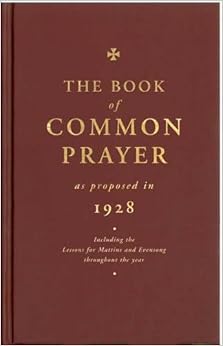
“Touching for the king’s evil” was formally included as part of the service order in the 1662 edition of the Anglican Book of Common Prayer.[1] 

It was also observed in Shakespeare’s Macbeth (1605). 

A most miraculous work in this good King, 
Which often since my here remains in England 
I’ve seen him do. How he solicits heaven 
Himself knows best; but strangely-visited people, 
All swollen and ulcerous, pitiful to the eye, 
The mere despair of surgery, he cures 
Hanging a golden stamp about their necks 
Put on with holy prayers; and ’tis spoken, 
To the succeeding Royalty, he leaves 
The healing benediction.[2] 


On July 6, 1660, King Charles II’s Royal Touch ceremony was witnessed by John Evelyn, an English nobleman. Evelyn shared the following observations:

“His Majesty sitting under his state [canopy] in the Banqueting-House, the chirurgeons [surgeons] caused the sick to be brought or led, up to the throne, where they kneeling, the King strokes their faces or cheeks with both his hands at once, at which instant a chaplain in his formalities says, ‘He put his hands upon them, and he healed them.’”[3] 


One contemporary pointed out that

“That divers persons desperately labouring under it [a debilitating skin disease] have been cured by the mere touch of the royal hand, assisted with the prayers of the priests of our Church attending, is unquestionable.”[4] 


Lee Huizenga argues,

Some of Europe’s most famous medieval medical men recommended the Royal Touch. John of Gaddesden (1280–1361), mentioned by Chaucer in his Prologue to the Canterbury Tales, spoke of it as a measure not to be overlooked in the treatment of scrofula and other skin diseases . . . There can be no doubt that some of the persons who received the Royal Touch were cured of their ailments.[5] 


The rite was practised by all the Tudor and Stuart kings with the single exception of William III. It reached its apex when some 100,000 people were touched by Charles II and James II. The practice ceased in England in 1712 but continued in some form in France until 1825.

In spite of the Reformation’s cessationist impulse, the ministry of healing was still embraced. It became an expression of authority and validation. 

Read the full article here

Inclusiveness Seems To Run Only One Way

From Andrew Bolt, a disturbing development in Queensland schools.

The Left’s hatred of Christianity is suicidal and deeply intolerant.

So is its hatred of free speech:

Talking about Jesus, exchanging Christmas cards and encouraging Christianity have been targeted under an unofficial policy from education bureaucrats that takes aim at junior evangelists in Queensland primary school yards.

Christian groups and free-speech advocates have expressed alarm at the recent edict from the Queensland Department of Education and Training contained within its latest review into religious instruction materials and warning that principals were expected to take action against students caught evangelising to their peers.

“While not explicitly prohibited by the (legislation), nor referenced in the Religious Instruction (RI) policy, the department expects schools to take appropriate action if aware that students participating in RI are evangelising to students who do not,” says the department’s ­report into the GodSpace ­religious instruction materials, released earlier this year.

“This could adversely affect the school’s ability to provide a safe, supportive and inclusive ­environment.”

Departmental policy defines “evangelising” as “preaching or advocating a cause or religion with the object of making converts to Christianity”.

Examples of evangelising cited in the review, as well as two earlier reviews into religious ­instruction providers, include sharing Christmas cards that refer to Jesus’s birth, creating Christmas tree decorations to give away and making beaded bracelets to give to friends “as a way of sharing the good news about Jesus”.

How can Leftist bureaucrats claim to want a “safe, supportive and inclusive ­environment” when they ban, discriminate and persecute?

Is there a similar schoolyard ban on students discussing green ethics, global warming evangelism, animal rights, Buddhism, Islam or the new tribalism – all of them far more troubling ethically than Christianity?

This is not just an attack on the free speech of students. It is also an attack on a faith that is life-affirming and preaches a system of ethics that actually underpin this “safe, supportive and inclusive” culture of ours.

These Leftist educationalists are in fact waging a suicidal war on the faith that best guarantees the freedoms and values these hypocrites claim to uphold.

Andrew Bolt: ABC’s Source Says ABC Was Not Fair

abc-smear

Andrew Bolt has been doing a fantastic job of defending the church from the ABC’s lies and misrepresentations about Domestic Violence. Now one of Julia Baird’s main sources for her report claiming that evangelical christians have the highest rates of Domestic Violence has spoken up.

ABC’S SOURCE: ABC WAS NOT FAIR IN SMEARING CHRISTIANITY

The ABC falsely claimed our worst wife beaters were evangelical Christians who went to church sporadically.

The academic whose work the ABC cherry-picked, Professor Bradford Wilcox, says the ABC anti-Christian series of reports that relied on that central – and false – claim “fails the basic journalistic test of fairness“:

On the one hand, the church is charged with “both enabling and concealing (domestic violence)”…

But it also states: “Research shows that the men most likely to abuse their wives are evangelical Christians who attend church sporadically.” Here, they are draw­ing on my research on religion and American marriages (they neither contacted me nor mentioned me in the story, even though they relied heavily on my empirical findings). They speculate that it’s the kind of men “who are often on the periphery (of church life), in other words, who sometimes float between par­ishes or sit in the back pews”, who are most likely to abuse. That’s not the full story, if they are basing this claim on my research. In my study of the nominal evangelical husbands who were most abusive, I found that it was evangelical Protestant men who infrequently or never attended church who were most violent.

How do you blame Australian churches for a big domestic violence problem if it is men who ­infrequently or never attend church who have the highest likelihood of being violent? How would bad Christian preaching, teaching or counselling be a major factor in spousal abuse if the worst abusers are rarely or never in the pews? It doesn’t follow.

Indeed, what may be happening in the real world is that churches and religious institutions actually reduce the odds that husbands or wives abuse one ­another. On average, messages about love, forgiveness and fidelity may actually make for better husbands and wives, especially when they are reinforced by a community of believers that is struggling to live out values and virtues generally supportive of strong marriages.

Indeed, in the US, the evidence suggests relig­ious attendance ­reduces the odds of domestic violence. Work by University of Texas sociologist Christopher ­Ellison shows that husbands and wives are less likely to report they are abusive if they attend weekly; they are also less likely to report they have been abused if they are part of a church community. My research indicates couples report significantly higher quality relation­ships if they attend church together.

The point is not to suggest that abuse is not present in the church in Australia, or that lay and clerical leaders have not made big mistakes in addressing abuse. Abuse, and failures to adequately address it, can be found throughout the nation — including the church.

But it is to suggest that the ABC story completely ignores the possibility that churches and ­religious institutions may be having some positive role in ­reducing the prevalence of domestic violence among their active adherents. Instead, the story fails the basic journalistic test of fairness by presenting an almost completely negative picture of Christian approaches to domestic abuse, one that does not square with the evidence that church­going couples, in America at least, appear to be less likely to suffer domestic violence and more likely to enjoy happy marriages.

The ABC reports that this article was based on a year-long investigation. So they had a year to get this right.

But the truth conflicted with the agenda, you see, and once again the agenda won. Christianity must be portrayed as malevolent.

Bill Muehlenberg: Christians Are To Be Different

Bill Miehlenberg nails it again- to be a follower of Jesus means we are to be different from the people who are not following Him. Not weird or super-spiritual but holy, loving, compassionate.

Yes, Christians Are To Be Different

Jul 25, 2017

Here is my thesis, short and sweet: if you claim to be a follower of Jesus Christ, but you are living just like everyone in the world is, then chances may be good that you really are not a Christian at all. I do not say this by my own authority of course, but by the authority of the Word of God.

Everywhere Scripture highlights how God’s people are to be living lives radically different from those who are not God’s people. Thus if the life you live is indistinguishable from what any non-Christian lives, then it may be time to ask yourself some hard questions.

And when I say different, I don’t mean in a superficial or nominal way. Some Christians are different all right, but mainly because they are just plain weird. It is not that they are holy and Christlike, just odd and perhaps too religious. They may have all sorts of man-made taboos, habits and things they run with, but they demonstrate no real godliness or Holy Ghost spirituality.

differentBut the born-again Christian will think differently, act differently and relate to others differently. I will explain what this looks like in more detail in a moment. But let me first mention why this article has come about. There have been two main reasons for writing this piece.

The first is something I just caught a glimpse of on TV, while the second is an author I have been reading through of late. The first can be covered quite quickly: it turns out to have been a UK documentary on cam girls. The 60 seconds or so that I saw was enough to leave me all rather gobsmacked.

One moment it was showing what this gal was doing for her paid customers, and the next minute it showed her with her flatmate at the dinner table praying. (Was it perhaps her lesbian partner? I did not stay around to find out.) But it showed them before the meal praying together, asking God’s blessing on all they did.

As I say, I was just floored. Here we had sleaze and sexual sin at its most blatant, yet the folks involved actually seemed to consider themselves Christians with whom God was perfectly happy. Um, yes, we can speak about God’s pleasure and blessing on an ex-cam girl, or an ex-prostitute, or an ex-sex-worker, or an ex-murderer, etc., but not on those still proudly living in known, overt sin.

I thought this was just so utterly bizarre, and reflected on it for a few moments. It occurred to me that there are likely millions of people who live just like the world, or live just like the devil, who have convinced themselves that they are nonetheless just peachy Christians whom God is perfectly happy with. This is deception of the highest order.

The other thing I was doing at the time offered a very nice counter piece to all this. I was reading some of John Stott’s writings. He was terrific in almost everything he wrote, and was such a champion of biblical Christianity. See my introductory article on him here:billmuehlenberg.com/2011/07/28/notable-christians-john-stott/

I have around 25 of his books, and they are always worth pulling off the shelves and rereading. So I was looking at his short but really excellent 1978 commentary on the Sermon on the Mount (Matthew 5-7). Of interest, he subtitled the book,Christian Counter-Culture.

Of course that is a concept I am fully familiar with. I was part of the original secular counter-culture of the late 60s and early 70s. We radical lefties, hippies, druggies and peaceniks really did think we could set up a counter-culture to replace what we considered to be the corrupt, authoritarian, violent, patriarchal, hung-up middle class America.

Stott picks up on this theme and argues that the real message of the Sermon on the Mount is that we Christians are to be a genuine counter-cultural force. We are to be different. That is the major emphasis of these three chapters. Let me offer some lengthy quotes from the opening pages of this excellent commentary.

He begins by speaking about the great tragedy of the church conforming to the world. He says this:

No comment could be more hurtful to the Christian than the words, ‘But you are no different from anybody else.’ For the essential theme of the whole Bible from beginning to end is that God’s historical purpose is to call out a people for himself; that this people is a ‘holy’ people, set apart from the world to belong to him and to obey him; and that its vocation is to be true to its identity, that is, to be ‘holy’ or ‘different’ in all its outlook and behaviour.

He notes how this was certainly the case with the people of Israel: they “were his special people,” they “were to be different from everybody else. They were to follow his commandments and not take their lead from the standards of those around them.”

But sadly they did not do what was demanded of them, and soon enough they were saying, “We want to be like the nations, like the peoples of the world” (Ezekiel 20:32). Stott continues:

All this is an essential background to any understanding of the Sermon on the Mount. . . . It portrays the repentance (metanoia, the complete change of mind) and the righteousness which belong to the kingdom. That is, it describes what human life and human community look like when they come under the gracious rule of God.
And what do they look like? Different! Jesus emphasized that his true followers, the citizens of God’s kingdom were to be entirely different from others. They were not to take their cue from the people around them, but from him, and so prove to be genuine children of their heavenly father. To me the key text of the Sermon on the Mount is 6:8: ‘Do not be like them.’ It is immediately reminiscent of God’s word to Israel in olden days: ‘You shall not do as they do’ (Leviticus 18:3). It is the same call to be different. And right through the Sermon on the Mount this theme is elaborated.
Their character was to be completely distinct from that admired by the world (the beatitudes). They were to shine like lights in the prevailing darkness. Their righteousness was to exceed that of the scribes and Pharisees, both in ethical behavior and in religious devotion, while their love was to be greater and their ambition nobler than those of their pagan neighbors.
There is no single paragraph of the Sermon on the Mount in which this contrast between Christian and non-Christian standards is not drawn. It is the underlying and uniting theme of the Sermon; everything else is a variation of it.…
Thus the followers of Jesus are to be different – different from both the nominal church and the secular world, different from both the religious and the irreligious. The Sermon on the Mount is the most complete delineation anywhere in the New Testament of the Christian counter-culture. Here is a Christian value system, ethical standard, religious devotion, attitude to money, ambition, life-style and network of relationships – all of which are totally at variance with those of the non-Christian world. And this Christian counter-culture is the life of the kingdom of God, a fully human life indeed but lived out under the divine rule.

This my friends is the normal Christian life. But we do not hear this sort of teaching anymore, so it sounds strange, harsh, austere and even unChristlike. We think we can live any way we like and God is fully happy with us. We even think we can strip and gyrate before lustful men as a cam girl and still ask God for his blessings.

As I said above, if you are living just like anyone in the world is living, you may be in desperate need of a spiritual check-up. It is time we all get back on our faces before God and seek him afresh. Reading the Sermon on the Mount while on our knees in an attitude of humility, brokenness and penitence would be a good way to begin.


Full article here