The number of trucks going past my house reminds me that we are in the middle of harvest time. Farmers, contractors, silos, truck drivers and mechanics are all working long hours to get the harvest into storage before storms, birds, insects or other disasters can do serious damage.
The Bible is full of references to farming and, in particular, to harvesting.
The phrase “you reap what you sow” is one of those references, and I imagine it would have been a fairly common saying back in the day. We can’t imagine a farmer planting barley and hoping for wheat. That would go against all the laws of nature.
Strangely, though, many people fail to apply this to their own lives. If you sow kindness and generosity, people will respond by being kind back to you. If you live by violence and bullying, then you cannot expect others to treat you with love and respect.
One of the Old Testament prophets coined this phrase, “They sow the wind and reap the whirlwind.” This referred to the then rulers of the state of Israel who ignored their God and instead chose to encourage the worship of the fake gods of other nations. The result, Hosea said, was that they would be overrun by the Assyrians, one of the nastiest empires of the time, and of course full of idols. The Israelites had played at worshipping idols, now they would be destroyed by expert idol worshippers.
In modern times, we might think of people who play fast and loose with the rules, seemingly untouchable until the Police or the Tax Office catch up with them. They sowed a wind but reaped a whirlwind of trouble.
Many people spend their whole lives without any reference to God. They might be good people but just have no time for religion. They are good enough for God, they reason, and He will take care of them in the after life.
But if you have a life in which you sow arrogance towards God, then you will reap a whirlwind of wrath. On the other hand, a life of humble service to the Lord will reap a very different harvest.
Sports, Sunday Mornings, and the Meaning of ‘Neglect’
A recent Lifeway survey found that 40 percent of evangelical pastors believe it’s never okay to miss church for sports. Only 25 percent of churchgoers agreed. Meanwhile, a study in Review of Religious Research found that among churches experiencing declining attendance, the most commonly cited reason was children’s sports on Sundays.
Sport is a wonderful joy. As Jeremy Treat puts it, “Sport is more than a game, less than a god, and when transformed by the gospel, can be received as a gift to be enjoyed forever.” So, what do we do about sports on Sunday mornings?
Each of us has a knee-jerk response to that question. It might be informed by your upbringing, your tradition, your community, or your past or present decisions. But all of life is to be arranged under Christ — including our sports. How can those of us who love sports — whether we’re pastors, parents, or athletes — consider carefully how to make faithful, godly, and wise decisions about sports on Sunday mornings?
We Need the Gathering
Christian athletes will rightly see their sport as an act of whole-life worship (Romans 12:1). But the question of whether we miss corporate worship in order to play can be harder to navigate.
The temptation to miss church is not a new one. Two thousand years ago, people were finding reasons to miss the gathering of God’s local community. Yet Hebrews 10:24–25 speaks with clarity and urgency:
Let us consider how to stir up one another to love and good works, not neglecting to meet together, as is the habit of some, but encouraging one another, and all the more as you see the Day drawing near.
One of the most important habits in the Christian life is the regular gathering of God’s people to sing, pray, sit under God’s word, and receive the Lord’s Supper. It is vital for our spiritual health. And God has designed this weekly gathering not only to sustain our faith but also to make us a means of encouragement to others.
Last year I ran a marathon. Though the race was long, the presence of others made all the difference. The cheers from the crowd, the shared pace, the grunts of encouragement from fellow runners — all of it helped me to press on. That’s what the weekly gathering is: an essential encouragement for weary saints, a mutual “Keep going!”
The gathering is also a guardrail. Elsewhere in Hebrews, the author issues a sobering warning: Isolation leaves us vulnerable to sin’s deceit (Hebrews 3:13). The local church is one of God’s primary means of preserving us week by week, keeping us anchored to the gospel as we await the coming Day. It’s like the marshals during the marathon: pointing the way, keeping me on course, reminding me how far I’ve come and how far I’ve yet to go.
The Sabbath law may be fulfilled in Christ, but the command to meet regularly as God’s people under God’s word still stands. This isn’t legalism. It’s a lifeline. Weekly worship is fuel for the journey and joy for the soul.
We Need All of the Body
Most Christian athletes I know agree that the Christian life isn’t meant to be lived alone. So, they find ways to engage with Christian community at other points in the week — through youth groups, perhaps, or a midweek huddle with fellow sportspeople. Christ, though, came so that all his people can be “one in Christ Jesus” (Galatians 3:28).
When our regular rhythms only include Christians who share our age, background, or calling, we miss out on something essential. The apostle Paul reminds us, “God arranged the members in the body, each one of them, as he chose. . . . As it is, there are many parts, yet one body” (1 Corinthians 12:18, 20). The church is not a social club of like-minded peers. It’s a spiritual body — diverse, interdependent, and designed by God for our good. As we gather, we encourage one another by being part of a body made up of different parts. Young and old. Rich and poor. Black and white. The fit and the less so.
We lose out on many blessings when we don’t meet week by week with those different from us. First, we do not learn how to love those different from us, as Paul urges us to (Colossians 3:11–14). Second, we miss an opportunity to display the unifying and reconciling power of the gospel to the watching world, as they see believers loving one another across divides of background and life situation. Caring for those we have little in common with shows God’s love most plainly (Matthew 5:43–48). Third, we miss the wisdom and perspective that come from others’ varied experiences. This includes the blessing of being with people who don’t treat you differently because you are an athlete.
“Neglect is measured not only in Sundays missed but in hearts drifting from Christ and his people.”
One former Premier League football player I spoke to reflected on this with joy: “When my family joined a new church for the first time, we met people who didn’t care about me because of football. They cared about my wife, my children, and me. For the first time in ten years, we felt like we belonged somewhere.”
To run the race well, we need the whole body. That requires deliberate rhythms, making time to gather, worship, and grow alongside brothers and sisters of every kind, not just the sporty ones.
My child, tell my people that I love them and have amazing plans and purposes for them, greater than they can imagine.
I am using this community to build my kingdom. Urge people to maintain their faith in me and not to be discouraged. I have said this community will become a community of 1000 people and I am faithful and I will bring this about in ways you cannot imagine.
Do not think that nothing is happening for, for my Spirit is stirring and breaking down strongholds, building foundations that will last for many generations. What I’m doing is not a flash in the pan. Not a once in a generation thing but it is a long lasting eternal thing that will affect this nation forever. Do not think that I’m doing a small thing for I’m doing great things.
I am positioning my people for a great move of my Spirit. Make sure that you are ready. Present yourselves as pleasing sacrifices to me. Do not seek things for yourself, but seek things that will benefit everyone.
Pray for others with a desire for their salvation that you have not felt before, with a faith that believes I want to save and that my Spirit will work mightily. Confess your unbelief and do not harbour it in your hearts.
I am faithful Stand on my promises. Tell the enemy, he has now right to people’s souls. For I have heard the outcry and they belong to me. Cry out on your knees for salvations. Be hungry for souls.
Proverbs 11:30 The fruit of the righteous is the tree of life and he who saves souls is wise.
On Saturday, Sept. 27, my mother came to me with a troubled expression. Her voice trembled as she spoke to me.
“You must leave the village!” she urged. “I heard it with my own ears — the villagers are plotting to kill you and attack your family. You need to go now to save your life!”
I was shocked but remained calm.
“I believe in God, the same God who healed my wife from her sickness and gave us peace and hope,” I told her. “No one can take my life without his will.”
A few minutes later, my younger brother came to me, tears rolling down his face.
“Please, leave. If you stay, we may never see you again,” he pleaded. “They are planning to kill you. If you go, at least we’ll know you’re safe somewhere.”
The concern in his voice moved me deeply. I turned to my wife and told her about the situation. I said I would leave for now and return once things settled down. That evening, I quietly left my village in Central India.
The next morning, around 9 a.m., I received a phone call from my brother.
“The entire village is at your house,” he said. “They’re demanding to know — will you deny Jesus or let your house be destroyed?”
I told him with a firm heart, “When my wife was on her deathbed and we had no hope, Jesus healed her. He gave us life. How can I deny him now? Even if I must give my life, I will not deny Christ and his rule in my life.”
The Hindu nationalist mob ridiculed my wife and mocked her.
“Leave this village and don’t look back,” one of them screamed at her. “Go to your God, let him protect you!”
“I have experienced God’s love,” my wife replied. “He healed my deadly sickness. My God will save me and my family.” With that, she too left the village.
Soon after, the mob destroyed our house. They damaged everything we owned and declared that I was excommunicated from the village — all because I follow Jesus and attend church.
My wife, our children, and I fled our village, traveling nearly 80 kilometres (50 miles) to find safety. We are now staying with fellow believers, Christians we got to know through church.
I accepted Jesus three years ago. A friend had introduced me to the church and prayer when my wife was seriously ill, almost at the point of death. I had taken her to many hospitals, spent all I could, but nothing helped. She couldn’t even move without my help.
But through the prayers of a pastor and the faith we had in Jesus, she was miraculously healed. That day, we knew the love and power of God, and we gave our lives to Christ.
Since then, the persecution started. From the day I accepted Jesus, I have faced opposition. But through it all, the Lord has been faithful.
I will continue to follow Jesus, no matter what. It may be difficult to return to my village because the people there have vowed to make the entire village Christian-free. But I know God is with me. I need to start my life from scratch; I know God will help me as I trust in him for love and care.
Back in August, I had the opportunity of going for a holiday in Tasmania, somewhere I have never visited before. We had a wonderful 11 day self-drive tour of the island with our accommodation and car rental organised and pre-paid through a travel agent.
One of the highlights of the holiday was a cruise along the Gordon River, which is a truly amazing place. The cruise included a stop at Sarah Island where a guide led us through the ruins of what had been one of the most severe convict settlements in the colony.
There were very few escapes from Sarah Island, because if you got across the water to the mainland, where would you go? One convict did escape, and walked through the rugged highlands all the way to Hobart. This was a marvel of bushcraft, when you consider there were no tracks, signposts or maps. He was captured on the edge of the town and assigned to a survey team that was tasked with exploring the very country he had just passed through.
For a while, Sarah Island became a centre of boat building because of the natural properties of the Huon Pine. After this enterprise wound down, a group of convicts stole the last boat and sailed it as far as Chile. Eventually the British caught up with them and returned them to Tasmania. Again, this episode represented amazing skills for these men to navigate a small vessel that far.
Although these men were in very isolated places, they were never alone. In Psalm 139 we read:
Where can I go from your Spirit?
Where can I flee from your presence?
If I go up to the heavens, you are there;
if I make my bed in the depths, you are there.
If I rise on the wings of the dawn,
if I settle on the far side of the sea,
even there your hand will guide me,
your right hand will hold me fast.
Whenever you feel isolated or alone, know that God is always with you. Even in the loneliest places, He is there with you. He will never leave you.
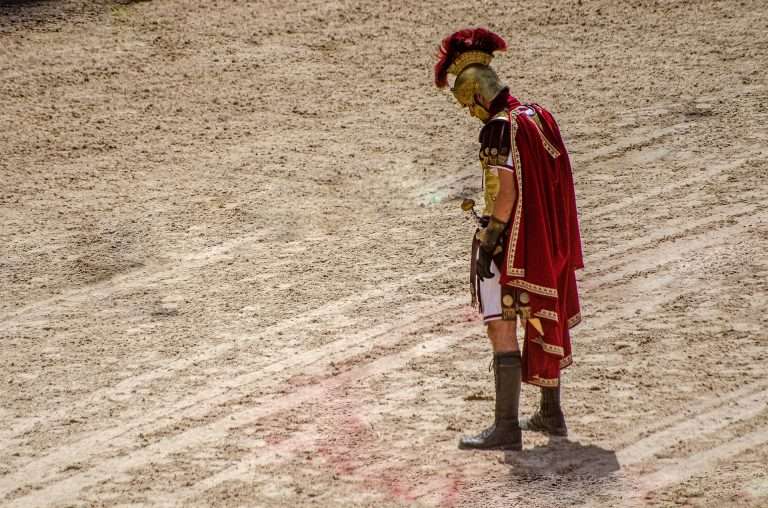
Back in Ancient Rome the gladiators were a major source of public entertainment. They were often required to fight to their very last breath.
There were professional gladiators who were idolised as much as any professional athlete today. Sometimes slaves were forced to fight. At other times they might be required to fight wild beasts such as bears or lions.
People were not fussed as long as there was lots of blood.
In 404 B.C. a lowly monk from the East of the Empire walked into the Coliseum, and onto the arena. He shouted, “In the name of God, stop this!” The details of what followed are murky. In some accounts the spectators were enraged and stoned Telemachus to death. Others say it was the gladiators who killed him. Some accounts say that after the death of Telemachus, the spectators filed out silently, ashamed of what had happened.
The Emperor was Honorius who was a Christian. He ordered that the killing games of Rome be stopped forever.
Having observed the fall out of the murder of Charlie Kirk last week, I feel that we are at a Telemachus moment. People at the political centre, on both sides of the divide, are asking “What have we become that a man is killed for debating ideas in a university?” Thousands of people have announced they are going back to church after decades, or reading their Bible for the first time since childhood.
To a lesser extent, this is happening in the UK and Australia also. We see the trends, and we might be a few years behind the US but we are heading down a similar path.
There has never been a more critical time than this. We stand at a crossroads where we allow our civilisation to crumble, or we turn and return to the Lord.
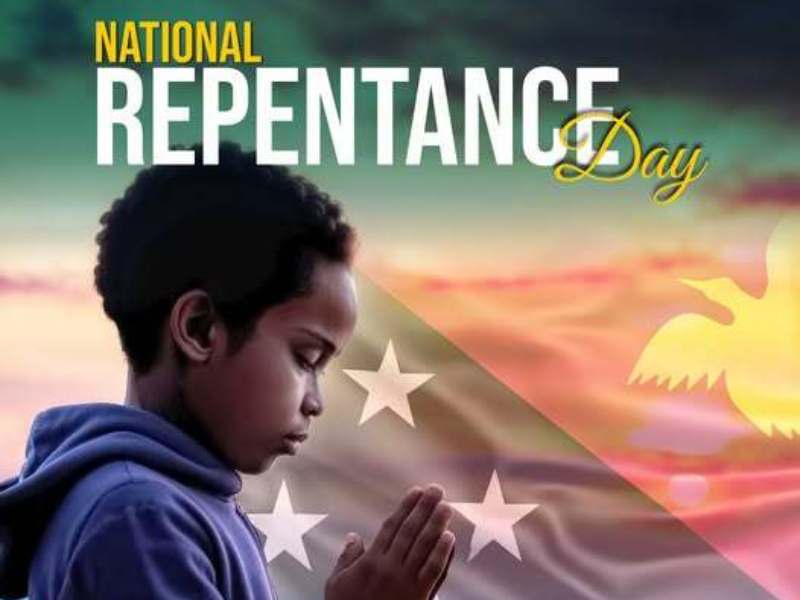
9/5/2025 Papua New Guinea (International Christian Concern) — Every August since 2007, Papua New Guinea has observed a national holiday called the National Repentance Day.
The purpose of the day is to encourage citizens to remember Papua New Guinea’s Christian heritage and focus on the repentance of sins for the more than 14 million people living on hundreds of islands in the Pacific Ocean.
Christian leaders from numerous denominations urge, especially within the government, honesty, stronger ethics, morals, and values, and more courage to confront corruption and violence in their nation.
In March, Papua New Guinea passed a constitutional amendment declaring itself a Christian nation. As it seeks to live up to the way of Christ, it also has high rates of corruption, bribery, crime, and gender-based violence. Additionally, there are frequent cases of tribal and village-based violence, which affects locals, Christians, and missionaries, particularly in rural and highland areas.
In West Papua, now an Indonesian territory, there is an intensifying Islamification of traditionally Christian areas and ongoing persecution of believers.
Amid its current challenges, National Repentance Day provides Papua New Guinea with a unique opportunity for renewed spiritual focus. The hope is that the nation will move closer to Christ and, over time, better represent God’s kingdom.
“Repentance is a way of life, acknowledging God as the source of our life, our country, and our very existence,” Dr. Jack Urame, head of the Lutheran Evangelical Church in Papua New Guinea, said during the recent National Repentance Day. “Yet, the way we live as a nation does not reflect that we have truly repented or changed our way of life.”




 New Life Narrabri