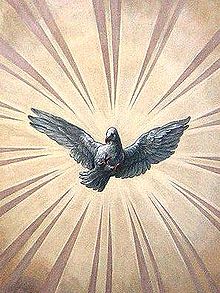
The Lord has been speaking to me that there is about to be a resurgence of the Baptism of the Holy Spirit in this season! He said that people are going to rise up and desire the power that they see in the early Church but that they no longer see in their denominational churches. And He said that they will have a desire for this because they are seeing that on their own they cannot be set free of the depth of darkness that their generation has taken them into.
I see this stirring in people again like never before! They are seeing their need of the power of God again in their lives. I am also hearing that the gifts of the Holy Spirit are once again going to become something that people desire and not look at as some backwoods thing that their parents and grandparents did that caused them embarrassment in the past, but they are going to remember the things that happened when Grandma prayed in tongues and God moved on her behalf! God is going to bring these things to their remembrance in this hour, and a new, deep desire for the deep things of God is about to begin stirring in their souls until they will have nothing less than all that God has for them!
The Lord has looked on these young souls and seen the poverty of their spirits and souls, and His heart is hurting to come near them so that He can heal them. So, He is beginning to place a desire in their hearts to come after that which they saw in their parents and grandparents that caused them to long to be clean. It caused them to know peace and to know that there was something in this world that was holy. So, He is putting the desire in their hearts again for the Holy Spirit! Be ready to bring them into this!
“It is well and good for the preacher to base his sermon on the Bible, but he better get to something relevant pretty quickly, or we start mentally to check out.” That stunningly clear sentence reflects one of the most amazing, tragic, and lamentable characteristics of contemporary Christianity: an impatience with the Word of God.
The sentence above comes from Mark Galli, senior managing editor of Christianity Today in an essay entitled, “Yawning at the Word.” In just a few hundred words, he captures the tragedy of a church increasingly impatient with and resistant to the reading and preaching of the Bible. We may wince when we read him relate his recent experiences, but we also recognize the ring of truth.
Galli was told to cut down on the biblical references in his sermon. “You’ll lose people,” the staff member warned. In a Bible study session on creation, the teacher was requested to come back the next Sunday prepared to take questions at the expense of reading the relevant scriptural texts on the doctrine. Cutting down on the number of Bible verses “would save time and, it was strongly implied, would better hold people’s interest.”
As Galli reflected, “Anyone who’s been in the preaching and teaching business knows these are not isolated examples but represent the larger reality.”
Indeed, in many churches there is very little reading of the Bible in worship, and sermons are marked by attention to the congregation’s concerns, not by an adequate attention to the biblical text. The exposition of the Bible has given way to the concerns, real or perceived, of the listeners. The authority of the Bible is swallowed up in the imposed authority of congregational concerns.
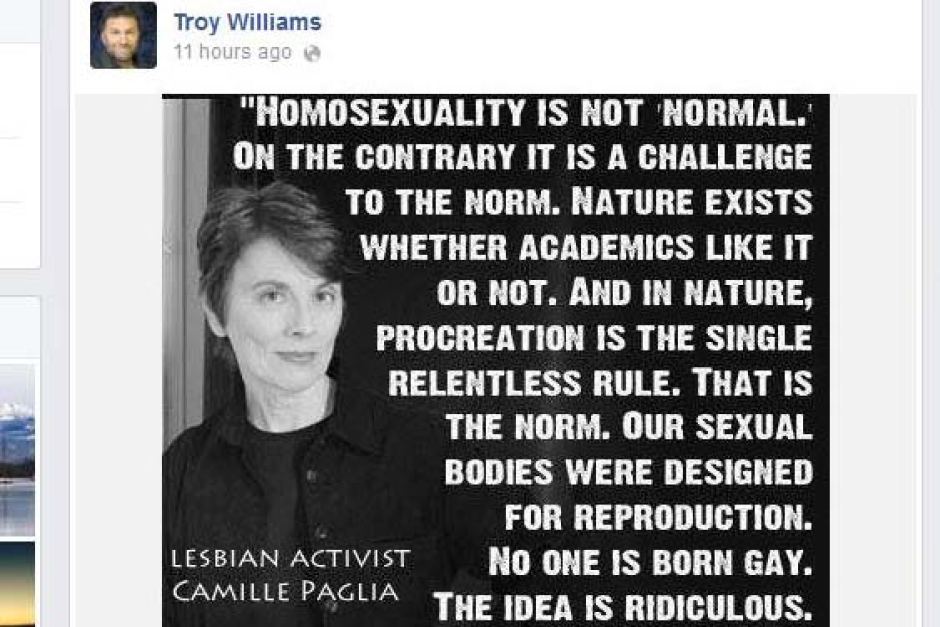
Michael Brown says that the church will divide over gay “marriage” and that this is not a bad thing.
Let the Separation Come
Dr. Michael Brown
As much I as I am constantly tackling controversial subjects, I am also working for the unity of the body, trying to major on the majors on my radio show (which reaches quite a diverse audience) and often interacting privately with those with whom I differ. Yet I recognize that sometimes division for the sake of truth can be healthy. Now is one of those times.
This past Wednesday, May 14, I gave a lecture at the Family Research Council in Washington, D.C., from noon to 1 p.m. It was also aired via live webcast, and the talk focused on issues related to my latest book, Can You Be Gay and Christian?
Shortly before the lecture, I was informed that at the exact same time and also live online, there would be a panel discussing Matthew Vines’ new book, God and the Gay Christian, with participation from Rachel Held Evans, Tony Jones and Jay Bakker, all of whom highly praised the book.
What excellent timing, and what an excellent opportunity to compare and contrast these two very different views. (For the record, my book is not a response to Matthew’s book, and the fact they came out at roughly the same time is providential rather than planned.)
One view says that while God deeply loves all people and offers them redemption in Jesus, under no circumstances would He ever bless or approve of two men (or two women) having sex together.
The other views says that under the right circumstances, God would bless and approve of two men (or two women) having sex. (For those who think that sex is not the issue, bear in mind that one of the major arguments made by same-sex “marriage” advocates like Matthew Vines is that it’s better for gays to be able to “marry” than to burn with lust, based on a serious misapplication of 1 Corinthians 7.)
Without a doubt, this issue will become a great dividing line in the church, and I, for one, welcome it, since it points to a much deeper divide in our approach to God, His Word and the people He wants to redeem. Ultimately, it will separate those who put God first and ask, “How can I fulfill His desires?” from those who put themselves first and ask, “How can He fulfill my desires?” (Although some will take extreme offense to this statement, if you analyze the major “gay Christian” arguments, they often boil down to this perspective.)
As nice as it can be to tuck ourselves away in some nook and cranny, all by our lonesome, and read the Scriptures we want to read, pray the prayers we prefer, play the songs we like, memorize the verses we pick, and fast from food when it’s convenient — as important as it is to pursue a regular rhythm of “private worship” in these personal disciplines — this is not the pinnacle of our Christian lives.
We were made to worship Jesustogether. Among the multitude. With the great hoard. Swallowed up in the magnificent mass of the redeemed. God didn’t fashion us to enjoy him finally as solitary individuals, but as happy members of a countlessly large family.
When the fog of everyday life clears, and we catch a glimpse of heaven’s bliss, we don’t find ourselves sequestered at a study desk or hidden alone in a prayer closet in paradise, or even standing alone before the great Grand Canyon or mountain peak of God’s majesty, but joyfully lost in the worshipping throng of Christ’s people from every tongue and tribe and nation.
Here’s the wash-up of “gay marriage”. No matter how much they promise freedom of religious practice for churches, no matter how much churches are promised to be exempt under the law, the pressure to buckle under just keeps increasing. It’s happening in the U.S. and now the U.K. If they win in Australia it will happen here too.
City Council Demands Churches Conduct Same-Sex Weddings
(Stefano Bolognini/Creative Commons)
A local council in the U.K. has been forced to apologize after issuing a letter that incorrectly demanded churches be licensed to perform same-sex marriages.
Essex County Council wrote to all churches in the county registered as wedding venues telling them that with “immediate effect” they “must” be licensed to “conduct same sex marriages.”
The words immediate and same were bold and underlined, with the latter also capitalized.
Simon Calvert of the Christian Institute says the council’s letter shows the need for churches to know their legal rights.
He says, “There is no legal reason whatsoever for churches to stop holding marriages in the ways they always have. They are free to do so.”
The Christian Institute has produced a new free legal guide, which gives reassurance that churches are well within their rights to say no to same-sex marriages.
“The behavior of Essex County Council goes to show why churches need to know their legal rights, because bureaucrats who want to push for gay marriage will try and go beyond the law,” warns Calvert.
He adds, “We want to be clear that Christians still have the right to express their belief that marriage is between a man and woman. Christians have every reason to be confident and bold in upholding the truth about marriage.”
“This is just the kind of thing we feared would happen,” says Colin Hart, campaign director of the Coalition for Marriage, which spearheaded opposition to the introduction of same-sex marriage.
“If this has already happened in Essex, there is a real danger that this kind of pressure will be applied by unelected officials across the country,” he warns.
The letter “lifts the lid on the Orwellian future that this ill-thought-through law creates,” Hart says.
You can memorize big chunks, even books, of the Bible. Unless you’re part of the very small percentage of us who’ve suffer from a traumatic brain injury or stroke or disability, you really can. And you should. But why should you?
1. Because you have a bad memory.
Don’t say you can’t memorize because you have a bad memory. That’s why you need to memorize. I have a bad memory too. I think it’s worse than average — seriously. I forget names of people I know and see regularly! I have to force my faulty, inefficient brain to drive things that matter most into my long-term memory. This only happens by the process of repeating (memorizing) every day over a period of time. You’d be surprised what you can commit to memory if you have a simple system and put forth some effort. I’ve memorized five New Testament books and am working on my sixth. And that’s because I have a bad memory.
Jesus told him, “I am the way, the truth and the life. No one can come to the Father except through me.”
Observation
This is at the Last Supper.
Jesus reassures His disciples. There is enough room in the Father’s house and Jesus is going to prepare their place.
Thomas says, “We don’t know where you are going or how to get there.”
Jesus replies, “I am the way, the truth and the life.”
Philip asks Jesus to show them the Father. Jesus tells him that He and the Father are one- to see Jesus is to see the Father.
Application
There is only one way to the Father and that is Jesus. Our culture wants to believe that all religions are equivalent and lead to the same destination. Jesus says, He is the only way.
There is no compromise here. If you want a place in heaven, Jesus is the only way to get there.
Muslims without Jesus will not see heaven.
Hindus without Jesus will not see heaven.
Buddhists without Jesus will not see heaven.
Atheists without Jesus will not see heaven.
My neighbour without Jesus will not see heaven.
We must pray and share our faith to see people saved. Jesus is their only hope.
Prayer
Lord Jesus, thank you for saving me. I pray that those people close to me who do not know you will come to salvation in Jesus’ name. Amen.
Over time, I have discovered that God takes our fears very seriously. We often do not. Most of us have been afraid of the same things for so many years that we almost don’t notice how they’re affecting us anymore—or worse, we choose to ignore them.
This isn’t fear, we may think. I just don’t do that sort of thing. I’m not outgoing enough.
It’s not because I’m afraid of failing. I’ve just decided not to see this through.
I know God doesn’t want me to be afraid of this (person, event, situation), but I am.
Our fears may seem small and insignificant to us, but they aren’t to God. He will often go to great lengths to see that we are delivered from them.
Several years ago, I had nightmares for 69 nights in a row. Most of the time, I would wake up sweating, yelling and thinking I was going to die. I begged God to stop the dreams, but He didn’t—at least, not in the way I had been expecting.
By the time Night Number 70 rolled around, I was staying up until 1 or 2 a.m. and avoiding going to bed for as long as I could. That night, when I finally fell asleep, I dreamed that I was in a huge, beautiful house. Everything was peaceful. But then I saw a bee outside the window, and I thought, Oh, no! Not again! I am not going to let them in this house!
I got out my duct tape and taped up every window, door and even the fireplace. I was determined the bees were not going to get into the house, and when I had finished, I was relieved. I had done it! I had conquered them! I couldn’t see out the windows because the swarm was so thick—but I had conquered them.
Suddenly, an angel stood beside me. “Come with me,” he said.
But I knew better. “No,” I replied. “I know you. You’ve been here before! Every time I go with you, you take me outside, and if I go outside, the bees are going to know I’m there, and they will sting me, and I will die!”
Rather forcefully, he said, “I said, ‘Come with me!‘”
The next thing I knew, I was standing outside about 100 feet away from the house. The bees blanketed the structure completely. You couldn’t even see it anymore.
The angel looked at me. “Blow on it!”
Once again, I knew better. “No,” I told him. “If I blow on it, they are going to know I’m here, and then they are going to come and sting me, and I’ll die!”
“I said, ‘Blow on it!‘” he repeated.
It was clear that either the bees were going to kill me or this angel was. So, coming up with a plan, I took a small breath and whispered at the house. I thought that maybe if I blew only a little bit, the bees wouldn’t notice I was there, and the angel would be satisfied.
But no. He turned to me again. “I said, ‘Blow on it!’ Let the breath of God blow through you! Blow on that!”
Knowing I was facing imminent death, I took a deep breath and blew with everything I had. To my shock, a huge number of bees lifted off the house and disappeared! Full of courage, I did it again. Three breaths later, I could see that the house was completely clean.
The angel looked at me and said, “Never allow the enemy to do that to you again! The Spirit of the Living God will stop it if you will let Him come forth from you. Never stop the breath of God!”
God takes our fears very seriously. None of them is inconsequential, and no matter how small they may seem, every one of them affects us. Our heavenly Father wants us to be free from their negative and binding consequences—but we have to want that freedom, too.
We need to view our fears the way God views them. Take some time and ask Him which fear, or fears, He wants to address in your life today.
What does He want to remove? What do you need to start thinking differently about? It could be that God has a great blessing waiting for you on the other side of the fear, a blessing that has been available to you but that you couldn’t see because the fear kept it hidden from your sight.
Let the breath of God blow through you at your fear, and you will reap the benefit true freedom brings.
John Paul Jackson is the founder of Streams Ministries International (streamsministries.com) and a well-known authority on dream interpretation and prophetic evangelism who ministers nationally and internationally in churches and conferences. He is also the author of numerous books, including the best-selling titlesUnmasking the Jezebel Spirit and Needless Casualties of War.
So the church throughout all Judea and Galilee and Samaria had peace and was being built up. And walking in the fear of the Lord and in the comfort of the Holy Spirit, it multiplied. Acts 9:31
I’m not against strategic plans. I’m for them. They have their place, as a matter of wise stewardship. But they cannot generate the astonishing outcomes described in the book of Acts.
I remember hearing Michael Green at the Lausanne Congress on World Evangelization in 1974. He asked us, Why don’t we see anywhere in the book of Acts a man-made strategic plan for evangelizing the world? His answer: They didn’t have one.
What then did they have? Two things, for starters: the fear of the Lord, and the comfort of the Holy Spirit.
In the fear of the Lord, they were teachable, they were humble, they were listening to the gospel, they were open and grateful and easily bendable. They did not have a spirit of self-assurance. They were eager to learn and grow and change in any way the Lord wanted them to.
In the comfort of the Holy Spirit, they were gladdened, they felt forgiven, they were reconciled to God and reconciling with one another. They saw their sins and failures, but they also saw the far greater reality of Jesus crucified for them. To put it in a secular way, they couldn’t believe their luck.
Openness in a know-it-all world, comfort in an angry world – that ancient world simply could not resist these heaven-sent powers. So the church didn’t just grow, it multiplied.
Those early churches had no master plan for their future. But they were walking in the fear of the Lord and in the comfort of the Holy Spirit, and it worked.
Church growth takes planning. Let’s do it. But church multiplication takes miracle. Let’s be open to what only God can do.
Over the last few months I have attended a couple of funerals which left me feeling somewhat disappointed in that while they were led by a pastor and each contained a hymn and a Bible reading, they felt decidedly secular.
I’ve had this experience a few times when attending funerals and weddings conducted by Pentecostal and evangelical pastors. There has been total focus on the human subject (the deceased or the bride and groom) but very little attention to Jesus or the gospel.
Rather than conducting a distinctively christian service which glorifies the Lord, they seem to have taken a secular ceremony and added a christian element to it.
The heart of the problem is this: in rejecting formal orders of service to be more “contemporary” or “relevant” we inevitably end up being indistinguishable from the world.
A written liturgy with formal prayers and declarations allows us to both worship the Lord and honour the people we are celebrating. The liturgy doesn’t have to be inflexible or in King James English. It does allow us to think about what needs to be said and how to say it.
There is a balance between the type of liturgy that is unchanging and said by rote and one that is flexible. I remember one person at a funeral I conducted saying, “At least we knew who we were burying not like when that other lot do them.”
I think that many pastors would do well to follow a more formal order of service rather than throwing together a bunch of things that they think should happen on the day. Above all else, the gospel must be preached on every occasion or else we are failing in our calling.