
From Charisma Online, James Lasher writes

According to Christian professor Michael Licona, more than 200 Muslim men have experienced life-altering visions of Jesus in their dreams, leading them to embrace Christianity.
Licona, a New Testament Studies professor at Houston Christian University, shared this extraordinary account through a Facebook post:
Quoting a report from underground Christian ministries in the Middle East, Licona revealed, “Last night, Jesus appeared to more than 200 of them in their dreams! They have come back to us to learn more from God’s Word and are asking how to follow Jesus.”
This miraculous event parallels the biblical accounts of visions and dreams during the end times. Acts 2:17 says: “In the last days it shall be,’ God declares, ‘that I will pour out My Spirit on all flesh; your sons and your daughters shall prophesy, and your young men shall see visions, and your old men shall dream dreams.’”
These conversions are not isolated incidents, as similar reports surfaced before the Oct. 7 Hamas terrorist attack. Assemblies of God missionary Dick Brogden emphasised the significance of dreams, stating, “Dreams are contributing to revelation … the process of evangelism and conversion.”
As believers, it is crucial to remain vigilant and faithful, sharing the message of salvation through Jesus. Despite the ongoing conflict, the transformative power of these dreams demonstrates that God’s grace, love and mercy can reach even the most challenging circumstances.
Licona, expressing his perspective on the Israel-Hamas conflict, urged prayers for the war’s end and the liberation of Palestinians from the oppressive influence of Hamas. This aligns with the Christian call to seek peace even with those who do not believe, as stated in Romans 12:18: “If it is possible, as much as it depends on you, live peaceably with all men.”
In times of uncertainty, these visions serve as a beacon of hope, reinforcing our faith in the redemptive power of Christ. As we navigate the complexities of the end times, we can draw inspiration from these conversions and continue to share the love and teachings of Jesus.
Weather has not been brilliant for riding this week. It’s been rainy, windy and muggy. This morning I took the opportunity to ride down to Jacks Creek and Gun Club Roads before the next weather event. #cycling #Narrabri #Biketooter

You don’t get intimacy with God just by praying to be intimate. You must give up the sins of the flesh, so that you die to them. You do that by yielding, or giving up, or surrendering to God. You do that by quitting sin. You pray, “Lord, I’ll not do it anymore.” As you give up the lust of the flesh, you’ll find the intimacy of God you seek. Elmer Towns

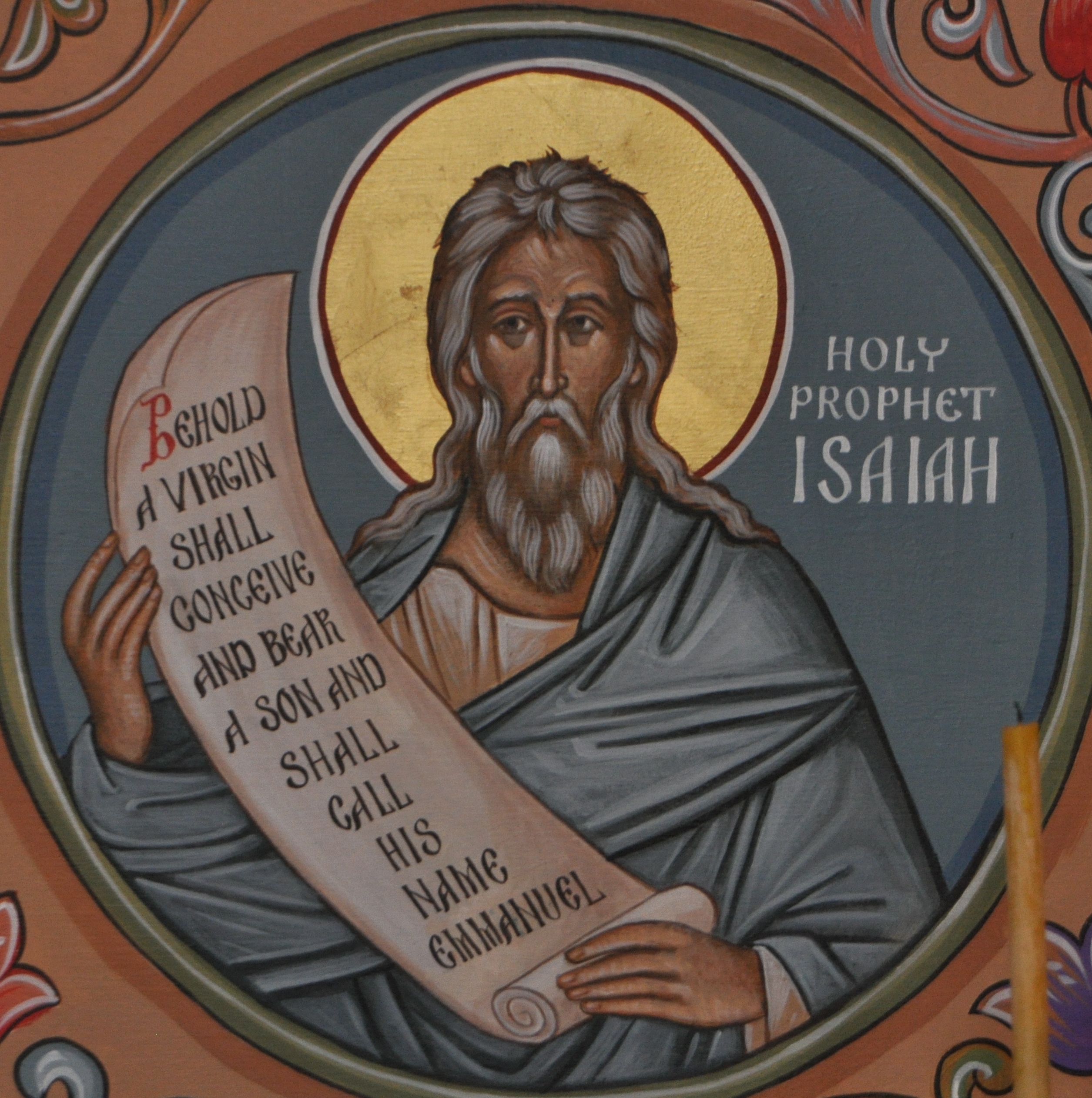
Scripture
“When I expected sweet grapes, why did my vineyard give me bitter grapes?”
Observation
The Lord had a vineyard set on a rich and fertile hill. He ploughed the land, planted the best vines, and waited for the harvest. Yet it produced bitter grapes. Now he will tear down the vineyard and let it be destroyed.
The Lord expected to find righteousness and justice in the in the nation of Israel, but He found oppression and violence.
The people will go into exile far away. What sorrow awaits those who mock God. What sorrow for those who call evil good and good evil and for those who are wise in their own eyes.
T Lord’s anger burns against the people. He will whistle to distant nations and they will come and carry off their victims.
Application
The Lord is always expecting a harvest of righteousness and justice from His people.
There is a common form of “easy believeism” or cheap grace in which salvation is preached as a gift that comes when we say a prayer. Salvation is so much more than a transaction enacted in a church service. Unless a life is changed, or a heart transformed over time, then the person has not been saved.
Isaiah condemned the people of Israel for their corruption, self-indulgence, and injustice. They produced only sour grapes, not the sweet grapes the Lord intended for them.
There are many people who profess to be Christians who live the same sort of lives that the people of the world live. They have the same ambitions, plans ans dreams as unbelievers. The gospel hasn’t changed anything about them.
To repent means that we turn our lives away from sin and towards God. Over time we become more like Jesus.
Prayer
Thank you Lord for salvation. Please show me any part of my life that is displeasing to you. Amen
We must sacrifice because we know God can answer and we must keep praying until God does answer. Elmer Towns
Scripture
But in that day, the branch of the Lord will be beautiful and glorious; the fruit of the land will be the pride and the glory of all who survive in Israel.
Observation
After the punishment, the destruction and the degradation of Israel comes the restoration. There will be so few men left alive that seven women will fight for each man.
But then the branch of the Lord, the remnant, will be beautiful and glorious. The land will be cleansed so that it is again fruitful.
The people will be holy. The Lord will wash the filth from Zion with the hot breath of Judgement. then He will provide a canopy of cloud during the day and fire by night over all the land. It will protect them from the heat and the storms.
Application
The branch of the Lord refers to the remnant of the people of Israel. They are going to go through a disastrous time of discipline in which the Lord will strip away the corruption of Israel. What is left will be holy and beautiful, a people dedicated to the Lord.
The branch of the Lord also remind us of another promise in Isaiah; that a branch will grow from the stump of Jesse. This time of the year, we tend to think of Jesus as being that branch. Jesus is the one who is beautiful and glorious. He is the one who makes the land fruitful.
We can see in this also a reference to the church. Israel had not been faithful to the lord. Israel rejected the Messiah. So the church became a branch that brings pride and glory to the Lord. We are the branch, grafted in, as Paul describes it in Romans. We are the holy remnant, the people of the Lord.
Prayer
Thank you Lord for grafting me into your chosen people. I did not deserve this, but I am now a part of the holy priesthood of God, through the grace of Jesus Christ. Amen.

The Anglican Archbishop of Sydney, Kanishka Raffel, describes how he abandoned Buddhism to follow Jesus Christ.
My family came to Australia in 1972. My parents were Sri Lankan. My mother’s family were Buddhist and so my two sisters and I were raised as Buddhists in Australia, which was unusual then.
I think Australia’s first Buddhist temple opened in 1975 in Stanmore. It was a Thai Buddhist temple and Thai Buddhism is very similar to Sri Lankan Buddhism, so that was where the Sri Lankan community would go.
In my third year at university, I thought I should devote myself a little to the study of my religion. So, I started privately reading Buddhist literature. I visited the temple. I developed my meditation practice. But in God’s kindness, I’d had Christian friends at high school and at university. And so, at the end of my third year at university, I was going on holiday with a few friends and we picked up some of them at the end of a beach mission.
So we arrived on the last day of the beach mission. And after we’d had lunch, the team said to me, “Oh, we’re going to pray now. Maybe you could go for a walk on the beach.” And I said, “Oh, I’ll just stay here if that’s okay.”
That was the first time I saw Christian people in prayer, and it was quite surprising. I didn’t know what they were going to do when they said that they were going to pray. They just stayed right where they were and started talking to God. So that was eye-opening.
“He allowed me to see the vitality, the beauty, the majesty of Jesus Christ.”
Then I said to one of my friends, “What’s being a Christian all about?” And he said being a Christian meant he’d “lost control of his life to Jesus Christ”. Remember, I had devoted the year to serious study of Buddhism and was trying to develop, especially through meditation, control of my emotions and my ambitions and my desires, in order to be released from them. And here was my friend, who I respected, who said he’d lost control of his life to somebody who lived 2000 years ago!
Well, he asked me, “Would you read something if I gave it to you?” I said, “Okay.” And he gave me Mark’s Gospel and John’s Gospel.
When I was back at home after our holiday, in my bedroom, I thought I ought to keep my word to my friend. So, I got John’s Gospel out and began to read it. And as I did – wonderfully – God, in his kindness, convicted me, first of all, that I wasn’t reading a fairytale but that I was reading history. And he allowed me to see the vitality, the beauty, the majesty of Jesus Christ – a person who had friends and enemies, who had compassion and a mission, who was a man of emotions, but also seemingly always in control.
The Lord drew my attention to a particular phrase that John uses. He relates a story, and then he’ll say, “At this, the people were divided.” God really drew my attention to this phrase and turned it around on me, so that I began to ask myself, “Well, you’re not on the side of Jesus. Why not?”
As I read through the gospel once again, my attention became focused on John 6:44. Jesus says, “No one can come to me unless the Father who sent me draws them to me, and I will raise them up on the last day.” Although this verse raises questions about God’s sovereign election, what provoked me was the idea of “the last day”. Buddhism taught me to expect that it would take hundreds of lifetimes, through many deaths and rebirths, before I could hope to achieve enlightenment. The Buddha himself took over 500 rebirths. If that was true, then the idea of a “last day” was problematic.
But then, I began to wonder what Jesus could have meant when he said, “No one can come to me unless the Father … draws them to me.” How would the Father draw someone to Jesus? How could this happen? Then I noticed the very next verse. John 6:45 says, “It is written in the Prophets: ‘They will all be taught by God.’ Everyone who has heard the Father and learned from him comes to me.” It occurred to me that as I had been reading the gospel, the Father had been teaching me about Jesus! If I had indeed “heard the Father” and “earned from him” then the necessary thing was to “come to Jesus”. I was being “drawn to Jesus”, and in God’s kindness, I came.
Eventually, I couldn’t think of any good reason for not being on Jesus’ side. In a way that I couldn’t have explained, I just felt somehow that Jesus was for me. And I thought, “Well, I need to be for him too.” And so, in God’s kindness, he saved me.

The sermon for November 19th 2023 is now available on the New Life web site.
In this sermon, which is based on Matthew 25:14-30, I talk about Service Not Works.
Click here to listen
Yieldedness is one of the keys to answered prayer. If God has not answered your prayer, then you ought to search your heart, for there might be something that is unyielded to God. Elmer Towns
 New Life Narrabri