Quote for the Day

Even in Europe, the late Middle Ages witnessed a steep decline in Christian power in the face of Muslim expansion under the Ottoman Turks. Ever larger numbers of Christians found themselves under Muslim rule, and the trend did not begin to be reversed until the 1680s. This point deserves stressing in view of the modern image of a predatory Christian West ever seeking to expand its dominion over an unsuspecting world. Philip Jenkins

Reflection on Hebrews 7: 11- 19

Scripture

For the law never made anything perfect. But now, we have confidence in a better hope, through which we draw near to God.

Observation

The perfection which God required could not be achieved under the old priesthood of Levi. Instead, God instituted a different priesthood with a priest in the order of Melchizedek.

If the priesthood is changed, the law must also be changed. Our Lord came from the tribe of Judah, and the law of Moses never mentioned priests from that tribe.

Jesus became a priest, not by belonging to the tribe of Levi, but by having a life that cannot be destroyed. The old law never made anything perfect, but we now draw close to God through our great high priest.

Application

The law of Moses could not make a person perfect. Like any law, all it could do is tell you what to do and warn of a consequence if you did not do it.

In Christ we have a better hope, a better priesthood. He is making us perfect and he opens the way for us to draw close to God .

Firstly, Jesus declares that our sins are forgiven. There is no punishment, or fear of punishment, where there is no trespass. If the judge declares that we have not broken the law, we will not be punished.

Secondly, the sin that separates us from God is removed. Therefore, I can enter into God’s presence at any time. Under the old covenant, only the high priest could enter the Most Holy Place, and then only once per year. We can enter God’s dwelling place at any time.

Thirdly, the Holy Spirit is transforming us to be perfect. This will not be completed in this life, but every day, as we seek to follow Jesus, the image of God in our souls is being restored.

Prayer

Thank you, Lord, that you are making me perfect and sinless. Amen.

Quote for the Day

At so many points, the living Christianity of Egypt, Syria, Palestine, Ethiopia, and Armenia takes us back to the earliest centuries of the faith, a time when the followers of Jesus were developing cells of believers within a still vibrant Roman Empire. Philip Jenkins

Reflection on Hebrews 7:1-10

Scripture

The priests who collect tithes are men who died, so Melchizedek is greater than they are, because we are told that he lives on.

Observation

The previous chapter ended with the statement that Jesus is an eternal high priest in the order of Melchizedek.

Melchizedek was both the king of Salem (Jerusalem) and also a priest of God. Melchizedek met Abraham after a battle. Melchizedek blessed Abraham, and Abraham gave him a tenth of all that he had captured in the battle.

The law of Moses required the priests of Levi to collect a tithe from the rest of the people of Israel. Melchizedek was not a descendant of Levi .

Melchizedek blessed Abraham, demonstrating that he was greater than Abraham .

The Levites who collected the tithes die, but Melchizedek is still alive. He is therefore greater than they are.

Application

The author of Hebrews is making the point that the priestly order of Melchizedek is greater than that of the priestly order established by the law of Moses. It is this order, Melchizedek’s order, to which Christ’s priesthood belongs.

The writer is using comparisons and analogies which were understandable to his readers, although we may struggle with them.

The crux of the message is this: Christ is greater than any human religious system, even the Old Covenant system established under Moses.

We do not have to go back to offering sacrifices or obeying the Old Testament law and requirements. Christ has set us free from all of this.

Because Christ is a higher priest, his sacrifice is effective for all people and covers all sins.

Prayer

Thank you Jesus for dying for me and for atoning for all of my sins. Amen.

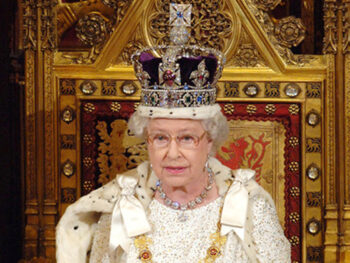
Queen Elizabeth wanted to see Jesus return, so she could cast her crown at his feet

From godreports.com


Queen Elizabeth wanted to see Jesus return, so she could cast her crown at his feet

By Charles Gardner —

Queen Elizabeth

Queen Elizabeth based her entire life, and her extraordinary 70-year reign, on Jesus, the Jew, the rock and guide of her long reign. Yet though she has travelled the world more than most, she never set foot in Israel, the land which gave birth to the Christian faith she so devoutly followed.

Every year at Christmas, in a broadcast to the nation watched by millions worldwide, the Sovereign shared her personal Christian faith as key to all she does.

Some years ago, for example, she quoted a verse from a well-known carol, In the bleak midwinter: “What can I give him, poor as I am, If I were a shepherd, I would bring a lamb, If I were a wise man, I would do my part, Yet what I can I give him, give my heart.”

As a true evangelist in the spirit of Billy Graham, she encouraged millions of viewers to give Jesus their heart. This was our Queen, and we are all so proud of her! Only today I heard of a conversation she held with an acquaintance in which she is said to have stated: “I wish Jesus would come back in my lifetime.” Asked why, she reportedly replied: “Because I would place my crown at his feet.”

In his sermon at St Paul’s Cathedral to mark the Queen’s Platinum Jubilee in June, Archbishop of York Stephen Cottrell said she was “someone who has been able to serve our nation faithfully because of her faith in Jesus Christ”. And then he added this challenge: “Perhaps there is no better way of celebrating her Platinum Jubilee than by doing the same ourselves.”

On this point, it is truly exciting to witness how the entire nation, led by the secular media, is being taken up with the wonder and reality of our late Queen’s faith.

Referring to the Apostle Paul, the Archbishop said he was only worth following because he was following Jesus, adding: “For me, the best leaders – like Paul, like Jesus – are those who know how to be led.”

The UK’s Chief Rabbi Ephraim Mirvis testified: “I recall how, on one occasion, she showed me and my wife items of Jewish interest and value in her private collection at Windsor Castle, including a Torah scroll rescued from Czechoslovakia during the Holocaust. Her affection for the Jewish people ran deep, and her respect for our values was palpable.”
The long exile from the modern Jewish state by British royalty is perhaps complex, but seems to reflect Foreign Office policy, which generally amounts to appeasement of the surrounding Arab nations.

The Queen’s affection for the Jewish people ran deep. But it was her faith in Jesus, the Jew, that proved the light and strength of her long life and reign.

The Queen’s mother-in-law, Princess Alice of Greece, was honored with the title of ‘righteous among the nations’ for her bravery in hiding a Jewish family during the Holocaust, and is buried on the Mt of Olives.

Jerusalem as seen from the Mt of Olives, where the Queen’s mother-in-law, Princess Alice, is buried. (Picture: Charles Gardner)

In 2018, significantly 70 years¹ after the rebirth of Israel, British royalty ended their ‘exile’ from official visits to the Holy Land when Prince William, the Queen’s grandson (now the Prince of Wales and first in line to the throne) toured the country.

The Queen’s eldest, now King Charles III, had already visited Israel twice to pay respects at state funerals as well as fulfilling a longstanding wish to visit his grandmother’s grave, but these were not considered official tours.

However, in what was seen to contribute to a positive new era in British-Israeli relations, Charles then attended the World Holocaust Forum in Jerusalem in January 2019. Charles has shown constant support for Holocaust survivors over the years, regularly inviting them to lavish teas, as one of them has shared with me.

In 2017, a rumored visit by Prince Charles was reportedly cancelled by the Royal Visits Committee on the grounds that it would “upset Arab nations in the region who regularly host UK royals”.²

The Queen’s late husband Prince Philip’s only trip was in 1994 to attend a ceremony commemorating his mother, Princess Alice who, as Princess of Greece, hid Jewish widow Rachel Cohen and two of her five children in her home. Rachel’s husband had in 1913 helped King George I of Greece, in return for which the king offered him any service he could perform, should he ever need it. When the Nazi threat emerged, his son recalled this promise and appealed to the Princess, who duly honored her father’s pledge.

As I watched Charles’ beautiful tribute to his mother shortly after she died, I found myself praying the prayer of William Tyndale as he was about to be martyred for daring to translate the New Testament into English: “Lord, open the King of England’s eyes.”
We know the new king has been less vocal and precise about his faith than his mother, but I pray that God will also open his eyes to the uniqueness of Christ and his gospel. God save the King!

1 The period spent in Babylon by the Jews of old.
2 Daily Mail, 2 March 2018


Why conservatives are happier than liberals

From The Spectator:


Why conservatives are happier than liberals

President Biden (Chip Somodevilla/Getty)

Ross Pomeroy, editor of RealClearScience, calls it “one of the most surefire findings in all of social psychology, repeatedly replicated over almost five decades of study: American conservatives say they are much happier than American liberals. They also report greater meaning and purpose in their lives, and higher overall life satisfaction.”

Given their recent embrace of lockdowns and masking as a societal ideal, drag queens as role models, abortion as a good career move, and sanctions against “misgendering,” it might not surprise you that American liberals are much more prone to neurosis, depression, and anxiety, and, as one recent study cited by Pomeroy pointed out, “have become less happy over the last several decades.” Their unhappiness “is associated with increasingly secular attitudes and actions.”

Think about that for a moment. “Attitudes” and “actions” imply that liberals might be people who choose to be unhappy.

That may sound flippant, but it’s a reasonable conclusion, especially given that social scientists often assert that conservative happiness rests on three “attitudes” and “actions” that pretty much anyone can adopt.

The first attitude is religious belief. Now, “religion” is a broad word — sort of like saying “politics” — but in our context, what we’re really talking about is Christian belief, and the action is going to church.

After 2,000 years of Christian witness and theology, and pro- and anti-Christian polemics, it’s reasonable to conclude that on the question of whether Christianity is true, there are respectable arguments on both sides. The odds are at least fifty-fifty that there is a God — a prime mover, a creator, a designer — that the gospels and the Acts of the Apostles are reliable historical documents, and that our lives have an eternal purpose. This is against the belief that the universe is the product of chance and random evolution, that the New Testament is a conspiracy theory, and that our lives have only such meaning as we give them.

If it’s a fifty-fifty proposition — and, frankly, it would be easy to calculate the odds much more in favor of Christianity — why would one choose a path shown by the science, albeit the social science, to be the path of neurosis, depression, anxiety, and unhappiness?

Marriage is the often proposed second pillar on which conservative happiness rests. Marriage might be less easily willed because it requires a willing partner, but conservatives are nevertheless much more likely than liberals to want to get married and have children. Liberals apparently see marriage as an inhibition to their freedom. The science tells us that this is the freedom to be unhappy.

The generally cited third source of conservative happiness is “personal agency” or what you and I might call the can-do spirit. Conservatives are much more likely than liberals to believe they can improve their circumstances through hard work. While conservatives revere the past and tradition — where they find examples of American grit and pluck — they are, in fact, future-oriented, focusing on achievement, supporting a family (the next generation), and one’s eternal reward. You could call it: the purpose-driven life.

Yet just as liberal cosmology denies free will, so too does it deny the idea of meritocracy (at least in its popular formulation). We live, in the liberal view, in a world shaped by an oppressive white, male, Christian patriarchy that needs to be overthrown. To that end, we should sort ourselves (if we are not conservative Christian white males) into a wide variety of alleged oppressed minority groups — a rainbow coalition, if you will. Or, if one is a liberal straight white male, one must be an “ally” of alleged oppressed minority groups.

In practice, this sorting leads to a relentless pursuit (intentional or not) of immiseration, pessimism, grievance, and anger — not to mention the creation of ever more obscure (and perverse) group identities. This, again, is a choice.

In the 1970s, a time oft-compared to our own — with its foreign policy disasters, energy crisis, skyrocketing crime, and social upheaval — a tribe of liberals packed up their tents, moved to the right, and proclaimed themselves “neoconservatives” or “liberals who had been mugged by reality.”

But today’s liberals are not much interested in reality — no matter how often it mugs them. They have prior ideological commitments.

If you think we live in a crazy world, it’s because we live in their world, a world where liberals who have lost reason and faith dominate every institution and use their bully pulpits to impose their neuroses on the rest of us.

Luckily, however, there is a cure. The ballot box is one part of it. Making the right choices ourselves is another.