Reflection on Matthew 20:17-28

Scripture

Jesus answered them by saying, “You will indeed drink from my bitter cup. But I have no right to say who will sit on my right or left. My Father has prepared these places for the ones He has chosen.”

Observation

Jesus takes the twelve disciples aside and tells them privately about His imminent death and resurrection.

The mother of James and John comes and asks Jesus to allow her sons to sit next to Him when He takes His Kingdom. Jesus replies that she doesn’t know what she is asking for. To follow Him means to drink from the same cup of suffering that He must drink.

He goes on to tell the disciples that anyone who wants to rule in His kingdom must first become a servant. Jesus came not to be served but to serve and to give His life as a ransom for many.

Application

To follow Jesus means that we must be ready to suffer for Him and for His Kingdom.

The path of Jesus has always been as odds with the world and the demonic powers that control it. Suffering is almost inevitable.

The so-called prosperity gospel promises wealth and success to those who believe in Jesus. While it is true that God’s favour can result in earthly advancement, it is also true that the world hates those who follow Jesus.

Persecution has been the lot of the majority of christians in the ages. But their experience has been that there is enormous blessing in suffering. Suffering for the faith brings an added dimension of the presence of Christ that those who follow Him in a place of comfort cannot understand.

We do not go out looking to be persecuted, but when suffering comes we should not flee it. Christ is always with us.

Prayer

Lord Jesus, when times of testing come, may I be found faithful. Amen.

Reflection on Matthew 20:1-16

Scripture

“Is it against the law for me to do what I want with my money? Should you be jealous because I am kind to others?”

Observation

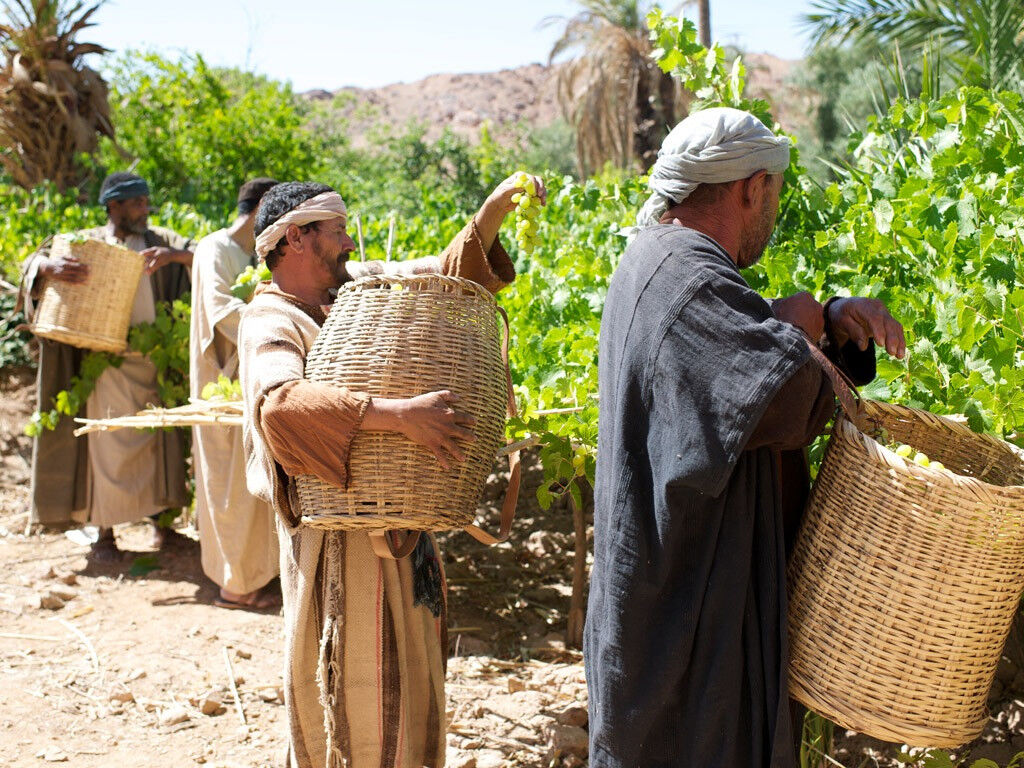
Jesus tells a parable about a landowner who needs to hire workers for his vineyard. He goes out at dawn, 9 o’clock, noon, and again at 5 o’clock. He tells the workers at each stage he will pay them what is fair.

After sunset, he calls the workers and pays them all exactly the same amount- a full day’s wage. Those who were employed first argued with this. The landowner points out that they had agreed to work for the usual wage. If he paid the latecomers the same amount they were not cheated in any way.

Application

Everyone who labours in the Father’s vineyard gets the same reward regardless of how long they serve Him. We all get eternal life whether we are born christian, so to speak, or whether we meet Jesus minutes before we die.

To complain that one person does it very easy while another does not is to miss the whole point. We get to live forever with our Father.

We do not serve the Lord for a pay cheque. We serve Him in love.

Jacob served Laban for seven years to get Leah, whom he did not want, and another seven to get Rachel. He effectively worked 14 years for Rachel his beloved and not a day for Leah. Which did he love more?

The idea of working and receiving payment is the opposite of grace. Yet some people cannot help but think this way. “If I do this for God, He will save me.” They fail to see hat the price has been paid and our salvation does not depend on what we do for God.

Prayer

Thank you Father for the promise of heaven. I don’t have to do anything to earn your favour because you already love me. Hallelujah!

Reflection on Matthew 19:16-30

Scripture

“Everyone who has given up houses or brothers or sisters or father or mother or children or property for my sake, will receive a hundred times as much in return and will inherit eternal life.”

Observation

A young man comes to Jesus and asks Him what he must do to have eternal life. Jesus tells him he just needs to keep the commandments.

The man tells Jesus he has kept them all. Jesus tells him he just needs to do one thing- to sell his possessions and give the money to the poor, and then come and follow Him.

Jesus tells the disciples that it is very hard for a rich man to enter the kingdom of heaven. It is easier to pass a camel through the eye of a needle. He goes on to tell them that in the kingdom age, everyone who gives up anything for His sake will be rewarded a hundred times over, and will also inherit eternal life.

Application

The rich man was badly addicted to his money, or to be more accurate, the lifestyle his money made possible. He could not give that up, even for the sake of eternal life.

The pandemic has brought about immense changes to people’s lifestyles because of restrictions imposed by authorities. While many people have lost businesses built up over many years, the biggest question for many seems to be “When can I travel overseas?”

Jesus constantly nails the one thing we are dependent on and asks us to yield it to Him. He promises that whatever we yield to Him He will restore a hundred times over.

Bu tit is always the one thing I have set my heart on or worked hard for. He wants me to give that thing up, and I can’t because it is my identity, my achievement, my idol.

The good thing is that once we have decided that everything is His, we don’t even mind giving it up for Him.

Our idols keep us rooted in this planet. Jesus gives us vision for eternity. When we give it all to Him, He returns it and eternity as well.

Prayer

Lord, please show me the idols of my heart, and give me grace to surrender them to you. Amen.

Reflection on Matthew 19:1-12

Scripture

“Some are born eunuchs, some are made eunuchs by others, and some choose not to marry for the sake of the Kingdom of heaven. Let anyone accept this who can.”

Observation

Some Pharisees come to Jesus, trying to trap Him (again). The question they pose is about divorce. Jesus says that when God joins a man and woman they become one flesh. They must not be separated. The only exception is in the case of adultery.

The disciples ask if it better not to marry. Jesus says that some are born eunuchs, others are castrated, and yet others become like eunuchs for the sake of the Kingdom of God.

Application

Jesus has a high value on marriage- much higher, it seems, than many of His followers.

Even so, Jesus sees that some people may observe a life of celibacy for the sake of God’s kingdom. This has been exemplified in the Catholic Church through the millennia by priests, monks and nuns, and others. In Protestant churches, some people experience a definite call to remain single in order to better serve the Lord.

In that sense, it is neither better nor worse to marry nor to stay single, as long as what we do is for the glory of God.

In our hypersexualised culture where it seems that personal pleasure is the highest god, this is a radical departure.

Christians place sexual activity in the context of marriage, which is defined as one man and one woman voluntarily committed to one another for life. This commitment is the opposite of the “If it feels good do it” narrative of our culture.

Prayer

Lord, I thank you for the gift of sexuality. I give this part of my life over to you to be used for the glory of your kingdom. Amen.

Reflection on Matthew 18:21-35

Scripture

Peter came to him and asked, “Lord, how often should I forgive someone who sins against me? Seven times?”

“Not seven times”, Jesus replied, “but seventy times seven.”

Observation

Peter asks how many times he should forgive a brother who sins against him. He suggests seven times, but Jesus says, “Not seven times, but seventy times seven.”

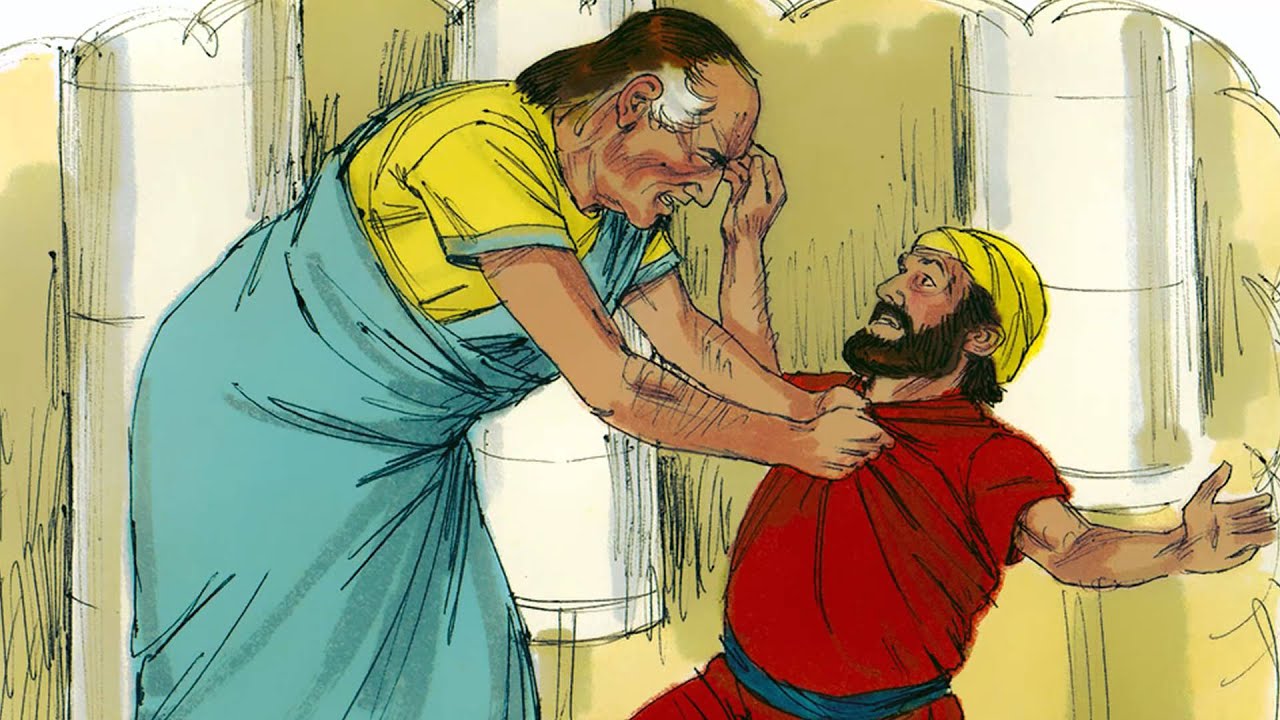
Jesus then tells a parable about a king who decides to put his accounts in order. He discovers that one of his servants owes him millions of dollars. He can’t repay the debt, so the master orders him and his possessions to be sold. The servant begs for more time to repay, which the king grants.

The same servant then cones across another servant who owes him a few dollars. He demands instant repayment, but the servant is unable to pay. The first servant has him thrown into prison.

Some of the other servants see this, and they go to the king. The king then orders the first servant to be thrown into prison until the debt is paid in full.

Application

God has forgiven me so much! I am like the first servant in the parable. My debt to God was so huge that nobody could pay it. But God forgave me and continues to forgive me.

So I need to be a person who also learns to forgive others. What people do to offend me is tiny compared to what God has wiped away for my sake.

Peter thought he was being radical by suggesting that he could forgive a brother seven times. After all, the rabbis taught that we should forgive three times.

When Jesus says I must forgive seventy-times seven, He is really saying “Keep forgiving and keep no record of it.”

I need to become a person who forgives automatically, instinctively and freely. I must become impossible to offend so that I can forgive without restraint.

Prayer

Lord Jesus, you forgive me without measure. Please help me to forgive those who offend me equally freely. Amen.

Reflection on Matthew 18:12-20

Scripture

“Where two or three are gathered as my followers, i am there among them.”

Observation

Jesus compares a lost brother or sister to a sheep that has gone astray. The shepherd leaves the ninety- nine sheep to rescue the one, and when he finds it, he rejoices over the one sheep than the ninety- nine who did not stray.

If another believer sins against us, we should first raise it with them privately. If they repent, we have won back a friend . If this is unsuccessful, we should return with some other christians to talk it through. If that fails, then we raise it with the whole church.

Whenever two or three people gather in the name of Jesus, He is there with them and will answer their prayers.

Application

There is great power in the prayer of agreement. The Father blesses those prayers that we pray together.

It doesn’t take a big group, just two or three. The condition is that they meet in the name of Jesus, that is, as His followers.

It is not about a group act of “name it and claim it.” This promise is for serious christians who live to see God’s purposes unfold.

The key to having prayer answered is to pray the Father’s will. Often we are too preoccupied with what we want rather than what God wants.

There are some areas where we know that we can pray with confidence that we are in the will of the Father. One of those is for people to be saved, another is for healing.

When christians pray together for these things, and other things that we discern are the will of the Father, we can be certain that He will act. Of course a person may not want to be saved, no matter how fervently we pray for them. But God will do all that can be done for that person to see the Kingdom of God.

Prayer

Thank you, Lord Jesus, for the assurance that whenever christians gather in your name you are with us. Thank you that you hear and fulfil our prayers. Amen.

Ephesians 4:26-27

Here is my commentary on Ephesians 4:26-27. I am publishing these once or twice a week, but you can read all of the available articles at our web-site, http://www.new-life.org.au

Ephesians 4:26-27

“In your anger do not sin. Do not let the sun go down while you are still angry, and do not give the devil an opportunity.”

Anger in its uncontrolled form is a quality that belongs to the old nature. There is a place for what is called righteous anger, but we need to make sure that it does not give an opportunity for the devil to get into our lives.

Paul seems to be saying here that anger is a reality in our human condition, and we need to deal with it in a godly manner.

Anger can be defined as an emotion which directs us to self defence or the defence of others when a threat arises. Anger can be a good thing in that it motivates us and energises us in the face of provocation or threat.

Anger is a problem when it leads to uncontrolled rage. We’re not content with a blast of the horn at a thoughtless driver, but instead we ram their car or stop them and hit them long after the threat to our safety has gone.

Anger can lead to resentment or hostility that constantly pushes other people away and destroys relationships. This kind of anger is like a psychological cancer that eats away at our soul.

A psychologist once described anger as like the “check engine” light in a car. it is a sign something is wrong and needs attention before a catastrophic failure occurs.

Anger can become a smokescreen for avoiding our own responsibility for our actions and attitudes. it leads to the reflex in which we constantly blame others for things we have done or failed to do.

Anger is a natural human emotion and, properly handled, it can be a good thing.

Jesus is moved to anger on a number of occasions, but never as a result of others provoking him. The most clear example of this is when he removed the corrupt money changes and animal traders from the Temple. John’s gospel tells us that he “made a whip out of cords” (John 2:15), suggesting that his actions were not a spontaneous rage, but a controlled fire.

We know that Jesus was tempted in all ways, but remained without sin (Hebrews 4:15). His anger must have been without sin also.

How can we be angry without sinning?

Firstly, we need to make sure that we do not allow the emotion to run away with us. Anger, or rage, can cloud our thinking so that we just want to destroy things or hurt people. This is sin.

Secondly, we need to determine if our anger is really a godly anger. Am I allowing self-protection to direct my actions, or is this a genuinely God-inspired action?

Thirdly, we should ask” Will my actions harm other people?” If we will be killing or injuring people, then we need to reconsider.

Paul tells us that we should not let the sun go down on our wrath. This is not permission to maintain the rage until a particular time of the day. We are not to think that we can allow ourselves to be offended in the evening and hold on to it for 24 hours.

Since the Jews counted each day as starting at sunset, Paul is effectively saying “Don’t hold onto your anger overnight. Start the day fresh with a new beginning and new expectations.”

This is good advice because it is hard to sleep when we are angry. Let the sun go down and unwind. Let go of the hurt, the offence, the desire to retaliate, and receive the peace of the Lord instead.

Christians are not to be people who hold on to ofence. We must forgive and release those who sin against us. This means letting the emotions go as well.

If we hold onto anger we give a place for the devil to get in and twist our spirits .

The devil can take our anger and make us permanently quick to fire up, or smouldering with resentment. If we are like this, we are not loving our neighbours with the love of Christ, and we are certainly not loving our enemies .

Anger can lead us into crimes that we would not normally consider possible, so-called crimes of passion. A life might be taken, leaving us to be thrown into jail and a fruitful life for Christ short-circuited.

Anger might lead to depression and an inability to know God’s presence much less to worship and serve Him.

The destructiveness unleashed by anger is the operating method of the devil. God builds up but satan pulls down.

Anger is a reality in our lives. It can be a positive emotion, but it is so easily subverted and twisted by satan.

Key points in these verses:

  • Anger belongs to our old nature
  • We need to be sure that we do not let righteous anger become a tool that Satan uses
  • If we are angry we must take extra care to avoid sin
  • We must not let our anger continue into a new day
  • Anger can lead us away from God and into the hands of the devil

Reflection on Matthew 18:1-10

Scripture

“What sorrow awaits the world because it tempts people to sin. Temptations are inevitable, but what sorrow awaits the person who does the tempting.”

Observation

The disciples ask Jesus, “Who is the greatest in the kingdom?” Jesus responds by calling a little child. He tells them that to even get into the kingdom they have to be like little children- humble and teachable.

If we cause one who trusts Jesus to sin, it would be better to be cast into the sea with a millstone around the neck. The world tempts the “little ones” of Jesus to sin and so great judgement awaits those who do the tempting.

If we have problems with sin, we should remove the offending part of the body. It is better to enter the kingdom maimed than to be thrown into the eternal fire.

Application

As christians we can become overwhelmed by the temptations that surround us. We focus on our failures and we war against our personal sins. We repent, but the temptations come back.

We live in a society that constantly promotes sin such as lust, adultery, greed, selfishness and so on.

We are the “little ones” who can be crushed under the weight of the battles we face. Jesus’ words can encourage us. If we keep our eyes on Jesus and live a life of humility and repentance we will be raised to eternal life.

Those who live by peddling temptation with no thought for God, they will be judged harshly for leading others into sin.

God is not ignorant of our struggles. He does not condemn us for our sins, but He does condemn those who lure others into depravity.

Even for the purveyors of temptation there is forgiveness if they repent. Nobody is too far from God’s kingdom.

Prayer

Thank you Lord for the knowledge that you see my battles with sin. Help me to turn from sin and live as your “little one.” Amen.

Reflection on Matthew 17:22-27

Scripture

“We don’t want to offend them, so go down to the lake and throw in a line. Open the mouth of the first fish you catch, and you will find a large silver coin. Take it and pay the tax for both of us.”

Observation

Jesus again tells the disciples that He will be handed over to His enemies. He will die, but on the third day He will be raised to life.

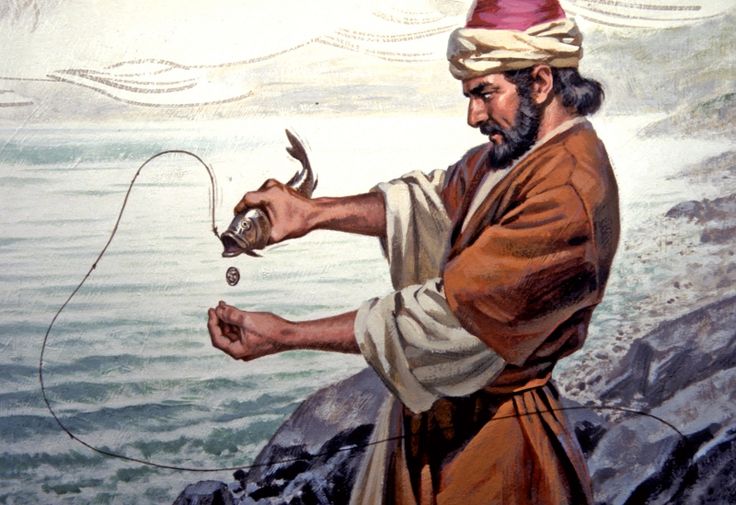
They arrive in Capernaum where collectors of the Temple Tax come. Peter asks Jesus what to do. Jesus tells him to go fishing and he will find a silver coin in the mouth of the first fish he catches. This will be enough for the tax for both of them.

Application

As the Son of God, Jesus did not need to pay taxes, especially the tax for the upkeep of the Temple where people worshipped him.

Yet He does pay the tax, and on this occasion He does it with a miracle.

What is Jesus doing with this miracle? I think that He was having some fun, sending Peter off to wet a line and providing what was needed in a way that Peter would enjoy. If only all of our taxes and bills could be paid through our leisure activities!

Jesus is demonstrating here that whatever our needs are, He will supply them. We don’t have to be stressed because He sees the need before we do, and He knows how He will meet that need- even if it is through fishing.

Prayer

Thank you Lord for the reminder that you have all my needs covered. All I have to do is rest in you. Please help me to remember that. Amen.

Ephesians 4:25

Here is my commentary on Ephesians 4:25. I am publishing these once or twice a week, but you can read all of the available articles at our web-site, http://www.new-life.org.au

Ephesians 4:25

“Therefore each of you must put off falsehood and speak truthfully to his neighbour, for we are all members of one body.”

In the previous section, Paul talked about putting away our old nature and putting on the new nature in Christ. We are ”created to be like God in true righteousness and holiness.” He gives specific instruction in how the new nature should replace the old.

In this verse, he addresses the issue of truth and falsehood.

We are to put off falsehood and speak truthfully to our neighbours.

Some translations use the word lying here, but the idea is broader than that. Yes, we are to put away deliberate lies, but there are many ways to deceive, and all of them are opposed to God.

Deception is any attempt to cause someone to believe something that is not true. That includes lies ( whether “black” or “white” lies), omissions or half-truths, using words in such a way as to make a seem better than we really are.

We must always speak truthfully to our neighbour, even if it seems difficult or costly.

We are followers of Jesus who called himself “ the Way, the Truth, and the Life.” Therefore, we are committed to truth-telling by virtue of the nature and authority of Christ.

Our culture is sometimes described as post-truth, that is sceptical or indifferent about issues about truth and falsehood. The argument is that there is no objective test of truth, and it is an obsolete concept.

Regardless of whether you seek truth or deny truth, the law of gravity still operates regardless of your opinion. It can be fatal to ignore some truths.

The Nazi propagandist Goebbels is credited with the statement that any lie repeated often enough becomes true. In our age of information saturation, people lack time or desire to investigate the veracity of political and commercial claims, and so blatant lies tend to become accepted as true.

We are not to live in this cynical way. We must remove all forms of deception and seek to be people of truth.

Paul now gives the reason for this as “ we are all members of one body.” This then raises the question “who is my neighbour?”

It might seem that Paul is limiting his definition of neighbour to fellow Christians. We have a duty to our Christian brothers and sisters to walk in honesty. Deception is about taking advantage of other people for our own game.

We must not use deception or falsehood in anyway in connection with the Christian family.

But Paul does not generally use the word neighbour to describe Christians. Jesus made it clear that to love our neighbour is to love everyone that we might interact with.

If we adopt this definition of neighbour, then Paul’s command here is open-ended. We must deal truthfully with everyone and not just our fellow christians.

In all of our business dealings, our family relationships, our friendships and so on, we must always speak truthfully.

This can be painful when we are filling in tax forms or don’t have enough cash to pay for items at a stall with an honesty box. It becomes very costly when we break the law and and are not caught.

Paul relates this commitment to truth in all situations to being a part of the Body of believers. God’s people are people of truth. Together we follow Christ, and He requires us to walk in truth. If one part of the Body is tainted by falsehood then the whole body is weakened.

Key points in this verse:

  • We are to put off falsehood
  • We must speak the truth, the whole truth, and nothing but the truth.
  • This commandment flows from the nature of Christ
  • We have to speak the truth always, not just within the church