“ So I sent for you at once, and it was good of you to come. Now we are all here, waiting before God to hear the message the Lord has given you.”
Observation
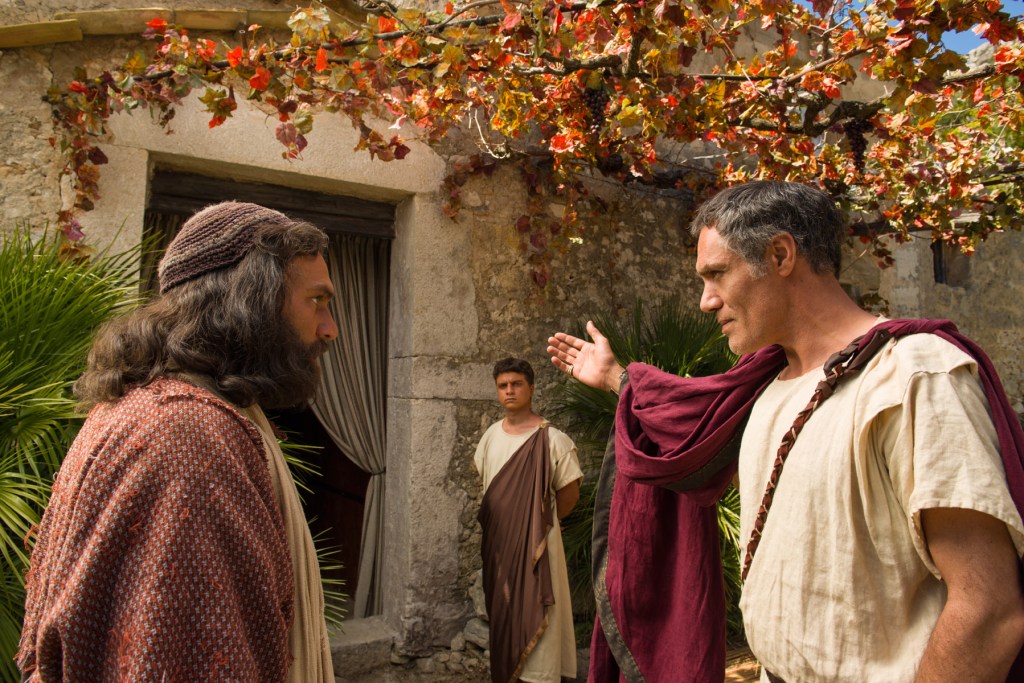
After seeing the vision, Peter is told by the Holy Spirit that three men have come to the house, and Peter is to go with them. He goes downstairs where the men explain why they have come.
The next day they leave for Caesarea. There, Cornelius has gathered his friends and relatives together to hear the message.
Peter explains his realisation that he should not call any person impure or unclean, despite the Jewish laws. Cornelius then recounts his experience of seeing the angel, and the message the angel gave him.
Application
After their respective experiences, Cornelius and Peter were both expecting God to do something powerful. Cornelius had even invited friends and relatives to hear Peter’s message, even though he did not know for sure what the message would be, or even if Peter would come.
Wouldn’t it be different if each Sunday in church everybody came with the sense of anticipation? We don’t know what the preacher is going to say, but we know that the Holy Spirit is leading him and it will be awesome!
As a pastor, I sometimes get my hopes up that God will do something this week. Sometimes He chooses to do visible healings and miracles; sometimes lives are changed by the Holy Spirit applying the message to people’s hearts.
I am sure that if we gather together with an expectation that God is going to do something, He will be more likely to act.
As I talk to people, they are already excited about getting together for worship after the lock down ends. I hope that the expectation is about meeting God as much as it is about meeting people.
This is the kind of expectation that God will use.
Prayer
Please help me Lord to grow in expectation that you will meet with me at any time and in any place, but especially when the church meets together. Amen.
But the voice spoke again, “Do not call anything unclean if God has made it clean.”
Observation
A devout, God- fearing man called Cornelius, a Gentile, has a vision in which he sees an angel. The angel tells him to send some men to Joppa to find Peter. As soon as the angel leaves, Cornelius sends some servants and a soldier.
As Cornelius’ messengers are approaching Joppa, Peter goes to the roof of the house where he is staying in order to pray. He falls into a trance and has a vision of a large sheet being lowered from heaven. The sheet has all kinds of animals on it, and a voice tells him to kill and eat. Peter refuses, saying that the animals are unclean. The voice rebukes Peter for calling unclean what God has called clean. The vision is repeated three times.
Application
I am often amazed at Peter’s boldness. In this passage he is not afraid to tell God that He is messed up with His command to eat unclean food.
The Lord had to make it clear to Peter that it was a new era now. God was working with the Gentiles, not just the Jews. It was time to adjust his thinking about what and who is clean, and what and who is unclean.
There are many christians who carry a similar, religious point of view. There are aspects of culture that they declare are sinful, even though the Bible is silent on the issue. Many have looked down on people who like contemporary music, dancing, playing cards, alcohol or whatever. They ask, “How can you be a christian and do that?”
Some aspects of our culture are misused, twisted by sin. But not all of them are.
As christians we must not fall into the trap of thinking that if I don’t like something, then it is not of the Lord; if one song is overly sexualised then it condemns a whole genre of music.
There are many things that God has declared to be good, which we might in our zeal to be holy, declare to be unclean.
Prayer
Lord, please help me to be slow to judge and quick to accept others. Help me to discern what you call clean or unclean, and to walk in humility with you. Amen.
The church then had peace throughout Judea, Galilee, and Samaria, and it became stronger as the believers lived in the fear of the Lord.
Observation
Saul begins to preach about Jesus in the city of Damascus. His preaching becomes more powerful, and some of the Jews plot to kill him. Some believers lower him over the city wall in a basket at night to escape.
Saul travels to Jerusalem, but the apostles do not believe he is truly a believer. Barnabas works as a go-between smoothing the way for Saul’s acceptance.
The church has peace for a while and grows in the Holy Spirit.
Meanwhile Peter travels from place to place, preaching and healing the sick. He heals a lame man in Lydda and raises a girl from the dead in Joppa. Many people come to believe the Good News.
Application
With Saul, the chief persecutor, being saved, the church experiences peace and grows stronger.
The christians started to grow in their understanding of walking with Jesus. “All the believers lived in the fear of the Lord.” This does not mean they were terrified of Jesus. Rather it means they carried an attitude of reverence- worshipping and obeying the Lord.
The fear of the Lord is the beginning of wisdom. To seek to live our lives the way God intends is indeed very wise. Many people who claim to be christians are theoretical believers. They hold on to an intellectual belief in the facts about Jesus, but they don’t allow those facts to change their heart. They live with sin and tolerate their sin as a normal part of their life.
As the believers lived for Jesus, the Holy Spirit brought people to faith. It is interesting that there is no great evangelistic campaign, just believers living for Jesus, and the Holy Spirit bringing a harvest.
While it is true that the church often thrives through persecution, it is also true that times of peace can also bring growth for the church.
Prayer
Than you Lord that whether times are tough for christians or easy for us, you are the Lord of the church. Help me to surrender entirely to you, to be used for your purposes. Amen.
But the Lord said, “Go, for Saul is my chosen instrument to take my message to the Gentiles and to kings, as well as to the people of Israel.
Observation
Saul is obsessed with persecuting christians. He goes to Damascus to arrest any that he finds there.
On the road, a light from heaven shines down and a voice calls out, “Saul! Saul! Why are you persecuting me?” Saul is struck with blindness, and his companions lead him into the city.
A believer named Ananias is sent by the Lord to go and find Saul. Reluctantly Ananias goes, and he lays hands on Saul, and Saul’s sight is restored.
Application
It must have been somewhat scary for Ananias to hear that the Lord wanted him to go to see Saul, the great persecutor of christians.
According to the world, a leopard cannot change its spots. A criminal is always a criminal, a sex offender always a sex offender, a liar always a liar.
While it is true that we cannot change ourselves, it is also true that when we encounter Christ, rapid and dramatic change is possible.
Saul, the great enemy of the church was transformed into Paul, the great apostle of Christ.
In this verse, the Lord describes Saul as His chosen instrument. The zeal for truth that drove him to persecute christians was the same passion that enabled him to withstand imprisonment, beatings, and shipwrecks for the sake of the gospel.
Paul would later take the message to the Gentiles and to kings. He would carry it to the heart of the Roman Empire, form where it would spread right across the world.
Prayer
Father, may I be so consumed by your grace that I take your Good News to my friends, my family and my neighbours. Amen.
“Let me have this power too,” he exclaimed, “so that when I lay hands on people they will receive the Holy Spirit.”
Observation
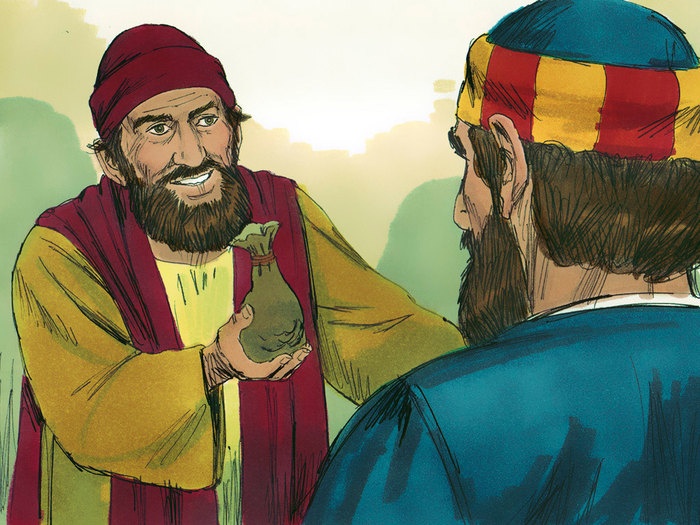
Simon, the former magician, sees how the Holy Spirit is given when Peter and John lay hands on people. He offers them money to buy the power. Peter sternly rebukes him and tells him to repent, which he does.
An angel sends Philip to the desert road, and he meets the treasurer of Ethiopia, a eunuch, who is reading aloud from the book of Isaiah. Philip starts a conversation and tells him the Good News. The eunuch asks to be baptised. As they come out of the water, Philip is snatched away, appearing in the town of Azotus
Application
The ability to lay hands on people and have them filled with the Holy Spirit must have been quite spectacular for a man like Simon to offer money to purchase it.
This is n quiet warming of the heart. This was Pentecost power being released into the lives of the believers. There must have been manifestations taking place through these believers- tongues, prophecy, healing, miracles and so on.
Simon had a good heart. He repented immediately when rebuked. His problem was that he did not understand God’s economy.
Human economics is about scarcity- we allocate limited resources by price through the laws of supply and demand.
In God’s kingdom there is no scarcity. The key word in God’s economy is abundance. There was no need for Simon to pay Peter for the gift because it is freely given.
When christians are afraid of losing their possessions or worry about whether they have enough, they show that they are not really trusting God’s provision.
When christian ministers demand money for their services, they also show they are not really trusting God- even when they own several personal jets.
We have received, and continue to receive, so much from God’s hands. This grace constantly pours spiritual gifts into our lives, if only we will receive.
Salvation is free.
The Holy Spirit is free.
The gifts and fruit of the Holy Spirit are free.
Why? Because God gives freely and abundantly.
Prayer
Lord, as we approach the Easter weekend with all its depiction of grace, help me to rejoice in you regardless of circumstances. Thank you Father that your grace is always free. Amen.
The Holy Spirit had not yet come upon any of them, for they had only been baptised in the name of the Lord Jesus. Then Peter and John laid their hands upon these believers, and they received the Holy Spirit.
Observation
Following the stoning of Stephen, a great wave of persecution breaks out, scattering the believers everywhere. Saul is a part of this persecution.
The scattered believers take the gospel, preaching about Jesus wherever they go.
Philip goes to Samaria, and many people receive Jesus there, including a man named Simon who had previously performed many acts of magic.
The apostles send Peter and John to find out what is happening in Samaria. They discover that the people had not received the Holy Spirit because they had only been baptised into the name of Jesus. When Peter and John lay hands on them they receive the Holy Spirit.
Application
A great revival is taking place in Samaria. Even people practising the occult are hearing the gospel and being saved.
In all the happy chaos, people are receiving a baptism that is not quite right, with the result that they do not receive the Holy Spirit when they are baptised.
It is hard to fathom this. We tend to think that words and liturgy don’t matter that much because God looks at our heart.
But clearly the Lord thought there was something lacking in the practice so that He withheld the baptism in the Holy Spirit from the new believers. They came up out of the water without speaking in tongues.
Fortunately, there are a remedy available- Peter and John laid hands on them, and they received the Holy Spirit.
So our words matter. If we only baptise in the name of the Lord Jesus and not of the Trinity (Father, Son and Holy Spirit) then our practice lacks something. The person may not receive all that God wants for them. This is not to say that God is limited by our words, but it may be that our words limit our ability to receive.
The Lord is not reluctant to bless us, often we just have to ask with an expectant heart.
Prayer
Father God, pour out your Holy Spirit on me. Baptise me, fill me, overshadow me, anoint me. Please pour out every grace into my spirit so that I can more readily honour you and point people to the Lord and Saviour Jesus Christ. Amen.
But Stephen, full of the Holy Spirit, gazed steadily into heaven and saw the glory of God, and he saw Jesus standing in the place of honour at God’s right hand.
Observation
Stephen continues his narration of the history of Israel.
Moses was rejected by the people who wanted to return to Egypt. Stephen says they carried pagan idols as well as the Ark of the Covenant through the wilderness.
He goes on to say their ancestors rejected all the prophets, and now the Jewish leaders have also rejected the Messiah the prophets has foretold.
The leaders are infuriated by Stephen’s message, and they drag him outside to kill him. But Stephen, full of the Holy Spirit, has a vision of Jesus in heaven.
Application
Stephen, throughout this show trial, was focused on God. At the beginning of his speech, we are told his face was as bright as an angel’s. Now, at the end, facing imminent death, he is full of the Holy Spirit and seeing Jesus at God’s right hand.
When we are most under pressure, facing opposition for our faith, it is then that the Holy Spirit fills us and enables us to speak for God or pray in faith, or whatever the need is at the time.
Many christians who have been imprisoned or tortured for Christ have reported that in their moments of greatest suffering, Jesus has been particularly real to them.
Stephen sees Jesus in heaven standing at the right hand side of the Father’s throne. What an amazing vision to have right at the moment of his death! It’s as if Jesus is cheering him on, “Come on Stephen! Just a few minutes and you will be here with me!”
Those momentary visions of heaven or of Jesus should be life- changing for us. It was a vision of Jesus that led to my salvation. The same vision has given me strength to continue walking with Him when tempted to give up. How could I turn my back on the one I had seen with my own eyes?
Not everyone has a literal vision of Jesus, but as we seek to be filled with the Holy Spirit, we see Jesus more clearly and follow Him more closely.
Prayer
Lord, as I stand firm in you there will be opposition, even persecution. Grant that I may gain a clearer vision of you and grace to persevere no matter what the cost. Amen.
“Moses himself told the people of Israel, ‘God will raise up for you a prophet like me from among your own people’”
Observation
Stephen continues his defence of charges of blasphemy that have been brought against him.
He now tells the story of Moses, how he was chosen by God but rejected by the people and forced into the desert for forty years. God spoke to him in the burning bush and commissioned him to be their ruler and saviour.
Application
Jesus was the prophet whom Moses had foretold. Moses was the greatest leader that Israel ever had, and he was closer to the Lord than anyone in history.
To say that God would raise up another prophet like him, Moses was looking forward to Jesus who was constantly in close relationship with His Father.
As followers of Jesus, we must also seek to walk closely with the Father. We do this through things like prayer, Bible reading, corporate worship, the gifts of the Holy Spirit and so on.
What I have noticed is that many of us reach a place of discipleship where we are comfortable. We might have a routine of prayer and Bible reading, a ministry in the church. We reach a place of ease so that there is no challenge to move higher.
But God is constantly calling us higher.
God’s aim is for intimacy with us, that close relationship that Jesus shared with the Father. That means stripping away everything that gets in the way.
Some of these things are not necessarily bad things. Sin obviously blocks our relationship with God. Sometimes it is things that are not of themselves sinful, but they do distract us from the main goal. They take time and energy that we should be devoting to the Lord.
What is the focal point of my life? Where does my attention go to?
Prayer
Lord Jesus, you are the Prophet Moses foretold, but even more so. Please help me to yield to you all that stands in the way of a truly surrendered relationship. Amen.
This was Stephen’s reply: “Brothers and fathers, listen to me. Our glorious God appeared to our ancestor Abraham in Mesopotamia before he settled in Haran.”
Observation
Stephen has been accused of blaspheming against the Temple and the Law of Moses.
He starts his testimony by reminding the council of their ancestors. The patriarch Abraham was called by God to leave his home and come to the land of promise.
God gave Abraham the covenant of circumcision which has continued down the generations. Joseph was sold into slavery but became the saviour of his family and of the nation.
Application
At first glance, this seems like an odd way of defending oneself on a charge of blasphemy. But by reciting the history of Israel, or at least part of it, Stephen is saying that he is a part of the story. He is a descendant of Abraham just as the members of the council are.
He reminds the council that God appeared to Abraham long before there was a Temple and a Law. In fact, Abraham’s first encounter with the Lord was outside of Israel. Much of Israel’s history in fact was spent outside the land.
I think the message Stephen is trying to get across is that the Lord is sovereign. He often does things we don’t expect. The latest of these unexpected things for Stephen was the death and resurrection of the Messiah.
The difference between the truly spiritual person and the religious person is humility. The religious person constantly tries to control God, to keep Him safely contained in a box. But God refuses to be contained or controlled by people.
Humility lies in knowing that God is bigger than we are, that He is in control and this is a good thing.
Prayer
Heavenly Father, thank you for the knowledge that you are everywhere and not contained in a building. You have called me to follow you. Please help me to do this in humility, always letting you direct my paths. Amen.
Here is my commentary on Ephesians2:2. I am publishing these once or twice a week, but you can read all of the available articles at our web-site.
Ephesians 2:2
“ … in which you used to live when you followed the ways of the world, and of the ruler of the kingdom of the air, the spirit who is still at work in those who are disobedient.”
We used to live in “sins and transgressions” until Christ set us free. We all have a history “Before Christ”, and when we are tempted to judge others from a position of self-righteousness, it is good to remember that we, too, once lived in sin.
Sin is so all-encompassing that it is no exaggeration to say that we once lived in it. Sin is like the air around us. It is always there even if we are not aware of it.
Sin is living for ourselves without reference to God’s will. In parts of the Bible it is described as lawlessness, rebellion, and witchcraft. When we live for ourselves without reference to the Lord, we are truly living in sin.
We used to follow the ways of the world before Christ came in.
Those who live in the world have their ways, just as christians have their ways. Whereas christians leave to serve Christ, the people of the world live to serve themselves. Vices are renamed virtues. Sins are redefined to make them more palatable.
The word “world” is not the physical planet on which we live, but the masses of humanity who go their own way, ignorant or rebellious against God.
God loves the world so much that He sent his one and only Son so that whoever believes in him shall not perish but have eternal life.
God loves the world, but the world does not love God. The world sets up its systems which deliberately exclude God.
The people who follow the ways of the world live for themselves. They work for money that does not last; their priorities can be summed up in the proverb, “Eat, drink and be merry for tomorrow we die.” Their attitude is to live life to the fullest because they see no prospect for eternity.
The people of the world think that they are being wise in their own ways, walking in their own freedom. Yet they are directed by the” ruler of the kingdom of the air.” The kingdom of the air is satan’s realm. It is the second heaven according to some people, the first being the celestial realm of the sun, moon and stars.
When people live for themselves, they are living for Satan. Despite their claims to be free, they are in the deepest of bondage. Having abandoned any sense of duty to their Creator, they have fallen into captivity to the devil.
That is why the world always sets itself in opposition to Christians. This is why so many Christians around the world face severe persecution. This is why society loves all manner of perversion and decadence, and they hate the church.
Those who walk in the ways of the world are really being directed by satan who is the ruler of the kingdom of the air. We cannot ever expect anything different. Sinful people, unredeemed people, sin because they are separated from God and in fellowship with Satan.
Many Christians are unaware of the spiritual war that they are fighting. This will be discussed in Ephesians 6 where the nature of the war is elaborated. For now we must recognise that the war is being waged, and humans are the prize on both sides.
There is no neutrality in this war. Satan will destroy everyone regardless of whether they are fighting for him or ignorant of him. He leaves alone those who are already on the path to hell. He takes great delight in causing suffering and distress to those whom he considers his enemies.
Those who are disobedient to God are those who allow the spirits of evil to work in their lives. The more determined people are to oppose God, the more they have allowed the spirits to work in them and through them.
People indulge in all kinds of evil acts including violence, sexual perversion, lust, theft, fraud, blasphemy and so on. They argue that anything is justified as long as nobody gets hurt. They overlook the fact that any act of disobedience causes hurt to someone even if it is only the disobedient person.
Human beings were created in the image of God. We are created for his purposes and any disobedience to God is a denial of our reason for being. We mar that image that is in our hearts whenever we indulge our selfish desires.
Acts of disobedience amongst christians are acts of surrender to the evil one. We deny our Creator and Redeemer. We turn away from the path of separation to God and back to the ways of the world which lead to bondage and captivity.
Key points in this verse:
We were once Sinners but have been set free by Christ.
Sin is following the ways of the world
Whether by intent or in ignorance, the world sets itself in opposition to God
God loves the world but the world does not love God
Those who live in the world are really in bondage to satan who is the ruler of the kingdom of the air
We are in spiritual war and need to be aware of this
Following the ways of the world leads to disobedience
We are created for God’s purposes and must obey him



 New Life Narrabri