Hate crimes against Christians surge in Europe: report

From Christian Post

European national flags in front of European Parliament building in Brussels, Belgium.
European national flags in front of European Parliament building in Brussels, Belgium. | Getty Images

Arson attacks were prevalent among a surge in anti-Christian hate crimes in May, according to the Observatory on Intolerance and Discrimination against Christians in Europe (OIDAC Europe).

The watchdog’s May report shows 37 verified anti-Christian hate crimes across 11 European countries. The crimes include 13 arson attacks, 10 acts of vandalism, three cases of desecration, three incidents of physical violence, three thefts targeting religious objects, three cases of vandalism and violence, one case of incitement and one disrupted worship service.

“This continued prevalence of fire-setting against Christian sites remains one of the most serious patterns documented during the year,” the report stated.

The 13 verified arson incidents represent the highest monthly total that investigators have recorded this year. The report dubbed the monthly figure “exceptionally high” as blazes hit properties across multiple countries, including attacks on church buildings, chapels, parish buildings and other Christian property.

In Germany, four arson attacks damaged properties in Marbach, Munich, Delmenhorst and Gladbeck. The country also saw severe property violations; in Knittelsheim, assailants scattered consecrated communion hosts across a church altar, while unknown persons daubed satanic graffiti inside the Barbara Chapel in Penzberg. Vandals in Bad Oeynhausen deliberately damaged church bells and live power lines, creating potential physical harm for the community.

In Italy, authorities recorded eight hate crimes, including four cases that carried an explicit ideological link. In Genoa, attackers defaced the Basilica of San Siro with anti-clerical and anarchist graffiti demanding that perpetrators “burn churches.”

Italian monitors also recorded a desecration at the parish of San Paolo della Croce in Rome, and heavy vandalism at the Church of Sant’Angelo Magno in Ascoli Piceno, where attackers destroyed a crucifix, sacred statues and a historic 17th-century organ.

Three arson cases in France included an attack at the Church of Notre-Dame de l’Assomption in Lentigny, alongside a highly dangerous suspected arson at a parish hall in Tergnier while children were inside the building.

French vandals also ransacked the Church of Saint-Pierre-ès-Liens during Pentecost at Pont-du-Casse near Agen. In Paris, thieves broke a crucifix and stole a figurine of Christ from Saint-Germain-des-Prés. In South Gironde, a wave of burglaries targeted several churches, resulting in altar desecration and tabernacle profanation. Assailants in Saint-Martin-la-Sauveté tore Christian statues from graves, while attackers in Poleymieux-au-Mont-d’Or near Lyon beheaded a statue of Mary holding the infant Jesus.

In Krosno, Poland, an attempted arson damaged an image of Our Lady of Perpetual Help inside a desecrated chapel, while vandals in Kalwaria Zebrzydowska defaced several chapels with physical damage and satanic inscriptions.

Arsonists and vandals also targeted two churches in Ireland. In Warrington, England, police launched an arson investigation after discovering fires inside a disused church building.

Violent crime targeted clergy as well, as robbers held a Portuguese priest hostage for 90 minutes while they looted a church building and parish house in Cantanhede. In Chania, Greece, a shotgun attack damaged a historic church bell tower. In Bosnia and Herzegovina, criminals forced entry into the Serbian Orthodox Church of St. George in Tuzla, marking another repeated act of vandalism against the site.

In Leipzig, Germany, a Christian-run café announced its permanent closure after organized harassment campaigns by left-wing extremists. The operators reported 26 attacks over the past two-and-a-half years, which included repeated vandalism, graffiti, and butyric acid attacks, making continued business financially impossible.

The report cited the closure as evidence of “the persistence of repeated and sustained campaigns targeting Christian institutions.”

“According to the operators, the attacks were carried out by individuals associated with the far-left extremist scene and ultimately made the continued operation of the café financially impossible,” OIDAC Europe stated.

Left-wing extremists reportedly also assaulted and seriously injured two Catholic fraternity students in Innsbruck, Austria. In Bielsk Podlaski, Poland, an assailant insulted and attacked a nun at a bus stop, tearing a cross necklace from her neck.

Perpetrators also fired steel and plastic balls during a Mass that approximately 200 worshippers attended at the Holy Spirit Church in Hanau, Germany. The projectiles shattered windows, and the report noted that the attack placed the congregation in immediate danger.

“The incidents recorded this month … illustrate that anti-Christian hostility is not limited to attacks against church buildings,” the report stated. “Several cases targeted Christian individuals, religious communities, and organizations directly, demonstrating that visible expressions of Christian faith and Christian presence in public life can themselves become targets of aggression or intimidation.”

The overall dataset includes widespread vandalism, desecration, physical assaults, and thefts targeting religious spaces and individuals. Germany led the continent with 10 reported incidents, followed closely by Italy and France with eight cases each. Poland recorded three cases, Ireland reported two, while Austria, Portugal, Spain, Greece, the United Kingdom, and Bosnia and Herzegovina each documented one verified incident.

“Germany also recorded numerous additional non-counted thefts, break-ins, damage incidents, and fires under investigation,” noted the report.

OIDAC Europe also noted widespread property damage that fell outside the official statistics due to unverified bias. This additional data included local authorities investigating nine church building fires alongside 14 unverified acts of vandalism, 24 break-ins, and dozens of thefts.

Separate figures confirmed last month to the Greek Parliament by the Ministry of Education, Religious Affairs and Sports reported 4,409 incidents involving Orthodox Church properties in the country between 2015 and 2024. This accounted for 96.05% of all recorded incidents involving religious sites in Greece over that 10-year period, covering attacks, vandalism, thefts, desecrations, and burglaries.

The publication of the data comes as the FIFA World Cup kicked off across 16 cities in the United States, Canada and Mexico on Thursday. Anja Tang, the executive director for OIDAC Europe, wrote an introduction to the report noting a negative reaction to sports personalities expressing their faith in the public sphere in the run-up to the matches.

“With the beginning of the World Cup, debates surrounding Christian football players have once again highlighted how expressions of faith continue to attract public scrutiny,” Tang wrote. “While athletes are increasingly encouraged to bring their identities into the public sphere, openly expressing traditional Christian beliefs can still provoke disproportionate criticism and controversy.”

The organization stressed that the official numbers represent only a baseline of the issue across the continent.

“The figures presented in this report reflect only documented cases known to OIDAC Europe and therefore cannot capture the full extent of anti-Christian hostility in Europe,” the report noted. “Nevertheless, the incidents recorded during May point to a continuing pattern of attacks affecting Christian places of worship, religious symbols, and Christian organizations across a broad range of European countries.”
Christian Freedom Index Launched in Australia

Watch Live: Australia’s First Christian Freedom Index Launches at Parliament House Tomorrow

The Canberra Declaration Team

From Canberra Declaration

Among the recommendations the Index puts forward is an Australian Freedoms Act that would provide enforceable nationwide protections for speech, religion, conscience and association.

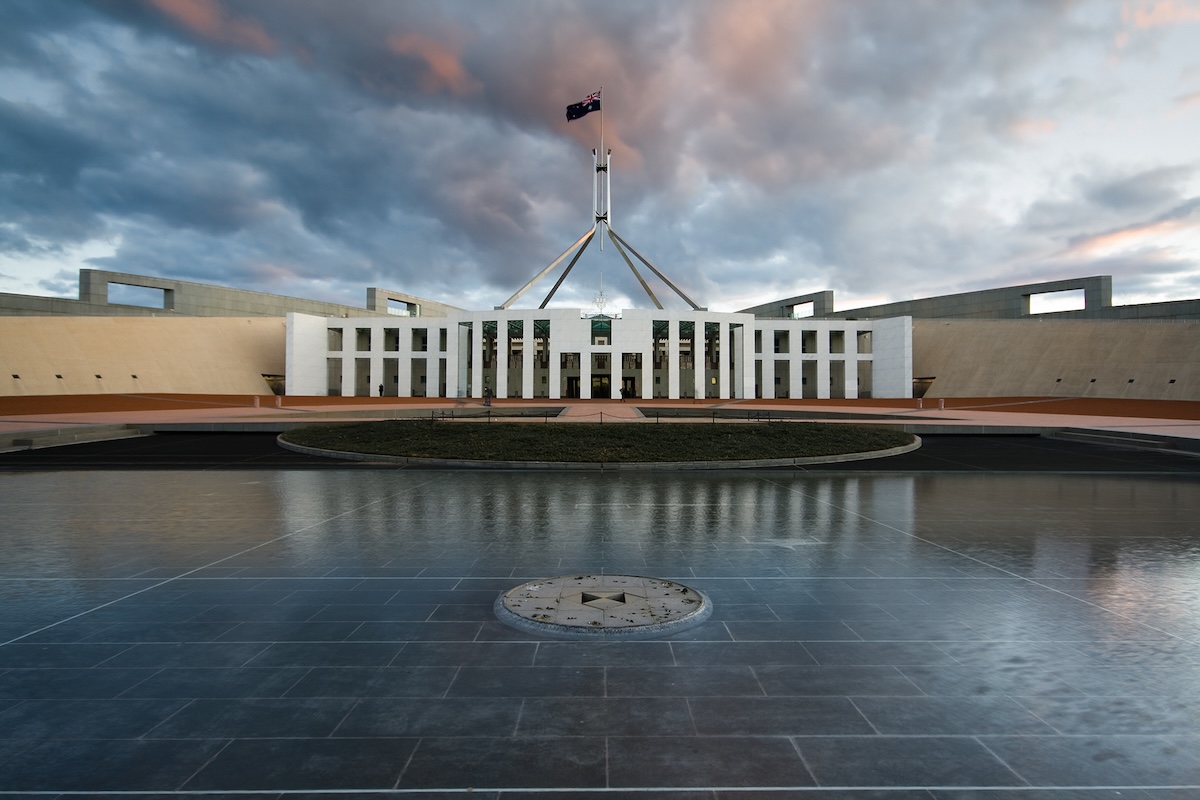
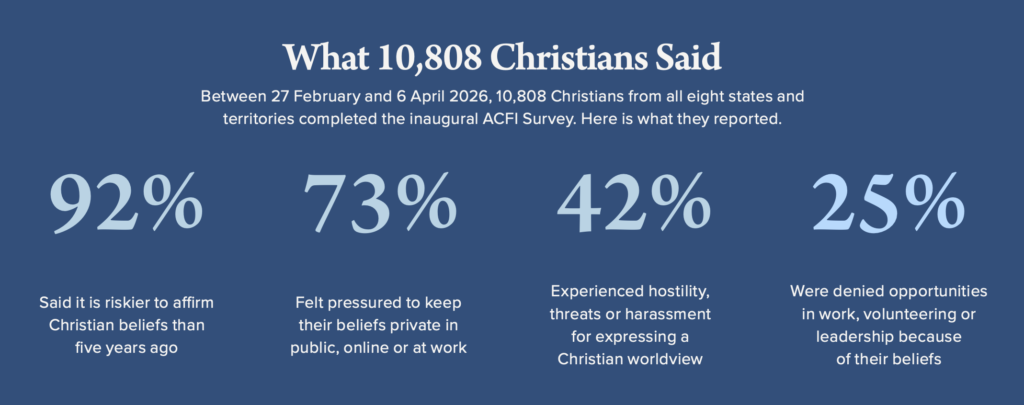
Australia’s first systematic audit of Christian freedom launches at Parliament House in Canberra tomorrow morning, with preview data already showing that nine in ten Australian Christians believe it has become riskier to affirm their faith publicly than it was just five years ago.

The Australian Christian Freedom Index (ACFI) 2025 — a 108-page report produced by the Canberra Declaration in partnership with the Australian Christian Lobby, FamilyVoice Australia, the Australian Family Coalition, CitizenGo, and the Human Rights Law Alliance — will be released at a bipartisan breakfast in the Reps Alcove at 7am on Thursday 28 May.

The event will be livestreamed at the link below.

Representatives from the Labor, Liberal and National parties, along with One Nation, are expected at the event, with organisers around a dozen parliamentarians.

Seven of the report’s eleven authors will give a short speech at the launch event. Every attendee will receive a hand-signed copy of the report.

What the Report Will Show

A companion guide released ahead of tomorrow’s launch — available here — previews the report’s major findings.

The full data draws on 10,808 survey responses collected from Christians across every Australian state and territory between 27 February and 6 April this year.

Watch Live: Australia’s First Christian Freedom Index Launches at Parliament House Tomorrow

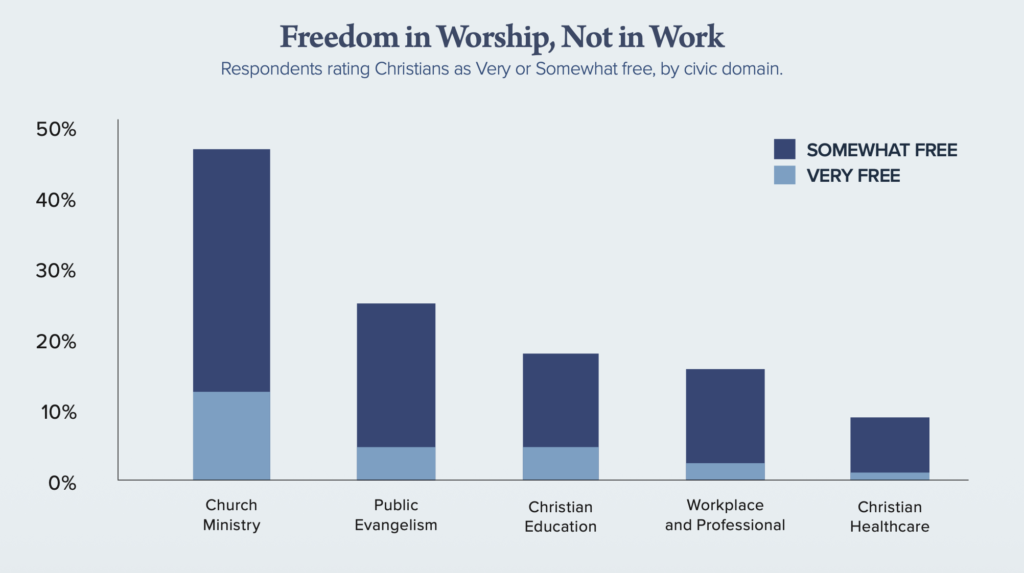
The companion guide shows perceptions of freedom varying sharply by civic domain. Respondents rated Christians as most free in church ministry and worship — the only domain where close to half rated Christians as at least somewhat free.

That figure fell to roughly one in four for evangelism, and dropped even further for Christian education and the workplace.

The lowest result was for Christian healthcare, where just 8% of respondents rated Christians as somewhat or very free to operate according to their beliefs.

Watch Live: Australia’s First Christian Freedom Index Launches at Parliament House Tomorrow

The report’s legislative audit, which covers 74 Acts across nine jurisdictions from 2000 to 2025, documents a sharp acceleration in restrictive legislation.

Victoria ranks as the most legislatively restrictive jurisdiction; Western Australia the least.

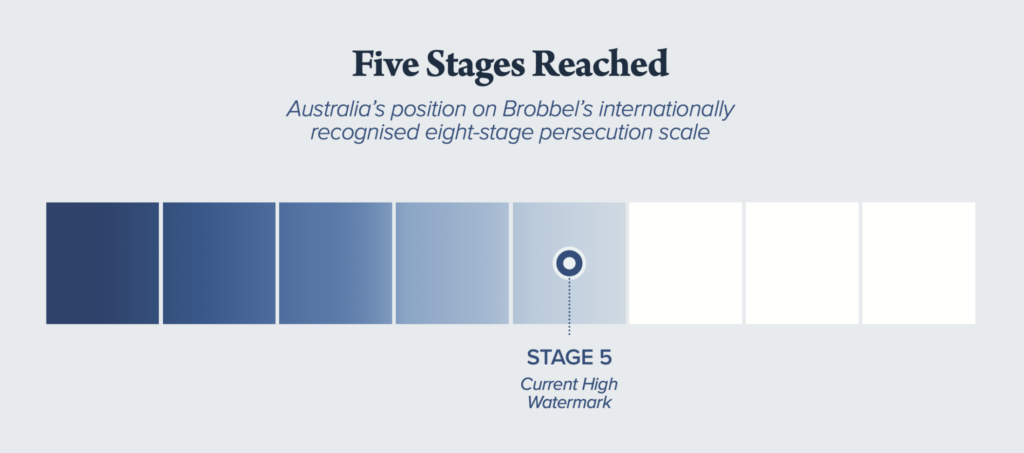
Using the eight-stage persecution scale developed by Floyd A. Brobbel of Voice of the Martyrs Canada — a scale that runs from ridicule through harassment, discrimination, defamation and attack, to detainment, torture, and martyrdom — the ACFI locates Australia’s documented cases across the first five stages.

Watch Live: Australia’s First Christian Freedom Index Launches at Parliament House Tomorrow

42 Recommendations

The report does more than document the problem: it makes 42 concrete recommendations across three audiences: parliaments, church leaders, and individual Christians.

For parliaments, the ACFI calls for an Australian Freedoms Act that would provide enforceable nationwide protections for speech, religion, conscience, and association — a positive legislative right to replace what it describes as the current patchwork of exemptions.

It also calls for restored religious hiring exemptions for faith-based schools across all jurisdictions and an end to compelled participation in abortion and assisted suicide for healthcare workers with conscientious objections.

For church leaders, the report urges public advocacy for Christians facing legal pressure, stating plainly that silence has only increased hostility.

The index also calls for the establishment of a national register of anti-Christian incidents, a mechanism that does not currently exist in Australia.

For individual Christians, the report calls on believers to maintain their public witness, engage their elected representatives, and share the findings of the report.

Most Australians — including most Christians — remain unaware of the scale of what the report documents, the companion guide notes.

European Parliament Names ‘Christianophobia’ in Formal Resolution for First Time

From the Daily Declaration by Kurt Mahlburg

Christianity is the world’s most persecuted religion, the European Parliament recently declared, using the term ‘Christianophobia’ in a formal resolution for the first time.

The European Parliament has used the term ‘Christianophobia’ in a formal resolution for the first time, declaring Christianity the most persecuted religion in the world and calling out the EU’s failure to appoint a coordinator to combat anti-Christian hatred — a position that already exists for Islamophobia.

The resolution, adopted in Strasbourg earlier this year, stated in Paragraph 84: “Christianity remains the most persecuted religion in the world today, with more than 380 million people affected.”

“There is no European coordinator responsible for combating Christianophobia, even though a coordinator has been appointed to combat Islamophobia,” it added.

The Commission of the Bishops’ Conferences of the European Union (COMECE) welcomed the resolution and urged the European Commission to act on it.

“Taking note of this important statement by the European Parliament, COMECE encourages the European Commission to give serious consideration to the appointment of an EU Coordinator responsible for this field,” the bishops’ body said in a statement last month.

The resolution — formally titled the Annual Human Rights Report 2025 and adopted under reference TA-10-2026-0014 — also condemned the persecution of Christian communities in the Middle East.

It described Christian communities from the Middle East as “among the oldest in the world,” noting they continue to face “severe persecution, discrimination, forced displacement and restrictions on their freedom of religion or belief.”

In January, Pope Leo XIV had raised the same concern. “We must not forget a subtle form of religious discrimination against Christians,” he said, “which is spreading even in countries where they are in the majority, such as in Europe.”

Coalition and Pushback

The specific language of Christianophobia was the result of sustained amendment work by centre-right and conservative MEPs.

The European People’s Party (EPP) and the European Conservatives and Reformists (ECR) drove the provisions, with Dutch MEP Bert-Jan Ruissen (ECR) and Croatian MEP Davor Stier (EPP) leading the effort in coordination with Aid to the Church in Need. The Patriots for Europe group also supported the text.

The final vote drew backing from a cross-partisan majority that included a significant portion of the Renew Europe group, whose members argued religious freedom is an indivisible pillar of human rights.

Radical left groupings and some Greens opposed the specific mention, reportedly concerned it would create a hierarchy among victims of religious hatred.

The Observatory on Intolerance and Discrimination Against Christians in Europe (OIDAC) welcomed the result, noting the Parliament “not only acknowledges the global scale of anti-Christian persecution but also highlights an institutional asymmetry within the EU’s existing anti-discrimination architecture.”

The Coordinator Question

COMECE proposed that the future coordinator’s title refer to “anti-Christian hatred” rather than ‘Christianophobia’, to align with existing EU positions on other communities and to avoid a term built on the contested concept of ‘phobia’.

The bishops’ body also called for dedicated funding through the EU’s forthcoming AgoraEU instrument.

The push for the role has been building for over a year. In December 2024, COMECE adviser Alessandro Calcagno told a European Parliament conference: “The time is ripe for the appointment of an EU Coordinator to combat anti-Christian hatred.”

In November 2025, COMECE Vice-President Mgr Czeslaw Kozon raised the same call directly with EU Commissioner Magnus Brunner.

The resolution also called for the timely appointment of an EU Special Envoy for Freedom of Religion or Belief — a post that has remained vacant for more than a year.

A Framework for Action

The resolution is political in nature and does not bind the European Commission to act. Whether the Commission appoints a coordinator — and on what timeline — remains to be seen.

The text of the resolution notes that the EU’s post for combating Islamophobia already exists as a standing institutional position.

COMECE’s statement drew a direct line: the protection of Christian communities in Europe “must become tangible” through both a dedicated coordinator and financial support.

The resolution, COMECE said, marks a point at which the European Parliament has moved beyond recording statistics toward providing “a legal and political framework for action.”

Communist China still fears Christianity

From lifestienews.com

Communist China still fears Christianity, and Jimmy Lai’s sentence proves it


Sentencing a frail 78-year-old Catholic to 20 years in prison is no act of justice. It is a calculated death sentence meant to terrorize Hong Kong and crush Christian resistance.

Featured ImageJimmy Lai, Apple Daily founder, arrives at the Court of Final Appeal ahead a bail hearing on February 9, 2021, in Hong Kong, ChinaPhoto by Anthony Kwan/Getty Images
(LifeSiteNews) — For Chinese Catholics, communist rule has often run red with the blood of martyrs. Now, in sentencing Hong Kong businessman and Catholic convert Jimmy Lai to 20 years in prison on fabricated crimes, the communists have created another one.

Make no mistake: sentencing a 78-year-old man in poor health to two decades behind bars is a death sentence. You know it, I know it, and the three black-robed stooges who yesterday handed down the sentence at yesterday’s Hong Kong court hearing – a sentence undoubtedly crafted by their masters in Beijing – know it.

We needn’t waste much time on the clearly fabricated charges that led to this sentencing. Lai, a newspaperman, was convicted of “colluding with foreign forces” for talking to people outside Hong Kong about the erosion of freedom under Red China’s increasingly oppressive rule. He also supported peaceful marches in favor of the self-rule that Hong Kong had been promised. Now you might think that talking to people is a newspaperman’s job, and peacefully demonstrating is a human right, but for this he was accused of “sedition.”

Jimmy Lai’s son, Sebastien, said the sentence against his father “signifies the total destruction of the Hong Kong legal system and the end of justice.”

It is that and more.

Jimmy Lai’s “trial” was a public spectacle designed by the totalitarian state that now rules China to control opinion, intimidate, and repress dissent in the once great city of Hong Kong.

It is proof positive that what the Catholic Catechism calls “the plague of totalitarian states” has now fatally infected the one-time British colony. Like China itself, the authorities in Hong Kong now “systematically falsify the truth, exercise political control of opinion through the media, manipulate defendants and witnesses at public trials, and imagine that they secure their tyranny by strangling and repressing everything they consider ‘thought crimes.’” (Para. 2499)

Everyone in Hong Kong understands that the Beijing-controlled authorities have imposed a de facto death sentence on Jimmy Lai. Not by immediate execution, of course, but by long and harsh incarceration. They intend to “kill without shedding blood” – a Chinese saying that means intentionally imprisoning someone for such a long period of time and in such harsh conditions that they do not survive.

Everyone also understands that they could easily suffer the same fate, if they openly criticise the regime. In sentencing Jimmy Lai to a slow death, the communists have, as another Chinese saying goes, “killed the one to terrorise the hundred.”

Catholics from the time of the Roman persecutions have long understood martyrdom as extending beyond the literal shedding of blood.

While many Chinese priests and laymen have been summarily executed for refusing to bow to the communist “god,” many other martyrs have been made in China’s gulags. They died from prolonged imprisonment under harsh conditions, ranging from torture and forced labour, to starvation and medical neglect. And their deaths are widely recognized as a form of red martyrdom.

While Lai has not been tortured or subjected to forced labor, he has been kept in solitary confinement for almost five years, which in itself is considered to be cruel and unusual punishment, and was intended to break his will to resist. (It failed.)

Lai is also suffering from medical neglect. He is a diabetic and has recently developed an irregular heartbeat, both conditions that have not been adequately treated during his confinement and may well hasten his death.

And now he faces two decades more of such harsh treatment.

There is no doubt that he would not be in prison today were it not for his Catholic faith and his passion for the truth, which are closely intertwined. His articles criticizing the atheistic Chinese Communist Party and its leaders dating back decades put a target on this back.

And the courage to confront the biggest killing machine on the planet – the Chinese Communist Party – came directly from his Catholic faith.

His interest in Catholicism was originally inspired by the faith of his wife, a devout Catholic, and by the faith of those Catholics he met in the course of his pro-democracy activities beginning in the 1990s, such as Cardinal Joseph Zen, then-archbishop of Hong Kong, and Martin Lee.

So it was that in 1997, within days of the communist takeover of Hong Kong, he entered the Church, baptized and confirmed by the great Chinese cardinal. As his wife noted at the time, “He knows that a fight is coming and that he will need God’s help for this fight.”

Lai continued his fight for freedom for the next 23 years, under increasingly difficult circumstances. While hundreds of thousands fled Hong Kong for the safer environs of America, Canada, and Australia, he stayed and fought and prayed.

Since his arrest in 2020, Lai has spent his time in confinement uniting his own suffering with that of Christ, mediating on His Passion, crucifixion, and incarnation. He has also produced a large number of religious sketches based on these themes, using the only drawing materials he is allowed: colored pencils and lined notebook papers.

His best-known work is a large depiction of Christ on the Cross, with blood streaming from his wounds, casting an agonized look directly at the viewer. The Cross itself is flanked by eight orange flowers, an intimation of the new life that follows Christ’s suffering and death. It was smuggled out of prison and is on display at the Catholic University of America.

The communist authorities were reportedly infuriated by the “power” of his art. They have since made certain that no additional sketches are smuggled out.

Of course, the true “power” of Lai’s art is that it is a depiction of Christ’s sacrifice on the Cross. The CCP has always found Christianity, and especially Catholicism, threatening, and sought to silence its followers.

As his art shows, Lai views his own imprisonment as a prolonged cross that he is bearing for the sake of Christ.

Those who have imprisoned him are also acting, at least in part, ob odium fidei, out of hatred for faith. That is, after all, the nature of communism. It is a grim and relentless foe of God and religion. Those who die in prison, persecuted for their faith, are honored as martyrs.

In the meantime, I was heartened to see that in October, Pope Leo XIV personally greeted Lai’s wife and daughter after the general audience in St. Peter’s Square. I pray that the Pope speaks out strongly against the unjust sentencing of not only our fellow Catholic, Jimmy Lai, but of all Christians in China.

I believe that Jimmy Lai is, day by day, offering up his life for the faith.

To date, that faith has remained strong. He asked for God’s help in this fight when he came into the Church, and that prayer has been answered.

When the three communist stooges asked him at his trial if he had anything to say for himself, he replied: “(A)t the end of the day, the truth will come out in the kingdom of heaven, in the kingdom of God, and that’s good enough for me.”

Say a prayer for Jimmy Lai, that the Holy Spirit may console him during his long years in cruel captivity to come.

Steven W. Mosher is the President of the Population Research Institute and the author of The Underground Church (forthcoming, Sophia Institute Press).

What It’s Like to Become a Christian in Iran – International Christian Concern

Recent uprisings, violent crackdowns, and escalating tensions with the U.S. have brought added international attention to Iran, a nation of 93 million people, most of whom are Shia Muslim.

Though Iran’s regime has been repressive for most of its citizens, conditions are more tenuous yet for its Christian minority. And there is no tolerance whatsoever for Iranians from Muslim backgrounds who choose to become Christian.

But many are doing so.

“Darius” is one of them.

He is a thoughtful and dedicated follower of his adopted (and, for him, highly illegal) Christian faith.

He is also among the minority of Iranian converts who have chosen Orthodox Christianity. While there are a significant number of Orthodox churches in Iran, basically everyone involved with them is an ethnic minority of ancient Christian lineage.

As a person of Iranian Muslim background, Darius cannot just walk in and join.

Authorities monitor these churches. And Iran’s regime unleashes severe punishments (the death penalty is technically possible, but lengthy imprisonment is far more likely) not just for the Muslim-background converts but also for those who are viewed as assisting in their conversion or being receptive to their conversion.

From what Darius can tell, Orthodox Christian clergy in Iran “don’t dare to answer any Muslim” seeking to convert.

Therefore, most Christian converts in Iran choose Protestantism. Darius said these Christians either join or establish underground churches or else leave the country, often heading to neighboring Turkey, where they “keep their faith to themselves.”

If you can keep a low enough profile, converting to Christianity in Iran has become easier in at least one important way: Darius said he doesn’t have to try hard to pretend he’s still Muslim because, at this point, few people around him go to mosques, recite the Quran, or make any visible manifestations of faith.

Religious adherence to Islam in Iran has declined significantly during the last few decades.

“Nowadays mosques are mostly empty,” Darius said, adding that, to a large extent, “Just old people and supporters of the regime go there.” He also noted that the consumption of alcohol, though officially banned, has risen in popularity.

“I just need to watch my mouth and don’t say anything about Christianity,” he remarked.

In the meantime, he reads his Bible and prays. He also belongs to an Orthodox online community — moderated by an Iranian woman — that offers prayers, lessons, and advice. (Having much experience as a Muslim praying in Arabic, he already understood Arabic Orthodox chants.) He became acquainted with another Iranian convert to Orthodox Christianity via Instagram.

Darius would like to get to Europe, so he could “escape from this hell [his long-suffering homeland] and have a future.” He also wants to “get baptized more easily and without fear.”

He added that, at this point, even most religiously adherent Muslims in Iran have come to detest the regime.

Though regime authorities, along with a few fervent supporters and assorted nationalists, are every bit as hostile as you might imagine, Darius said most Iranians don’t hate the West or have any strong opinion about Christianity.

And indeed, a significant number find it increasingly compelling. Many media venues have reported that Iran has the world’s fastest-growing Christian community.

“People here get familiar with Christianity through different means,” Darius said.

“There used to be some ads on YouTube introducing Jesus,” he recalled. He also mentioned that some people become interested in Christianity through dreams and spiritual experiences. One such example involved an acquaintance of his who “said he saw Jesus when he was imprisoned by the regime.”

Darius himself had once been a devout Shia Muslim. At the same time, he was “open-minded” and “would always question [his] beliefs.”

He ultimately decided he no longer believed in his own religion.

“After I left Islam, I felt lost and was looking for a guide in my life,” he said. At the same time, he had not given up on God.

When visiting family in Isfahan, he would make a trip to the legendary Vank Cathedral (as a regular tourist, not as an aspiring convert).

“I was and still am amazed by its paintings,” Darius said.

He was also a fan of musician Johnny Cash, who had many songs that touched on religious themes and “really made me interested in Christianity.”

One night, he had a dream in which he saw icons of the 12 apostles and three Orthodox saints.

“When I woke up, I knew that Jesus had called me,” he said.

He later had a strange encounter in a crowded part of Tehran (the Iranian capital city), where he came upon a woman selling the Bible in Persian, Iran’s main language, also known as Farsi.

Darius said he bought it for a “reasonable price” and that the woman was also selling a sacred book of Zoroastrianism, a major pre-Islamic faith in the region and one that has seen a growing number of Iranian converts.

“She’s just an open-minded Muslim who tries to make some money,” Darius said of the bookseller. He added that he has never seen the Bible sold anywhere else in his country.

Selling Bibles in Iran is a dangerous career path. Buying one is also unsafe.

Darius understands his spiritual journey has put him at considerable risk. But he seems to have accepted the circumstances, saying, “The true way is not always the way we want and like.”

Story by R. Cavanaugh

Millions of Christians Must Secretly Celebrate Christmas – International Christian Concern

From persecution.org

December 19, 2025

Each year, Christ followers worldwide eagerly anticipate Christmas, remembering and celebrating how their Savior entered the world. The story of Jesus’ arrival is read from the Scriptures and meditated upon; lights are hung, and worshippers sing songs commemorating the most precious birth ever to take place.

As this occurs, large numbers of our fellow believers must approach the day with caution and keep their Christmas joy to themselves.

Christians living in Brunei, China, Iran, North Korea, and Somalia must celebrate the birth of Jesus in secret or else face legal consequences, including imprisonment.

Brunei

In Brunei, public displays of Christmas are banned. While Christians are allowed to recognize the holiday inside their homes or churches, they can’t hold any public Christmas celebrations. The nation officially banned public Christmas displays in 2014, fearing that they could lead Muslims away from Islam.

Muslims found violating the ban, by wearing Santa hats or in some fashion partaking in banned Christmas festivities, could face up to five years in prison. Additionally, Christians are prohibited from spreading the gospel to Muslims.

China

China allows approved groups to hold restricted Christmas celebrations, which vary by region. Individuals younger than 18 years old are forbidden to attend Christmas church celebrations, and authorities continue their campaign to force churches to inject communism into Christian worship.

Iran

In Iran, Christmas gatherings are allowed in registered churches and approved districts. Small, unregistered house-churches, particularly those of Muslim converts to Christianity, are often raided by authorities. In November 2025, two individuals who converted to Christianity from Islam began serving a two-year prison sentence for charges related to their participation in a Christian house church.

According to Barnabas Aid, their “arrests resulted from a raid by 30 intelligence agents on a house church gathering in Shahriar … in December 2023, when some 25 worshippers had gathered to pray and to plan their Christmas celebration.”

In addition, all church services are forbidden to be conducted in Farsi, Iran’s native language. Instead, foreign languages, such as Armenian or Assyrian, are typically used to curb the spread of Christianity to native-born Muslim-Iranians.

North Korea

Christmas worship and displays are banned in North Korea. The communist government views Christianity as a threat to its leadership and Christmas as a menace to society. Freedom of religion is non-existent in the nation, and owning a Bible or celebrating the birth of Christ is a serious offense. In 2016, the dictator of the nation, Kim Jong-Un, announced a decree mandating North Koreans to worship his grandmother, Kim Jong-suk, who was born on Dec. 24, 1919, to preempt any focus on Christ and his birth.

Somalia

Public Christmas celebrations are banned in Somalia, a predominantly Muslim nation. Officials outlawed Christmas observance in the country in 2015. That same year, Reuters reported that Somalia’s ministry of religion, “sent letters to the police, national security intelligence and officials in the capital Mogadishu instructing them to ‘prevent Christmas celebrations.’” The ban is still in effect.

Although many Christians have little to no access to religious freedom, large majorities of them continue to follow Christ in their hearts and celebrate Christmas in quiet, meaningful moments. The outward appearance of such celebrations appears instead within their hearts.

For those of us blessed with the freedom to celebrate Christmas publicly, let us also remember and lift up our brothers and sisters in Christ who cling to him, regardless of the cost.

Christians in Afghanistan.

Underground church thrives despite Taliban

From God Reports

When a church leader and his family were all killed by the Taliban in Afghanistan in 2014, it sent a shockwave of fear over the underground church.

“This fear affects people,” says Ramazan Rafee, an Afghan who became a Christian. “But at the same time when you’re thirsty, it is not matter what will happen. I know it is dangerous. I know it is it is hard for me and for my family. But it is worth it.”

Ramazan eventually escaped Afghanistan. His bears witness that the church under the iron grip of Islamic rule in his country thrives, deep underground, despite proclamations by the Taliban government that there is no Christianity in the nation.

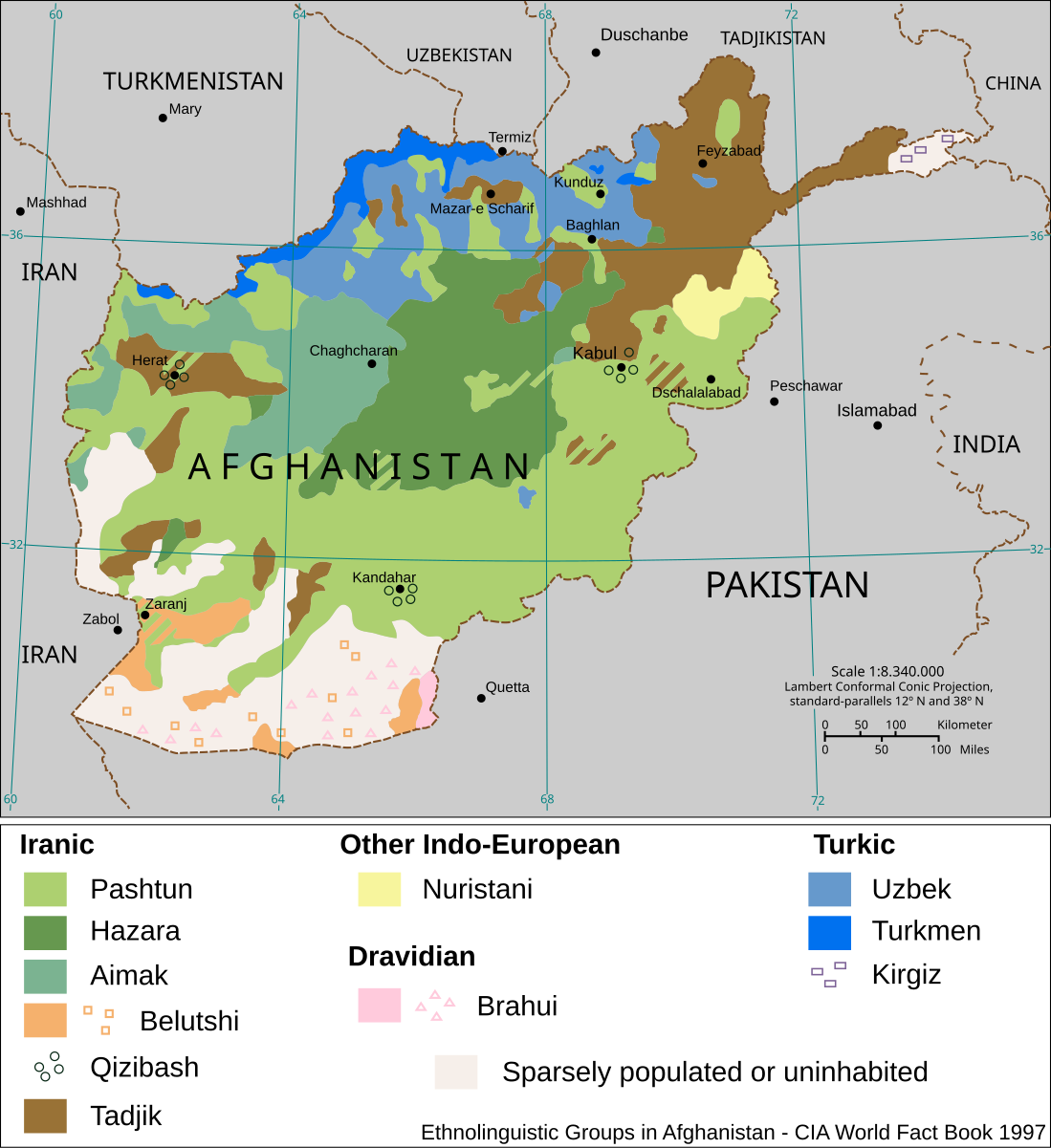
Ramazan Rafee was born into a Hazara family who believed in the strictest application of Sharia law. His own father was a mullah, a Muslim scholar.

But Ramazan began to doubt Islam because 60% of the Hazaras have been killed by the Afghan authorities (for belonging to the Shia branch of Islam because Taliban is Sunni).

“In Islam, they give you a boundary. If you would walk other side of that red line, then they label you as infidel,” Ramazan says. “I had a lot of questions about the nature of God, human suffering and the suffering of my people. Around 60 to 62% of Hazara people were killed by the authorities. Those authorities they were Muslim as well.”

Ramazan found himself staring down the barrel of a rifle — and his dad was the on aiming it with his finger on the trigger.

“I will kill you,” his dad growled.

His mother jumped in.

“First kill me, then Ramazan,” she screamed.

Ramazan left his village for the city of Kabul. At the time, the U.S. armed forces were still in Afghanistan with the hopes of building a Westernized democracy. There was some freedom in Kabul while the U.S. was there.

Ramazan had rejected Islam but believed there was a Creator, so he embarked on a quest to learn about different world religions. The Bible was a banned book in public. But Hitler’s Mein Kampf was available. That seemed strange.

“Is the Bible that bad?” he wondered. The fact that Bible was banned made it seem like they wanted to keep the truth away from him. “I thought, there is something going on here.”

Eventually, Ramazan found a foreigner who gave him a Bible and proceeded to study it with him. Ramazan got saved in 2009. “I was on fire. I shared the gospel with my family, with friends and classmates. Within a year, we were 12 individuals and two families,” he says.

The foreigner left Afghanistan, and Ramazan was left alone with his group of Christians. He integrated in the underground church, a network of more believers. It was dangerous — especially for house church leaders.

In 2014, one friend was killed, with his family, by the Taliban, despite the U.S. supposedly controlling the city and setting up a Westernized government.

Then the U.S. left abruptly in 2021. The military withdrawal under Biden was a disaster, with much military hardware left abandoned in the country. But things were worse for the Christians. The Taliban swept in and took over Kabul.

“I woke up and everything was different. I kissed my wife and kids and said, ‘Ok, maybe today is our last day,’” Ramazan says. He and church members deleted every Christian resource on their phones and laptops. “The Taliban were here. It was chaos like in a movie.”

A pastor stopped by to pick him up with his family. He had no idea where they were going or what the future held. They didn’t make it out of the country. They were at the airport when a bomb blast prevented people from leaving. They tried leaving in car.

For 36 days, they were moving around, constantly changing their location, on the run from the authorities.

“When the last airplane left Afghanistan, I said, ‘Ok, it’s over. God wants us to die here,’” he says. “The only thing I was praying was that when the Taliban would take us, they would shoot all of us, not only shooting me and take my wife and children.”

Ramazan wrestled with God during these days of anxiety. Amazingly, God calmed him.

Finally after 36 days, a security team showed up and took Ramazan and his family in cars to the northern border. They crossed nine checkpoints. There were flown to Qatar. “When I landed in Doha, Qatar, I was reading Psalm 18 God, you are my rock.”

Many of his brothers and sisters in Christ also made it out of the country. Still others stayed and went deep underground. Not only are the Christians there, there are new converts among them too.

“It’s more dangerous than ever to be a Christian in Afghanistan, yet people are still coming to Christ,” says Jamie Dean, of Radical. “The Spirit just moves.”

Exposing the ‘shameful silence’ of pro-Palestinian activists

From God Reports

By Charles Gardner —

(YouTube screenshot)


The shocking hypocrisy of left-wing posturing over the supposed evils of Israel in their dealings with Palestinians has been brilliantly exposed in a major Daily Mail(1) article.

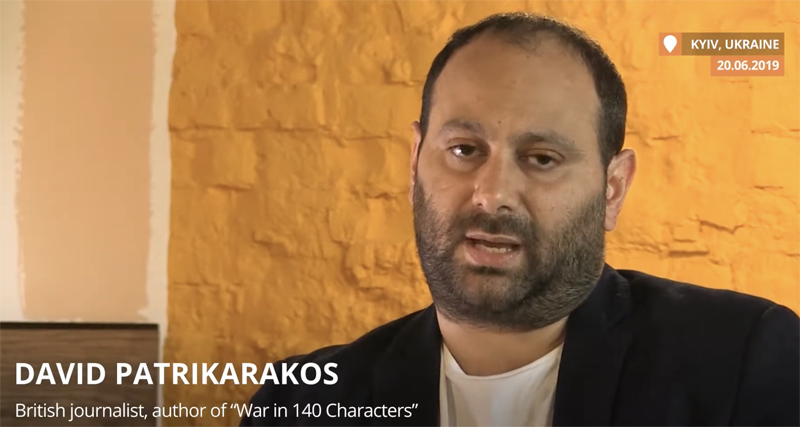
In a feature titled ‘Shameful Silence of the Left’, David Patrikarakos highlighted the terrible atrocities carried out by Islamic groups in Sudan and Nigeria involving the brutal massacre of numbers far in excess of those reputed to have died in the recent Gaza conflict.

And yet the progressive left is strangely silent over the plight of the victims who are – in the main – Christian.

Tragedies calling for outrage among the left, he writes, “must provide a villain who flatters Western fantasies of resistance – ideally a white, Western or Jewish oppressor – and a victim that appeals to our sense of colonial guilt.”

He continues: “Trendy urban baristas don’t get to feel like freedom fighters by bellowing about African killers or Arab militias. There is no moral glamour in calling out crimes that cannot be laid at the feet of the West.”

Their outrage is not universal, he adds. “It is selective – and therefore hollow.”
He points to the case of a Sudanese rebel fighter who confronted an unarmed restaurant owner. When asked what tribe he belonged to, the man replied that he was from the non-Arab Berti tribe.

At this, ignoring his desperate pleas for mercy, he was shot dead. The same man also ordered the shooting in cold blood of 460 hospital workers, including patients, their companions and anyone else present.

Meanwhile Nigeria is being torn apart by overlapping conflicts that together have produced a body count that amounts to a multiple of Gaza’s death toll over the past decade.

In 2023, he writes, over 5,000 Nigerian Christians were murdered for their faith. And yet, in the West, it still barely registers. It is in fact a blind-spot of the Western conscience.

“Until Sudan and Nigeria fill our streets with the same fury the activists reserve for Gaza, their outrage will remain a performance – and the bodies of black Africans will continue to be buried in silence.”

But thankfully the unfolding genocide in Nigeria has been thrown into the spotlight by none other than U.S. President Donald Trump, threatening possible action against Islamic militant groups.

“At least it shows he cares, which is more than can be said for most of those whose lives seem devoted to relentless displays of public sanctimony.”

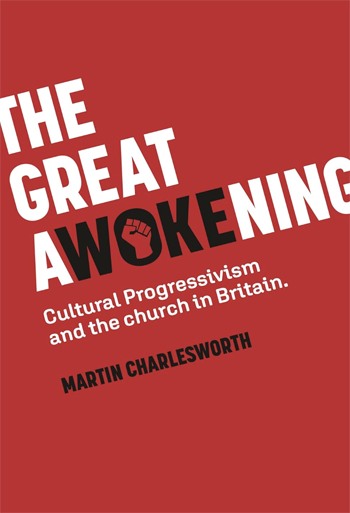
We do not need a Great Awokening, as a new book by Martin Charlesworth has been aptly titled. We need another Great Awakening to the reality of God in our midst, of his judgment and mercy, and of his beloved Son, our Lord Jesus Christ.

Forced Out For My Faith in Christ

From persecution.org

By Sameer Patel 

On Saturday, Sept. 27, my mother came to me with a troubled expression. Her voice trembled as she spoke to me. 

“You must leave the village!” she urged. “I heard it with my own ears — the villagers are plotting to kill you and attack your family. You need to go now to save your life!” 

I was shocked but remained calm.  

“I believe in God, the same God who healed my wife from her sickness and gave us peace and hope,” I told her. “No one can take my life without his will.” 

A few minutes later, my younger brother came to me, tears rolling down his face.  

“Please, leave. If you stay, we may never see you again,” he pleaded. “They are planning to kill you. If you go, at least we’ll know you’re safe somewhere.” 

The concern in his voice moved me deeply. I turned to my wife and told her about the situation. I said I would leave for now and return once things settled down. That evening, I quietly left my village in Central India. 

The next morning, around 9 a.m., I received a phone call from my brother.  

“The entire village is at your house,” he said. “They’re demanding to know — will you deny Jesus or let your house be destroyed?” 

I told him with a firm heart, “When my wife was on her deathbed and we had no hope, Jesus healed her. He gave us life. How can I deny him now? Even if I must give my life, I will not deny Christ and his rule in my life.” 

The Hindu nationalist mob ridiculed my wife and mocked her. 

“Leave this village and don’t look back,” one of them screamed at her. “Go to your God, let him protect you!”  

“I have experienced God’s love,” my wife replied. “He healed my deadly sickness. My God will save me and my family.” With that, she too left the village. 

Soon after, the mob destroyed our house. They damaged everything we owned and declared that I was excommunicated from the village — all because I follow Jesus and attend church. 

My wife, our children, and I fled our village, traveling nearly 80 kilometres (50 miles) to find safety. We are now staying with fellow believers, Christians we got to know through church. 

I accepted Jesus three years ago. A friend had introduced me to the church and prayer when my wife was seriously ill, almost at the point of death. I had taken her to many hospitals, spent all I could, but nothing helped. She couldn’t even move without my help. 

But through the prayers of a pastor and the faith we had in Jesus, she was miraculously healed. That day, we knew the love and power of God, and we gave our lives to Christ. 

Since then, the persecution started. From the day I accepted Jesus, I have faced opposition. But through it all, the Lord has been faithful.  

I will continue to follow Jesus, no matter what. It may be difficult to return to my village because the people there have vowed to make the entire village Christian-free. But I know God is with me. I need to start my life from scratch; I know God will help me as I trust in him for love and care. 

*Name changed for security reasons 

To read more news stories, visit the ICC Newsroom. For interviews, please emailpress@persecution.org. To support ICC’s work around the world, please give to our Where Most Needed Fund.

Over 200 Christian Farmers Killed Before, After Nigeria’s Democracy Day

6/16/2025 Nigeria (International Christian Concern) — More than 200 Christian civilians, including children and the elderly, were killed in coordinated attacks carried out by armed Fulani militants in Nigeria’s Middle Belt, just before and after the country’s Democracy Day holiday.

The attacks, which spanned from the evening of June 11 through the early hours of June 13, struck Christian farming communities in Plateau and Benue states.

On the evening of Wednesday, June 11 — just hours before the public holiday — Fulani militants ambushed a group of Christian farmers in Rigwe Chiefdom, Bassa County, Plateau state. According to local sources, four victims, including a 9-month-old infant, were killed near Nkiedonwro village as they were returning from their farms with harvested vegetables.

The victims, identified as Musa Chega, 40, Gali, 43, Uhwie Emmanuel, 25, and her infant daughter, Mary Emmanuel, were attacked with machetes. Two other villagers sustained severe injuries. The farmers were reportedly headed to the Jos Vegetable Market before being intercepted on the road.

Only two days later, in the early hours of June 13, heavily armed militants conducted another deadly assault in Yelwata, a predominantly Christian farming settlement in Guma County of Benue state, which borders Nasarawa state. The attack lasted from around 11 p.m. to 1 a.m., and 200 people were feared dead, according to community reports.

Internally displaced persons (IDPs) were among the victims. Many had fled earlier violence in Nasarawa and Benue and were sheltering in stalls and lock-up shops at Yelwata market. Witnesses said attackers poured gasoline on the shops and set them ablaze, killing entire families who had taken refuge inside.

Matthew Mnyam, a former state education official and community leader in Yelwata, confirmed the scale of the destruction.

“Some families were completely wiped out,” he said. “A man, his two wives, and all their children were burned alive. It was a well-coordinated assault from both eastern and western flanks of the community.”

In a related incident that same night, suspected militants also attacked a military post near Daudu town, killing at least two soldiers. Earlier reports suggested up to five soldiers may have died, though the Nigerian Army has not confirmed the exact number.

According to Leadership News, Benue State Police confirmed the attack but declined to provide a death toll, stating investigations were ongoing.

“Our tactical teams responded swiftly, and some of the attackers were neutralized,” Deputy Superintendent of Police Sewuese Edet said. She added that several civilians were killed and wounded in the attack.

In recent weeks, Fulani militias have shifted tactics, launching broad daylight ambushes on farmers in Plateau state. According to the Miango Youth Development Association (MYDA), a series of ambushes and killings occurred in Rigwe land between June 3 and June 9, resulting in at least 10 fatalities and multiple injuries.

Joseph Chudu Yonkpa, national publicity secretary of the Irigwe Youth Movement, warned that such ambushes often precede larger massacres.

“Before the Zike massacre last year that killed 54 people, there were two weeks of daily ambushes,” he said. He added that recent intelligence suggests that Nkien-whie, Miango, and Teegbe districts are currently being targeted.

A data report compiled by the Rural Youth Integral Support Initiative (RUYISI) shows that 65 communities in Irigwe Chiefdom have been attacked by Fulani militants between 2001 and 2023, with some villages struck multiple times. The highest spike occurred in 2021 when 44 communities were attacked in a single year.

The growing pattern of impunity has raised concerns among civil society and local leaders who accuse security forces of delayed or passive responses. In the case of Yelwata, local sources say security personnel stationed nearby failed to intervene during the two-hour onslaught.

Many of the recent victims were Christian subsistence farmers, forced to flee their ancestral homes only to be attacked again in makeshift shelters. The attacks came during the national celebration of Democracy Day, a public holiday commemorating Nigeria’s return to democratic rule.

These incidents mark one of the bloodiest weeks in Nigeria’s Middle Belt this year.


From International Christian Concern