The most frightening sentence in any language is “I’m from the Government and I’m going to help you.” Lose your wallet in Germany and you could find yourself in immigration detention for two weeks until someone notices you don’t look like a refugee (and that would be labelled racist in many places).
Chinese tourist mistaken for asylum seeker in Germany after losing wallet
A Chinese tourist got tangled up in the red tape of Germany’s migrant influx by mistake and was stuck in a refugee home for nearly two weeks, the Red Cross says.
Officials thought the backpacker, who spoke neither German nor English, “needed help” after landing in Stuttgart Airport in south-west Germany on July 4, Christoph Schluetermann of the German Red Cross said.
The 31-year-old man, who had lost his wallet, was taken to a reception centre in the nearby town of Heidelberg.
There, he unwittingly filled out an asylum request form, following the local authorities’ instructions, Mr Schluetermann said.
On July 6, he was transferred to a reception centre in the western city of Dortmund, where his passport was taken from him.
He was then moved to another shelter in Duelmen near the Dutch border.
“Machinery kicked into gear from which he couldn’t immediately escape,” Mr Schluetermann told news agency DPA.
Public broadcaster WDR said the man complied with standard procedure for refugees, including allowing his fingerprints to be taken, undergoing a medical examination and accepting pocket money.
Chinese restaurant called on for help
But staff eventually noticed that the man was unusually well-dressed for an asylum seeker and when the likelihood of a mistake dawned on them, sought help at a local Chinese restaurant.
The owners suggested Mr Schluetermann try using a Mandarin smartphone translation app and it soon became clear that the man did not want asylum but to continue his European tour.
“I want to go walking in a foreign country,” one of the translated messages said, WDR reported.
Twelve days into his stay in Germany, the man was able to set off for France and Italy.
Germany let in nearly 1.1 million migrants and refugees last year, posing an enormous challenge for its overstretched bureaucracy.
“It isn’t how I imagined Europe,” WDR cited the tourist as saying.
In Australia we force people to wear helmets under threat of massive fines. Maybe we should just let them use their own common sense and work out what is a safe environment and what is not.
At the FreeCycle event in central London on Saturday, there were, of course, large numbers of people wearing helmets and hi-viz tabards – not least because the latter were, as always, being handed out to participants.
But as I cycled around the event during the course of the day, I began to notice a distinct phenomenon. Something dangling from people’s handlebars.
Wow! So it’s just a starting point and you can only use it at temperatures of about -200 C, but this is just incredible
From the SMH:
World’s ‘smallest hard drive’ means every book written can now be stored on a stamp
July 19 2016 – 1:08PM
Marcus Strom, Science Editor
When Johannes Gutenberg invented the printing press he changed the world.
Now a team of scientists in the Netherlands has taken this to the ultimate extreme. Through the manipulation of single atoms they have made the world’s smallest hard drive. It is so dense the technology could store all the world’s books on device the size of a postage stamp.
Using a scanning tunnelling microscope to push single atoms around, Associate Professor Otte’s team created a stable grid of 8000 chlorine atoms where each can represent the one (1) or zero (0) that make up binary digital data.
Potential: all the world’s books on a single stamp.
This means a storage density of 78 terabits per square centimetre, many hundreds of times greater than the best hard disks available.
IBM estimates that humanity is creating about 2.5 billion gigabytes of data a day – and that was in 2012. So the ability to store data efficiently is as a global challenge.
Advertisement
The researchers at Delft hope their research, published this week inNature Technology, will be a step towards dealing with this data management conundrum.
“In theory, this storage density would allow all books ever created by humans to be written on a single post stamp,” Professor Otte said.
For all the sophistication of modern science, and believe me I am a big fan of science done well, there is one massive blind spot.
Scientism or naturalism is the belief that science can explain everything without reference to God. There are many problems with that belief, one of which is that science can never really explain why there is anything. In fact science can only tell us that we shouldn’t be here. Yet here we are.
Antimatter isn’t just a great plot device for sci-fi stories. It’s at the heart of one of the great mysteries in modern physics — why our universe has stuff in it.
Key points:
Equal amounts of matter and antimatter were made in the Big Bang
These should have destroyed each other
But some how we ended up with left over matter
Physicists are looking for the cause of this by smashing high speed particles together
But antimatter isn’t as exotic as it sounds.
Every particle that makes up matter — the electron, proton, neutron and their more-obscure cousins — has an almost-identical twin: its antiparticle.
They were both made together from cooling energy in really high-energy environments like the big bang.
Antiparticles are exactly the same as their particle “siblings”, except they have the opposite charge.
So there’s no way to tell particles and antiparticles apart, except for how they are affected by other charged particles.
An electron (negatively charged) will be attracted to a proton (positive), but an anti-electron (positive charge) will be repelled by it.
Anti-protons, anti-neutrons and anti-electrons can get together to form anti-atoms that act just like regular atoms. And anti-atoms can make anti-molecules that would behave just the same as regular molecules.
There could even be an anti-you that would look, sound and behave just like you do.
The only difference between them and a regular twin would be as soon as you shook anti-you’s hand, you’d both be destroyed in a massive flash of light, as your matter and antimatter converted back to the energy that they formed from.
This same thing happens whenever matching matter and antimatter particles get together — they annihilate each other, converting back to the energy they came from.
Which brings us to a fundamental problem with our understanding of the universe: we shouldn’t be here.
Many Christians assent to the reality of miracles, dreams and visions and other supernatural encounters with Jesus. Yet the vast majority rarely move in these things. Often God seems to be at a distance or only understood at the level of the mind.
Part of the reason for this is bad teaching (“The gifts are not for today.”) or bad practice which suggests that the gifts of the Holy Spirit are rarely given and only to a few special “men of God.”
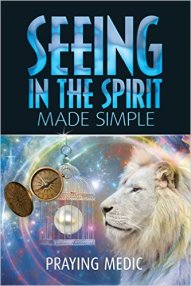
This book written anonymously by a paramedic dispels this notion. Praying Medic prays often with his patients on the way to hospital and sees many of them healed. Often he employs a process he calls “seeing in the spirit” which is visualising what God is doing in the present situation.
This book is really easy to read and simply written. It encourages the reader to step out in faith and to use their “spiritual eyes” as a part of their prayer life. A number of exercises are given to help this process along.
June 3, 2016 (SPUC) — LEGO is tapping into the joy many parents experience when they see their unborn child for the first time on an ultrasound screen.
In an announcement for a new baby minifigure this week, the toy company created a life-affirming graphic depicting a LEGO “baby in the womb.” The company made the graphic look like a birth announcement coupled with a ‘photo’ of the toy baby on an ultrasound screen. The hazy gray ultrasound ‘photo’ shows the smiling ‘baby’, its size and estimated birth date.
“It’s a big day! The first ever LEGO baby minifigure says HEY! to the world, arriving with the LEGO City 60134 Fun in the Park set, tomorrow June 1st !” the announcement reads.
“Simply the best”
The ad was well-received on social media, with many pro-lifers thanking the company for the life-affirming announcement. Actress and pro-life advocate Patricia Heaton tweeted about it, too:
The power of ultrasound images
The ad taps into the strong feelings that ultrasound images of real unborn babies often create. Ultrasounds have become powerful tools in the abortion debate because they show what until recently was hidden from the public eye – a baby in the womb. Ultrasound images show that unborn babies are valuable human beings who act in much the same way that born babies do. Thanks to the new technology, parents have watched their unborn babies smiling, sucking their thumbs, grimacing, clapping, turning somersaults and much more. Texas Right to Life’s Melissa Conway described the ad as “simply adorable” in an interview with the Independent Journal Review.
“LEGO’s introduction of the LEGO baby acknowledges that life, including preborn life, is literally and figuratively a growing industry,” Conway said. “This campaign and expansion to the toy line is a fun way to acknowledge that life begins in Mom’s tummy and affirms that children can easily and undeniably grasp the importance of life, growth, and family.”
Doritos and “humanising foetuses”
However, abortion activists have gone to extremes to suppress information about unborn babies from the general public. Last winter, they even went so far as to openly criticize a Doritos commercial that showed an unborn baby on an ultrasound screen. Sean Davis, co-founder of The Federalist, saw the new LEGO ad and remembered what happened with Doritos:
Abortion activists try to avoid anything that “humanises foetuses” because they know the facts change people’s minds. One study found that 78 percent of women considering abortion chose life after seeing their unborn child’s ultrasound image.
A car-sized sled powered by electromagnets has rocketed to more than 160 kilometres per hour through the Nevada desert in what the Los Angeles company developing the technology said was the first successful test of a futurist transit system called hyperloop.
Key points:
Developers say system will transport passengers by 2021
Sceptics say construction costs are underestimated
Hyperloop One already has raised $80 million from backers
Hyperloop One is among several companies competing to bring to life a technical vision by Elon Musk, the founder of rocket maker SpaceX and electric car company Tesla Motors, who suggested sending pods holding passengers and cargo inside giant vacuum tubes between Los Angeles and San Francisco.
It is a matter of debate how soon — or whether — passengers and cargo will ride the system at velocities approaching 1,200 kilometres per hour, but Hyperloop One has already raised $80 million from backers including clean technology venture capitalist Khosla Ventures, high-speed railway SNCF, the French National Rail Company and GE Ventures.
Brogan BamBrogan, a former SpaceX engineer who co-founded Hyperloop One, called the test a major milestone.
“Technology development testing can be a tricky beast,” he said to a crowd of 300.
“You never know on a given day if things are going to work exactly like you want.”
The sled began on a train track and then was rocketed to 168 kilometres per hour by electromagnets as electricity was shot into copper coils. After a short ride, the sled ran into a sand trap, sending out silicon sprays. If all goes according to plan, sleds will levitate and carry pods in a test later this year.
Gigantic tubes are already scattered around the Las Vegas area test site.








 New Life Narrabri